
13 Leading Healthcare Marketing Trends for 2026
Healthcare organizations often stick to old-fashioned marketing: word-of-mouth, walk-ins, and the occasional billboard. It's like using a horse-and-buggy in a world of electric cars — nostalgic, but outdated. To modernize, you need to know the latest digital healthcare marketing trends.
Over two-thirds of Americans say that medical costs are tough on their wallets, so they’re shopping around and reading reviews. The best place to do so is online. You need to meet future patients there.
If you add new digital tricks to your old marketing strategy, more patients will find you on Google and book a visit, but that’s only the beginning. The real advantage is better-quality appointments: patients can learn exactly what services you offer, understand which treatments fit their needs, and book the right type of visit.
Let’s explore which marketing trends to watch for in the healthcare industry that could help you with this mission.
Healthcare Begs for Digital Marketing Strategy
The way people find doctors and clinics has changed. Most patients start their search online, just like they do for restaurants, hotels, or products:
-
A DigitalSilk survey said that 65% of patients look online before booking an appointment at a clinic
-
72% healthcare clients read reviews — and only trust doctors with 4-star ratings or higher
The global healthcare advertising market is huge — nearing $45 billion — and 70% of that money companies started to spend online.
Companies didn’t make that move because it sounded trendy. They did it because digital marketing works: delivers better results, more patients, and a higher return on every dollar invested.
Just Give Me a Reason
Who says you can’t teach an old dog new tricks? You can — and you should. It’s hard to learn how to use healthcare digital marketing trends, but your business has a few important reasons to do so.
Awareness Channels Are Online Now
Most people now start their search for healthcare on Google or social media. When they type “pediatrician near me” or “best cardiologist in [your town]”, your company needs to show up.
It's impossible without an optimized Google Business Profile, local SEO, and social media posts. You need to invest some time and money there.
Search results on Google when a patient types in “pediatrician near me Tampa.”
Budget Control Freakery
Traditional ads (billboards, flyers, print) are expensive, and you can’t even measure their results. How many people saw your billboard? Was it the reason they came around? Nobody knows.
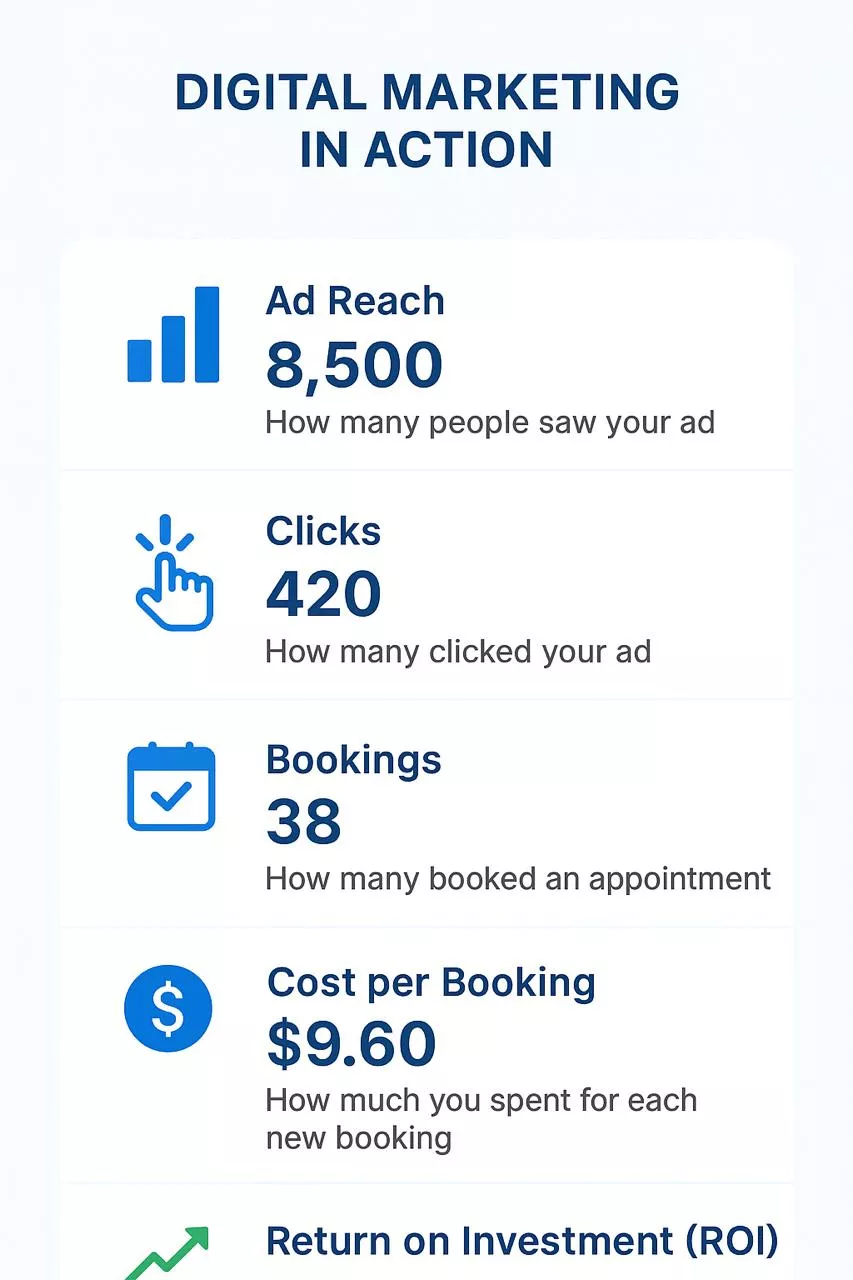
Digital marketing can be pricey too, but at least you know what works and what doesn't. You can see data in real time — how many people saw your post, clicked your ad, and booked an appointment.
So, you can spend the budget only on strategies that work. No guessing!
Chatbots Don’t Need Beauty Sleep
People no longer have the patience to wait. They can get upset when an ordinary salesperson doesn’t answer their questions immediately. How do you think they’ll feel when it comes to their health — in pain, anxious, or scared — and no one is there to help?
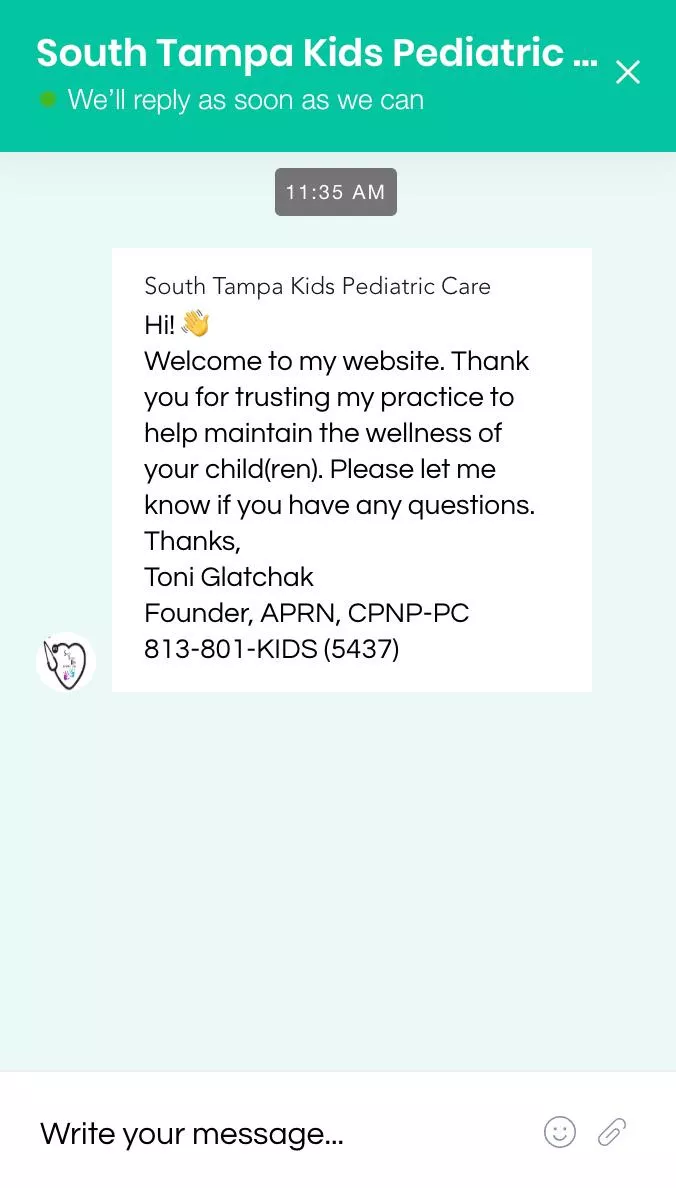
Your business needs to respond immediately, and chatbots are your saviors. They answer questions at any time and make patients feel cared for.
Online Word-of-Mouth
In health systems, patients value credibility above all else. They need to be sure that you will treat them properly and not make things worse for a six-figure price.
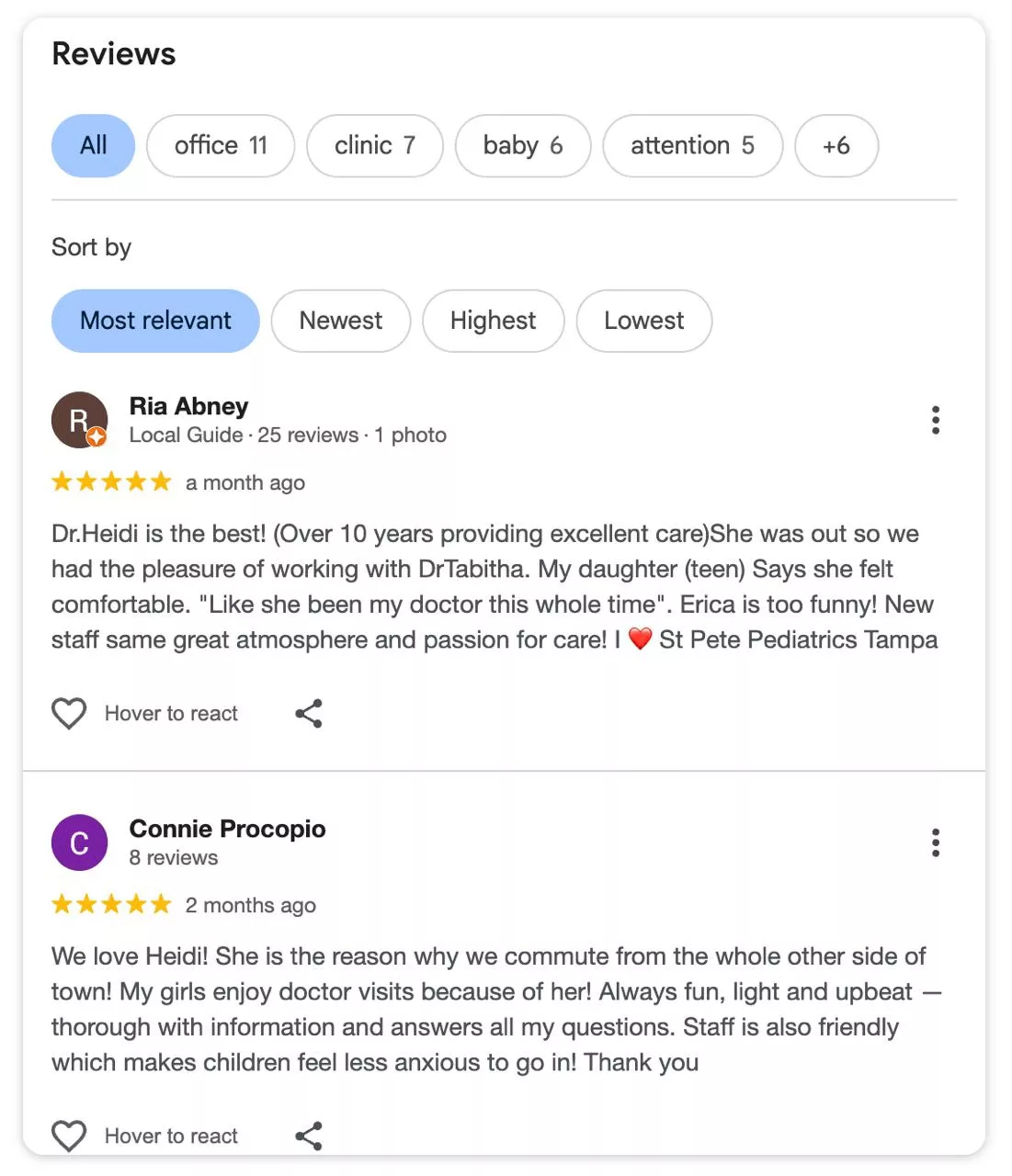
When happy patients leave reviews online, you earn the trust of future clients before they even walk through your door. It’s a top healthcare marketing approach.
We helped medical lab Synevo to have +100% positive reviews. If you’re impressed and now looking for medical marketing services, just give us a call! We nail healthcare marketing trends to benefit your business.
Healthcare Marketing Trends 2026
The way trends spread is universal — a single innovative idea sparks a wave that soon catches on everywhere. Healthcare marketing trends show what’s working best for leading clinics and hospitals.
We discovered how they attract patients and keep their schedules full. You're welcome!
#1: Telehealth & Virtual Care: Make It Remote
Telehealth is growing thanks to better technology and changing patient habits. People choose virtual care because it’s faster, easier, and often more comfortable than in-person visits.
What can you do?
-
Create telehealth landing pages for queries like “online doctor”, “virtual therapy, " and “same-day consultation.” Add “Book Virtual Visit” CTAs.
-
Lead with convenience in messaging: “No waiting rooms,” “Talk to a doctor from home,” “Appointments in minutes.”
-
Use telehealth as a funnel entry point: offer quick consultations as the first step and upsell follow-ups, diagnostics, or in-person visits
-
Run ads in wider regions (telehealth removes location limits)
#2: AI-Powered Search — Are You on the List?
Search has changed. With AI-powered summaries, assistants, and chat-based tools, patients often get one clear answer — with a shortlist of providers. Make sure your company is on that list.
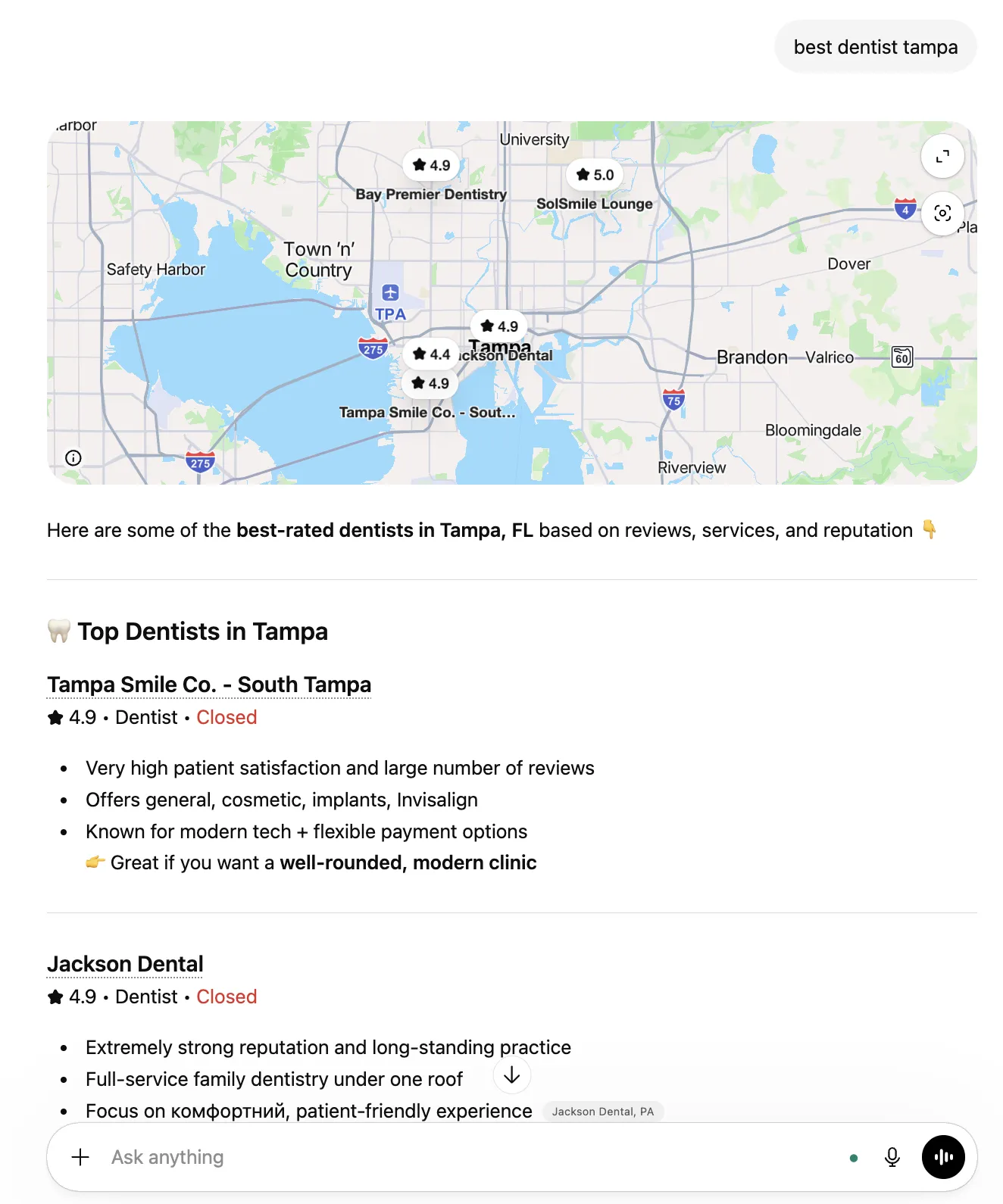
How to do so?
-
Write like you’re answering a patient directly and add FAQs.
-
Cover topics fully (e.g., a condition + treatment + FAQs + costs) and interlink pages.
-
Run your healthcare content marketing to have strong trust signals: reviews across multiple platforms, brand mentions, etc.
-
Structure your content for machines with headings, lists, and tables. Add schema markup where relevant.
#3: Geek Out: Healthcare SEO Trends 2026
For better or worse, people are chronically online — connecting, chatting, and having fun. So, it’s only logical that they search for help there, too.
Your business should be discoverable online. Here's how you'll achieve it.
Local SEO — Be the Friendly Neighbor
As a small business, you don't need to compete with the entire internet for clients. It's enough to be the go-to place in your own neighborhood.
You want to be the first result when people search for "dentist near me" or "pediatrician in [your city]." To accomplish this, you must earn Google’s trust.
Local SEO is the way to tell Google: "I'm a trustworthy local business, and recommending me won't embarrass you." Technically, it is about:
-
Use the right keywords on your website pages.
-
Optimize your Google Business Profile.
-
Encourage clients to write reviews.
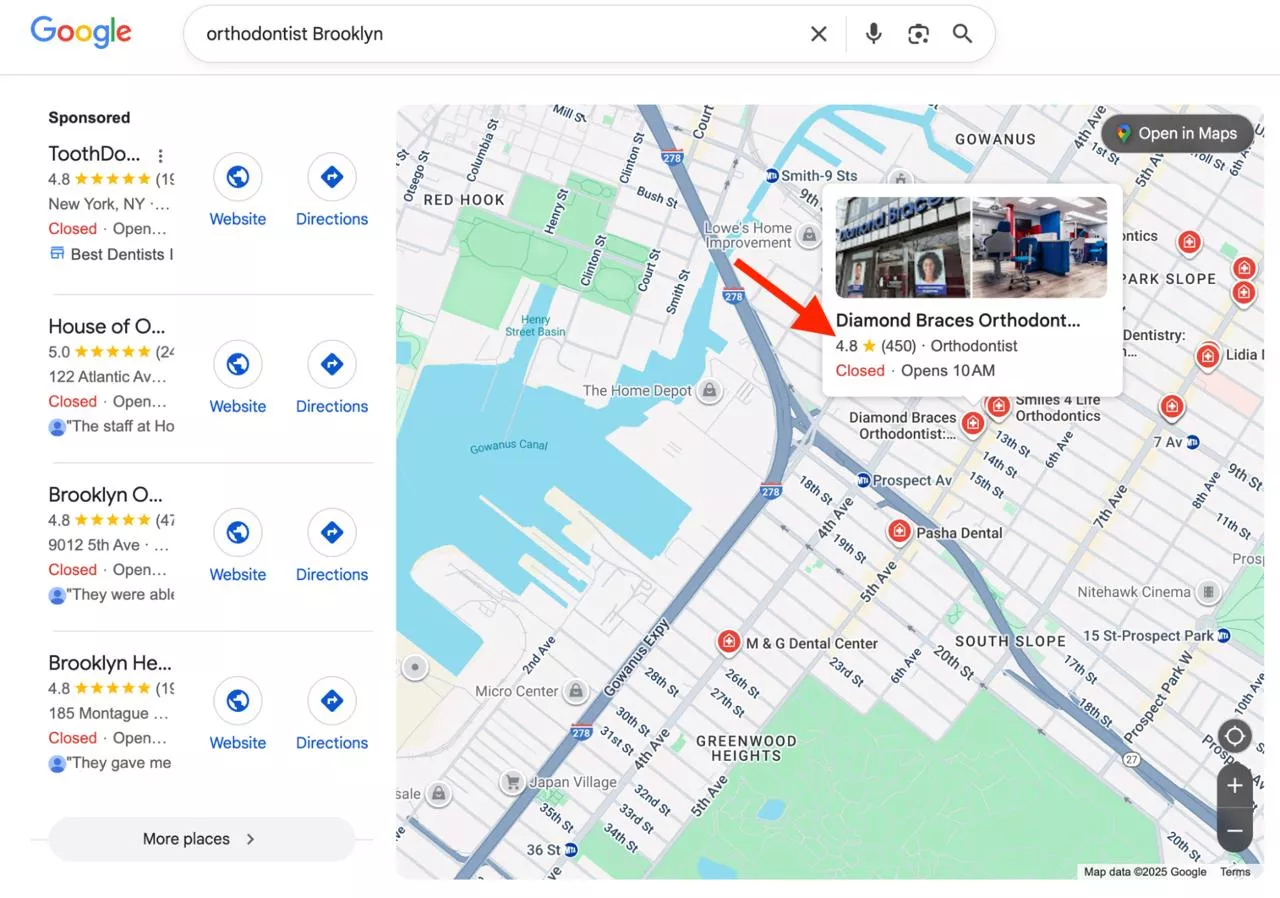
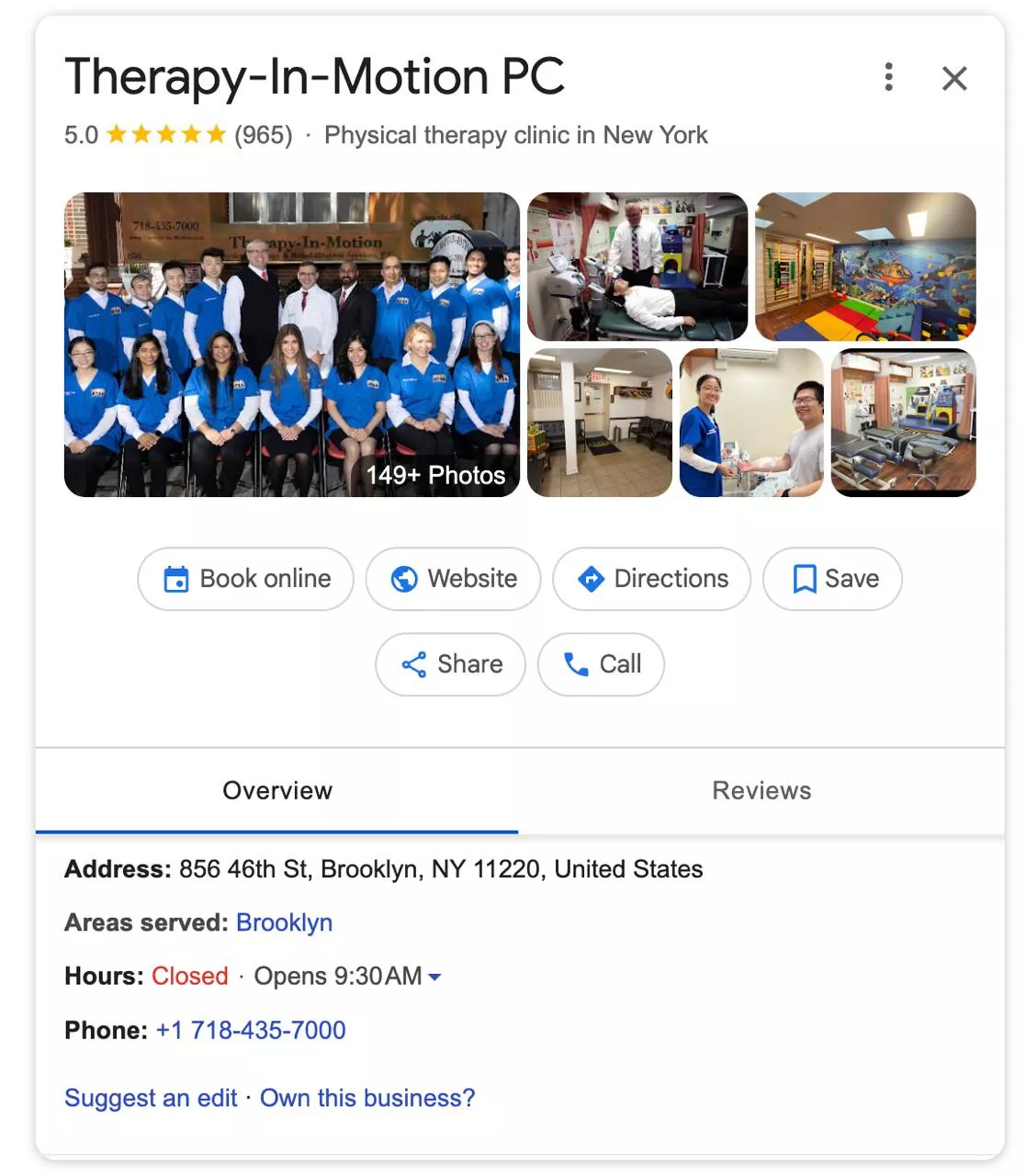
Example: A physical therapy clinic in Brooklyn optimized its keywords and Google Business Profile and asked clients for reviews. Now, when someone searches for their services, they appear at the top.
For more details, read our article about local SEO for small businesses.
National SEO — The Content Battleground
National SEO is useful for healthcare chains that want to get long-term results. But the competition is huge and messy, so it’s time to use your most powerful weapon available: content.
Write articles and guides, and optimize them with the right keywords. Make them useful, too. Google rewards websites with higher rankings when visitors are satisfied with the content.
The most exciting thing, though, is that if patients find your writing helpful, they may stay with your brand and schedule appointments.
Example: The Cleveland Clinic is great at explaining medical terms simply and using healthcare SEO trends 2026 in their marketing. That’s why both Google and people love them — their article shows up first when someone searches “types of braces.”
People click the link, read the article, start trusting the clinic — and some even book an appointment right away. It’s a goldmine for your marketing strategy.
#4: Healthcare Social Media Trends 2026: Video Marketing Is King
People love to scroll short videos on their phones: YouTube Shorts, Instagram Reels, TikTok! Yes, sometimes we do prefer to procrastinate for hours instead of living our lives. Your business should leverage it since it’s a big healthcare marketing trend!
Pick the most likable person on your team (maybe it’s you!) and let them be the face of your clinic. Share your daily routine, bust a few medical myths, tell funny medical practice stories — that’s how you build trust, and that’s everything in healthcare.
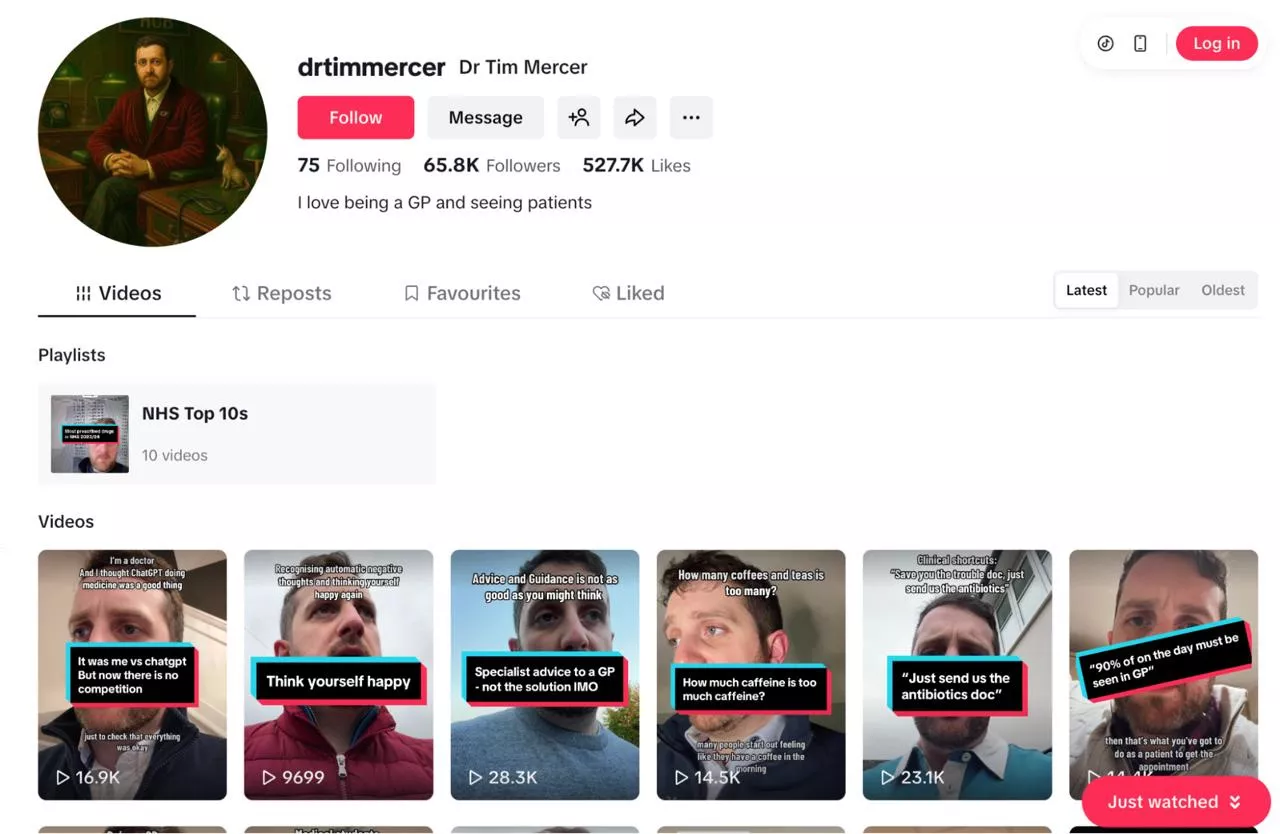
Example: A family doctor started sharing short videos on TikTok and learnt all about healthcare social media trends 2026. He is cute and kind, and he wants to help. People trust him, so when they need a serious consultation, they’ll be ready to make an appointment.
#5: PPC Trends Hospitals Healthcare: Google Ads Still Work — If Done Right
Those shiny paid search results that sit right at the top of the page are one of the primary PPC trends hospitals healthcare today. You only pay when someone clicks your link. A conversion rate of ~2.6% makes healthcare PPC the most convertible channel in the industry.
Google Ads became a must-have for healthcare in the late 2000s when practices realized they could reach patients exactly when they were looking. Clicks come from users with high intent — they’re ready to book an appointment, not just browsing.
The most effective healthcare Google Ads trends: use the right keywords and negative keywords, and think about your bidding strategy.
That's a piece of work, but if you do it correctly, it's gold.
Example: A Los Angeles dental clinic focused on the right keywords, added Ad Assets, and built a clear landing page — now it’s the top result for anyone searching “emergency dentist LA.”
“In 2026, catchy slogans and graphics will not do. The latest healthcare advertising trends show: healthcare organizations that harness predictive analytics and elevate digital access to align marketing with actual capabilities will turn patient engagement into a strategic advantage.”
— Cathy Tallaksen, Chief Marketing Integration Officer at Netpeak US
#6: Multichannel Marketing: More Touchpoints, More Trust
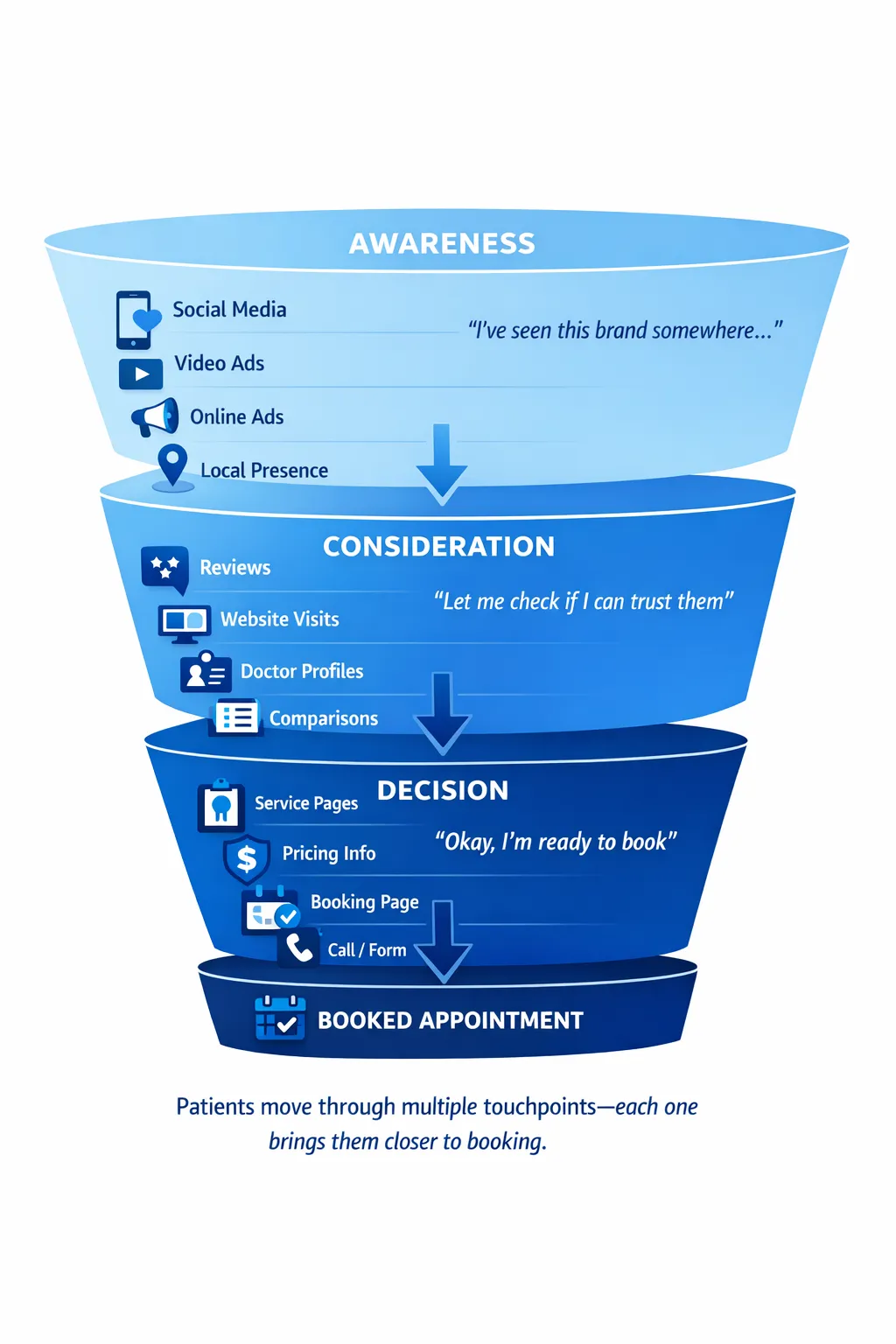
Patients move across multiple channels before making a decision. They might see you on social media, check reviews, visit your website — and only then book.
It usually takes a few touchpoints to feel confident, so each one helps move them closer to choosing you.
What should you do?
-
Align your SEO, paid ads, social media, Google Business Profile, and email and CRM into a connected ecosystem. Everything should work toward the same goal: getting patients to book.
-
Match content to the funnel stage: awareness (educational content, videos), consideration (comparisons and reviews), and decision (CTAs and booking pages).
#7: Patient Engagement Trends: Patients Don’t Want to Talk With You
Patients expect booking a doctor's appointment to be as easy as shopping on Amazon. The question is, how can your business achieve that?
Clients hate endless phone calls and being put on hold. A "Book Now" button for self-appointments solves this problem once and for all. It's more convenient for clients, and you need fewer call center workers.
Example: A family clinic in Florida added an online booking option to its website. Now, visitors can help themselves. It's heaven for introverts!
#8: Healthcare Email Marketing Trends: Keep in Touch
One of the main healthcare marketing insights: patients want personalized care and communication. After all, it's their health we're talking about! Sometimes, doctors know their patients better than their own mothers do.
Send patients emails:
-
friendly reminders before a visit
-
thank-you messages afterward
-
warm birthday wishes
Healthcare email marketing trends: Personal touches ➝ emotional connection ➝ higher client retention.
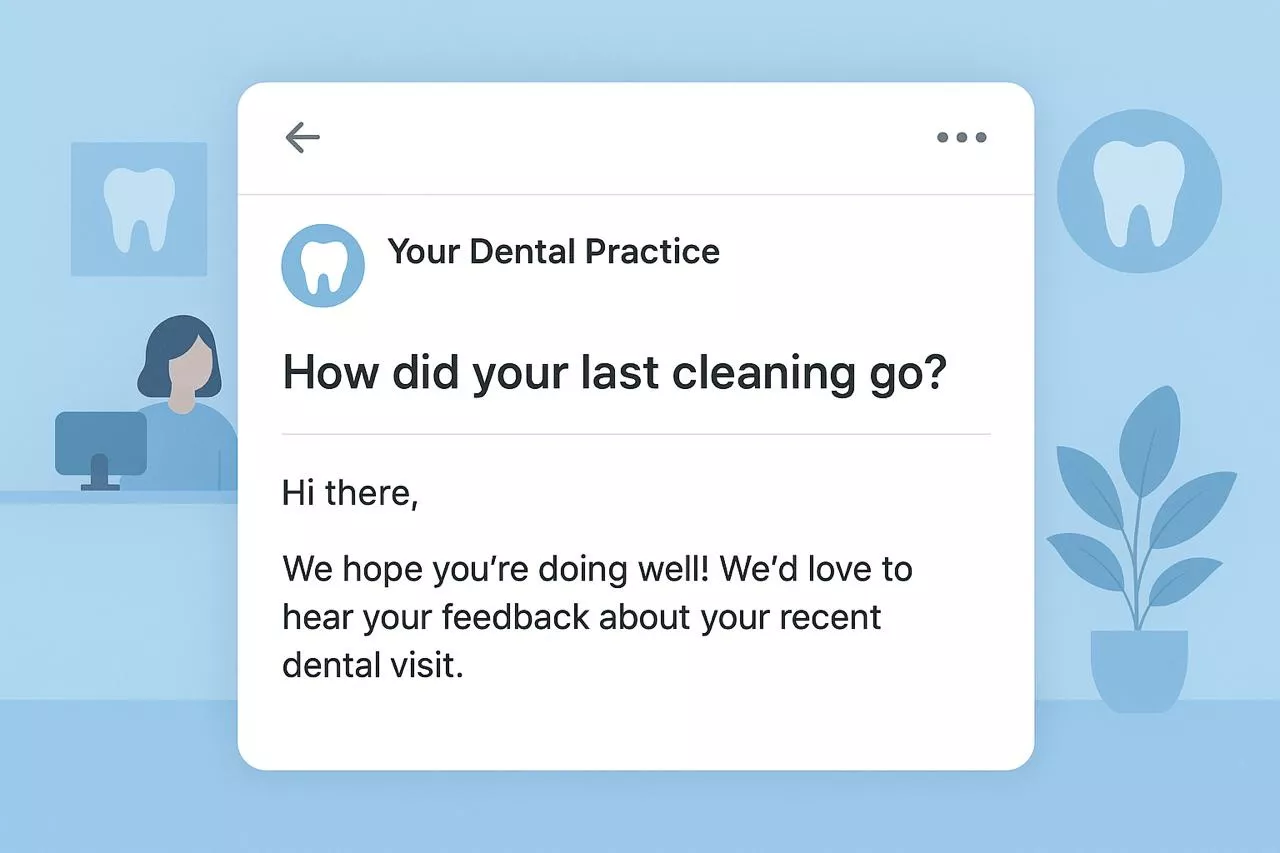
Example: A dental practice started sending simple follow-up emails, such as "How did your last cleaning go?" and "Here are three ways to keep your smile healthy."
#9: Trust & HIPAA Compliance: Privacy First
Healthcare marketing is hard to manage — lots of rules, lots of people involved. You’re handling sensitive patient trust, personal data, and strict regulations. That’s why compliance (especially with HIPAA) should be a part of every marketing step.
Healthcare is a high-risk category (YMYL). If you expose patient data, use misleading claims, or run non-compliant ads, be ready for legal penalties or worse — that Google or Meta limit or ban your accounts.
What you need to do:
-
Protect patient data with your life at every touchpoint (use HIPAA-compliant tools)
-
Align messaging with medical advertising rules (accuracy, no exaggerated claims)
-
Follow Google and Meta restrictions on targeting, remarketing, and content
-
Train your team on healthcare-specific nuances like compliance, tone, and patient sensitivity
"Fines you can live with, but more damning is that HIPAA violations are trust killers. One data breach, and all that credibility you've spent years building? Up in flames it goes.
Healthcare marketers need to treat compliance like seatbelts: maybe you don't want to think about them until the crash, but by then it's too late. Tracking pixels, CRMs, email platforms: they're compliant from the start, or you're already mid-collision and just don't know it yet."
Ross Faivinov, Head of Website, HIPAA Certified
Privacy Infrastructure
As more interactions move online (telehealth, forms, tracking, and AI tools), patients are scared of the data leaks. You need to reassure them that it will never happen in your company (and mean it!)
-
Review every tool in your stack (analytics, CRM, call tracking, chat, ads) through a privacy lens
-
Don’t collect, store, or share sensitive data without strict controls
-
Set up clear consent mechanisms and privacy policies
-
Maybe pray. You never know what might help :)
#10: Transparency: Show All Your Cards
Patients want to know what to expect from your service, so be Amazon-like to the max and provide a comfortable healthcare journey:
-
Clear pricing.
-
Honest communication.
-
Simple explanations go a long way.
Avoid difficult medical jargon — patients want to understand, not be confused. Most of them aren't doctors, and seeing a wall of technical terms can feel intimidating or even push them away. Use plain language and relatable examples.
Example: A diagnostic lab began publishing price lists and test explanations online. Now, they only attract people who can afford their services.
#11: Operational Trends: Behind the Scenes
Your business can’t afford chaotic healthcare marketing. It needs data, structure, and teamwork.
Doctors, front-desk staff, and marketers should share information and set goals together. For example, if the marketing department runs a catchy ad campaign, the receptionist needs to know about the new offer that patients are calling about.
In their turn, doctors should also be aware of the online reviews patients leave after appointments.
Useful tools:
-
HubSpot — Centralizes customer data, emails, and notes so everyone on the team can see what’s happening with each patient or client.
-
Salesforce Health Cloud — Designed for the healthcare landscape, it combines patient information, appointment history, and care plans in one place.
-
Asana — Team members can comment directly on tasks, so everyone stays in the loop and nothing slips through the cracks.
#12: Healthcare Branding Trends: Looking Good Everywhere, Every Time
Trust is paramount in healthcare, and it is cultivated through consistency. Your company can use the latest healthcare branding trends to achieve that:
-
If your social media tone is warm and caring, your reception emails shouldn't be robotic.
-
Your website and social media shouldn't use different colors or terminology.
-
Standardize how you describe your services: don’t call it “virtual care” in one place and “online consultation” in another.
-
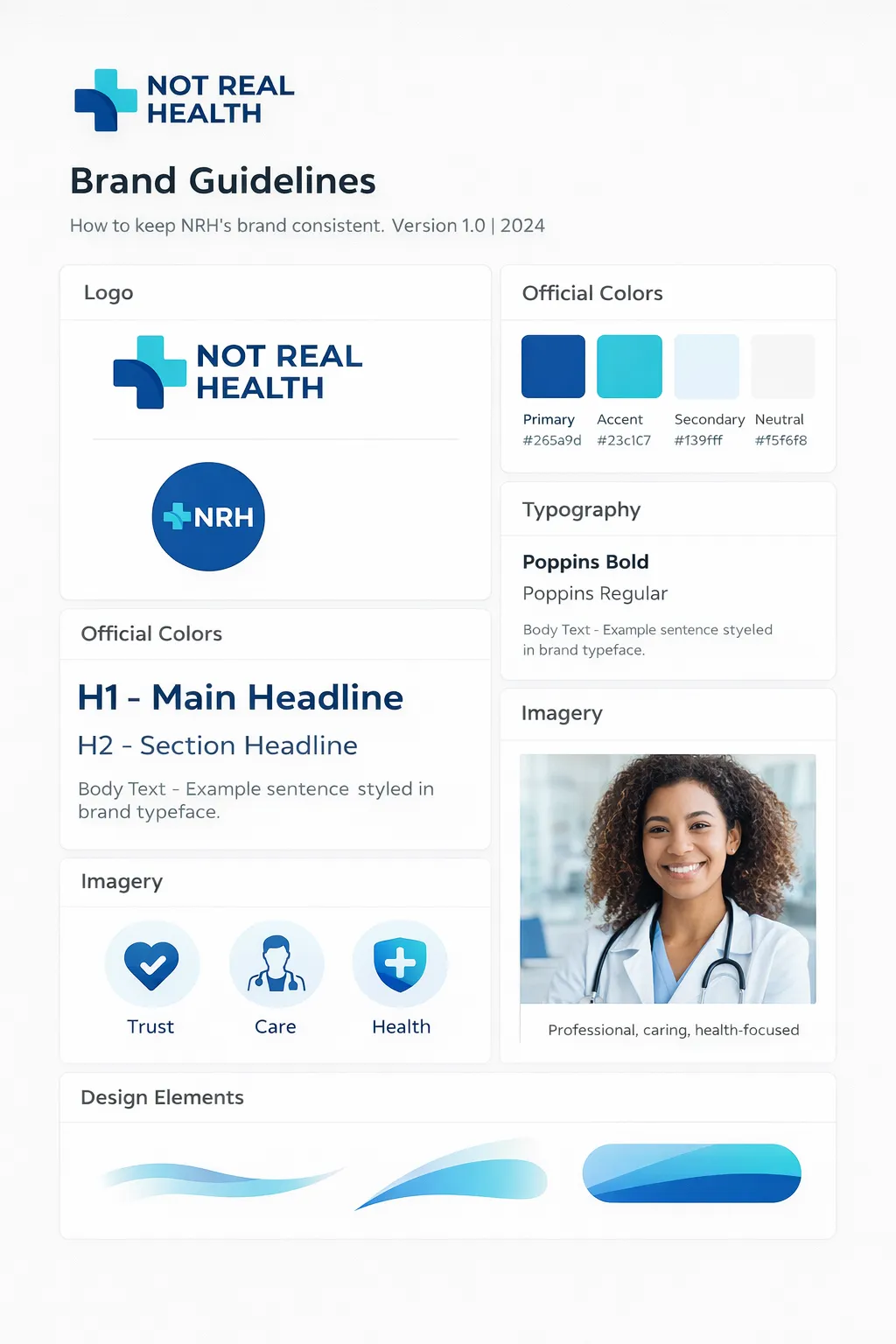
Create simple brand guidelines for your team, so everyone (marketing, front desk, support) communicates the same.
In a field where people are already vulnerable, inconsistency screams about risk.
Solution: Create a unified brand style guide that includes your tone of voice, logo usage, colors, typography, and so on. And ensure that every staff member involved in a patient communication workflow follows it.
#13: Success Measuring
You need to track your marketing results to know the full picture and make data-driven decisions. When patients interact across multiple touchpoints before converting, no single channel gets all the credit, so it’s hard to find out what actually brings patients in.
So, what should you do?
-
Track calls, form submissions, show rates (who actually attends), and revenue per patient.
-
Focus on the number of appointments (online + offline) and cost per booked consultation.
-
Track the full funnel to identify where patients drop off and then improve weak points in the journey.
Take Care of Trends, And the Dollars Will Take Care of Themselves
Keeping up with key healthcare marketing trends 2026 cuts costs, attracts the right patients, and encourages them to come back.
|
What They Do |
Results |
|
|
SEO and Google Ads |
Your clinic appears right when people are looking for care. |
Instead of waiting for walk-ins, you attract patients ready to book — higher conversions, lower ad waste. |
|
Online booking, email reminders, and follow-ups |
Cut down phone time and paperwork. |
Your staff can focus on patients, not admin tasks — saving time without extra hires. |
|
Strong reviews and consistent branding |
Build confidence. |
More trust means more referrals and repeat visits — and keeping patients is always cheaper than finding new ones. |
|
A simple website, helpful videos, and quick replies |
They are turning into loyalty. |
Happy patients become your best promoters — no ad spend required. |
FAQ
What are the latest medical marketing trends 2026?
The biggest trends include hyper-personalized patient experiences, AI-driven insights, and a shift toward trust-based, educational short-form content. Healthcare brands are focusing on transparency, preventive care, and omnichannel strategies that connect online and offline touchpoints. Video, local SEO, and data privacy will also define marketing success in 2026.
How is AI changing healthcare marketing?
AI is transforming healthcare marketing through personalization, automation, and predictive analytics. It enables tailored patient communication, optimizes campaigns in real time, and powers chatbots and virtual assistants. However, success depends on striking a balance between innovation and data ethics, as well as regulatory compliance.
How can healthcare providers use marketing effectively?
Healthcare providers can use marketing effectively by building trust, educating patients, and maintaining consistent messaging across digital and in-person channels. Using data responsibly to personalize outreach, sharing credible expert content, and focusing on patient experience help attract and retain loyal patients.
What role does patient trust play in healthcare marketing?
Patient trust is the foundation of all effective healthcare marketing. Clear communication, verified information, transparent pricing, and authentic patient stories all contribute to building credibility. When patients feel understood and safe, they’re more likely to engage, return, and recommend your services to others.

 0
0
 0
0
 0
0
 0
0
Related Articles
How to Do SEO for a Cleaning Company in 2026? From Invisible to Fully Booked
If you do it right, cleaning service SEO becomes your most sustainable growth channel — bringing in clients, lowering acquisition costs, and building long-term online visibility.
Local SEO for Home Service Companies: 8 Fool-Proof Ways to Reach Your Customers
When something breaks, people go straight to Google to find a plumber, an electrician, or a roofer right away. And local home services SEO is what makes sure you’re the one they find (and choose!) instead of your competitor.
Local SEO for Construction Companies Explained
If clients can’t find you online, they hire someone else. Learn how local SEO puts your construction business in front of ready buyers.