
How to Approach ASO in a Narrow Niche Without Ads: Growing Downloads by 631% — Aromoshelf Case Study

If you want to grow an app in a niche so tight you can barely squeeze in a keyword, forget about ads and focus on the basics: more localizations and better app store graphics. Even when organic growth is slower than a Monday morning, these tactics can still move the needle — no ad spend required.
Fragrance apps might sound like a niche within a niche, but the global niche perfume market is anything but small. With an 8.1% CAGR and a $13.7 billion forecast by 2034, there’s clearly a crowd out there sniffing around for something new.
This case study is about how a systematic ASO strategy helped our partner overcome niche limitations by expanding localizations and updating app store graphics.
Project: Aromoshelf
Period: May–October 202
Region: Worldwide
Service: ASO
About the Partner
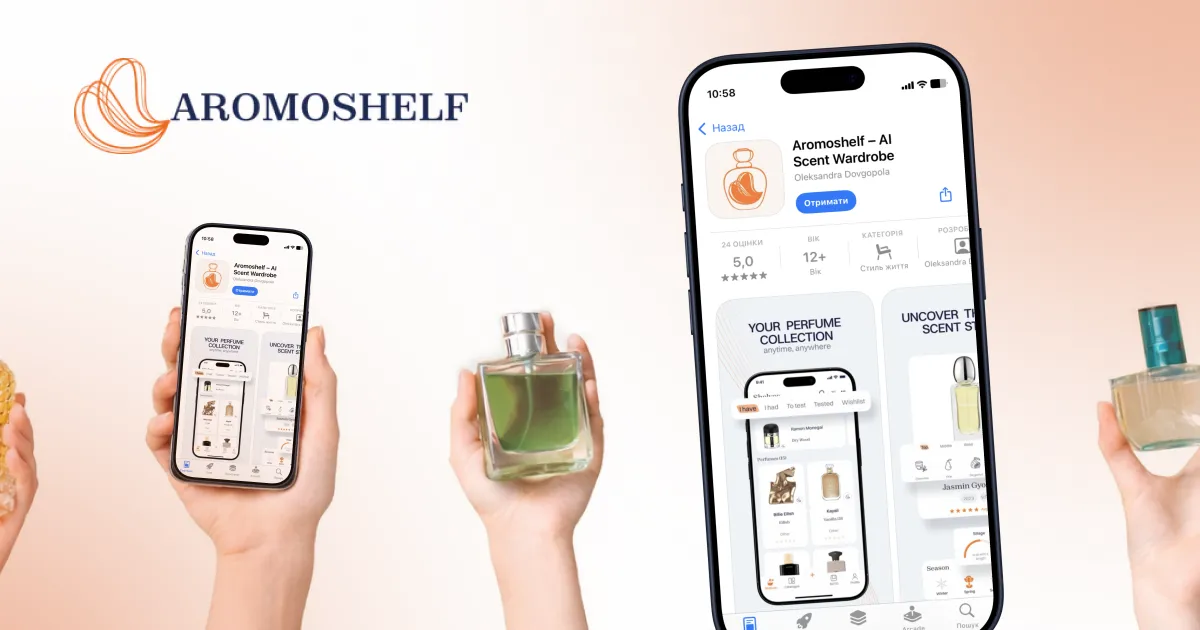
Aromoshelf is an app built for people who take their fragrance seriously. You can catalog your collection, jot down impressions, and find new scents worth trying — all in one place.
The app is listed on both the App Store and Google Play; the App Store page shows a 4.8 rating from 300 ratings, while Google Play shows 5K+ downloads.
Aromoshelf is also expanding across priority markets including the United States, Spain, and Germany, with ASO efforts focused on growing visibility, organic installs, and the active user base.
Cooperation Goals and Challenges
The partner approached us with the goal of scaling the product through ASO, looking for a sustainable user acquisition channel without relying on expensive ad campaigns.
The main challenge was the narrow specificity of the app and the small number of direct competitors. This significantly limited the semantic core and made metadata preparation more complex.
The market lacked relevant general keywords. In the English (U.S.) locale, the initial semantic core consisted of only three basic search terms: perfume, fragrance, and scent.
We had three main goals:
-
Increase app visibility
-
Grow organic installs
-
Expand the active user base
Strategy
To scale Aromoshelf’s visibility and increase organic installs, we utilized our comprehensive ASO services to build a step-by-step strategy:
-
Research the market and competitors to identify growth opportunities
-
Collect a complete semantic core and create updated metadata to improve visibility and conversion
-
Scale localizations and regularly optimize keywords to improve rankings and secure positions
-
Strengthen the app page visually by updating screenshots and adapting messages to the expectations of the target audience
Step 1. Market and Competitor Analysis
We kicked things off by digging into the competition — how they structured their metadata, which keywords they were leaning on, what their screenshots looked like, and which countries were driving the most organic traffic their way.
This helped us identify growth points and choose priority markets for the partner:
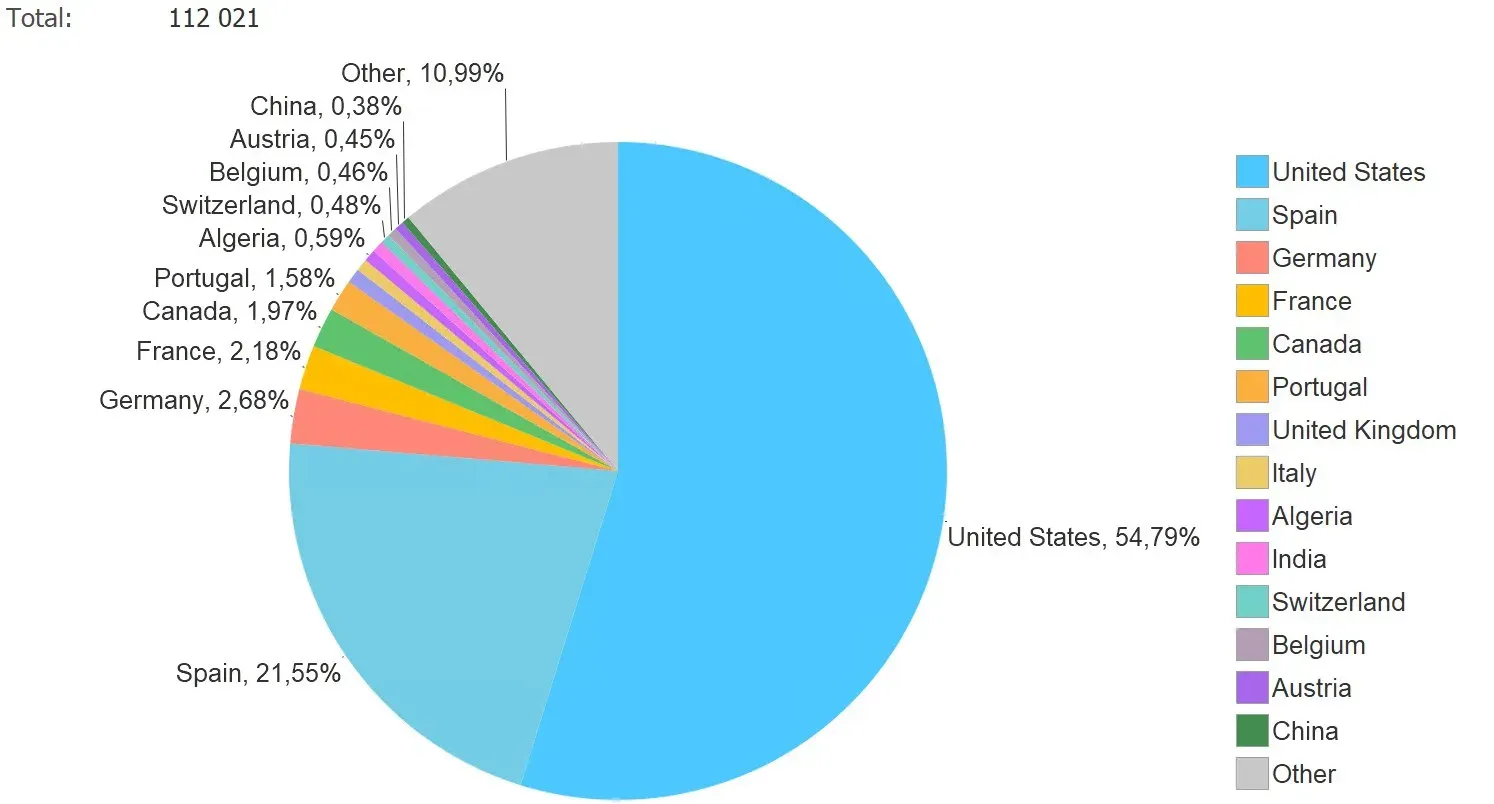
At first, the Aromoshelf team planned to focus only on the U.S. market. However, the niche analysis showed higher scaling potential, so we recommended expanding the geography. As we have seen in our SEO promotion of a German beauty salon, dominating priority regional European markets is crucial for scaling successfully in the beauty and wellness space.
As a result, we selected the top three markets:
-
United States
-
Spain
-
Germany
For the first iteration, we selected four locales indexed in the U.S.:
-
English (U.S.)
-
Chinese (Traditional)
-
Korean
-
Vietnamese
A full list of cross-locales can be viewed via the link.
Step 2. Semantic Core Development and Metadata Creation
At the next stage, we created a complete and high-quality semantic core.
-
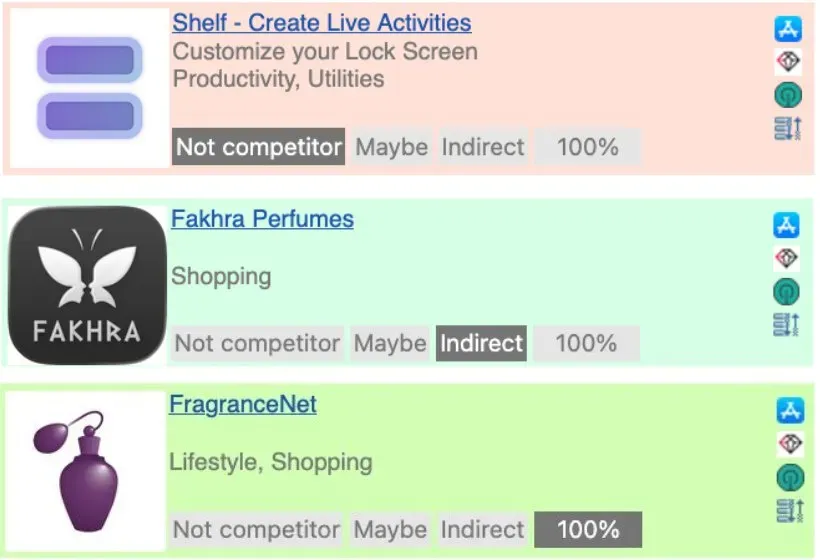
To do this, we analyzed both direct and indirect competitors and filtered out apps that were irrelevant to the niche.
-
After analyzing the keywords, we identified which terms should be used in the Title and Subtitle to increase visibility and improve page conversion.
-
Based on the collected semantic core, we prepared the first version of metadata for the approved locales. For each locale, we selected the most popular and relevant keywords that could potentially attract target users. Much like the strategic keyword placement we used when we successfully doubled app installs in the shopping niche, we placed the search terms in the Title, Subtitle, and Keyword field so that they formed logical connections and clearly reflected the app’s functionality.
-
After publishing the updated metadata, we monitored its performance, continued optimization, and scaled the number of localizations approximately once a month.
During the first three months, we optimized additional locales:
-
English (U.K.)
-
French
-
German
-
Spanish (Spain)
-
Arabic
-
Italian
-
Dutch
-
Portuguese
-
Chinese (Simplified)
The choice of locales was based on niche analysis and the volume of organic traffic in specific countries.
Step 3. Graphics Analysis and Conversion Hypotheses
After optimizing the metadata, we moved on to improving the app page conversion.
We analyzed competitors’ graphics to identify common visual patterns and evaluated the quality of their optimization. We also studied niche trends and target audience preferences. Similar to consulting a beauty ad playbook for inspiration, understanding which visual messages and design styles influence the install decision is exactly where you must start.
Based on these insights, we developed a set of hypotheses to improve conversion.
The main focus was on:
-
Updating screenshots
-
Changing the screenshot set structure
-
Strengthening key messages
After presenting the hypotheses to the partner, we selected the best ideas for the first screenshot set.
In the new version, we decided to focus on the app’s most valuable features, use simple and clear messaging, highlight unique capabilities, and visually show how the app stands out from competitors.
Step 4. New Screenshot Set Development and Performance Monitoring
Based on the approved hypotheses, we prepared a detailed technical task for the designer.
It included:
-
Screenshot set structure
-
Screen order
-
Key messages and design style
-
Requirements for composition, colors, and text
Original screenshot set, used as the baseline for updates:
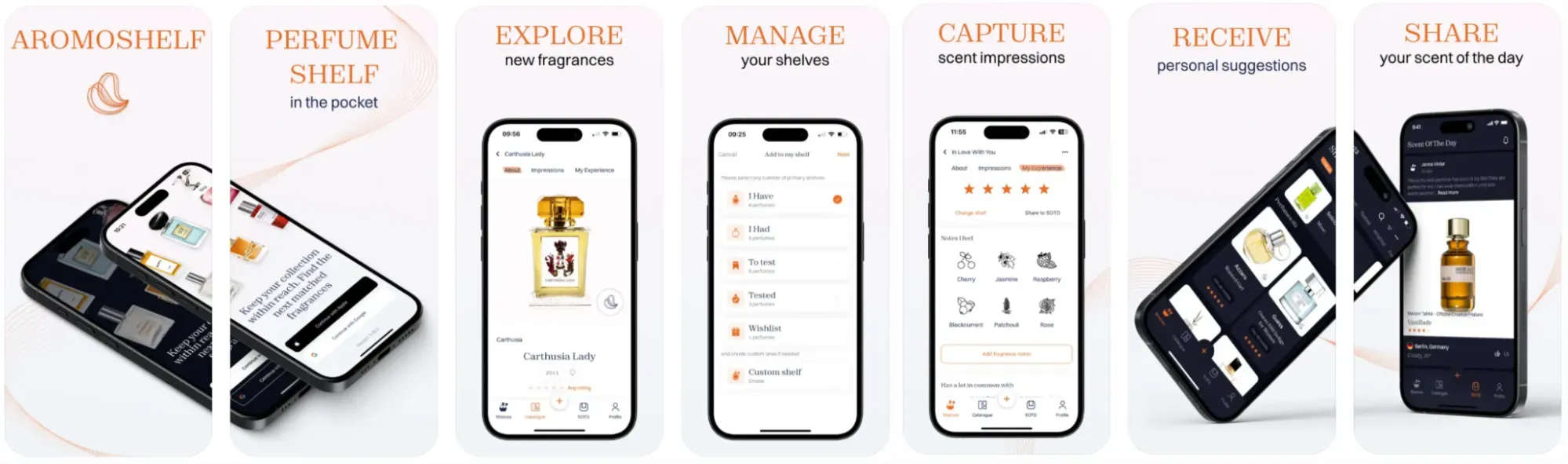
Updated screenshot set:
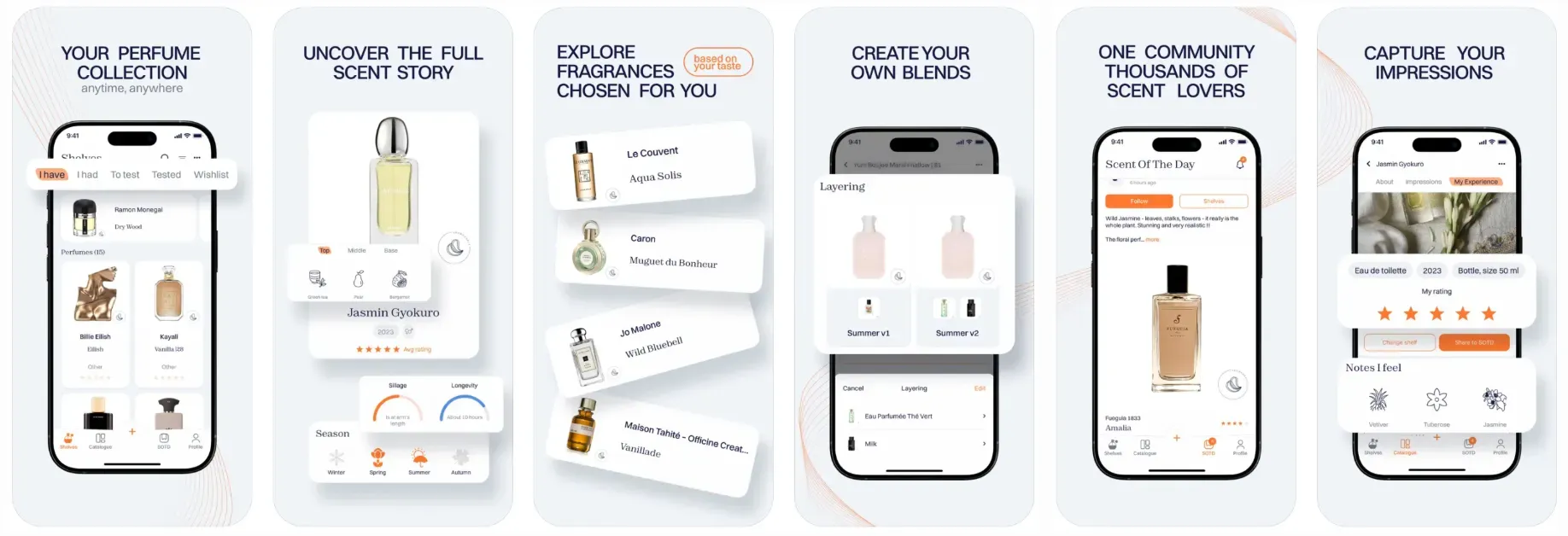
What we improved:
-
Explained the app’s functionality in more detail and showed key features
-
Added zoom-ins on important interface elements
-
Created clear messages with soft CTAs
-
Showed personalized selections as an element of content individualization, drawing inspiration from successful e-commerce content marketing strategies like Rare Beauty vs Rhode.
-
Rebuilt the screenshot structure from key features to secondary ones
-
Filled empty space with useful informative details
-
Updated the background to a colder tone based on competitor analysis
After uploading the updated screenshot set, we started monitoring organic metrics — impressions, installs, and conversion — to evaluate the impact of the changes and define the next optimization steps.
Promotion Results
App Visibility Growth
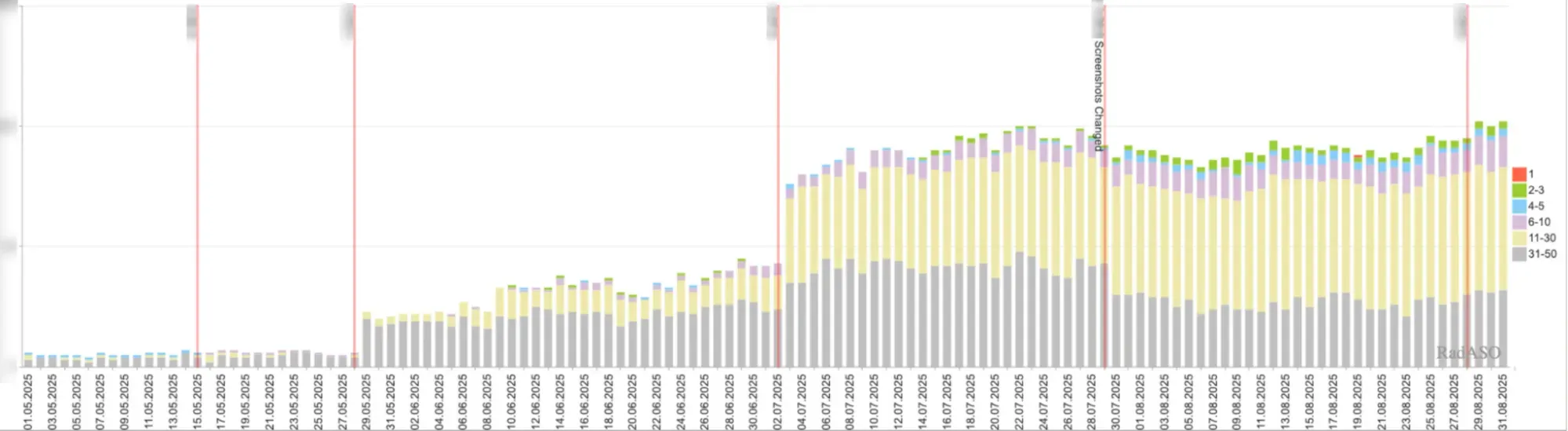
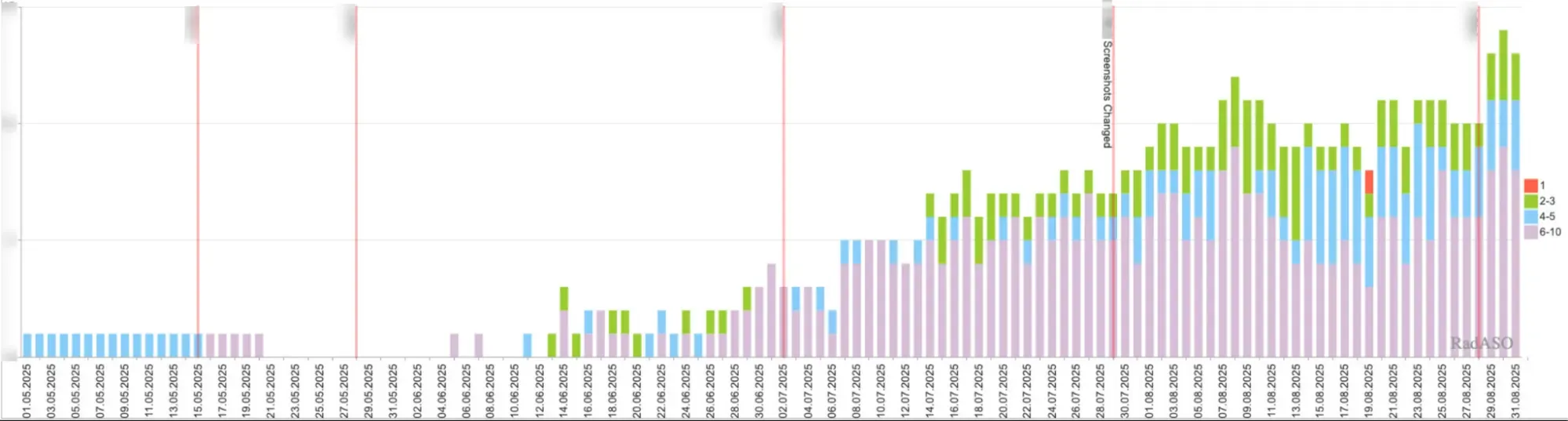
After metadata optimization and localization scaling, the app’s search visibility began to grow steadily.
We tracked:
-
TOP-50 ranking dynamics across all countries
- TOP-10 ranking dynamics
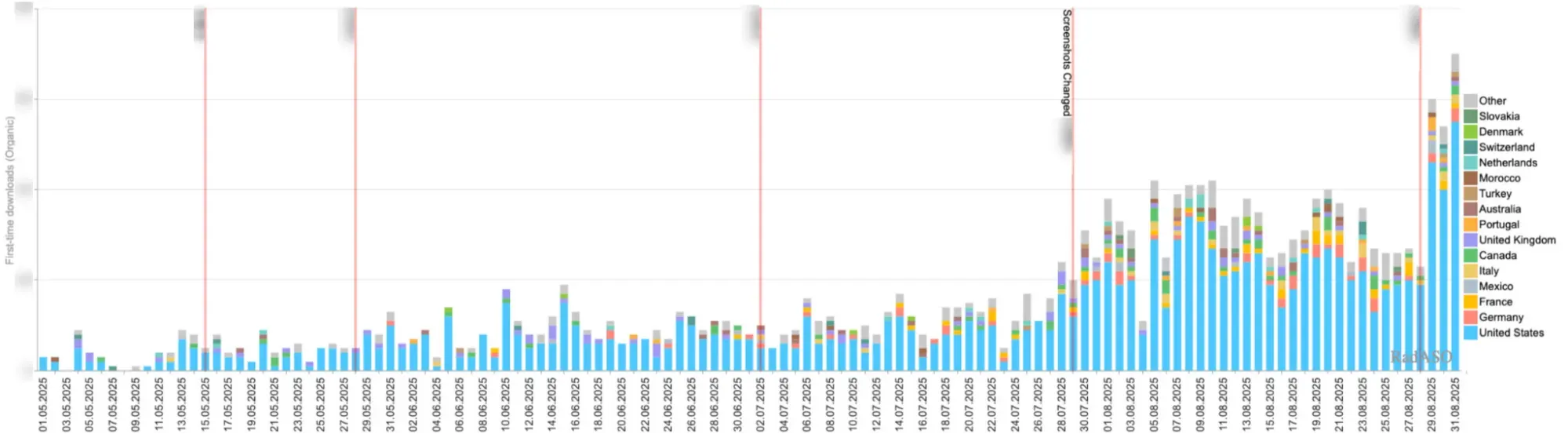
Organic Traffic Growth
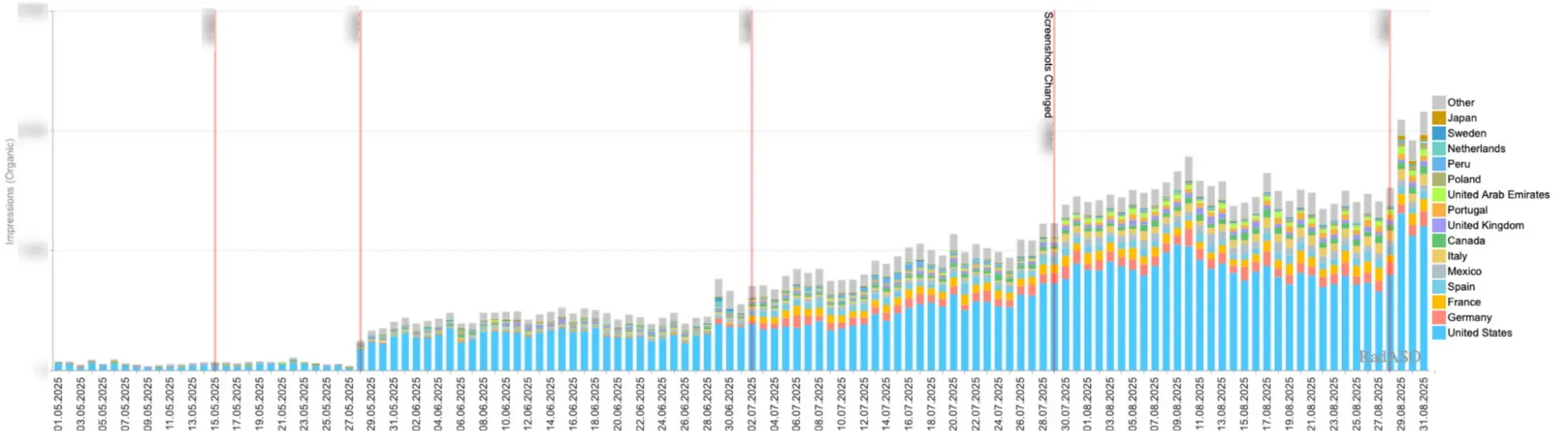
Improved visibility directly influenced organic impressions and installs.
We monitored:
-
Organic impression dynamics in target countries
- Install dynamics in target countries
App Page Conversion Growth
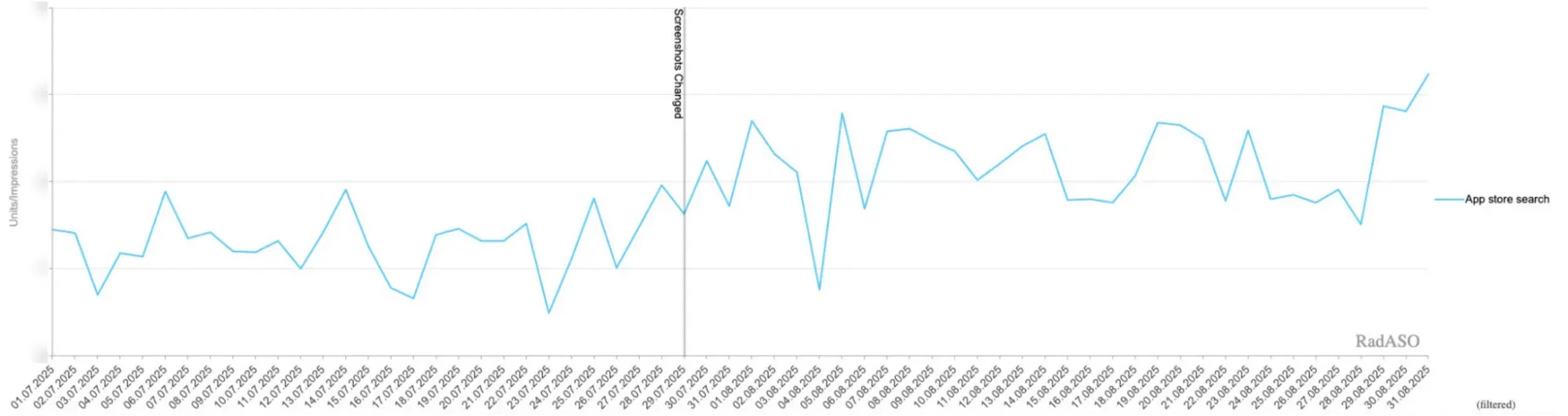
The updated screenshot set had a noticeable impact on user behavior.
Conversion from App Store Search one month before and after the screenshot update:
|
July 2025 |
1.72% |
|
August 2025 |
2.82% |
The increase amounted to +1.10 percentage points.
Overall Quarterly Result
The combination of optimized metadata, expanded localizations, and updated graphics delivered stable growth.
Organic impressions and first downloads growth during the quarter:
|
United States |
1215% |
634% |
|
Eastern Europe |
2081% |
300% |
|
Turkey |
1307% |
100% |
|
Ukraine |
230% |
500% |
|
China / Singapore |
569% |
300% |
|
Japan |
900% |
100% |
|
Total |
1169% |
631% |
Feedback on Cooperation
The success of this campaign was deeply rooted in the strong partnership between the agency and the client. For Business Owner Oleksandra Dovhopola, the decision to collaborate was straightforward given the agency's established expertise, noting that choosing a partner "did not require much hesitation."
However, optimizing an app in a highly specialized niche is rarely without friction. Oleksandra admitted that the biggest hurdle was "accepting the 'rules of the game' of the stores," humorously adding that at times, it seemed that working with the Netpeak team "was even harder than working with us."
Ultimately, she credited the team's professionalism for overcoming these hurdles, resulting in a long-term impact where her team gained "a deeper understanding of the tool: how to work with it further and how to scale the result systematically."
From the agency's perspective, Khrystyna Bereziak, ASO Specialist at RadASO, attributed the massive 631% growth to a "systematic approach, analytical work, and regular iterations." She emphasized that the client's "speed in decision-making, willingness to test hypotheses, and focus on real data" were the true catalysts that allowed the team to build a strategy entirely on facts, ultimately leading to the steady growth in downloads and active users.

 0
0
 0
0
 0
0
 0
0
Related Articles
Business Apps in the US: iOS vs. Android, September 2026
We searched for US App Store and Google Play data to see what business apps professionals, shoppers, and investors actually installed in September.
Pet Food Product Patent: How to Protect Your Innovation
Patenting pet products requires careful consideration and proper application filing. With the 8 steps below, you will be able to submit your patent application and protect your invention.
What Happens When Amazon Suppresses Your Listing? The New 2026 Rules
Under the new 2026 rules, Amazon warns you first and gives you a grace period to fix the issue.