
Online reputation management is the process of making sure that when people search for your business, they find out that you’re credible and trustworthy. Not perfect, nobody is.
You need to guard your online reputation as hard as a Regency-era mamá does with her daughter entering the marriage market — pay attention to every rumor, raised eyebrows, and especially reviews. And be kind and witty enough to transform the unpleasant gossip into "They handled that well, indeed."
Google is like the mightiest gossiper at this reputation party. It sees everything and publishes it on page one. Therefore, you need to find a way to provide Google with the information you want to show.
For businesses, the benefit of a good reputation is not an eligible bachelor at the end of a season, but better conversion rates, more inbound leads, and fewer deals lost to "We Googled you, and you’re a mess."
What Is Online Reputation Management All About
Online reputation management (ORM) is shaping what people see — and think — about your business when they search for you online. It ensures that when people Google you, they see plenty of positive reviews, 4-star-plus ratings, and no awkward silence under complaints.
When people search for services online, reviews are the only social proof they have. They can’t walk into your business yet, can’t judge your skills firsthand, and don’t have a friend vouching for you — so they rely entirely on what others wrote. You don't want to mess that up:
-
95% of consumers read online reviews before choosing a business, and 93% say online reviews influence their decision.
-
82% of consumers trust online ratings & reviews as much as (or even more than) personal recommendations by friends and family.
Online competition is fierce, so if you don't seem trustworthy, potential customers will click the following link.
We at Netpeak US have worked with a wide range of companies and know how a good reputation improves business results in practice. You can delegate your business reputation management to us and sleep calmly at night!
The Parts of the Online Reputation Marketing
ORM is a set of small, ongoing efforts that work together:
-
Online reviews. You monitor them, respond to them, and gently encourage happy customers to leave more — on Google, Yelp, Trustpilot, and industry sites.
-
Search results (page one of Google). You want your best angles — positive articles, profiles, and pages — showing up first. Most people are too busy to click further.
-
Brand mentions & comments. Social media, forums, blogs, news sites — people are talking whether you’re there or not. ORM makes sure you listen in and jump in only when it actually matters.
Reputation Glow-Ups to Learn From
Your online reputation can’t be flawless — everyone drops the ball sometimes. People will either speak well of you or say nothing at all, only if you’re dead.
Let's learn how brand reputation management works across different industries and what lessons we can take from them.
SEE Eyewear — Google Business Profile Review Management
A patient left a Google review about SEE Eyewear after having an incorrect prescription and waiting weeks for their glasses. Frustration followed, as it usually does.
The clinic apologized and invited the patient to speak privately. The reply was calm and focused on finding a solution — not on winning an argument.
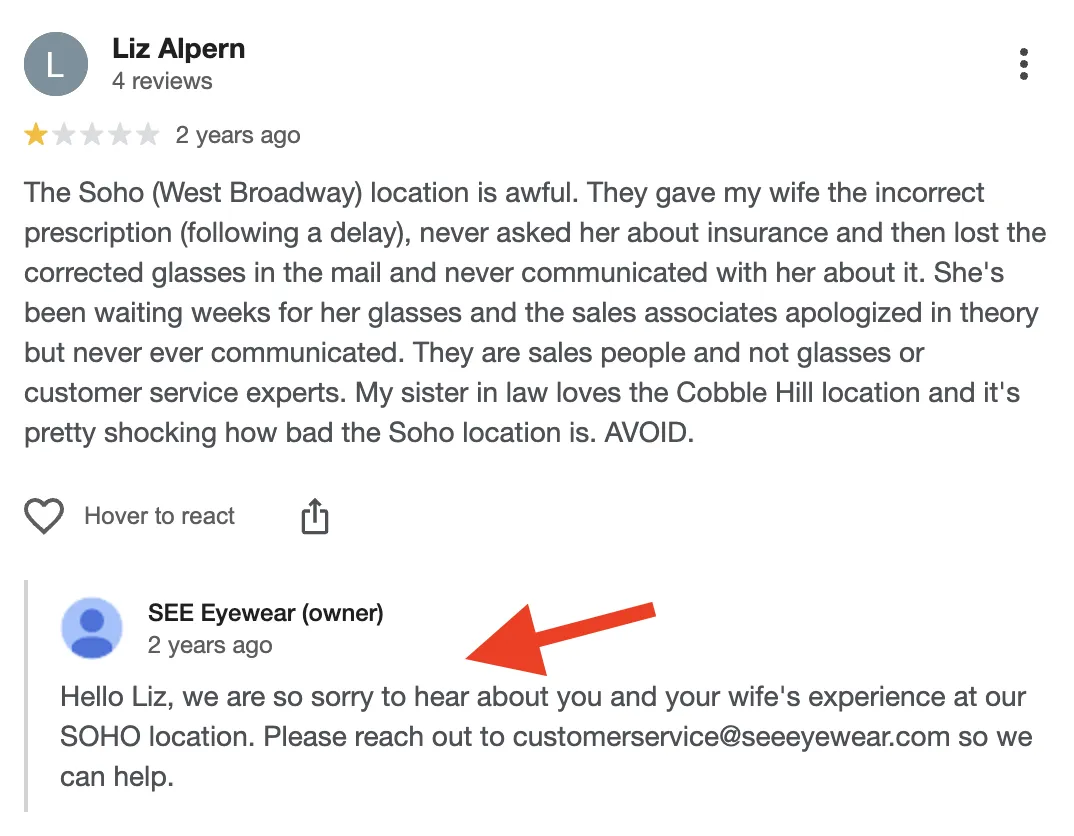
ORM lesson: You don’t need to prove who’s right in public. Apologies, and invite the review authors to propose solutions offline. It shows accountability — and builds trust with everyone else reading the review.
BeGood Clothing — First Page Google Reputation Management
When people search for a brand, they rarely go past the first page of Google. That page becomes your online presence.
Apparel brand BeGood is a strong example of managing the first page right: it is filled with high ratings and complimentary reviews.
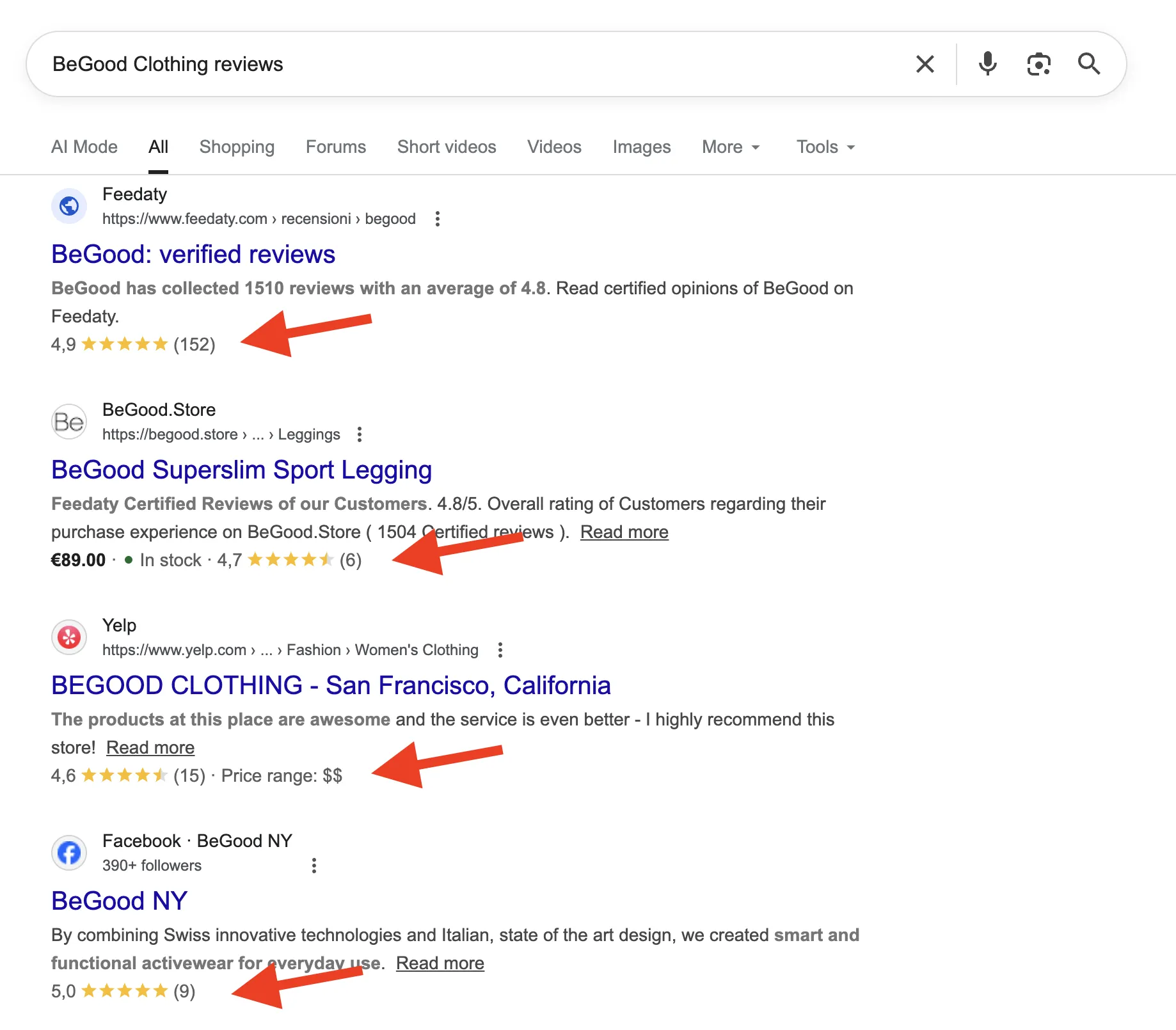
ORM lesson: Reputation isn’t about one perfect review site. Positive reviews and authoritative profiles should show up everywhere people look.
Glossier — Content-Driven Reputation Management
E-commerce company Glossier didn’t shout about how great it is — it let others do that for it. The brand invested in user-generated content, product reviews, and expert opinions that feel unpolished in a good way.
Alongside media mentions, users can see safety ratings from sites like APIVoid and ScamAdviser. They add an extra layer of reassurance that the brand is legitimate.
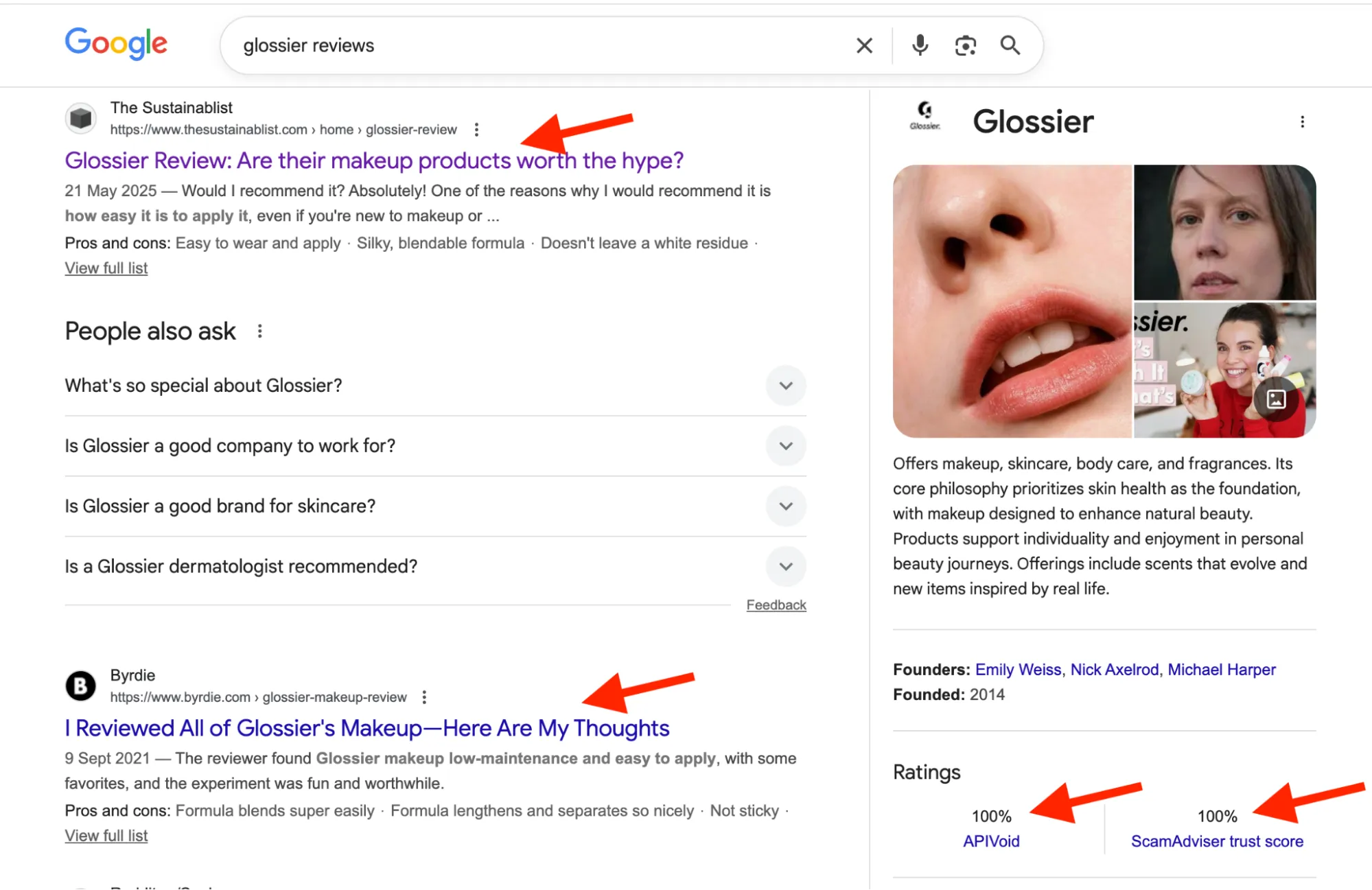
ORM lesson: Make real voices, expert opinions, and third-party validation work together.
BarkBox — Social Media Management
BarkBox shared an Instagram post about their Advent calendar. A customer commented that they bought one at Costco and had items missing.
The company responded in a genuinely human way and showed the customer clear support options.
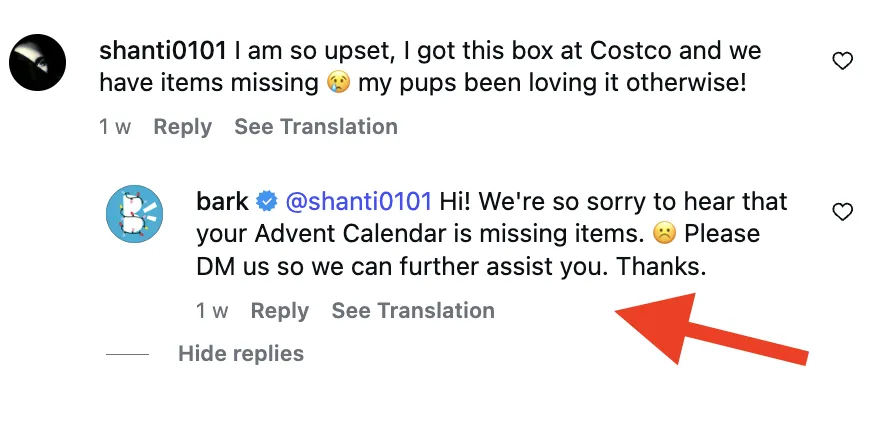
ORM lesson: A calm public response reassures the person asking and others watching.
We are at Netpeak US, helping companies with their ORM. One of our favourite online reputation management examples is DOM.RIA’s case study, when we helped to remove negativity from the Top 10 search results in four months. Call us if you need some help, too!
Best Practices: Corporate Reputation Management, Scaled
Online reputation management looks different depending on the size of your business. A startup doesn’t need the same strategy as a global brand — but everyone needs a plan.
Reputation Management for Small Businesses
For small guys, reputation lives in Google reviews and word-of-mouth.
Focus on:
-
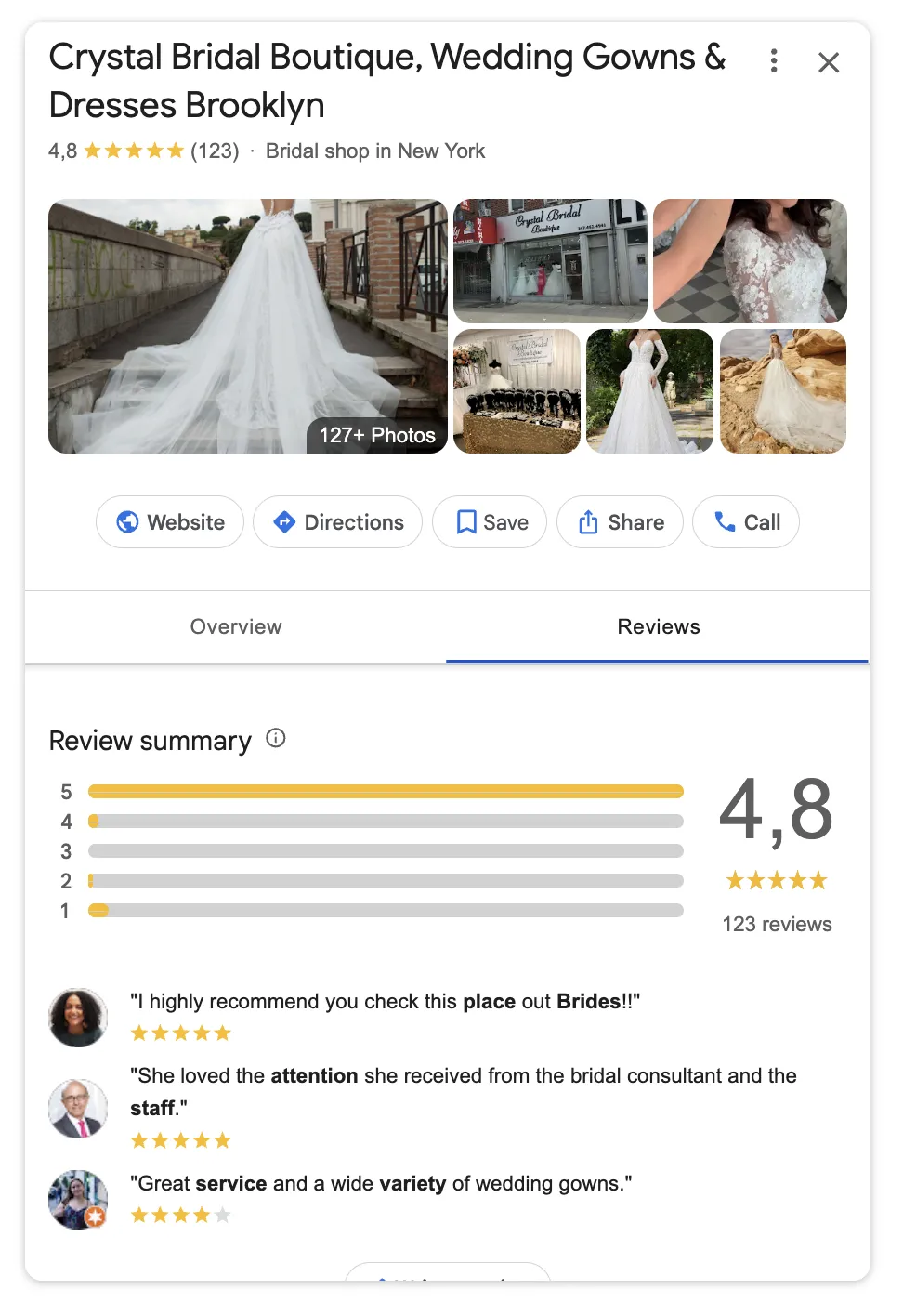
Google Business Profile. You need to claim it, make it worthwhile, and make it attractive. That's your online business card.
-
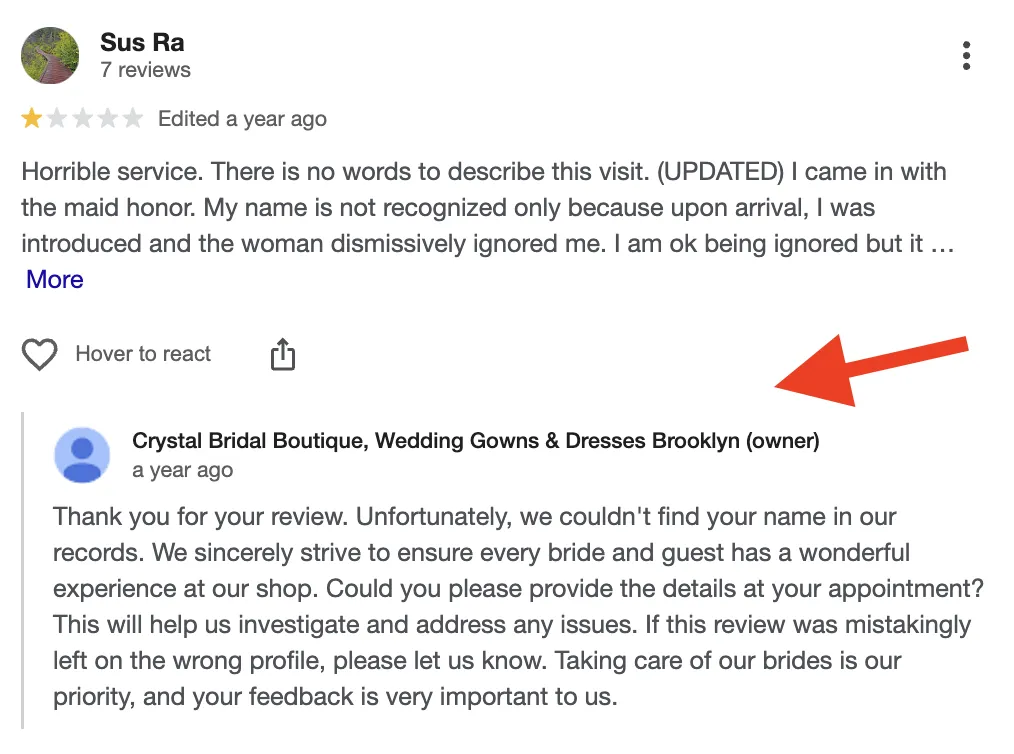
Replying fast and humanly. A calm and polite response to a negative review can be more important than the review itself. Arguing with the customer or ignoring the review will cause far more damage than the review ever could.
-
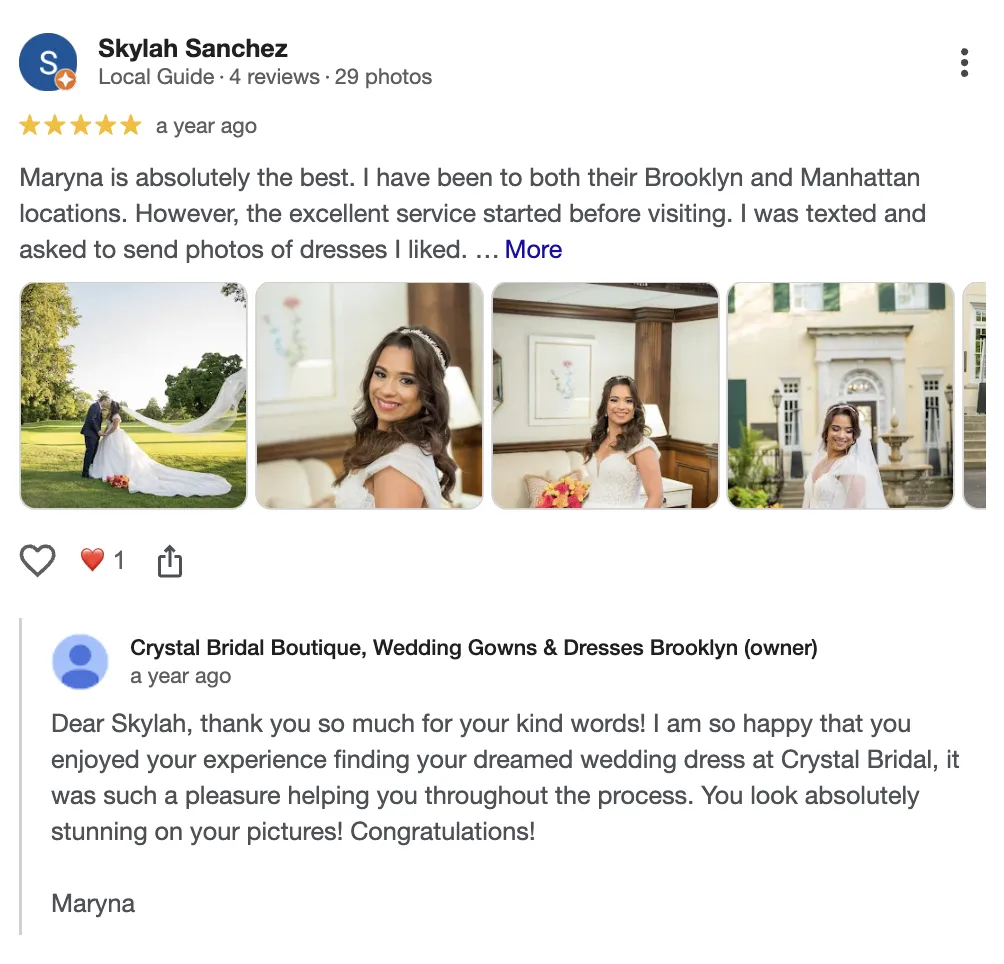
Asking happy customers for reviews. Do this after an appointment, a job well done, and a successful delivery. Fresh reviews naturally push older negative ones further down the list.
Reputation Management for Mid-Size Businesses
As your business grows, reputation stops being something you check occasionally and becomes something that needs structure.
Focus on:
-
Centralizing review monitoring. You need one "Mission Control" dashboard that aggregates reviews from Google, Yelp, G2, Trustpilot, and social media.
If you can't afford paid software yet, start by setting up Google Alerts for your brand name. Paid tools: Podium, Birdeye, Brand24.
-
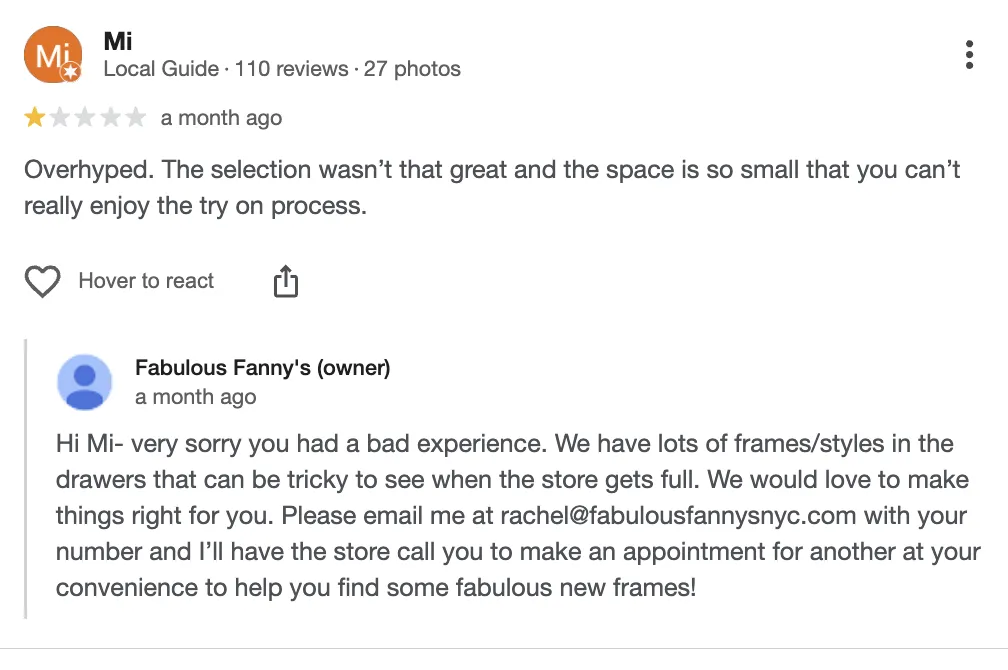
Standardize responses. Create a consistent brand voice while keeping replies human. Use the "3-A Method" for negative reviews:
-
Acknowledge the issue ("Thank you for bringing this to our attention").
-
Apologize (if at fault) or Empathize ("We are sorry to hear about your experience").
-
Act ("Let’s talk in private so we can fix this immediately").
-
Claim your profiles on high-authority business sites. Even if you don't use them often, their high "domain authority" helps them rank above negative content.
-
Brand-gating your products. It’s beneficial if you sell on Amazon. Brand gating keeps random sellers from listing your products, protecting customers from fakes and low-quality copies.
Reputation Management for Big Corporations
When you operate at a global scale, you are not just fighting bad reviews; you are fighting narratives, geopolitical shifts, and changing social values.
Focus on:
-
Creating the "reputation bank". Big corporations must view reputation as a bank account. You need to make regular "deposits" of goodwill (positive PR, community engagement, transparent leadership) so that when a crisis hits, you don't go bankrupt.
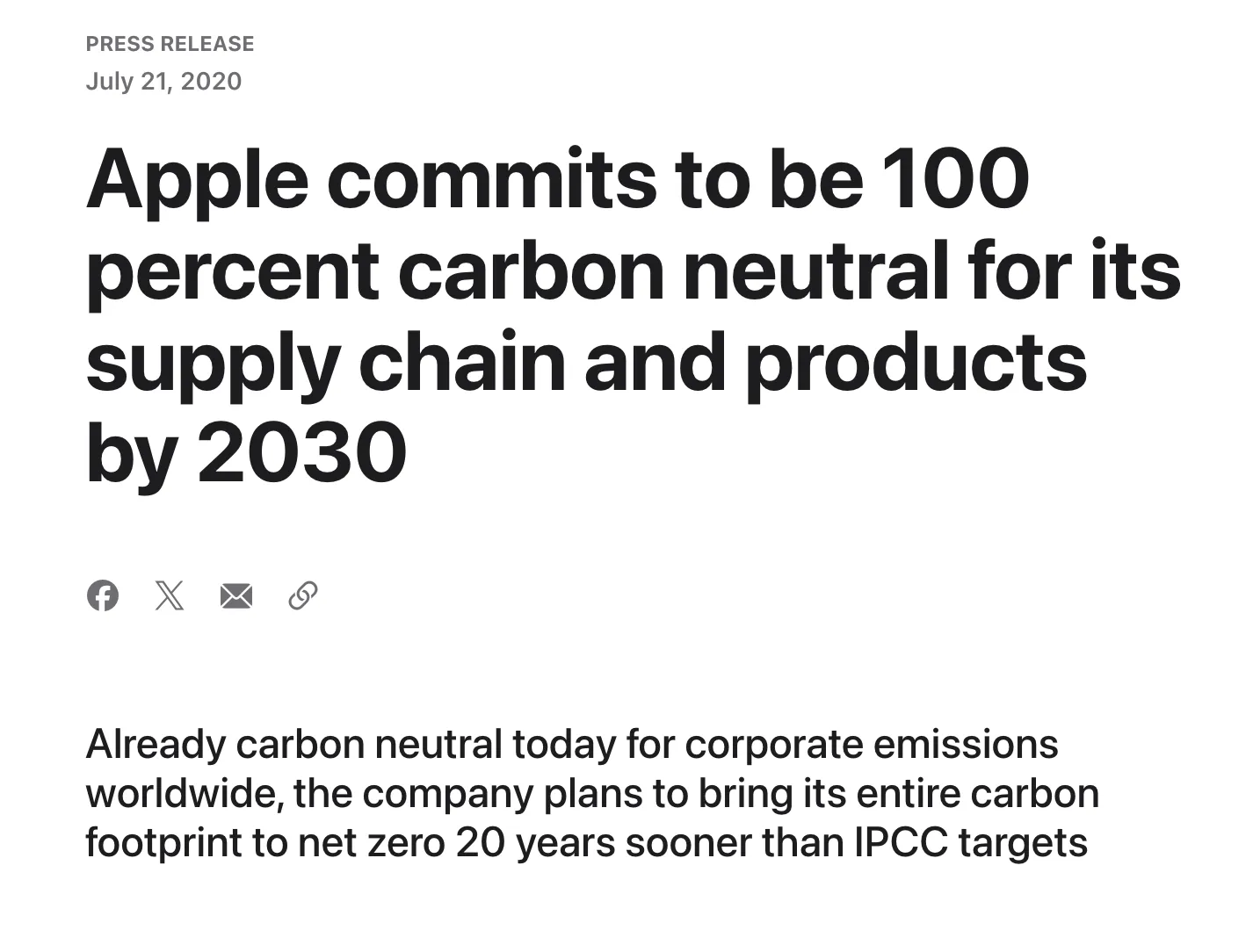
If you have a strong surplus (like Apple), the market forgives you faster, and your crisis management works better.
-
Avoiding the internal leak. In the age of Slack, Teams, and blind corporate forums, your internal culture is your external reputation. Employees can leak toxic culture memos or screenshots that go viral instantly.
Use tools like Glassdoor to monitor internal sentiment just as aggressively as you monitor Twitter.
-
Creating AI & deepfake defense. We are entering an era in which AI can generate false narratives (deepfake CEO audio, fake viral images). You need a protocol for protecting your reputation against it.
Online Reputation Management Tools: Your All-Seeing Eye
Your online reputation needs better monitoring. These tools won’t fix a bad review for you, but they will tell you where it appeared, who wrote it, and whether it’s about to become a problem.
|
Tool |
What It Does |
How You Can Use It |
|
Free monitoring: sends you alerts when your brand name (or keywords) appear anywhere on the web. |
Best for beginners and solo founders who need a simple “ping” when someone talks about them online. |
|
|
Pulls reviews from every local platform into one dashboard and helps you ask customers for new reviews. |
Best for business that relies on Google Maps, “near me” searches, and local directories. |
|
|
Sees social media (Google Alerts doesn’t), has sentiment analysis and visual dashboards. |
Best for small or mid-size businesses that need real-time alerts and reputation control. |
|
|
Helps view all location reviews in one place and assign them to team members to respond. |
Best for brands with many locations or those active on many review platforms. |
Online Reputation Management Mistakes to Avoid
Here are non-obvious ORM mistakes businesses make — even when they think they’re doing everything right.
-
Treating ORM as “marketing’s job” only. Most people don’t complain about “branding” — they complain about pricing and customer experience. ORM can’t out-reply bad customer service. Fix: Route reviews to the teams that caused them and use feedback to improve your processes.
-
Publicly defending yourself. Writing long replies to justify policies or to blame customers. You may be right, but public arguments erode the trust of silent readers. Fix: Acknowledge, then apologize, and move offline. Save explanations for private conversations.
-
Ignoring neutral reviews. 3-star reviews are trust gold. They feel honest — and they often contain the most useful feedback. Fix: Reply to neutral reviews and thank the customers.
-
Assuming “industry norms” protect you. When everyone in your industry has bad reviews, it’s not a reason to ignore reputation management. Customers compare you to the best alternative, not the industry average. Fix: Work on your reputation, even when no one else does.
Final Thoughts
Whether you’re a small local business, a growing company, or a global brand, the rules are the same: people will Google you, read what they find, and decide — often in seconds — whether they trust you.
Online reputation management isn’t about chasing perfection. It’s about showing your business in the best light and making sure it’s judged on who you are today — not on a bad moment or an old review from a few years ago.
You just need to listen, respond, and make sure your best story is the easiest one to find.
FAQ
What are online reputation strategies?
Online reputation strategies are the steps a business takes to shape how people see it online. This includes managing reviews, replying to feedback, keeping an eye on brand mentions, improving what shows up in search results, and being open and transparent with customers.
How do you do online reputation management for a business?
Online Reputation Management (ORM) starts with keeping an eye on what people say about your business on Google, review sites, social media, and in search results. From there, it means replying to reviews, fixing any recurring issues, encouraging happy customers to share their feedback, and creating helpful content that shows off your real strengths.
What should your business do to improve its online reputation before a crisis?
The best time to work on your reputation is before something goes wrong. Businesses should claim and update their profiles, respond to existing reviews, build a steady flow of fresh feedback, and regularly monitor brand mentions.
How long does it take to see results from online reputation management?
Some improvements, such as greater customer trust or calmer review conversations, can appear within weeks. Changes in search results and overall perception usually take a few months of consistent effort. ORM isn’t a quick fix — but steady work compounds, making future issues easier to manage and less damaging over time.

 0
0
 0
0
 0
0
 0
0
Related Articles
13 Leading Healthcare Marketing Trends for 2026
Discover the 13 hottest healthcare marketing trends in 2026 that will help your brand stay ahead, engage patients, and drive results. Stay smart, stay relevant!
Local SEO for Home Service Companies: 8 Fool-Proof Ways to Reach Your Customers
When something breaks, people go straight to Google to find a plumber, an electrician, or a roofer right away. And local home services SEO is what makes sure you’re the one they find (and choose!) instead of your competitor.
Local SEO for Construction Companies Explained
If clients can’t find you online, they hire someone else. Learn how local SEO puts your construction business in front of ready buyers.