
Amazon Review Sharing Across Variations Update: How Your Pet Brand Just Lost Half Its Reviews
For years, bundling ASINs to pool reviews was the open secret of Amazon's pet category. That era is officially over.
Since February 12, 2026, most product variations on the marketplace wouldn’t share common ratings and reviews. If you thought you were safe linking ASINs and sharing reviews between them — think again.
Amazon has quietly rewritten the rules, and the review-pooling strategy that once gave your listings a competitive edge? It could now be the very thing dragging them down.
For the pet industry — where your products often come in endless sizes, flavors, and pack options — this is a pretty big shake-up. A combined review effect while taking ASINs with many reviews and linking them to new products, making most of the company’s ASINs appear trustworthy, thanks to review sharing. What to expect now?
In this article, I explain everything you need to know about the new Amazon update, how the absence of reviews shared across variations impacts your business, and how to prevent your pet brand from losing revenue.
P.S. If you act fast and smart, your company can even benefit from it.
Let’s go!
- Amazon Review Sharing Policy: What Is Actually Changing, Specifically
- How Does It Affect Your Pet Brand?
- How Pet Brands on Amazon Should Act?
- Final Thoughts
- FAQ
Amazon Review Sharing Policy: What Is Actually Changing, Specifically
How It Worked Before
Amazon didn’t introduce this update out of the blue. The variation review system had begun to bend the rules a bit too much.
Some sellers grouped products with significant differences into the same variation family and shared thousands of reviews across them. This made the listing look extremely trustworthy, even if the specific variant a customer was buying had very little feedback of its own.
Imagine a pet food brand selling puppy, adult, and senior Salmon Recipe food. All those life-stage formulas shared the same reviews. The result:
-
A new life-stage formula could launch with thousands of inherited reviews from its sibling ASINs.
-
Review momentum came from the parent ASIN’s history, not how that product-specific variation performed.
-
Star ratings reflected overall product sentiment, rather than feedback about that exact version.
This created two issues.
-
It confused shoppers. For example, a product might show 4,000 reviews and a 4.6 rating, but many of those reviews could refer to a different formula or version.
-
It skewed the competition. Listings could build massive review counts that didn’t truly reflect each variant’s performance, making it harder for other products — especially newer ones — to compete fairly.
A customer who wanted to make sure the Salmon Recipe was good for his puppy had to scroll through reviews from owners of adult or senior dogs. Annoying and confidence-crushing!
Let's be honest — as Amazon sellers, we absolutely loved it. New product launch? Link it to your hero ASIN, grab a margarita, find the nearest beach chair, and watch the reviews roll in like it's magic. No review strategy, begging customers for feedback, or sleepless nights staring at a zero-review listing. It was instant social proof, served on a silver platter by Amazon.
Amazon’s update is designed to fix that. They want to make reviews more trustworthy for shoppers and ensure that each product variation reflects feedback from customers who have actually purchased that product.
What Changes After February 12
Reviews will only be shared between variations that differ only in minor, non-functional ways. If variations differ in ways that affect the product itself — think different formulas, product types, or performance expectations — their review pools will be split.
Here is how to differentiate one from another:
|
Non-Functional Variation Family (Reviews Shared) |
Functional Variation Family (Reviews Separated) |
|
|
"Amazon is finally addressing something that’s been overdue for a while. Reviews should accurately reflect the product a customer actually bought. For brands that have invested in genuine product quality across their full range, this is validation. For brands that were gaming review pools, the clock just ran out."
Are you worried about the results of your pet brand after this Amazon update? Contact us today, and let's take a look at your Amazon account together!
How Does It Affect Your Pet Brand?
The pet industry is feeling this change more than most Amazon categories. Pet purchases are high-consideration and highly repeatable, so shoppers rely heavily on social proof.
On top of that, pet products come with a lot of built-in variation. Many pet food and supplement brands run 10–50+ child ASINs under a single parent listing. When review pools split, some of them without a shared review pool could lose most of their social proof.
Let’s predict the risk level of your brand by its product archetype:
|
Expected Impact |
Risk Level |
|
|
Premium multi-protein pet food (e.g., multiple recipe flavors under one ASIN) |
A salmon recipe that once rode on 4,000 family reviews could suddenly show just 200 of its own if it wasn’t the bestseller. Conversion impact: potentially sharp. |
🔴 Critical |
|
Life stage product lines (puppy/adult/senior) |
Puppy, adult, and senior formulas now stand on their own. Puppy variants — usually lower-volume — are the most exposed. Smaller sample sizes also mean star ratings may swing more easily. |
🟠 High |
|
Functional supplements & health products |
Weight management, hip & joint, sensitive stomach — each becomes its own review island. These niche variants often lose the social-proof anchor they previously borrowed from the main product. |
🟠 High |
|
Pet accessories (collars, leashes, beds) |
Toys, collars, and beds can still share reviews across sizes or colors. But material changes (nylon vs. leather) will likely split reviews. Overall impact: lighter than food or supplements. |
🟠 Medium |
|
Pack size/subscription variety packs |
Bundles like 12-pack vs. 24-pack continue to share reviews, so quantity-based strategies remain intact. |
🟢 Low |
|
Single-ASIN or minimal variation brands |
Categories with fewer variations may even gain an advantage, as competitors with complex catalogs see their review pools split across multiple listings. |
🟢 Low |
Let’s look at this even closer. For example, Blue Buffalo is one of the top 2 brands by market share in Amazon dog food. Their “Life Protection Formula” line sells across:
-
multiple proteins (chicken, lamb, salmon, duck, turkey, fish)
-
life stages (puppy, adult, senior)
-
breed sizes
All were historically grouped into a single review count. After February 12, some modifications build reviews from scratch.
The Salmon variant went from thousands of reviews to 18 overnight, and we all know it hurt like… let’s say it hurt a lot.
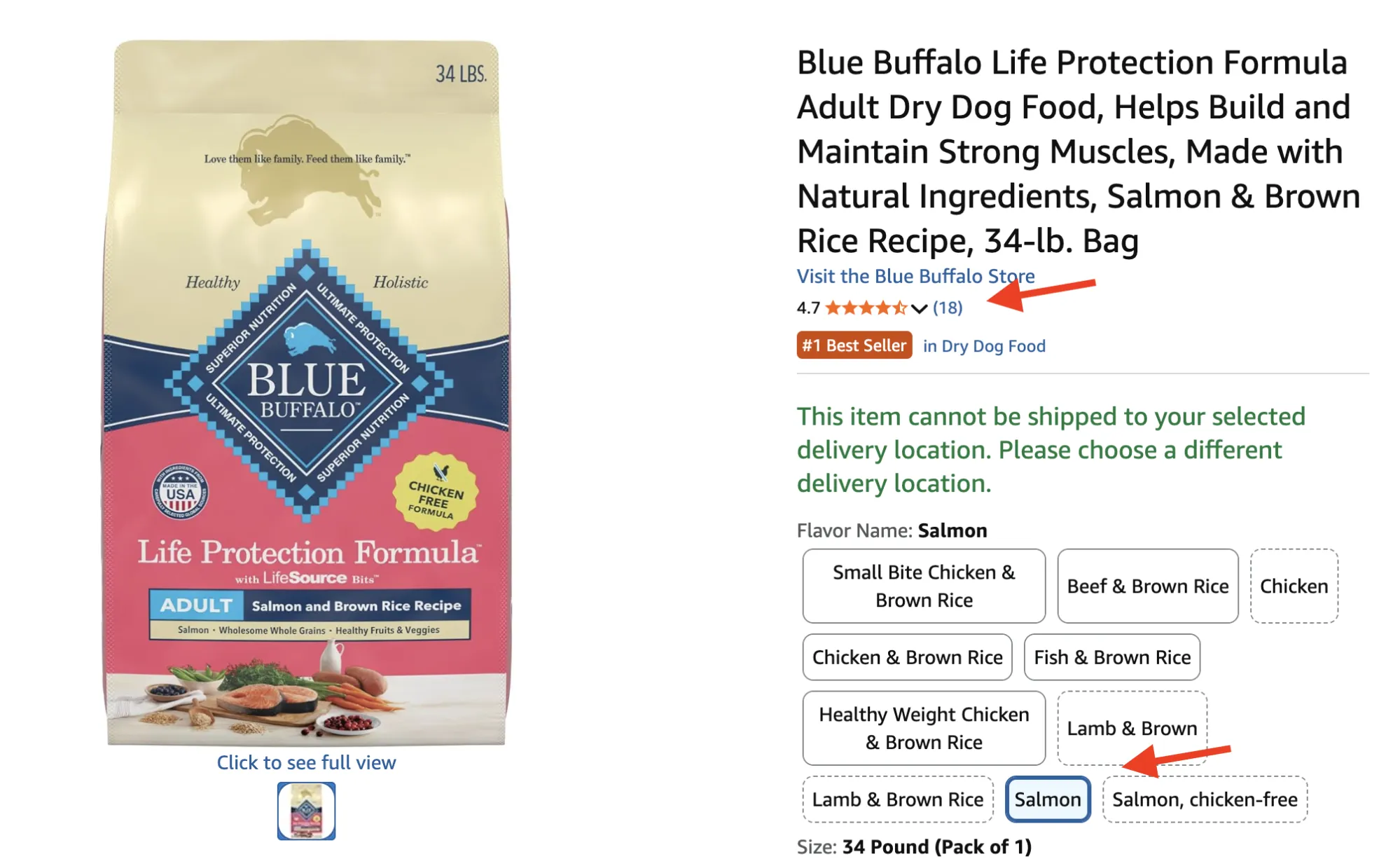
Which other Blue Buffalo ASINs have a high risk of being separated from the review pool:
|
Variation Themes |
Policy Outcome |
Risk Level |
|
Chicken vs. Salmon vs. Lamb vs. Duck vs. Turkey (Adult) |
SEPARATED — different proteins = functional difference |
🔴 Critical |
|
Puppy vs. Adult vs. Senior (7+) |
SEPARATED — different life stage = different nutritional function |
🔴 Critical |
|
Small Breed vs. Large Breed (same recipe) |
LIKELY SEPARATED — functionally different formula |
🟠 High |
|
5lb vs. 15lb vs. 30lb bag (same recipe) |
STAYS POOLED — pure pack size variation |
🟢 Safe |
"A dog with a chicken allergy choosing the salmon formula needs to trust that those reviews came from salmon buyers, not chicken buyers.
Amazon is actually making the marketplace safer for pet owners, even if it's disruptive for brands in the short term."
How Pet Brands on Amazon Should Act?
As a small brand on Amazon, you may find yourself in one of two situations:
-
You worked hard on reviews for each ASIN, and now you have an opportunity to compete with major brands you never thought you could beat.
-
Or you relied on the common review pool, and now your reviews are gone faster than the pandemic “puppy boom".
So, what should you do?
Amazon Update: A Rare Opportunity for Small Players
“The brands that will benefit are ones with strong products across all variants, not just one hero ASIN. This update favors brands that create consistent quality throughout their lineup — which is ultimately good for the category.”
Imagine a scenario: Company A sells Chicken, Salmon, and Duck adult dog food as variations under a single parent ASIN, with 6,200 combined reviews and a 4.6-star rating.
After the update, their Duck food has 120 reviews.
|
Variant |
Current Reviews (Pooled) |
Post-Policy Reviews (Separated) |
|
Chicken (top seller) |
6,200 |
~4,100 |
|
Salmon (mid seller) |
6,200 |
~1,600 |
|
Duck (low seller, niche) |
6,200 |
~120 |
Small Company B never had a chance to compete against the combined reviews of Company A, but after updating their Duck, the top seller with 2,200 reviews still has them all.
|
Variant |
Current Reviews (Pooled) |
Post-Policy Reviews |
|
Duck (top seller) |
2,200 |
2,200 |
So, how can Company B use this situation to its advantage? I guess you see me coming — you need to redirect as much of the ad budget on Amazon as you can on listings, which wins the comparison.
This is exactly why staying on top of Amazon's policy changes matters — and why speed wins. You don't need to be an Amazon expert to see what happens next. Picture this: a pet parent is scrolling through their search results.
-
On one side, a well-known brand, not even knowing it’s been 2 weeks, is sitting comfortably with 120 reviews.
-
On the other hand, your brand — a bit less well-known — has 2,200 verified reviews.
Who do you think gets the click? This is almost a once-in-a-generation window to steal market share from brands that got fat and lazy like my cat. Don't waste it.
(I know, I should be stricter with him, but how can you not give him that one little hot crevette?)
Stress-Management after Amazon Update
Now let's flip the script. Imagine you're the CMO of Blue Buffalo, reading this article over your morning coffee — and nearly choking on it when you discover some of your hero ASINs have gone from 4,000 reviews to 120. Overnight.
I’m a marketplace professional at a pet brand marketing agency, not a magician, so I won’t hide that there is no silver bullet here, but here’s what you can do:
-
Audit your variation catalog TODAY — not next week! — and identify your review-thin variants. Before making any changes, you need to understand the scale of the review problem.
-
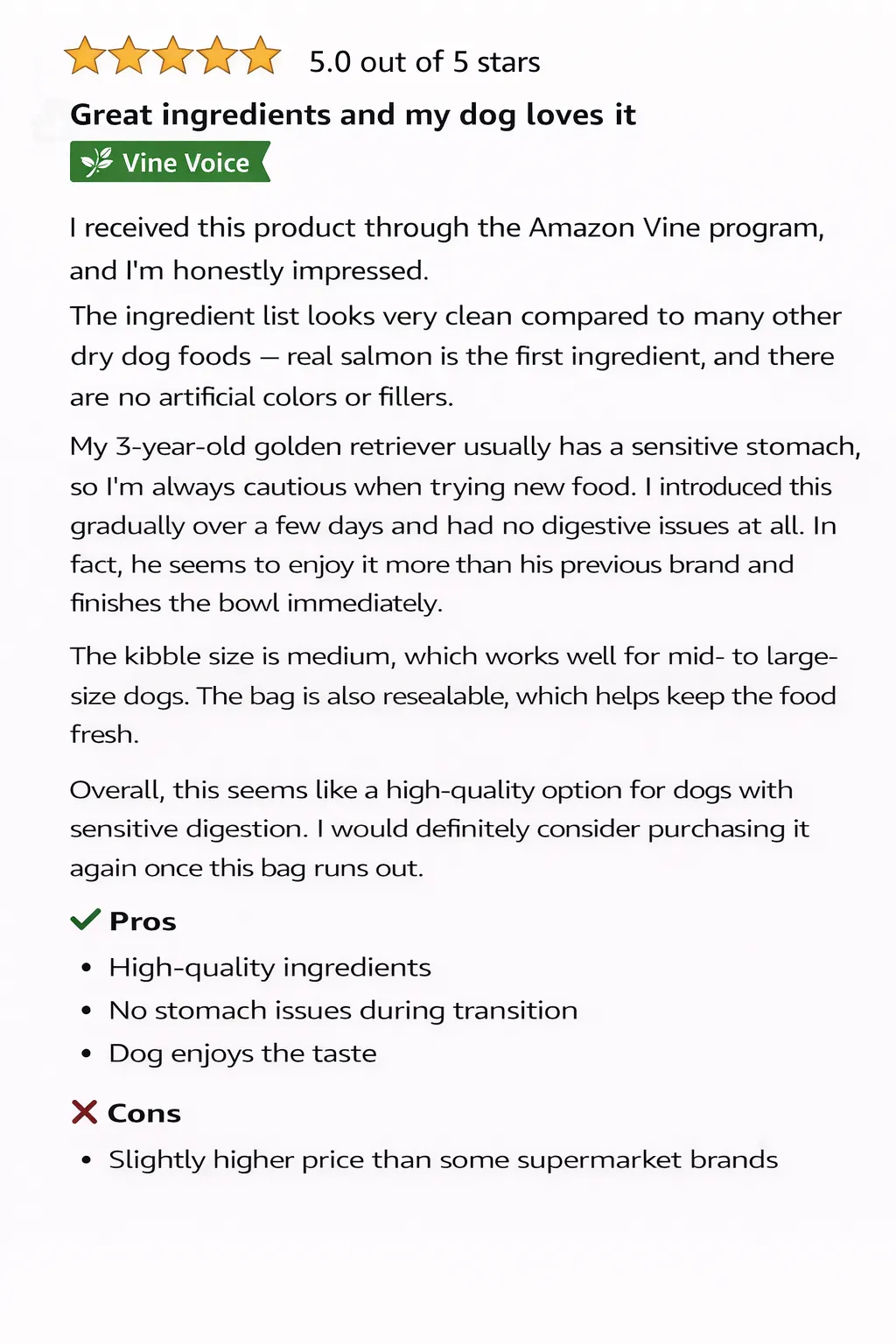
Activate Amazon Vine immediately to get expert reviews and gain some trust fast.
- Vine Voices, experienced reviewers selected by Amazon, would receive your product for free and publish honest, unbiased reviews.
- Then their reviews will appear on your product pages with a “Vine Voice” badge, which gives you both new reviews + credibility.
-
Contact your community. Dig into your CRM or Amazon Brand Analytics to find customers who actually bought those ASINs, and ask them to leave a review on Amazon. Many people who love your product would be happy to help their favorite brand in need.
Even though this situation makes your heart rate skyrocket, you can turn it into a reason to reconnect warmly with your customers. Imagine the story they'll tell other pet parents:
"You know, the CMO of [company name] personally called me! She said they were having a hard time on Amazon and asked me to share my honest opinion of their dog food. You know, the one that finally stopped my Golden's itchy skin. Of course I agreed! I'm loyal."
It’s a kind of brand story money can't buy. People’ll talk about it at dog parks, in breed-specific Facebook groups, and in the comments sections of competitors' listings. That’s why you need to pick up the phone, swallow your pride, and turn a crisis into hundreds of conversations that start with “let me tell you about my company."
-
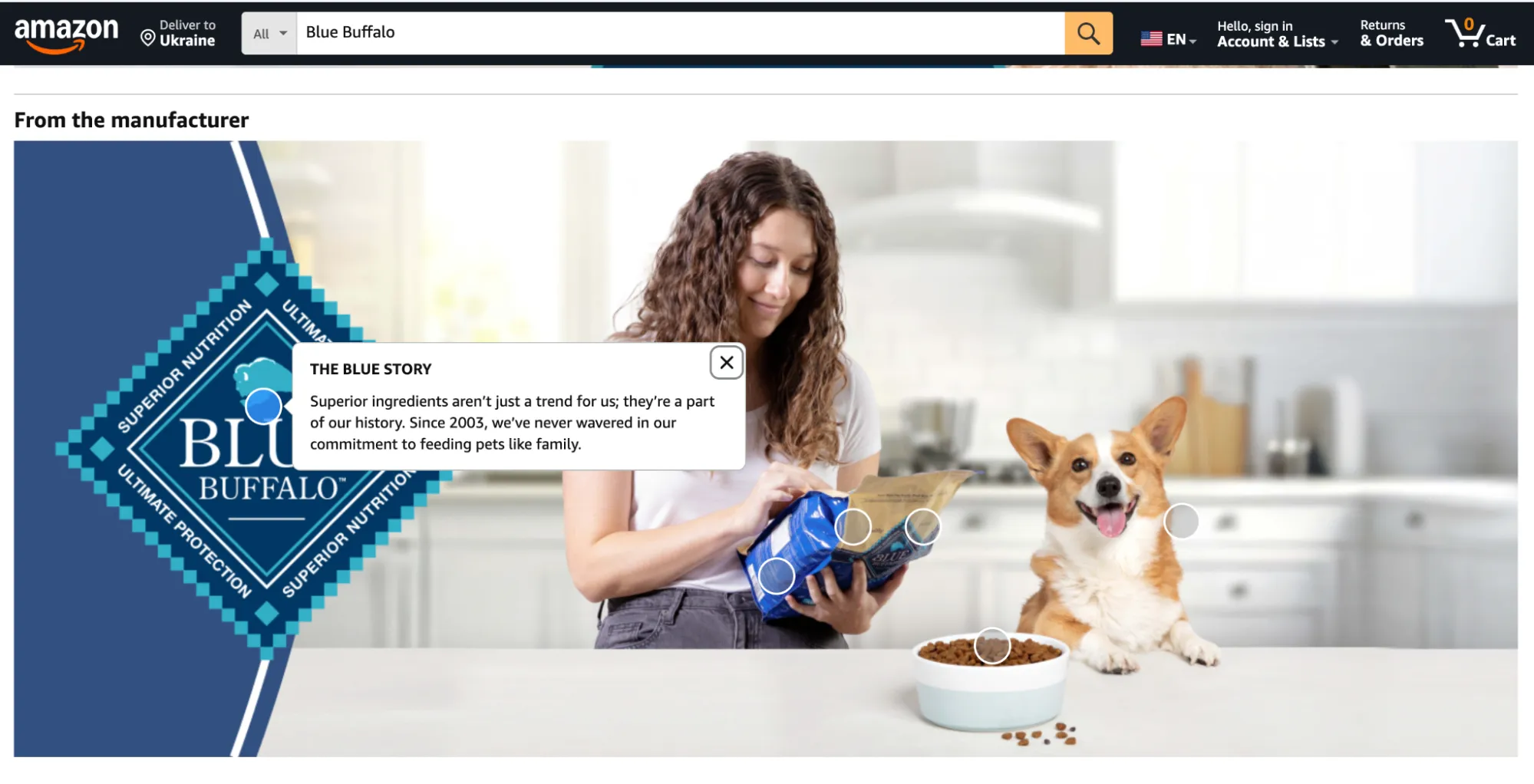
Invest in A++ content. What you may try to do is to invest in A++ mechanics to convince your customers before they scroll long enough to see your reviews catastrophe.
-
Use other marketing channels. Amazon is not where people make product decisions. Rather, buyers find confirmation of decisions they have already made there.
Customers saw a banner ad, scrolled past a social media post, visited the website, or were part of a community where everyone buys this product. Then, they come to Amazon and make a purchase. Amazon's roles are operational excellence and quick delivery.
If you already have strong community trust, people may overlook poor reviews.
Use a multichannel marketing strategy to create the effect that you’re everything, and you’re trustworthy. If you want some help with it, call us at Netpeak US. We know how to do it right!
Read our PetLoc8 case study to learn how it works in practice.
Final Thoughts
Amazon is tightening its social proof rules to keep customers comfortable. What used to be one big, happy review family is becoming a set of individual report cards for each product variation.
The takeaway is simple: the fundamentals haven’t changed. Brands that actively manage variations, generate reviews across key ASINs, and strengthen their listings with strong visuals and A++ content will adapt and prosper.
If you haven't invested enough in this yet, now is the time to do so.
FAQ
What exactly changed in Amazon’s review-sharing policy?
Amazon now limits when reviews can be shared across product variations. Reviews will only transfer between variations with minor, non-functional differences, such as pack size or color. If variations differ in formula, ingredients, product type, or expected performance, their reviews will be separated.
Why does this update affect pet brands more than other categories?
The pet industry naturally has high variation and complexity. A single product line can include different life stages, functional formulas, and pack sizes, often resulting in 10–50+ child ASINs under one parent listing.
Under the old system, these could share reviews. With the new policy, many of those variations will become review-isolated, which can significantly change star ratings and conversion rates.
Which product variations will still share reviews?
Variations that don’t change how the product works are typically still eligible to share reviews. For example:
-
Pack sizes (12-pack vs. 24-pack)
-
Color variations for accessories
-
Size differences that don’t affect functionality
However, variations that change ingredients, formulas, materials, or product purpose will likely have separate review pools.
What should pet brands do to adapt to the new policy?
Brands should treat review generation as a per-variation strategy rather than a single listing effort. Practical steps include:
-
Prioritize reviews for top-selling and strategic ASINs
-
Optimize listings with A+ Content, comparison charts, and clear benefits
-
Monitor star ratings across variations to identify review gaps early
-
Simplify variation structures where possible
Brands that adjust quickly can protect conversion rates and maintain visibility, while those that rely on shared reviews may see their listings weaken.

 0
0
 0
0
 0
0
 0
0
Related Articles
Sustainability Marketing: 7 Smart Ways to Earn Trust (and Customers)
Learn how to grow your brand efficiently while using eco-friendly marketing practices to build trust and long-term revenue.
Why Your Amazon Pet Ads Are Getting More Expensive Every Quarter Since 2025 (and How Smart Brands Manage It)
What happened to the auction prices? Where is the margin going, and what should be done next quarter?
How to Track Brand Mentions in AI Search? Find Out Whether You Are in the Answer
Being mentioned in an AI search boosts visibility. Discover how to monitor your brand mentions in ChatGPT, Perplexity, or Gemini and follow our approach to higher mention frequency.