
How to Track Brand Mentions in AI Search? Find Out Whether You Are in the Answer
AI chats are at their prime now, and they’re completely changing search behavior. A huge part of users, instead of googling, ask questions and get direct answers from AI tools like ChatGPT, Gemini, or Perplexity.
Around 37% of users now begin searches with AI tools rather than Google, and spend more than twice as long there (13 minutes vs ~6 minutes per session).
All because AI search engines act like advisors: they compare the “best” options and create a shortlist of chosen brands. For some customers, it’s enough to make a decision.
You want to know whether your brand is mentioned in lists like that, and if it's not, why exactly. It works like a Spotify playlist. Users don’t explore the whole catalog — they hit play on what’s recommended. And you want to be in recommendations.
In this article, we’ll show you how to track brand mentions in AI search engines, what influences those mentions, and how to adapt your content so you actually make the cut.
- So… What Counts as a Brand Mention in AI Search?
- Why AI Visibility Is Now a Business Metric
- How to Track Brand Mentions in AI Search Results: Are You Visible or Just Hoping?
- How Often Should You Track Brand Mentions?
- Common Mistakes in AI Brand Mention Tracking
- Final Thoughts
- FAQ
So… What Counts as a Brand Mention in AI Search?
A brand mention in AI search is when an AI tool (like AI-powered search, AI assistants, ChatGPT, Gemini, or Perplexity) includes your brand name in its answer.
It’s simple: User asks → AI responds → your brand is (or isn’t) part of that response.
Mentions can show up in different ways:
-
Positive → “This is one of the best options.”
-
Neutral → just listed among others
-
Comparative → “Brand A is better for X, Brand B for Y.”
-
Missing entirely → you’re not even in the conversation
And the depth of the mention can vary as well. Sometimes it’s just your name. Other times, the AI adds context, such as your pricing, positioning, and reviews.
The more detailed and confident the mention, the stronger your presence.
Brand Mention in AI Search vs Website Ranking
Here is the key shift:
-
Google rankings = brand visibility in a list of links on Google
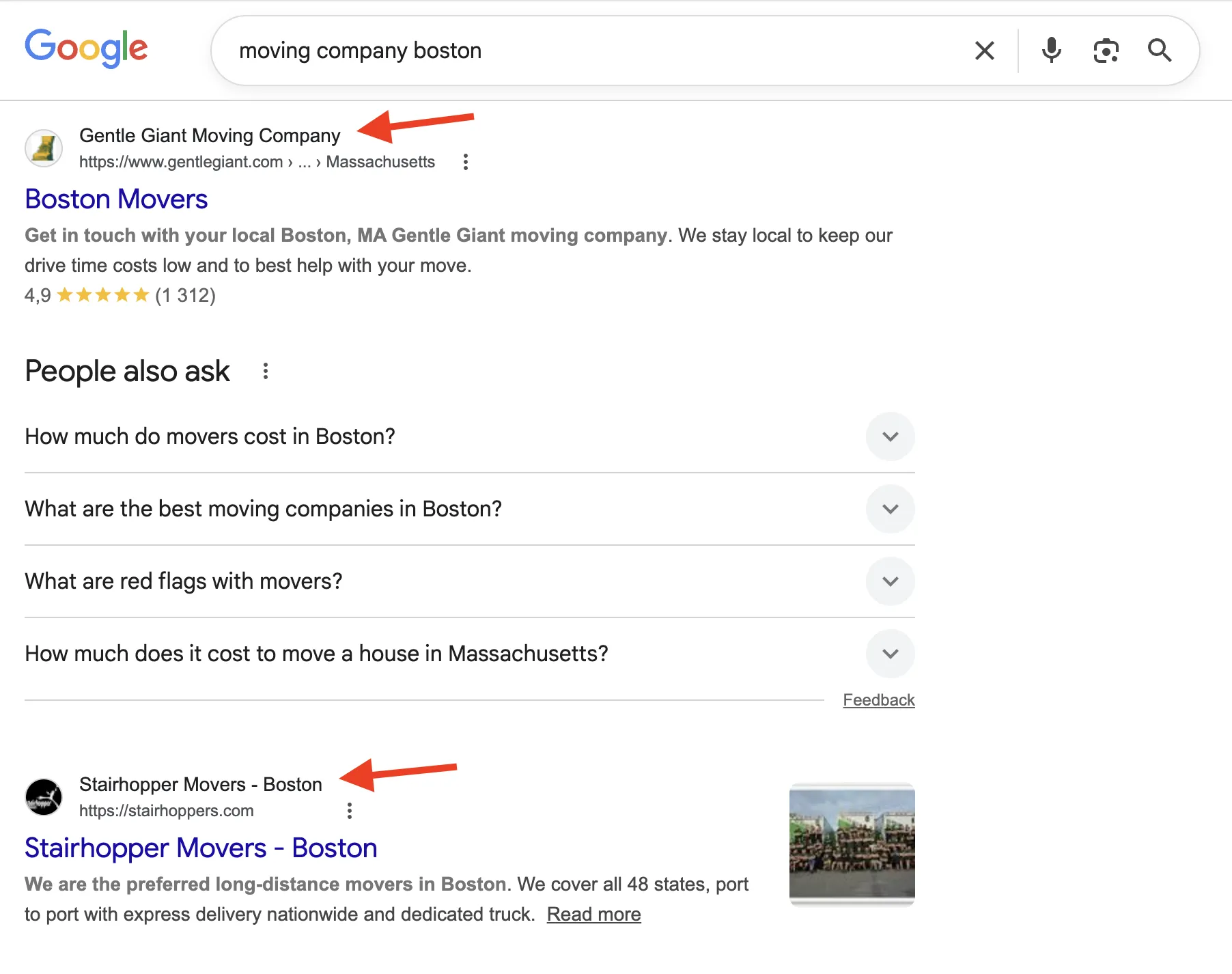
-
AI mentions = brand visibility inside the AI tool answer
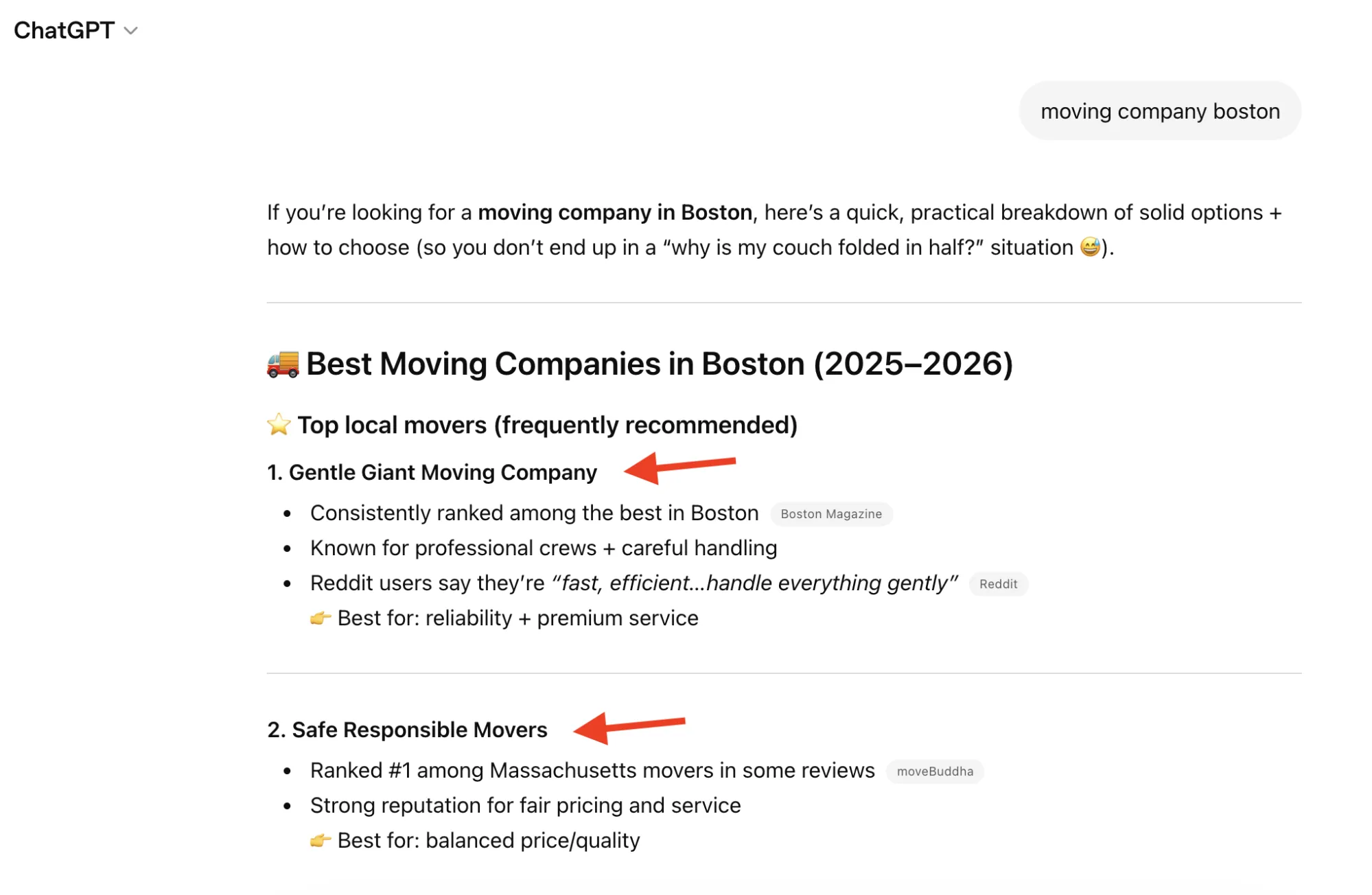
|
Traditional Search Rankings |
|
|
AI Search Mentions |
|
If you want to know more about AI SEO, read our article on how to survive in the zero-click search era.
Why AI Visibility Is Now a Business Metric
AI is quickly becoming part of how customers choose brands, rewriting the SEO funnel, and gaining business influence.
-
McKinsey surveyed 500 marketing leaders across five European countries and found three key directions for the 2026 agenda: the use of generative AI is among them, along with trust and effectiveness.
-
Serpstat also interviewed CMOs, technical SEO leads, and founders. 68% of them name AI as the #1 marketing priority for 2026 — higher than any other focus area.
“In the second half of 2025, the picture changed significantly — the role of AI, LLM platforms, and new user touchpoints became much bigger,”
Artem Melikyan, the SEO Tech Lead at Netpeak, participated in Serpstat’s survey
Here are more AI insights from Serpstat:
- You need to set clear rules before you scale. Define brand safety guidelines, disclosure policies, and approval workflows. For higher-risk outputs, keep a human in the loop to review and validate.
- Use AI to speed up research, briefs, content outlines, creative variations, and reporting. Measure success not just by output, but by time saved and increased team capacity.
- Adjust your content for how AI answers work. Make it clear, structured, and answer-first. Add relevant schema and strengthen author and brand credibility signals on key pages.
- Make sure AI-driven work ties back to business results. Use incrementality tests, blended attribution, and channel-level KPIs that connect directly to revenue.
- Automate repetitive tasks like audits, keyword clustering, internal linking, and reporting. Keep experts focused on strategy, prioritization, and quality control.
- Train your team to use AI properly. Focus on prompt quality, QA processes, evaluation frameworks, and brand-safe usage. Uncontrolled AI isn’t efficiency — it’s a risk.
What That Means for Your Brand
AI is shaping clients’ decisions, so brand mentions within those answers are directly tied to business revenue.
-
AI tools are becoming a decision layer, not just a research tool
-
Users rely on AI-generated answers to compare and shortlist brands
-
Your visibility is shifting from search results to AI recommendations
-
Companies that master SearchGPT SEO and generative engine optimization will capture high-intent traffic from users seeking direct, authoritative answers. Read more about the benefits of ranking in AI for businesses in our article.
So now the question is not only: “Do we rank?” but also “Are we being recommended?”
Do you want to track brand mentions in AI for your company, but don't have the time to learn how to do it properly? Call Netpeak! You can delegate it to us.
How to Track Brand Mentions in AI Search Results: Are You Visible or Just Hoping?
Do you think your brand is “probably mentioned”? You need to know for sure. Let’s learn how to check where you stand.
Step 1: Decide What You’re Actually Tracking (Yes, It Matters)
Before you start testing, get clear on what you want to track.
-
Decide whether you’re tracking your company name, a specific product, a service, or maybe even a founder’s name. Many brands also have variations — different spellings, abbreviations, or slightly different names — so check them too.
-
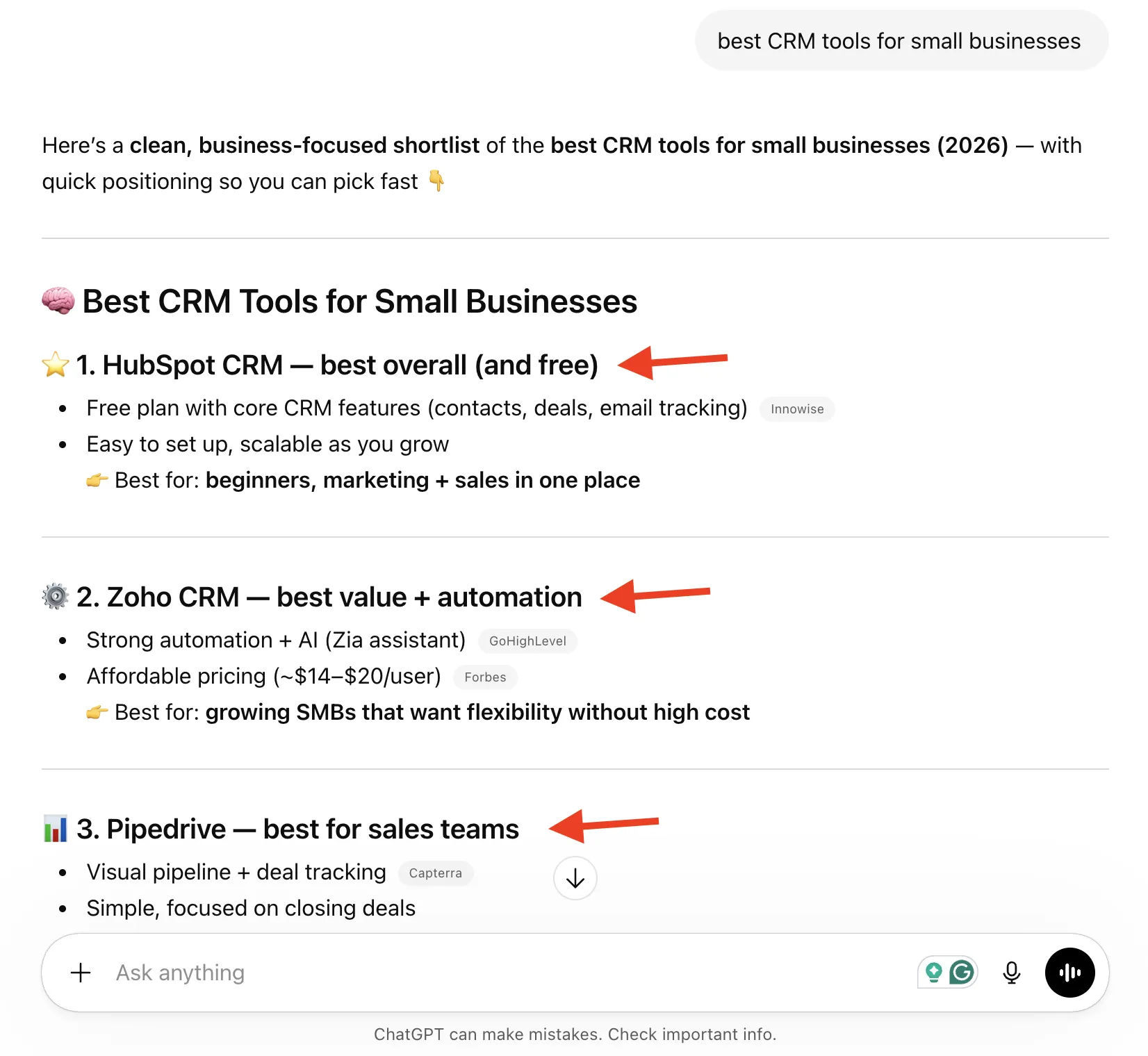
Think about your geography, category, and main competitors. For example, does your brand appear when someone asks about “Local SEO agencies in the Midwest” or “best CRM tools for small businesses”? Think about your context.
Step 2: Build a Prompt Set (What Are People Asking?)
The next step is deciding what questions to ask AI tools. These questions are your prompts — and they’re the core of your AI tracking.
The trick is to think like a real customer, not a marketer, and to ask salespeople who communicate directly with customers for help. People search and ask messy, real-life questions depending on where they are in the process. They can:
-
Explore their options, asking things like “best moving companies in Boston.”
-
Compare a few choices, asking for differences between brands
-
Search for trust signals and ask which companies are the most reliable, etc.
Your prompts should be smart and reflect all of that. And don’t just include questions with your brand name. The non-branded ones matter even more — that’s where new customers discover you.
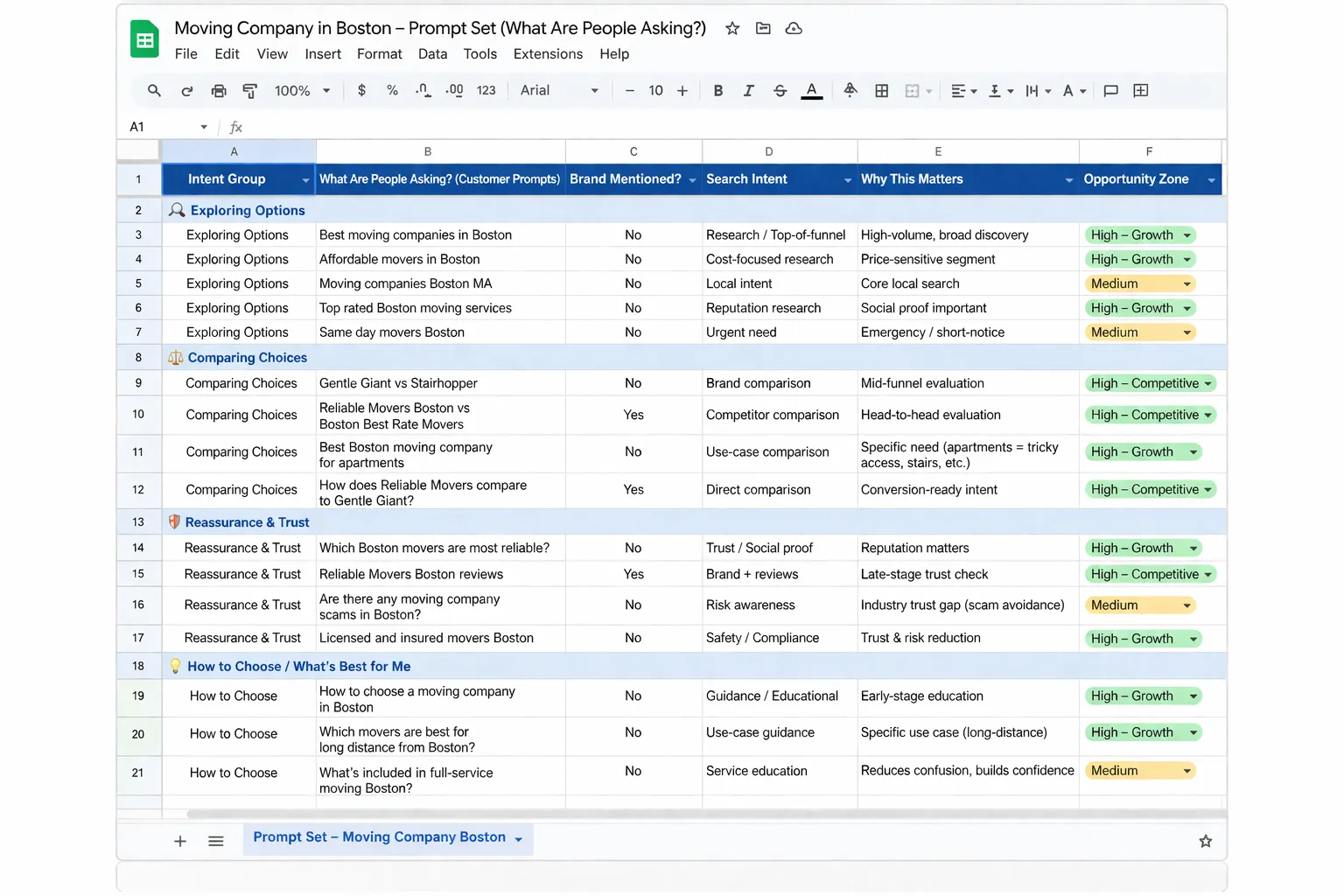
After you’ve created your prompt list, group them by intent (what the user is trying to do).
This makes patterns easier to spot. For example, your brand might show up a lot in educational queries but disappear in comparisons. That usually means you’re visible — but not yet competitive.
Step 3: Run the Prompts: Best Ways to Track Brand Mentions in AI Search
Now it’s time to test. Take your prompts and run them in tools like ChatGPT, Gemini, or Perplexity.
-
Try to keep things consistent so you can compare results more easily.
-
For each prompt, look at the full answer.
-
Check if your brand is mentioned, how it’s described, and whether the AI shows any sources.
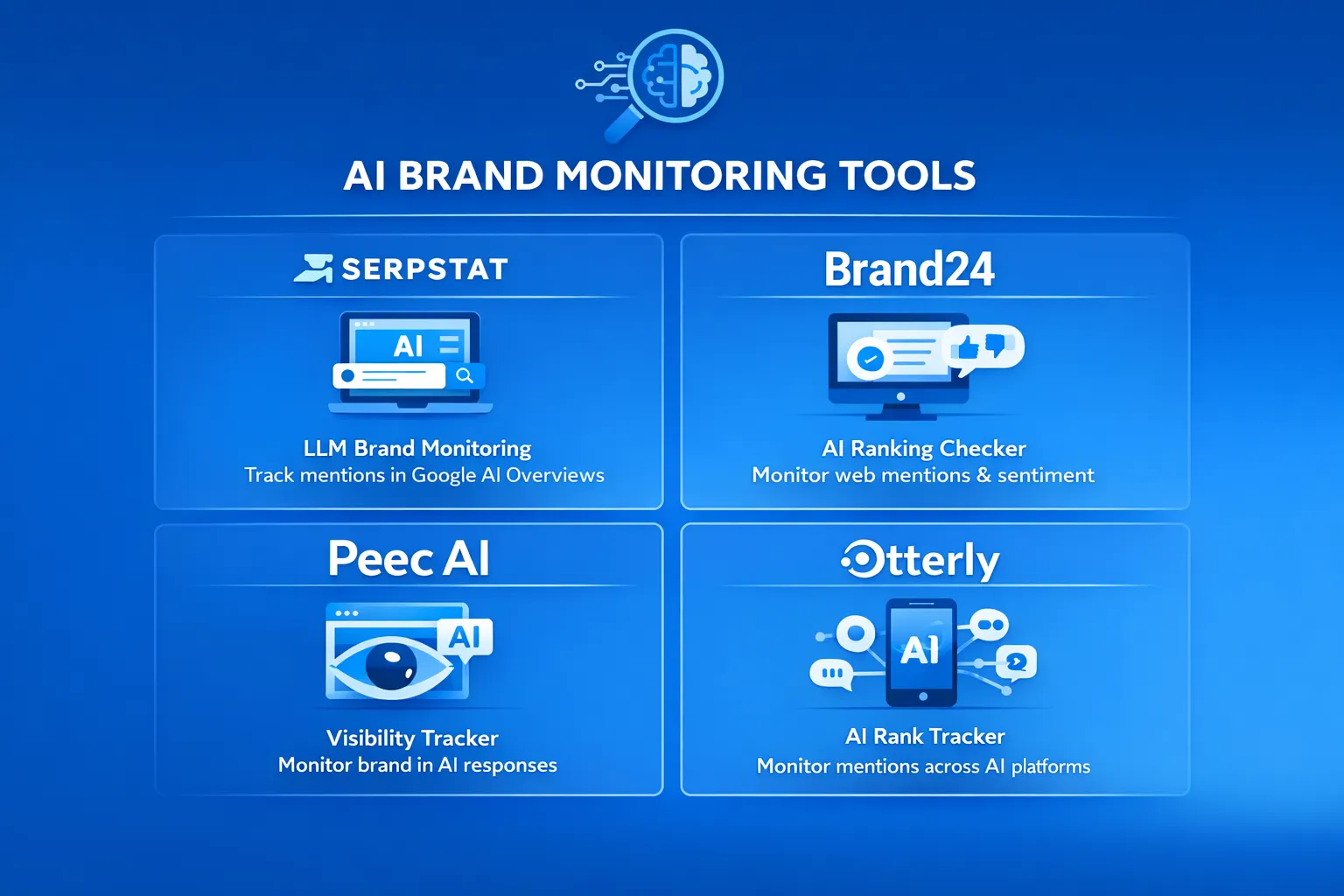
You can track brand mentions manually by testing prompts in AI tools and recording the results. But if you want to scale the process by automated tracking, there are monitoring tools that can help:
-
Serpstat — offers tools to track brand mentions in Google AI Overviews (LLM Brand Monitoring), helping you see where and how your brand appears in AI-generated answers.
-
Brand24 — AI ranking checker that tracks brand mentions across the web, including discussions and sentiment.
-
Peec AI — a visibility tracker that focuses on how brands appear in AI responses.
-
Otterly — an AI rank tracker that helps monitor brand mentions across different AI platforms.
These visibility tools won’t fully replace manual testing (yet), but they can significantly speed up tracking.
Keep in mind: AI answers aren’t fixed. The same question can give slightly different results depending on timing, wording, or context.
So this isn’t a one-time check. To see what’s really happening, you need to repeat it over time.
Step 4: Analyze the Quality of the Mentions
Once you’ve collected some data, the next step is to look beyond simple yes-or-no answers. Here are simple visibility metrics:
|
Type of mention |
What it looks like |
What it means for your brand |
|
Strong mention |
Listed at the top with explanation (e.g., “Best for small businesses due to…”), clear positioning, sometimes even repeated in follow-up answers |
High impact — you’re shaping the decision |
|
Medium mention |
Included in the list with some context, but not emphasized |
Moderate impact — you’re in the consideration set |
|
Weak mention |
Listed at the bottom or among many others, no explanation |
Low impact — easy to ignore |
|
No mention |
Not included at all |
No brand visibility — competitors take the space |
Step 5: Check Which Sources Influence AI Answers
AI tools don’t create answers out of thin air; they rely on information available online. This includes:
-
Your own website
-
Reviews
-
Directories
-
Media articles
-
Comparison pages
-
Forums
-
Other search platforms
You can see the source in the answer and analyze citation data: which ones the AI considers trustworthy to use.
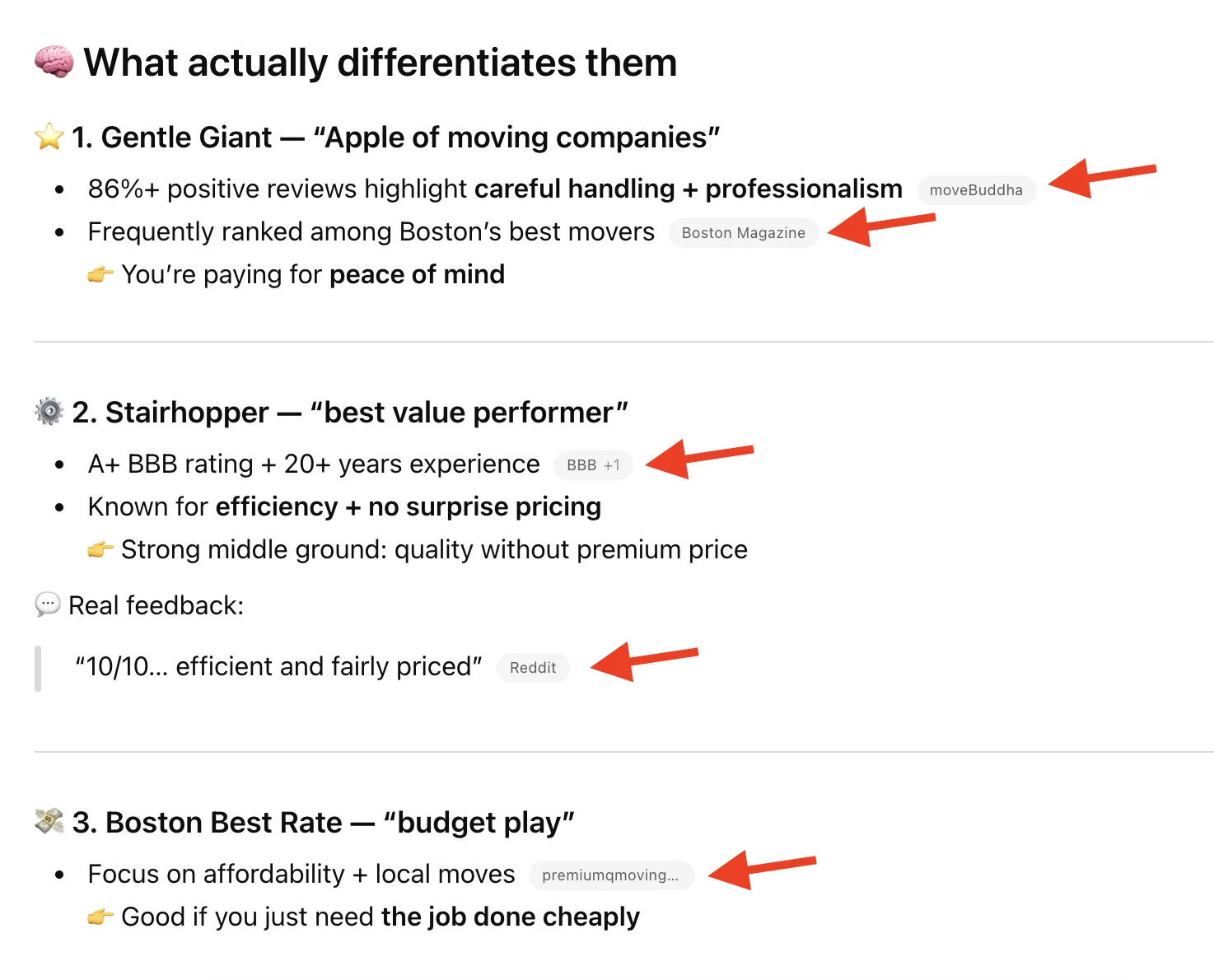
If your brand isn’t showing up in AI answers, it usually means your online presence is either weak or unclear. And if competitors keep appearing, it’s often because they’re mentioned more at the right places.
Step 6: Identify AI Search Visibility Gaps
Once you have enough data, patterns will start to appear. You might notice that your brand only shows up when it’s already mentioned in the prompt. Or that it rarely appears in broader category queries. Sometimes the problem is weak positioning — when AI mentions you not in a compelling way.
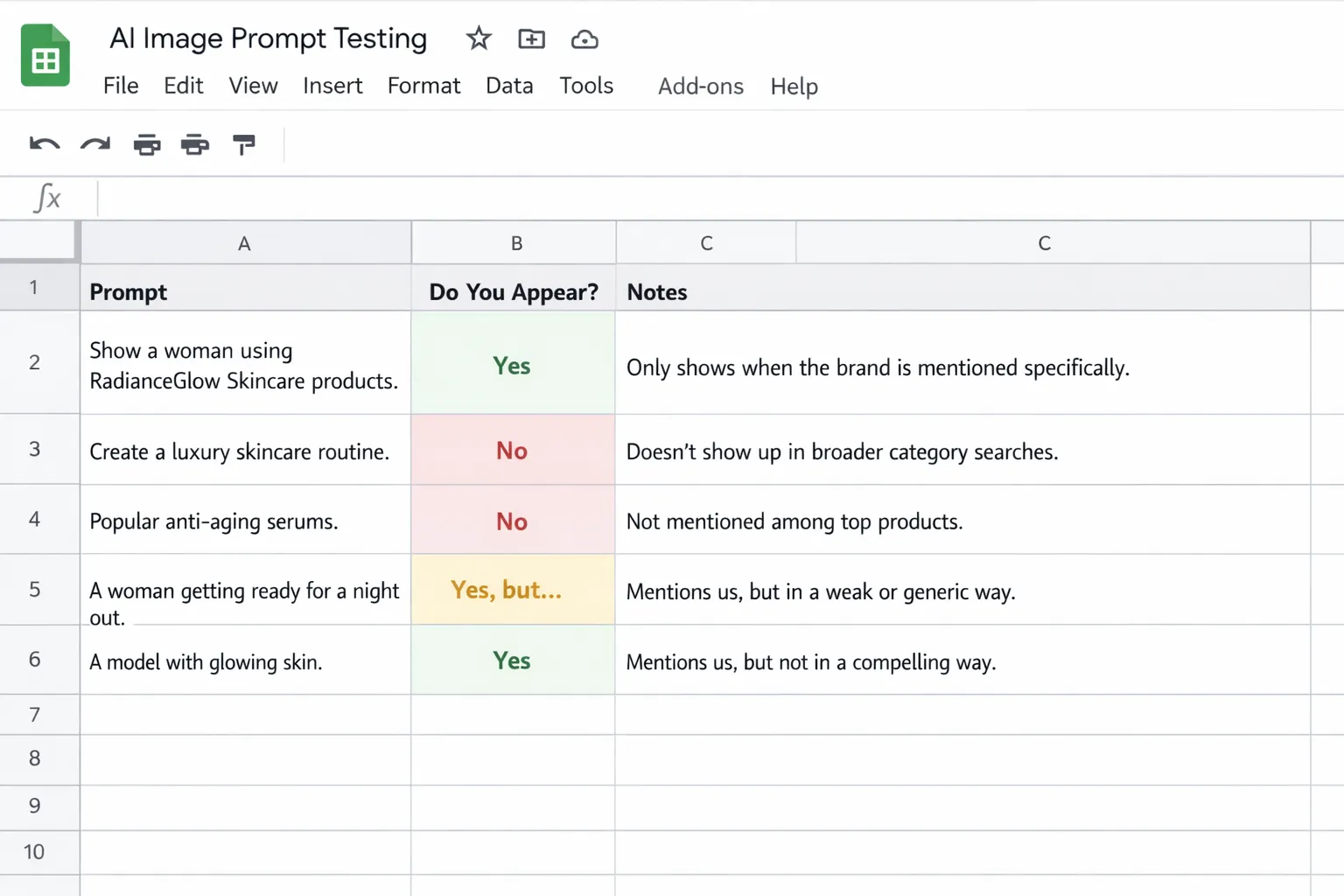
These gaps are important because they show where your brand visibility breaks down.
If your brand doesn’t appear, it usually means one of three things: you’re not visible enough, not trusted enough, or not clearly positioned in your category.
Step 7: Turn Insights Into Optimization Actions
The final step is to act on what you’ve learned and add changes to your brand strategy. For example:
-
If you’re missing in category-level queries, you may need better website content that explains your services.
-
If competitors dominate comparisons, you may need clearer positioning or more comparison-focused pages.
-
If trust is an issue, reviews and third-party mentions become more important.
The overall goal is to master GEO (Generative Engine Optimization) and make your brand easier for AI systems to understand, trust, and recommend.
How Often Should You Track Brand Mentions?
AI answers change, competitors publish new content, and your own visibility can shift over time. That’s why it’s better to think of AI tracking as an ongoing habit.
A simple rhythm works best.
|
How Often |
What You’re Doing |
Why It Matters |
|
Once a week |
Running prompts and collecting data |
Helps you catch quick visibility changes and keep data fresh |
|
Once a month |
Reviewing results and spotting trends |
Shows whether brand visibility is improving or declining |
|
Every few months |
Analyzing accumulated data |
Helps you understand patterns and gaps |
You could do it more frequently if:
-
You’re a large brand or playing in a highly competitive market because things change faster.
-
You’re actively publishing content, making content refresh, or working on an SEO strategy
-
If AI search plays a big role in how your customers make decisions
The key idea is simple: consistency matters more than intensity. It’s better to track regularly in a simple way than to do one big analysis and never revisit it.
Common Mistakes in AI Brand Mention Tracking
When you’re just starting AI tracking, it’s easy to overcomplicate things. Here are the most common mistakes — and how to fix them:
-
Only Checking Branded Prompts. You’ll usually show up if your brand is already in the question — but that doesn’t reflect real discovery. Fix: Add non-branded prompts like “best [service]” or “top [category] tools” to see if new users can find you.
-
Using Too Few Prompts. A small set of questions gives you a very limited view. Fix: Build a broader prompt list that covers different scenarios, wording, and stages of the customer journey.
-
Ignoring Competitors. AI responses are always comparative, even when it’s not obvious. Fix: Track which competitors appear, how often, and in what context — not just your own brand.
-
Focusing Only on Whether You’re Mentioned. A simple “yes” isn’t enough — some mentions have much more impact than others. Fix: Look at how you’re mentioned: position, explanation, and whether you’re recommended or just listed.
-
Tracking Without Action. Collecting data alone won’t improve your brand visibility. Fix: Practice GEO (Generative Engine Optimization): use insights to update website content, improve positioning, and strengthen your presence across trusted sources.
After reading the article, you now know how to track brand mentions for your company. But do you really want to spend time on that? It might be easier to give this job to a professional company like Netpeak that won't make rookie mistakes. Call us, and we'll take care of it!
Final Thoughts
AI search has added a new layer to how brands are discovered — and how decisions are made.
It’s about showing up in the answers people trust. Whether your brand is recommended, compared, or missing can influence decisions — often before anyone clicks on a website.
To understand your real brand visibility, you need a simple, repeatable tracking process. That’s what turns guesswork into clear insights.
Brands that start measuring AI mentions early have an advantage. They know where they stand, what drives their visibility, and how to improve it.
FAQ
What is a brand mention in AI search?
A brand mention in AI search happens when tools like ChatGPT, Gemini, or Perplexity include your company, product, or service in their answer. This could be a recommendation, part of a list, or a comparison.
If your brand is named in the response, it counts as a mention — but the strength of that mention depends on how it’s described.
Why are brand mentions in AI search important?
Because users increasingly rely on AI answers to make decisions. Instead of visiting multiple websites, they often choose from the few options AI suggests. If your brand is mentioned, you’re part of that decision. If not, competitors are taking your place — even if your website ranks well in traditional search.
How can I check if my brand appears in AI answers?
You can check this by creating a set of realistic prompts (questions your customers might ask) and testing them in AI tools like ChatGPT, Gemini, or Perplexity. Then you review the answers to see if your brand appears, how it’s described, and which competitors are mentioned instead.
How can I improve my chances of being mentioned by AI?
To increase your chances, focus on making your brand easy to understand and trustworthy. This includes having clear service pages, strong positioning, and consistent information across your website and other platforms.
Mentions on trusted third-party sites, good reviews, and helpful content that answers real user questions also increase the likelihood that AI tools will include your brand in their responses.

 0
0
 0
0
 0
0
 0
0
Related Articles
5 Questions to Expose an Amazon Agency That Can’t Handle Pet Brands
A field guide for CMOs who are tired of getting sold smoke and mirrors — and want an agency that actually understands the difference between a kibble and a kernel.
2026 E-commerce Scaling Guide: Boost Your Revenue Manyfold
Ready to scale your e-commerce business? This guide covers the strategies, systems, and metrics for growing revenue without increasing costs.
SEO for Contractors: Tips and Strategies for 2026
Your freedom as a contractor comes at a high price: you need to find your own jobs. That's what SEO for contractors helps you with.