
Digital Marketing for Moving Companies: How to Be Found (Cases Included)
Moving companies are great at lifting heavy things — marketing decisions, not always. Many still rely on gut feeling, word-of-mouth, and a bit of crossed-finger optimism to keep the calendar full. However, customers don't ask around first anymore — they Google it. Local demand has moved online, so digital marketing for moving companies is no longer optional.
And yes — learning new marketing channels for moving industry feels hard when your days are already packed with quotes, crews, trucks, and last-minute emergencies. But think of it this way: using marketing for movers is like hiring Sam to your Frodo — and allowing him to help you with heavy stuff.
This guide covers realistic digital mover marketing approaches to help you get more bookings, smoother seasons, and revenue you can actually plan for. All without turning marketing into another full-time job.
So, How Does Digital Marketing for Moving Companies Work?
Digital marketing helps people to find and choose your moving service online, rather than through flyers or “my friend knows a guy.”
In practice, when someone opens Google and types “movers near me”, digital marketing puts you on the display. So, potential clients see your company on Google Maps with real reviews, visit your website to check estimates, and contact you.
Having a moving company marketing strategy is important because:
-
Around 97% of people search online to find local services, including movers.
-
Nearly 46% of all Google searches have local intent, meaning people are actively looking for nearby businesses, such as “moving company near me” or “local movers.”
-
88% of consumers trust online reviews as much as personal recommendations, and most people read reviews before calling a local service business.
-
Moving business marketing helps to turn online demand into real bookings. Organic search alone drives over 50% of website traffic for many small businesses.
Digital marketing creates a trackable lead flow — which means steadier revenue and fewer slow months driven by luck rather than demand.
Why the Phone Isn’t Ringing: Key Challenges in Marketing for Moving Companies
If your calendar feels unpredictable, it’s not usually because demand has disappeared. Below are the most common moving service marketing challenges — and how to face them right.
|
Challenge |
Problem |
How to do it right |
|
|
1. |
Word of mouth is helpful — but unreliable |
Referrals are great when they happen, but they’re impossible to control. Some months, everyone “knows a guy,” at others, the phone is silent. Relying solely on word-of-mouth makes revenue unpredictable. |
Treat referrals as a bonus, not a strategy. Build SEO and paid ads, so leads come in whether or not someone mentions your name. |
|
2. |
Competition with bigger companies and aggregators is harsh |
Large commercial moving brands and lead-gen platforms spend heavily on ads and dominate search results. Small and mid-size movers often feel invisible next to them, even if their service is better. |
Compete locally, not nationally. Target specific cities, neighborhoods, and services where your local reputation matters more than ad budget. |
|
3. |
No time to “learn marketing.” |
Most moving company owners are busy running crews, handling logistics, and fixing daily problems. Marketing feels complex, time-consuming, and easy to postpone — until the slow season hits. |
Start simple. One solid channel (Google Search or Maps) done well beats five half-managed ones. Automate what you can and outsource the rest. |
|
4. |
Hard to know what actually brings in jobs |
Without tracking, it’s unclear whether calls came from Google, referrals, ads, or luck. This makes it hard to invest confidently or stop wasting money on things that don’t work. |
Track simple data: where calls come from, which ads lead to booked moves, and which pages people visit before contacting you. |
If you want to outsource your moving marketing and focus on your core strengths, Netpeak is here to help. Just give us a call, and we'll start planning how to bring you a steady flow of clients!
‘Moving has specifics you surely know about: demand spikes in May–August, unpredictable retention, limited time to contact the lead, and strong necessity to match your capacity and marketing spend (there’s nothing more frustrating than paying for requests you cannot make money from).
Nobody cares about the brand — they want you to be predictable, reliable, and do the job. Extra points if you are easy to find.
That’s what we do — mitigate marketing-to-operations risks, place your brand where people search, and help you make more from every buck,’ — Leonid Kovalenko, Head of Marketing at Netpeak USA
What’s Going On in The Customer’s Heads
Marketing works better when you know what your customers are thinking — especially when they need to choose fast and are surrounded by boxes.
-
Most customers don’t need you regularly. Moving isn’t a repeat weekly service like cleaning. People hire movers when life forces them to: a new job, a new home, a new city, a divorce, or a growing family. That means you can’t rely on the same customers coming back regularly. To grow, you must constantly reach new local customers.
-
Customers decide fast — and compare everyone. When someone needs a mover, they don’t spend weeks researching. They usually Google, open a few websites, check Google Maps, read reviews, and contact 3-5 companies at most. The movers who look available and easy to contact win.
-
Stress drives decision-making. Moving is stressful. Customers are overwhelmed with logistics, deadlines, and emotions. They don’t want long explanations or complex pricing, so make the next steps simple.
-
Price is important, but not the only factor. Customers compare prices, but they’re usually willing to pay more for movers who look reliable and will be there today. Unclear pricing, no website, or poor reviews create doubt — and kill conversions.
Online Marketing Channels Movers Really Need
Here are the main digital marketing channels that actually work for moving companies — explained so you understand why each one matters.
Google Business Profile
Your Google Business Profile is the box people see when your moving company appears on Google Maps or in local search results. It shows your business name, service area, phone number, reviews, photos, and working hours.
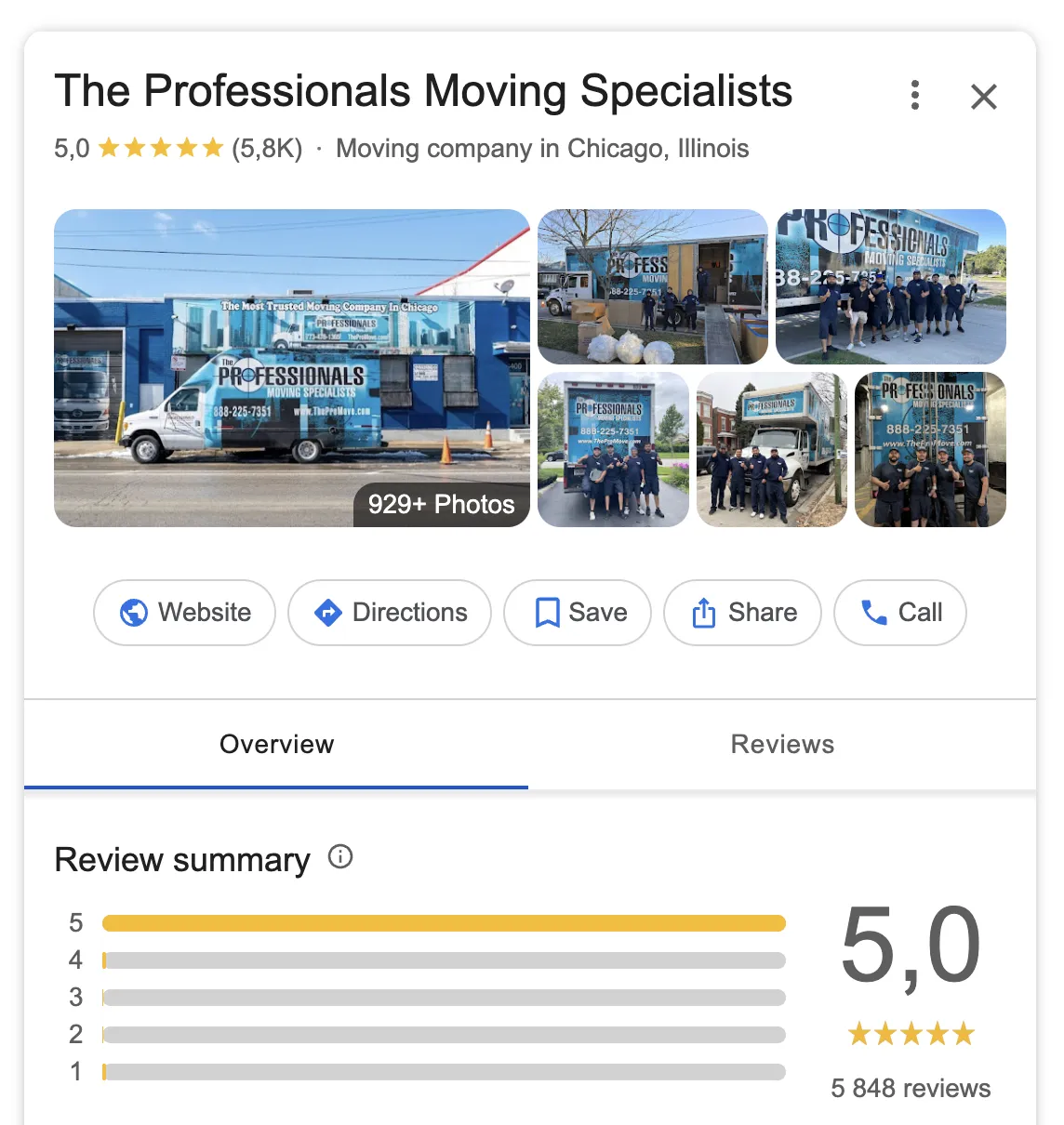
A Google Business Profile helps customers decide whether to call you. How it works in real life:
-
Someone searches for “long-distance moving near me.”
-
Google shows a map with a few movers.
-
The customer checks one listing, reads reviews, and looks for photos.
-
If everything looks fine, they call — often without visiting the website.
Business results: 60% of mobile users contact a business directly from local search results by clicking to call or get directions — and that usually happens through the GBP listing.
Website & Landing Pages Optimization
Your website’s main job is to turn visitors into calls and booked moves. Google, ads, or Maps could lead the interested people to you, but if the website and landing pages are ugly or slow, those visitors leave — and your marketing money is wasted.
Make it easy for people to trust you, find your prices, and get in touch. Here's what you need to add to your pages:
-
A click-to-call phone number (especially important for mobile users).
-
Clear details of your services and service areas.
-
Reviews and trust signals that are visible above the fold.
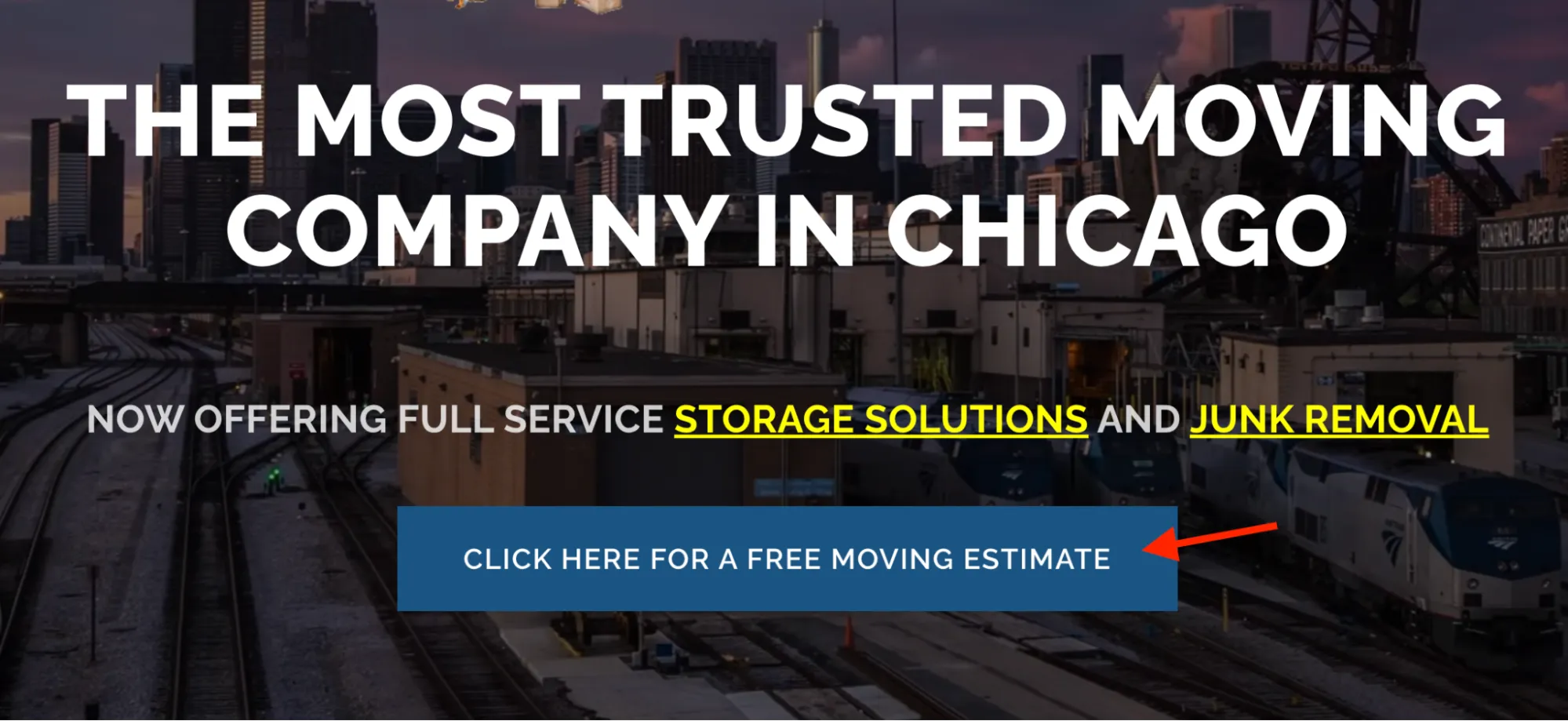
Business results: Improving conversion elements (buttons, forms, etc.) can boost lead generation by 20-200% without increasing traffic.
Local SEO (Search + Google Maps)
For a moving company, local SEO is a free way to show up when someone nearby searches for help. Practising SEO is the reason some movers appear at the top of Google results and on Google Maps when people type “movers near me” or “moving company in [city]” — and others don’t show up at all.
Google decides which businesses to show in the “Map Pack” based on their location, Google Business Profile, reviews, and website keywords. It's great to be there for customer acquisition.
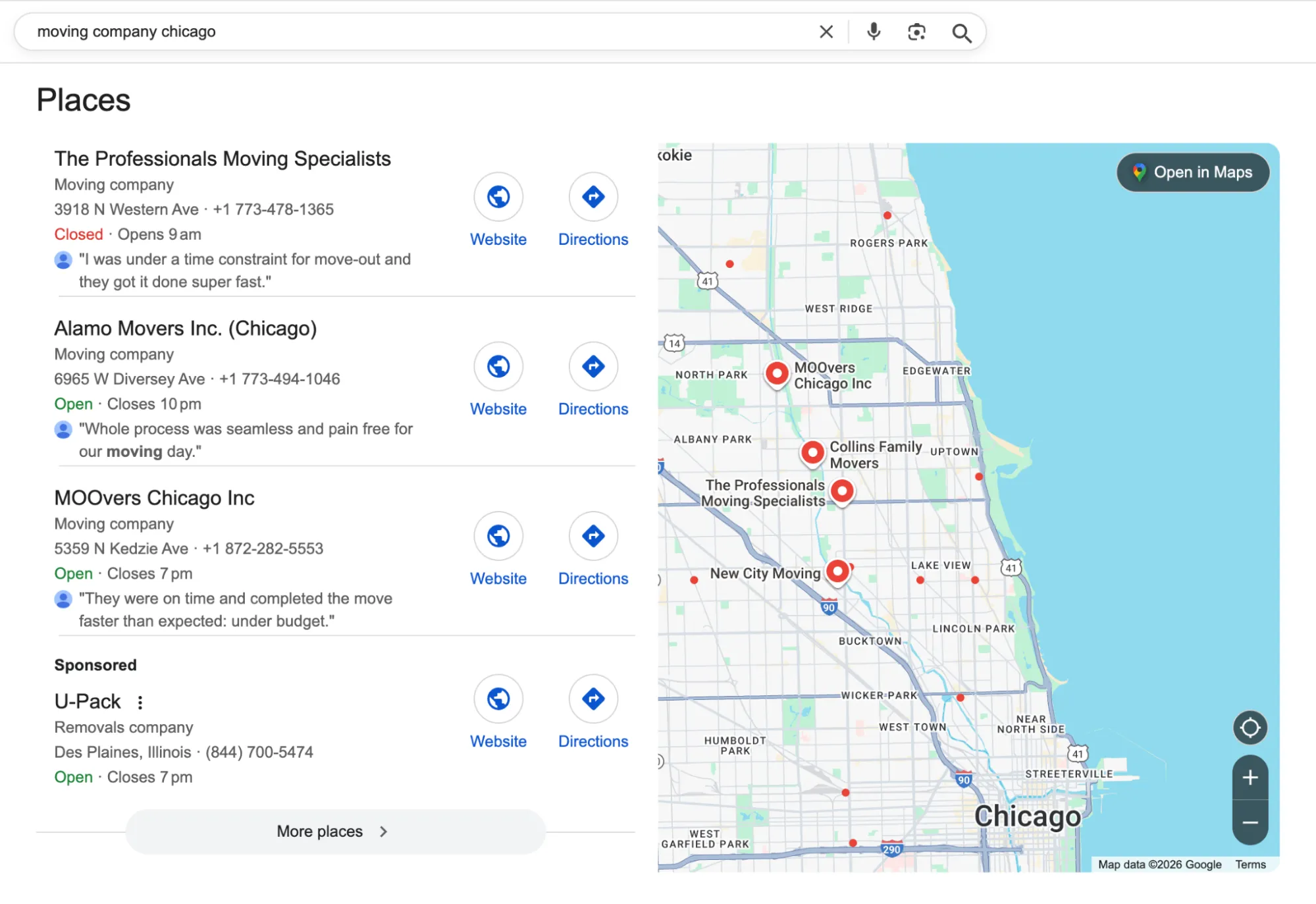
Business results: Businesses that appear in the top local “Map Pack” get 126% more traffic and 93% more calls, website clicks, and direction requests.
Search Ads (Pay-Per-Click / PPC)
Search Ads are paid listings that put your moving company at the very top of search results when someone types “office relocation near me,” “local moving company,” or “residential moving.” You only pay when someone clicks your ad — not when it’s shown.
Good PPC campaigns focus on:
-
Using local keywords. They should target specific cities, neighborhoods, and services, not broad terms like “interstate movers” or “packing and moving services.” This keeps costs down and improves lead quality.
-
Generating phone calls. Use call extensions, click-to-call buttons, and “Call now” messaging for that. Calls convert better than website visits because customers can confirm availability and pricing immediately.
If you want to know more PPC secrets, read our article about training advertising algorithms.
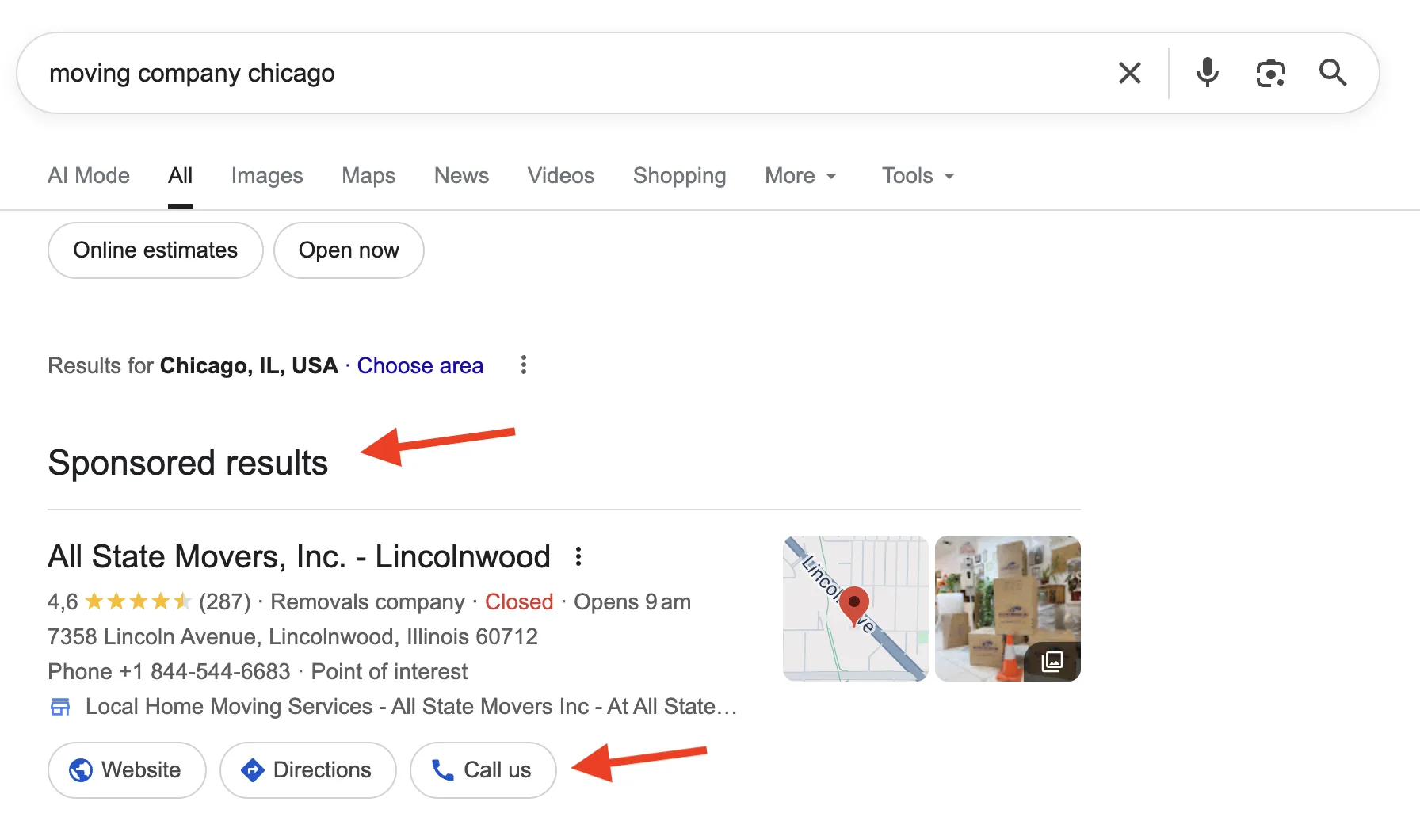
Business results: Businesses make an average of $2 in revenue for every $1 spent on Google Ads.
Social Media Marketing
Social media marketing for movers helps your company stay visible on platforms people already use every day — like Facebook and Instagram.
For many customers, social media is a background check. How it works in real life:
-
A customer finds you on Google or Maps.
-
Check your Facebook or Instagram page, see real photos, short moving tips, customer reviews, and behind-the-scenes moments.
-
Feel safer calling you instead of a random company.
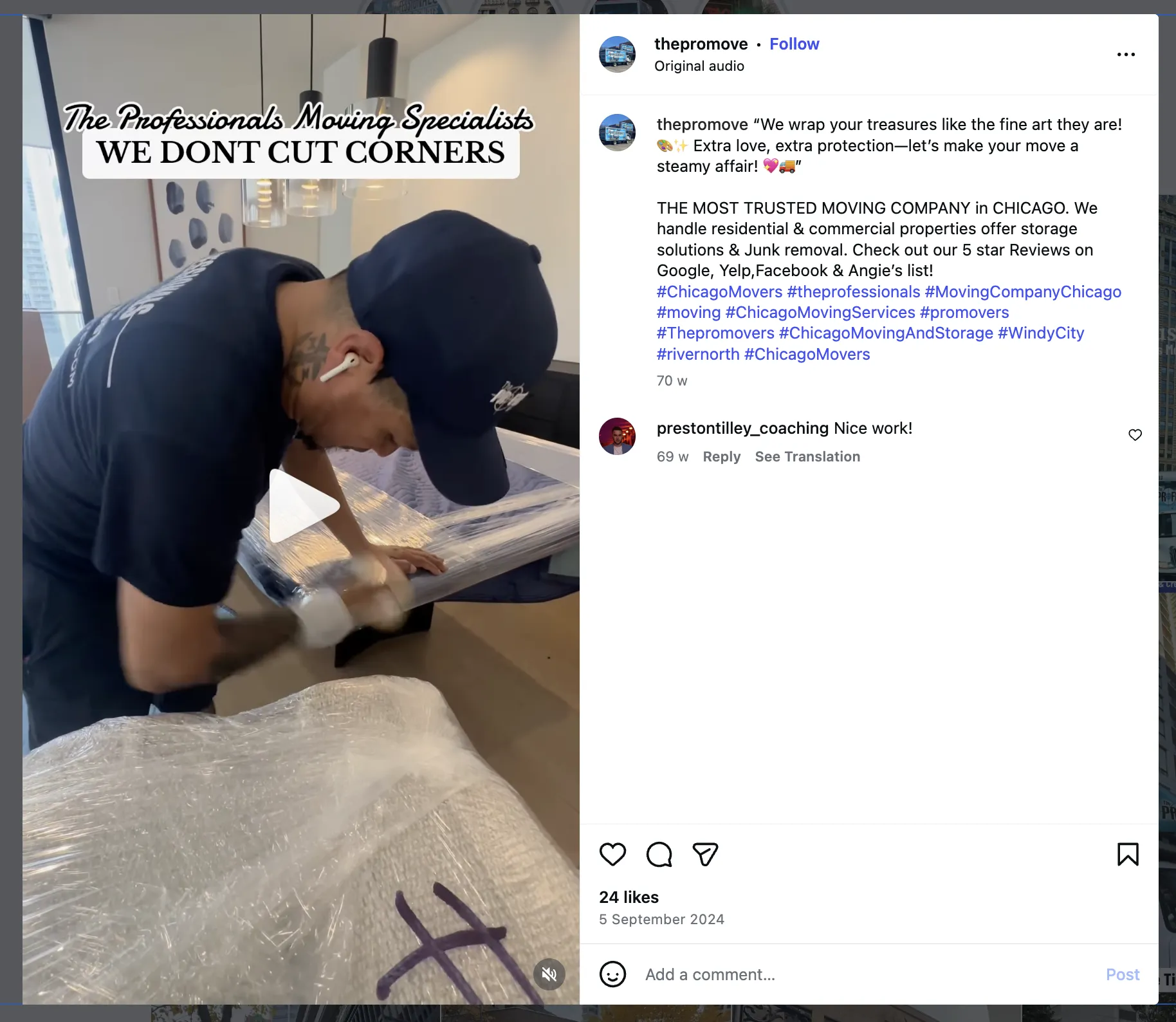
Business results: 86% of marketers agree: social media keeps your brand visible, so customers remember you before they need you.
Retargeting Ads (Google & Social)
Retargeting ads are among the most effective because you show them to people who have already visited your website. They appear later on Google, Facebook, Instagram, or other sites to remind them that you exist and are often enough to attract a client.
How retargeting mover marketing works in real life:
-
A customer checks your website or landing page but does not contact you.
-
Later, they see your ad while scrolling social media.
-
They already know you, so it seems like a good idea to return and book.
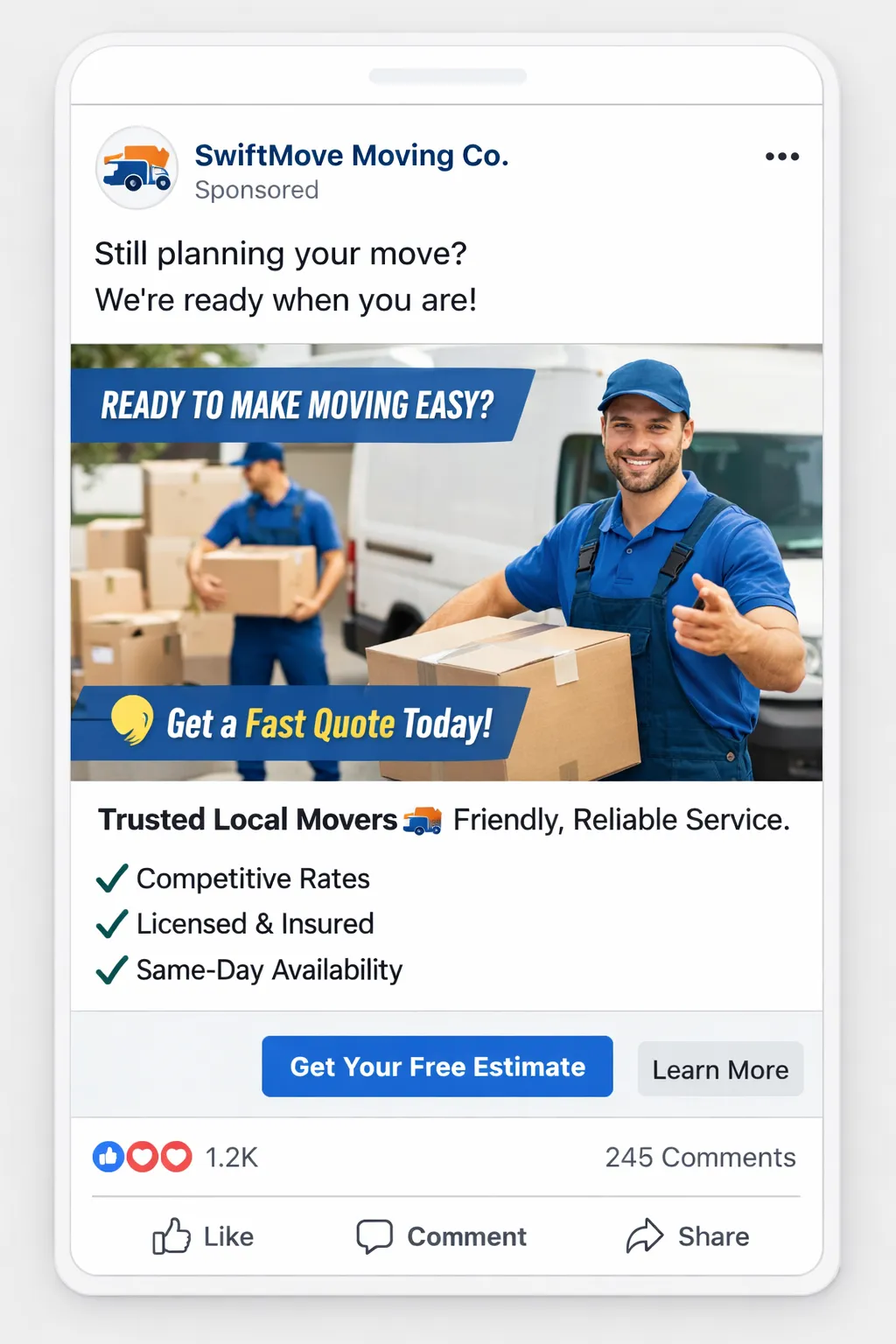
Business results: Retargeting can increase conversion rates by up to 70%.
Retention Marketing
Retention marketing is everything you do to stay in touch with customers after the move is done. Instead of focusing only on getting new customers, retention helps you get repeat business, referrals, and word-of-mouth.
For marketing for movers, this is especially important because new leads are expensive, while past customers already trust you.
How it works in real life:
-
You complete a move.
-
Follow up with a thank-you message or email based on past moves. Ask for a review and feedback, propose joining the referral program, etc.
-
Stay in touch (send tips, reminders, seasonal offers, etc.).
-
When someone needs a mover again — or knows someone who does — they remember you.
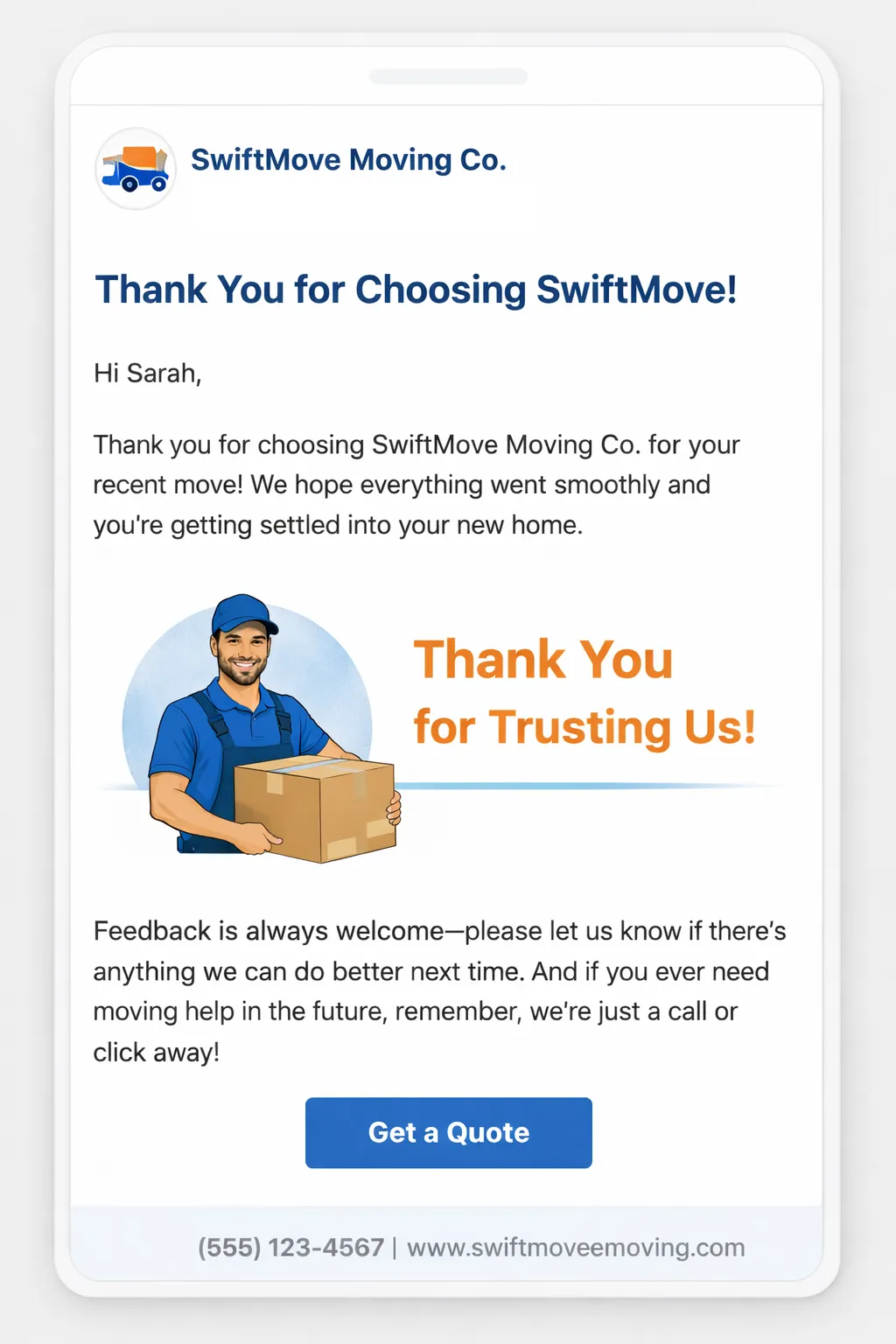
Business results: Increasing customer retention by just 5% can boost profits by 25%-95%.
Real-Life Case Study: H2H Movers’ Approaches
H2H Movers, a Chicago-based moving company, quickly realized that referrals alone weren’t enough to compete with national franchises and lead aggregators crowding the search results.
They partnered with Netpeak US to build a multi-channel strategy that could generate steady lead flow from Chicago and the surrounding areas. Here are the online marketing approaches they used to achieve the goal.
|
Channel |
Online Marketing Approaches |
|
Pay-Per-Click |
|
|
Social Media Mover Marketing |
|
|
Retention Mover Marketing |
|
The Results
-
+135% increase in Google Ads conversions
-
+35% increase in CPA (growth without runaway costs)
-
Stronger brand visibility across Chicago and the surrounding regions
-
Higher lead quality from users ready to book
If you want to replicate their success in marketing for movers, contact us at Netpeak US! We specialise in making home services visible in their local area and have many marketing ideas for moving companies.
Final Thoughts
Digital marketing for moving companies comes down to one simple goal: be there when someone needs a mover — and make choosing you the easiest decision of their day.
The good news is you don’t need a massive budget to win. A solid presence in local search, a trustworthy Google Business Profile, and smart use of ads are enough.
Done right, digital marketing works quietly in the background — bringing in leads while you’re busy managing trucks, crews, and last-minute surprises.
FAQ
What is the best digital marketing strategy for moving companies?
A mix of local SEO, Google Search Ads, and Google Business Profile optimization works best. SEO builds long-term visibility, while ads bring immediate moving leads. Together, they balance fast results with sustainable growth.
How much should a moving company spend on marketing?
Most movers invest 5-10% of their monthly revenue. In competitive cities, allocating more to paid search during peak moving season pays off faster. The goal is to spend where demand is highest, not evenly all year.
Does SEO work for local movers?
Yes. Local SEO helps movers rank for “movers near me,” appear on Google Maps, and capture high-intent customers who are ready to book. These leads are often cheaper and more consistent over time than paid ads.
How long does it take to generate online leads?
Paid ads can generate leads in days, while SEO usually takes 3–6 months to deliver consistent, low-cost moving leads. Most movers use both to cover short-term needs and long-term stability.

 0
0
 0
0
 0
0
 0
0
Related Articles
Account-Based Marketing (ABM) for B2B: A Practical Guide to Targeting Big Fish
Your B2B wants to target specific big companies rather than chase a massive pool of leads? Account-based marketing (ABM) is exactly what you need!
SEO Marketing for Moving Companies, Illinois: What Actually Works in 2026
Read these best SEO tips to help your local moving companies, Illinois, outrank competitors and get to the top of Google SERP in 2026!
Pet Care Marketing: Why Does Empathy Beat Tech Specs
Increase your pet care marketing efficiency with our guide. Use 10 tried and tested marketing strategies that will help you grow.