
In 2026, SEO for moving companies is a must-have. If your business doesn’t appear on Google when someone types “movers near me,” you lose potential customers every hour. Homeowners browse for movers in panic, surrounded by half-packed boxes; they need to find and book you right away to reduce the mental load of the moment.
If you seem trustworthy, people will be eager to close the deal right away. You have a few minutes to present yourself in the best light, brag about your great reviews, and show off your fancy photos. Moving company SEO helps you use these minutes as effectively as possible.
In this article, we’ll discuss SEO for movers and best practises to increase bookings from high-intent searches, leading to fewer empty trucks, fuller schedules, and a healthier bottom line.
Moving SEO 101: The Four Key Components of a Strategy
SEO for moving companies is a system: visibility, reputation, website, and recommendations working together. Here’s how it all fits together.
|
How It Works |
Example |
Business Results |
||
|
1. |
It helps your moving company show up when people search things like: “movers near me,” “moving company in Brooklyn,” “cheap movers Jacksonville.” The heart of this is your Google Business Profile (earlier Google My Business). |
A homeowner types: “furniture movers near me.” Google shows a map with three companies. If your Google Business Profile is complete, you’re much more likely to get the call. |
28% of local searches result in a purchase, and 90% of local searchers make a purchase within a week. |
|
|
2. |
User Reviews |
Reviews are basically your reputation on the internet. For movers, this is huge because moving is stressful and expensive — people want proof you won’t damage their grandmother’s piano. |
Imagine: Company A: ⭐ 4.9 (120 reviews) — photos, polite replies Company B: ⭐ 3.2 (18 reviews) — no replies Even if Company B is cheaper, most people will pick Company A. There are fewer risks and less stress because of the peace of mind that comes with knowing the service will go smoothly. |
87% of consumers read online reviews for local businesses before deciding to engage. |
|
3. |
On-Page SEO |
It is the process of optimizing your website's local content and structure. This way, search engines clearly understand what your business offers and where you operate. |
Instead of one homepage like: “We are a moving company,” you create pages like: “Apartment Moving in Seattle,” “Office Moving in Seattle,” “Piano Moving in Seattle,” etc. People will find you based on a specific query and understand that you can solve their particular problems. |
52% of SEO specialists say service pages are the most important ones for earning higher rankings. |
|
4. |
Quality Backlinks |
A backlink is when another website links to yours. Google sees this as a recommendation: “This company is legit.” |
Good backlinks can come from local news sites, city business directories, real estate websites, or partner companies (e.g., realtors, storage services, cleaners). |
Pages that rank #1 on Google have about 3.8× more backlinks than pages in positions 2–10. |
Each component of the strategy has one common feature: reassuring customers and reducing their mental load. Since moving is already associated with life changes, it makes sense that customers would want to trust professionals and focus on their life events.
Therefore, every promotional activity should consider this mindset.
If you want some help with it, we are an SEO agency for a moving company you need to call.
Why Do Your Moving Businesses Need Local Search Optimization?
Moving is emotional and highly competitive. That’s why moving SEO marketing matters so much.
-
In most cities, there are dozens of moving companies. If you have no optimized Google Business Profile, few reviews, and weak service pages, you blend into the crowd.
-
Moving has peak seasons — spring and summer are busy, and winter is slower. Without movers SEO, you depend on ads during busy months and struggle to get steady leads during slow periods. With strong moving companies SEO, you rank year-round.
-
Moving services are location-based. People don’t search for “the best movers in the world.” They search for: “movers near me,” or “moving company in LA.” If your business doesn’t appear locally, customer doesn’t book you, even if you have trucks ready to go.
-
Most moving searches are high-intent and urgent. People search when their lease ends, they just bought a home, their office relocation date is fixed, etc. They are ready to book.
-
Moving is stressful. People worry about damaged furniture, hidden fees, late arrival, and unprofessional staff. Local SEO for movers builds trust through reviews and real photos.
-
A lack of reviews directly reduces clicks and calls, as potential customers compare ratings before contacting anyone. Movers SEO encourages collecting reviews, responding to them, and building a visible reputation that increases trust and conversions.
“There is fierce competition among movers in Chicago, where we operate. That is why we have consistently invested in SEO over the long term. Google dominates our field and state in lead volume — about 60-80%. However, it's important to note that this is the result of a combination of classic SEO, Google Warranty, and Google Ads,” — Vitalii Kovalenko, COO of H2H Movers.
How to Get Consistent Organic Traffic and Leads: 11 Proven Steps
Here are 11 SEO moving tips to help moving businesses build a steady online presence, stronger trust, and predictable bookings, rather than relying on luck or last-minute ads. Step-by-step.
Step 1: Perfect Your Google Business Profile (GBP)
Your GBP is the “map listing” people see first when they search “movers near me.” It shows your exact services (apartment moving, office relocation, packing), service areas, working hours, a website link, etc.
To keep it fresh, post there weekly something like “Moved a 2-bedroom today in NYC.”
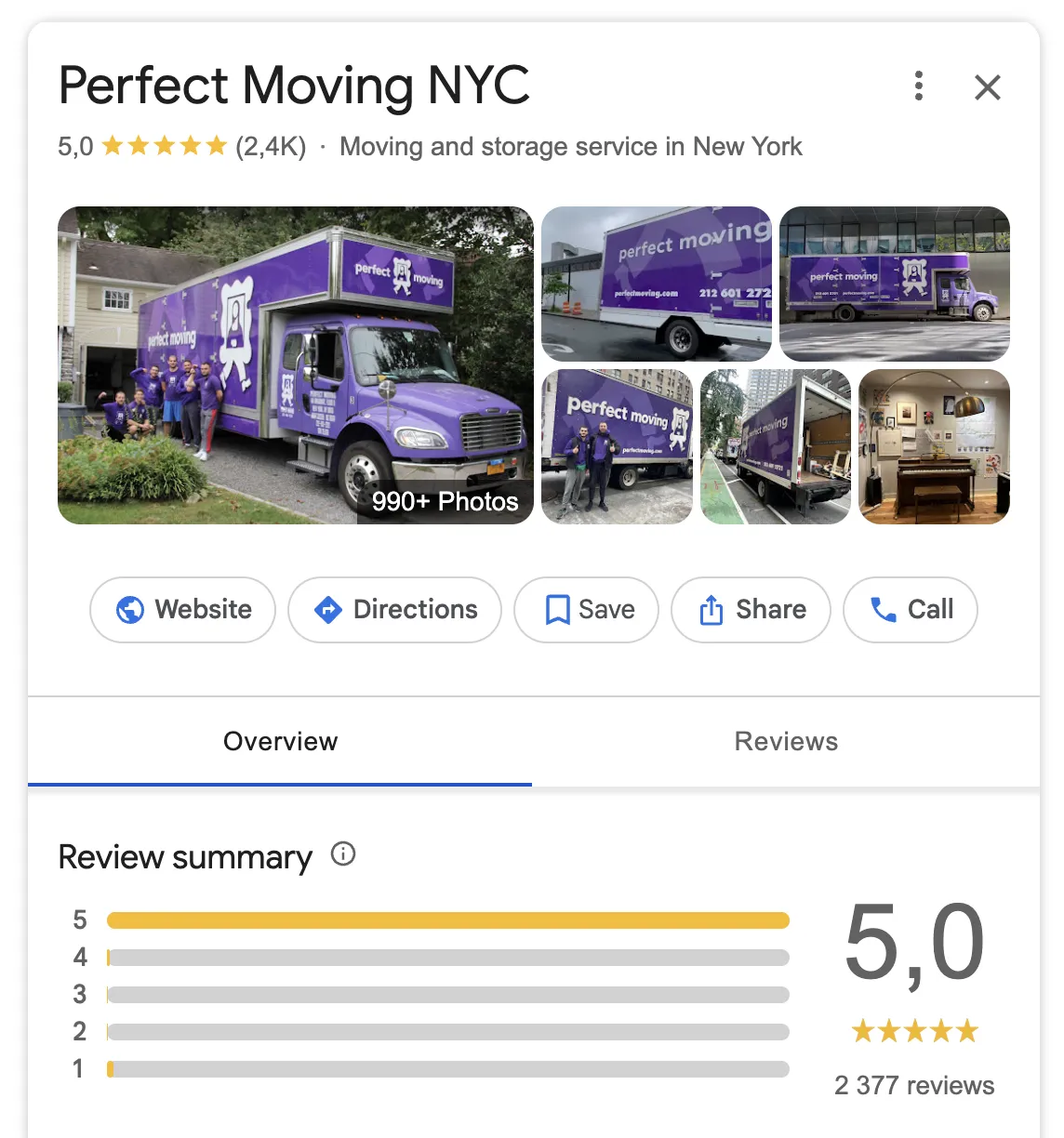
Business results: 61% of people who click on a Business Profile then visit the website.
Step 2: Optimize for Mobile and Voice Search
If someone needs movers, they usually don’t have time or a desktop computer. They grab their phone and voice search “moving company for 2-bedroom apartment tomorrow, Florida” while standing in the middle of the chaos.
That’s why your website should be optimized for mobile and voice search; it directly affects whether you get the call.
Business results: Mobile devices generate the majority of organic traffic, with mobile accounting for around 64% of all internet traffic. Over 50% of local businesses are discovered through voice search.
Step 3: Create Location-Specific Landing Pages
If you want to rank locally, you must clearly tell Google where you work and what you do. When someone searches: “movers in Upper West Side,” Google prefers to show pages that clearly mention this area — not just NYC in general.
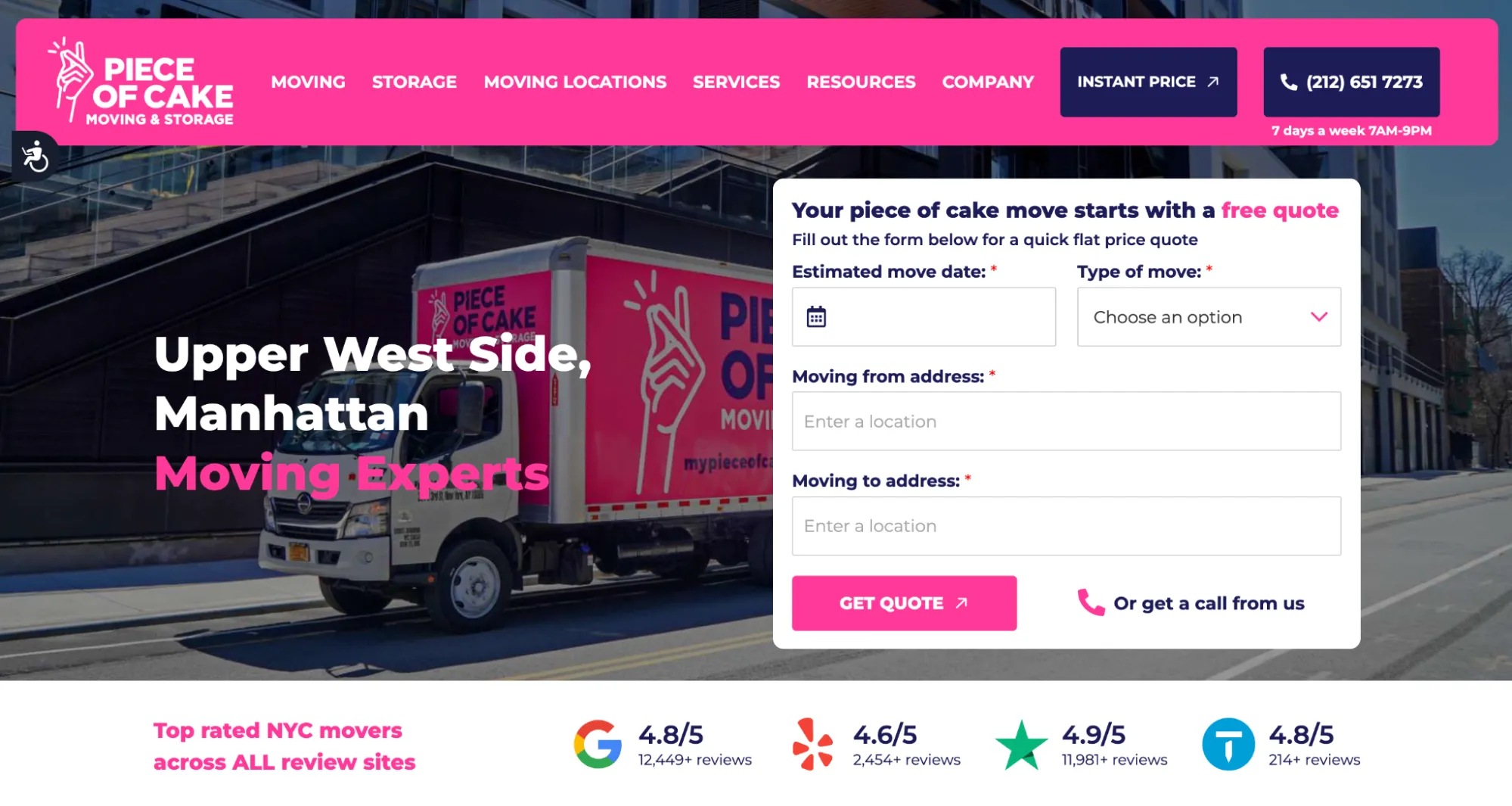
Business results: Location-specific landing pages typically convert 2-3× better than generic service pages.
Step 4: Monitor Interactions & Respond Fast
Moving searches are often urgent, and potential customers are stressed and time-pressed. Customers contact 2-4 companies within minutes and book with the first to respond.
It is important to enable GBP messaging/call tracking, set up missed-call text-back, and respond to form leads within minutes.
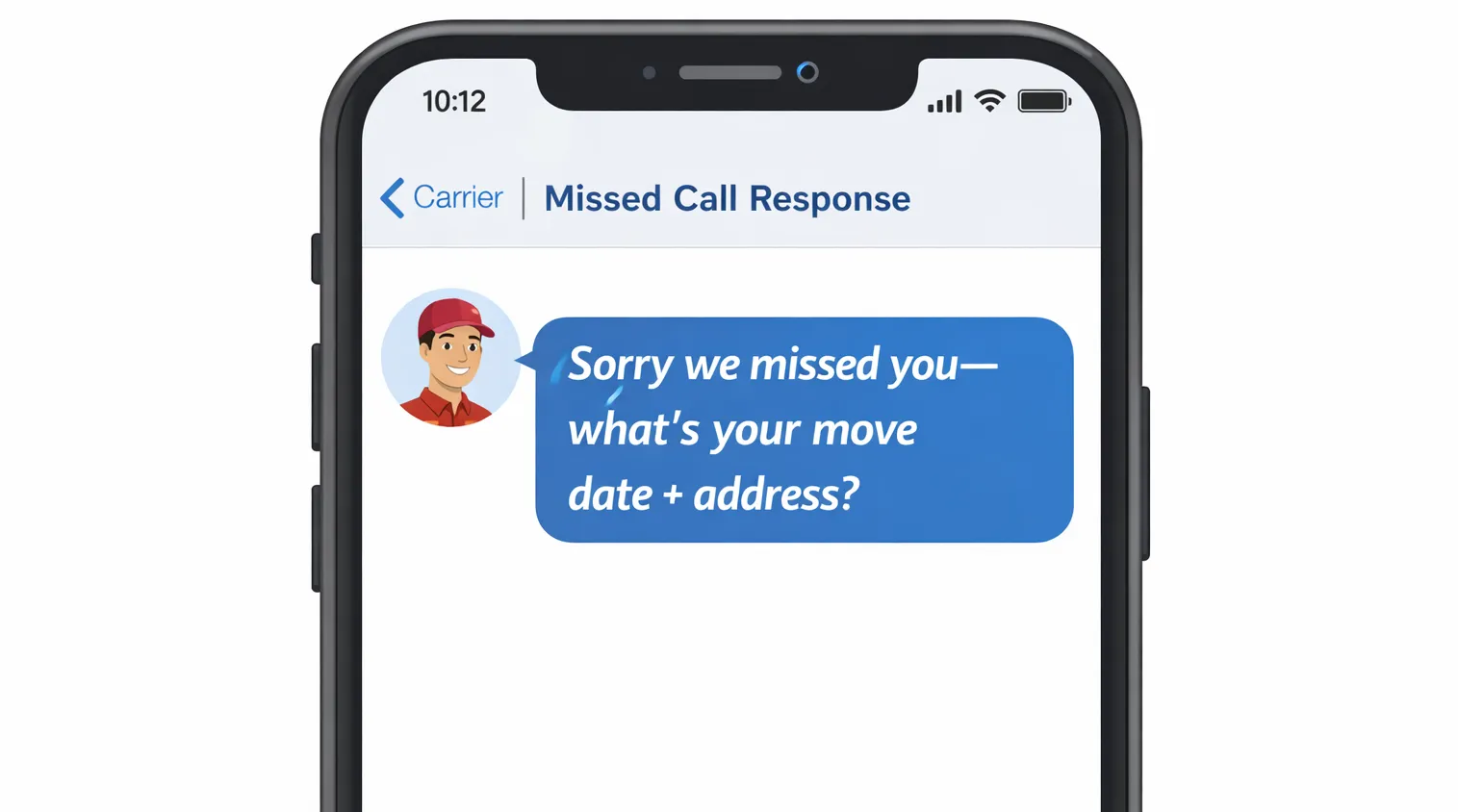
Business results: Responding to a lead within 5 minutes can increase conversion chances up to 100× compared to waiting 30 minutes.
Step 5: Upload Real Team/Office Photos
When people hire movers, they’re letting strangers into their home and trusting them with everything they own. That’s why visuals matter so much — photos make you feel real and reliable.
Avoid stock photos; they look staged. Even if not perfect, real photos are better because they show your actual team and real work environment.
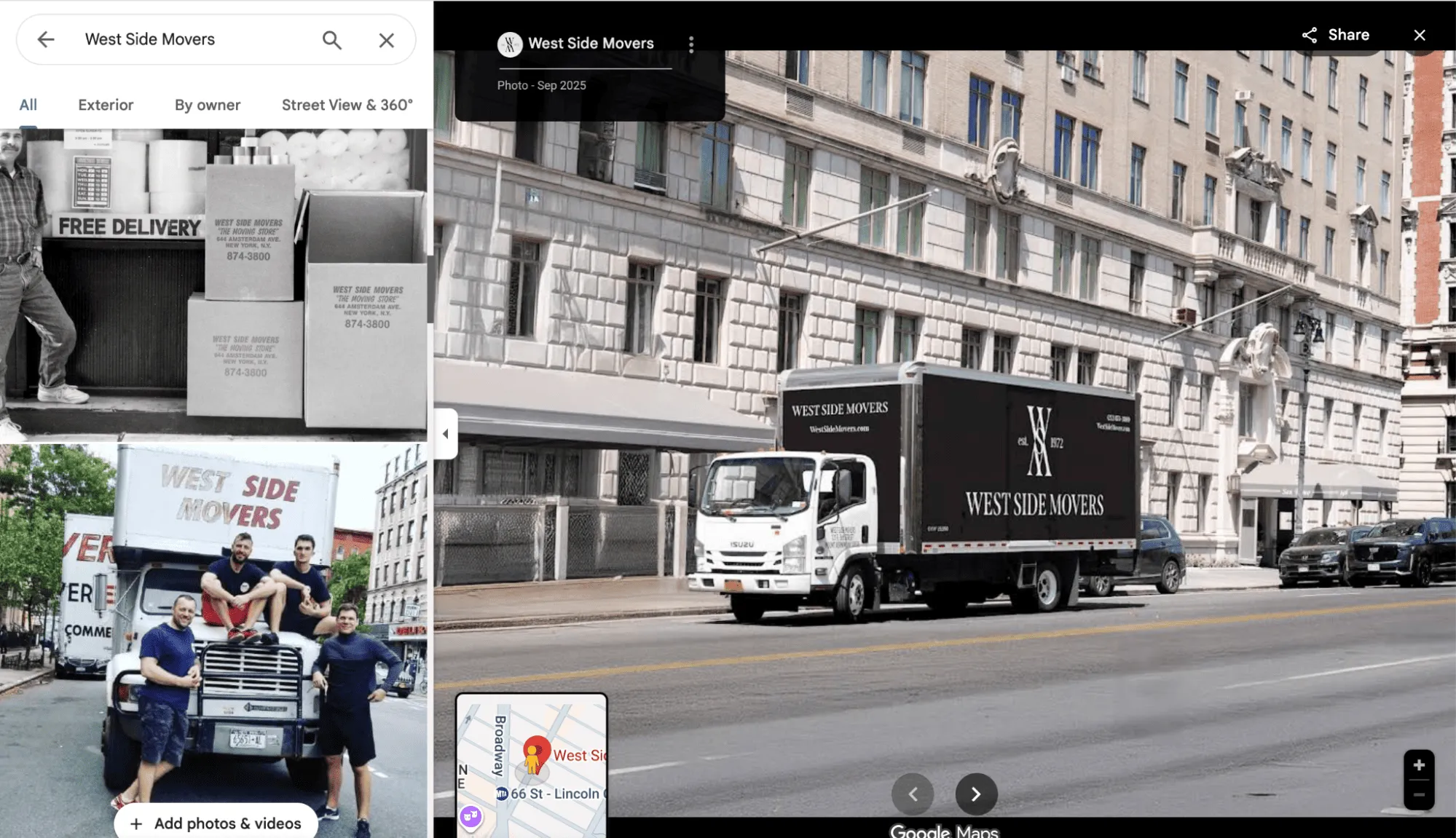
Business results: Businesses with photos on their Google Business Profile get 35% more website clicks and 42% more direction requests than those without images.
Step 6: Add Useful Tools – Calculators or Forms
When people plan a move, they typically have the same questions about cost, number of boxes, moving timeline, and more. If your website can answer these questions instantly with simple tools, users are more likely to stay and request a quote.
These are interactive elements you can use:
-
Move cost calculator
-
Box quantity estimator
-
Inventory checklist form
-
Move date availability checker
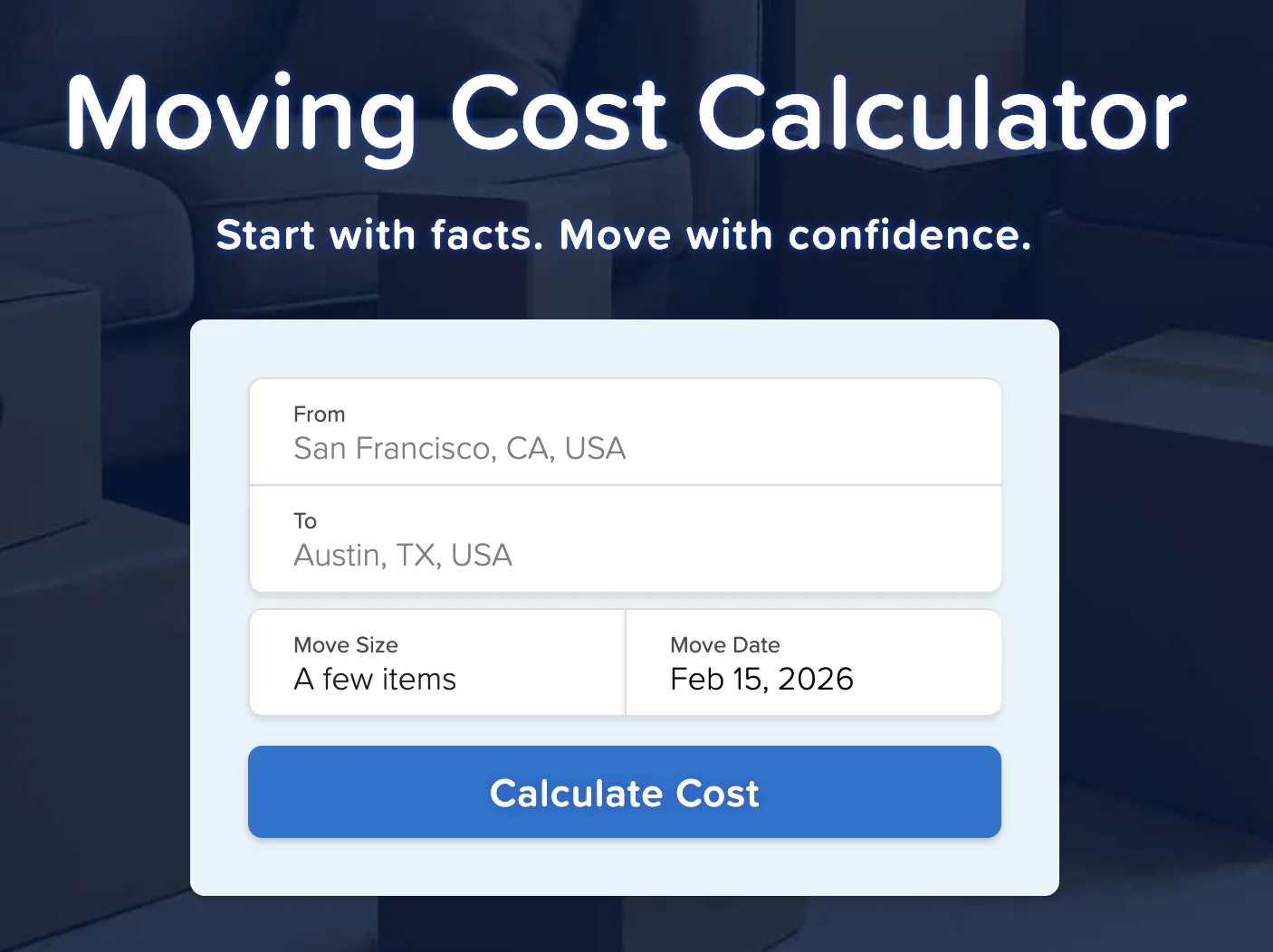
Business results: Interactive content (calculators, quizzes, forms) generates 2× more conversions than passive content.
Step 7: Earn Trust Signals and Mentions
Trust signals and mentions are the online proof that your company is real and reliable. For local moving companies, this includes:
-
Listings in directories (Google, Yelp, local directories)
-
Mentions on partner sites (realtors, storage companies)
-
Reviews across platforms
-
Consistent contact info (name, address, phone)
-
Media mentions or local articles
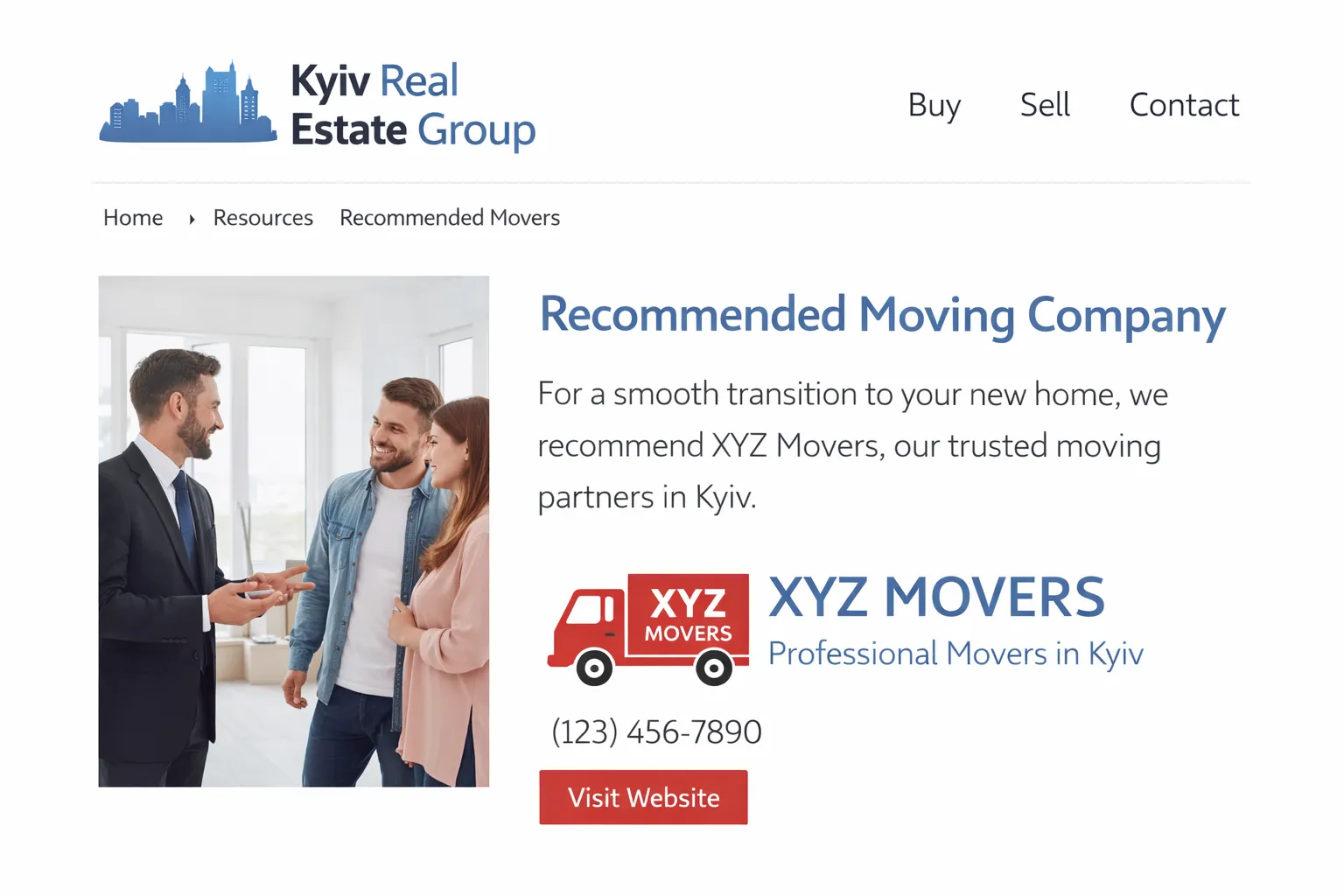
Business results: Businesses listed on 10+ directories saw 80% higher Google visibility. Those same businesses saw 67% more consumer actions (calls, clicks, visits).
Step 8: Monitor Competitors and Seize the Initiative
If several competitors create pages with keywords like "office movers business district," it signals that those areas generate leads. If competitors highlight same-day moving or packing services, you can create or improve these pages to compete.
Customer reviews can also highlight your strengths and weaknesses. For example, if customers complain about late arrivals, poor communication, or hidden fees, you can emphasize an on-time guarantee or transparent pricing.
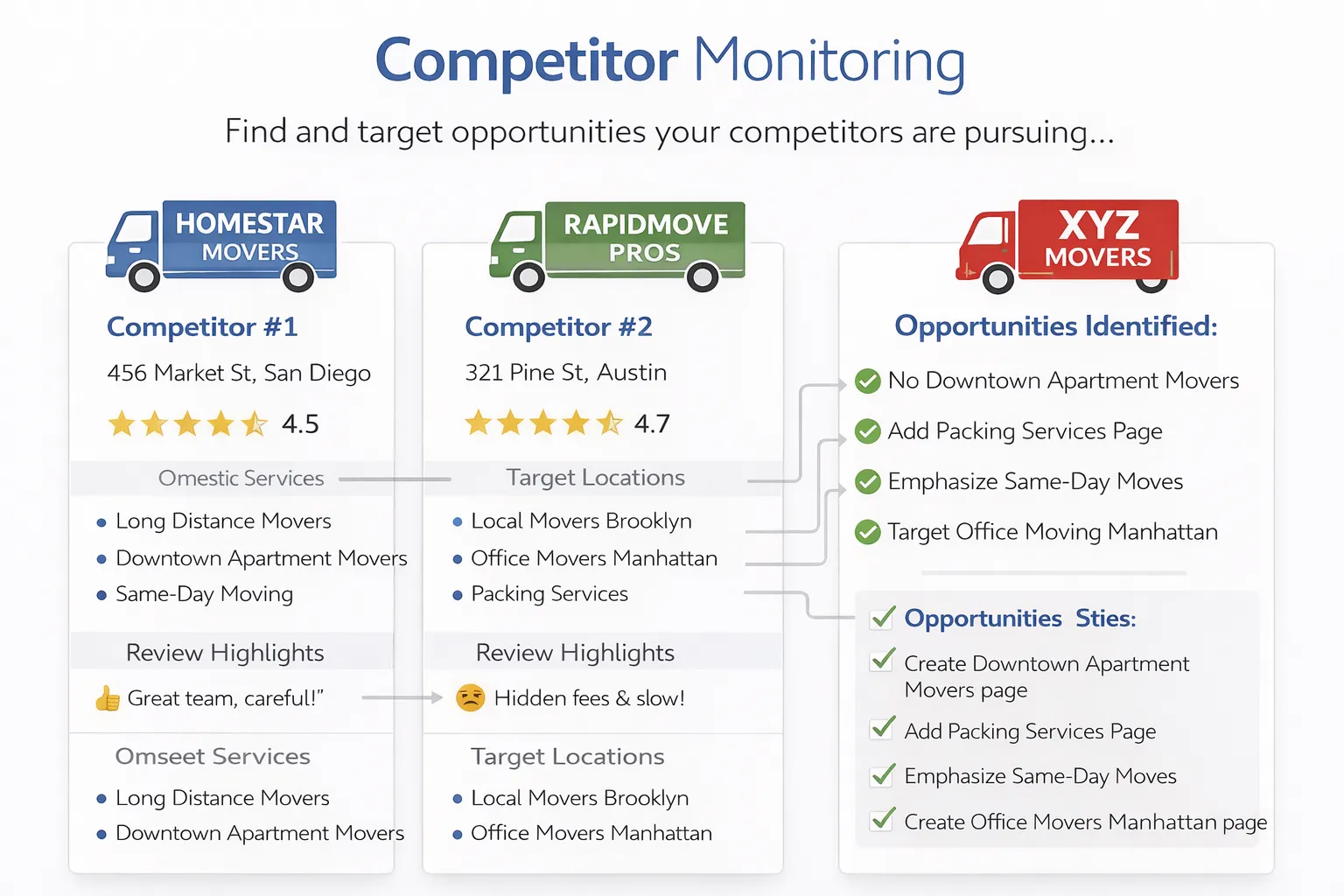
Business results: Companies that systematically track competitors are 2× more likely to see revenue growth.
Step 9: Provide a Personalized Approach to Each Client
Every move is different: apartment vs. house, stairs vs. elevator, short distance vs. long distance. When people hire movers, they’re trusting someone with their memories and valuable belongings.
If you adapt to their situation, you come across as professional.
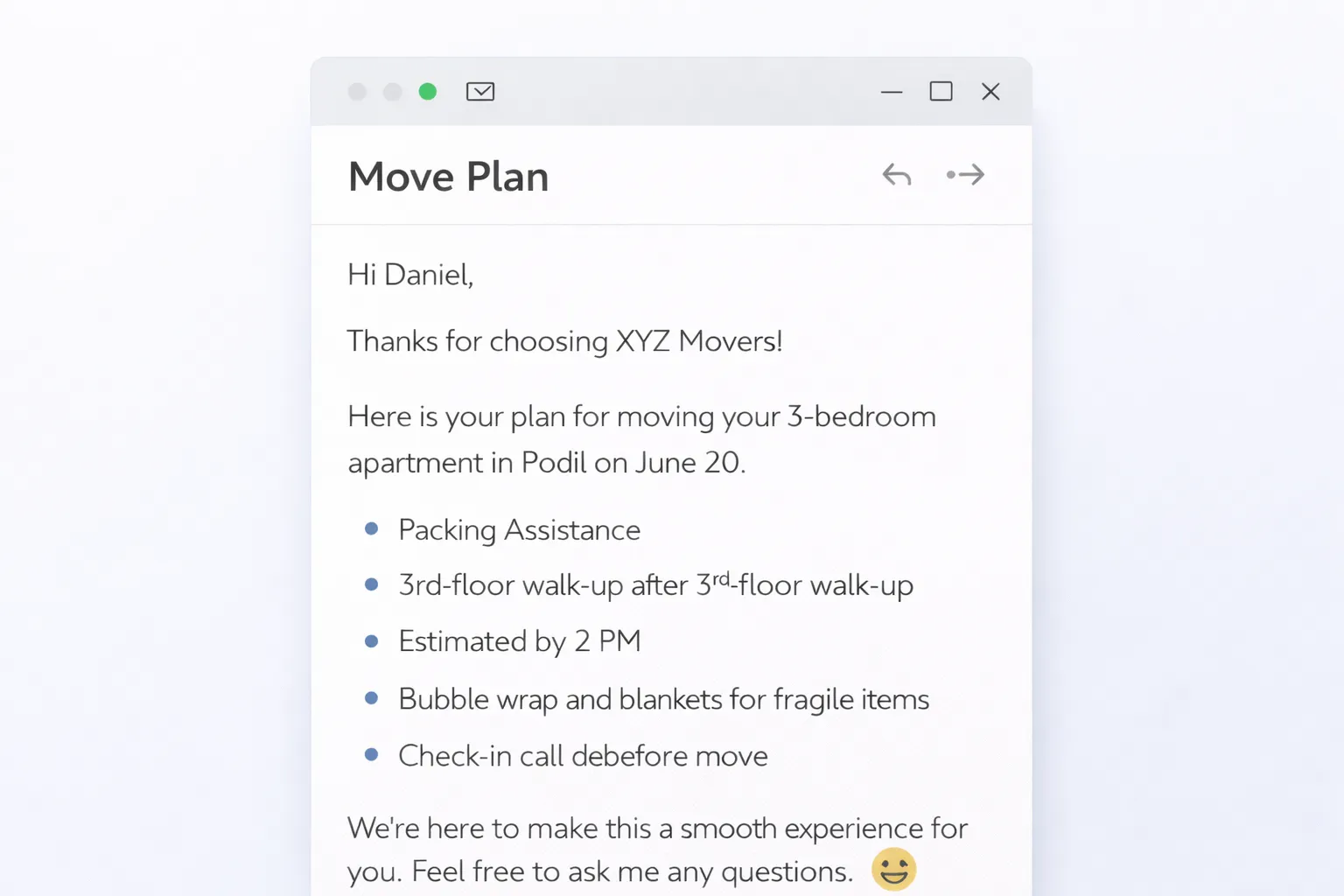
Business results: Personalized customer experiences can increase conversion rates by up to 202%.
Step 10: Target Clients with Hyperlocal Keywords for Moving Company
People rarely search broadly for movers in an entire city or a state — they search for movers near their exact neighborhood or landmark. That’s where hyperlocal keywords win.
They are combined: Service + very specific location. For example, “Movers in Downtown Austin.”
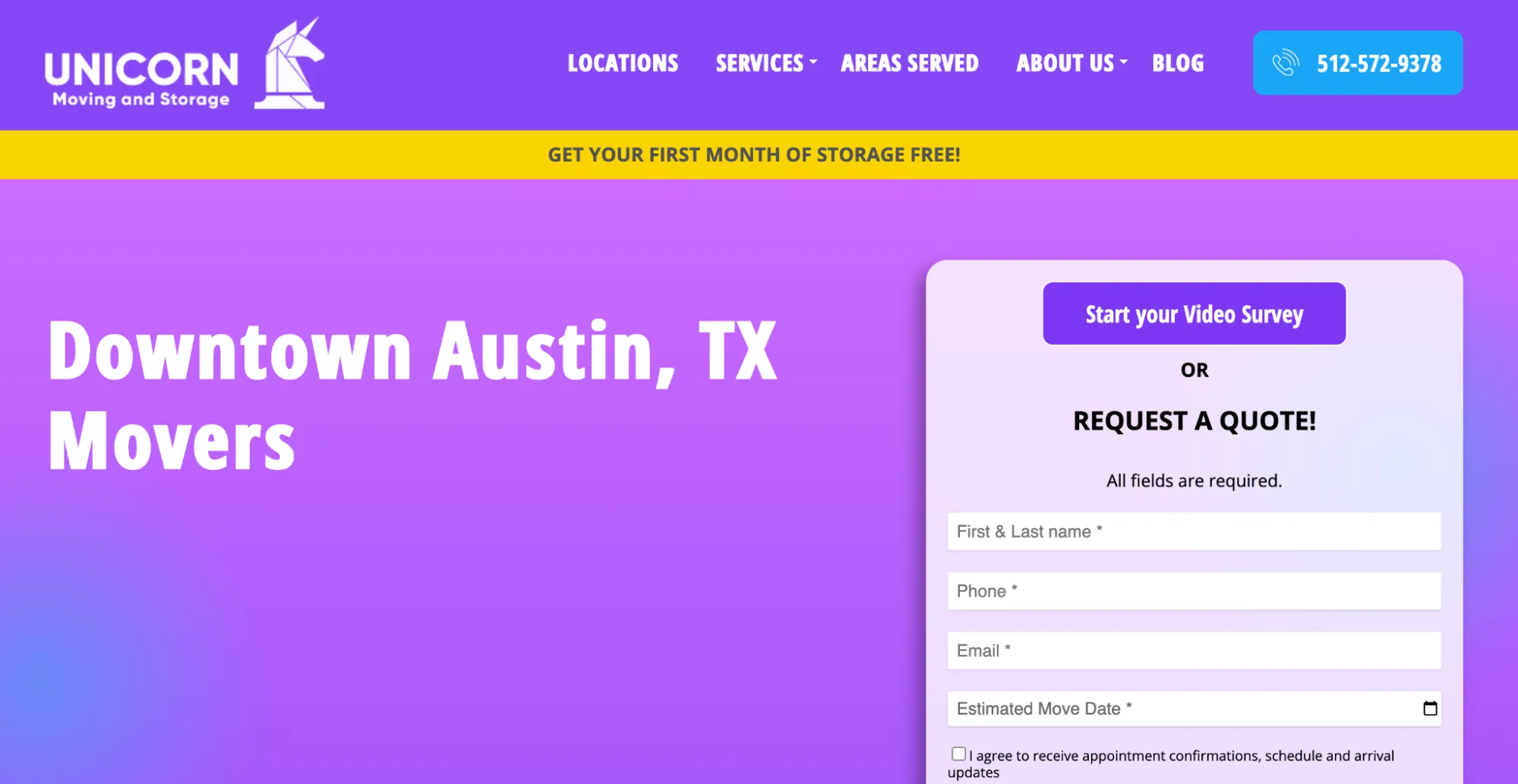
Business results: Local searches convert 80% of the time, and 76% of mobile local searches lead to a visit within a day.
Step 11: Demonstrate Expertise with Cases
A case study is a short, real-world example of a completed move. It shows what the client needed, the challenges you faced, how you addressed them, and the result.
Moving is perceived as high risk by customers: fragile items, tight spaces, expensive furniture, deadlines, stairs/elevators. People want proof you’ve handled similar situations.
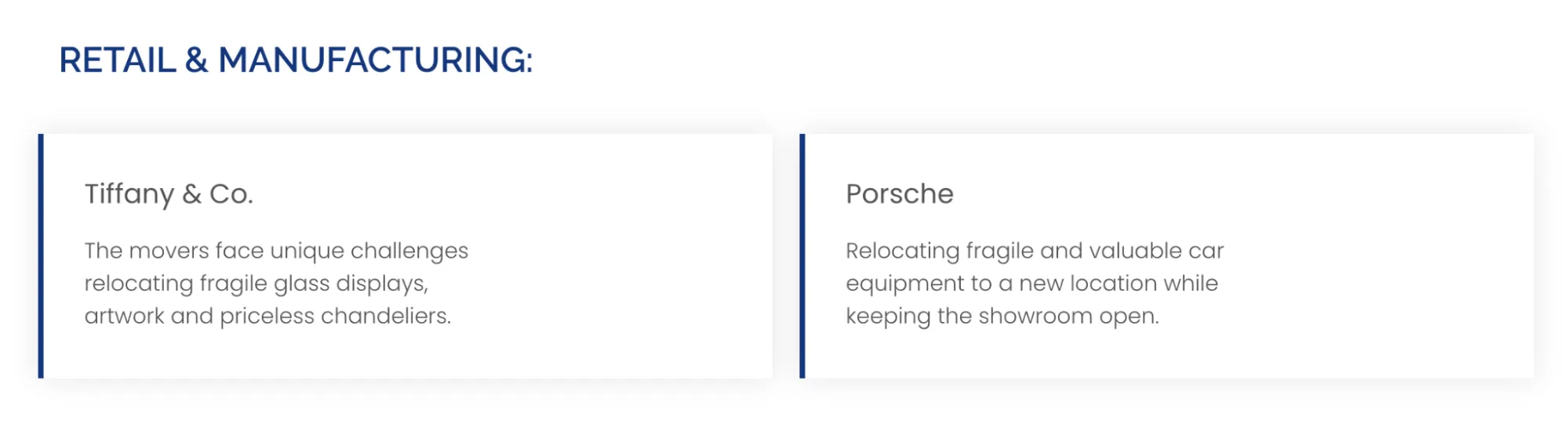
Business results: Displaying social proof such as case studies and testimonials can increase conversion rates by up to 34%.
If you're interested in specific regional tips, read our article about moving SEO in Illinois or about moving SEO in Boston.
Which SEO Steps Should You Use by Experience Level?
Not every moving company needs the same SEO setup at the same time. The appropriate steps depend on how well-established your business and marketing are:
-
Beginner: Small or newly growing local mover with 0-6 months of SEO experience, low or minimal budget, and no SEO specialist (DIY or occasional help)
-
Intermediate: Established local or multi-area mover with 6-24 months of SEO experience, high SEO investment, and SEO specialist (freelancer or part-time agency support)
-
Expert: Established mover with 2+ years of SEO experience, moderate budget, and SEO specialist (dedicated one or agency)
|
Step |
Beginner |
Intermediate |
Expert |
Why to Use |
|
1. Perfect Google Business Profile |
✅ Core |
✅ Core |
✅ Core |
Foundation of local visibility |
|
2. Mobile & Voice Optimization |
⚪ Basic |
✅ Core |
✅ Advanced |
UX + rankings in competitive markets |
|
3. Location Pages |
⚪ 1–2 pages |
✅ Core |
✅ Advanced |
Scale hyperlocal coverage |
|
4. Fast Response |
✅ Core |
✅ Core |
✅ Core |
Conversion driver at all levels |
|
5. Real Photos |
✅ Core |
✅ Core |
✅ Core |
Trust signal everywhere |
|
6. Tools & Forms |
⚪ Simple form |
✅ Core |
✅ Advanced tools |
Engagement & lead capture |
|
7. Mentions & Trust Signals |
⚪ Basic directory llistings |
✅ Core |
✅ Advanced authority |
Local citations → authority |
|
8. Competitor analysis |
⚪ Occasional |
✅ Core |
✅ Advanced |
SEO strategy & gaps |
|
9. Personalization |
⚪ Basic |
✅ Core |
✅ Advanced |
Conversion & reviews |
|
10. Hyperlocal Keywords |
⚪ City level |
✅ Core |
✅ Advanced neighborhoods |
Ranking scale |
|
11. Case Studies |
⚪ Few |
✅ Core |
✅ Advanced library |
Proof & E-E-A-T |
“The quickest way to a steady lead stream is matching urgency with trust: make it frictionless to call/text from your GBP and mobile site, then back it up with recent reviews, real photos, and hyperlocal pages that prove you actually move in that area,” — Andriy Tarasenko, SEO Team Lead at Netpeak US.
How AI Reshaped SEO for Moving Businesses in 2026?
SEO for moving business has always focused on local and urgent searches, but in 2026, AI-powered search results and hyperlocal intent have reshaped the landscape. Industry leaders are adapting by shifting their focus from ranking pages to becoming the trusted local entity that AI recommends.
AI Overviews & Zero-Click Dominance
AI Overviews already serve billions of users monthly, and 92% of users who see them don’t scroll to search results.
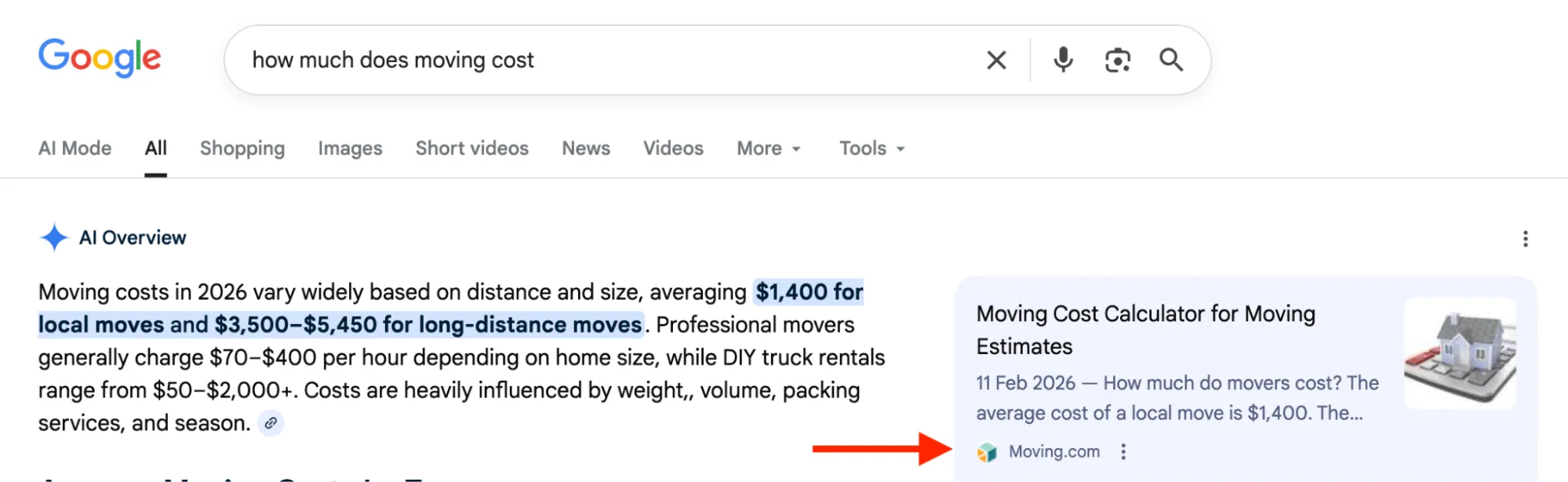
Your moving company should optimize its entire local presence so AI can confidently recommend it: send the right signals via GBP data, reviews, local citations, and content across platforms, because AI pulls business info from the Knowledge Graph ecosystem.
We at Netpeak conducted an experiment to test whether AI would mention our brand in chatbot responses. Read our article to find out what we learn.
How leading moving companies adapt: Moving.com publishes quality content, so when someone searches “how much does moving cost,” they’re recommended by AI Overviews above everyone else.
Neighborhood-Level Precision
It is the practice of optimizing your moving business for specific geographic areas within a city — districts, neighborhoods, ZIP codes, landmarks, or micro-regions: “Movers Lincoln Park Chicago,” “Movers Near Wrigley Field,” etc.
AI and mobile search favor extremely close businesses. Even slightly closer companies often outrank better-rated ones. Effective neighborhood pages include:
-
streets or landmarks
-
building types
-
parking/logistics notes
-
local move examples
-
neighborhood photos
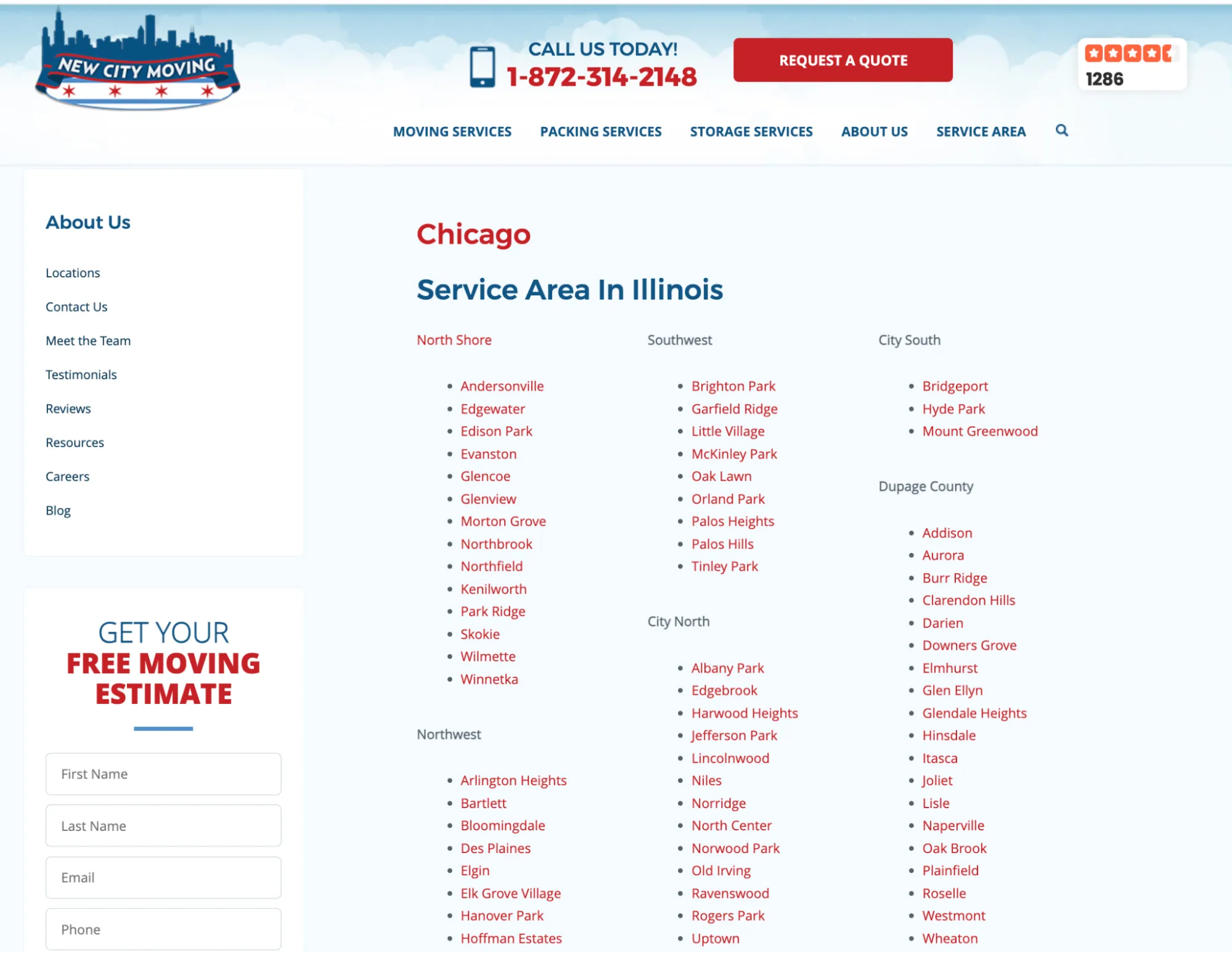
How leading moving companies adapt: New City Moving created service pages for every part of Chicago, so when people see their street or park, they think of the company as an expert in the area.
E-E-A-T of High Priority
AI search, like a standard search, prioritizes expertise, experience, authority, and trust. Brands must demonstrate real-world cases, reviews, mentions, and a consistent presence.
How leading moving companies adapt: We at Netpeak helped a logistics company in the moving sector increase organic traffic by 37% year-over-year on conversion-focused service pages through quality content, link building, and on-page SEO.
Conversational Search for Urgent Requests
Conversational queries are rising with voice and AI assistants. They sound like: “Who can move my apartment tomorrow near me?” Users can find their answers in the AI Overview, in Reddit threads, or in the article recommendations on the right.
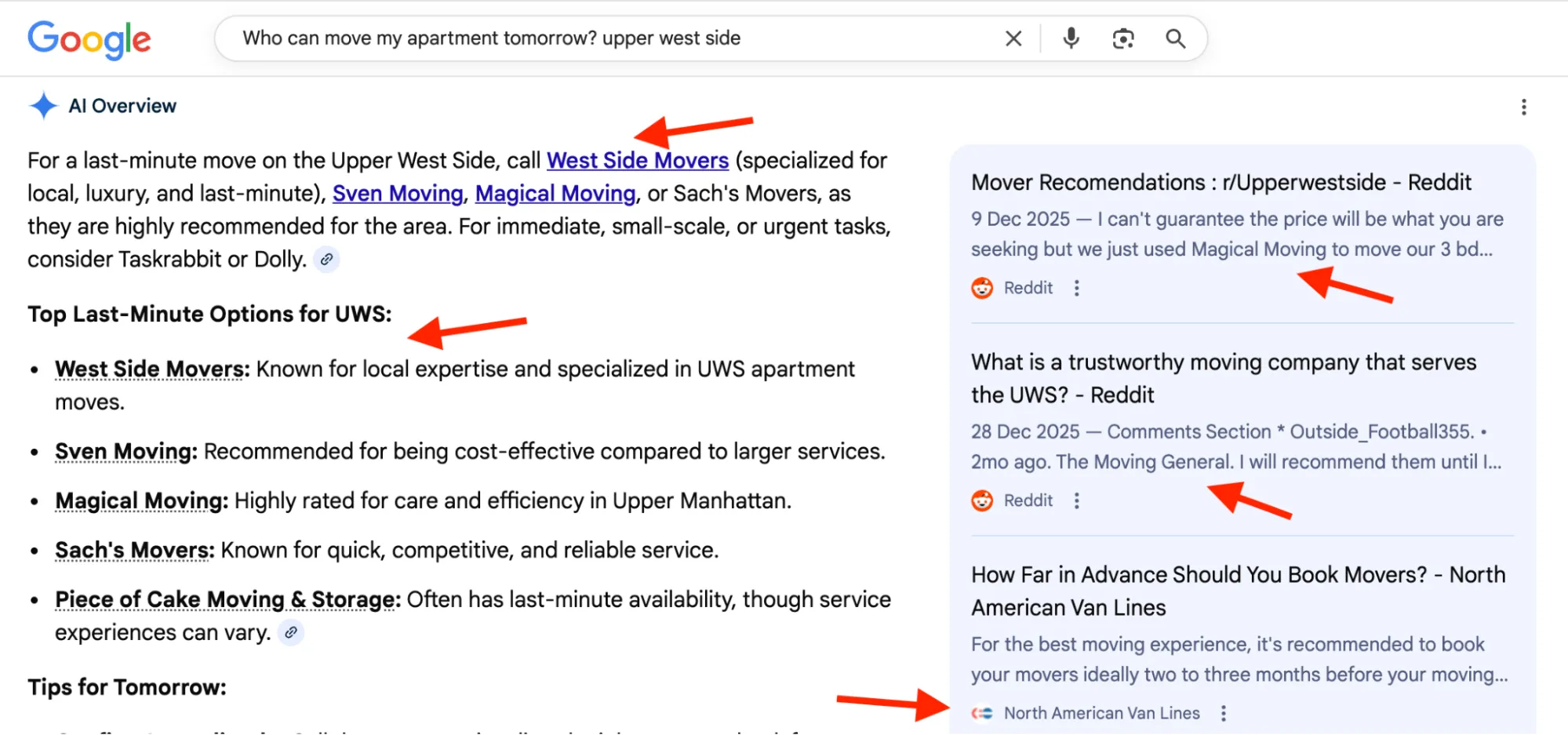
How leading moving companies adapt: Magical Moving has adapted its content for conversational search, so it appears three times in AI results above. They have an active blog with moving tips that answer users’ questions in plain language. AI uses these answers for its own.
Long-Tail Intent Prevails
AI search matches detailed intent better than broad keywords, so SEO moves from generic keywords to long-tail ones. For example, “same-day movers Brooklyn,” “piano movers Chicago stairs,” “office movers downtown Austin,” etc.
You need to use these keywords on your website and in your local content.

How leading moving companies adapt: LogiMove shared a case study where they targeted long-tail local keywords and focused on user intent phrases. Result: 150%+ organic traffic growth and page-1 rankings for “affordable movers near me.”
Template: SEO for Moving Companies: Quick Checkup Checklist
Final Thoughts
SEO for moving company is how potential customers find you at the exact moment they need help. When someone searches “movers near me,” the businesses that appear are the ones that would close the deal.
Moving company local SEO today is about your website, but also about Google Business Profile, reviews, local pages, and overall reputation across the web. Movers who understand this shift and build a strong local presence are far more likely to be recommended by both search engines and AI.
FAQ
I have unique content on my website — why is my moving business ranking so low?
Unique content alone is not enough — Google also evaluates your local signals, backlinks, reviews, and technical quality. If competitors have stronger Google Business Profiles, more reviews, and better backlinks, they may rank higher even with simpler content. SEO is a system, not just text on a page.
Where to start with moving SEO?
Start with your Google Business Profile — fully optimize it, add real photos, services, and collect reviews. Then make sure your website clearly explains your services and the cities you serve. After that, work on backlinks and consistent content updates.
If there is no mobile website, do I lose to my competition?
Yes — most people search for movers from their phones, often in urgent situations. If your website is slow, hard to navigate, or not mobile-friendly, users will leave quickly, and Google will notice. A mobile-friendly website is no longer optional — it directly affects rankings and bookings.
How long will it take to get my moving website to the top 3?
It usually takes several months, depending on the competition in your city and your starting point. In smaller markets, results may appear within 3-4 months, whereas in competitive cities, they may take 6-12 months or longer. SEO is a long-term investment, but once you rank, the leads are more stable and cost-effective than paid ads.

 0
0
 0
0
 0
0
 0
0
Related Articles
Sustainability Marketing: 7 Smart Ways to Earn Trust (and Customers)
Learn how to grow your brand efficiently while using eco-friendly marketing practices to build trust and long-term revenue.
Why Your Amazon Pet Ads Are Getting More Expensive Every Quarter Since 2025 (and How Smart Brands Manage It)
What happened to the auction prices? Where is the margin going, and what should be done next quarter?
How to Track Brand Mentions in AI Search? Find Out Whether You Are in the Answer
Being mentioned in an AI search boosts visibility. Discover how to monitor your brand mentions in ChatGPT, Perplexity, or Gemini and follow our approach to higher mention frequency.