
In a world of endless brand noise, trust is the new currency — and sustainability marketing is how you earn it. You can always buy more clicks, but credibility doesn’t come that easily — it’s built over time, step by step.
Nowadays, people don't just buy products; they buy the impression that those products create of them. The brands they choose become part of how they express their identity. And as sustainability becomes a priority for Gen Z and Millennials, it’s also becoming a powerful way for brands to connect with these audiences.
In this article, you’ll find a sustainable marketing definition and the role of sustainability in marketing. You’ll learn why, in a world where trust converts, going “green” might be your most profitable move to improve performance and build long-term customer relationships (on the IKEA, Adidas, and Patagonia examples).
- Sustainability Marketing: Good for the Planet, Great for Business
- 7 Sustainable Marketing Strategies Where “Going Green” Meets Making Money
- Go Multichannel: Why It Works Best for Sustainability
- How to Market Sustainability: Learn from the Best Case Studies
- Where Good Intentions Meet Real Challenges
- Final Thoughts: What Is Sustainable Marketing
- FAQ
Sustainability Marketing: Good for the Planet, Great for Business
Sustainability marketing is a way for businesses to promote their products while reducing environmental impact, supporting social responsibility, and focusing on long-term value.
Sustainability became a trend gradually, especially over the last 10-15 years, and accelerated after 2020. Famous examples of brands using green marketing are IKEA, Adidas, Patagonia, etc.
And while it’s a great initiative for the planet, it’s even better for the company's revenue. When you reduce waste with sustainability in marketing, your numbers improve naturally:
-
Customer acquisition costs go down because you stop paying for irrelevant clicks and low-quality traffic
-
Conversion rates go up because your messaging is clearer and more aligned with real customer needs
-
Lifetime value increases because you attract people who trust your brand and are more likely to come back
Why Green Strategies Work for Businesses
At its core, sustainability marketing aligns with how people think and buy today. The brands they choose become a reflection of who they are. And when sustainability is part of that identity, customers naturally gravitate toward brands that help them express it:
-
According to Nielsen, 73% of global consumers would change their consumption habits to reduce their environmental impact
-
IBM research shows that around half of consumers are already paying more for sustainable products
-
And according to PwC, consumers are willing to spend nearly 10% more on sustainably produced goods, even in challenging economic conditions
This is especially true for Gen Z and Millennials: when they connect with a brand’s values, they are happy to become its ambassadors. They not only buy once, but also come back again, recommend you to friends, and share posts about it on social media.
Can Small Businesses Compete in Sustainability? (Yes — and Often Better)
It’s easy to think sustainability is something only big brands can afford with their budgets, teams, and global initiatives. But in reality, small businesses often have an advantage: authenticity and flexibility.
For example, Beco Pets makes poop bags, bowls, and soft pet toys from recycled materials.
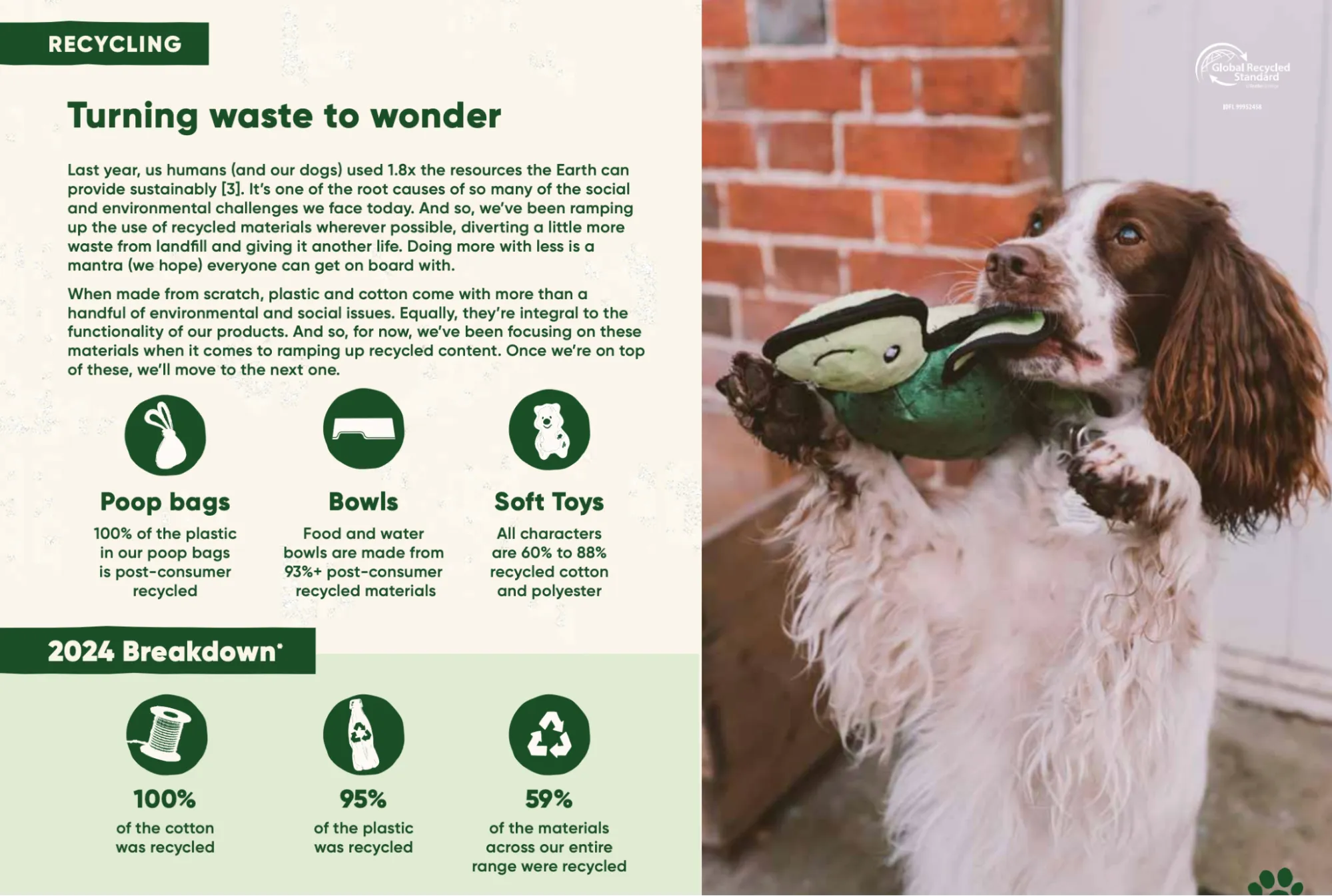
You don’t need a large-scale program to start. What matters is:
-
Making small, real improvements (packaging, processes, sourcing)
-
Being transparent about what you’re doing
-
Communicating it simply and honestly
In fact, small businesses often feel more trustworthy because their actions are closer, more visible, and more personal.
So, let’s find out what practical steps your brand can take right now to convert trust into long-term revenue. And help a planet, of course!
7 Sustainable Marketing Strategies Where “Going Green” Meets Making Money
Sustainable digital marketing doesn’t have to mean big changes or complicated initiatives. Often, it starts with small improvements in how your business works — things that don’t disrupt your routine or require major effort.
How its elements look in practice:
#1: Be Efficient in Your Marketing
Every ad impression, click, and page load consumes energy (servers, data transfers, and user devices). So, sustainable advertising reduces your digital carbon footprint.
You can lessen unnecessary energy use by targeting the right audience, avoiding irrelevant clicks, and cutting low-quality placements.
How to do it right:
-
Optimize page speed, image sizes, and scripts to reduce energy use per visit. Heavy pages (large images, scripts, videos) require more energy to load.
-
Use Google Ads extensions to show as much info as possible and avoid unnecessary clicks.
-
Update and repurpose existing content. Creating new campaigns constantly means more design, uploads, data storage, and distribution.
-
Optimize funnels from visit to purchase. If users drop off or get confused, they repeat actions (reload pages, revisit, click multiple times). Less digital “friction” = less energy spent.
It’s good not only for the environment but for your online business: lower ad spend for the same (or better) results, higher ROI (return on investment) per channel, and more profit from existing traffic.
#2: Help Potential Customers Choose Better, Not Faster
People are oversaturated with "buy now" messaging. Instead of pushing them at all costs, help users decide if, when, and what to buy.
“People are unlikely to see you as a lifestyle brand if you spam them. You can become a ride-or-die brand they can brag about during cocktail parties if you have an image that is worth bragging about. Yes, this approach is not a size-fit-all for every company, but it is a go-to if you are building a brand & think long-term.”
Valeriia Karbusheva, Head of Blog & Marketing Specialist at Netpeak US
To make better purchasing decisions possible, use:
-
Product/service explanations with no hidden conditions
-
Comparisons (“this vs that”)
-
Honest fit: who it’s for and not for
For example, an online skincare store might publish: "You don't need a 10-step routine." This kind of transparency in Google search results builds immediate trust.

For your business, a sustainable marketing concept reduces low-quality lead generation, lowers refund/return rates, and improves reviews. You don't trick people into buying; they feel that you genuinely wanted to help, and it’s how brand loyalty arises.
#3: Use Long-Term Strategies: Be Ready for a Marathon, Not a Sprint
Invest in green marketing that compounds, not disappears, when the ad budget stops. This approach is more cost-effective because the content keeps working over time and shows that your sustainability efforts are consistent, not new.
The most solid way to do so is to do market research and then:
-
Master local SEO, improve your Google Business Profile, and ask for customer reviews to catch consumer demand and the local target audience
-
Create SEO pages with specific keywords that answer real queries
-
Use an evergreen content strategy for blog posts (guides, FAQs, use cases)
-
Run link building and hunt for quality backlinks to your blog content
-
Practice email marketing and create loyalty programs to create a customer base and make it easy for people to come back
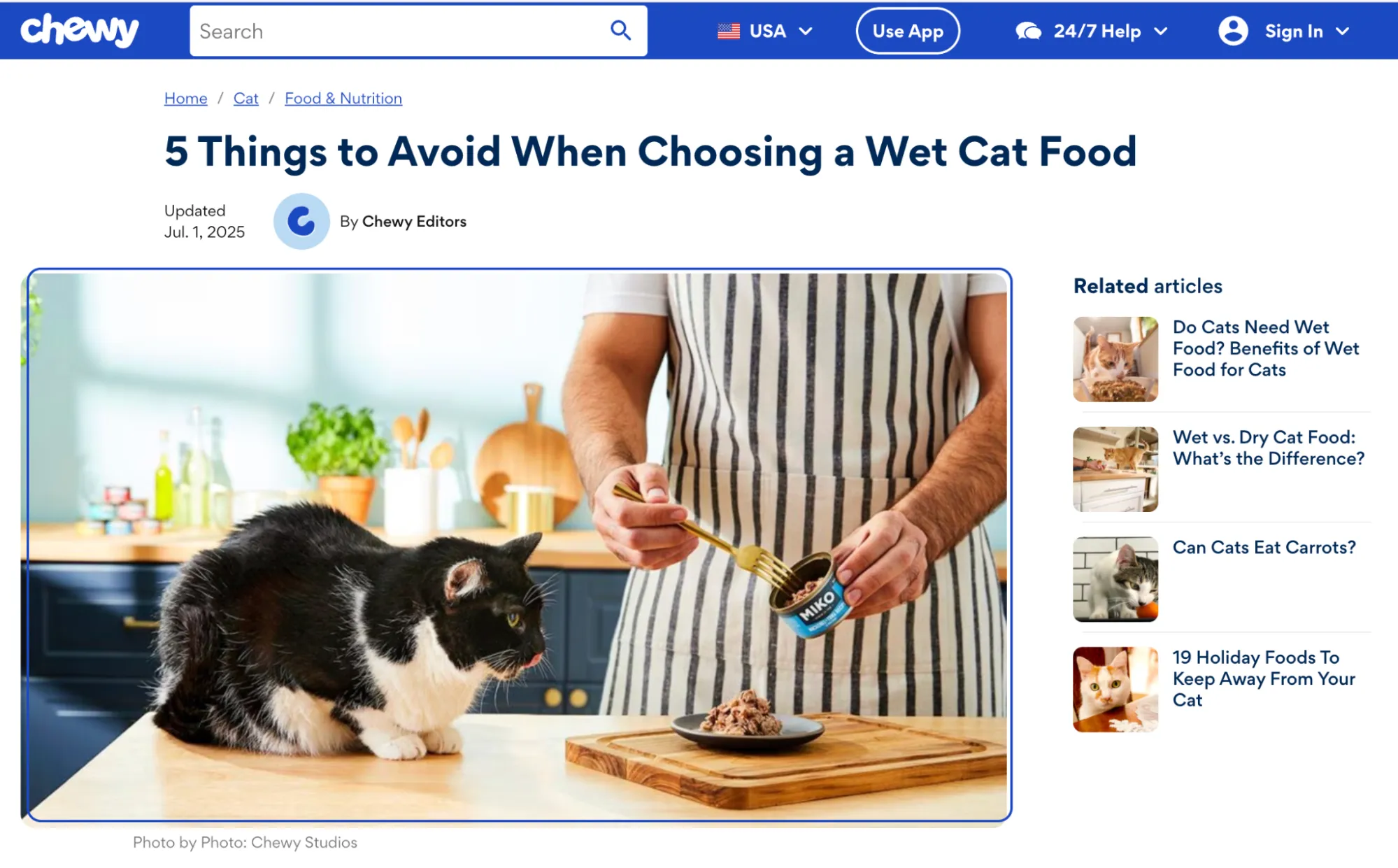
With a sustainability marketing strategy, your business starts to pay less to get each new customer as your marketing gets stronger; buyers keep coming even after the ads stop running, and people come back.
Build traffic once, benefit for years — here’s how SEO makes growth sustainable.
#4: Show Real-Life Actions: Do Good While Doing Business
Your brand needs to show awareness of its impact on people, communities, and environmental issues.
What you can change right now:
-
Communicate honestly without pressuring, exaggerating, or playing on fear
-
Naturally represent diverse audiences with different ages, backgrounds, and lifestyles; avoid showing a “perfect life.”
-
Try to link your product/service to a real impact: think about relevant organizations or initiatives you can partner with, donate to, volunteer for, and support the community

Impact for business owners: People trust your online presence more, so they buy more and come back. Your brand feels different and stands out from the competition because people who align with your values become your brand ambassadors.
#5: Avoid Greenwashing: Say What You Mean — and Mean It
Don’t try to sound more impressive than you really are.
Make your marketing clear, specific, and provable:
-
Instead of vague claims like “eco-friendly” or “sustainable,” explain what exactly you did: “we reduced packaging by 30%,” “we switched to recyclable, sustainable materials,” etc.
-
Back up your claims with numbers (before/after results), certifications, standards, or a short explanation of how your process works.
-
Match your message everywhere: website, ads, social media, PR, etc. Don’t say one thing in ads and another on your website, or highlight sustainability in one campaign but ignore it elsewhere.
For example, instead of saying “we’re sustainable,” a furniture brand shows how it redesigned packaging to use less material and fit more items per shipment.
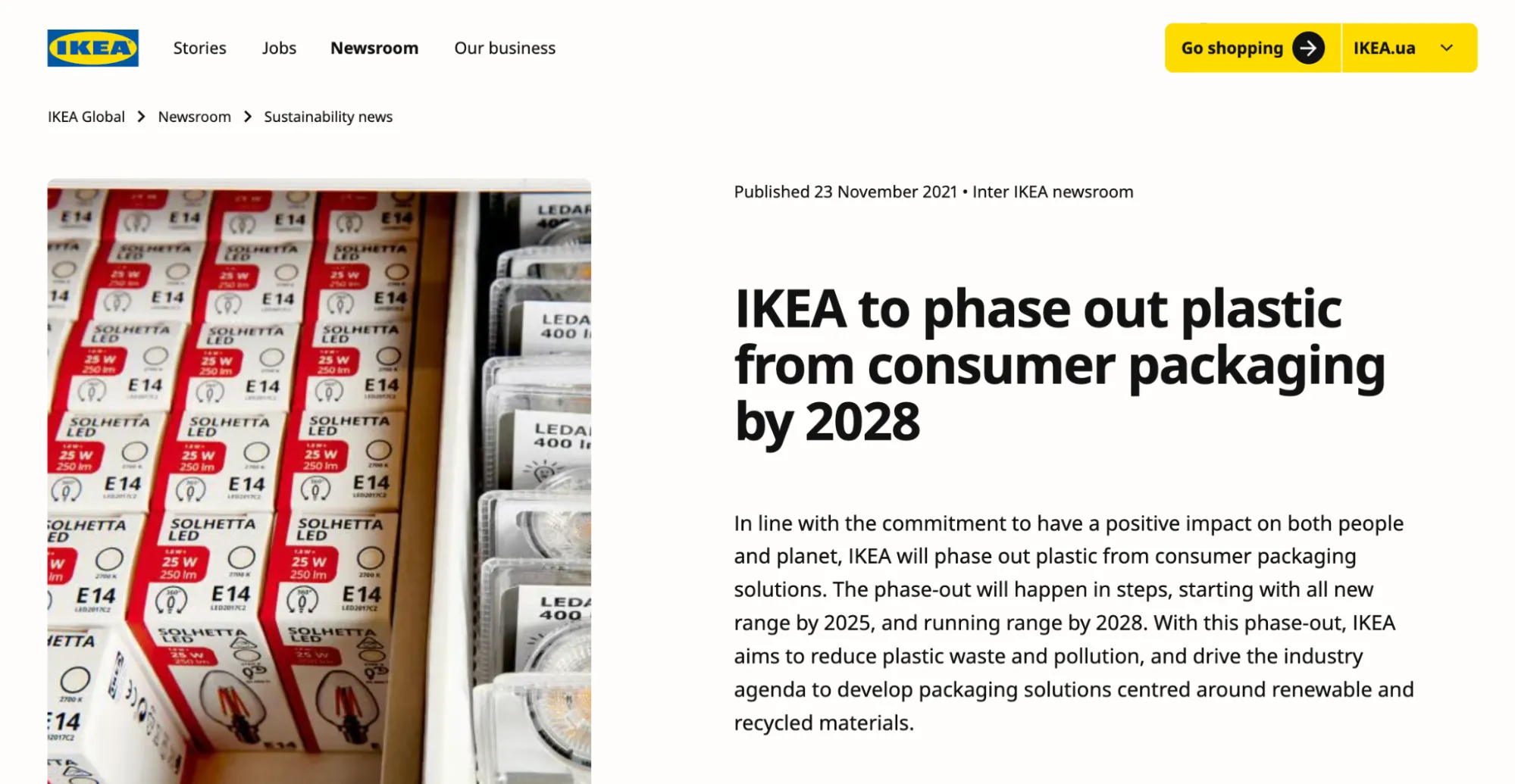
A sustainable marketing strategy protects your business from backlash and reputational damage, builds credibility, and strengthens trust across all marketing channels, not just sustainability messaging.
#6: Share the Full Journey: Highs and Lows
Share your progress and the challenges you're facing. Perfect results look great, but they lack life.
What you can do right now:
-
Share one honest update this week about something you’ve improved — and something you’re still working on.
-
Show behind-the-scenes, not just results. It can be small moments such as testing, changes, decisions, etc.
-
Add a simple “What we’re improving” section on your website or product page. Share what you’ve done and what’s next.
For example, a pet brand can share its progress year by year.
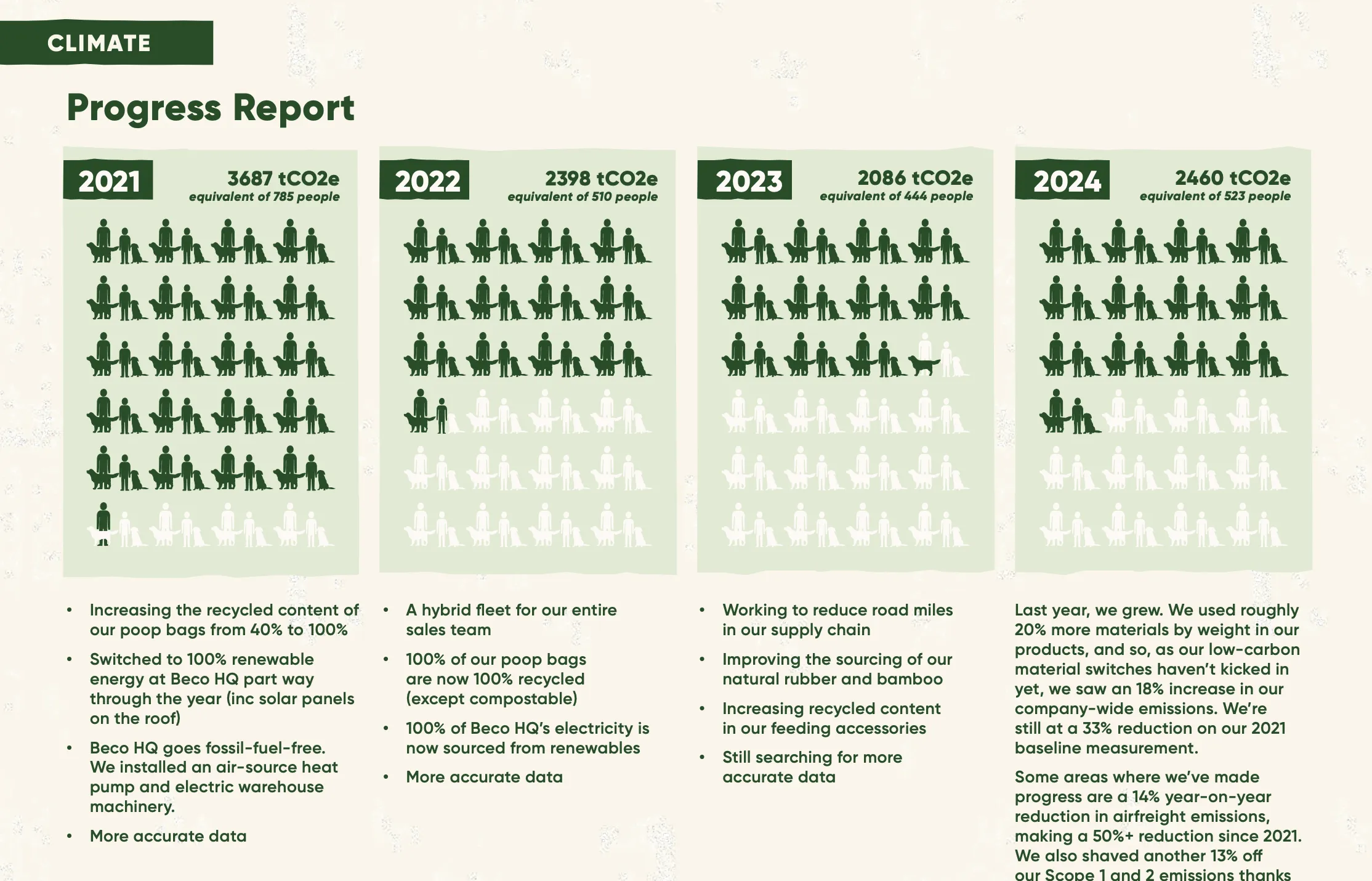
Why it works even for local businesses: Sincerity builds real trust (not just marketing one). It makes your brand feel human, increases brand loyalty, and encourages repeat purchases.
#7: If Sustainability Happens, Post It on Social Media
Sustainability should show up in your everyday content — and social media is the easiest place to do that. You don’t need perfect visuals, just share real moments.
What you can do right now:
-
If you improved something — post it. Small updates are worth sharing.
-
Take quick photos or videos instead of perfect posts. Real visuals feel more trustworthy.
For example, a furniture brand might post a quick video on media platforms showing how a product is repaired rather than replaced, or share a photo of your team members participating in eco-supporting activities.

From a business perspective, this grows your brand awareness, makes it visible, and relatable. Instead of one-off campaigns, you build an ongoing connection with your audience — and often get better results without relying as much on paid ads.
You see, the most valuable effect of sustainability marketing is the remarketing part: that people will come back and buy from your brand more.
If you want to increase sales and create a customer retention strategy, call us at Netpeak! We know how to win back lost customers.
Go Multichannel: Why It Works Best for Sustainability
Using multiple channels that support each other is one of the most effective ways to show that sustainability is part of how your business actually works. When the same message appears across your website, ads, and social media, it stops feeling like a campaign and starts looking like a core part of your brand.
From a sustainability perspective, a multichannel strategy means less waste.
You don’t need to constantly push for new traffic — you get more value from the people already discovering your brand, and your marketing keeps working over time.
Data backs this up:
-
According to Google, people usually interact with multiple touchpoints before making a decision.
-
At the same time, research from Harvard Business Review shows that multichannel customers spend more and have higher lifetime value.
Multichannel marketing isn’t just more effective — it’s a more sustainable way to grow.
We at Netpeak mastered the art of creating sustainable marketing strategies. If you want some help with yours or expert opinion on whether you're doing everything right, call us!
How to Market Sustainability: Learn from the Best Case Studies
The easiest way to understand green marketing strategies is to look at brands that have built them into their business. Come on, let’s learn something from the sustainable marketing examples!
IKEA: Sustainability as a Lifestyle
From a customer point of view, IKEA makes sustainability feel simple and accessible. It’s not something niche or complicated — it’s built into everyday, affordable products. People don’t feel like they need to completely change their lifestyle to “go green” — they can just make slightly better sustainable choices as they go.
What IKEA does is quite practical. They:
-
Use a flat-pack design to reduce transport impact
-
Works with renewable and recycled, sustainable materials
-
Encourages potential customers to repair, reuse, or resell furniture instead of throwing it away
Instead of abstract messaging, they show ways for customer engagement — with quick tricks to save energy at home or steps to extend the life of their furniture.
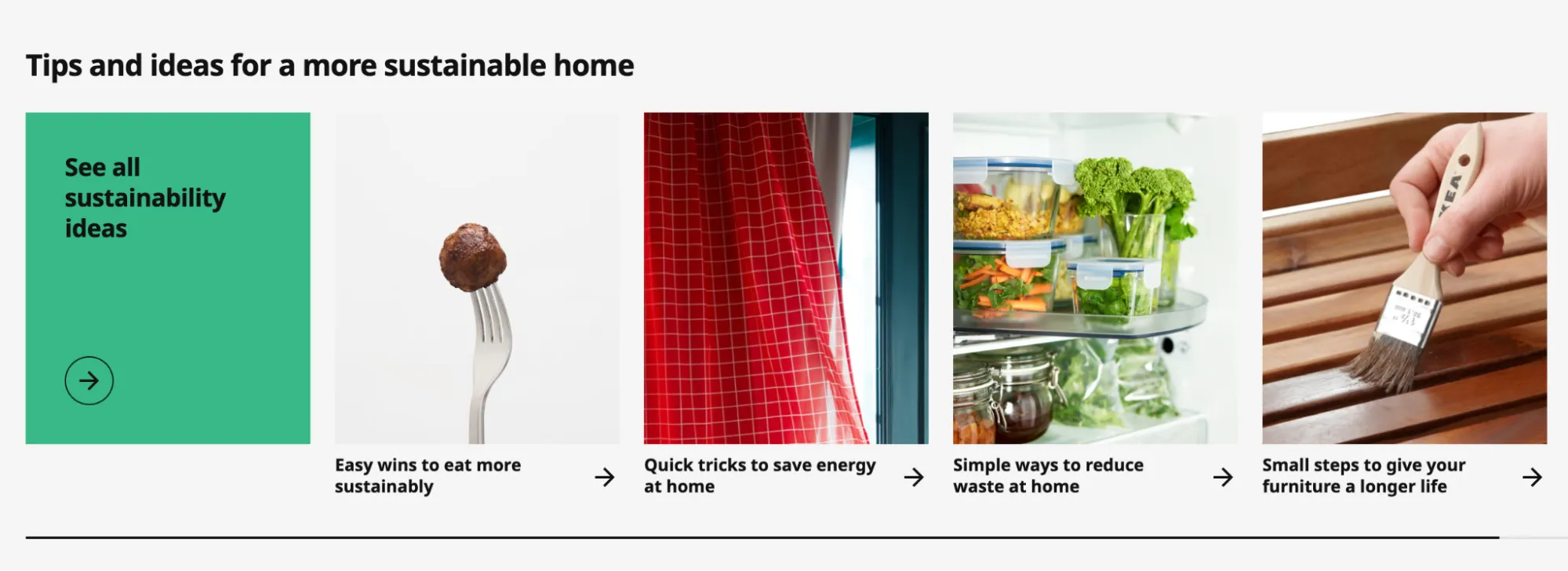
This is supported by clear and consistent communication. IKEA has dedicated service pages on its website, like “Climate and environment” and “Social impact,” where it explains what it’s doing in a simple, transparent way.
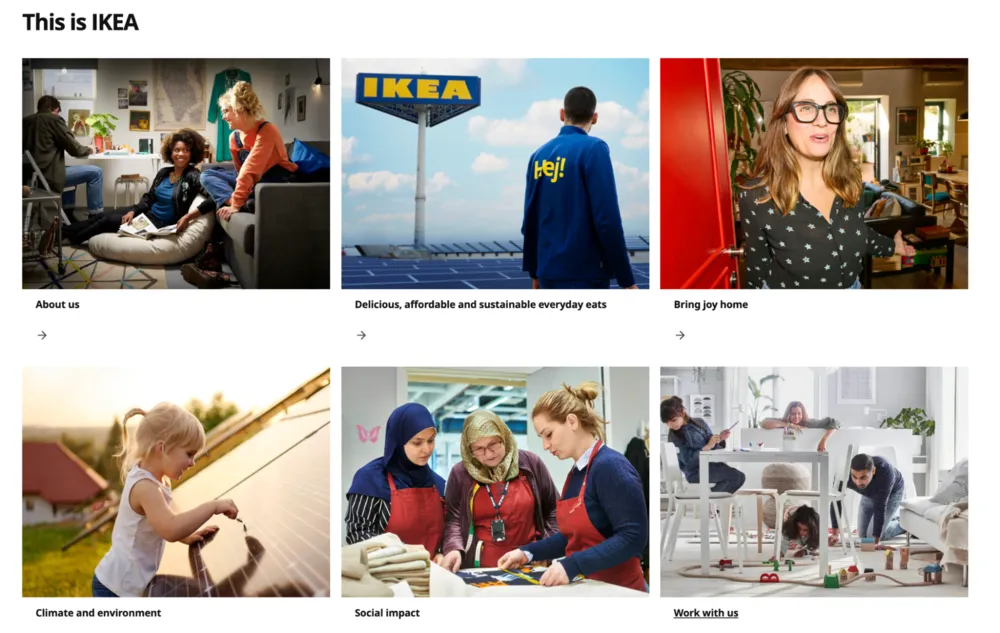
On social media, IKEA shares real stories — from handcrafted women-made products to behind-the-scenes moments. This makes their message feel more human and easier to trust.

From a business perspective, sustainability helps IKEA build a strong, lasting brand. People see it as practical, affordable, and increasingly responsible.
That leads to more trust, repeat purchases, and a stronger connection — especially with younger, more conscious consumers.
Adidas: Sustainability Like a Path
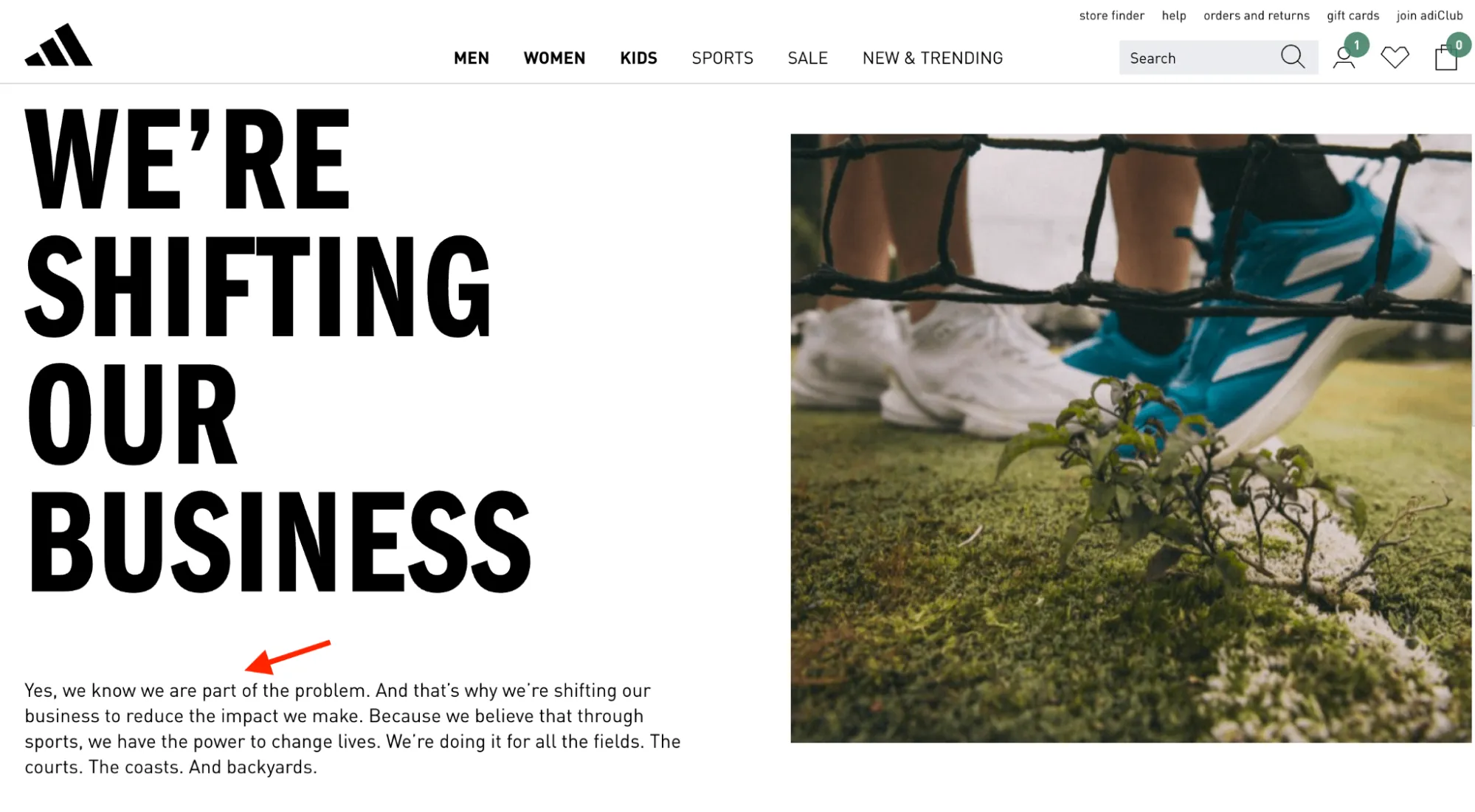
Adidas talks about sustainability in a real, down-to-earth way. Instead of trying to look perfect, it admits it’s part of the problem and shows how it’s working to improve.
That honesty makes people trust the message more and feel less skeptical.
They are actively talking about their actions:
-
Reimagining the materials they use
-
Finding ways to extend sustainable products' lives
-
Reducing their carbon footprint, etc.
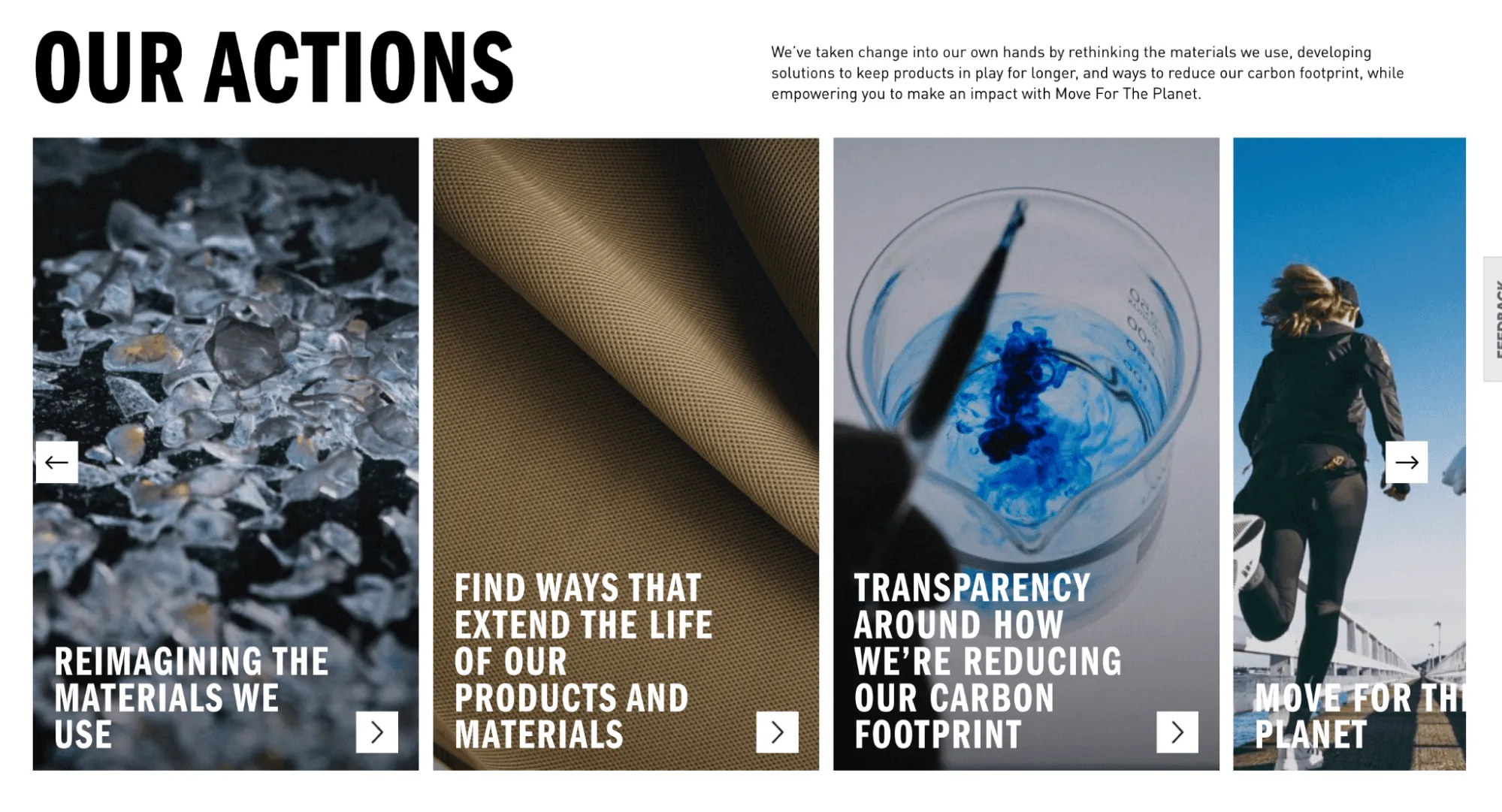
At the same time, Adidas goes beyond just products. Initiatives like “Move for the Planet,” created with the United Nations Climate Change, link physical activity to real environmental impact. Their campaigns also highlight real projects like “Girls United Mexico” and “Organization Earth.”

Business impact: Sustainability helps Adidas stand out. It attracts more conscious new clients and makes the product feel more valuable, not just something to buy.
People choose Adidas for the product, and they additionally feel part of something bigger. That builds a stronger connection and long-term brand loyalty.
Patagonia: Patagonia: High-Level Consistency
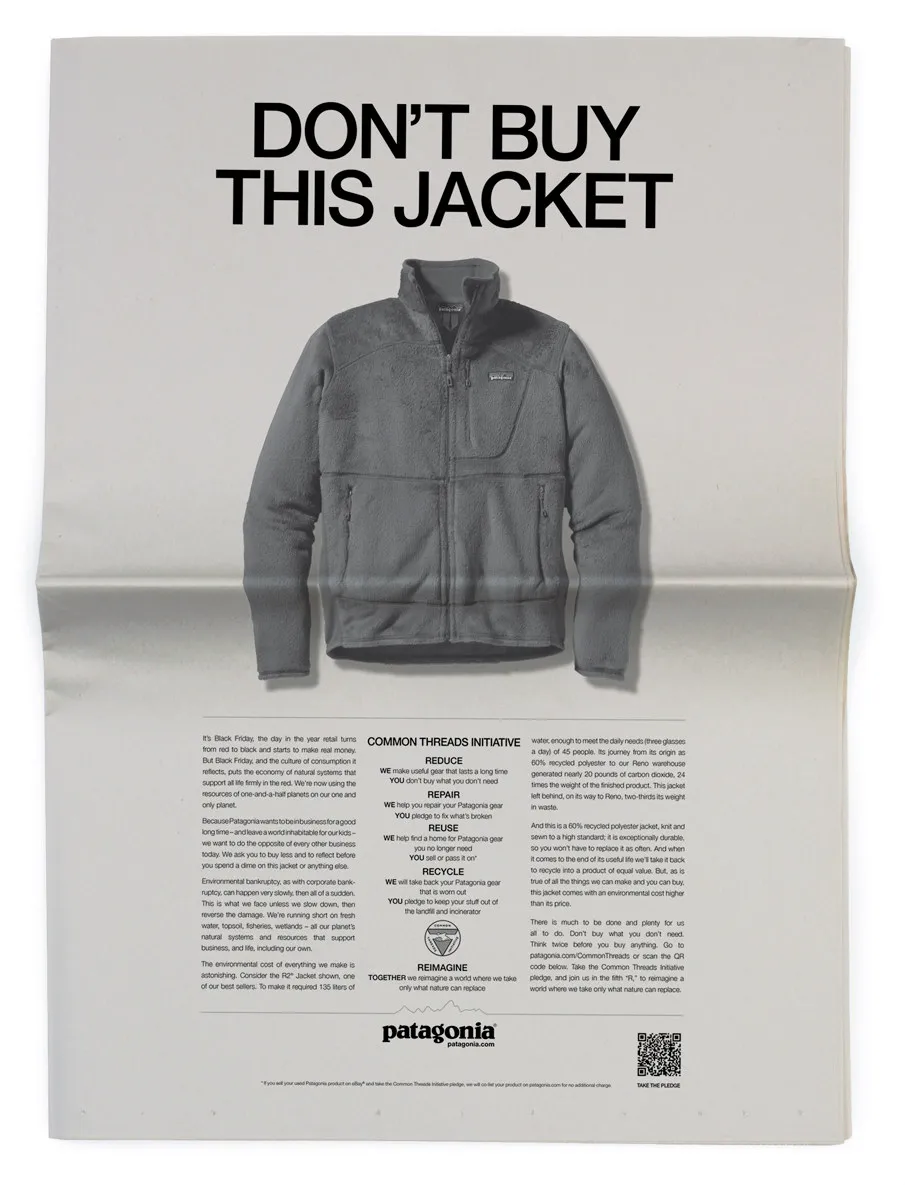
Patagonia took a bold step by telling potential customers to buy less. Campaigns like “Don’t Buy This Jacket” encouraged people to think before purchasing and to repair what they already have.
When a brand says, “Buy only if you need it,” it builds trust. Customers feel respected, not pressured — so they come back for customer experience when they’re ready, care less about price, and are more likely to recommend the brand.
At the same time, the brand made this behavior easy by sharing repair guides and running its “Worn Wear” program.

This works because their entire business supports that message — there’s no gap between what they say and what they do.
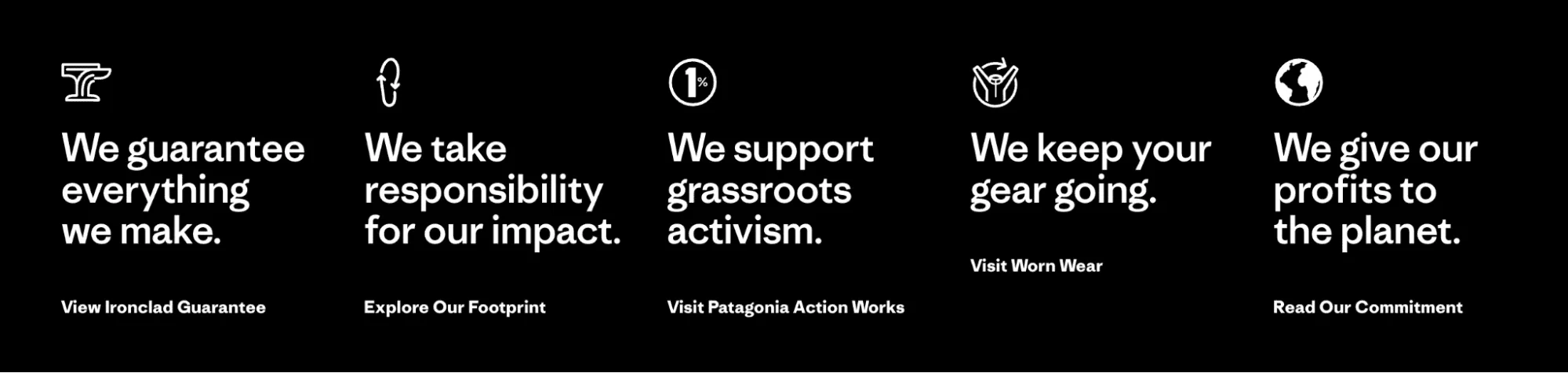
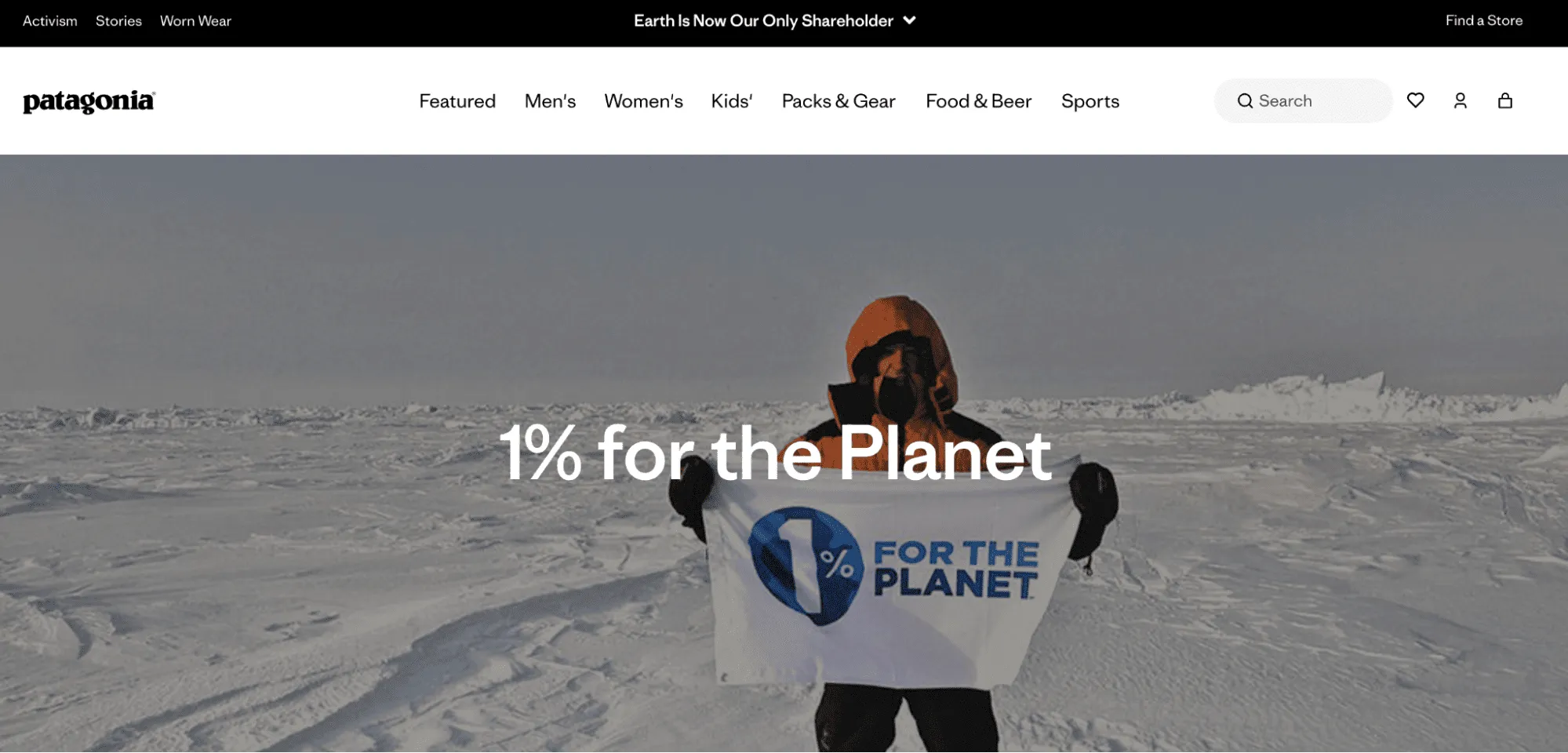
Patagonia even commits 1% of its revenue to the “1% for the Planet” initiative. So potential customers don’t see it as just a campaign — they see a company that has been doing this for years.
Business impact: Sustainability brings better revenue and customer satisfaction. People may get fewer impulse purchases, but they’re more loyal and stay longer.
Over time, this means more stable growth, less need for constant ads, and a brand people already trust.
Read our article to learn more about e-commerce marketing tactics that can help small businesses with sustainable growth.
Where Good Intentions Meet Real Challenges
Sustainable marketing sounds great in theory, but many businesses struggle at the start to balance honesty, performance, and cost. because it requires changing habits. But it’s fixable — and once it's solved, it makes your marketing stronger.
|
Challenge |
What It Means |
How to Fix It |
|
Saying More Than You Can Prove |
Saying things like “eco-friendly” without proof or a clear explanation |
Be specific (“reduced packaging by 30%”), add proof (data, processes, customer feedback), and keep messaging consistent |
|
Not Quite Sure What’s Working |
Not knowing how to track sustainability efforts, and not having clear marketing analytics |
Define clear metrics for your marketing efforts (CAC, LTV, conversion rate), track performance in tools like Google Analytics, and compare before/after |
|
“Green” Seems More Expensive |
At first, sustainable options can look pricey. Better sustainable materials, cleaner processes, or more thoughtful marketing often require higher upfront investment. |
Focus on long-term effect: Lower CAC → you spend less to get each customer over time Less waste → fewer ineffective campaigns and unnecessary costs Higher LTV → customers stay longer, buy more, and trust you more |
|
Short-Term Mindset |
Expecting quick results instead of building long-term assets |
Balance quick wins (optimize ads) with long-term channels (SEO, SMM, and content marketing) |
|
Creating More Than You Need |
It’s easy to fall into the trap of doing more — more ads, more pages, more campaigns — even when they don’t deliver results |
Audit performance, scale what works, and repurpose top content |
|
Teams Not Fully on the Same Page |
Marketing might talk about sustainability, while product or leadership hasn’t fully aligned with those goals. |
Set clear priorities (what sustainability means for your business), align teams around shared goals, and create simple messaging guidelines everyone can follow |
Final Thoughts: What Is Sustainable Marketing
Sustainable marketing is a method that fixes one of the biggest problems in modern growth — waste. Too many businesses rely on more ads and more traffic to grow, even when a large part of that effort doesn’t convert.
Sustainable marketing shifts the focus from volume to efficiency, helping you get better results from what you already have.
Green marketing also changes how your revenue grows. Instead of depending on constant spending to maintain results, you build systems that keep working over time.
FAQ
Is sustainable marketing a universal concept?
Not fully universal, but it’s highly adaptable across industries. The core principles — efficiency, transparency, and long-term thinking — work for almost any business. The way you apply them depends on your goals, audience, and market.
If my business isn’t fully green yet, should I use green marketing?
Yes, but only if you’re honest about it. You don’t need to be perfect — just communicate real actions and progress. Avoid misleading claims, as they can harm trust more than help.
Does it bring quick results?
Typically, no — it’s designed for long-term impact. Sustainable marketing focuses on building assets that perform over time rather than quick spikes. However, you can still see short-term gains by reducing waste and improving efficiency.
Which industries benefit the most?
Industries where trust and reputation matter benefit the most. This includes healthcare, e-commerce, local services, and travel. That said, any business in a competitive market can gain from a more efficient, sustainable approach.

 0
0
 0
0
 0
0
 0
0
Related Articles
Why Your Amazon Pet Ads Are Getting More Expensive Every Quarter Since 2025 (and How Smart Brands Manage It)
What happened to the auction prices? Where is the margin going, and what should be done next quarter?
How to Track Brand Mentions in AI Search? Find Out Whether You Are in the Answer
Being mentioned in an AI search boosts visibility. Discover how to monitor your brand mentions in ChatGPT, Perplexity, or Gemini and follow our approach to higher mention frequency.
5 Questions to Expose an Amazon Agency That Can’t Handle Pet Brands
A field guide for CMOs who are tired of getting sold smoke and mirrors — and want an agency that actually understands the difference between a kibble and a kernel.