
Scrolling through your feed in 2025 is an endless parade of advertisements about beauty. Every third post: another dewy model, another “this changed my life” caption. “Glazed donut skin”? It’s kind of exhausting.
But great beauty ads don’t feel like ads. They’re your friend texting screenshots because they found the perfect foundation match. They’re watching someone peel off a face mask in reverse (deeply satisfying, mildly gross). They’re seeing someone with your exact skin tone looking incredible and thinking “wait, maybe I can pull that off.”
For an e-commerce company trying to break through in the beauty industry, creating content that works isn’t about outspending competitors. It’s about making people stop mid-scroll and actually pay attention.
Ready to transform your beauty brand’s digital presence? Explore our digital marketing for e-commerce services.
Why Good Content Matters for Beauty Brands
According to research by BeBold Digital, 70% of beauty purchases are influenced by social media and influencer marketing. Your potential customers are making buying decisions while they’re pretending to listen during Zoom calls.
The beauty industry is incredibly competitive. Mediocre content doesn’t underperform; it just never gets seen.
When real people with actual skin show your product working, customers trust it way more than marketing jargon. The beauty advertisement landscape shifted from aspirational (look like this supermodel) to relational (look like your best self).
Machine learning can optimize all you want, but boring content still dies. Perfect algorithms, competitive pricing, a product that works — none of it matters if your ad feels like a sales pitch instead of a conversation.
Types of Content Approaches Beauty Brands Use
User-Generated Content (UGC)
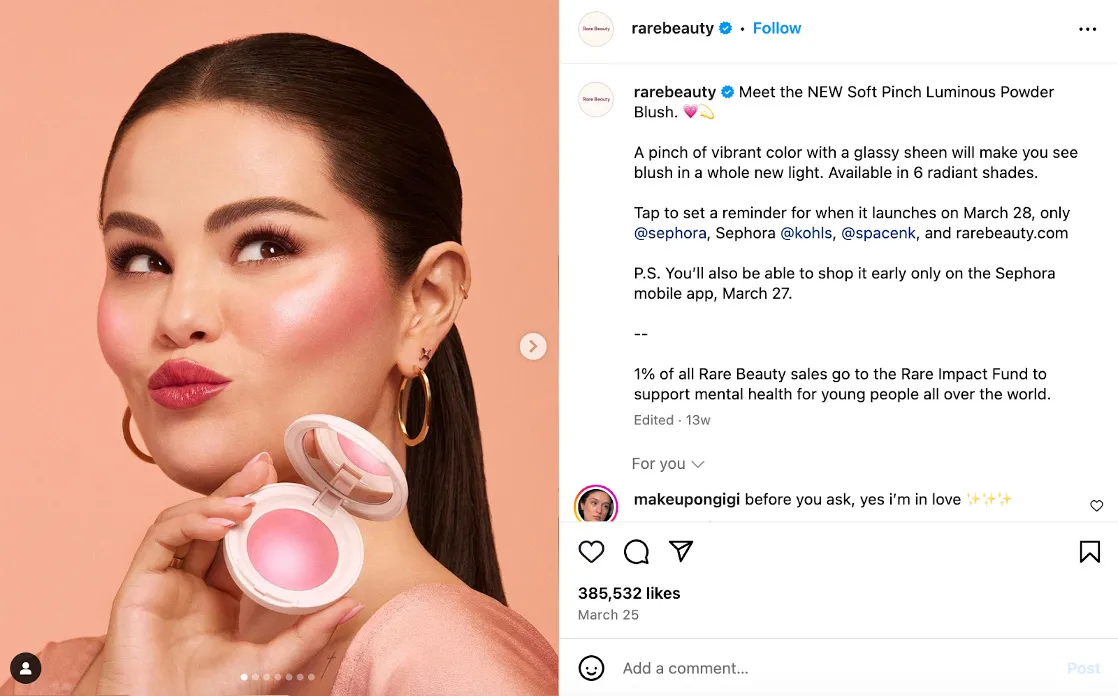
Rare Beauty’s creator-driven TikTok approach generated 98% of their ad conversions. Ads featuring Selena Gomez drove 770% more video views, but everyday creators showing real application made people buy.
The Rare Beauty advertisement strategy transforms customers into collaborators. When someone with your skin type, your budget and your same bathroom lighting shows how a product fits their routine, that’s peer recommendation, not marketing.
Interactive Content
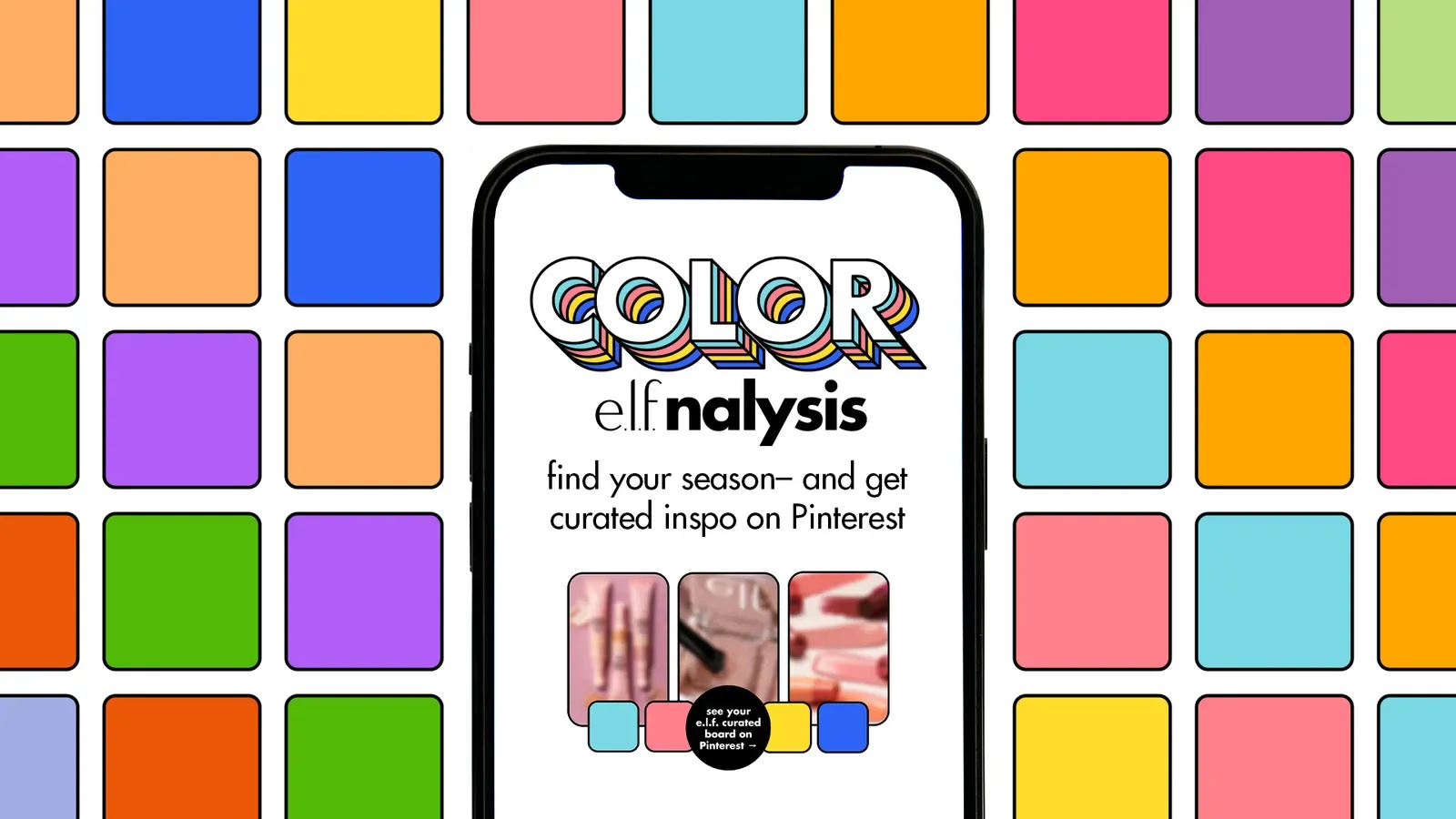
E.l.f. Cosmetics partnered with Pinterest for an interactive color analysis tool after noticing a 22x spike in color season searches. Pat McGrath Labs’ AR in-store try-on mirrors drove conversion lifts. Remove the “what if this looks terrible?” barrier, and you remove the biggest obstacle between browsing and buying.
Aspirational Content
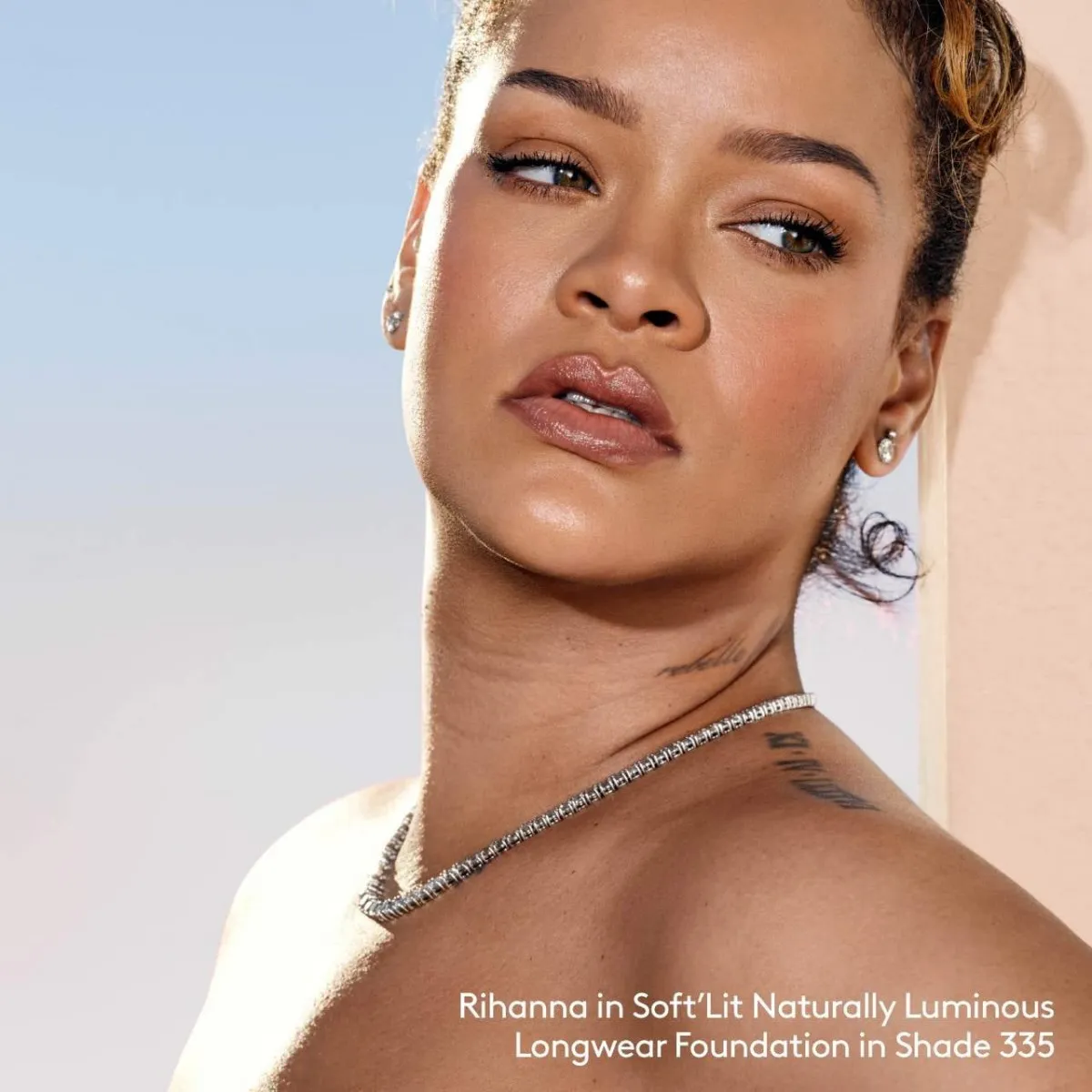
Fenty Beauty’s “Soft’Lit” campaign with Rihanna nailed the balance. Close macro skin shots with natural light transitions created “this could be your skin, but better.” Not perfect, not airbrushed — just glowing. Explore our Rare Beauty vs. Rhode comparison, breaking down how two massive brands approach content differently.
Virality-Focused

E.l.f.’s #eyeslipsface TikTok challenge became the most viral beauty campaign ever, attracting Lizzo and Reese Witherspoon (unpaid). Simple, memorable, and it gave people creative freedom. The Rare Beauty ad campaign, “Every Side of You,” took a different approach — emotional resonance through a 60-second spot sparking genuine conversation about beauty standards and mental health.
Brand Storytelling
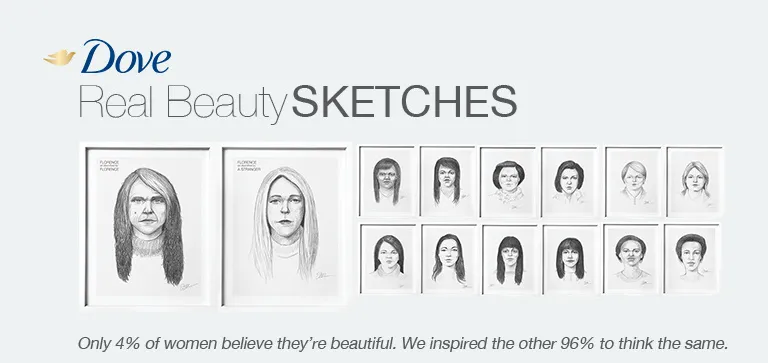
The Dove Real Beauty sketches advertisement achieved 180 million views by challenging how women see themselves. An FBI-trained sketch artist drew women based on their self-descriptions, then based on strangers’ descriptions. The stranger’s sketch was always more flattering. “You’re more beautiful than you think” resonated because it wasn’t just selling soap — it was selling self-compassion.
Seasonal Content
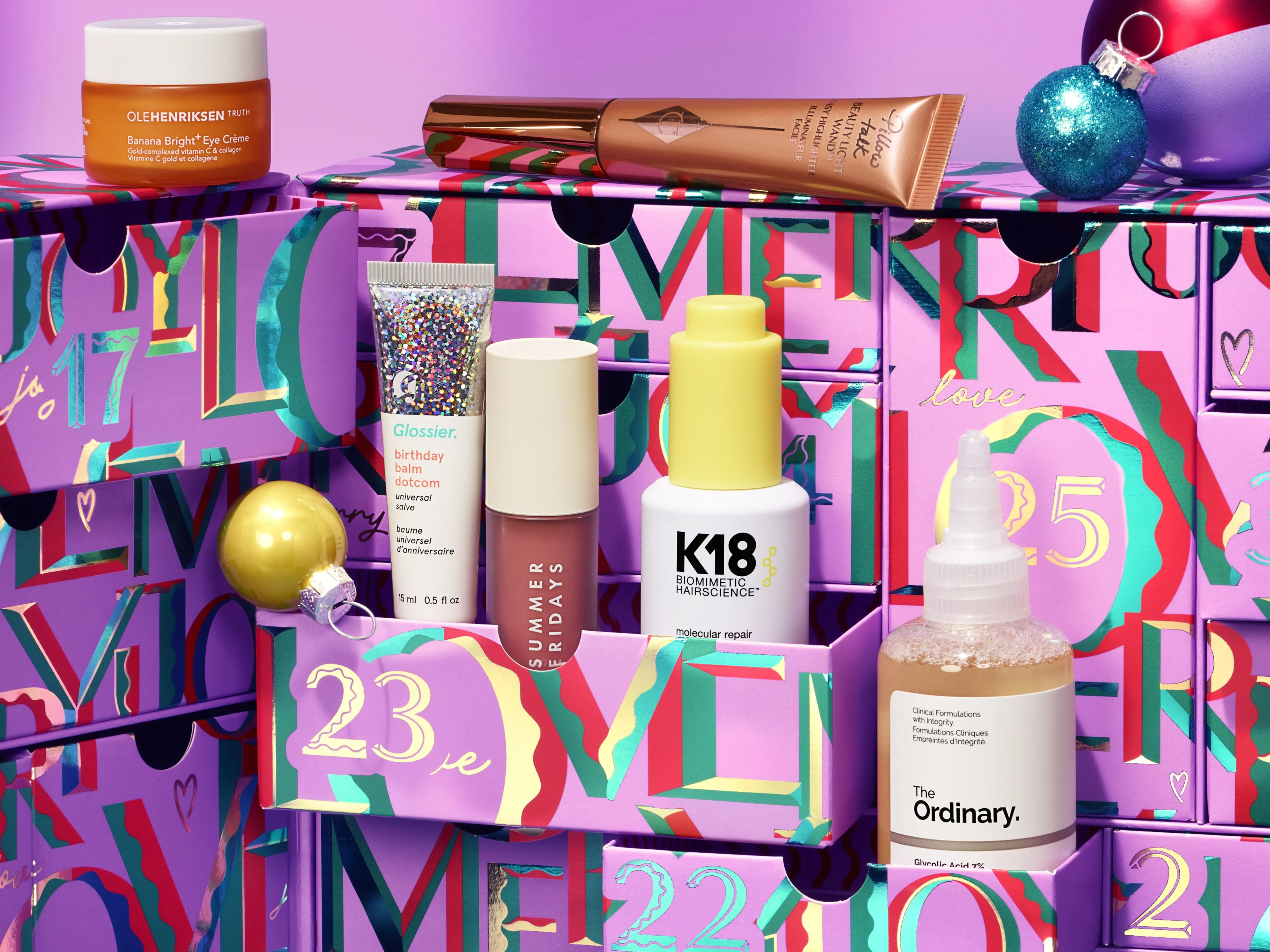
SpaceNK’s Beauty Advent Calendar launch represents a massive customer acquisition opportunity through sneak peeks, influencer unboxings and limited availability creating genuine FOMO. Rare Beauty’s scratch-and-sniff billboard campaign for their fragrance launch combined OOH with Shopify’s geogated technology — fans could scan a QR code for a mail-in sample, but only if they were near the billboard. Inspired by Willy Wonka’s lickable wallpaper.
Best Beauty Advert Examples of 2025
-
Rare Beauty: AI-Powered Search

Rare Beauty leveraged Google’s AI tools to meet Gen Z where they are — asking conversational questions like “what is the best blush product for my skin type?” Their YouTube Shorts plus AI-powered search delivered 7X return on ad spend. Why it works: Gen Z doesn’t search like millennials. They ask full questions like they’re texting friends. Rare Beauty adapted their search strategy to match conversational intent.
-
Fenty Beauty: Natural Hair Rep
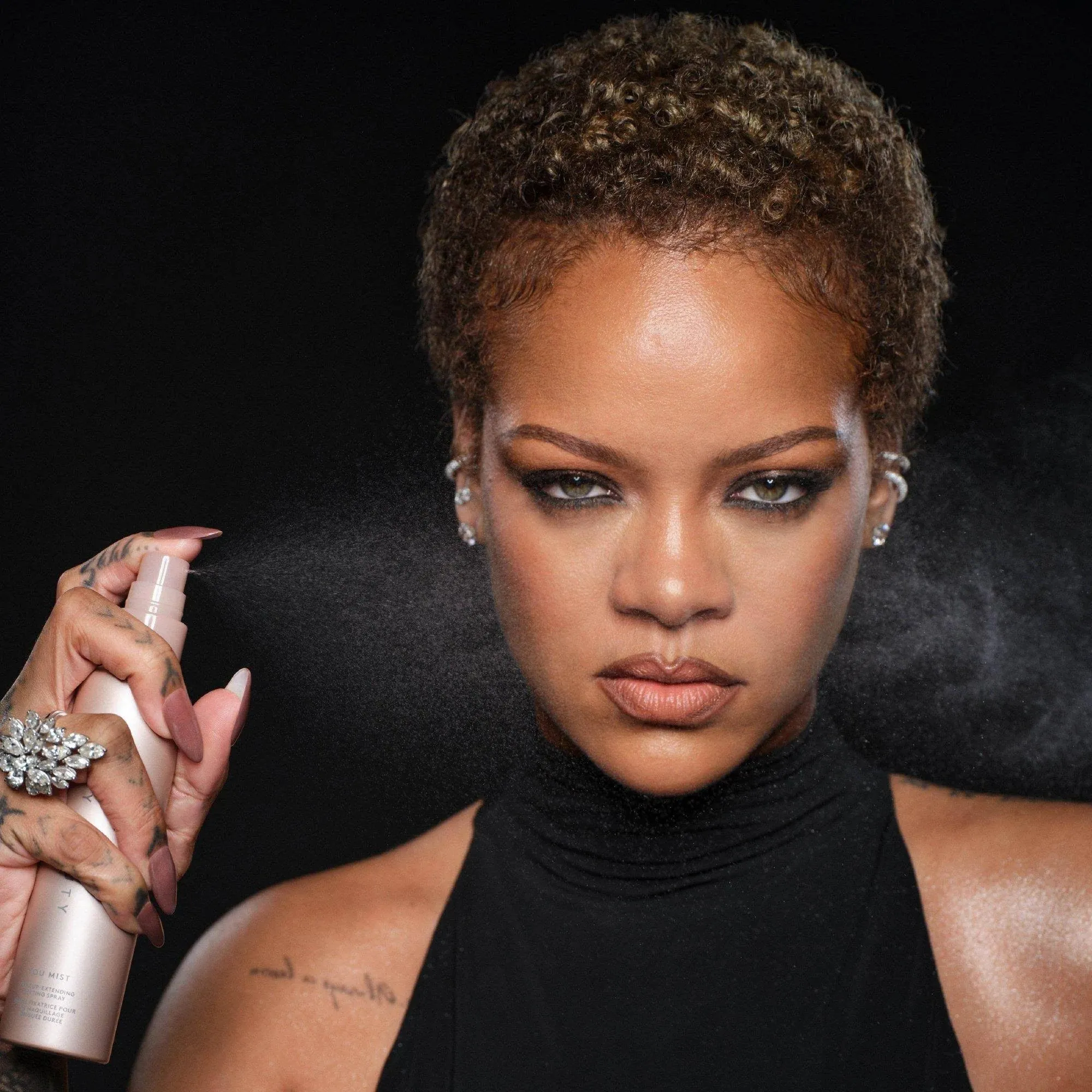
When Rihanna launched Fenty Beauty’s “You Mist” setting spray in January 2025, she rocked short natural honey blonde curls. In an industry where Black women’s hair is 2.5 times more likely to be viewed as unprofessional, showing natural textures in a major beauty ad matters. The Fenty Beauty ad worked because it challenged traditional standards without making a big deal about it.
-
Ulta Beauty: College Glow Up Tour
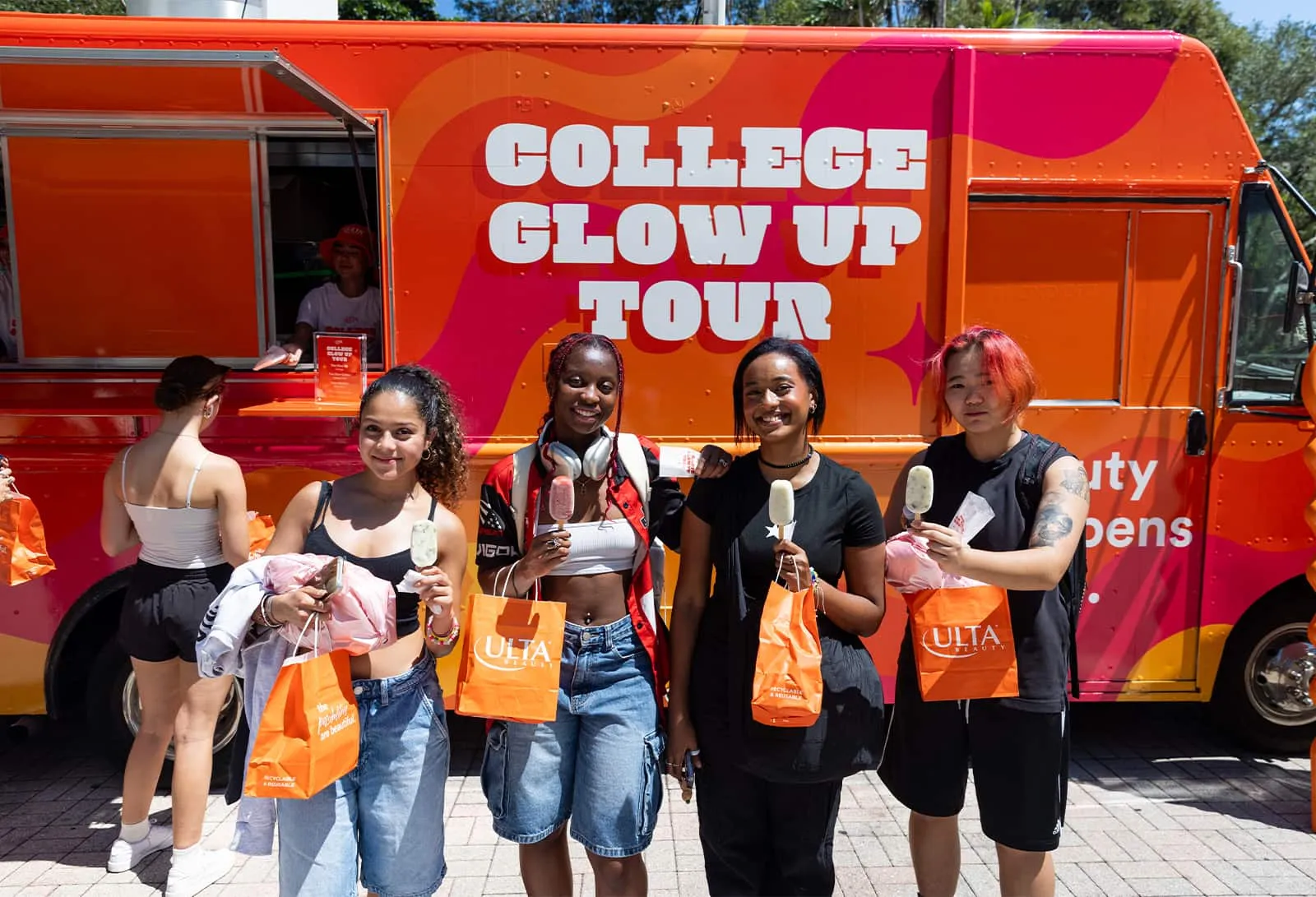
Ulta’s College Glow Up Tour in 2025 brought a custom orange-pink branded truck to six college campuses, offering interactive photo moments, surprise influencer meets, product giveaways and free treats. The Ulta Beauty advertisement strategy connected authentically with Gen Z through experiential marketing, deepening relationships with the next generation while making beauty accessible beyond traditional retail.
-
Dove: AI Transparency
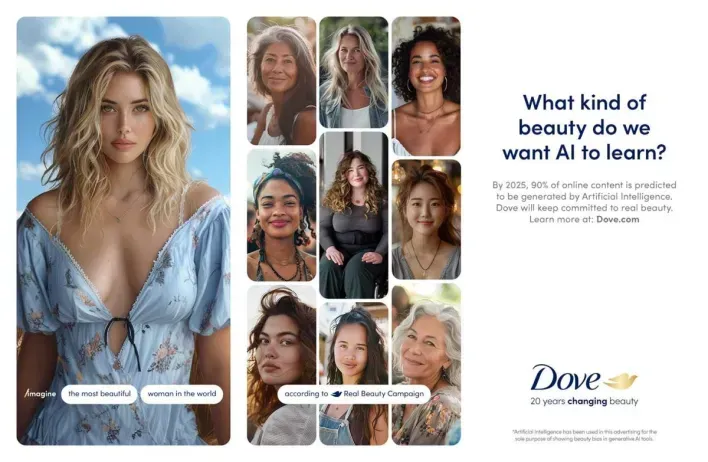
According to Dove, 90% of content is predicted to be AI-generated by year-end 2025. Dove doubled down on real beauty with a commitment never to use AI to distort women’s images. They’re creating “Real Beauty Prompt Guidelines” to help people generate representative AI images. A proactive approach addressing how technology affects self-esteem keeps them relevant after 20+ years.
-
Garnier: CGI Street Cleaning

A giant Garnier micellar water bottle gliding through Paris streets atop a cotton pad, “cleaning” the street — absurd, eye-catching, and it demonstrated product benefits without words. The CGI stunt went viral by transforming a basic cleansing benefit into a bold, visual spectacle.
-
L’Oréal: Social Campaign
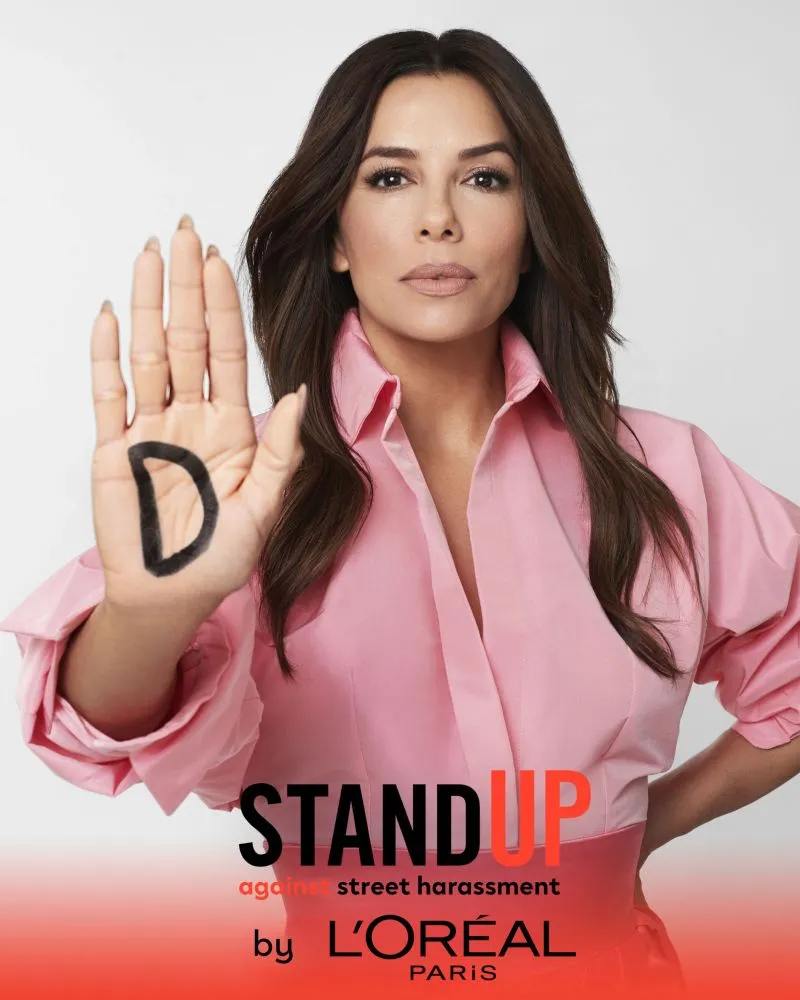
L’Oréal’s International Women’s Day “Never Your Fault” campaign addressed street harassment, earning respect by standing for something beyond products. When 70% of Gen Z beauty shoppers research sustainability credentials before making a purchase, your brand’s values matter as much as your formulation.
-
Rhode Beauty: Peptide Lip Treatment Launch

When Hailey Bieber launched Rhode Beauty’s Peptide Lip Treatment, she sparked a viral beauty SMM moment. The campaign drove peptide lip treatment searches up 327% year-over-year across platforms, with TikTok searches increasing 347%. Rhode’s strategic use of GRWM videos, celebrity collaborations with artists like Tate McRae and UGC transformed customers into co-creators, generating massive organic exposure through peer recommendations.
Implementation Best Practices
Start with actual customers. Look at your highest-performing UGC. What patterns emerge? Your customers are showing you what works.
Diversify content types. Rare Beauty uses Selena for awareness (770% more video completion), creators for conversion (98% of conversions) and community UGC for social proof.
Invest in tools. Rare Beauty’s 7X ROAS happened through strategic AI use. For smaller businesses: AR try-on integrations, AI shade matching, automated email flows.
Build creator relationships. Rhode Beauty’s collaboration with pop artist Tate McRae for the Peptide Lip Shape campaign showcased the power of authentic creator partnerships. Treat creators as partners, not one-off sponsorships, and the content becomes a movement.
Test and measure. Track video completion rates, click-through rates versus benchmarks (1.16% for Beauty on Facebook), cost per acquisition.
How Netpeak Transforms Beauty Brands
Building a successful beauty advertisement strategy requires expertise across SEO, PPC, social media and content strategy.
Netpeak’s digital marketing for e-commerce solutions are designed for beauty brands. We’ve helped beauty businesses dramatically increase bookings and revenue through integrated strategies building sustainable growth.
Check our Hello Beauty case study where SEO drove 500% booking increases.
Understanding Amazon advertising costs for beauty brands is crucial if you’re selling on the platform. Netpeak helps navigate these complexities with data-driven strategies maximizing ROI.
We analyze your unique position, identify customer experience gaps and create integrated solutions across SEO, PPC, content marketing, social media and e-commerce optimization.
Let us help with your beauty brand’s digital strategy. Contact Netpeak today.
Real Is Beautiful
The beauty advertisement landscape in 2025 is more challenging and exciting than ever. Anyone can launch a beauty brand with decent products and social media, but success requires treating customers as collaborators and creating content that gives genuine value.
Customers spot inauthentic marketing instantly and call it out publicly. Brands succeeding treat authenticity as the price of admission, not a buzzword. Check our case studies and blog examples for tangible results.
You don’t need Rihanna’s budget to create an effective beauty ad. You need strategy, authenticity and the willingness to test and adapt. Learn from brands doing it right, implement best practices and stay nimble.
FAQ
What is beauty advertisement?
Beauty advertisement refers to promotional content created by cosmetics, skincare, fragrance and personal care brands to showcase products and build brand awareness. This includes traditional print and TV commercials plus modern social media campaigns, influencer partnerships and user-generated content. Effective beauty advertisements connect emotionally while demonstrating product benefits.
How do I advertise my beauty products?
Focus on local advertising online and social media like TikTok, Instagram and YouTube where beauty content thrives, partner with micro-influencers who genuinely love your products and encourage user-generated content from customers. Invest in interactive experiences like AR try-on tools, optimize for search through SEO and PPC targeting beauty-specific keywords. Test relentlessly, and track metrics like engagement rates and customer acquisition costs.
What types of content work best for promoting beauty brands on social media?
Tutorial videos showing real application, user-generated content featuring genuine customer results and interactive content like AR filters perform best. Behind-the-scenes content showing product development builds emotional connection, while educational content explaining ingredients positions your brand as a trusted authority. Short-form video optimized for TikTok and Instagram Reels drives discovery through platform algorithms.
 0
0
 0
0
 0
0
 0
0
Related Articles
Online Local Advertising for Small Businesses: How Neighbors Find You Online
Discover how small businesses use online local advertising to show up in search, maps, and social feeds — and turn neighbors into customers.
How to Do SEO for a Cleaning Company in 2026? From Invisible to Fully Booked
If you do it right, cleaning service SEO becomes your most sustainable growth channel — bringing in clients, lowering acquisition costs, and building long-term online visibility.
13 Leading Healthcare Marketing Trends for 2026
Discover the 13 hottest healthcare marketing trends in 2026 that will help your brand stay ahead, engage patients, and drive results. Stay smart, stay relevant!