
What Are the Best Moving Marketing Campaigns This Year in 2026?
In 2026, the best moving marketing campaigns are Wirks Moving & Storage's reputation-driven growth strategy and U-Haul's massive push for user-generated content.
Like a well-packed truck, these campaigns stack trust, visibility, customer stories, and a clear path to conversion neatly together, showing exactly how modern movers can turn their reputation and their customers into their strongest growth tools.
Breaking Down the 2 Campaigns
Wirks Moving & Storage:
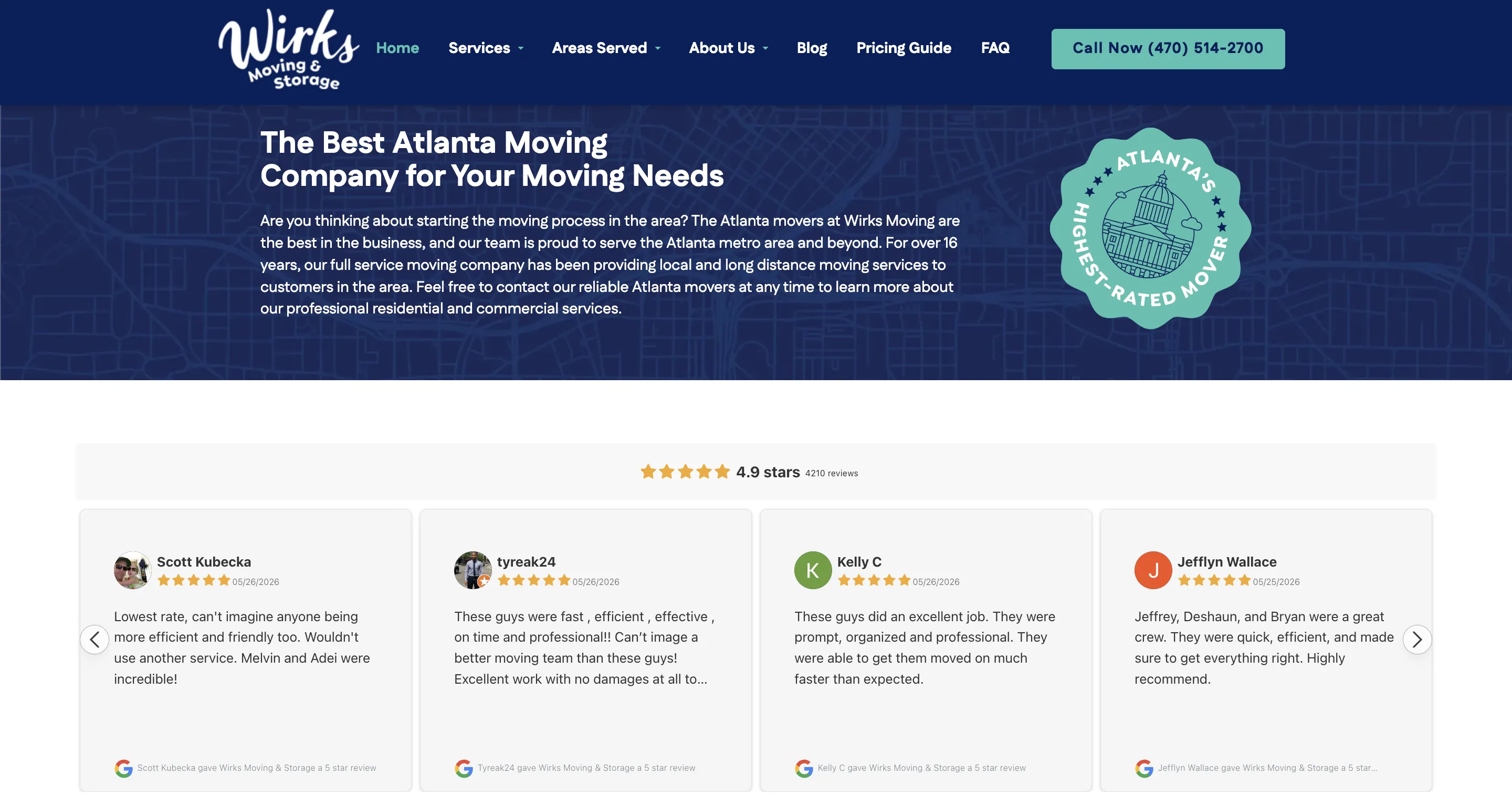
Wirks Moving & Storage is a moving and storage company that uses a mix of traditional moving services and targeted local marketing to reach customers at the right moment in their relocation journey.
Wirks used real estate data to drive postcard campaigns, door-to-door outreach, and realtor partnerships.
What was done:
-
Automated postcard campaigns based on homeowner data
-
Personalized outreach using real estate filters
-
Door-to-door visits near scheduled appointments
-
Realtor relationship building
-
Forget Me Not Boxes with useful moving-day items
What was achieved:
- 300 Forget Me Not Boxes distributed in 90 days
-
16 leads generated
-
63% close rate
-
$20,000 in revenue
-
More than $2,500 average job value from the campaign
What to learn:
The lesson is simple: moving marketing works better when it reaches people at the right moment. Wirks combined data, timing, and a practical personal touch.
That is why digital marketing for moving companies should connect reputation, local visibility, paid traffic, and conversion tracking into one system.
U-Haul:
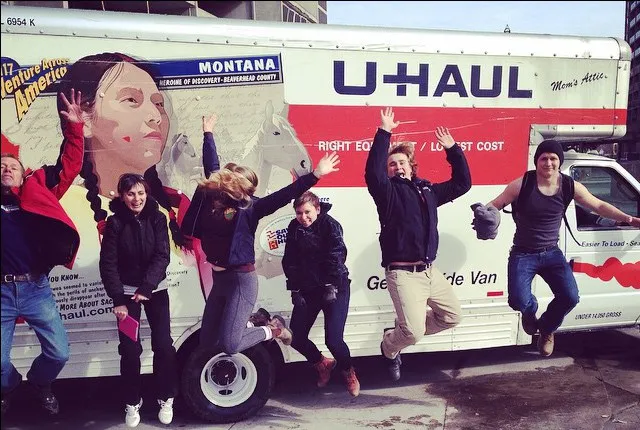
U-Haul’s #UHaulFamous campaign is a strong example of customer-generated marketing. The campaign invited customers to share moving photos using #UHaulFamous. During the campaign period, U-Haul said it would donate $1 to the American Red Cross for each Instagram photo submitted with the hashtag, and selected photos could be printed on one of 5,000 U-Haul trucks across North America.
U-Haul’s FAQ also says selected users can track where their photo appears by entering the email or Instagram username used for submission. Photos may remain on trucks for the life of the decal, which U-Haul says could be up to 10 years.
What was done:
U-Haul turned its trucks into physical media and invited customers to become part of the brand story.
The campaign combined:
-
User-generated content
-
Instagram participation
-
Customer storytelling
-
Charity connection
-
Out-of-home visibility through trucks
What was achieved:
More than 15,000 people submitted images to the campaign through Instagram and uhaulfamous.com. The GPS-enabled element also gave selected participants a reason to keep engaging with the campaign after submission: they could track the truck carrying their photo and try to find it in the real world.
What to learn:
Local movers don’t need a national truck fleet to compete. Instead they can use :
-
Moving-day photos
-
Customer testimonials
-
Before-and-after stories
-
Short customer videos
-
Referral posts
-
Local community content
Not sure where to spend your marketing budget first? See our breakdown of the six promotion platforms that generate the most moving leads in 2026.
Campaign Comparison
|
Campaign |
Main idea |
Public result available |
What movers can learn |
|
Wirks Moving & Storage |
Data-driven local outreach |
300 Forget Me Not Boxes distributed in 90 days, 16 moving leads generated, 63% close rate, $20,000 in revenue |
Use data, timing, and practical offline touchpoints to reach people when they are most likely to need movers |
|
U-Haul #UHaulFamous |
Customer-generated brand content |
15,000+ submitted images, 5,000 trucks planned for selected photos, $1 Red Cross donation per qualifying Instagram post |
Turn customers into part of the campaign and make the moving experience shareable |
|
Both |
Visibility + proof |
Public campaign results show how trust-building can work through both local outreach and customer participation |
Campaigns work best when they reach people at the right moment and give them a reason to trust the brand |
What Strategy Should Moving Businesses Adopt?
The best moving campaigns in 2026 should connect search visibility, proof, and conversion.
1. Start with local search
People searching for movers usually have high intent. That makes SEO, Google Business Profile optimization, and paid search important.
Include the following for a strong local strategy:
-
Optimized service pages
-
City/location pages
-
Review generation
-
Google Business Profile updates
-
Quote-focused landing pages
If the goal is long-term visibility, SEO for moving companies can help build the structure needed to rank for local and service-based searches.
2. Use PPC for urgent demand
Paid search exists for exactly that gap — the customers who need someone tomorrow and are already comparing quotes.
A solid PPC setup should cover the basics:
A solid PPC setup must cover the basics:
-
High-intent keywords targeting people ready to book
-
Tight local targeting so you only show up where you actually operate
-
Call and quote tracking to know exactly which ads are ringing your phone
-
Negative keywords to filter out junk searches and save your budget
-
Dedicated landing pages to send them to a page built to convert
For faster lead generation, a moving company PPC agency can help focus campaigns on booked jobs.
3. Build campaigns around proof
A moving company must have proof of its reliability:
-
Review volume
-
Customer testimonials
-
Crew photos
-
Licensing and insurance information
-
Years in business, if accurate
-
Before-and-after moving content
4. Partner with real estate professionals
Teaming up with real estate agents is still a no-brainer, since buying or selling a house almost always triggers a move. NAR reported that 91% of sellers used a real estate agent in its 2025 Profile of Home Buyers and Sellers, while only 5% sold as FSBO.
That makes real estate professionals a valuable referral source for local moves, downsizing, storage, and relocation.
FAQ
Which marketing channel can give the highest ROI for a moving company in 2026?
For most moving companies, local SEO, Google Business Profile, paid search, and referral partnerships tend to deliver the best return. SEO builds visibility over time — PPC fills the gaps while you wait.
Should my business partner with realtors?
Yes. Realtor partnerships may help movers reach customers just as they need moving services, especially after a sale, purchase, or relocation decision.
What budget should be allocated for a medium-sized moving marketing campaign?
There is no magic number. Your local market, the competition, the season, and the aggressiveness of your lead goals should be considered. A solid budget needs to cover the essentials: SEO, paid ads (PPC), landing pages, lead tracking, and review management. If you try to cut corners and spread your budget too thin, you'll likely just end up paying for useless website clicks instead of actual booked moves.
Are reviews part of a marketing campaign?
A strong review profile can support SEO, improve click-through rates from local search, increase quote requests, and improve paid traffic conversion rates. In other words, reviews are not separate from moving marketing. They are the proof layer that makes the rest of the campaign work.
Build a Moving Marketing System That Actually Brings Leads
The strongest moving campaigns do not rely on one channel. They connect visibility, trust, paid traffic, local search, and conversion.
Netpeak US helps moving companies build marketing systems that attract qualified leads and turn website traffic into booked jobs through SEO, PPC, and a full-funnel strategy.

 0
0
 0
0
 0
0
 0
0
Related Articles
Amazon's AI Now Builds Complete Looks on Product Pages. How Do Brands Make Sure the Bundle Is Theirs?
Amazon now uses AI to assemble complete, shoppable looks around a single product, and it fills those looks with whichever brands its model picks.
Business Apps in the US: iOS vs. Android, September 2026
We searched for US App Store and Google Play data to see what business apps professionals, shoppers, and investors actually installed in September.
Pet Food Product Patent: How to Protect Your Innovation
Patenting pet products requires careful consideration and proper application filing. With the 8 steps below, you will be able to submit your patent application and protect your invention.