
How to Deal with Negative Reviews on Google in 2026?
In 2026, effective Google negative reviews management is more important than ever, as a single piece of negative feedback can significantly impact consumer demand. One negative review can turn away 22% of potential customers, and that number jumps to an alarming 59% if they spot three bad reviews.
However, ignoring the problem will damage your reputation faster than you realize. The real question most businesses keep coming back to is: how to manage negative Google reviews in a way that works in your favor?
For all business owners, this is a chance to transform a PR nightmare and show off their customer service chops and build brand loyalty. When people search for your business, your online reviews heavily influence their purchasing decisions.
"The quality of your reviews and your overall rating are just the tip of the reputation iceberg. While it is the most visible part, confidently controlling your score and customer sentiment requires digging deeper into your operations. Still, you absolutely cannot skip the front-line engagement. Review management is exactly where analytics and early problem detection happen."
Vyacheslav Pysanka, Head of ORM/SERM at Netpeak Agency
It’s time to explore the best way to respond to negative Google reviews, how to set up an assessment framework, and how you can use bad reviews to your advantage.
Google Reviews Assessment Framework
Before you start typing a hasty reply to an angry customer, you need a systematic approach. Operating without a solid reputation management framework is a fast track to making things worse. A structured approach ensures consistency across all channels and helps your customer service team stay objective — protecting your brand reputation in the process.
Here is how you can set up a framework to figure out how to deal with negative reviews Google reviews:
-
Follow Google’s Content Policies: Not all negative Google reviews are legitimate. Familiarize yourself with Google's guidelines to identify fake negative comments, suspicious reviews, spam, or inappropriate reviews. Understanding these rules is the first step in protecting your online reputation in the search results.
-
Create Response Guidelines & Templates for Various Scenarios: Whether you operate an online store or offer professional services, your team needs a standardized but customizable guide across all media channels. Reviewing best practices for handling online gossip and reputation management ensures you maintain a professional, de-escalating tone.
-
State Your Ethics and Values on the Website: Make sure your commitment to customer satisfaction is highly visible. When you have a clear public stance on your ideal customer experience, it anchors your marketing efforts to your core values.
-
Audit Your Current Standing: Before reacting, you need to know the baseline. Use a specialized SERM calculator to understand the financial impact of your current search engine reputation and determine how much organic traffic or qualified leads you might be losing due to false information or poor ratings.
Key Tips for Handling Negative Google Reviews
Knowing how to handle negative Google reviews safely can directly influence your retention strategy and customer base. Here are the core rules for de-escalating tension and showcasing your brand's professionalism when responding to negative Google reviews.
Do Not Get Defensive or Personal
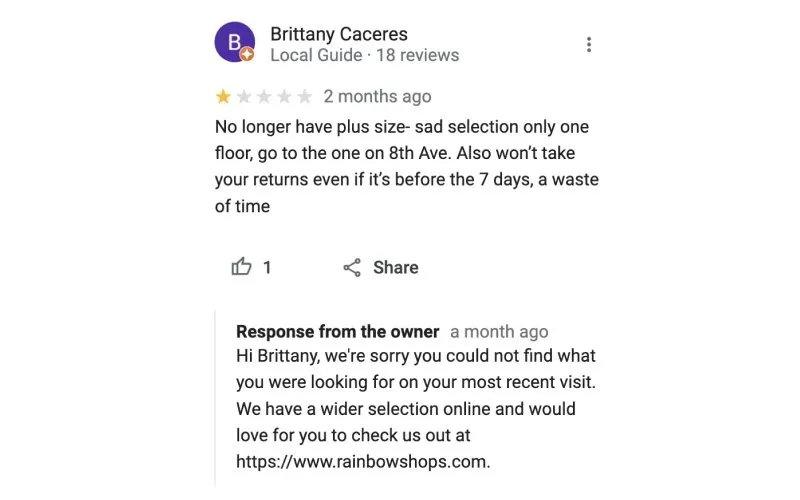
It is easy for business owners to take negative feedback personally, especially if they feel the reviewer is being unfair. However, defensive or aggressive bad Google review responses only escalate the situation. It makes your business profile look unprofessional to potential customers reading the thread. Take a breath, step away from the keyboard for ten minutes, and respond objectively.
Empathize and Acknowledge the Issue
Always validate the customer's feelings, even if you suspect the issue is beyond your control. A simple, "We are so sorry your customer service experience did not meet your expectations," goes a long way toward turning a frustrated customer into a loyal one. Empathy is one of the strongest marketing tools you have for diffusing anger and rebuilding customer relationships.
Offer a Solution
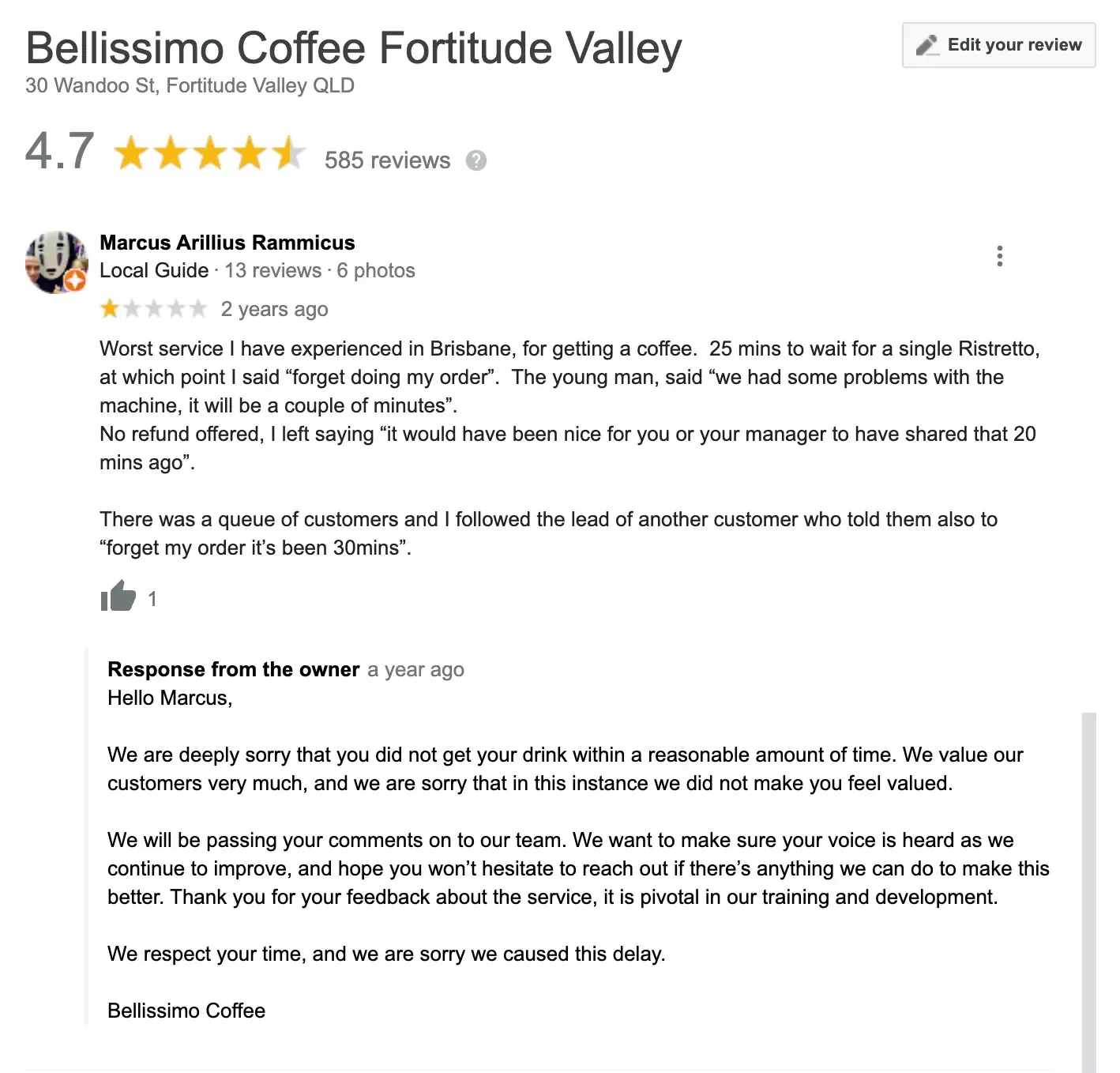
The key to responding to bad reviews on Google is shifting the conversation from the problem to the solution. Offer something concrete — a refund, a replacement, or a direct line to management. That's what commitment to sustainable growth looks like.
Take Responsibility
In 2026, consumers value transparency above perfection. Taking responsibility = strong operational integrity. As McKinsey notes in its customer experience studies, resolving a complaint effectively can often create a more loyal customer than one who never had a problem in the first place.
Reply to ALL Reviews
Your review management plan should address both positive and negative customer feedback:
-
Thanking people for positive reviews shows you value your community.
-
Responding to negative reviews on Google shows you take responsibility, which potential customers will notice.
Negative Google Reviews as Marketing Assets
Most company owners panic when they see a 1-star rating pop up on their business profile. The instinct is to hide it, delete it, or drown it out. However, figuring out how to deal with bad google reviews with a strategic mindset can turn them into a core pillar of your content strategy. When leveraged properly, negative feedback transforms from a PR crisis into a powerful trust-building tool for your online business. This also matters for paid ads, because even well-targeted traffic can underperform if users land on a profile full of unanswered complaints.
It’s “why a flawed profile is often better than a perfect one” o’clock:
1. Honest Criticism Boosts Trust and Authenticity
A flawless 5.0-star rating can actually decrease the likelihood of a purchase. Modern consumers perceive a perfect score as "too good to be true" or assume the positive reviews are fake.
Turns out, people are most likely to buy when your rating sits somewhere between 4.2 and 4.7 stars. A handful of negative reviews proves to your target audience that your local listings are authentic and that you are not artificially manipulating your brand reputation.
|
Business case |
How they used honest criticism |
Result |
|
Boots |
Responded to negative product reviews with explanations, guidance, or advice on how to use the product differently |
186% increase in purchase intent when the brand responded to reviews with helpful guidance |
|
Vertbaudet |
Used negative reviews about sizing issues in a maternity clothing line to improve the product |
12% increase in sales among visitors who read reviews |
|
Webroot |
Publicly responded to low-rated reviews across retail sites, showing shoppers that the brand takes criticism seriously instead of hiding it |
Responded to 70% of low-rated reviews across 38,000+ reviews; another case reports review volume grew 9,168% and low-star review response rate increased 97.9% |
2. Increased Dwell Time and User Engagement
People love a bit of drama. Prospective customers will spend more time picking apart your worst customer reviews and your replies than they ever will reading another glowing five-star pat on the back.
This longer dwell time on your knowledge panel or Google Maps listing can subtly influence your local SEO. That’s a sign to a search engine of high customer engagement on your profile, which is a positive behavioral metric for your overall online presence.
3. A Public Stage for Your Problem-Solving Skills
Even a single response to a frustrated buyer becomes a public exhibition for everyone reading the thread. On the contrary, a calm, solution-oriented reply is a highly effective piece of content marketing.
Run a reputation audit for deeper insights into how your audience perceives these interactions and what their complaints reveal about your operations.
4. Search Engines Reward Active Profiles
Google's algorithm favors businesses that are active and responsive. Consistent review management, which means engaging with both the good and the bad signals to Google that local businesses are operational, attentive, and relevant to consumer demand.
Trust matters in every business. See how dental practices turn happy patients into a steady stream of new ones.
Bad Google Review Responses: 4 Best Examples for Various Cases
Handling bad reviews is a balancing act: empathy, professionalism, and knowing when to draw the line. Your response should fit the complaint and the kind of customers you actually want.
Below is an expanded guide on how to respond to negative reviews on Google across four common, yet distinct, scenarios:
|
Scenario |
The Customer's Complaint |
The Ideal Response Template |
Why This Works |
|
1. Poor Customer Service |
"The staff was incredibly rude, ignored me for 20 minutes, and seemed like they didn't want my business." |
"Hi [Name], we sincerely apologize for the lack of attention you received. This entirely misses the mark of our standards. Please contact us directly at [Email/Phone] so management can make this right and ensure our team does better." |
It validates the customer's frustration without throwing specific employees under the bus. It moves the conflict offline immediately. |
|
2. Major Expectation Disappointment |
"I had high hopes based on the ads, but the experience was completely underwhelming. Not worth the money." |
"Dear [Name], we are truly sorry we fell short of your expectations. We value honest feedback and rely on it to improve our customer service. We would love to hear more details about your visit. Please reach out to [Phone]." |
This response shows humility. It acknowledges the gap between the marketing campaign promise and the actual customer experience, inviting constructive dialogue. |
|
3. Product/Service Quality Issue |
"The item broke on the first day. Terrible quality, feels cheap. Do not buy." |
"Hi [Name], we apologize for the defective product you received. We stand by the quality of our online store and want to fix this immediately. Please email your receipt to [Email], and we will arrange a full replacement or refund right away." |
It immediately offers a tangible solution (refund/replacement) while publicly reinforcing the company's confidence in its own quality. |
|
4. Off-topic/Mistaken Identity Review |
"Wait times at your clinic are way too long!" (Note: You run a B2B SaaS company) |
"Hi [Name], it looks like you may have reviewed the wrong business by mistake! We provide professional services for software, not medical care. We hope you get your issue resolved with the clinic. Have a great day!" |
It politely corrects the false information without being condescending, alerting both the user and Google that the review is misplaced. |
Is Asking for Client Reviews Worth It?
Absolutely. One of the most effective marketing strategies to dilute the impact of negative feedback is a proactive offense: actively collecting more positive reviews to bury the bad ones.
Relying solely on organic web traffic to generate reviews naturally results in a skewed perspective. Angry customers are inherently more motivated to leave a scathing review than satisfied customers are to leave a glowing one. To combat this, you must integrate automated review requests into your daily operations.
How to Proactively Build Your Review Profile:
Negative reviews are harder to dodge when your profile is already full of positive ones. Here's how to build that foundation proactively:
-
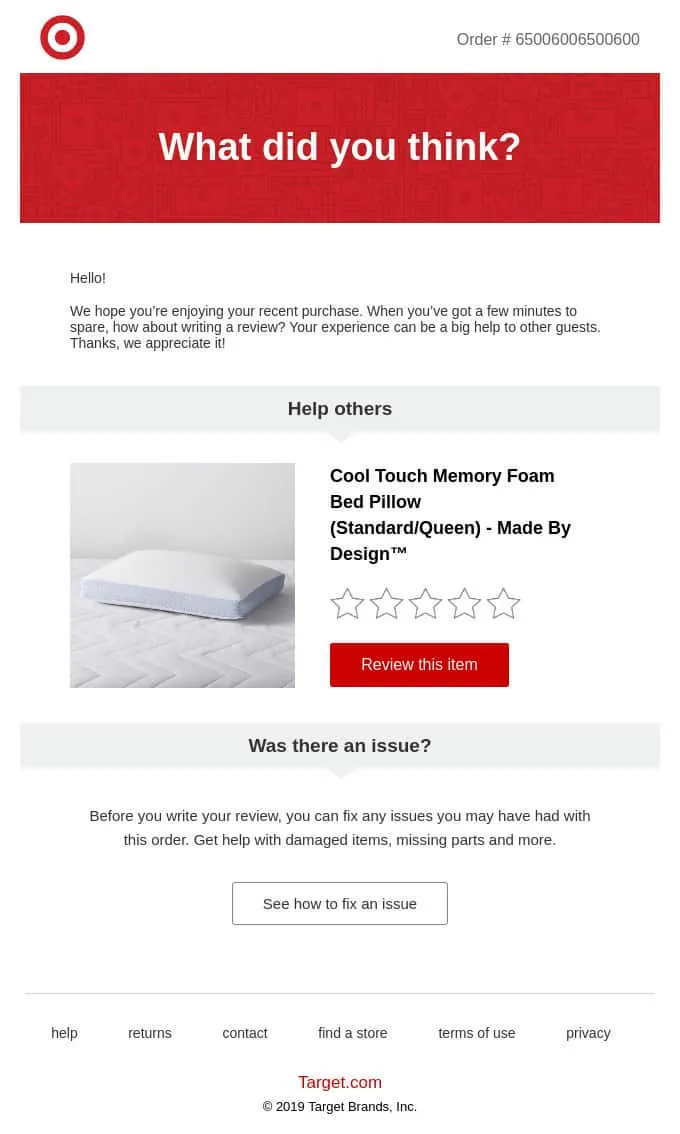
Leverage Email Marketing: Send an automated, polite follow-up email 3-5 days after a purchase or service completion.
- Incentivize Loyalty Programs: Encourage your most dedicated customer base to share their experiences online.

-
Optimize the Post-Purchase Flow: If you manage digital marketing for e-commerce, ensure your checkout page or app prompts users to rate when their satisfaction is at its peak.
Generating reviews on purpose does wonders for your search rankings and online visibility. If you want proof, check out our Anacosma ORM case study. And if you’re in the visual industry, teaming up with digital marketing pros for beauty brands can help you collect those all-important photo reviews from your happiest clients.
AI isn't just changing content creation and search. It's also transforming how brands manage their online reputation. Read our article to learn how.
What Negative Google Reviews Can Be Removed?
It is a common misconception among business owners that you can delete a review simply because you disagree with it or because it negatively impacts your brand awareness. Google’s policies are strict: you cannot remove a review just because it hurts your feelings. However, Google does allow you to flag and request the removal of reviews that explicitly violate their content guidelines.
You can successfully petition Google to remove:
-
Fake Negative Reviews: Coordinated attacks from competitors, bots, or users who have never actually interacted with your business.
-
Inappropriate Content: Reviews containing hate speech, harassment, profanity, or explicit material.
-
Conflicts of Interest: Reviews left by disgruntled former employees aiming to damage your operations.
-
Spam and Promotional Material: Reviews that contain links to external websites or promote unrelated businesses.
Suppressing What You Cannot Remove
If a legitimate negative review cannot be removed, you must rely on a broader SEO strategy to protect your brand in Google search. When a PR crisis extends beyond Google Maps and negative articles start appearing in the regular search results, you have to push those pages down.
This involves aggressive link building and acquiring quality backlinks to authoritative assets you control. By optimizing your website's service pages, publishing high-value blog content, and writing targeted posts around specific keywords, you can improve your own keyword rankings and outrank the negative press. If you are dealing with a severe, page-one reputation crisis, read our detailed guide on how to remove negativity from the top 10 search results in four months.
Final Thoughts
Mastering how to handle negative reviews on Google is a non-negotiable pillar of modern customer retention and marketing analytics. Every time you turn a frustrated user into a satisfied one, you are actively protecting the ROI of your paid advertising. After all, what is the point of spending thousands of dollars on Google ads or Facebook ads if prospects click through, see a string of unaddressed 1-star reviews, and immediately bounce to a competitor?
Without a solid reputation, your lead generation efforts will always underperform. Whether you are a rapidly scaling enterprise or looking for highly specialized SaaS digital marketing agency support, integrating reputation control into your broader growth plan is essential. To build a resilient framework that connects all these dots, explore our comprehensive marketing strategy services.
FAQ
What if my business has more negative reviews than positive?
If your negative reviews significantly outnumber the positive ones, it is time to immediately pause your PPC campaigns and display ads. You are currently paying to send traffic to a leaky funnel. Instead, invest that budget into deep market research to fix the operational flaws causing the complaints. For small businesses and local practices, reading relevant case studies, such as best practices for dentist review management, can provide an actionable roadmap for turning a negative profile around before you resume ad spending.
Should I pay attention to anonymous reviews?
Absolutely. While an anonymous review might seem suspicious to you, new clients browsing across various media platforms and social media cannot always differentiate between a troll and a genuine customer. You must respond to anonymous reviews with the same level of professionalism and empathy, publicly offering a way for the user to contact you offline to verify their experience.
How to delete reviews I don’t want to respond to?
You cannot manually delete reviews from your profile just because they are inconvenient to address. Google controls the platform. If a review is legitimate and does not violate Google's spam or hate speech policies, your only option is to respond professionally, offer a solution, and focus on generating more positive feedback to bury the negative one.
How to collect more positive reviews?
The most sustainable way to collect positive feedback is to automate the ask. Integrate review requests into your email marketing flows and loyalty programs, targeting customers immediately after a successful purchase or service delivery when their satisfaction is at its peak. You can also learn how to use AI in a reputation management strategy to scale your outreach efforts efficiently. Finally, to truly understand if your efforts are working, ensure you know how to calculate customer satisfaction and Net Promoter Score (NPS) to track your improvements over time.

 0
0
 0
0
 0
0
 0
0
Related Articles
Amazon's AI Now Builds Complete Looks on Product Pages. How Do Brands Make Sure the Bundle Is Theirs?
Amazon now uses AI to assemble complete, shoppable looks around a single product, and it fills those looks with whichever brands its model picks.
Business Apps in the US: iOS vs. Android, September 2026
We searched for US App Store and Google Play data to see what business apps professionals, shoppers, and investors actually installed in September.
Pet Food Product Patent: How to Protect Your Innovation
Patenting pet products requires careful consideration and proper application filing. With the 8 steps below, you will be able to submit your patent application and protect your invention.