
How to Market a Security Company in 2026?
Digital marketing for security companies is entirely different from marketing software or sneakers. You are providing peace of mind and the promise that the worst-case scenario will not happen on your watch. If you are trying to navigate the complexities of marketing for a security company, you already know the traditional playbook, yellow page ads, cold calling, and branded pens are dead.
Buyers in 2026 do their homework online before they ever let a sales rep into their building. They demand proof of reliability, immediate answers to their concerns, and flawless online reviews. To build a solid marketing plan for security company growth, you need a digital strategy that captures high-intent demand when people are looking for it.
Refusing to adapt can cost you your market share to competitors. You might think it’s impossible because they offer weaker security operations or have slower response times than you. However, the one who dominates the search results gets the contract first.
Before diving into the mechanics of what digital marketing is and how it works for this specific niche, we need to address the elephant in the room: the security industry has a marketing problem that goes deeper than not running enough ads. The way most security companies present themselves online doesn’t match the level of trust their clients need before they even pick up the phone.
- The Challenges Unique to Security Companies
- Why Digital Marketing Is a Must for Security Companies
- How to Build the Right Marketing Strategy for Security Companies?
- Why Does Multichannel Marketing Work Best?
- 2026 Digital Marketing Template for Your Security Company
- Final Thoughts
- FAQ
The Challenges Unique to Security Companies
Your world is high-stakes, high-pressure, and needs a playbook that fits the game.
-
The "Invisible" Product: Unlike a new roof or a fresh coat of paint, successful security solutions are largely invisible. When your product works perfectly, nothing happens.
-
High-Friction Purchases: People buy commercial alarm systems or hire a security guard out of fear, following a traumatic event (like a break-in), or to comply with strict insurance mandates. The emotional state of your target audience is often stressed or defensive.
-
The Ultimate Trust Barrier: You are asking clients to give you the keys to their business, access to their private camera feeds, and the safety of their employees. Generating this level of trust in the security industry requires a flawless online presence. A single bad review regarding a breach can derail months of marketing efforts.
-
Fierce Commoditization: To an uneducated buyer, all security firms look the same. If your marketing strategies for a private security company don’t clearly separate your professional services from the budget competitor down the street, you will be forced into a race to the bottom on price.
-
The Complexity Gap (especially for cybersecurity): You're dealing with risks your clients often don't know exist yet. Explaining why they need protection from a threat they've never seen, in language they can understand, is one of the hardest marketing challenges for security firms.
Why Digital Marketing Is a Must for Security Companies
To build genuine brand awareness and capture new clients, relying on legacy relationships is a recipe for stagnation. Let’s break down the core pillars of effective security marketing, looking honestly at what each channel can fix and the disastrous results of ignoring them.
Local SEO Optimization for High-Intent, Urgent Searches
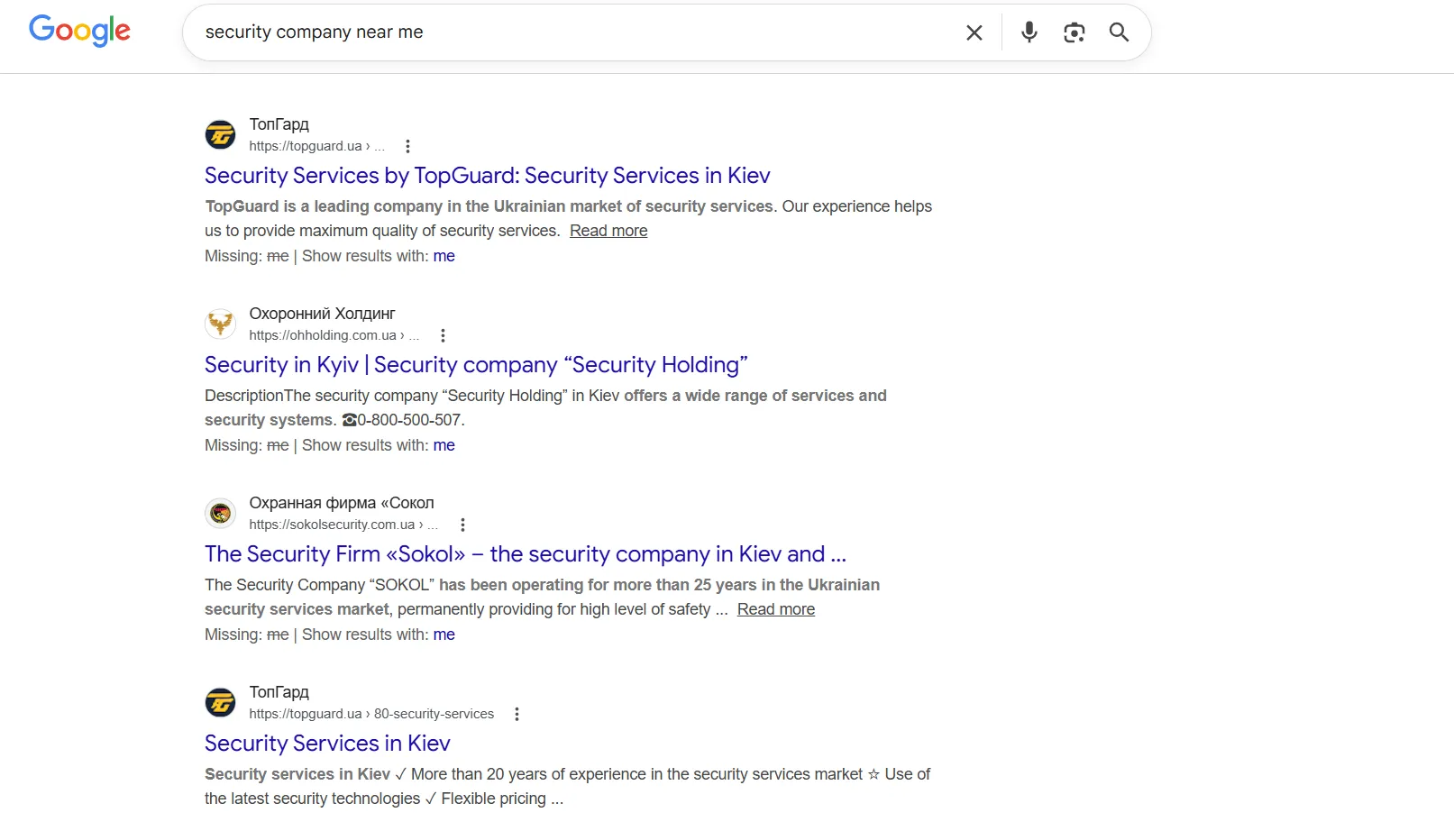
When a business owner fires a disgruntled employee, they pull out their phone and search for “emergency access control change near me.” 8 in 10 Americans Google a local business every week. 1 in 3 do it daily. Also, nearly half of all Google searches have local intent.
Strong local SEO ensures your company appears right on every major search engine.
-
What it solves: It positions your security services directly in front of people actively experiencing a crisis or urgent need. It drives highly qualified traffic to your service pages and Google local listings.
-
What it cannot solve: A terrible website. If Local SEO gets a panicked prospect to click your link, but your site takes ten seconds to load and hides your phone number, they will bounce immediately to the next competitor.
Expertise Through Content Strategy
A strong content strategy comprising blog content, case studies, and threat-awareness guides proves you understand the nuances of modern security operations. A marketing glossary is worth bookmarking before you dive in.
-
What it solves: Educating your audience on why AI-filtered cameras reduce false alarms positions you as a premium authority, justifying a higher price tag.
-
What it cannot solve: You can write brilliant blog posts about cybersecurity, but if you still rely on outdated legacy hardware, educated buyers will see right through the facade.
Trust-Based Service & Digital Reputation Management
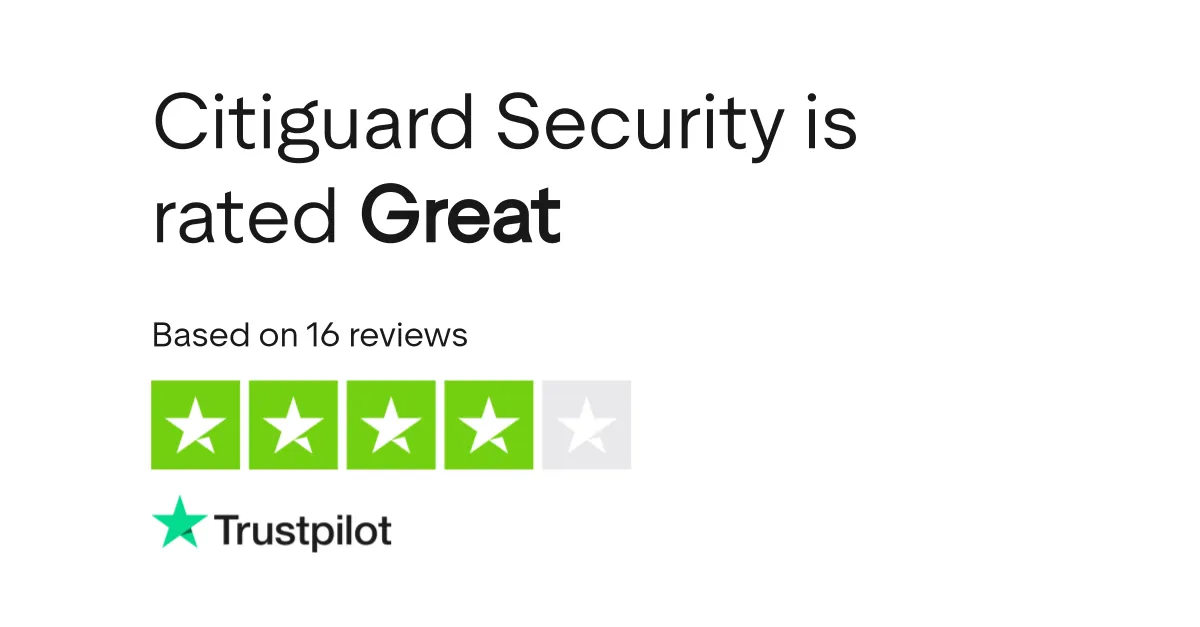
People trust customer reviews more than their own cousins. That means you need a digital strategy that scoops up glowing feedback and keeps your story front and center on media platforms.
-
What it solves: It builds the social proof necessary to close high-ticket contracts.
-
What it cannot solve: Bad customer service in the real world. No amount of marketing magic can cover up a technician who shows up three hours late. Your customer experience has to live up to the online hype.
Scalable, Measurable Results Compared to Offline Methods
Unlike a billboard on the highway, modern types of digital channels and advertising for security companies are ruthlessly measurable. With proper marketing analytics, you know exactly which ad copy, keyword, and landing page generated a signed contract.
-
What it solves: You can track your lead generation metrics down to the cent, eventually scale up the campaigns that work and shut down the ones bleeding cash.
-
What it cannot solve: A weak sales team that takes two days to call the leads back.
How to Build the Right Marketing Strategy for Security Companies?
Knowing you need a digital presence is step one. Step two is building a machine that reliably converts stressed, urgent searchers into paying contracts. If your current approach to growing your online business consists of crossing your fingers and hoping the phone rings, you are operating on borrowed time.
Here is the blueprint for a security company marketing strategy that builds unshakeable trust and dominates your local market.
Make Sure Your Website Is Ready for the Modern User
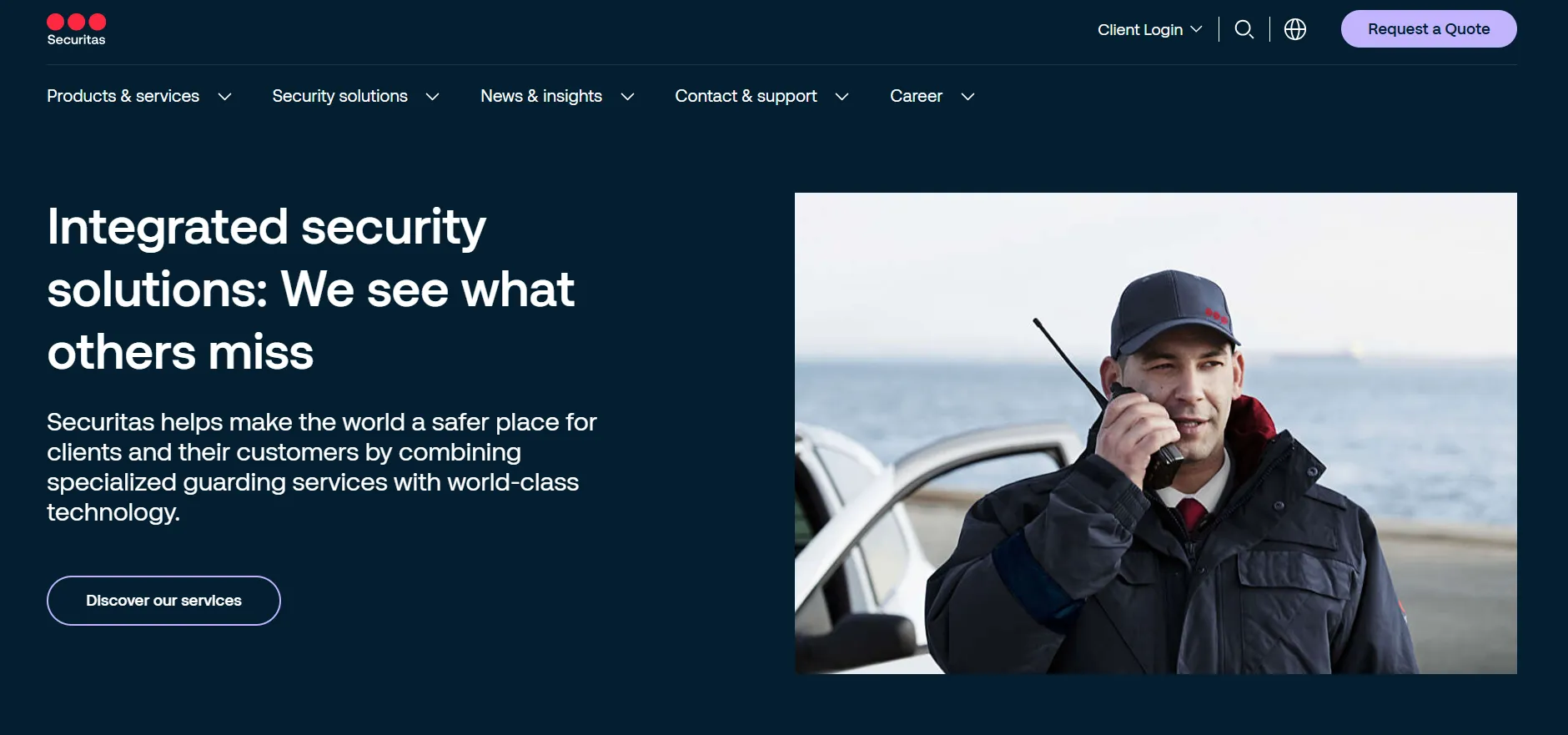
A website that looks like it was coded in 2004, takes ten seconds to load, and doesn’t render properly on their phone, leads to low customer satisfaction.
Broken digital storefront = your physical security operations are, too. A poor website destroys a positive customer experience before you even get a chance to introduce yourself.
To fix this, prioritize three things:
-
Speed: When a facility manager needs an emergency repair, they will not wait for your massive hero image to buffer.
-
Mobile-First Responsiveness: Your "Request a Quote" button and emergency contact number must be thumb-friendly and instantly visible without zooming or scrolling.
-
Voice Queries & AI Readiness: These days, people talk to their phones, asking things like, "Siri, find a commercial alarm installer near me." You must optimize your site structure to answer these conversational queries clearly, especially as we navigate the zero-click search era driven by AI. And while you're at it, a well-placed chatbot can catch those visitors the moment they land and turn a casual query into a booked consultation.
Optimize Your Google Business Profile
If you want to survive local Google search intent, your Google Business Profile (GBP) is more important than your homepage. When someone searches for "security guards Chicago," Google bypasses regular websites and serves up the "Local Pack," the top three map results.
To turn your GBP into a lead-generation asset:
-
Upload High-Quality Photos: Real, well-lit photos of your marked fleet vehicles, technicians installing hardware, and your command center can do more for trust than any tagline you write.
-
Keep Working Hours Flawless: If your security services profile says you are open 24/7, but a panicked prospect calls at 11 PM and gets a generic voicemail, they will leave a scathing review and never call back.
-
Maintain Accurate Contact Details: Ensure your phone number, website link, and address are identical across the web. Consistency is a massive ranking factor for local marketing strategies.
Dominate Local Search
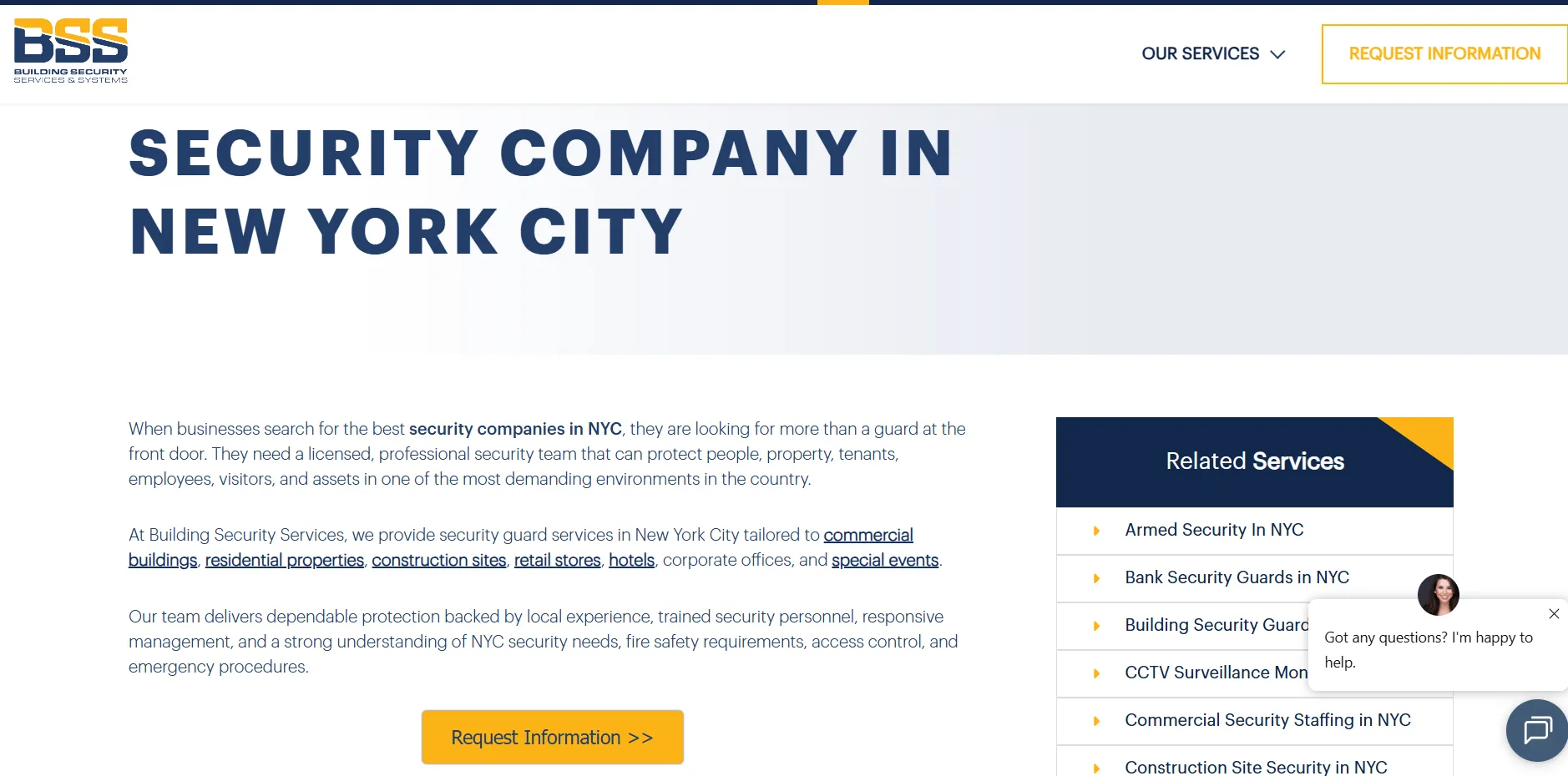
Ranking in the main organic search results requires a dedicated local SEO strategy.
-
Target Transactional Intent: Do not just optimize for broad terms. Go after specific keywords like "commercial CCTV installation cost in [City]" rather than just "CCTV cameras."
-
Create Dedicated Location Pages: If you service five different counties, you need five distinct service pages with the specific crime stats, local ordinances, and tailored solutions for that exact area. Don’t forget to keep this data current.
-
Optimize for LLMs: AI-powered search tools like ChatGPT and Perplexity are increasingly where people go for local security services recommendations. Make sure your brand is mentioned across authoritative sources so it gets picked up. We ran a real experiment on exactly this — here's what we found about brand visibility in AI search.
-
Analyze Competitors: Look at the marketing efforts of the guy outranking you. What keywords are they using in their headers? How fast is their site? And be smart about who you're competing with — going head-to-head with national security firms is a waste of budget if you don't serve nationally.
-
Build Local Authority (Mentions & Citations): Sponsoring a local team and getting a link from their website, or being featured in the local Chamber of Commerce directory, generates the quality backlinks required for link building. Publish genuinely useful local content like a neighborhood crime trends guide or a breakdown of local security ordinances. Content that serves the community naturally attracts backlinks without you having to chase them.
-
Apply Proven Blueprints: The tactics used by successful home services, plumbers, and HVAC technicians to dominate local search work exceptionally well for residential alarm installers.
Launch High-Intent Google Ads & PPC Campaigns
If your company is not running Google Ads for those exact, high-intent phrases, you are voluntarily handing your most lucrative contracts to your competitors. Period.
According to Google’s own Economic Impact data, businesses generally make an average of $2 in revenue for every $1 they spend on Google Ads. For high-ticket security systems, that ROI can be exponentially higher. But running paid ads blindly will drain your marketing budget overnight.
Here is how you execute a profitable campaign:
-
Target Specific Keywords (and ruthlessly block the bad ones): You must target long-tail, specific keywords like "commercial access control installers [City]." Equip your campaigns with massive "negative keyword" lists to block irrelevant traffic. Before you spend a single dollar, define your audience with surgical precision — industry, company size, job title, trigger event.
-
Optimize Landing Pages: Every ad must direct the target audience to a dedicated landing page built specifically for that service.
-
Understand Your Metrics: You must track your exact ROI. If you do not know your cost per lead and how to calculate it, you are gambling, not investing.
-
Leverage Remarketing: When your logo keeps appearing on the news sites and industry blogs they read, it creates the illusion of massive brand awareness and industry dominance. You can explore different PPC banner strategies to keep your brand top-of-mind.
-
Match Your Campaign Type to the Need: Not all security services should be promoted the same way. Here's a simple breakdown:
|
Campaign Type |
Best For |
|
Google Search |
High-intent buyers actively looking to hire ("alarm installer near me") |
|
Performance Max |
Broad reach across Google's full inventory for brand awareness |
|
Meta (Facebook/Instagram) |
Targeting by demographics, job title, or life event (new business owner) |
|
Remarketing/Display |
Re-engaging visitors who didn't convert on the first visit |
|
YouTube |
Explaining complex services like cybersecurity to a cold audience |
Invest in Content Marketing
The biggest lesson I took from working with cybersecurity and private intelligence clients is this: the unique peril of security industry marketing is that you need to establish the company as a source of truth on safety & a partner worth utmost trust. Content is a great way to do so, but the catch is to discuss complex concepts in an approachable way without oversimplifying.
What works best is:
1. Figuring out the specific worries of the customers in a specific region or field. It can be related to the fear of burglars, phishing threats, identity theft, targeted physical attacks, etc. Forecasting the worries shows you are in the know and have tailored solutions in store.
2. Communicating that you have a tried-and-true system with no room for experimentation when it comes to safety.
3. Publishing ultraspecific cases that show you have experience with certain niches and types of services, since not all security offerings are built the same. Bonus points for cross-selling, for example, by offering a multifaceted partnership combining on-site, remote, and cybersecurity services.
Valeriia Karbusheva, Head of Blog & a Marketing Specialist with experience working for cybersecurity & private intelligence clients
Therefore, translating all of that into an actual content strategy means being both specific and consistent: a website without educational content is just a digital brochure, and buyers do not trust brochures. Demand Gen Report found that B2B buyers consume between three and five pieces of content before they ever engage with a sales representative.
Your website should be more than alive to drive customer engagement. Otherwise, your buyers will find a competitor who is actively publishing content marketing assets that answer their specific questions.
To build an impenetrable content strategy:
-
Publish Educational, Threat-Aware Content: Write highly specific, hyper-relevant articles like "How the NIS2 Directive Impacts Physical Security for Logistics Hubs in 2026." This is how you attract high-level decision-makers and generate high-quality backlinks to boost your overall SEO strategy.
-
Show Success Stories: Case studies are the ultimate closer. Detail a scenario where your security solutions prevented a catastrophic loss for a local retail chain.
-
Use Videos and Tech Demos: Your potential customers want to see the clarity of your 4K night-vision cameras or how quickly your mobile app grants building access. Make use of security company marketing ideas like short, embedded demo videos to keep people on your site longer, which signals to Google that your page is highly relevant.
-
Avoid Robot Writing: Inject human expertise into your content. There is a delicate balance to strike to ensure that using AI in marketing does not kill brand creativity or your unique company voice.
-
Optimize content for SEO and LLM discovery: Structure articles to rank in search and be picked up by AI systems. Use clear headings, direct answers, and semantically rich language.
-
Strengthen EEAT (Experience, Expertise, Authority, Trust): Publish content backed by real-world experience, certifications, and expert insights. Show who is behind the content and why they are qualified to speak on security industry topics.
-
Focus on genuinely useful, high-intent topics: Research what your audience cares about by analyzing competing security companies, browsing discussions on Reddit and Quora, and gathering insights from your sales team. Prioritize topics that reflect real problems and urgent concerns.
-
Educate instead of directly selling: Avoid pushing your security services aggressively. Present clear arguments, real scenarios, and factual explanations that help potential clients understand why your solution works and how it solves their problem.
Deal with Feedback & Reviews
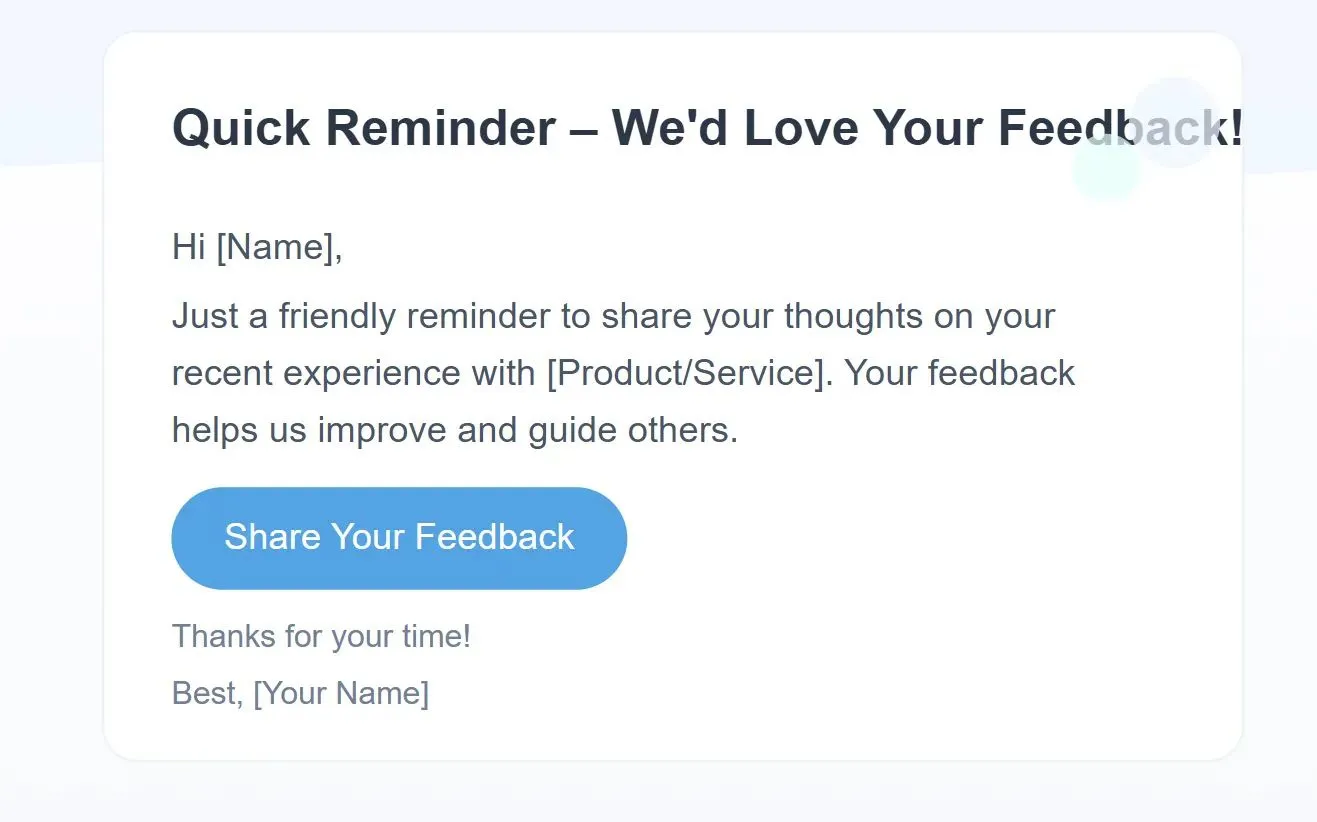
In the security sector, a bad review is a revenue killer. Silence is an admission of guilt. Ignoring your customer feedback signals to the market that you do not care about your customer base once the check clears.
Data from the Spiegel Research Center shows that displaying reviews can increase conversion rates by 270%. Here is how to weaponize your reputation:
-
Automate the Process: Integrate an automated email marketing sequence that sends a polite review request link to the client 14 days after a successful installation.
-
Respond to the Positive: Thank clients by name. It shows public appreciation and reinforces strong brand loyalty, which is a core component of a healthy retention strategy.
-
Neutralize the Negative: Respond immediately to a bad review, acknowledge their frustration, add helpful context, and hand them a direct number to sort it out off-thread. A swift resolution professionally shows you take customer service experience seriously.
-
Turn Failures Into Content: Don't fix mistakes quietly. A piece of content like "What We Got Wrong About Response Times and How We Fixed It" is disarmingly honest, builds trust faster than any polished case study, and gives a dissatisfied client a reason to give you a second chance. In the security industry, where everyone claims to be flawless, transparency is a competitive advantage.
Use AI for Automation
Communication is always key. AI and automation prevent your pipeline from bleeding new clients and support your customer retention efforts.
-
Personalize Emails Instantly: Set up automated, condition-based email marketing sequences. If a user downloads a guide on "Access Control for Small Businesses," your CRM should immediately send a personalized email offering a free on-site audit.
-
Consider Predictive Analytics: If you install comprehensive security systems, AI can track the lifecycle of that hardware. It can automatically flag when a client’s system is due for a software upgrade and trigger a targeted email campaign.
-
Chatbots for Triage: Implement an AI chatbot to handle midnight queries. It can filter out the people looking for a job as a security guard from the high-value prospects trying to secure an online business server room.
Do Not Underestimate Monitoring and Performance Tracking
Spending $5,000 a month on advertising for security companies without knowing which search terms lead to signed contracts is just taking a chance.
You need strict marketing analytics to survive.
-
Define the Timeframes: Set realistic quarterly milestones for your brand awareness and lead generation goals.
-
Choose the Right Tools: Integrate Google Analytics 4 (GA4) with your CRM. You must be able to trace a closed-won deal back to the exact keyword the user searched.
-
Celebrate Milestones: If your keyword rankings for local searches jump to the top three, double down on that strategy. Explore a comprehensive suite of marketing services to ensure you have experts monitoring these metrics daily.
|
Step |
What to Track |
Tool |
How Often |
|
1. Set your baseline |
Current traffic, leads, and cost per lead (CAC) |
Google Analytics 4 + CRM |
Before launching any campaigns |
|
2. Track website engagement |
Page views, bounce rate, session duration |
Google Analytics 4 |
Weekly |
|
3. Monitor keyword rankings |
Performance for target local keywords |
SEO tools + Google Search Console |
Weekly |
|
4. Measure lead conversion |
Number of prospects turning into qualified leads |
Weekly |
|
|
5. Review ad performance |
CTR, cost per lead, conversion rate by campaign |
PPC platforms (e.g., Google Ads) |
Weekly |
|
6. Track content performance |
Assets driving demo requests and inquiries |
Marketing analytics + Google Analytics 4 |
Monthly |
|
7. Calculate CAC and ROI |
Cost per signed contract vs. revenue generated |
PPC platforms + marketing analytics |
Monthly |
|
8. Benchmark and adjust |
Performance vs. past campaigns and industry benchmarks |
Marketing analytics tools |
Quarterly |
Why Does Multichannel Marketing Work Best?
One Google algorithm update and your phone stops ringing. That's the risk of betting everything on organic search.
Consumer demand for instant, credible online presence has never been higher. That’s why you need a layered approach. When a prospect sees your Google ads at the top of their search, reads your blog content during their research phase, and then gets retargeted by your Facebook ads a week later, you create an illusion of absolute industry dominance.
By the time they call your office, they are asking when you can start. That is the power of combining paid ads, local SEO, and active media platforms.
2026 Digital Marketing Template for Your Security Company
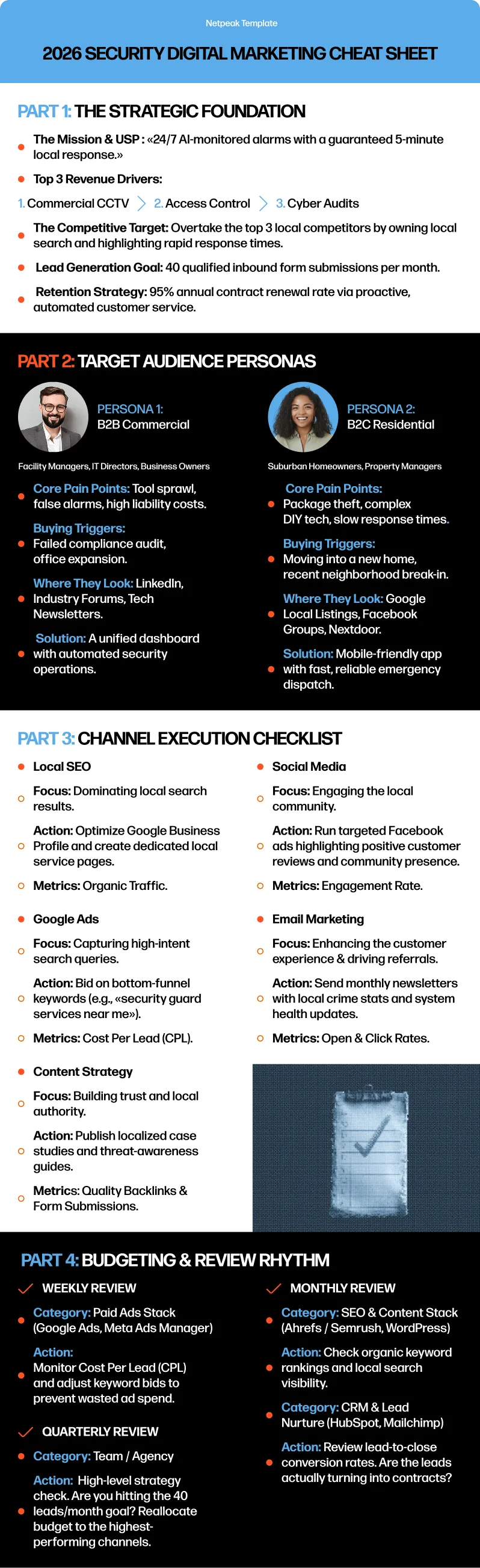
Use the comprehensive, printable template provided in this section to align your Company Overview, Audience Personas, Priority Channels, and Budget into one actionable sheet.
Final Thoughts
Gone are the days when you could just toss a business card at someone and cross your fingers. These days, your buyers are making snap decisions online and expecting answers right away. If your security company marketing doesn't swoop in with answers, show off your expertise, and grab their info the moment they start shopping, your competitors will be more than happy to roll out the red carpet for them.
So, put the marketing strategies for the security company above to work, keep a hawk's eye on your data, and treat your online presence like it's the front door to your security operations.
FAQ
Why does my security company need digital marketing?
Facility managers, homeowners, and small businesses use Google and social media. A strong digital marketing presence ensures your security solutions appear precisely when potential customers are actively searching for protection, directly impacting your bottom line and driving sustainable growth.
When will I see actual results?
It depends on the channel. Google Ads can generate high-intent inbound phone calls within 48 hours of launching a campaign. However, building quality backlinks and seeing significant movement in your organic search results through a dedicated SEO strategy typically takes three to six months.
How to deal with negative reviews?
A deeply flawed customer experience left unaddressed on your business profile destroys trust. Respond promptly, politely, and publicly. Acknowledge the issue and offer a direct line to management to resolve it.
Can I compete with companies with larger marketing budgets?
Don’t try to beat the big companies at their own game. Start by focusing your market research and becoming the top choice among local businesses. National security firms often spend a lot on broad keywords that don’t work well. By targeting local service pages, specific long-tail queries, and improving your Google Local presence, you can stand out against bigger companies.

 0
0
 0
0
 0
0
 0
0
Related Articles
Sustainability Marketing: 7 Smart Ways to Earn Trust (and Customers)
Learn how to grow your brand efficiently while using eco-friendly marketing practices to build trust and long-term revenue.
Why Your Amazon Pet Ads Are Getting More Expensive Every Quarter Since 2025 (and How Smart Brands Manage It)
What happened to the auction prices? Where is the margin going, and what should be done next quarter?
How to Track Brand Mentions in AI Search? Find Out Whether You Are in the Answer
Being mentioned in an AI search boosts visibility. Discover how to monitor your brand mentions in ChatGPT, Perplexity, or Gemini and follow our approach to higher mention frequency.