
SEO for a cleaning company in 2026 means focus on local SEO, clear service pages, strong reviews, and SEO content that matches real customer intent.
Today, it is more complex than before because not only Google and Maps, but also AI, now determine who shows up at the top of search results. And your business needs to appear there.
Your clients want to find help fast, so they will stop at one of the first proposed companies if they look trustworthy. Your business should be on the shortlist because it's where most calls and bookings go.
If you do it right, cleaning service SEO becomes your most sustainable growth channel — bringing in clients, lowering acquisition costs, and building long-term online visibility. This guide will show you exactly how to compete — and win — in 2026.
In search, like in Game of Thrones, you either play the game or someone else takes your spot. May the Seven bless you on the way!
- Why Cleaning Company SEO Is the Most Reliable Lead Source
- A Practical SEO Framework for Cleaning Businesses in 2026
- From First Click to Final Booking: Why Multichannel Matters
- 7 Pro SEO Tips to Get More Cleaning Jobs from Google
- Final Thoughts: Why Cleaning Companies Need SEO?
- FAQ
Why Cleaning Company SEO Is the Most Reliable Lead Source
Unlike ads that stop when the budget ends, SEO builds long-term visibility and consistently brings in high-intent leads who are ready to book.
Most of the cleaning businesses heavily rely on paid ads, and it’s understandable: you run it today and get work tomorrow. It’s great but unstable: ads have no long-term effect on your visibility, and sometimes, with high competition, you cannot afford them. That’s just the reality of local businesses.
SEO for cleaning services could help with that. It took some time to work in full power, but once you optimize, you get a reliable source of calls you don’t need to pay for.
SEO puts your cleaning company in front of high-intent customers across Search, Maps, and AI recommendations organically, just because Google and LLM systems think you’re reliable enough. Read our article to learn more about local SEO in the age of AI.
Here’s how your SEO efforts translate into business impact:
-
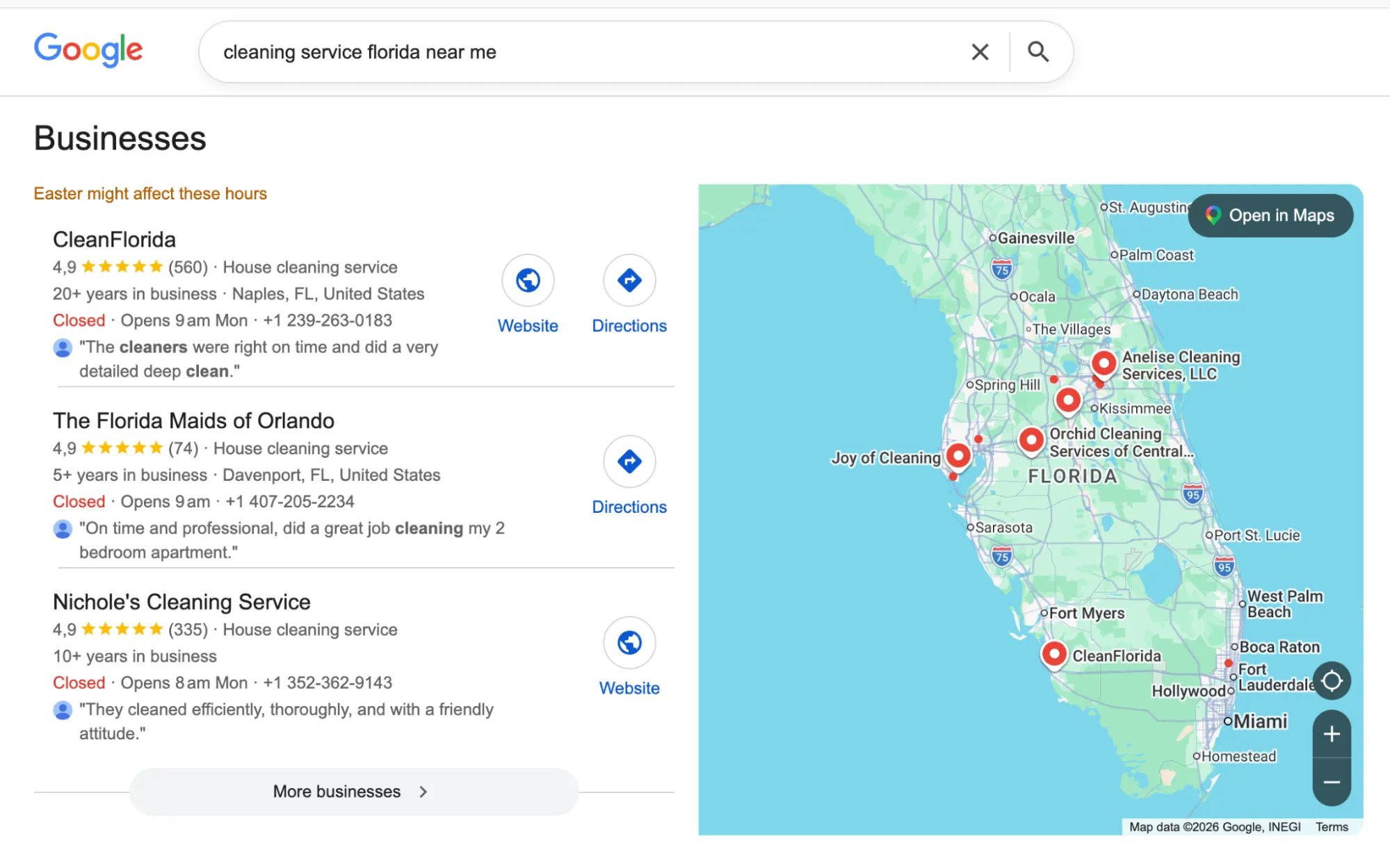
Local SEO for house cleaners brings calls from your service area. When you optimize for local search, you show up in “near me” queries and Google Maps — most cleaning bookings happen there.
-
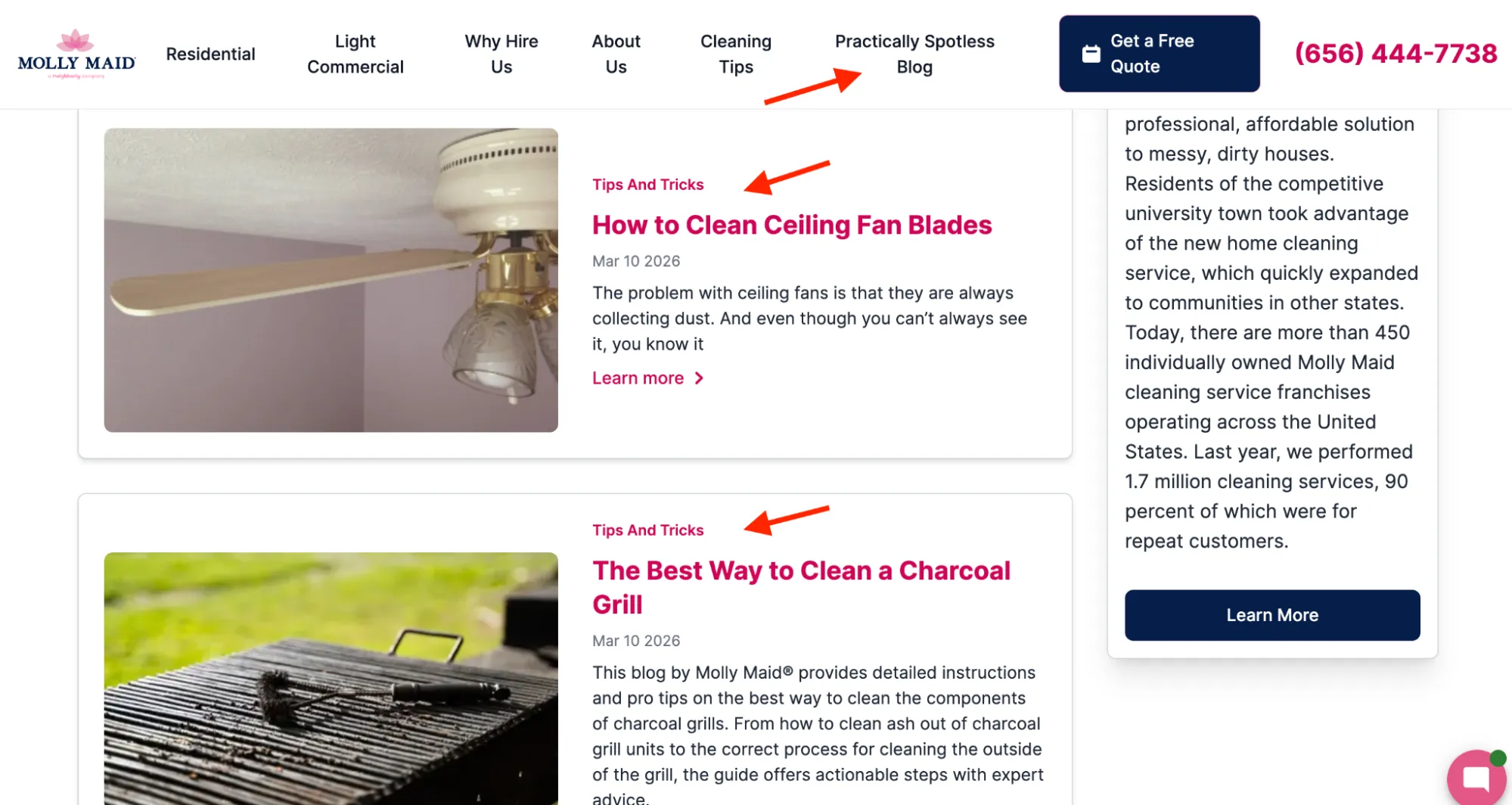
Expert SEO content gives you higher conversion rates. Clear service pages, FAQs, and helpful blog posts allow you to answer customer questions before they even contact you. That positions you as an expert — and makes people choose you. Because knowing how to do something doesn’t mean they want to do it themselves.
-
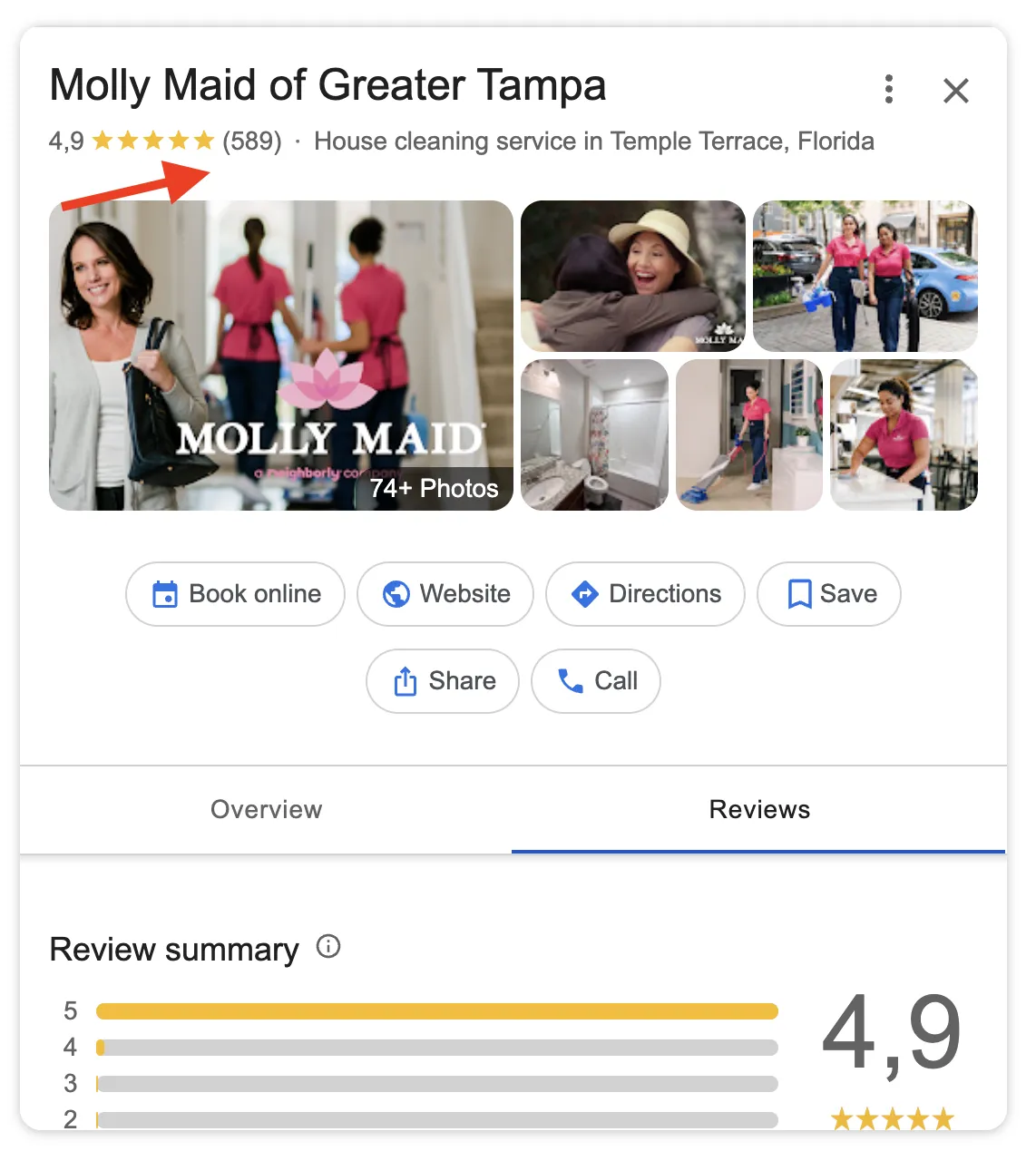
Strong SEO for a cleaning business builds trust, and it means more bookings without price wars. Cleaning is about entering someone’s home or workspace. If you show fresh, happy reviews, customers feel confident choosing you and are ready to pay more.
-
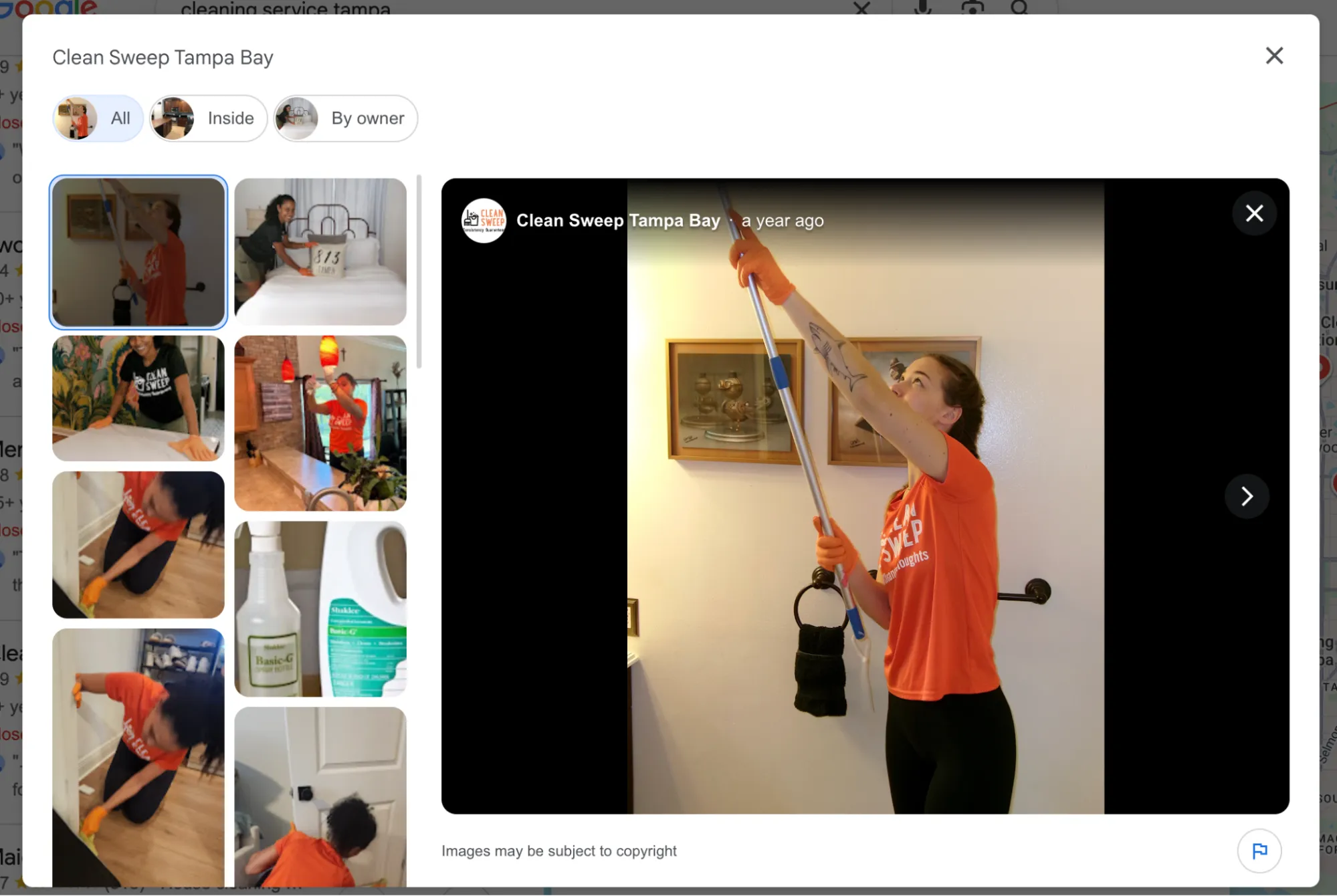
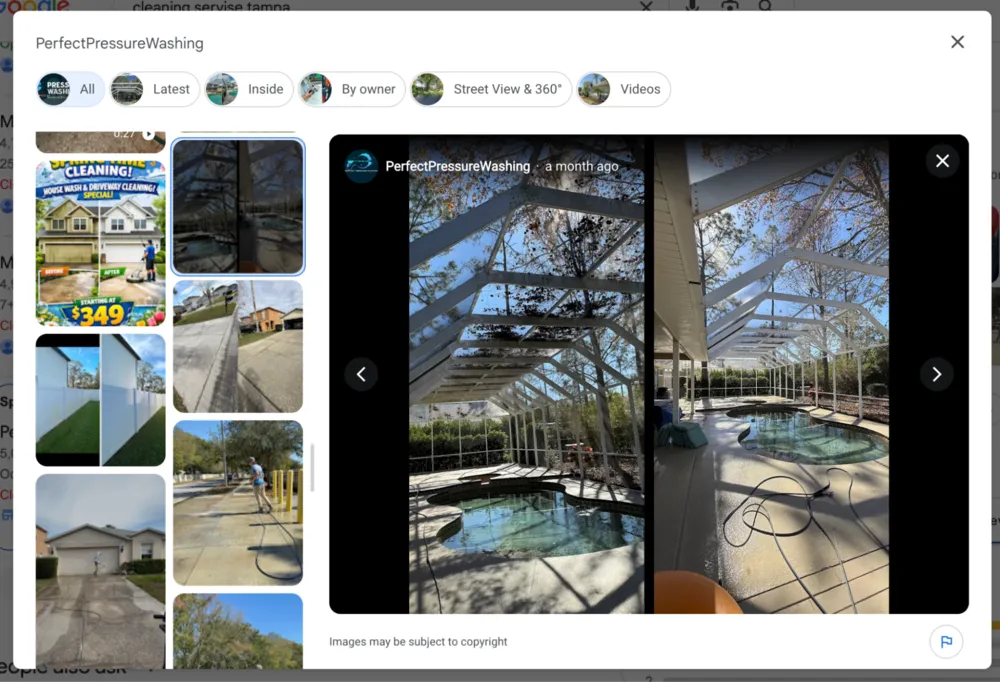
Quality visuals help with faster decision-making. Photos, team images, and short videos help people understand what they’re paying for. This increases the chances they’ll contact you instead of continuing to compare options.
-
Before/after cases speak louder than promises. People love to see transformations. Plus, photos give potential customers a clear expectation of your work.
-
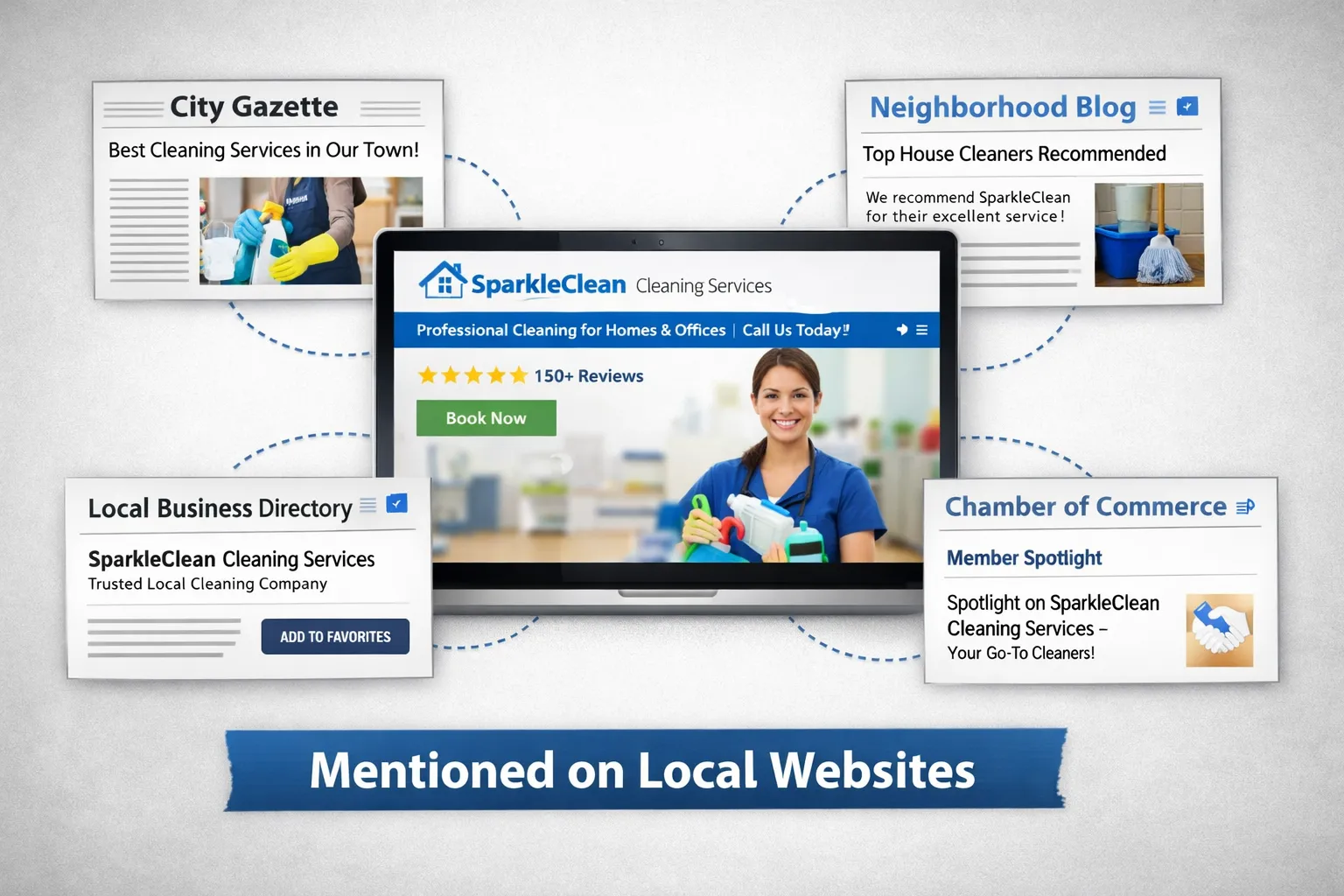
Local networking → stronger authority (online + offline). Mentions from local listings, websites, events, and partnerships create trust with both Google and your community. Read more about ways to increase website visibility with off-page SEO.
Unlike ads that stop the moment you pause the budget, SEO compounds over time — creating a reliable pipeline of customers month after month. If you want help with your SEO for a cleaning company, call us at Netpeak US about SEO services.
A Practical SEO Framework for Cleaning Businesses in 2026
You need to maintain the technical SEO fitness of your website, find your competitors’ gaps and fill them, create different types of SEO content, and measure your progress.
SEO for cleaning companies helps your small business get discovered, trusted, and booked. Here is what you need to do.
Maintain the Technical SEO Fitness of Your Website
Your website is your main sales tool. And if it’s slow and confusing, it loses you money.
-
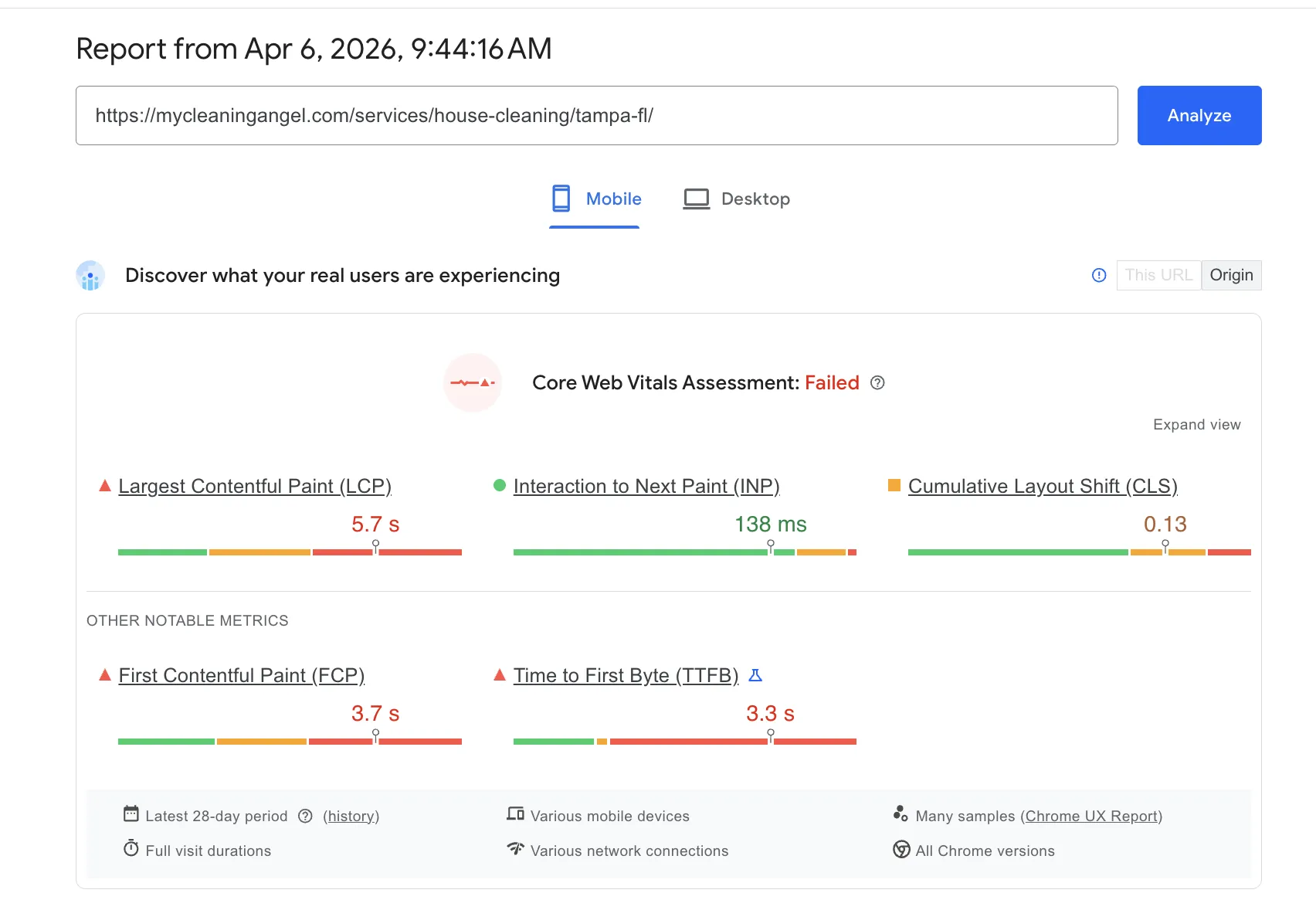
Think about how people actually book cleaning services. Your target audience searches from their phone, opens two or three sites, and makes a decision in minutes. If your website takes too long to load or the “Call Now” button is hard to find, you’re out of the game.
-
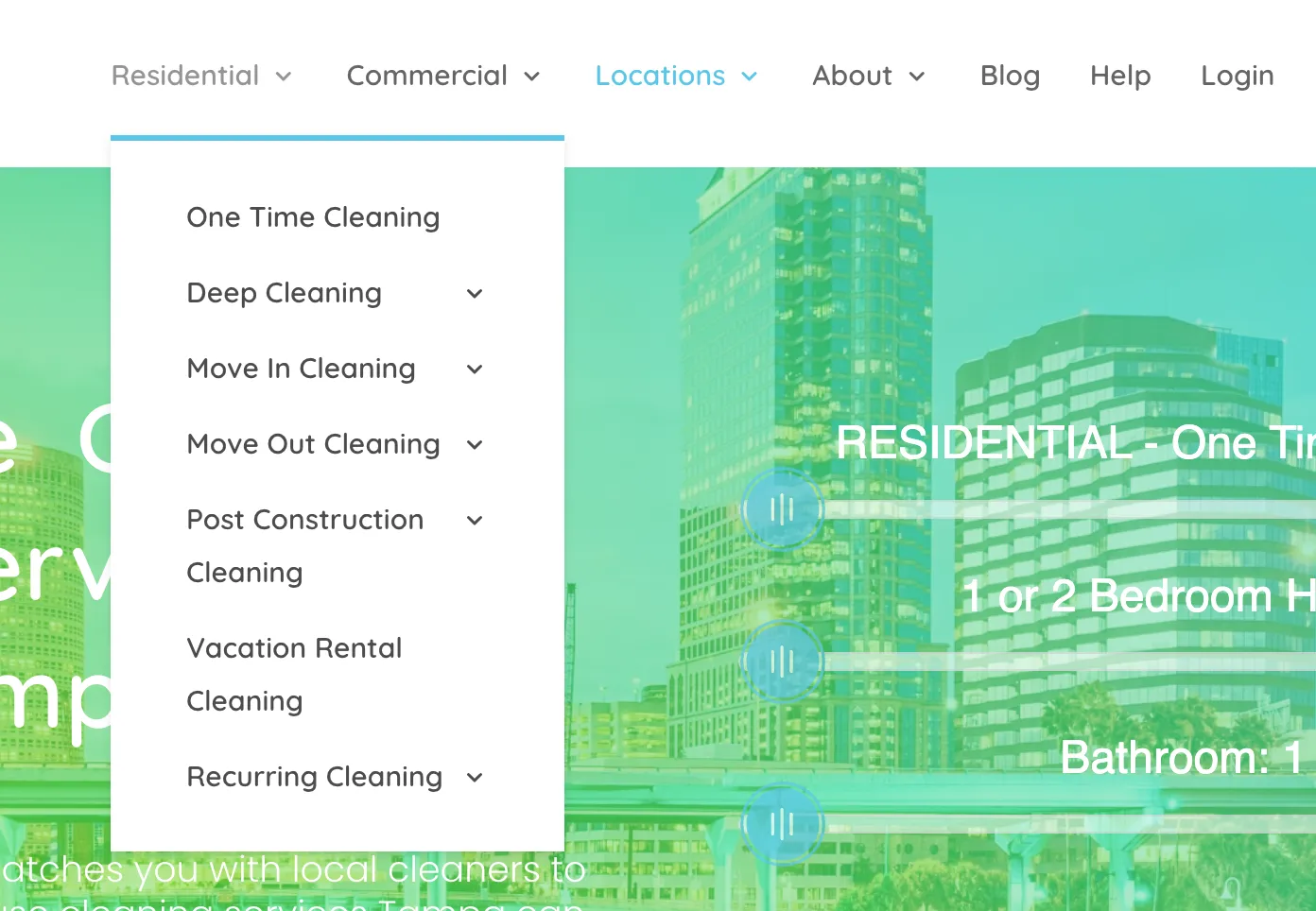
The same applies to website structure. Instead of one generic “Services” page, create dedicated pages like “Move-Out Cleaning” or “Vacation Rental Cleaning.” On-page SEO helps Google match your business with the customers who are searching for your services.
-
Even small technical elements like clear URLs, meta descriptions or structured data play into this. When your page is clearly labeled as “/our-services/apartment-and-condo-cleaning/,” it becomes easier for search engines to recommend you.

Find Your Competitors’ Gaps and Fill Them
You need to find out what your competitors are not doing well and occupy that space. If you search your main services and look closely, you’ll often see patterns.
-
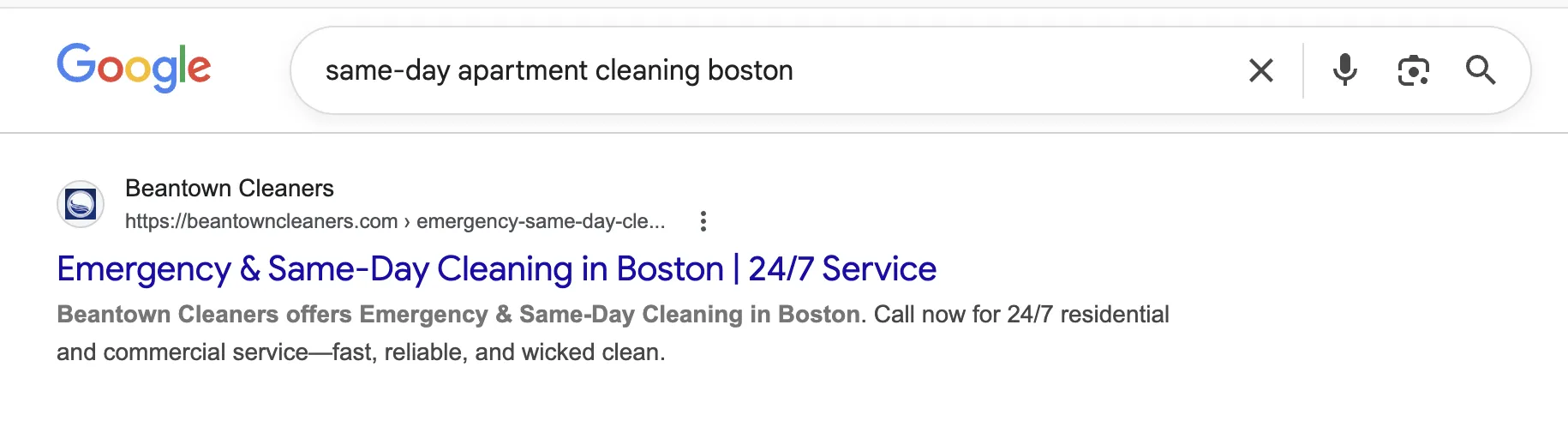
Competitors may rank for broad terms like “cleaning services Chicago,” but ignore specific, high-intent searches like “same-day apartment cleaning Boston” or “move-out cleaning for small apartments.” These gaps are where real money is.
-
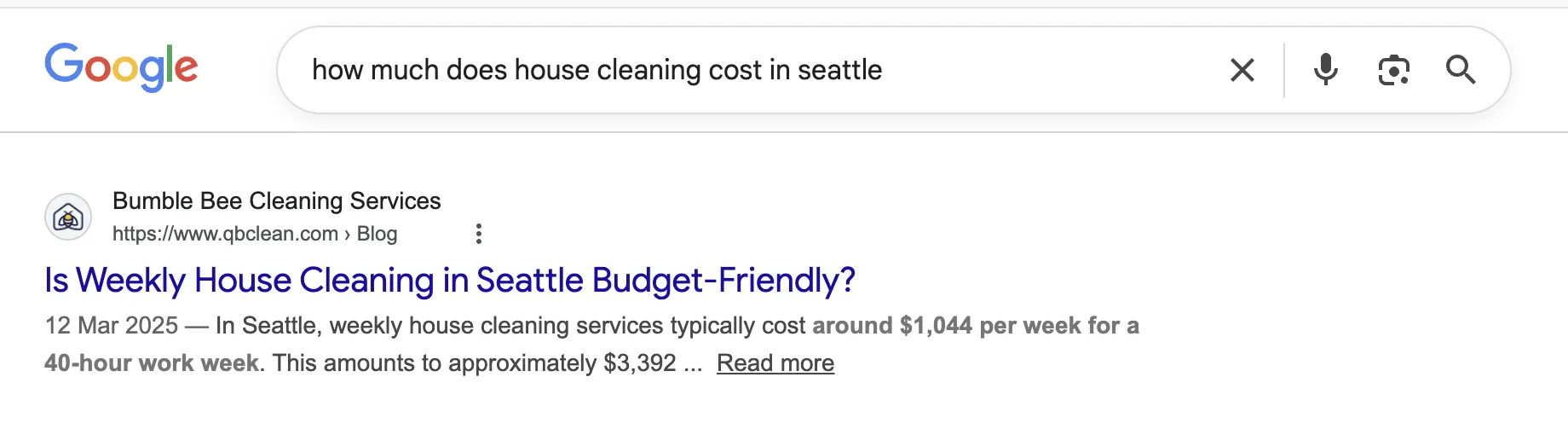
If none of your competitors explain pricing clearly, add a “How much does house cleaning cost in [city]?” page. It immediately positions you as the most transparent and trustworthy business in the area.
-
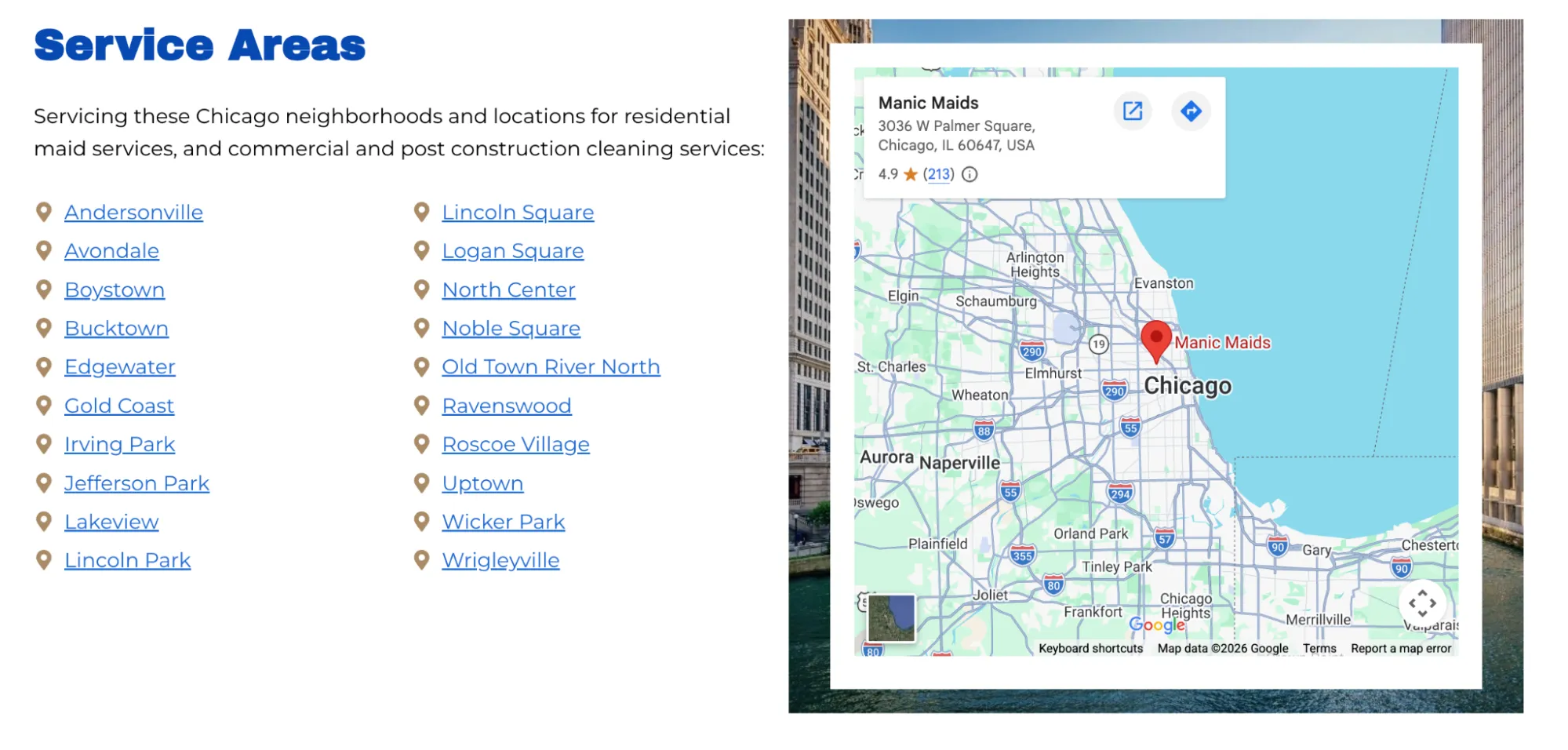
If they don’t target neighborhoods, create pages for service areas like “Cleaning Services in Lincoln Park” or “Office Cleaning in Downtown Boston.” It allows you to jump into less competitive search segments that still bring calls (high-quality ones!)
-
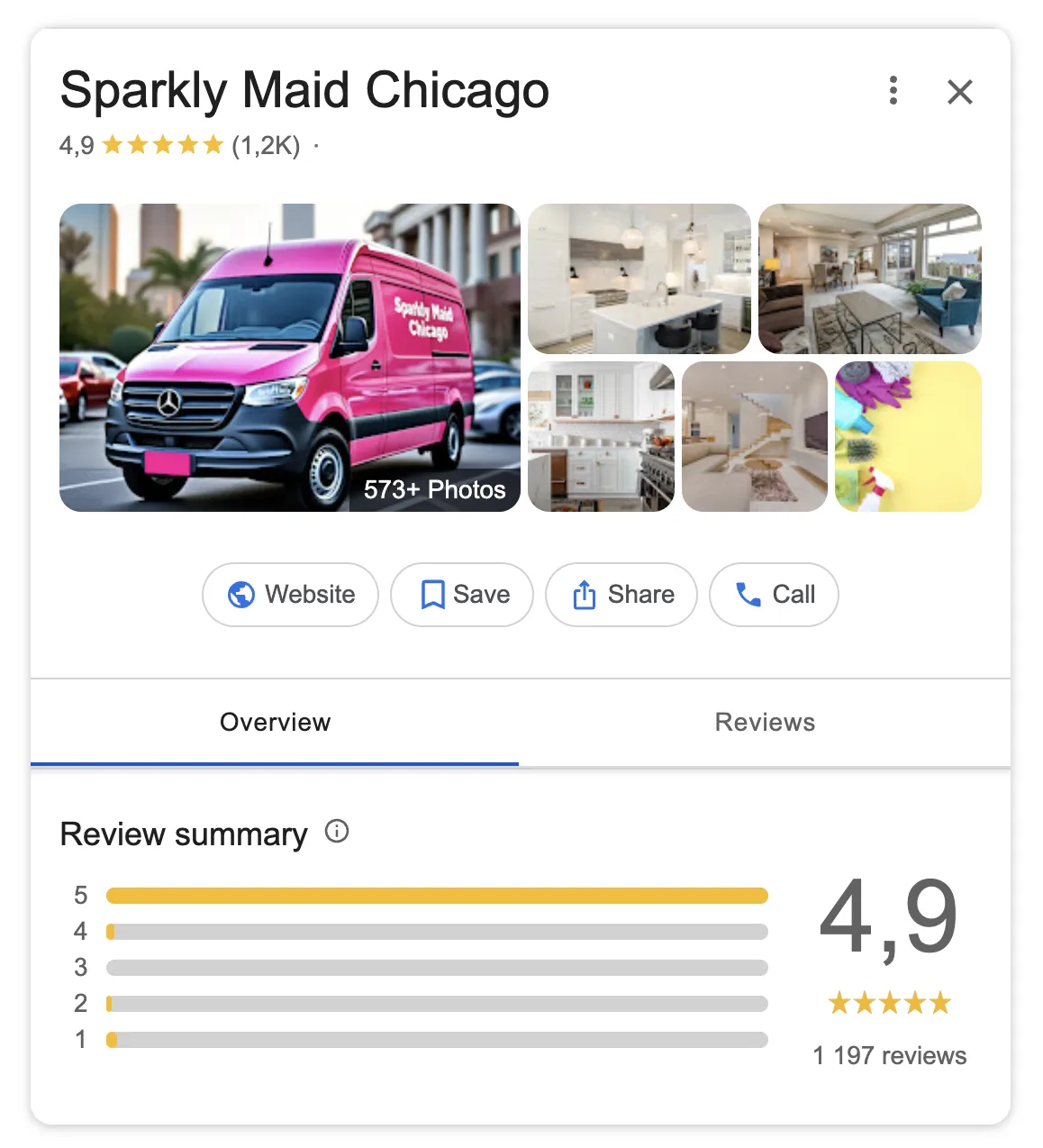
Your Google Business Profile is another place where gaps can be obvious. Many companies leave it half-empty, with a few photos and outdated information. If you actively upload before-and-after photos, answer questions, and collect reviews about customer service, you get higher customer engagement: more clicks and calls directly from Maps.
Create Different Types of SEO Content
In the cleaning industry, trust is everything because you’re entering someone’s personal space. When a potential client lands on your website, they’re asking themselves, “Can I trust these people in my home?”
You need to create different types of website content to calm them down:
-
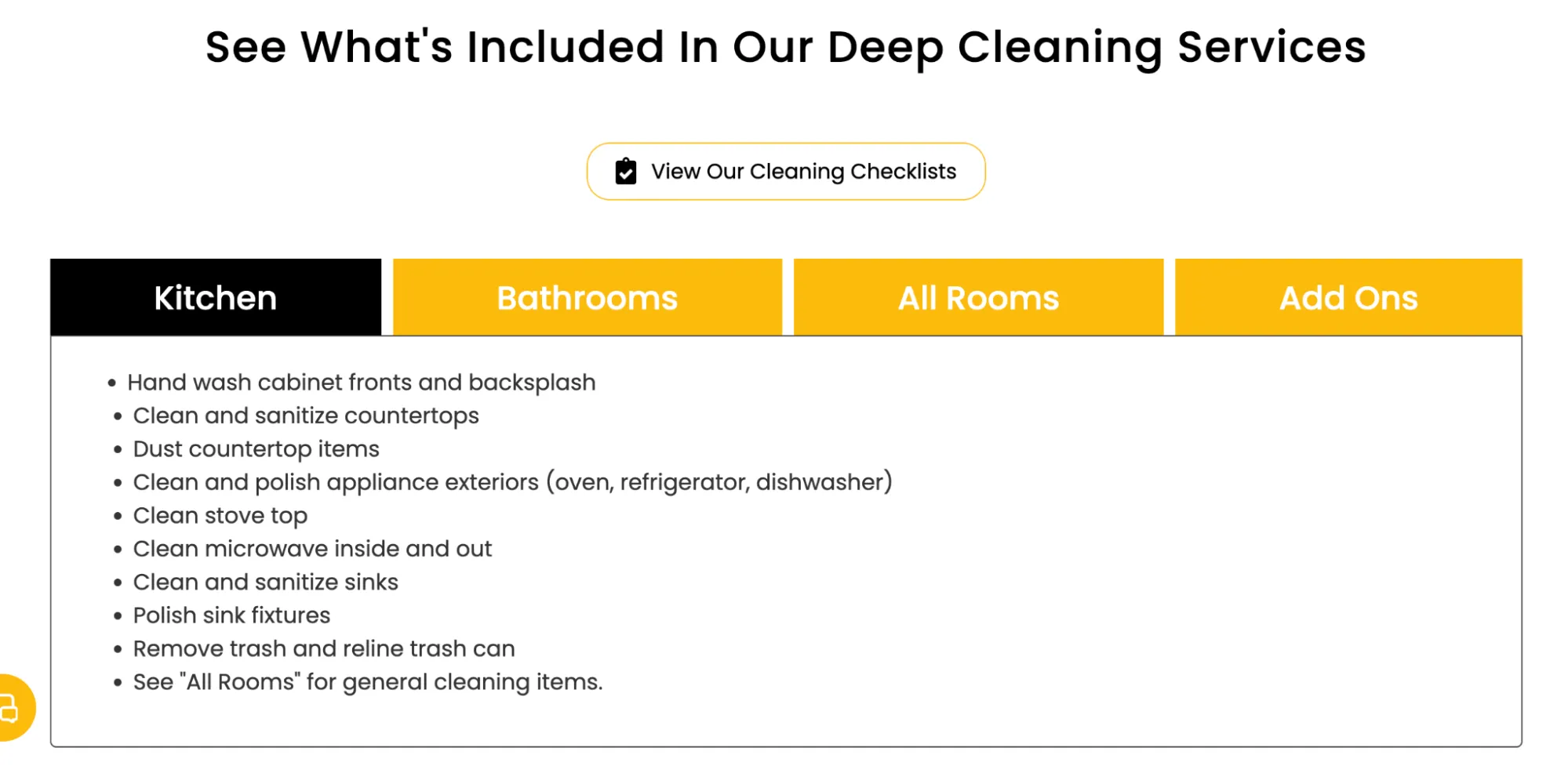
Service pages. A well-written “Deep Cleaning” page should explain what’s included, show real results, and remove hesitation.
Add location pages too — they make your online business feel local, which is critical because people naturally prefer companies that seem “close” and familiar.
-
Blog content. Someone searching “how often should I deep clean my apartment” might not be ready to book today, but if your SEO content answers their question, you become the brand they remember when they are ready. It works like an instrument of customer retention. This type of content is also what gets picked up in AI-generated answers, and that's an additional online visibility.
-
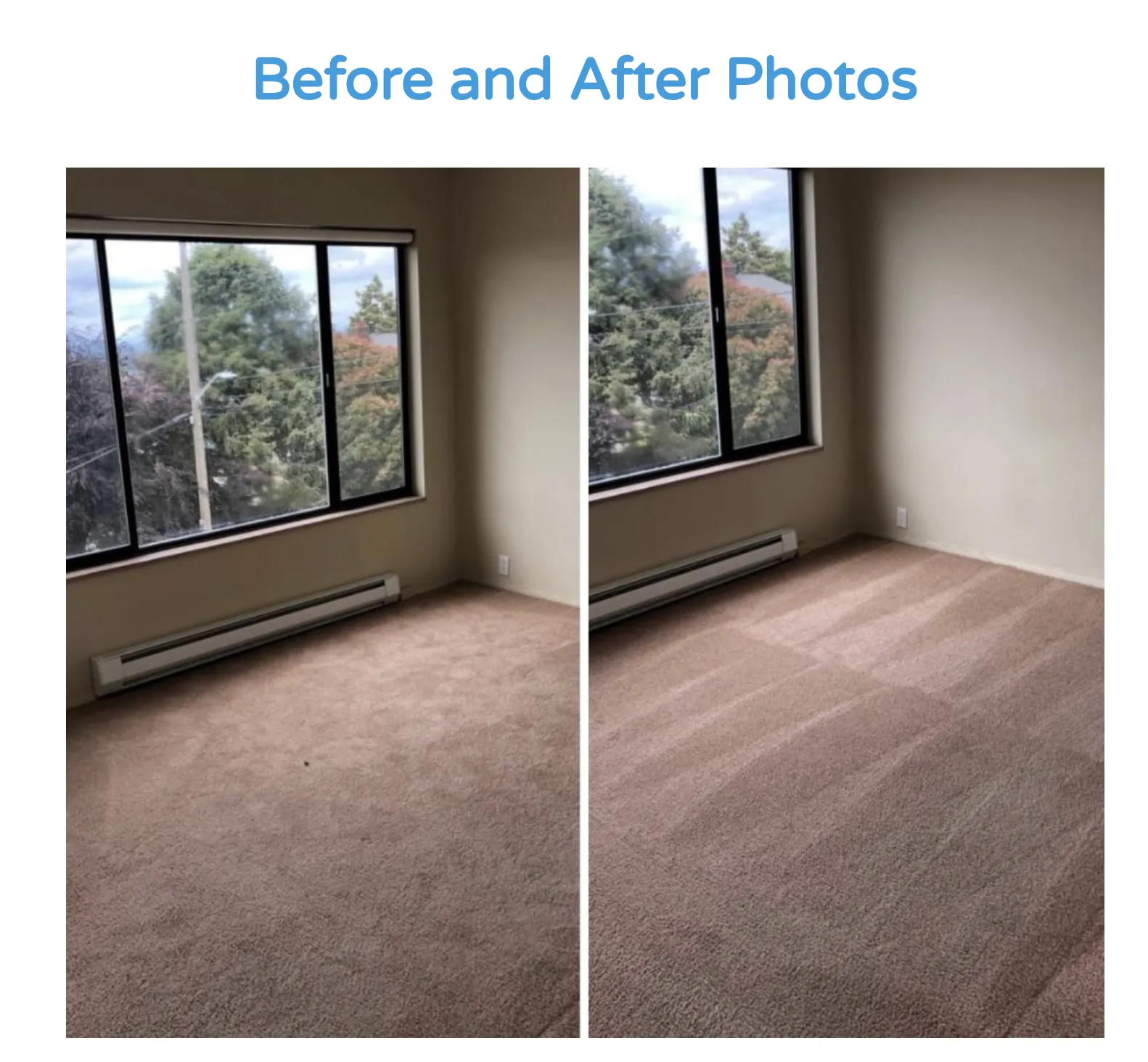
And local SEO is about proof; that’s why you need to show a before-and-after case study. Sometimes, visual transformations say more and louder than paragraphs of text.
Measure Your Progress and Refine SEO Strategies
Without tracking, SEO performance feels slow and unpredictable. Measuring the right data can calm you down and show the results of your actions.
-
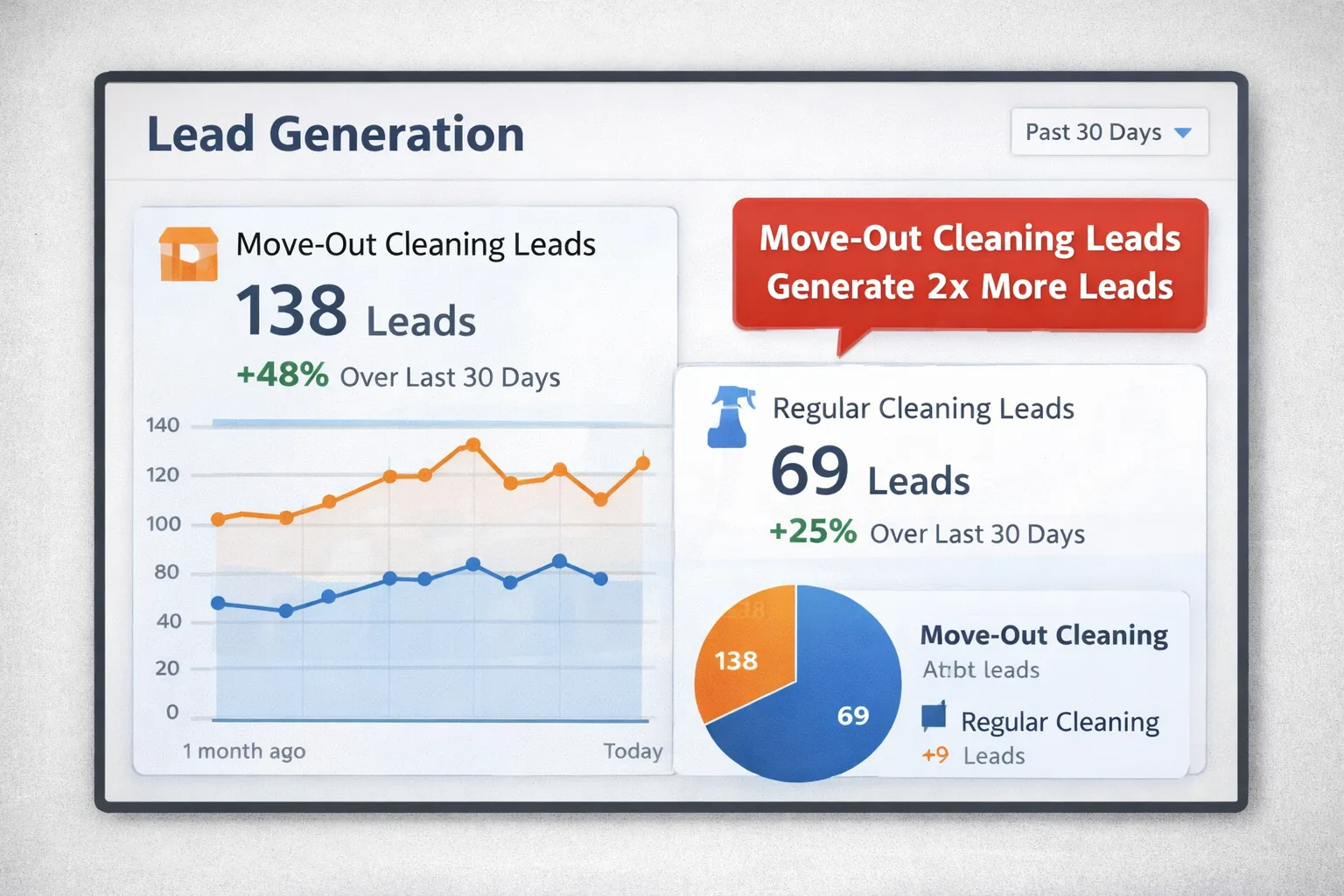
The most important shift is focusing on outcomes: calls, form submissions, and booked jobs are what actually matter. You might see that one service — for example, Move-out cleaning — generates twice as many leads as Commercial cleaning. That insight allows you to double down, create more pages, and expand into more locations for that service.
-
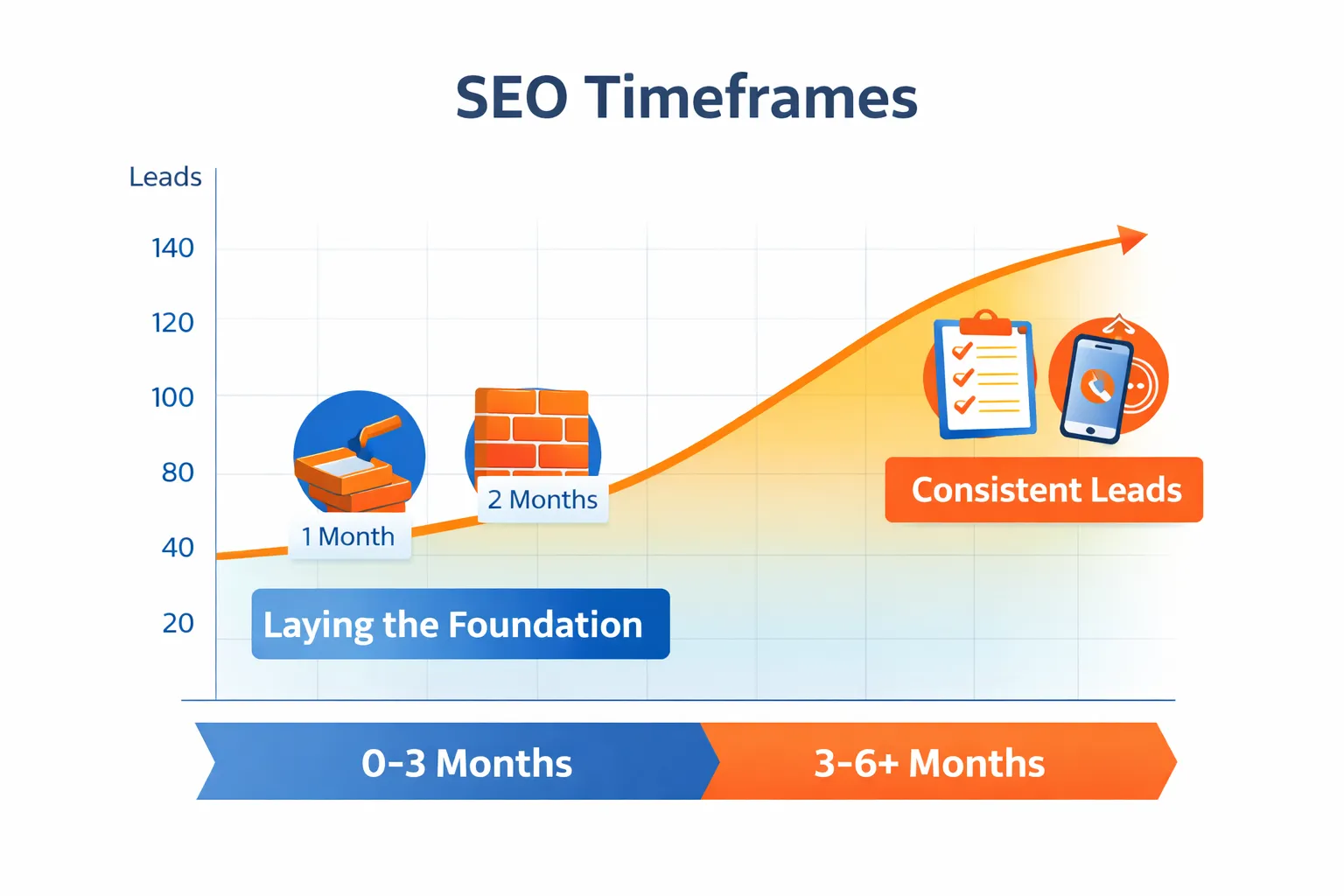
You need to keep in mind timeframes. SEO doesn’t deliver overnight results, so be patient and just wait. The first few months are all about laying the foundation, and only around the three-to-six-month mark, you start getting some calls.
-
Don’t forget that SEO is an ongoing process. You can’t stop your work: test new relevant keywords, add service pages, work in new service areas, etc. For example, if a keyword starts driving appointments and calls, use it. It’s time to create more SEO content with it, optimize ads around it, etc.
From First Click to Final Booking: Why Multichannel Matters
The perfect marketing channels do not exist: SEO needs time to start working; paid ads are temporary, so your phone stops ringing the moment you pause the budget; social media platforms are more about trust than sales.
That’s why your cleaning business needs a marketing strategy that combines different channels that support one another.
And data backs this up:
-
Shoppers move across channels before purchasing. This makes multichannel presence essential to stay visible throughout the journey (Google).
-
More importantly, multichannel brings you more money. Omnichannel customers are 1.5× to 2.1× more valuable than single-channel ones.
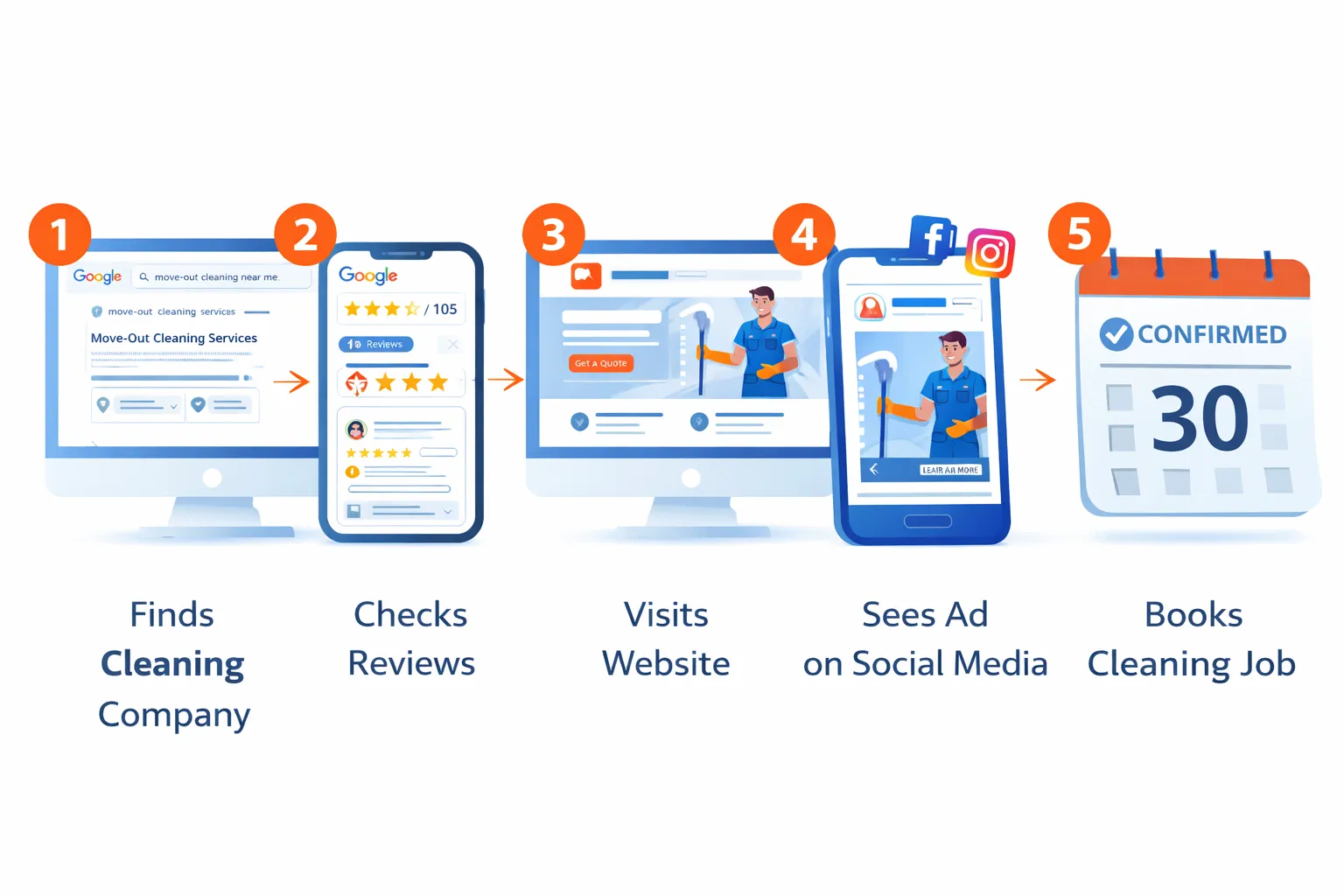
For a cleaning company, the customer funnel might look like this:
-
A user finds you via SEO (“move-out cleaning near me”)
-
Check your reviews on Google
-
Visits your website
-
Later sees your ad on social media
-
Comes back because of the retention strategy and books
-
Maintain brand loyalty because of a great customer service experience and loyalty programs
The more potential customers see you, the more they trust you — and the easier it is to say yes. We’re at Netpeak US, mastering digital marketing for cleaning companies. Call us if you don’t have time to learn it professionally by yourself, and we will discuss how much does SEO cost for a cleaning business.
7 Pro SEO Tips to Get More Cleaning Jobs from Google
Here are a few SEO tricks you'd better use as a business owner. Each one ties back to your revenue, not SEO rankings for the sake of rankings.
#1: Get an SEO Audit → Find Where You’re Quietly Losing Money
Many cleaning companies have broken pages, weak website content, or missed opportunities. You need to know for sure that you’re not one of them, and if you are, fix that fast.
An SEO audit shows you exactly where leads are leaking. For example, you might discover that your “Deep Cleaning” page ranks on page 2, loads slowly on mobile, and has no clear call-to-action. Fixing just that one page can move it to page 1 and get you bookings.
What you can do right now:
-
Google your main services (like “deep cleaning near me”) and check where you appear
-
Open your website on your phone and try to book like a real customer
-
Identify your top 3 service pages and check: are they clear, fast, and easy to contact you from?
-
Add a strong call-to-action on every page (“Call Now,” “Get a Quote,” “Book Today”)
-
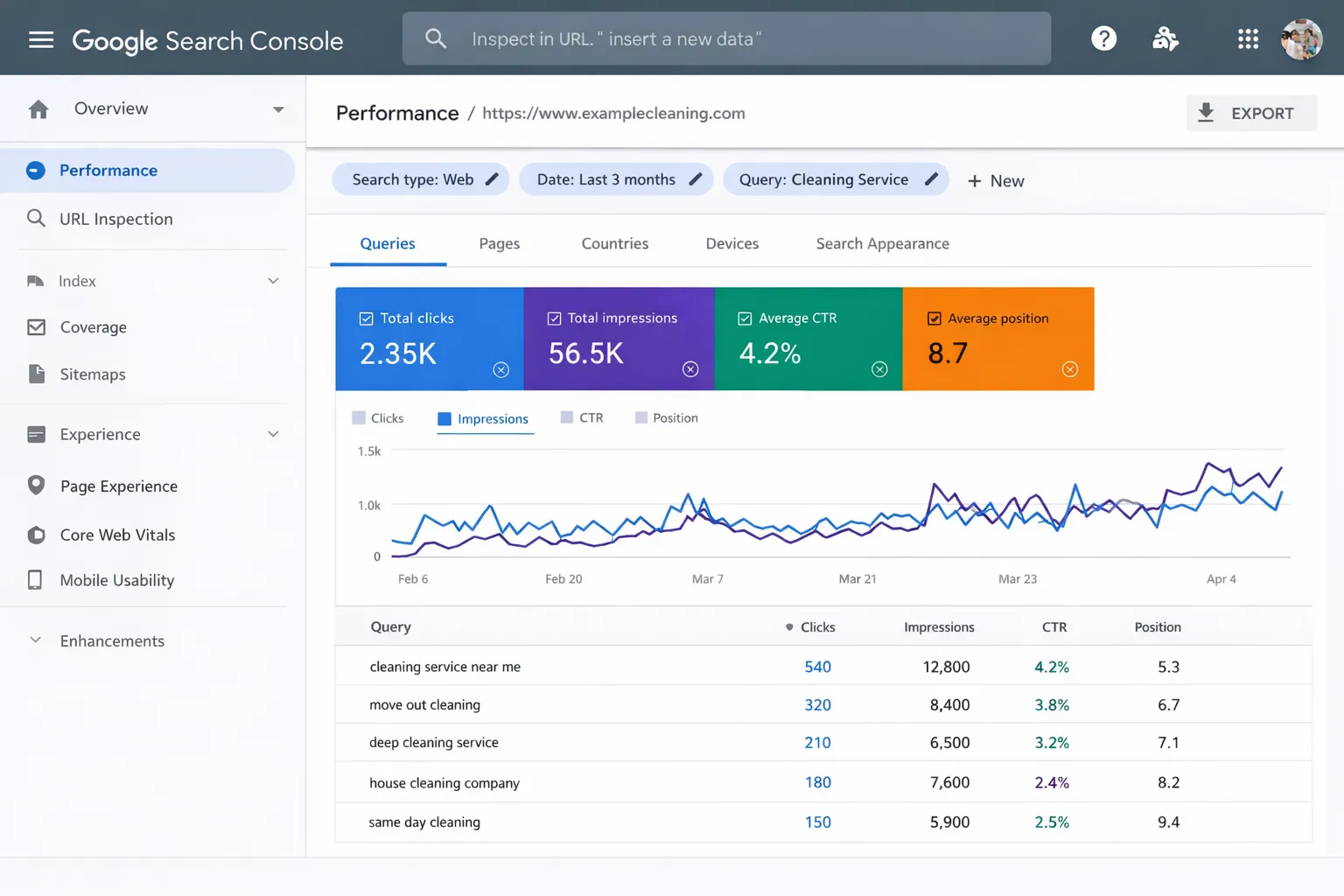
Check your page speed using a free SEO tool (like Google Search Console or PageSpeed Insights)
This is the fastest way to grow without increasing your budget, because you’re improving what you already have.
#2: Match the Search to Meet Consumer Demand
A person searching “cleaning services” could just be browsing, but if someone spends some time typing “same-day apartment cleaning near me,” they seem to be ready to book.
Your website should catch these urgent, specific keywords, so build pages that match the client's intent.
What you can do right now:
-
Google your main services and write down 5-10 search phrases your customers would use when they, for example, urgently need cleaning
-
Identify which of your pages match those searches — and which don’t exist yet. Marketing analytics (especially Google Analytics) could help with that.
-
Add new pages (e.g., “Same-Day Apartment Cleaning in [City]”)
-
Think about specific CTAs like “Book Same Day Cleaning.”
-
Include FAQs that would answer questions in customers' heads (e.g., “Can I book cleaning today?”)
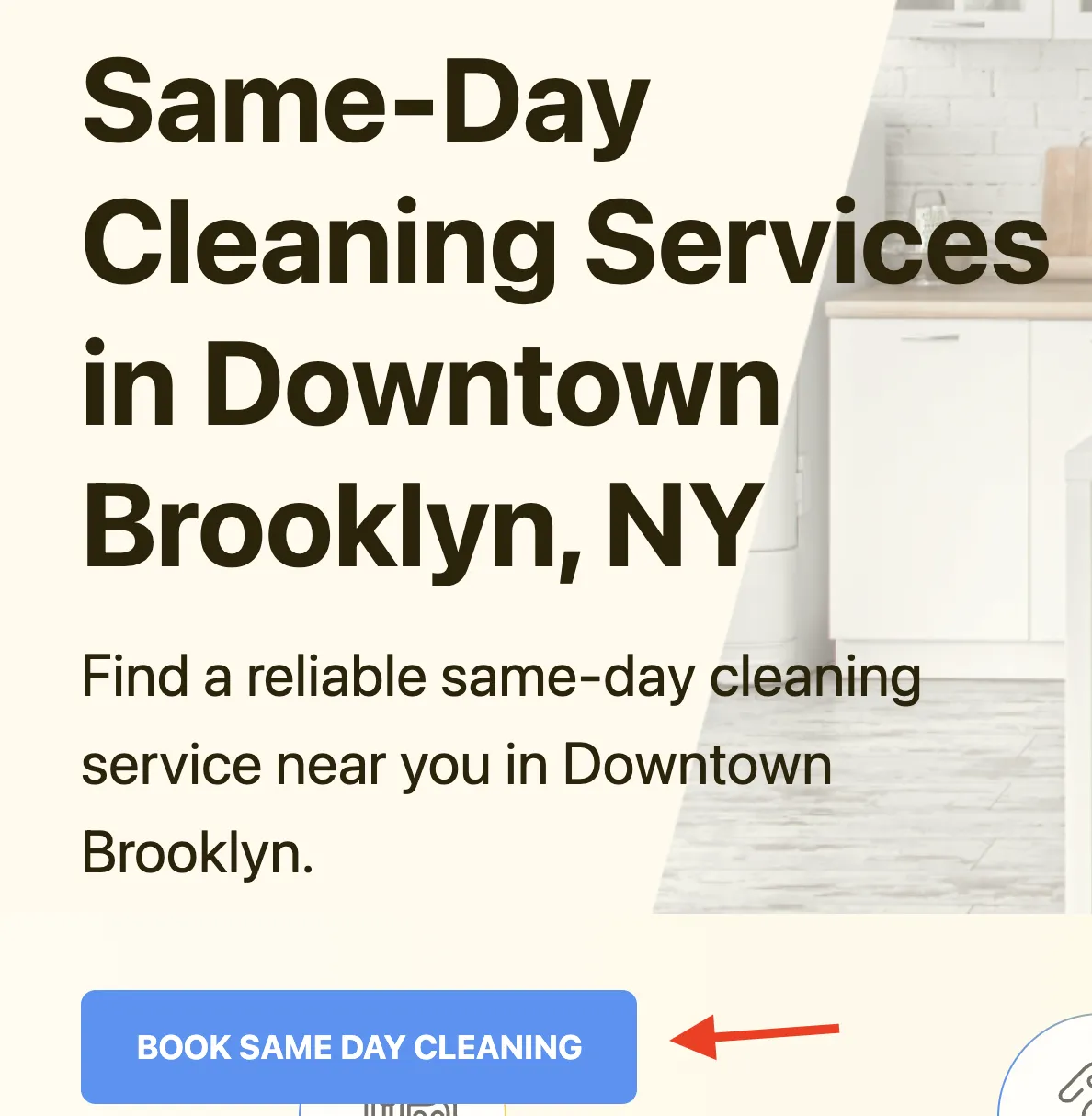
This is where SEO helps you with sales, because you’re aligning your message with people’s needs.
#3: Optimize for E-E-A-T → Google Would Love You for That
E-E-A-T (Experience, Expertise, Authoritativeness, Trustworthiness) is Google’s framework that they use to check if your website is trustworthy. They give detailed instructions on how to do so, and you'd better listen.
What you can do right now:
-
Replace any stock photos with real photos of your team and actual work
-
Add a short “About Us” section explaining who you are, how long you’ve been in business, and what you specialize in
-
Show real numbers (e.g., “500+ homes cleaned,” “5 years of experience in [city]”)
-
Add at least 3–5 recent customer reviews directly on your website
-
Include specific service details (what’s included, how long it takes, what customers can expect)
-
Display trust badges if you have them (insured, licensed, satisfaction guarantee)
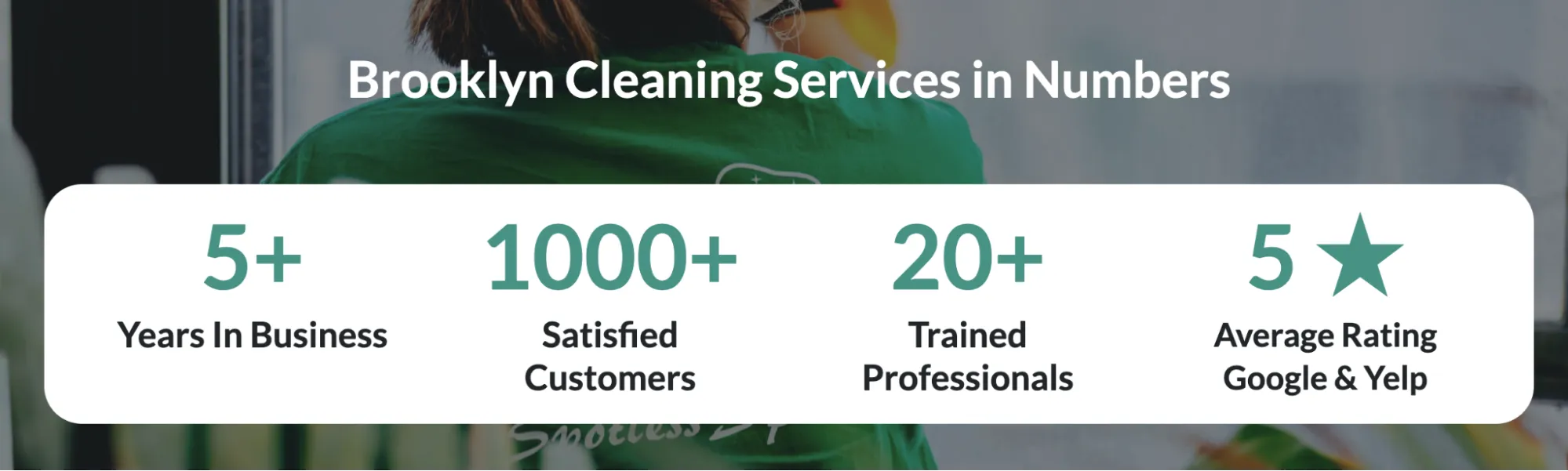
A cleaning company that shows “500+ apartments cleaned in [city]” with real photos and testimonials will outperform a competitor with vague claims.
#4: Use Structured Data for AI Online Visibility → Get Recommended
Structured data helps search engines and AI systems quickly check information about your business: what you offer, where you operate, how customers rate you, etc. The easier it is to understand, the more likely you are to show up in rich results and AI summaries.
What you can do right now:
-
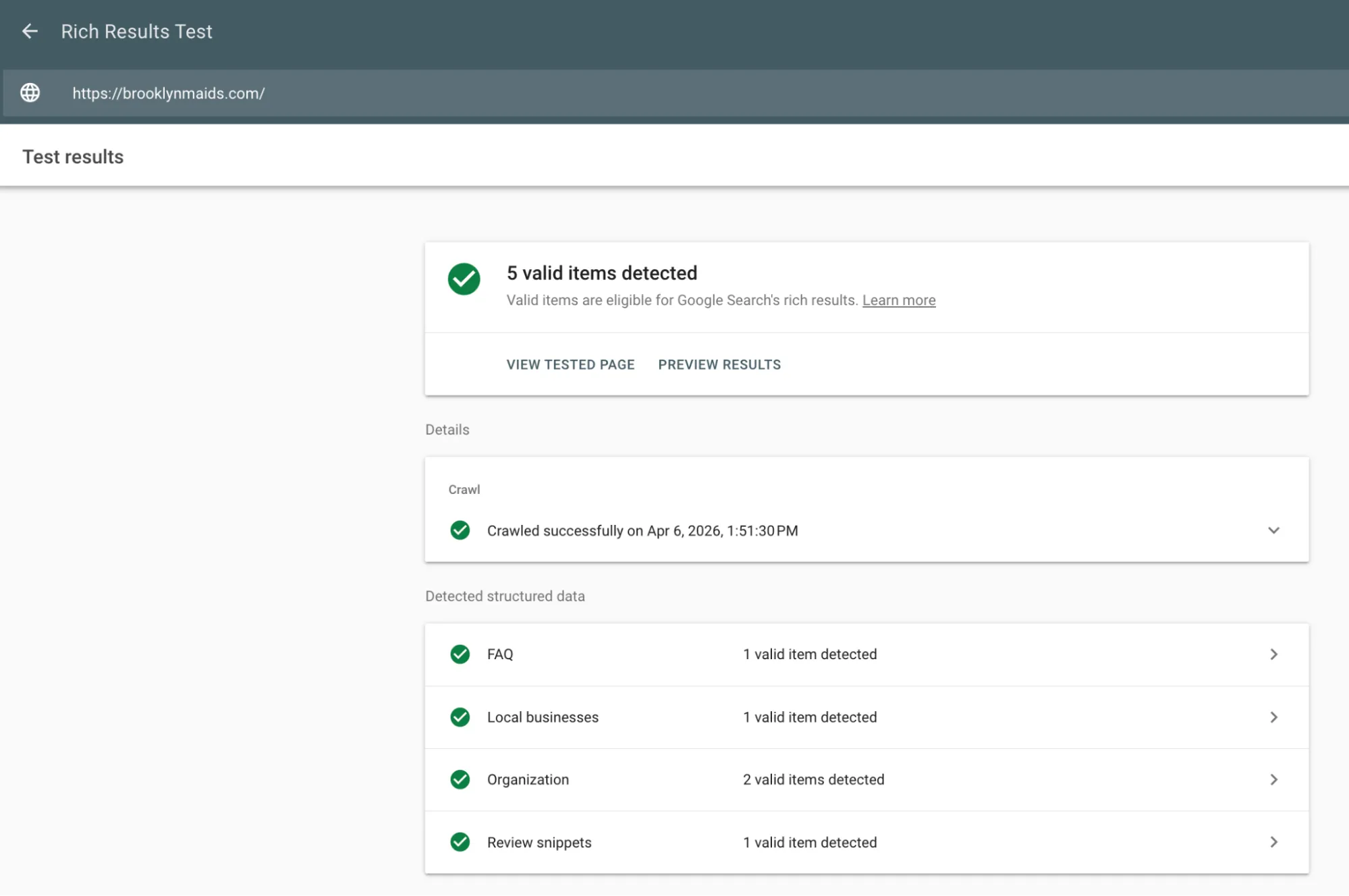
Add LocalBusiness schema (name, address, phone, service area, opening hours) and review schema (ratings and testimonials) to your website
-
Don’t forget about the FAQ schema on your main service pages (add answers to the questions like “How fast can you come?”)
-
Add schema to your most important pages first (homepage + top professional services)
-
Use a free tool like Google’s Rich Results Test to check if your schema works
#5: Divide Topics into Clusters → Own Entire Categories
Many cleaning companies create a few random pages and hope they will have high keyword rankings. You need to think in clusters — build a group of related pages around one service.
What you can do right now:
-
Pick one core service to focus on and create (or improve!) your main service page
-
List 5-10 questions customers ask about that service, and turn each one into a separate supporting page or blog post
-
Link all those pages back to your main service page and between each other
-
Check Google’s “People also ask” and autocomplete for website content ideas
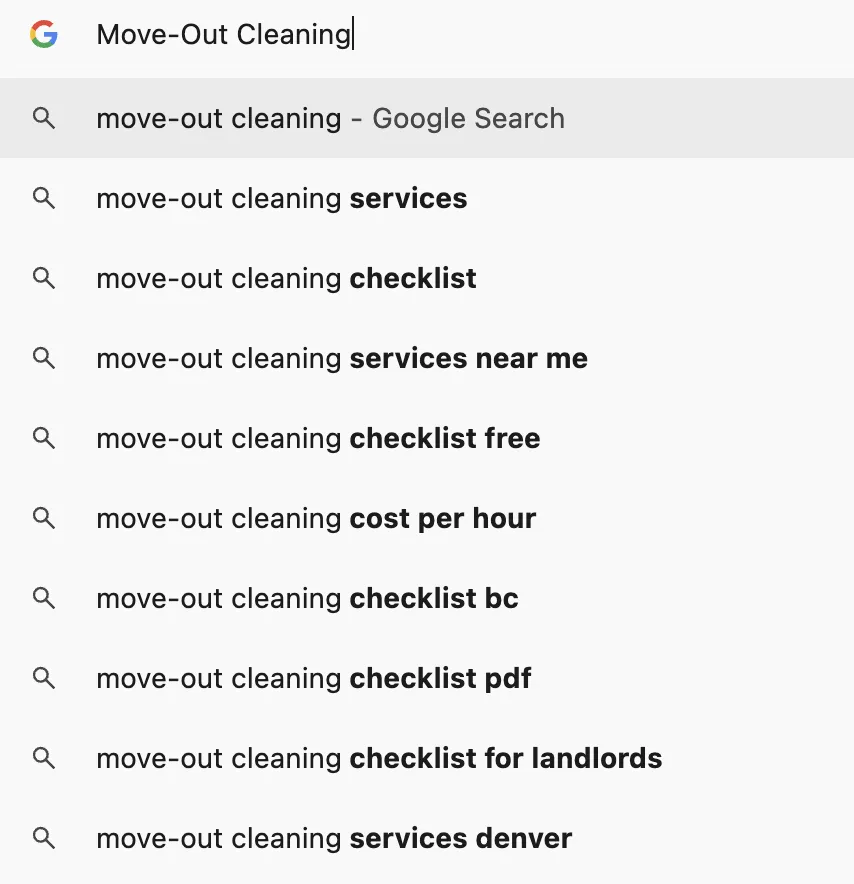
This structure signals expertise to Google (they love quality backlinks and link building!) and increases chances to rank across different local searches.
#6: Work with Different Reviews → Make Your Reputation Work Overtime
Customer feedback helps you rank and helps people choose you. A cleaning company with lots of recent, detailed reviews about customer experience will almost always win over one with just a few old ones.
But it’s not just about having more reviews. When people mention specific services like “move-out cleaning” or “same-day service,” it also helps Google understand what you’re good at — and show you for those searches.
What you can do right now:
-
Set up a simple system: ask for reviews after every completed job
-
Ask your last 5-10 customers for a review (send a simple direct link to your Google profile)
-
Reply to every existing review — especially recent ones (shows activity + trust)
-
Fix negative reviews professionally (respond + show how you resolved it)
-
Add your best reviews directly to your website, especially on key pages (homepage + service pages)
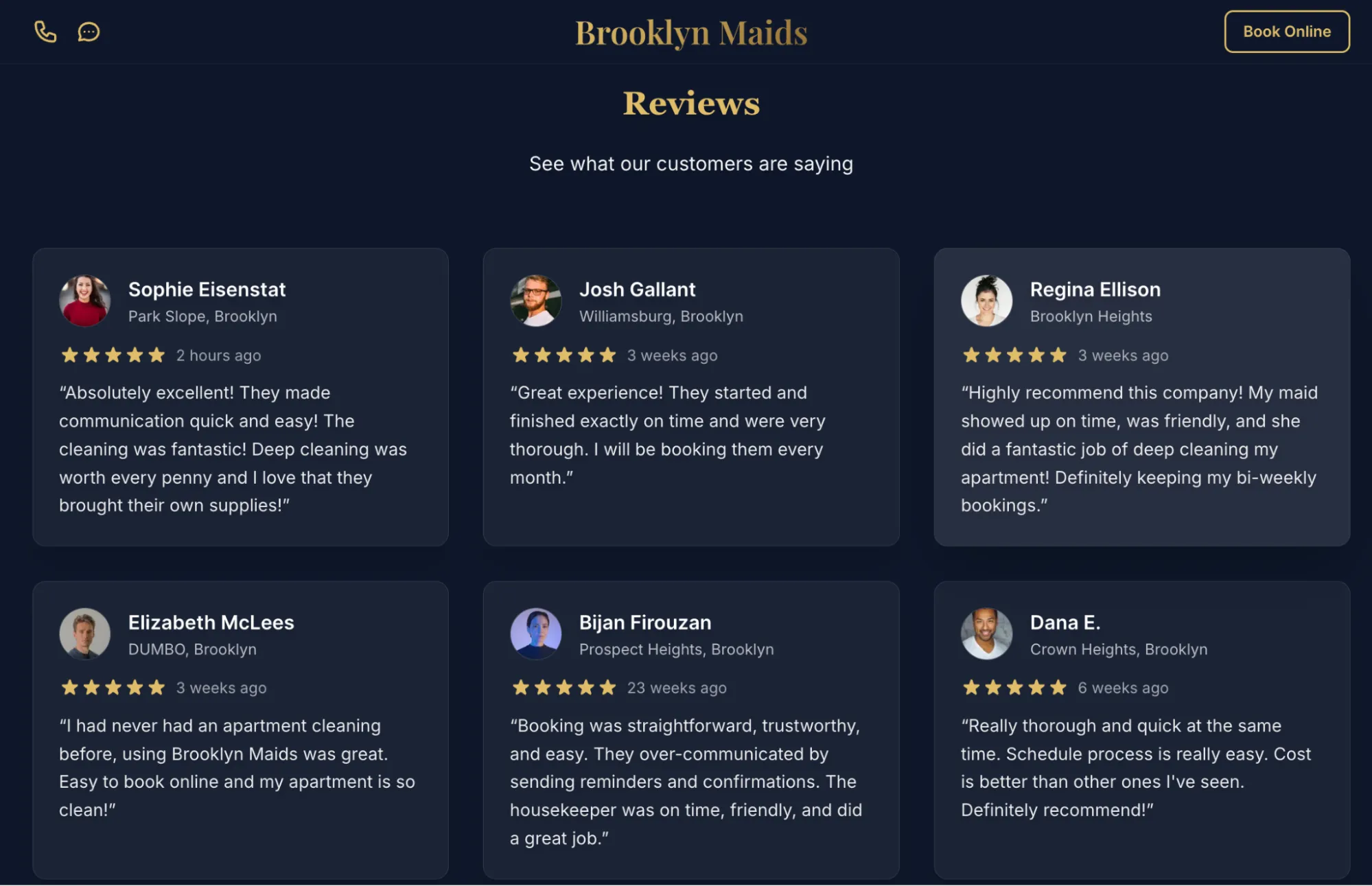
Reviews about customer satisfaction reduce price sensitivity. People are ready to pay slightly more for a company they trust.
#7: Visualize Your Cases → Show, Do Not Tell
Most cleaning companies say they’re “high quality.” Very few do something to prove it. Before-and-after cases are one of the strongest conversion tools you have. A single visual transformation instantly communicates attention to detail and results.
For example, showing a messy apartment turned spotless with a short explanation (“2-hour deep cleaning before tenant move-in”) gives potential customers a clear expectation of what you deliver.
What you can do right now:
-
Create a simple “Before / After” section on your homepage or service pages
-
Take photos during your next 2-3 jobs (before + after with the same angle and same lighting if possible)
-
Pick your best transformation and upload it to your website
-
Add a short, clear description (what was done, how long it took, what problem you solved). Do keyword research and add a new keywords (e.g., “Move-out cleaning in [City]”)
-
Use these visuals in your social media — people love content like that
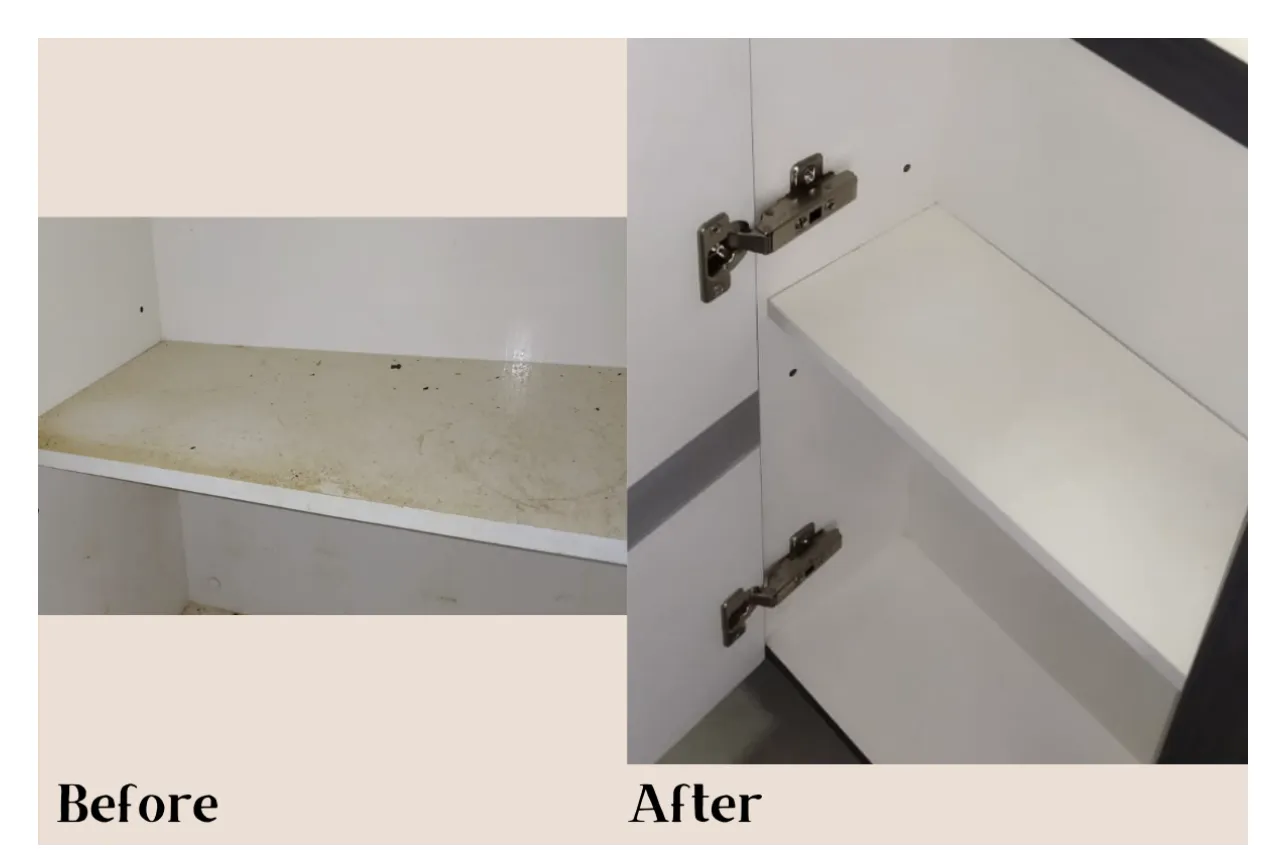
This makes decision-making faster. Potential customers would see your work and think, “I want this result.”
We’re at Netpeak US are experts in digital marketing for home services. If you want to delegate your SEO to someone, we’re here for you (and our years of experience, too!)
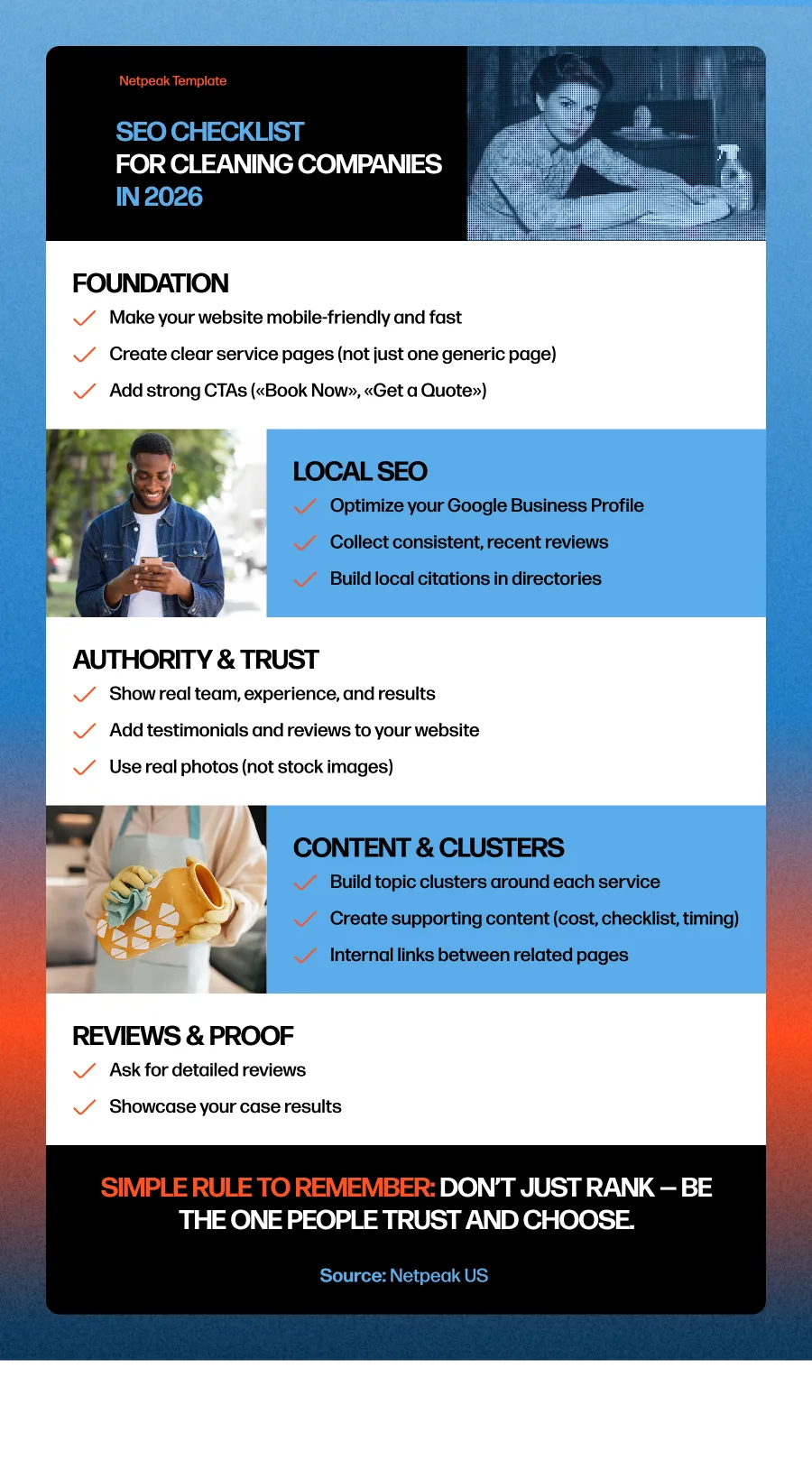
Final Thoughts: Why Cleaning Companies Need SEO?
The goal of your SEO strategy for cleaning companies is to build a system that brings you ready-to-book customers without paying for ads all the time. And you don’t even need to be a big player to win.
When you combine technical optimization, local SEO for a cleaning company, strong content marketing, and proof of your work, you get a steady source of calls.
You just need to be consistent. Small improvements compound over time: one optimized page, one new review, and one local mention at a time.
FAQ
What is SEO for cleaning companies, and why does my business need it?
SEO for cleaning companies means optimizing your website and online presence so people can find you when they search for services like “house cleaning near me.” It helps you show up in Google results, Maps, and even AI-generated answers — right when customers are ready to book.
Without it, you’re basically invisible to high-intent clients who are already looking for what you offer.
How to earn mentions for a cleaning company?
To earn mentions (in Google, AI search, and local platforms), you need consistent, structured content and strong local signals. That means building service pages, answering common questions (FAQs), collecting reviews, and getting listed in directories and local websites.
The clearer, helpful, and more trustworthy your content is, the more likely search engines and AI tools will “recommend” your business.
What is the difference between SEO, GEO, and AEO, and which one do I need?
SEO (Search Engine Optimization) helps you rank in traditional search results, while GEO (Answer Engine Optimization) focuses on getting your content featured in direct answers and AI responses. GEO (Generative Engine Optimization) is about being mentioned by tools like ChatGPT or Google AI Overviews when they recommend businesses. It’s like an AI SEO.
In reality, you need all three — they work together to make sure your business shows up everywhere customers are searching.
I don’t know my competitors. How to define them?
Start by Googling your main services (like “cleaning service near me”) and see which companies consistently appear in results and Maps — those are your real competitors. Then check directories, review platforms, and ads to see who else is targeting your area.
Your competitors aren’t just big brands — they’re whoever shows up where your customers are looking.

 0
0
 0
0
 0
0
 0
0
Related Articles
13 Leading Healthcare Marketing Trends for 2026
Discover the 13 hottest healthcare marketing trends in 2026 that will help your brand stay ahead, engage patients, and drive results. Stay smart, stay relevant!
Local SEO for Home Service Companies: 8 Fool-Proof Ways to Reach Your Customers
When something breaks, people go straight to Google to find a plumber, an electrician, or a roofer right away. And local home services SEO is what makes sure you’re the one they find (and choose!) instead of your competitor.
Local SEO for Construction Companies Explained
If clients can’t find you online, they hire someone else. Learn how local SEO puts your construction business in front of ready buyers.