
Local SEO for Construction Companies Explained
Local SEO for construction companies matters so much because it helps your business appear where clients are already looking. You can handle last-minute change orders, supply chain headaches, manage temperamental subcontractors, and execute a flawless build. With nearly 4 million construction businesses in the U.S., standing only because you’re good at your job is impossible.
If your construction business doesn't show up when potential clients frantically google 'contractors near me,' they are going to hand their deposit to the guy down the street simply because his website loaded faster.
So, if you continue to ignore your search visibility, competitors with a stronger online presence are going to take your market share. We are here to help figure out how to make the internet start working for your business instead of against it.
- Unique Challenges of the Construction Industry?
- What Does SEO for Construction Companies Entail?
- 6 SEO Strategies for Construction Companies
- Why Does Multichannel Marketing Work Best
- Final Thoughts
- FAQ
Unique Challenges of the Construction Industry
You are not selling low-risk impulse purchases. You are working with major investments, long decision timelines, and clients who have every reason to be careful before making a choice.
Here is what makes construction a particularly demanding space for digital marketing:
-
Long sales cycles. Nobody wakes up and thinks, ‘You know what, let’s gut the kitchen today.’ Clients grill their friends, binge on reviews, and scroll through portfolios like they’re picking a new Netflix show. Your online presence needs to hold their hand from the first Google search to the final ‘let’s do this’ email.
-
A very high trust threshold. Trust is the name of the game in construction. Folks are either letting your crew into their living rooms or handing you the keys to a project that costs more than their first car. Your website, customer feedback, and case studies all need to team up and shout, ‘Yes, we actually know what we’re doing!’
-
Strong local limits. You can’t pour concrete via Zoom. Your general contractors and crews are restricted by geography. If you optimize your site for "best roofers," but attract traffic from three states over, you've wasted your time and money.
-
Visual-heavy expectations. Customers want to see your actual work so they can picture what you can deliver. Original photos, before-and-after examples, and clear project details go much further in building trust and helping potential clients imagine working with you.
What Does SEO for Construction Companies Entail?
So, what exactly is construction SEO? It's tweaking your website, business info, and digital footprint so search engines like Google see you as the most reliable contractor in town.
|
SEO Pillar |
What It Means for Builders |
Business Result |
|
Local SEO |
Dominating the Google Map Pack and local listings. Here's a full breakdown of what local SEO means in practice. |
You show up first when someone searches "contractors near me." |
|
On-Page SEO |
Optimizing your service pages' content with specific keywords (e.g., "roof repair Austin"). |
Google understands exactly what construction services you offer and where. |
|
Off-Page SEO |
Getting quality backlinks from industry authorities (like the AGC or local suppliers). |
Builds massive trust and website authority. |
|
Technical SEO |
Ensuring your site loads faster than a nail gun and works perfectly on mobile. |
Keeps users from bouncing off your site out of frustration, improving user experience. |
Effective SEO strategies for construction companies rely on building a solid, logical foundation that both search engines and your potential clients can easily understand. Here are the foundational strategies you need to prioritize.
Local SEO Prioritization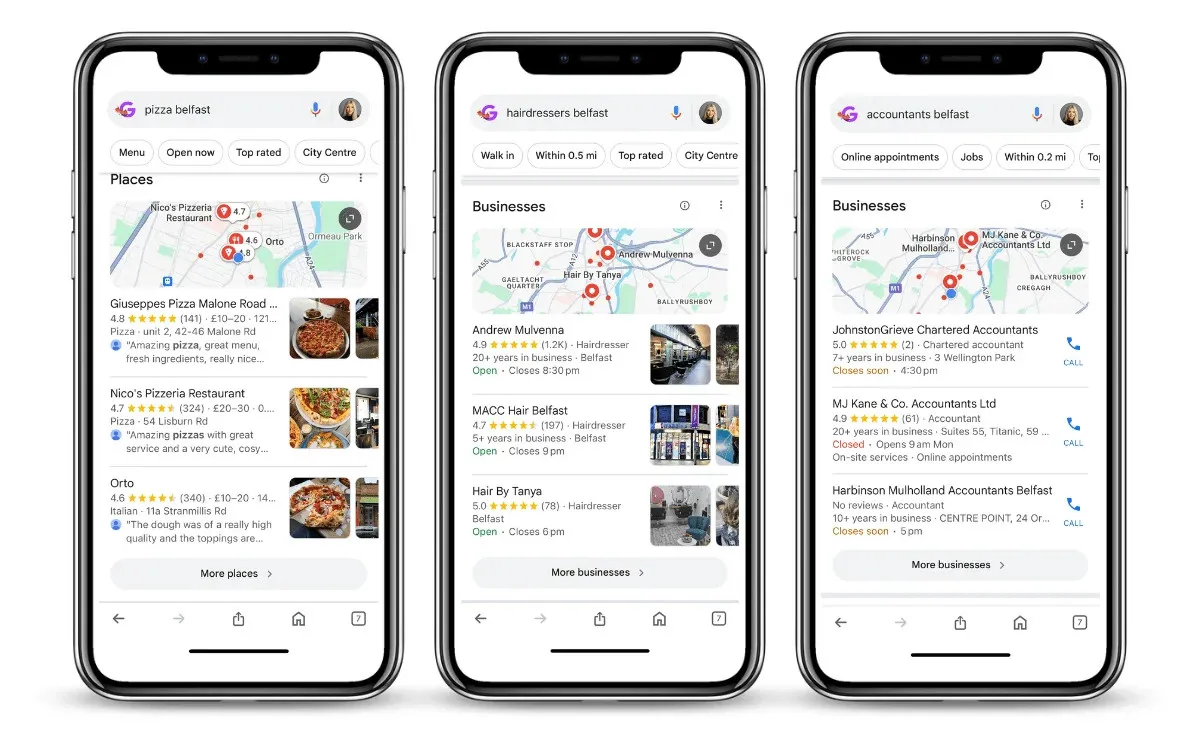
![]()
For most general contractors and builders, your service area is strictly defined by geography. For instance, a roofer in Chicago, ranking #1 in Seattle, is essentially useless for your lead generation. This is why local search must be the cornerstone of your construction marketing plan. If you're just getting started, our guide to local SEO for small businesses walks you through the basics before you scale up.
Your primary goal here is to dominate the Google Map Pack, that coveted cluster of three local businesses that appears at the very top of the search results.
To get there, you need to focus on:
-
Google Business Profile. Claim it, verify it, and optimize it to the brim. Ensure your operating hours, business information, and service categories are 100% accurate.
-
NAP consistency. Name, Address, Phone number — matching everywhere. Your site, directories, and local listings. All of it needs to say the same thing.
-
Review Management: Keep those five-star reviews rolling in. Google loves to see you’re alive and kicking. And don’t ignore the occasional cranky customer; a friendly reply shows excellent customer service experience.
Business Takeaway: Mastering local SEO for construction companies is the fastest way to put your business directly in front of a target audience actively looking to hire now. A shortcut is to let our local SEO specialists handle it for you.
No Single-Page Websites

A single-page website is a lot like showing up to a major commercial job site with nothing but a hammer. It might look simple and sleek, but it simply doesn't have the tools necessary to get the job done.
Any search engine craves structure. To rank for specific keywords, you need dedicated pages for specific topics. A well-organized site architecture involves:
-
Dedicated Service Pages. Don't just list "Remodeling, Roofing, and Additions" on your homepage. Create a unique, detailed service page for each offering. This allows you to naturally use SEO keywords for construction, like "commercial roofing installation" or "custom kitchen remodeling”, which is exactly what on-page SEO optimization is designed to do.
-
Location Pages. If you serve multiple cities or counties, create specific pages for each. This drastically improves your local keywords' visibility.
Clean Technical Foundation. Ensure your site navigation is logical and that your page speed is lightning-fast. A slow, clunky site will ruin the user experience, and Google will penalize your search rankings for it. If you aren't sure where your site stands, a thorough technical audit is a smart first step.
Deep Expertise Through Content
Apologies, but most construction websites are pretty thin on helpful information, and your clients have many questions before they sign a contract. Creating quality content is about answering your customers' most pressing questions in plain English.
Guide your potential clients through the entire journey — from realizing they have a problem to deciding who to hire. The more pain points and questions you cover at each funnel stage, the stronger your authority in their eyes.
Liudmyla Tiusova, Deputy Head of SEO at Netpeak Agency Ukraine
Think about the phrases your clients use. Instead of optimizing solely for industry jargon, use search empathy.
|
Instead of optimizing for... |
Create blog content around... |
Why it works (AEO - Answer Engine Optimization) |
|
"Commercial structural reinforcement" |
"How to tell if your warehouse foundation is failing" |
Matches the user's actual pain point. |
|
"Residential HVAC installation" |
"How long does it take to replace an entire home AC system?" |
Directly answers a common logistical question. |
|
"Construction cost per square foot" |
"What to expect: 2026 home addition pricing guide" |
Sets realistic expectations and builds trust. |
Business takeaway: By building this topical authority, you improve your engine rankings and prepare your site for the future of AI SEO, where search engines actively look for direct answers to feature in AI Overviews.
Detailed Cases with High-Resolution Visuals
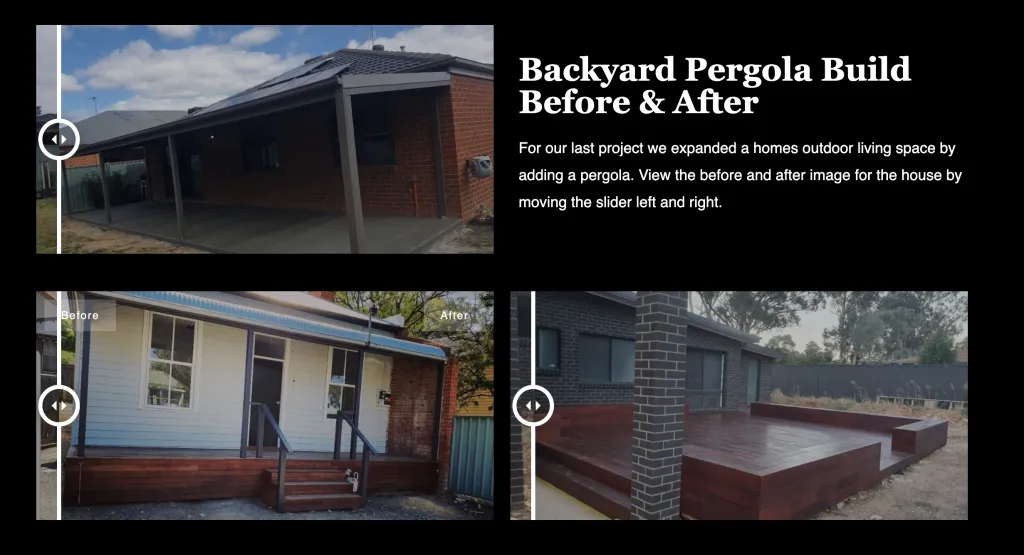
In the construction business, your portfolio is your ultimate sales pitch. But simply dumping a folder of blurry smartphone photos onto a gallery page is a missed opportunity for construction company SEO.
Your potential clients want to see your completed projects, but search engines can't "see" images — they read text. To bridge this gap:
-
Use Before-and-After Formats. This highly engaging format keeps users on your page longer, which is a positive signal to search engines.
-
Write Detailed Case Studies. Accompany your high-resolution photos with a brief story. What was the client's problem? What construction services did you provide? What was the outcome?
-
Optimize Image Alt Text. Describe what’s in the photo like you’re explaining it to your grandma, but sneak in those keywords too.
Business Takeaway: Real project pages build trust with clients and help you climb the search rankings. Stock photos? They’re the fast food of the internet — everyone can spot them, and nobody’s impressed..
Local Networking:
Digital marketing doesn't exist in a vacuum. The handshakes and relationships you build in your community directly translate into SEO efforts.
Search engines gauge your website's authority by looking at how many other reputable sites link back to yours (link building). In the construction industry, you can earn quality backlinks through your real-world connections:
-
Suppliers and Vendors: Ask your material suppliers if they feature "preferred contractors" on their websites.
-
Trade Associations: Getting listed on the local Builders Association or Chamber of Commerce website provides incredibly powerful local backlinks.
-
Community Sponsorships: Sponsoring a local team or a charity build often results in a link from their community page.
Business takeaway: This seamlessly blends your traditional marketing strategy with your digital one, proving to search engines that you are an established, trusted pillar of the local community.
6 SEO Strategies for Construction Companies
If you want to stop relying purely on word-of-mouth and take control of your lead generation, you need a blueprint. Here are the six non-negotiable SEO strategies for construction companies that will turn your website from a digital brochure into a 24/7 salesperson.
Prepare Your Website for Increased Traffic
You wouldn't invite a high-paying client to a job site covered in debris and safety hazards. The same logic applies to your online business. Before you try to drive traffic, your site’s technical SEO must be flawless.
-
Mobile-first Responsiveness. Most of your potential customers are looking you up on their phones while standing in a leaky kitchen or staring at a damaged roof. If your site requires them to pinch and zoom, they will leave. You need flawless mobile-first responsiveness to keep them engaged.
A beautiful website that loads slowly or breaks on mobile will actively hurt your search rankings. Consider a full technical audit before pouring money into content.
-
Speed. Page speed is a direct ranking factor for Google. If your site takes longer than three seconds to load, you've already lost half your visitors. Compress those high-res images of your completed projects.
-
Clean Structure. A confused mind says "no." Your website architecture should be incredibly simple. Users should be able to find your contact us page or your service page in one or two clicks.
-
URLs. Keep your web addresses short and descriptive. A URL that reads yourdomain.com/services/commercial-roofing is great for user experience and search engines. A URL that reads yourdomain.com/p=12345 is a wasted opportunity.
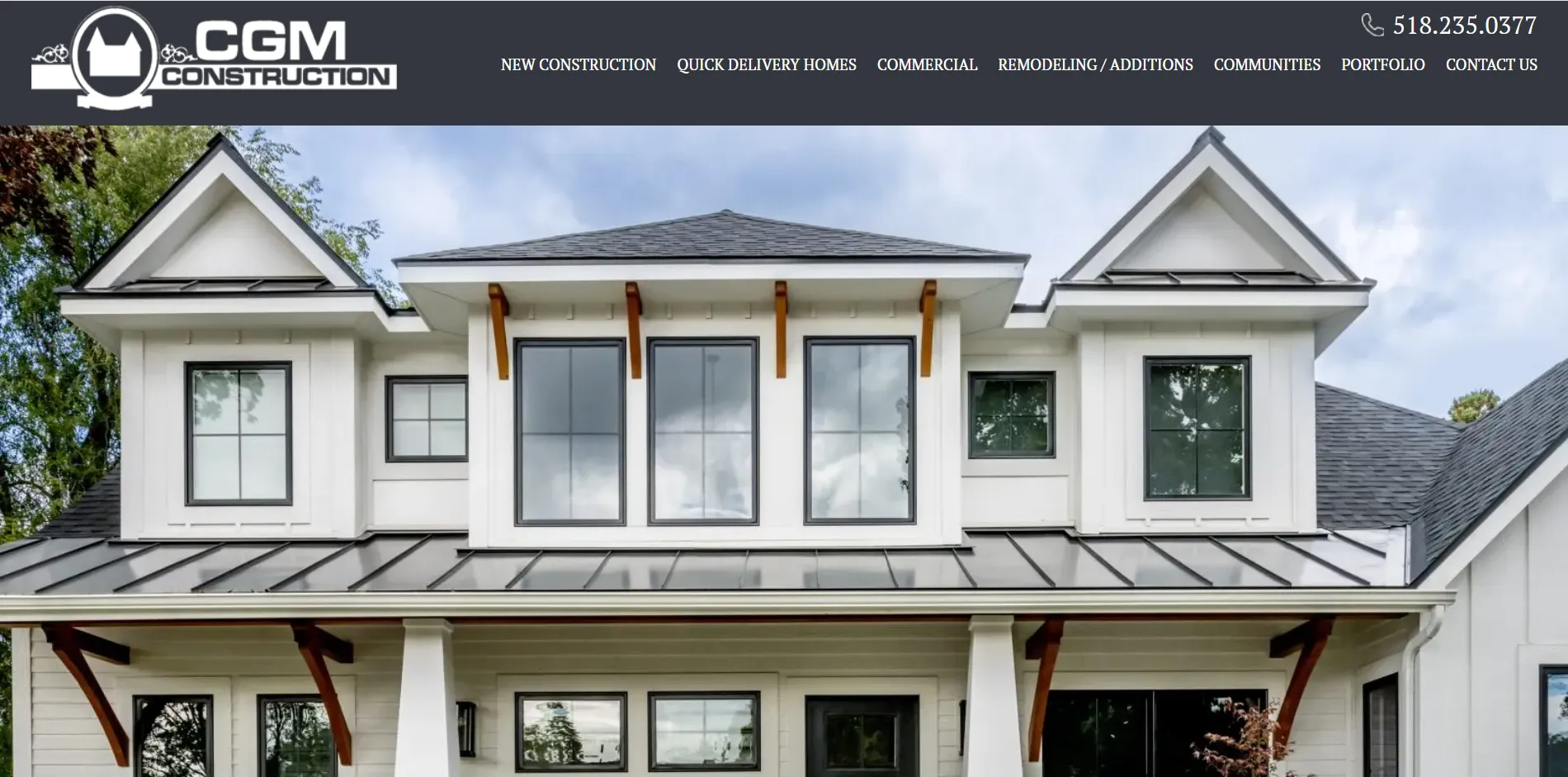
Case: A New York construction company, CGM Construction, redesigned its website to improve mobile usability, page speed, and overall user experience. After the rebuild, the site became mobile-friendly, page speed improved significantly, it reached Google’s first page for a key commercial contractor query, and traffic increased by 50%, with visitors spending 40% more time on the site.
Problem Solved: Bleeding leads due to poor user experience, back rankings, and lead potential.
What It CANNOT Solve: A fast, empty website is still empty. Technical SEO cannot magically generate traffic if you lack the actual keywords and content to attract it.
Explore the Local Surroundings
For general contractors and local builders, national traffic is a vanity metric. You need leads in your specific service area. Mastering local SEO for construction companies means dominating your own backyard. For a step-by-step breakdown, here's how to rank your website locally from the ground up.
-
Find Local Keywords: Keyword research is your foundation. You aren't just targeting "roofing"; you need to target local keywords like "commercial roof repair in [City Name]."
-
Analyze Competitors: Run some market research on the guys outranking you. What specific keywords are they using? How many positive reviews do they have? Find their gaps and fill them.
-
Optimize Your Google Business Profile: This is arguably more important than your website for local search. Ensure your business information (Name, Address, Phone) is 100% accurate, upload regular updates with photos, and fill out every category.
-
Target Both Transactional and Informational Intents: Some people want to hire you right now ("contractors near me"—transactional). Others are just researching ("how much does a kitchen remodel cost"—informational). Your SEO strategy must capture both.
-
Create Location Pages: If you serve five different counties, create five different location pages. This signals to Google exactly where your construction services are available.
-
Build Local Authority: Get your business listed on local directories, the Chamber of Commerce, and industry sites to build local citations.
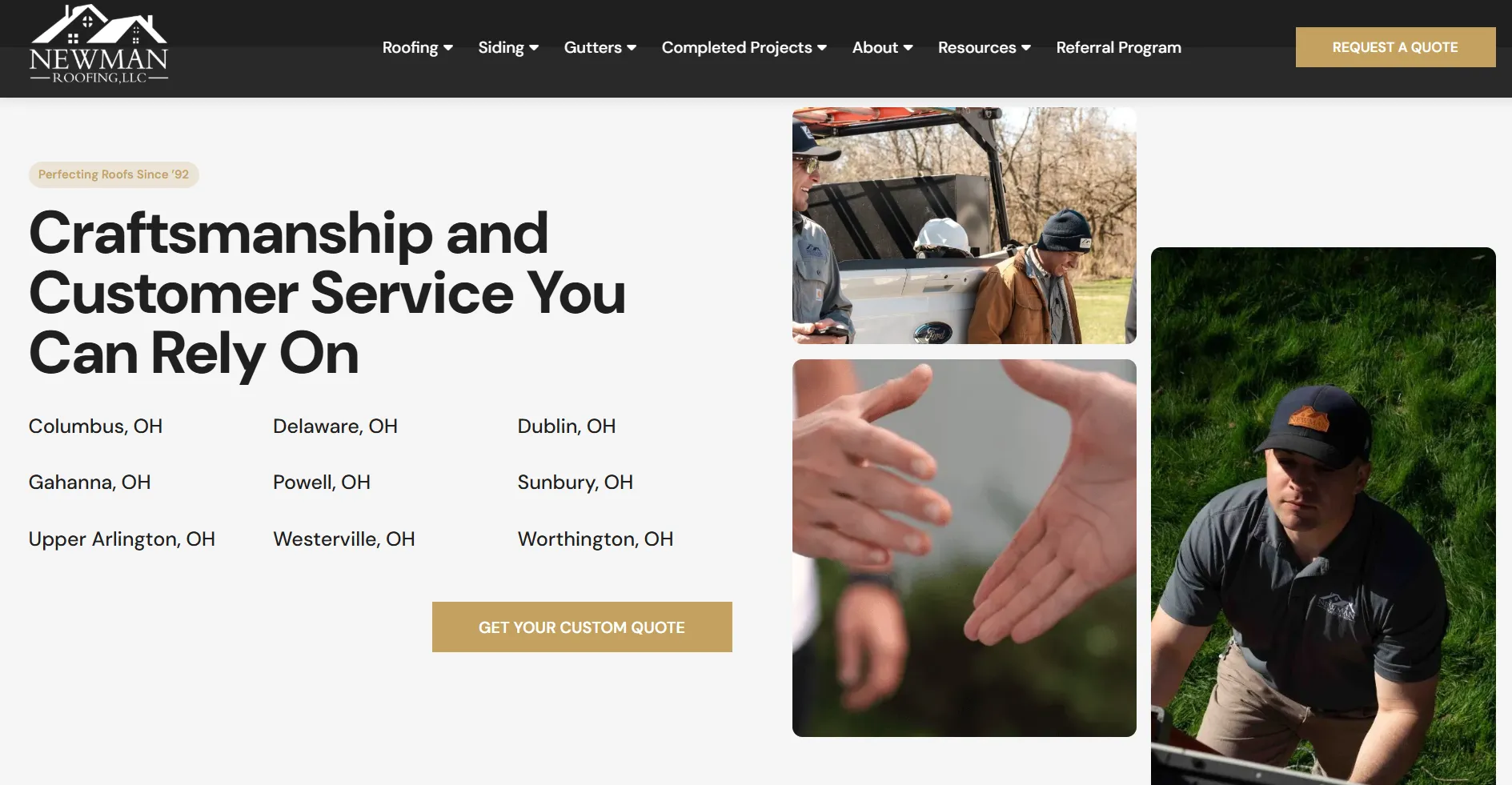
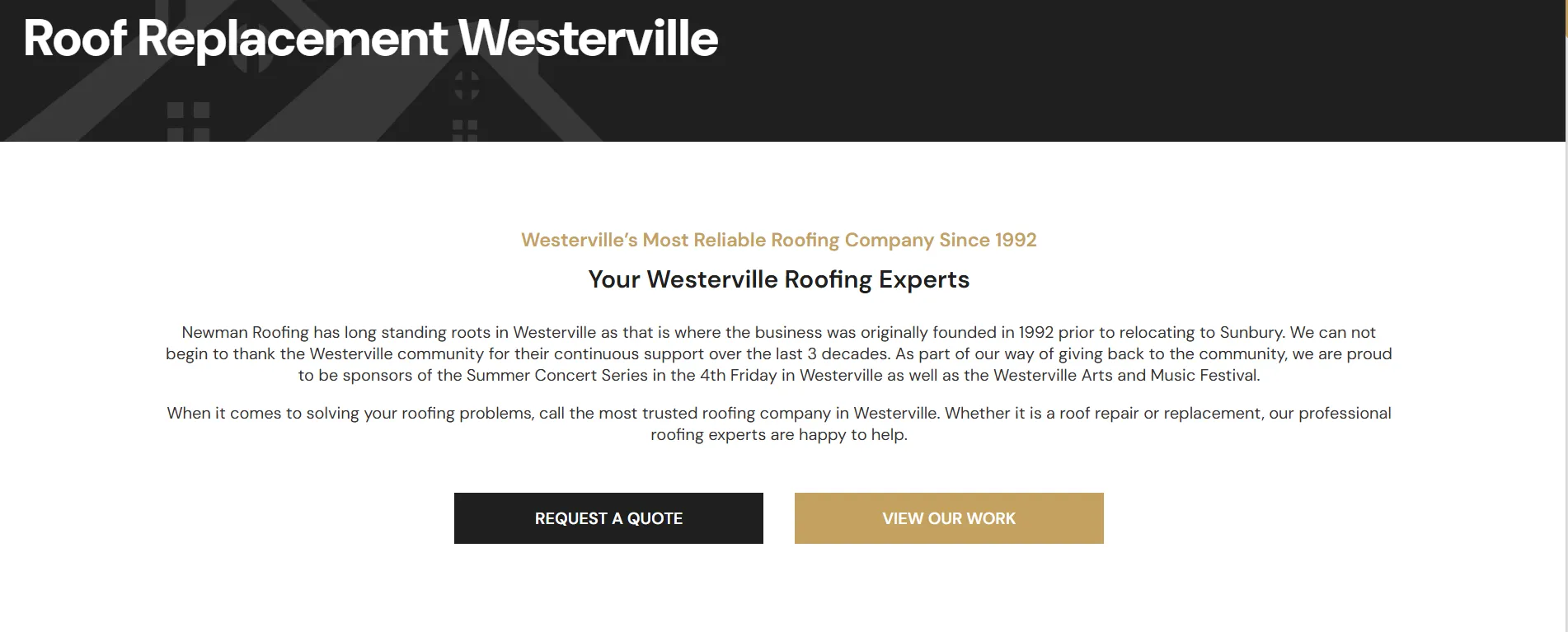
Case: Ohio-based Newman Roofing stopped relying entirely on broad terms and built out hyper-specific service area pages (e.g., “Westerville Roofing Company”). By capturing the local search intent for that specific affluent suburb, they hit the #1 spot and increased their online leads by over 30%.
Problem Solved: Being invisible to the exact people who live within your driving radius. It connects you strictly with local, qualified buyers.
What It CANNOT Solve: A terrible real-life reputation. If you optimize perfectly but have an average rating of 2.1 stars, ranking #1 locally just means more people are going to see exactly how angry your past clients are.
Produce Expert Content & Find Quality Links
Content is how you prove to search engines that you actually know what you are doing. But we aren't talking about writing poetry; we are talking about highly relevant, helpful SEO content.
-
Service Pages: Every single service you offer needs its own dedicated service page. Don't lump "plumbing, electrical, and drywall" onto one page. Give each topic room to breathe so you can target construction SEO keywords accurately.
-
Location Pages: As mentioned, pair your services with your locations. (e.g., "Bathroom Remodeling in Austin, TX").
-
Blog Content: Use your blog to answer the questions your clients ask you on the phone every day. This kind of content marketing builds massive trust and topical authority. A client who feels informed before the first call is already having a better customer experience than one navigating a competitor's vague website.
-
Boost Online Presence with Quality Backlinks: Link building is how you get other websites to vouch for you. Getting links from local news outlets, supplier websites, and trade associations is one of the most effective ways to increase website visibility with off-page SEO.
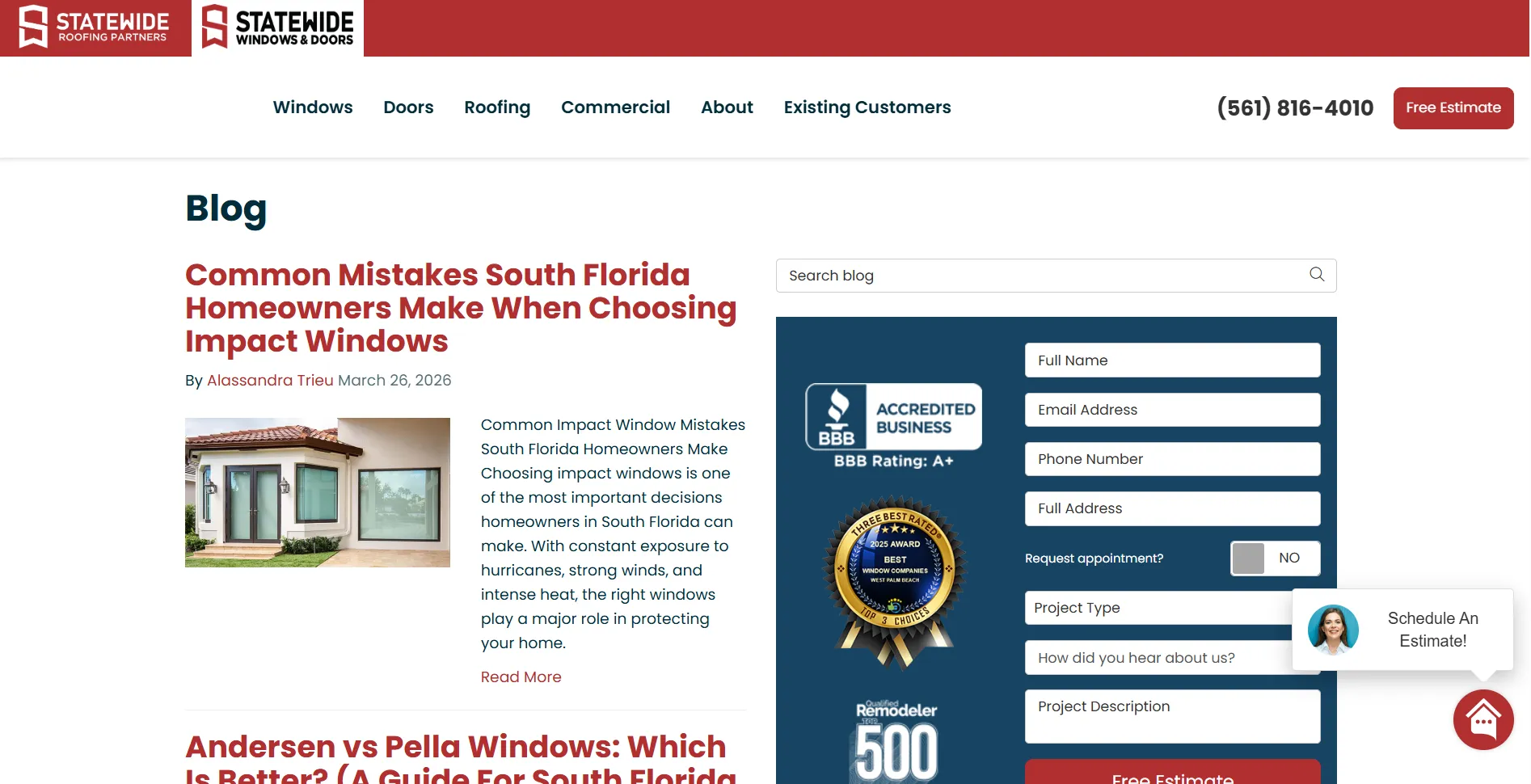
Case: A Florida-based roofing company grew organic traffic by 233% and new ranking keywords by 406% after fixing technical issues and expanding authority and visibility across multiple metro markets.
Problem Solved: Educating cold prospects and proving your authority so Google trusts you enough to rank you above generic directory sites like Angi or HomeAdvisor.
What It CANNOT Solve: Immediate, tomorrow-morning lead generation. Content and link-building take time to rank; it’s a long-term investment, not a quick-fix ad campaign.
Comply with E-E-A-T Guidelines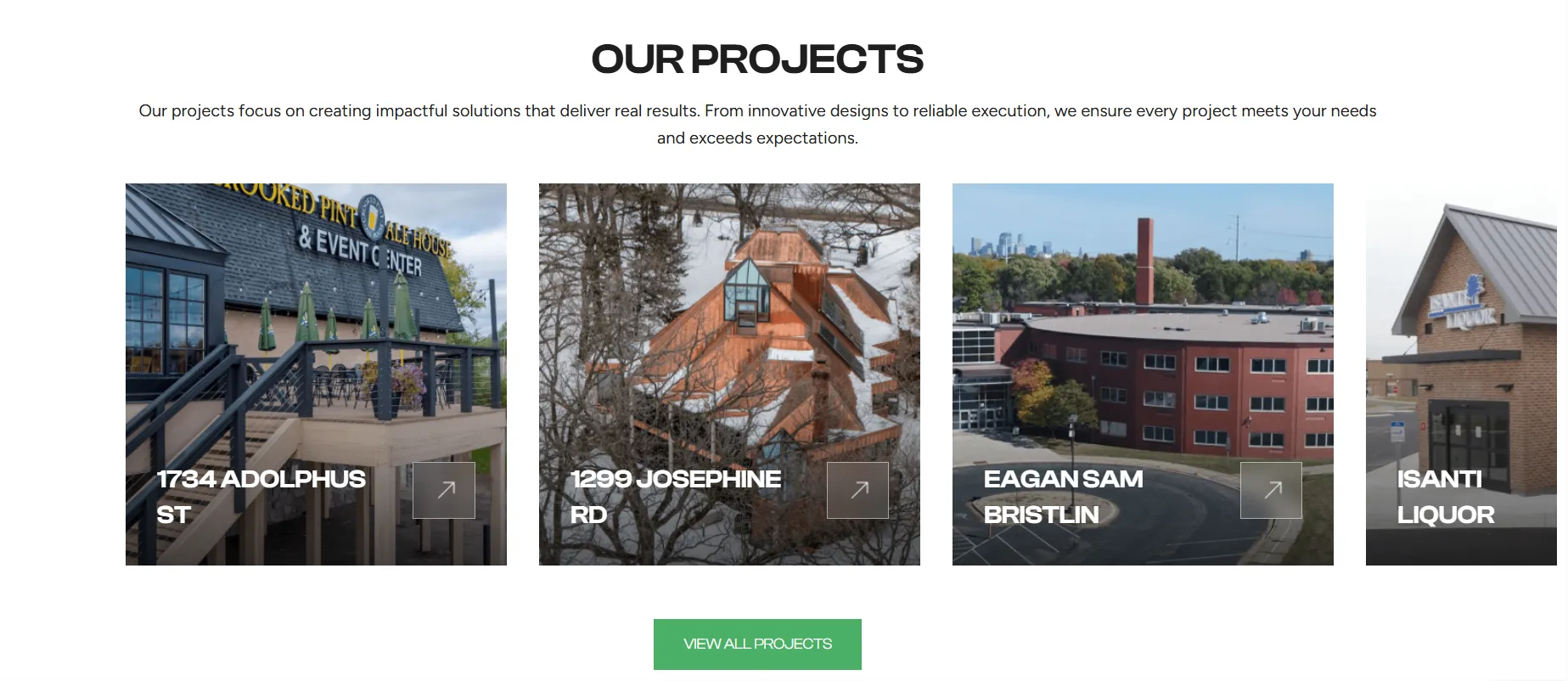
![]()
Google uses E-E-A-T (Experience, Expertise, Authoritativeness, and Trustworthiness) to figure out if you are a legitimate business or a scammer. In the construction industry, where projects cost thousands of dollars, the trust threshold is massive.
-
Demonstrate First-Hand Experience: Show, don't just tell. Use original photos of your crew working, not stock images.
-
Be Honest and Transparent About Your Service: Clearly define your process. If a custom build takes six months, say so. Managing expectations improves customer satisfaction.
-
Have a Detailed Pricing Policy on the Website: You don't need a strict menu, but offering a pricing guide or an ROI calculator shows you're not hiding anything.
-
Encourage Reviews: Implement a system to ask every happy client for a Google review upon project completion. Customer reviews are digital gold. A simple follow-up process is one of the most underrated customer retention tools construction business owners can have.
-
Focus on Users and Their Priorities: Your website should be about their problems, not just your awards. Shift the focus to how your construction business solves its headaches.
Case: Bristlin Construction Services went from zero digital footprint to over 70+ top rankings in just two months by publishing detailed, proof-driven content. By showcasing their real-world expertise and completed projects, they easily passed Google’s strict E-E-A-T quality thresholds.
Problem Solved: The trust deficit. It bridges the gap between a skeptical homeowner and the fear of a contractor running off with their deposit.
What It CANNOT Solve: Pricing you out of the market. If you are charging triple what the competition charges without offering a premium service to match, all the transparency in the world won't force a client to sign on the dotted line.
Networking & Partner Programs
Real-world relationships fuel your SEO efforts. Search engines notice when local entities talk about you online.
-
Event Sponsorship: Sponsor a local charity run or a community build. These organizations usually link back to their sponsors' websites, providing powerful local backlinks.
-
Referrals: Partner with real estate agents, architects, or complementary trades (like an HVAC SEO agency partnering with a general contractor) to swap referrals and digital mentions. Some contractors take this further with structured loyalty programs. If your HVAC partners are struggling with their own digital visibility, point them to our digital marketing guide for HVAC companies — helping them grow helps you too.
-
Co-Created Content: Do a joint case study with an architect you frequently work with. You both share it, you both link to it, and you both win.
Case: Newman Roofing professional services publicly says on its Westerville service-area page that it sponsors the Summer Concert Series and the Westerville Arts and Music Festival. Uptown Westerville’s event page also references the “Newman Roofing Summer Concert Series” and links to Newman Roofing.
Problem Solved: This strategy solves that by legally and authentically "buying" a hyper-local, high-trust backlink from an established community organization.
What It CANNOT Solve: All the community goodwill and high-authority backlinks in the world are useless if the link points to a broken website.
Do Not Underestimate Monitoring and Performance Tracking
SEO for construction is not a guessing game. If you aren't tracking your data, you are flying blind and wasting money.
|
Tracking Element |
How to Execute It |
The Value |
|
Define the Timeframes |
Set expectations. SEO takes 3 to 6 months to show real momentum. |
Prevents you from pulling the plug right before the strategy starts working. |
|
Choose Specific Tools |
Use Google Analytics, Google Search Console, and keyword trackers. |
See exactly which great SEO tools work best for your marketing analytics. |
|
Set Measurable KPIs |
Track phone calls, form submissions, and keyword rankings for your top 10 keywords. |
Connects SEO for builders to work directly to your bottom line. |
|
Celebrate Milestones |
Acknowledge when you hit page one for a difficult search engine term or double your organic traffic. |
Keeps your team motivated to maintain a long-term sustainable growth mindset. |
Why Does Multichannel Marketing Work Best?
Here is a hard truth about SEO for construction companies: it is incredibly powerful, but it shouldn't be the only tool in your truck. Relying entirely on one single channel for your lead generation is like trying to frame a house using only a hand saw. It might work eventually, but it’s going to be painful and slow.
In modern digital marketing, a multichannel marketing strategy works best because your target audience doesn't live in a vacuum. A homeowner might search for "roofers near me" on Google, click your website, leave to pick up their kids, and then forget your name.
If you aren't retargeting them on other media platforms, you've lost the lead.
Here is how combining channels creates an inescapable net for your customer base:
-
SEO + Paid Ads: While your seo efforts build long-term, cost-effective, sustainable growth, paid ads (like Google Local Services Ads) can get your phone ringing tomorrow while you wait for your organic traffic to climb. Here's how online local advertising works for small businesses alongside your organic efforts
-
SEO + Social Media: Your website tells clients what you do and answers their technical questions; social media shows them how you do it. A user finds your blog content on "how to prep for a kitchen remodel," but they hire you because they saw a stunning time-lapse video of your crew on Instagram.
-
SEO + Retention Strategy: A well-optimized online business attracts new blood and ups customer engagement. Funneling your website traffic into an email list allows you to send out seasonal maintenance tips, boosting overall customer satisfaction, brand loyalty, and word-of-mouth referrals.
SEO lays the massive, unshakeable foundation for your online presence. But layering it with social media and targeted ads guarantees you meet consumer demand wherever your potential customers happen to be looking.
Final Thoughts
Let’s bring it all back down to earth. Effective SEO keywords for construction and a solid technical foundation are what separate construction business owners constantly stressing over their next bid from those who have a waitlist six months long.
Yes, fixing your search engine visibility takes time. Yes, it requires consistent, regular updates and high-quality content. You can't just throw up a GoDaddy site in an afternoon and expect to dethrone the guys who have been doing local SEO for a decade.
But once your digital foundation is poured, cured, and set, it becomes a 24/7 lead-generating machine that doesn't call in sick, doesn't ask for overtime pay, and doesn't mess up the blueprint. Focus on your local target audience, answer your clients' questions honestly through your content, track your marketing analytics ruthlessly, and make sure your website works exactly as hard as your crew does. If you want to go deeper, our home service marketing guide for 2026 covers eight winning strategies with a checklist you can action immediately.
FAQ
What is construction SEO, and why does my business need it?
SEO for the construction industry is the strategic process of optimizing your website and online footprint so that search engines rank your business highly when locals search for builders or contractors. You need SEO practices because 84% of consumers search for local services online daily. If you aren't ranking on the first page, your competitors are quite literally stealing your contracts.
Should I respond to negative reviews or simply ignore them?
Always respond. Ignoring them makes you look either guilty, apathetic, or both. A professional, calm response offering to make things right shows prospects that you have top-tier customer service experience and accountability. Google also rewards active review management, meaning even a handled negative review can indirectly help your local listings if managed well.
Does SEO Cover AI Overviews?
Yes, absolutely. With the rise of AI SEO, search engines are increasingly using artificial intelligence to directly answer user queries at the very top of the search results (the Zero-Click Search era). By creating structured, expertly written content that directly answers common construction questions (a strategy known as Answer Engine Optimization), you drastically increase your chances of being the cited, featured source in these AI summaries. You can read more about how to adapt in this guide on how to survive in the zero-click search era.
My competitors have larger SEO budgets. Can I compete with them?
Without a doubt. In local search, relevance and geographic proximity often beat massive corporate budgets. A small business with highly specific location pages, a perfectly optimized Google Business Profile, and consistent, localized quality backlinks can easily outmaneuver and outrank a slow-moving, bloated national giant in their specific zip codes.

 0
0
 0
0
 0
0
 0
0
Related Articles
How to Market a Security Company in 2026?
Most security companies are invisible online. Here's how to fix that and turn your digital presence into a steady stream of qualified leads.
Sustainability Marketing: 7 Smart Ways to Earn Trust (and Customers)
Learn how to grow your brand efficiently while using eco-friendly marketing practices to build trust and long-term revenue.
Why Your Amazon Pet Ads Are Getting More Expensive Every Quarter Since 2025 (and How Smart Brands Manage It)
What happened to the auction prices? Where is the margin going, and what should be done next quarter?