
If you’re in the home services industry, chances are your customers are searching for you in panic. When something breaks, they go straight to Google to find a plumber, an electrician, or a roofer right away. And local home services SEO is what makes sure you’re the one they find (and choose!) instead of your competitor.
So, how do you become a Chosen One? Don't worry — it doesn't include a noseless dark magic wizard shooting you with “Avada Kedavra” in your baby crib. Google makes it easier: it's enough to know and follow the rules consistently to show up at the top of the search results.
In this article, you’ll find 11 practical, no-nonsense ways to improve your local SEO.
Also, you'll learn how local SEO marketing for home service contractors brings you more calls and more bookings from potential customers who already trust you before reaching out.
- What Is Home Services SEO All About?
- Why Paid Ads Are Great but Not Enough
- The Ingredients of Local SEO That Actually Bring You Calls
- Securing Organic Traffic with Local SEO: 8 Surefire Ways
- Why Your Customers Don’t Stick to One Channel (And You Shouldn’t Either)
- Final Thoughts
- FAQ
What Is Home Services SEO All About?
Home services SEO is basically about being in the right place at the exact moment someone panics and types “plumber near me” or else into Google. And that moment happens a lot — about 46% of all Google searches have local intent.
Local SEO dominates because Google plays matchmaker between local search queries and local businesses. The famous Google Maps “3-pack” appears in most local searches and captures the majority of clicks, calls, and directions.
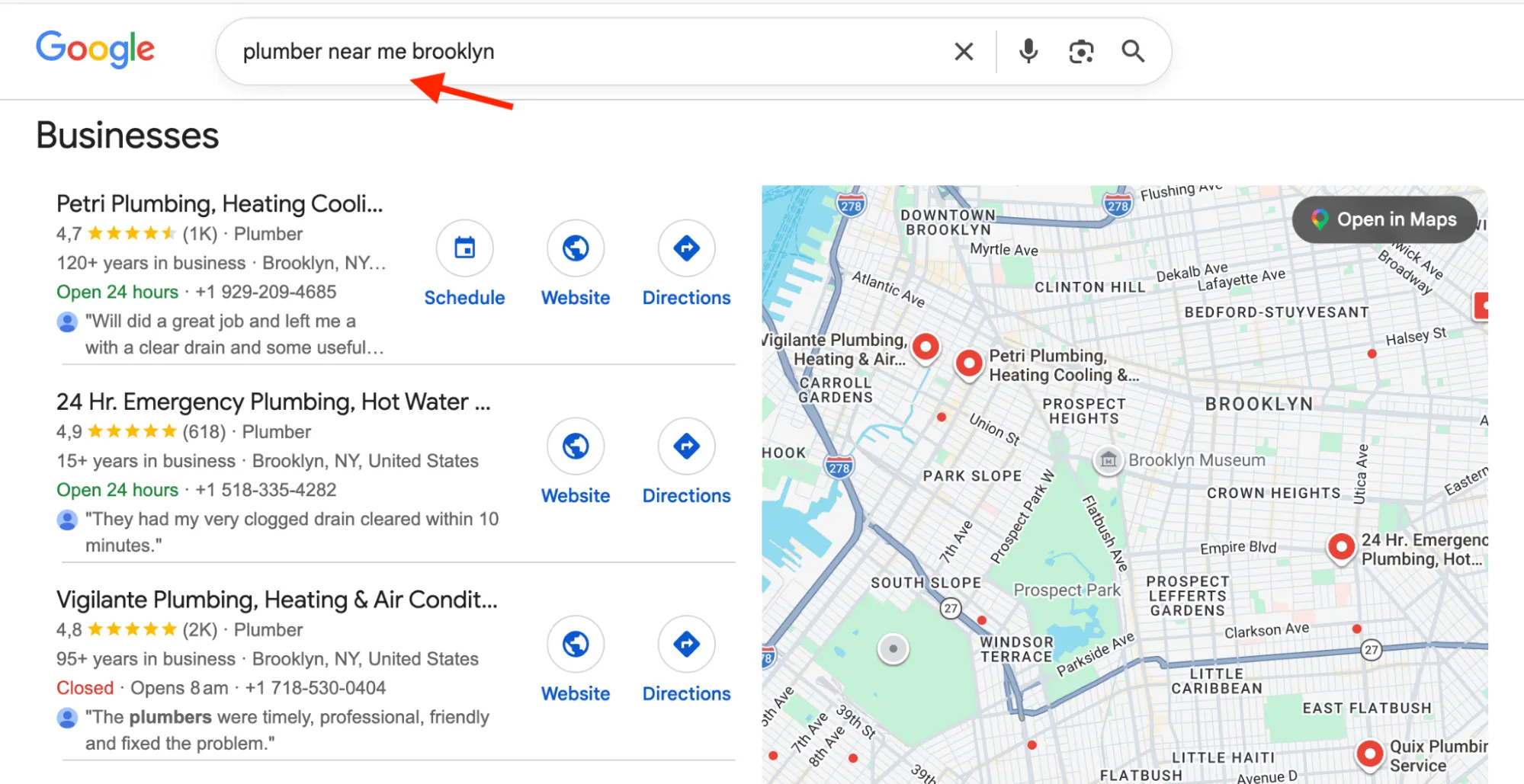
Even better (for you), 76% of people who search for something nearby visit a business within 24 hours, and 28% of those searches result in a purchase. Which means many people are ready to call you, so all you need to do is give them such an opportunity.
For a small business owner, local SEO for home service contractors means having:
-
A fast website, different service and location pages, and SEO content that answers real questions (not just keyword soup)
-
An active Google Business Profile that works like your online business card
-
Fresh positive customer reviews and other trust signals, because people who let you (a stranger!) fix their house want to feel a certain level of trust
-
Local reputation — mentions, partnerships, and community events — that feeds into how Google and the neighborhood see you
Many businesses still don’t fully invest in local SEO. So, if you do it right, you could outrank people who’ve been in the game longer.
Sounds great, right? If you want to use home services SEO but don’t have time to learn how to do it effectively, call us at Netpeak US.
We have experience at this and will put you at the top of the “3-pack” without making any rookie SEO mistakes.
Why Paid Ads Are Great but Not Enough
Paid ads work quickly: you turn them on today, and your phone starts ringing tomorrow. For many home service businesses, ads are the easiest way to get to the top of search results.
However, there's a catch (it’s always a catch when something is fast and easy!): the moment you stop paying, the leads stop too. Ads don't build long-term visibility or trust on their own; they buy you short-term attention.
Over time, costs can increase, especially in competitive niches like plumbing or HVAC, so you will pay more for the same results. Without SEO marketing for home service companies and reviews about customer service experience, your business will always be dependent on your budget.
The best approach is to use ads for quick wins while building organic visibility in the background.
The Ingredients of Local SEO That Actually Bring You Calls
Here’s what really goes into SEO that actually makes it work.
The Website That Can Convert
Getting traffic is only half the job — your website should turn it into calls or bookings. Your site needs to make it easy for someone to take action within seconds. That’s where mobile-first responsiveness, speed, and clean structure come in.
-
Most people searching for a plumber or electrician are doing it from their phones, often in a hurry, so a slow or confusing website costs you leads.
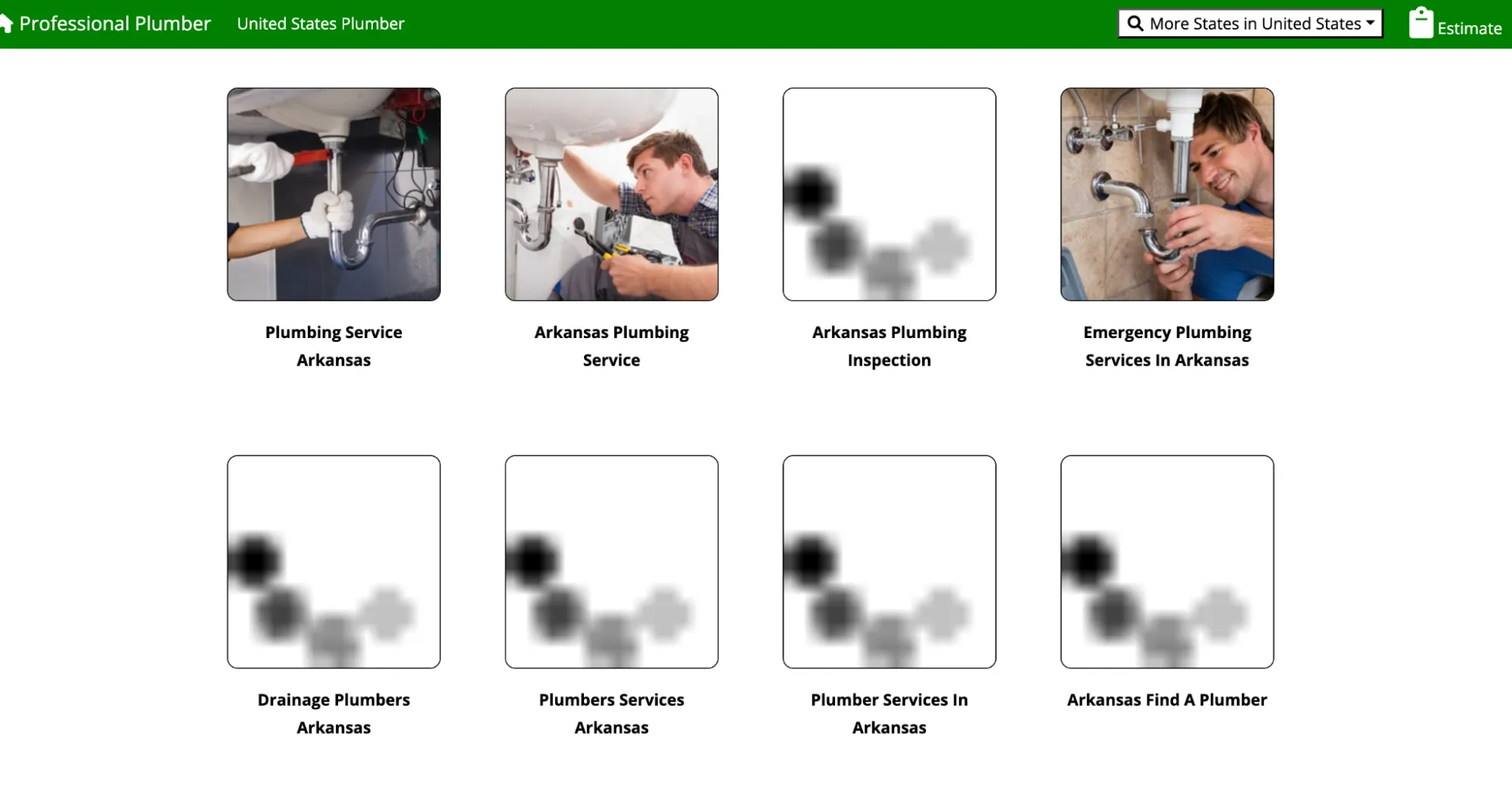
For example, this “Professional Plumber” website has large images that don’t upload immediately. It’s irritating and a reason to go and find help in another place. The company did it wrong, so they are likely to miss opportunities.
-
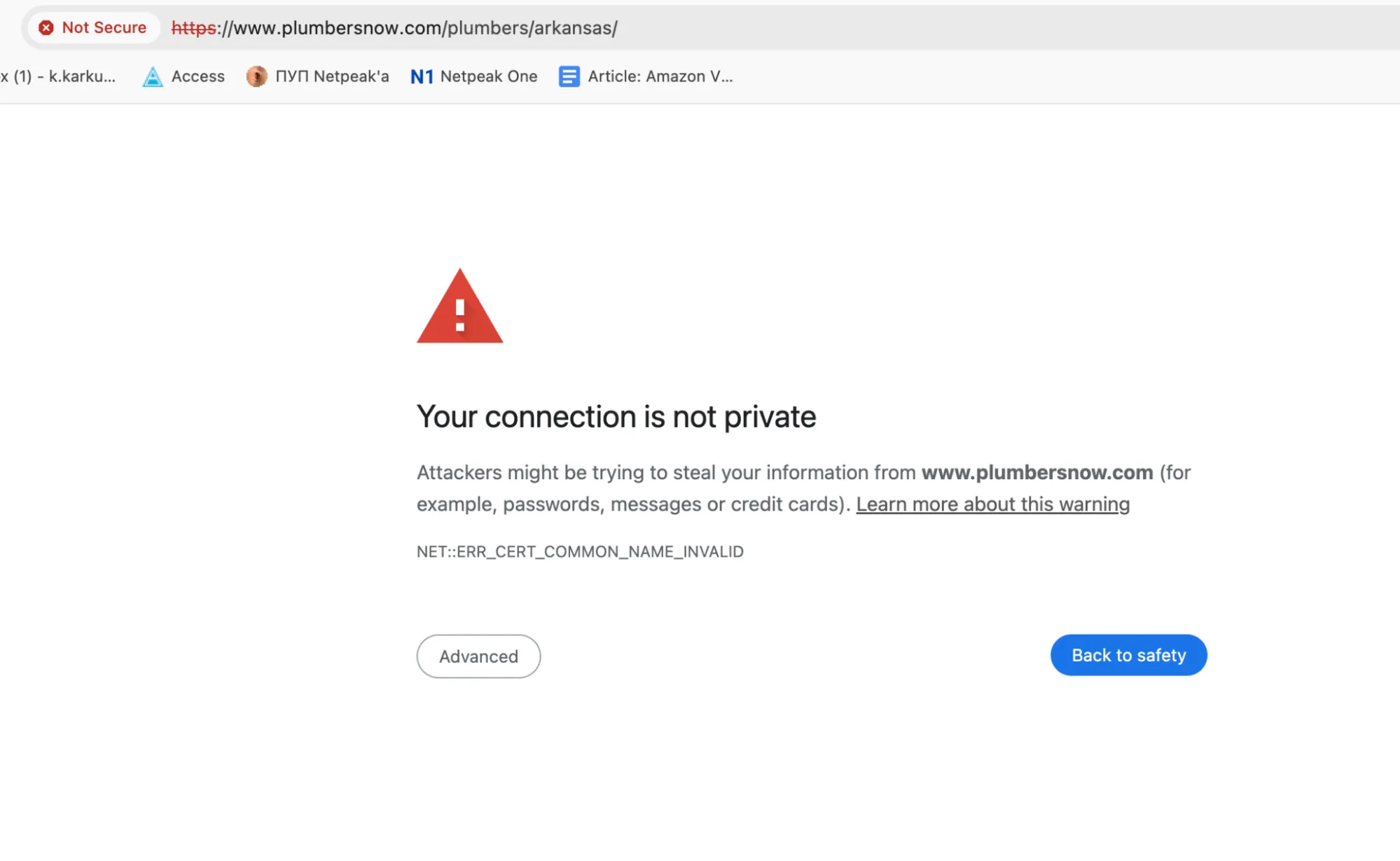
Messy navigation, unclear URLs, or an insecure connection make it hard for both users and search engines to understand what you offer and raise suspicions about your trustworthiness. In practice, weak on-page SEO means fewer calls and lower keyword rankings.
From a business perspective, a well-optimized website helps you get more value from every visitor, whether they come from SEO, ads, or referrals.
Local Authority and Popularity
Google uses local signals to decide who deserves to show up when someone searches for a service in your neighborhood. You need to optimize for every possible signal to appear in the Google Maps “3-pack”.
So, what do you need to do?
-
Find specific keywords to understand how people in your area actually search for your professional services and use them generously on your website: in headers, URLs, meta descriptions, articles, service pages, etc.
Your target audience searches not only “roof repair” — but phrases like “roof repair Brooklyn prices” or “flat roof repair Brooklyn NY.”
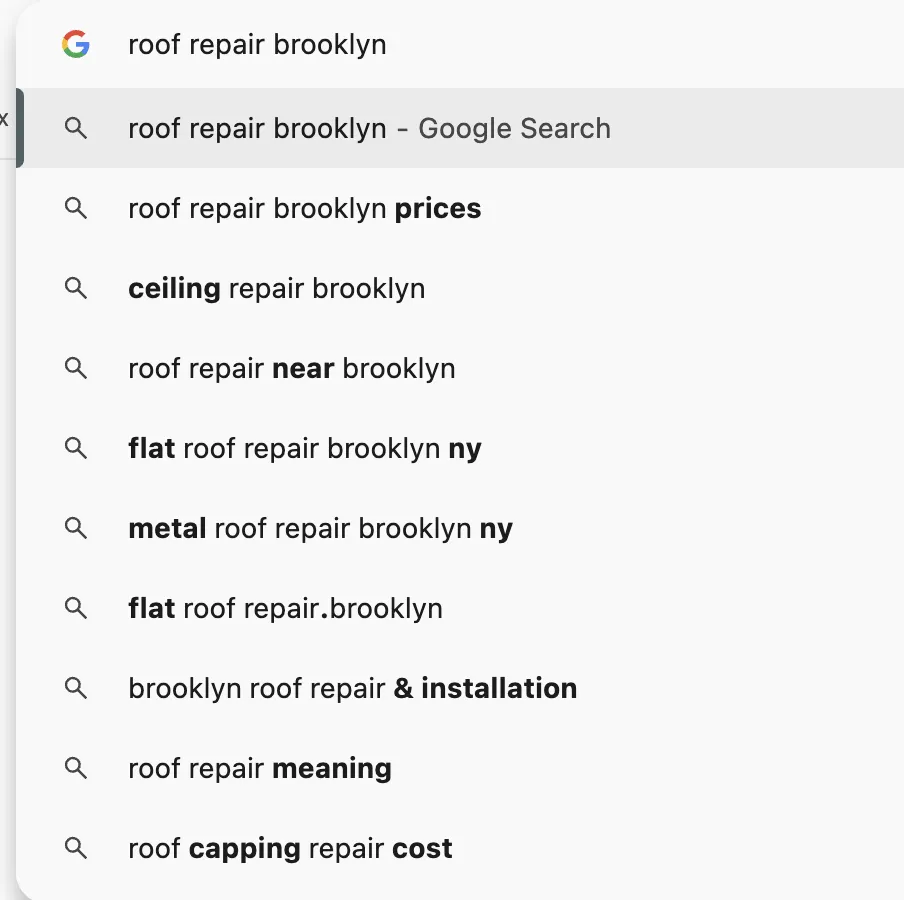
When your business uses real, local phrases, you get more traffic — and people who know what they need and are ready to book.
-
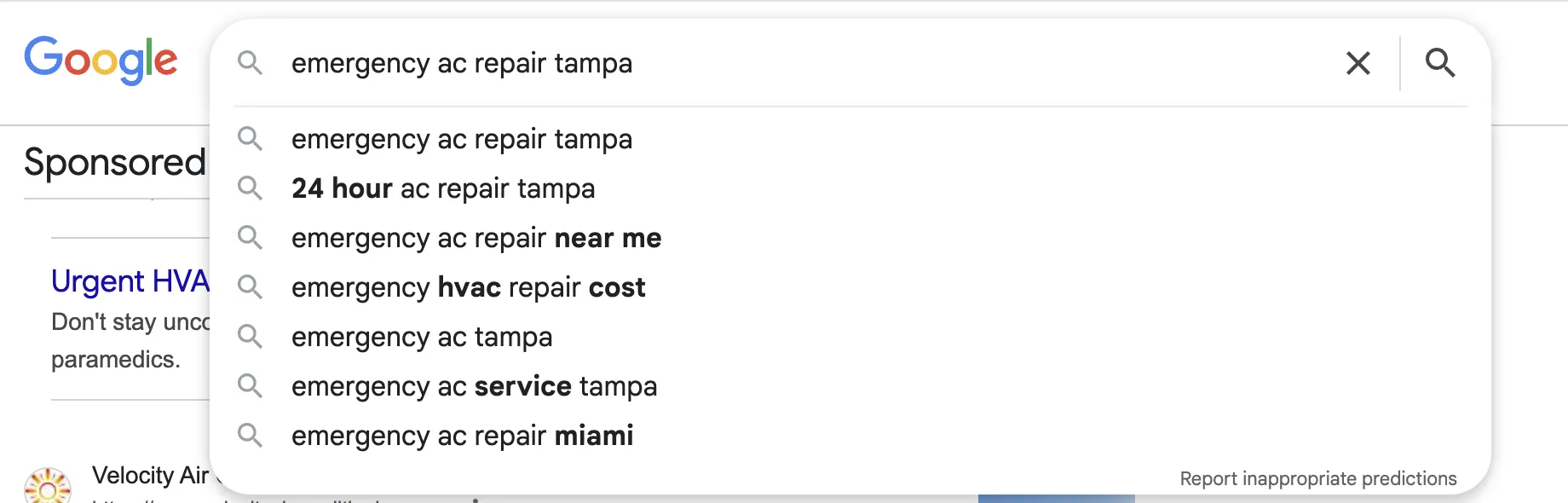
Target the right search intent. Some searches are informational, while others are all about urgency and readiness to hire, such as “emergency AC repair Tampa”. Your website needs to match all the consumer demand.
High-intent queries mean higher conversion rates.
-
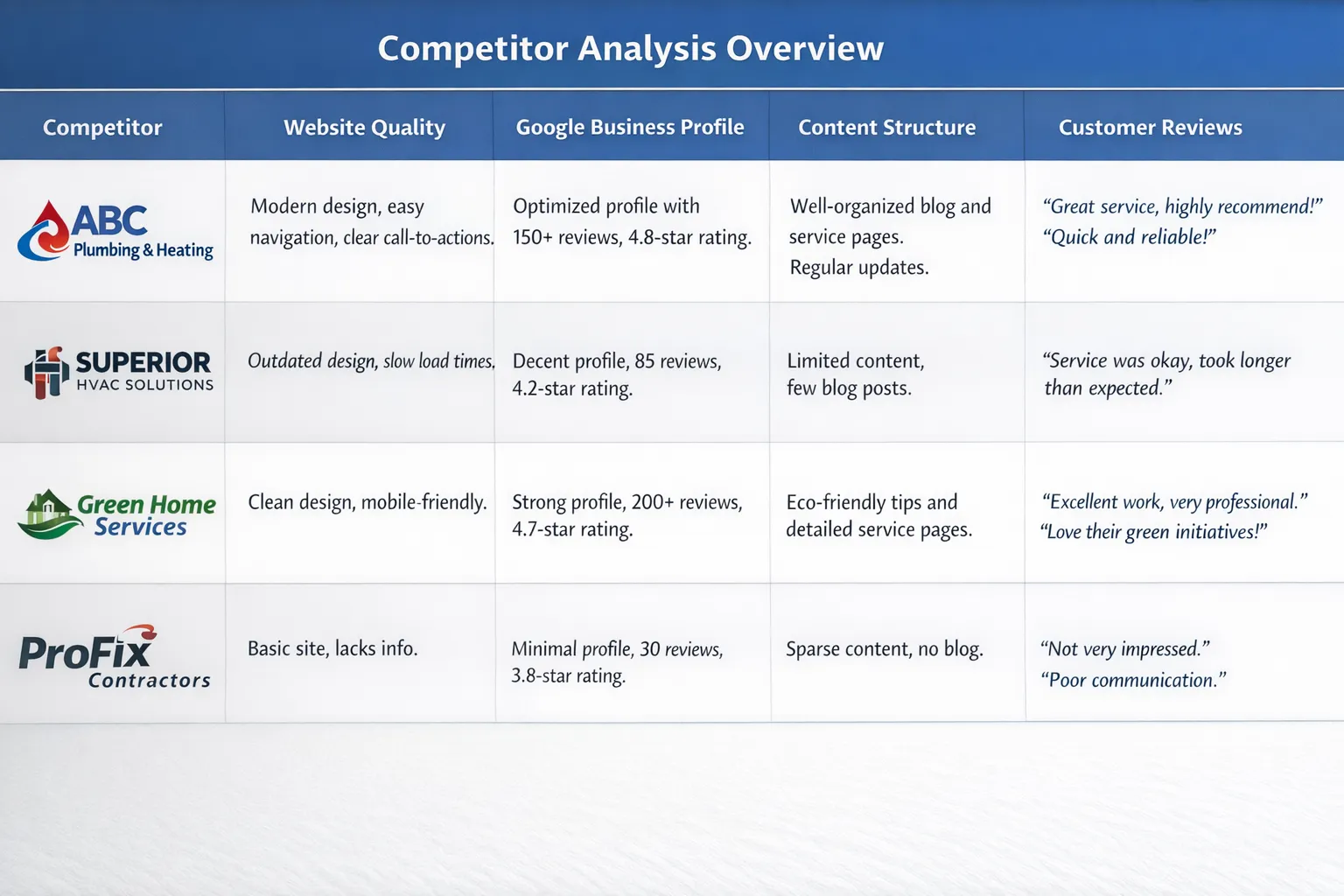
Analyze competitors to have context. Your main competitors are a handful of businesses in your area that Google already trusts and shows them at the “3-pack”. You need to run market research and understand what they’re doing right (and where they’re weak).
Look at their websites, Google Business Profiles, content marketing efforts, customer reviews, etc, and do the same and do it better.
-
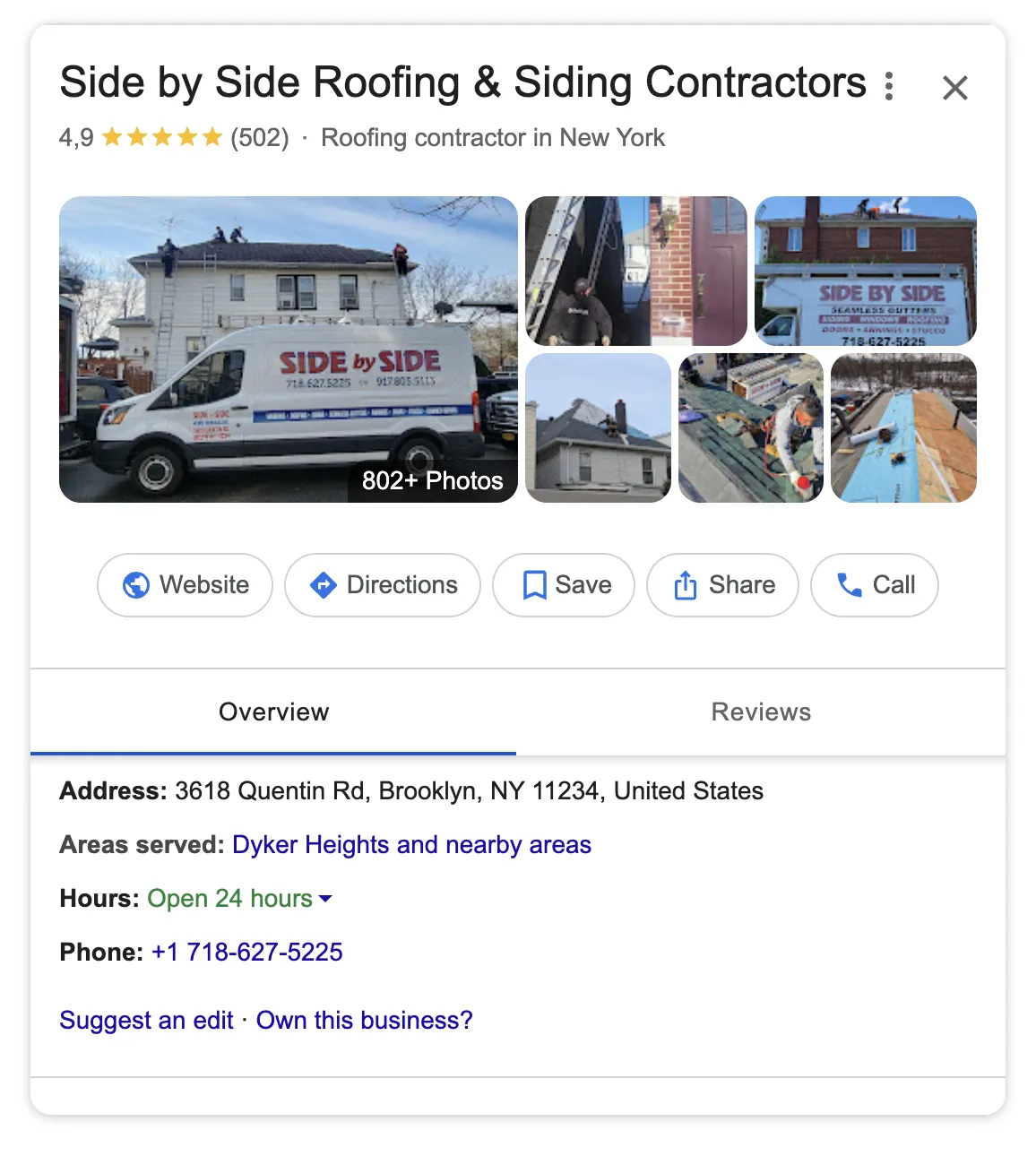
Optimize your Google Business Profile because it’s often the first (and sometimes only!) thing potential customers see. Before they even visit your website, they check your customer feedback, photos, and service area on your Profile.
A strong profile builds trust and drives direct actions like calls and direction requests — often without users ever clicking through.
-
Build local mentions. Your business should appear consistently across directories, local websites, and community platforms; it signals Google that you’re established and really work in the area.
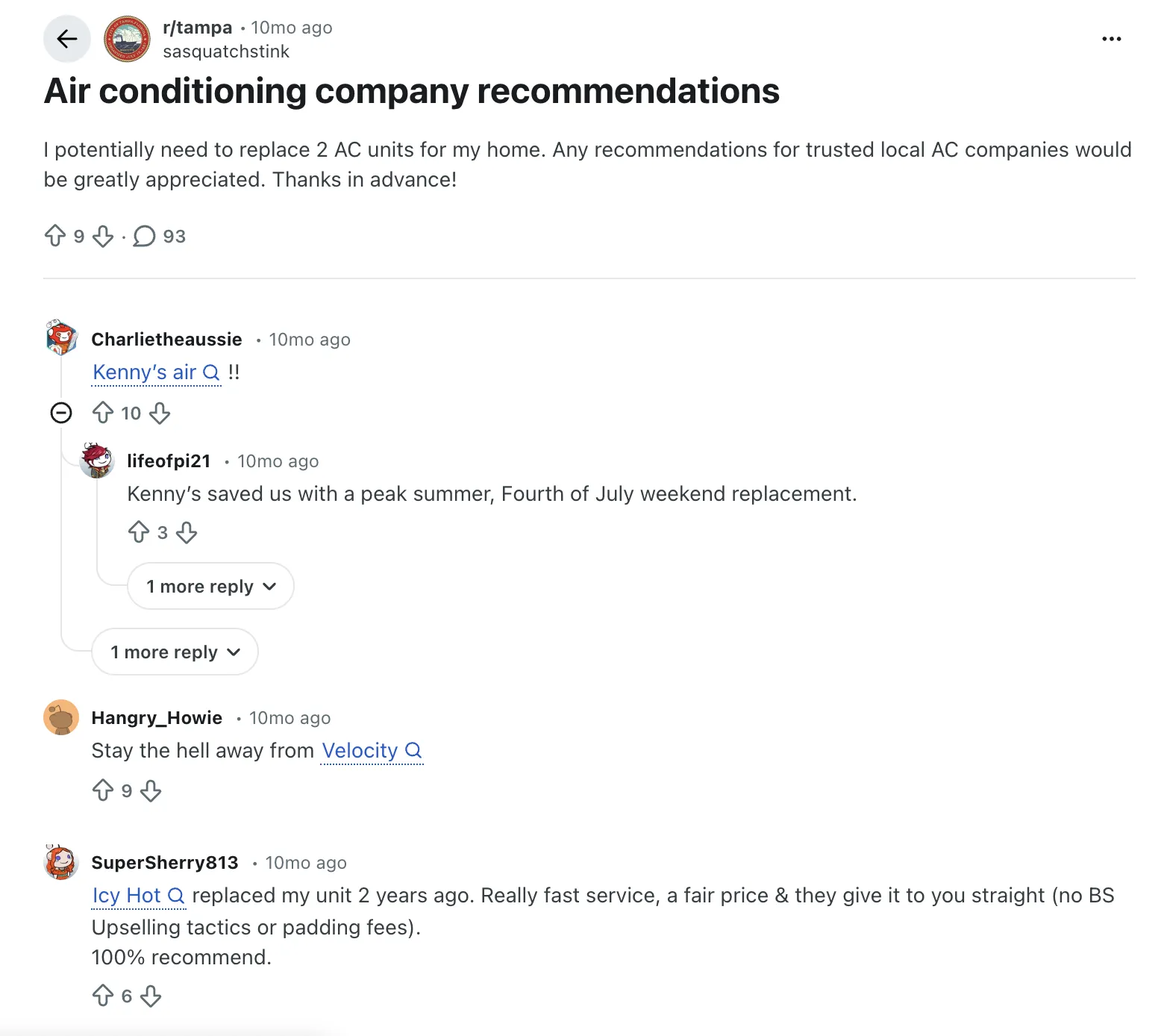
Done right, local signals lead to stronger brand recognition and help build a steady flow of customers without relying entirely on paid ads.
Expert SEO Content & Quality Backlinks
At home services, customers are looking for businesses that clearly know what they’re doing. Here is what you need to create such an impression:
-
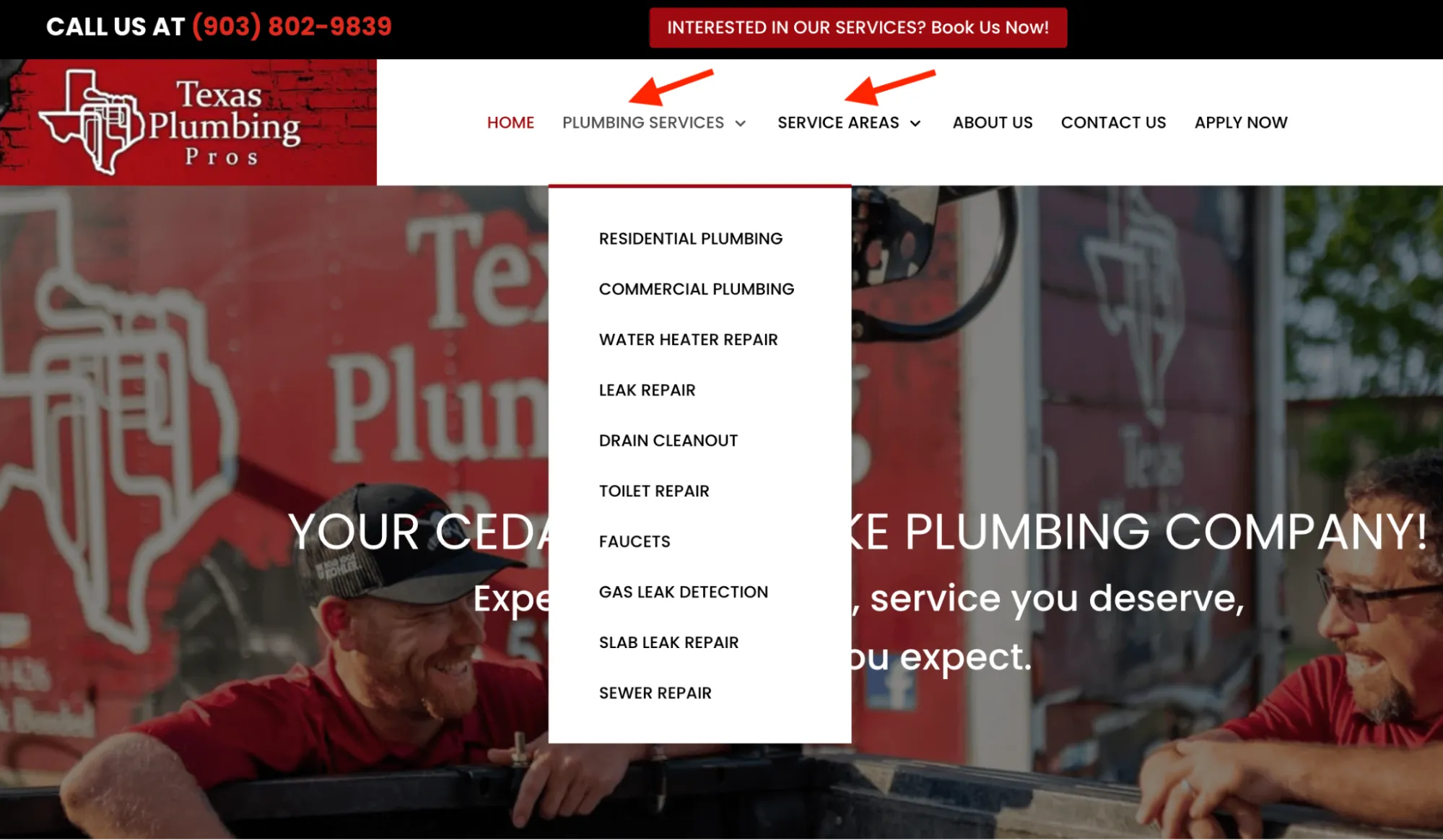
Service and location pages. They connect your business to specific needs and areas — you’re showing that you handle this exact problem in this exact location.
That means higher relevance in search and better conversion rates, because users feel like your service is tailored to them.
-
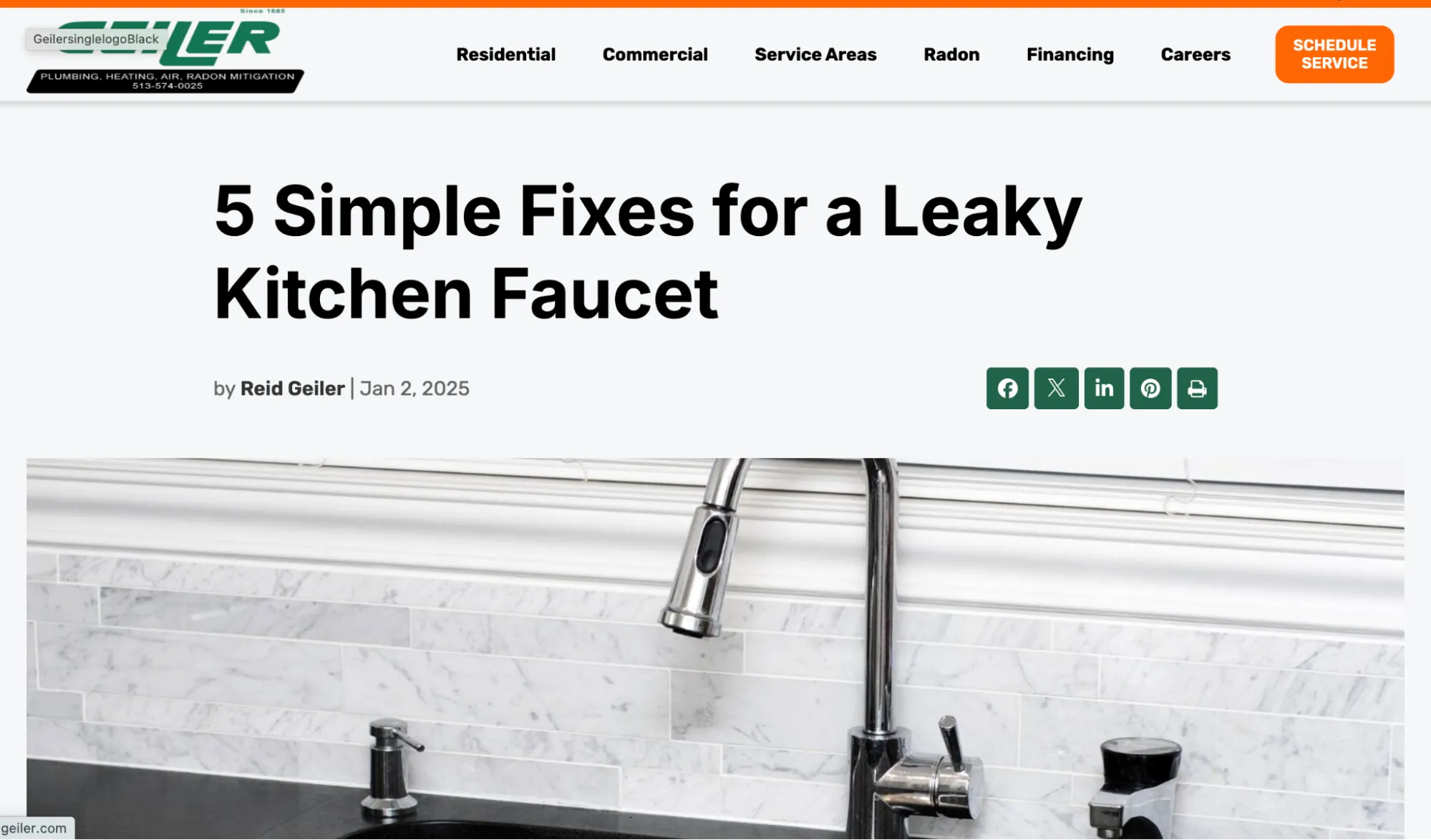
Blog content. It helps to capture people earlier in their decision-making process. Not every customer is ready to book immediately — some are trying to understand the problem themselves first.
When your content helps them find answers, you become the source of expertise, and they start to trust you. It helps later when they’re ready to book.
-
Backlinks. When other websites mention or link to your business, it signals to search engines that you’re worth recommending. The stronger and more relevant those mentions are, the more authority you build.
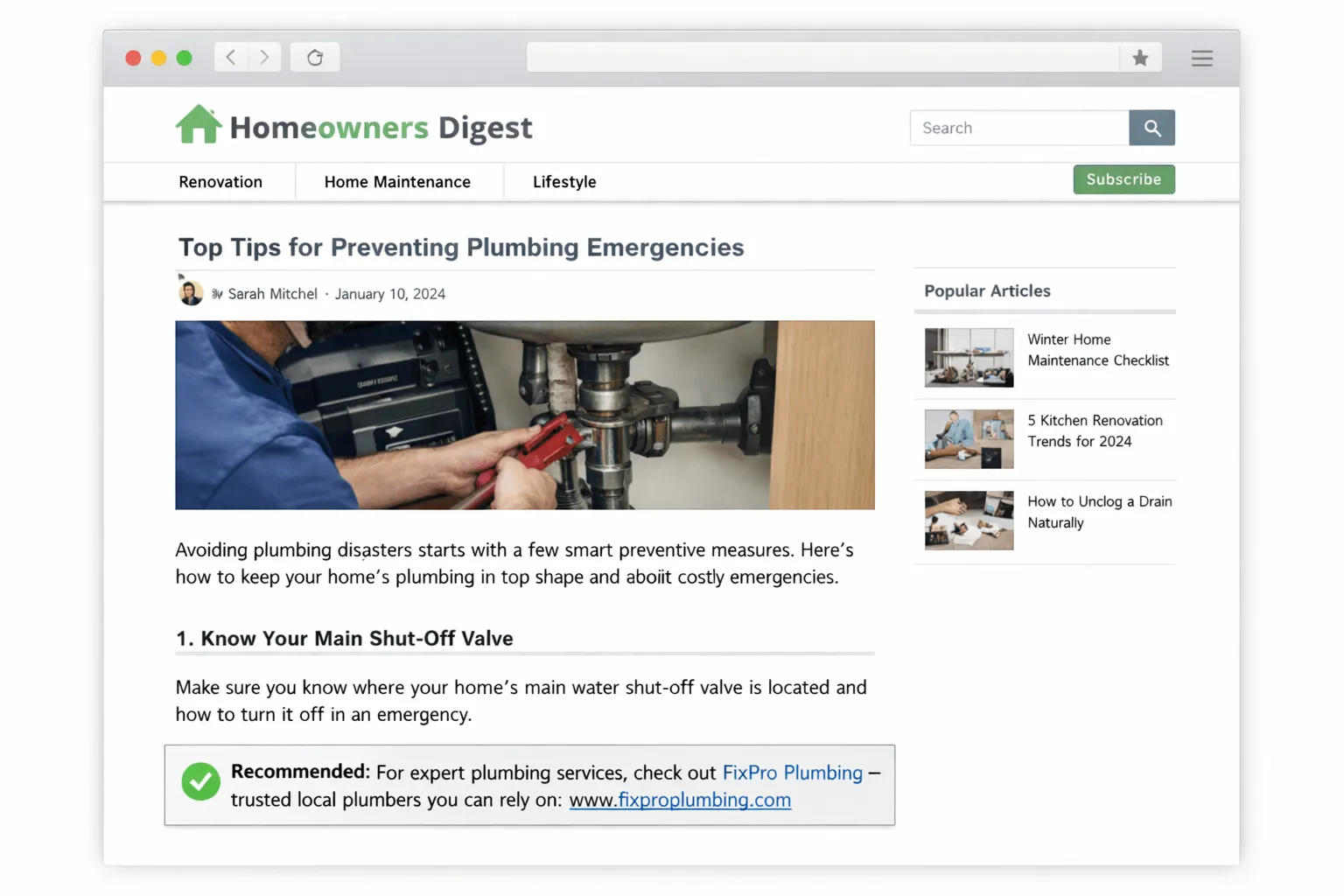
Together, expert content and link building attract better-qualified customers, build trust before the first interaction, and drive long-term sustainable growth.
Monitoring and Performance Tracking
SEO can be something you can grow and control only with proper tracking. Without it, you might be getting more traffic or calls — but you won’t know why, what’s working, or where you’re losing opportunities.
Here is what you should do:
-
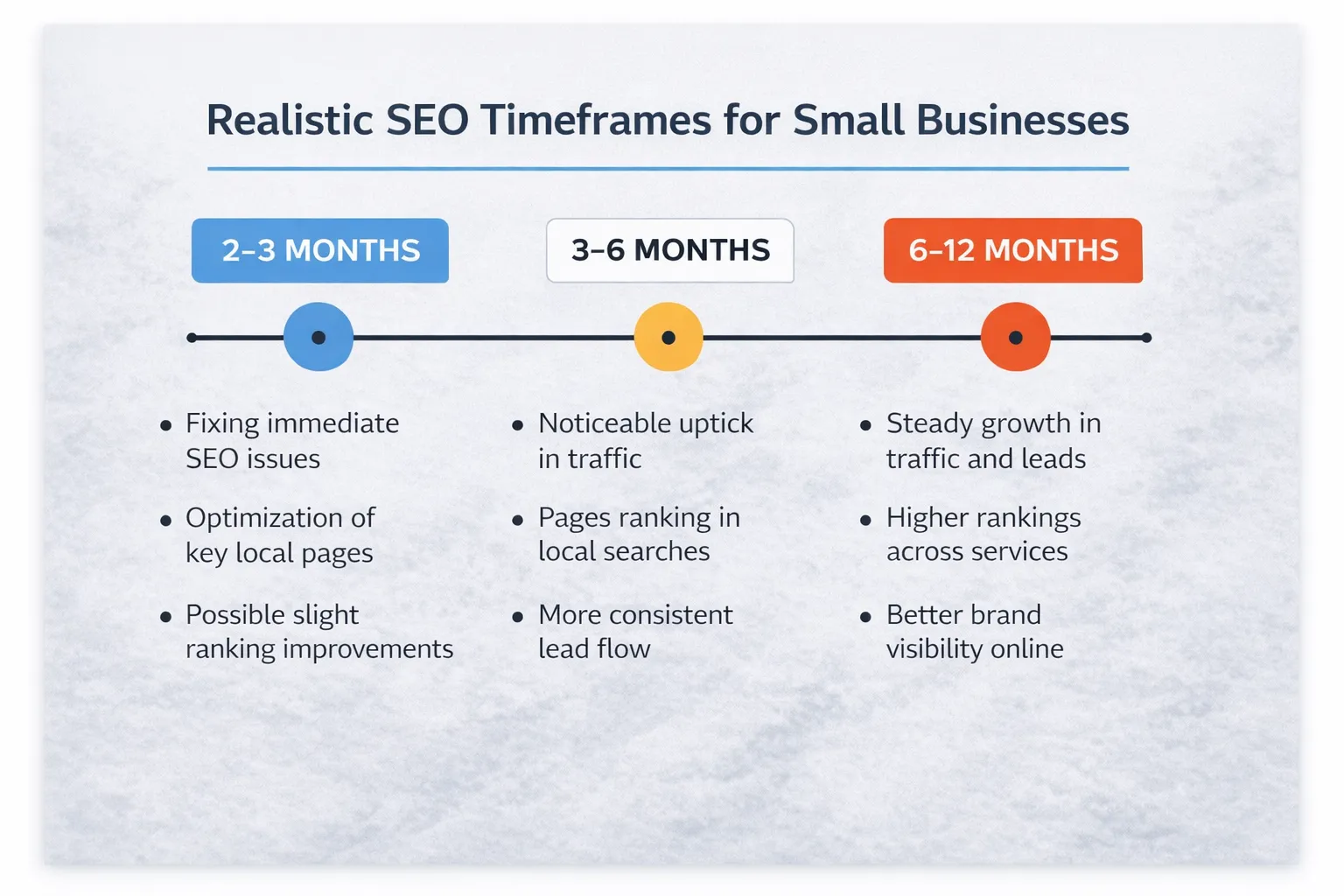
Define timeframes. Some SEO improvements show results in weeks, others take months to build momentum. When you set realistic checkpoints, you avoid premature conclusions and instead see the bigger picture.
-
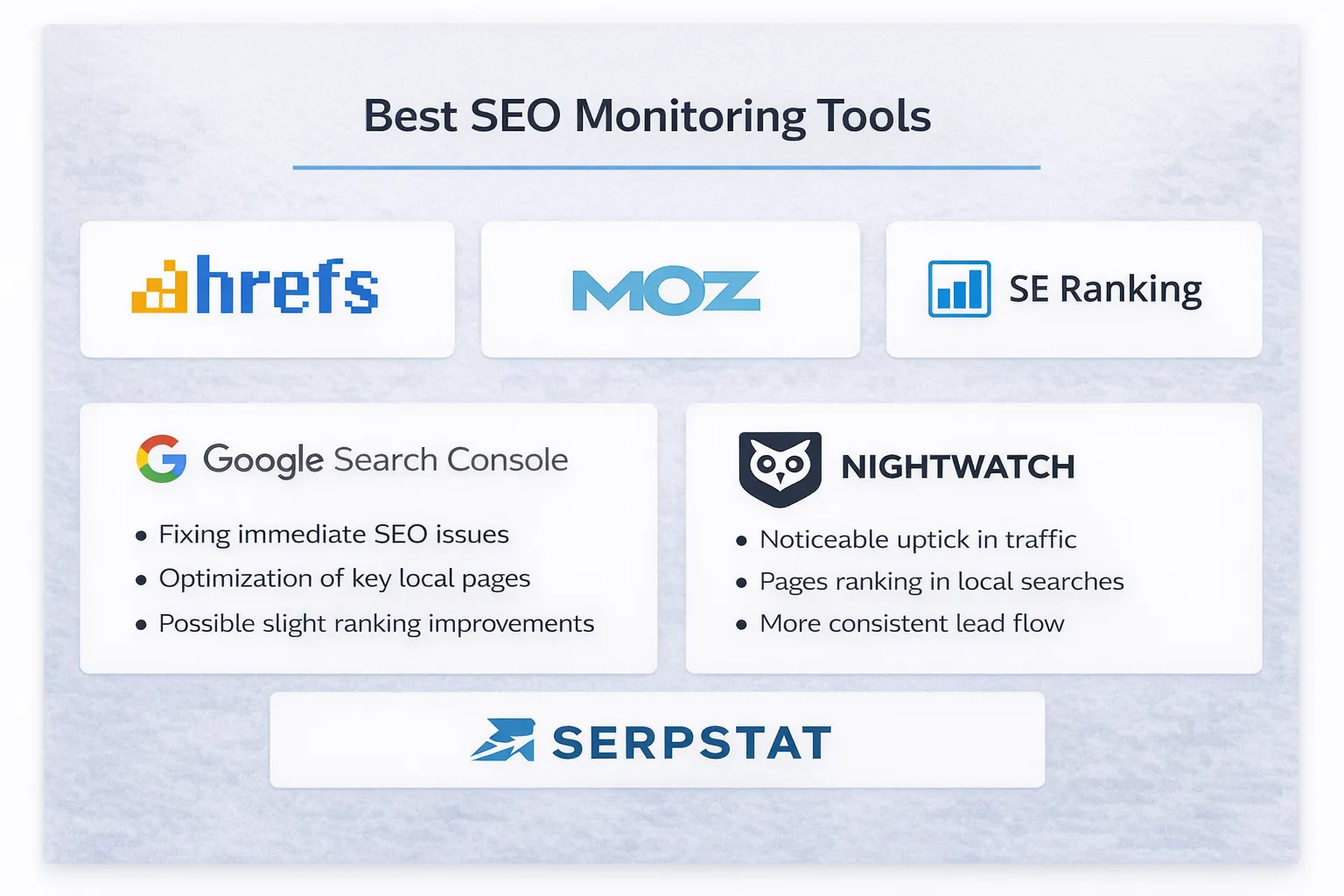
Choose the right SEO tools to have clarity. They show where your traffic comes from, which professional services drive lead generation, how your rankings change, and how users behave on your site.
Instead of guessing, you’re making decisions based on actual data — optimizing what works and fixing what doesn’t.
-
Celebrate milestones. SEO is a long game, so recognize every win: reaching the map pack, increasing calls, improving conversion rates, etc. It helps to keep focused and motivated.
More importantly, you can double down on strategies that are already bringing real business impact and then win again.
See, local SEO for home services needs a lot of attention for details, and, which is even more important, consistency.
If you’re not sure you have time for this but want results, call us, Netpeak US, for SEO services. We’ll take care of your search results positions!
Securing Organic Traffic with Local SEO: 8 Surefire Ways
Here are practical ways to move the needle — improve keyword rankings, and drive more calls and bookings from potential customers.
#1: Be Consistent with NAP Across Different Services
Your Name, Address, and Phone number should be identical everywhere:
-
Your website
-
Google Business Profile
-
Directories
-
Social platforms, etc.
Even small differences (like “St.” vs “Street”) can confuse search engines and hurt your visibility.
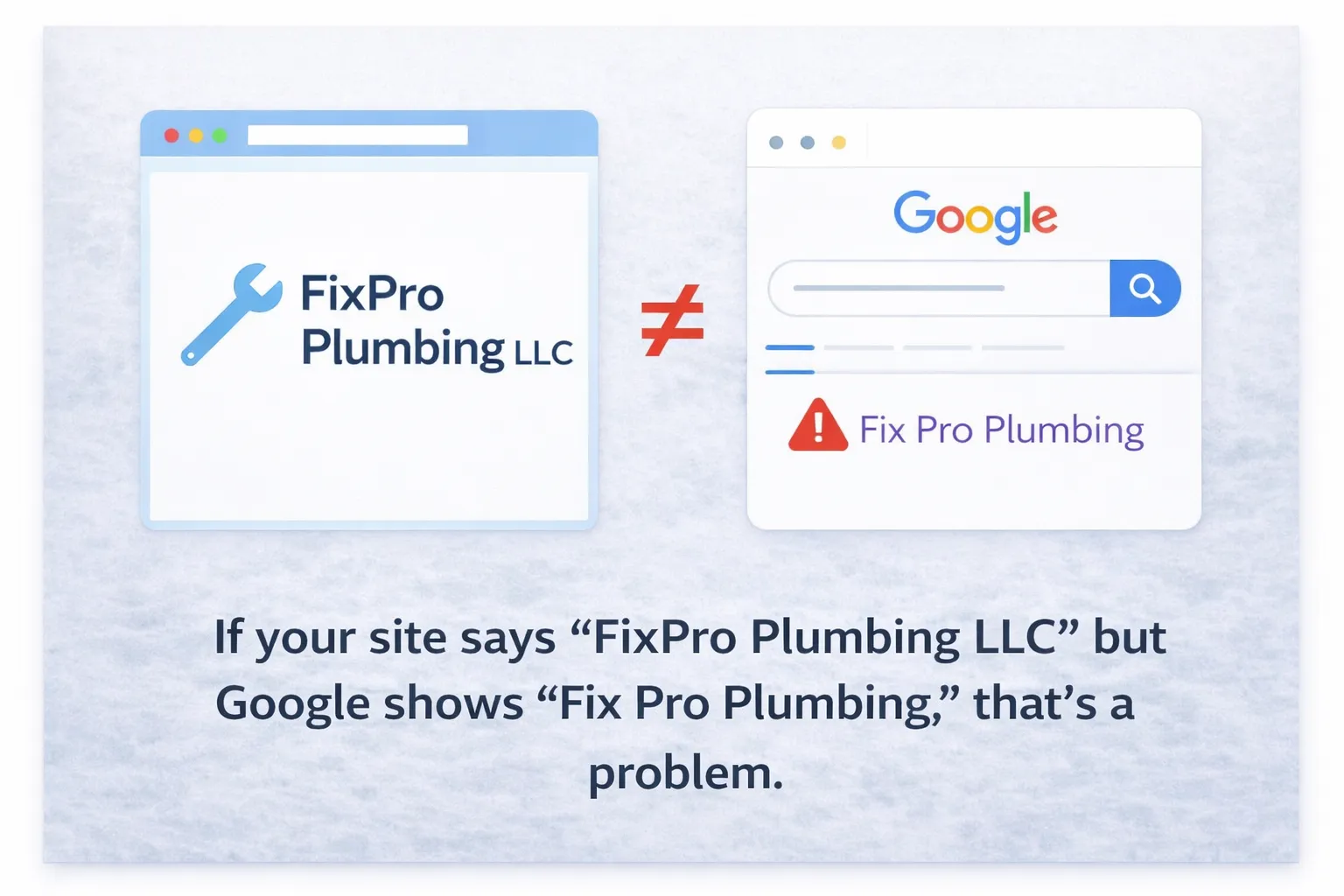
Example: If your site’s business name says “FixPro Plumbing LLC” but Google shows “Fix Pro Plumbing,” that’s a problem. Pick one version and use it everywhere.
#2: Run SEO Audit Before SEO Efforts
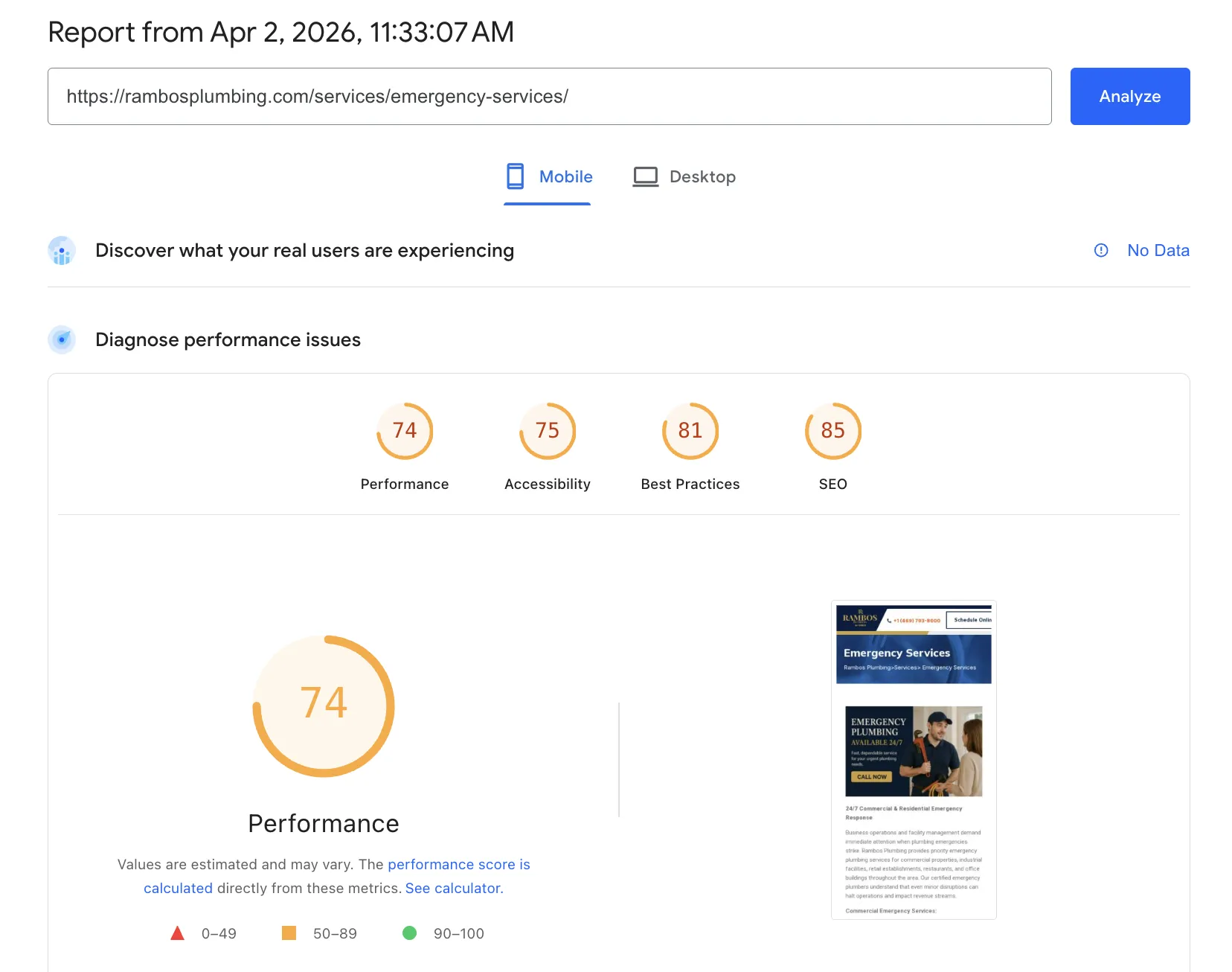
Before doing anything new, check what’s possibly broken: your website speed, mobile usability, indexing, current rankings, etc. And then fix everything. A technical SEO audit is the fastest method to get some SEO results.
|
Level |
Common Issues |
Impact on Business |
|
Beginner |
Slow website speed |
Pages take too long to load, so people leave → fewer calls |
|
Not mobile-friendly |
The site is hard to use on phones, so you lose leads from mobile users |
|
|
Missing basic pages |
No clear services, contacts, or location info, so users don’t trust and convert |
|
|
Not indexed in Google |
Pages don’t appear in search at all = zero traffic |
|
|
Broken links/errors |
Pages show 404 or don’t work properly: poor user experience + lower keyword rankings |
|
|
Intermediate |
Poor page structure |
No clear headings, messy layout, so Google and users don’t understand your services |
|
Duplicate content |
Same or very similar pages. It confuses search engines and hurts rankings |
|
|
Weak internal linking |
Pages don’t connect, so important pages don’t rank well |
|
|
Missing metadata |
No titles/descriptions optimized for search. It means lower click-through rates |
|
|
Unoptimized images |
Large or missing alt text makes your site slower + you miss SEO signals |
|
|
Pro |
Poor crawl budget usage |
Google wastes time on unimportant pages, so key ones get indexed more slowly |
|
Technical indexing issues |
Wrong canonical tags and noindex errors make pages disappear from search |
|
|
Weak Core Web Vitals |
Poor loading, interaction, and stability metrics = lower keyword rankings and conversions |
|
|
Structured data missing |
No schema for services, customer reviews, etc. means missed rich results (stars, FAQs) |
For example, your site loads slowly or isn’t mobile-friendly — fixing that alone improves rankings.
#3: Automate Processes if Possible
Use tools to automate repetitive tasks. This will save you time and reduce human error, especially as your business grows.
Here are easy ones you can set up:
-
Rank tracking — to monitor keyword positions without manually checking every week
-
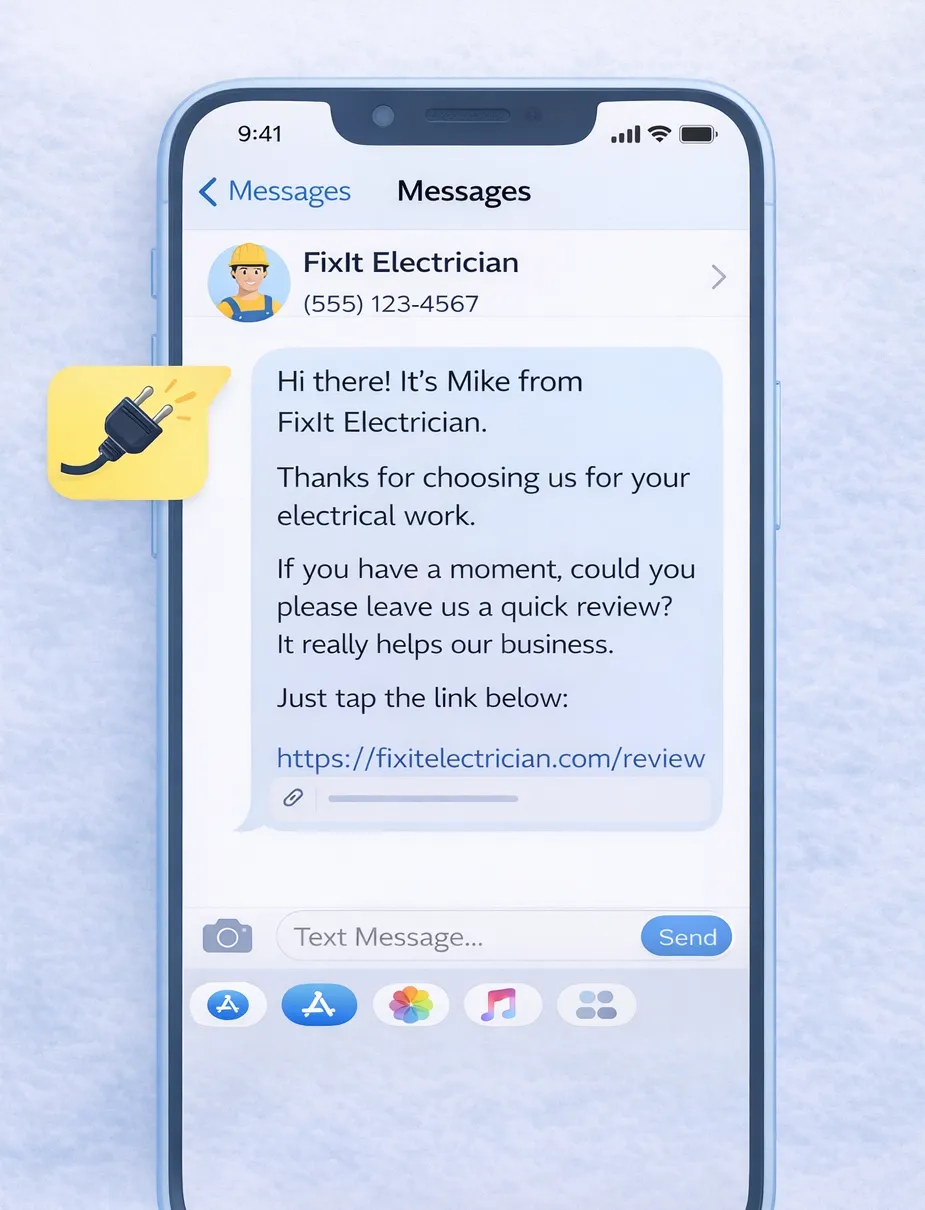
Review requests — to automatically send an SMS or email after each job, asking for a review
-
Google Business Profile updates — to schedule posts or updates in advance
-
Lead notifications — to get alerts when someone submits a form or calls
-
Call tracking — to automatically track which calls come from SEO, ads, or Google Business Profile
-
Appointment reminders — to reduce no-shows with automatic reminders
Don’t take it wrong: automation doesn’t replace SEO strategy. It just makes execution more scalable.
Example: Automatically send a review request SMS after each completed job, instead of asking for it manually every time.
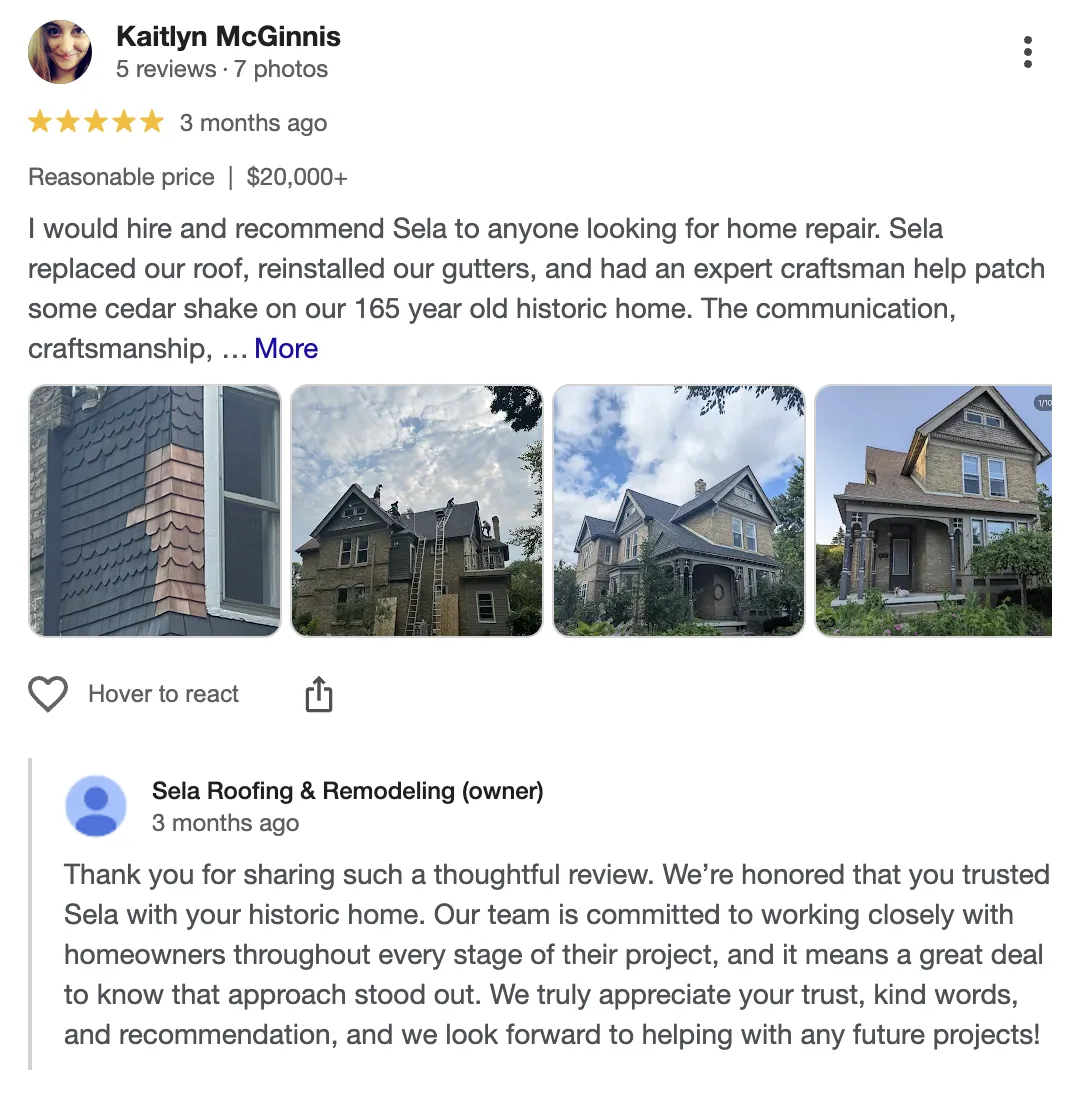
#4: Respond to Positive and Negative Customer Reviews
Reviews are so important! They’re a ranking and conversion factor. Ask for them every day, thank happy customers, and professionally respond to negative ones.
It shows future clients that you care, and Google sees your business as active and trustworthy.
Here are effective ways to get more customer reviews:
-
Train your team to ask after the job is done — a quick “We’d be happy to read your review” in person works surprisingly well
-
Send a direct link to the customer base — don’t make people search for your business
-
Use SMS, not just email — texts get opened way more often
-
Add a QR code on invoices or business cards — easy scan → review page
#5: Participate in Local Events
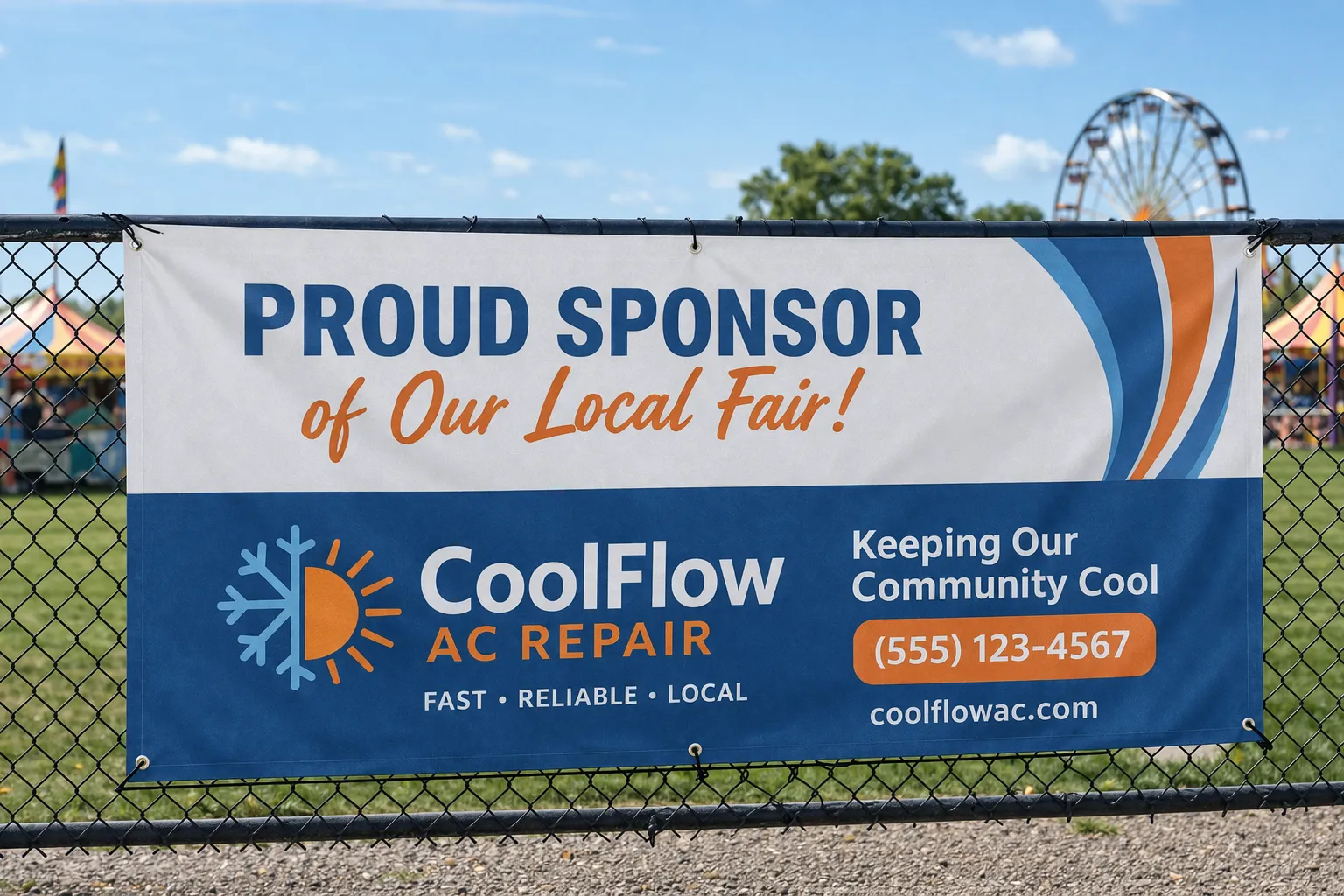
When you collaborate in community events and sponsor customer engagement, it creates local mentions online (news sites, event pages, social media), and locals just meet you in real life and trust you more. These signals strengthen your local authority in Google’s eyes (and community eyes, too).
|
Who to Reach Out To |
What to Offer |
What to Ask For |
Business Benefits |
|
Schools & kindergartens |
Small sponsorship and prizes |
Website mention and logo on event materials |
Local brand loyalty + awareness among families |
|
Community centers & local groups |
Free consultations and workshops |
Event page mention and backlink |
Strong local authority signals |
|
Local charities & non-profits |
Sponsorship and free/discounted services |
Mentions in press releases and social media tags |
Positive brand image and backlinks |
|
Event organizers (fairs, markets) |
Booth, branded merch, and giveaways |
Logo placement and event website link |
Visibility, direct local exposure, and brand loyalty |
Example: Sponsor a local fair or school event — your business gets mentioned online, and new people find you offline.
#6: Partner with Local Brands
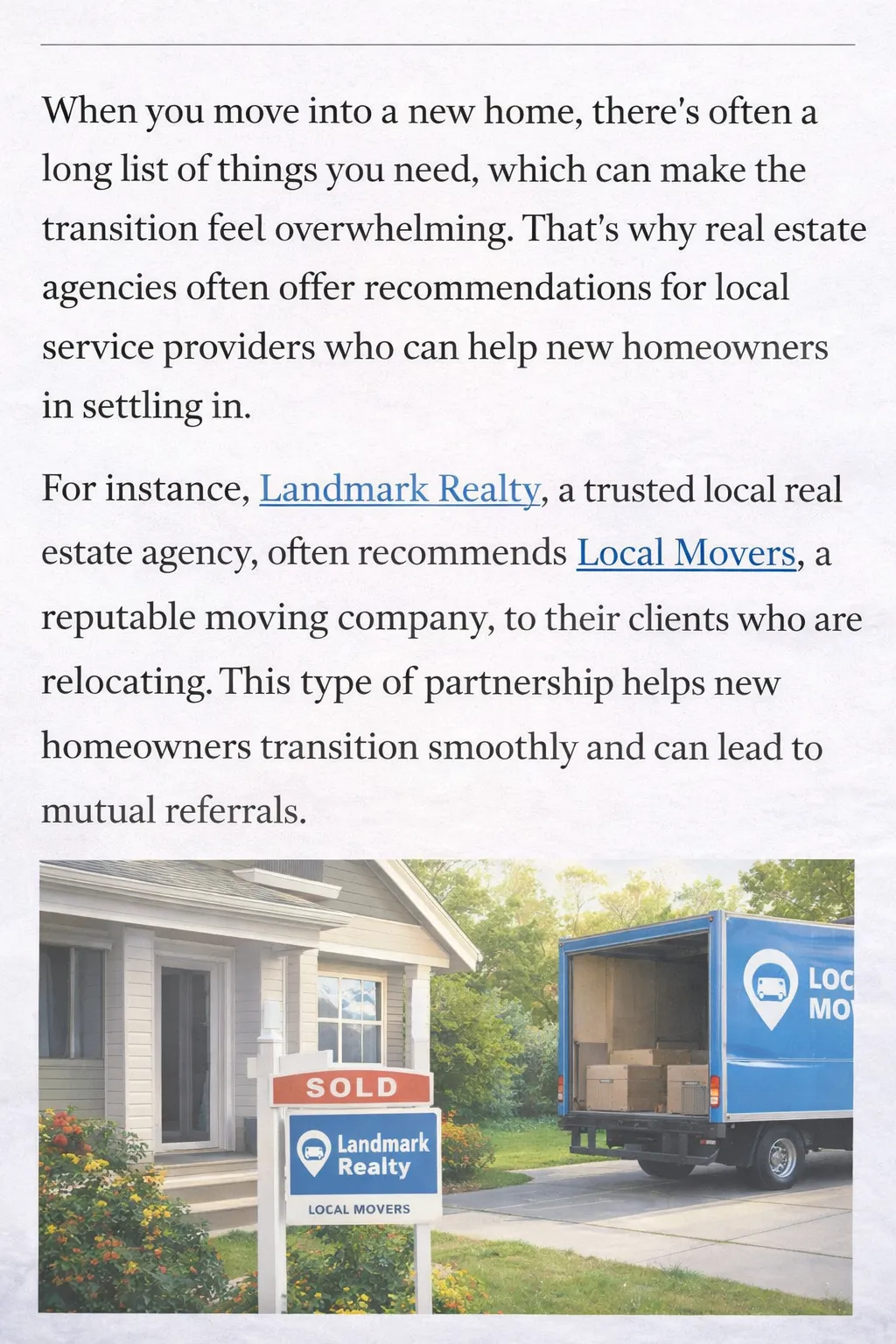
When you work with nearby small businesses — real estate agencies, construction companies, local stores — you get access to cross-promotions, mentions, and shared audiences. It creates both backlinks and trust, plus referrals from local partners often convert better than cold leads.
|
Who to Reach Out To |
What to Offer |
What to Ask For |
Business Benefits |
|
Real estate agencies & property managers |
Partnership, referral, collaboration |
Recommendation to the new homeowners and site mention |
High-quality leads and steady referrals |
|
Sports teams & clubs |
Sponsorship (uniforms, events) |
Logo on materials and social mentions |
Long-term local recognition |
|
Local businesses (cafés, gyms, stores) |
Cross-promotions, joint offers |
Mentions and shared audience exposure |
Referrals + community presence |
Example: A moving company partners with a real estate agency and gets recommended to new homeowners.
#7: Use Visuals as a Strategic Tool
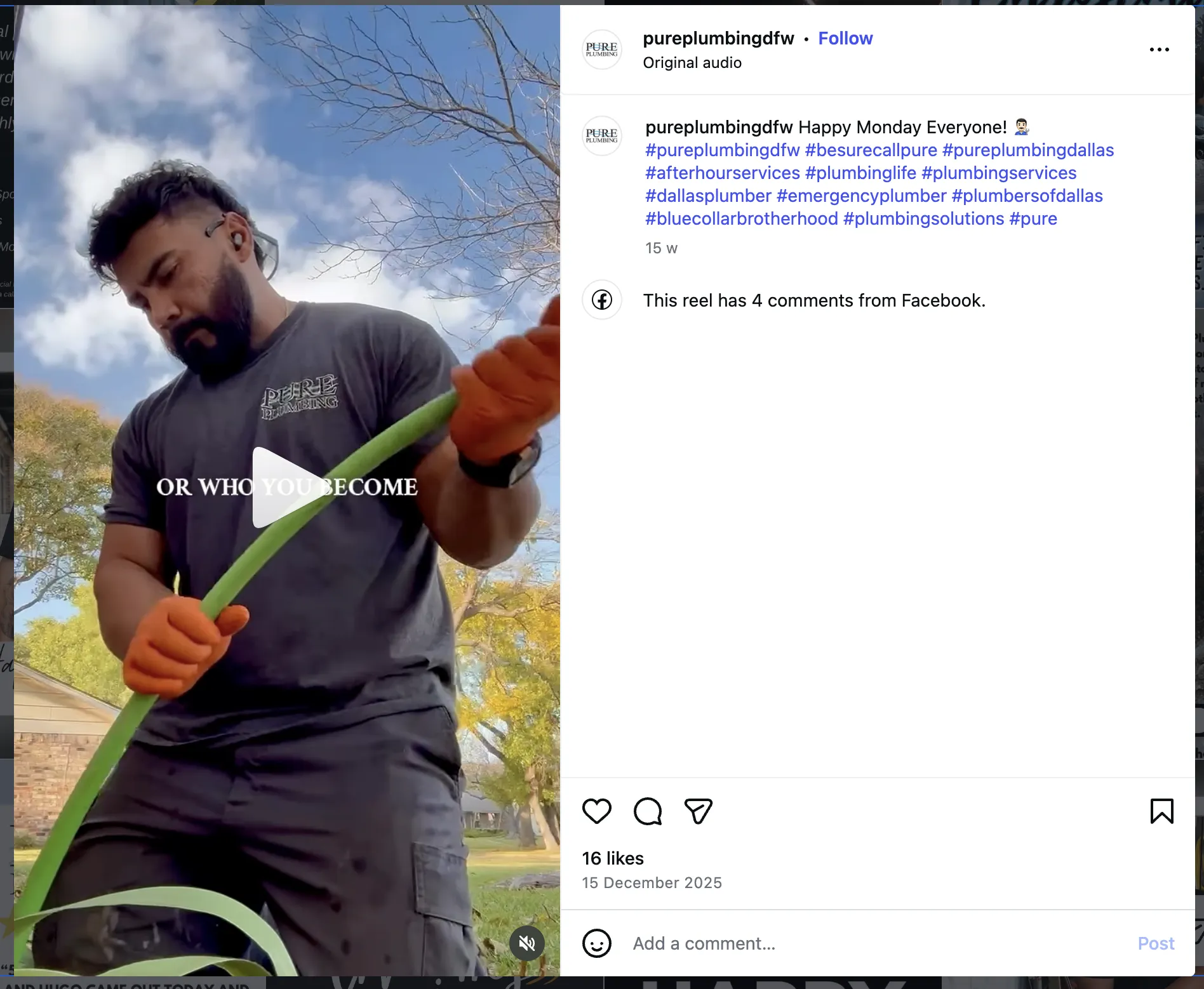
Use photos, before/after shots, team images, and short videos — and make them work hard for you. People want to see who they’re hiring because you will be working in their sacred, safe spaces. They don't want creeps there.
Show real-life photos and videos on your Google Business Profile, website, social media platforms, etc. It proves that you’re legitimate and that your clients are happy with your work.
Here is how to create visuals that increase customer satisfaction:
-
Show real work and great customer service — before/after shots of actual jobs
-
Include your team — people want to see who is coming into their home
-
Use consistent branding — use the same uniforms, logo, and colors
-
Shoot in good lighting — find natural light, it makes a huge difference
-
Capture short videos (15–30 sec) — quick walkthroughs, “what we fixed,” or simple explanations
-
Optimize for mobile — make vertical videos with clear framing
Example: Post your work process on Instagram, explaining what you do.
#8: Don’t Forget About AI Search Influence
Search is changing. Google's AI Overviews now recommend businesses at the top of search results. It's worth the effort to try to show up there, too.
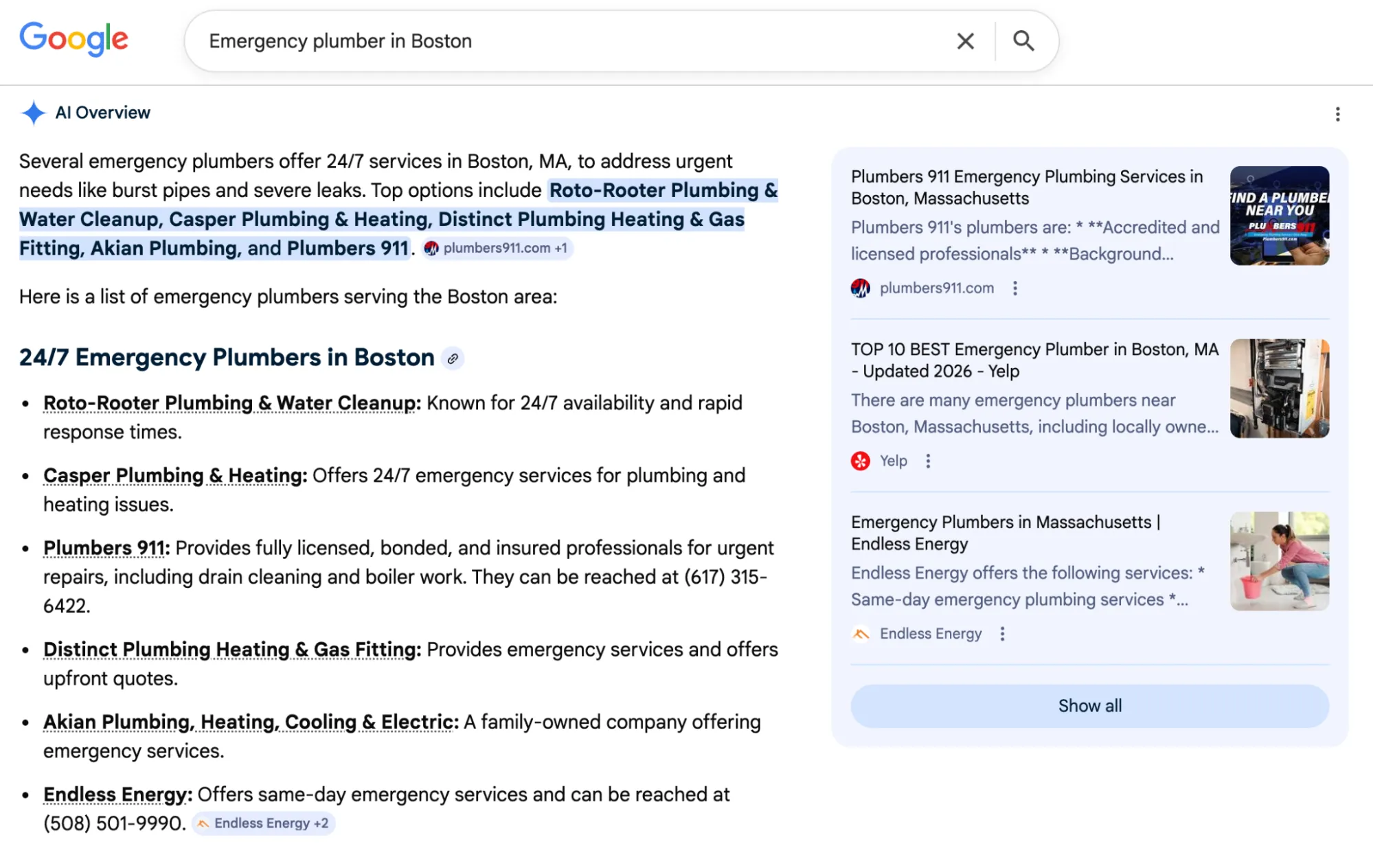
What you can do to show up in hack AI SEO:
-
Answer questions in articles — structure SEO content like “What is…”, “How to…”, “When should you…”, and give direct answers
-
Add FAQ sections — 3-5 common questions per page
-
Use structured formatting — headings, bullet points, and tables
-
Show expertise — include author info, experience, certifications, and real examples
-
Get mentioned on other websites — blogs, local media, directories, because AI pulls from multiple sources
People trust personalized answers more than a list of links, plus many businesses are still focused only on classic rankings, so there’s a window to stand out in AI-driven results.
SEO, but make it AI-ready. If you want to know more about how local SEO works in the AI era, read our article.
Why Your Customers Don’t Stick to One Channel (And You Shouldn’t Either)
Often, potential customers don’t make decisions in a straight line — they zigzag between the channels. One minute they’re Googling, then checking reviews about customer experience, then stalking your website, then randomly seeing your ad later.
-
Google confirms that people interact with multiple touchpoints before converting
-
Research from Harvard Business Review shows that customers who engage across multiple channels spend more and stick around longer.
In business terms, digital marketing for home services is simple: don’t put all your leads in one basket. Be where your customers already are — and show up there more than once.
|
Business Goal |
What It Means in Practice |
Channel Combo with SEO (to Get There Faster) |
|
More Calls |
More people are contacting you directly from the search |
SEO + Google Ads (Search & Local Services Ads) |
|
More Bookings |
Turning visitors into actual jobs |
SEO + Website CRO + Retargeting ads |
|
More Trust |
Customers feel confident choosing you |
SEO + Reviews (Google, Yelp) + SMS/email review requests |
|
Faster Results |
Getting leads while SEO is still growing |
SEO + PPC (paid search campaigns) |
|
Higher Customer Retention |
Staying top of mind after the first job |
SEO + Email/SMS follow-ups + Loyalty programs |
|
Stronger Brand Recognition |
People remember your name before they search |
SEO + Social media + Local sponsorships |
If you want to know how to run your home service marketing like a system, not separate channels, read our article.
Final Thoughts
Local SEO is a system. Everything should work together — your website, local presence, SEO content, and your reputation.
The good news is that you don’t need to do everything at once. Start with small improvements:
-
Clean up your local listings
-
Add a few targeted pages
-
Respond to reviews, etc.
And then do more and do it consistently. At the end of the day, the goal isn’t just better keyword rankings — it’s a steady flow of real customers who already trust you before they even reach out.
FAQ
What is home services SEO, and why does my business need it?
Home services SEO is the process of optimizing your online presence so customers can find your business when they search for services like plumbing, roofing, or repairs in their area. It focuses on local visibility, including Google Maps, service pages, and reviews. Without it, you’re essentially invisible to people who are actively looking to hire someone right now.
I don’t have large budgets. Does it make sense to compete with local giants?
Yes — because local SEO isn’t won by budget alone, but by relevance and proximity. Smaller businesses can outperform bigger competitors by targeting specific neighborhoods, niche services, and long-tail searches. Smart optimization often delivers better ROI than broad, expensive campaigns.
What is the most effective way to start doing SEO?
Start with the basics: set up and optimize your Google Business Profile, create clear service pages, and ensure your contact details are consistent everywhere. Then build trust through reviews and useful SEO content that answers real customer questions. SEO works best when you focus on solving problems your customers are already searching for.
Why do I have to run a website if my service is local?
Your website acts as your digital storefront where potential customers validate your credibility before contacting you. It gives you control over your messaging, services, and trust signals in a way that directories or social media cannot. Plus, search engines rely on your website to understand and rank your business.
Can SEO be customized, or is it rather a one-size-fits-all approach?
SEO is highly customizable and should reflect your specific services, location, and audience. What works for a roofing company in Boston won’t be identical to a plumber's services in a small town. The best results come from tailoring your strategy to your market, competition, and business goals.

 0
0
 0
0
 0
0
 0
0
Related Articles
Local SEO for Construction Companies Explained
If clients can’t find you online, they hire someone else. Learn how local SEO puts your construction business in front of ready buyers.
How to Market a Security Company in 2026?
Most security companies are invisible online. Here's how to fix that and turn your digital presence into a steady stream of qualified leads.
Sustainability Marketing: 7 Smart Ways to Earn Trust (and Customers)
Learn how to grow your brand efficiently while using eco-friendly marketing practices to build trust and long-term revenue.