
Pet Care Marketing: Why Does Empathy Beat Tech Specs
Pet parents face a unique challenge: making choices for someone who cannot provide direct feedback. They’re essentially guessing two things: will my pet like this, and am I ready to pay the price?
The more emotionally attached owners are to their pets, the larger the budget they’re ready to invest in their wellbeing. However, there is a catch: not all pet owners are built the same. After all, it would be foolish to expect a ranch owner to have similar buying habits as a Valley girl.
And that’s exactly where pet care marketing says “hello.” It helps predict the level of attachment based on the pet species, the owner's personality and lifestyle, as well as the country, urban or rural location, etc. Your task is to identify the positioning that drives sales and builds your brand at the same time.
Product quality alone rarely wins in this deeply emotional domain. It’s all about empathy for different pets’ and owners' needs. In this article, we collected our pros’ pet marketing ideas on how empathy helps brands win in price wars. Here are the big names:
-
Daria Markova, Strategist at Netpeak
-
Anton Lypskyi, Head of PPC Department at Netpeak
-
And myself, Cyril Kuznetsov, Head of Marketplace Growth Department at Netpeak
You can learn more about pet care industry trends from them at our upcoming Netpeak Pet Marketing Meetup. So, stay tuned! But for now, let’s explore this pet business marketing article that digs into pet owner psychology like a young terrier in the garden.
- Why Should You Trust Our Expertise?
- The 2026 Pet Market: Hearts Lead, Brands Follow
- Regional Differences: US vs Europe, Urban vs Rural
- Not All Pets Are the Same — Your Marketing Shouldn’t Be Either
- Why One Channel Isn’t Enough in Pet Care Marketing?
- 10 Marketing for Pet Business Ideas That Cut Through Noise
- Real Marketing Campaigns Pets Would Approve (If They Had Thumbs)
- Final Takeaway: Empathy Above It All
- FAQ
Why Should You Trust Our Expertise?
At Netpeak, we have over 20 years of experience and more than 8,500 projects for companies of all kinds. And when you do something for so long every day, you start to get the hang of it.

Pet marketing is one of the most fun-to-work-with e-commerce spheres: a crazy-growing market, emotions all around, working with giants like Purina, and, most importantly, you NEED to use pets and their stories in your ads every day!
And that amazing feeling when all your hard work is helping pet brands grow:
-
CatsJoys with their cute handmade furniture and accessories for cats, had +29% organic revenue and +13% orders! on Etsy
-
We helped Petloc8 stand out in a crowded GPS category by speaking to pet-owner emotions, not just features
-
We launched new dogs and cats' premium treats Delickcious, told about them to the world, fought for a place in the market (and won!)
You see, we love what we do and know how to do it right. If you want to delegate your pet brand marketing to someone experienced, Netpeak is here for you! Give us a call, and we'll start market research for the most effective ways to increase your revenue.
The 2026 Pet Market: Hearts Lead, Brands Follow
First, what I can say about the pet industry marketing trends in general is that it is huge and growing:
-
In the US, it reached about $273B in 2025 and could reach $497B by 2034. 71% households (94 million) own at least one pet.
-
In Europe, it is worth $81B in 2025 and could reach $127B by 2034. 49% households (139 million) own one or more pets.
It means a LOT of opportunities and ENORMOUS competition.
Second, most pet owners are attached to their pets: some more, some less, but emotions are there:
-
93% of dog owners say their dog’s health is as important or more important than their own.
-
65% prefer spending time with pets over their human partners.
-
90% say the presence of a pet is calming.
-
80% of people say pets help them pause daily tasks.
People love their pets, okay? Think about it every time you create an ad.
Daria Markova, Strategist at Netpeak, knows from her rich experience that in the pet category, emotions form the basis of strategy, not just an added bonus to communication:
“When pets are considered family members, purchases in the 'safety/health/comfort' category become emotional decisions. People pay not only for functionality, but also for peace of mind, care, and a sense of control. The role of empathy will only grow as pet care becomes an "emotional infrastructure" for people. Animals provide support, routine, attachment, and stress relief.
However, as technology becomes more prevalent, empathy will become a key differentiator between a "useful brand" and "cold functionality.”
You can’t sell pet products using heartless characteristics; it would stop your brand’s growth. You need to be in the heart/lifestyle territory to earn customers' trust:
-
Sell to Humans, but for Pets. People buy, but they judge through the pet’s imagined experience. For example, instead of listing fabric specs for a dog bed, show a short video of a senior dog settling comfortably.
-
Go for Trust Before Price. Strong trust supports premium pricing.
-
Visual Proof Matters. Use UGC, demonstrations, and lifestyle visuals that show real pet reactions.
-
Show That You Get It. Use empathetic messaging that shows understanding of the owner's situation: “For dogs who get anxious during storms or travel — gentle support without sedation.”
-
Life-Stage Sensitivity. Align messaging to life stages (puppy, adult, senior) and show fit with current needs. For example, “Soft training harness for first walks” for a puppy, but “Lift-assist support harness for mobility” for a senior.
That’s all the general tips you need; all other information worth knowing is deeply specific and based on which country you sell products, what kind of person would buy it, and which pet would consume it. So, go for it!
Regional Differences: US vs Europe, Urban vs Rural
Let’s start with urban versus rural locations and the United States versus Europe. Are people’s levels of attachment to pets different? Do they have different buying habits?
Urban vs Rural Pet Attachment
Anton Lypskyi, Head of the PPC Department at Netpeak, notes that pet attachment looks remarkably similar in the US and Europe, and it’s more about the city vs countryside battle:
“In some EU countries, keeping a pet is more regulated and demanding: owners may need permits, and meet specific legal and welfare requirements. This makes pet ownership a serious financial responsibility: veterinary care and ongoing expenses can be significant. And highly urbanized states such as New York and Florida resemble European cities in standards of responsibility and expectations for pet care.
At the same time, Europe is not uniform: in some countries and cities, regulations are more relaxed, and expectations of input are lower. In more rural regions of the US (for example, Texas or parts of the Midwest and South), the situation is the same: they use a more practical, less regulated approach to animals.”
Key Takeaway: Urban citizens are ready for greater input (read: time and money) in their pets; they often treat them like family members. Rural ones are generally more relaxed about that; they could keep animals outside and buy food in bulk, etc.
US vs Europe Buying Habits
After years of working with major marketplaces, I see a clear pattern: pet owners on each side of the Atlantic buy quite differently.
If I boil down my POV to a structured list:
-
Amazon domination vs fragmented marketplaces: The US market is what we call a flywheel. It’s one big market, dominated by Amazon — though some brands can also sell through their own online store. In Europe, you may have different niches and specialized marketplaces for the pet industry: Zooplus, Brekz, etc.
-
Visibility vs trust: In the US, trust is often gained through scale and visibility. If people talk about me and I’m shown on social networks, it signals that I can be trusted. In Europe, it doesn’t work the same way. Being known doesn’t automatically mean trust. They know the brand, then they start checking what kind of company it is: go to the website and look for certifications. If those certifications aren’t there, they won’t buy.
-
Promo-code culture: In Europe, if you want to sell well, you shouldn’t just throw a promo code into a subscription. If you simply drop the price in Europe, it can raise suspicion. People ask: why? If the product is good, why are you discounting it? In the US, discounts are normal — promo codes signal “I’m saving,” and both sides win.
-
Price vs. value focus: In the US, price is extremely important, and a strong savings culture prevails: if I can save, I’ll buy. In Europe, ecological responsibility, moderation, and “made locally” often matter more — “made in Europe,” “made in France,” or “made in Germany.”
-
Label reading: US consumers rely more on brand and positioning. But in continental Europe, there is a nuance: people still won’t read everything, but many owners know the basics and quickly scan for red flags. If the ingredient list looks too long or suspicious, they notice.
Key Takeaway: In the US, you need to be on Amazon, be as loud as possible, and generous with the coupons. In Europe, work on building trust and look reliable. Overconsumption is a problem for them, not a lifestyle, so you can’t throw your US campaign at Europe and expect the same customer satisfaction.
Not All Pets Are the Same — Your Marketing Shouldn’t Be Either
Species matter, especially in terms of attachment. Which do you think pet owners feel more deeply for: a family Labrador that sleeps with the children and eats at the family table, or a goldfish in an aquarium that risks being flushed down the toilet after a few months to be replaced by an identical one?
Your marketing efforts should reflect the level of emotional connection and overall lifestyle. Remember: more love - higher average order value.
Dogs: Experience-Driven Pet Services Industry Marketing
Dogs represent about 60% of the US pet market, and we can talk about 90M pet dogs in the EU. Dog ownership is active and social. Some owners see their dogs as children, companions, babysitters, and emotional support. Others see them as workers, like those at the rancho, or police helpers.
Dogs are very lovable: they are capable of returning affection, which is why it’s safe to say that dogs form the tightest emotional bonds with their owners.
Here is a customer portrait you can use to target dog owners:
Woman (25-35), First-Time Puppy Owner
When you imagine her, think about Pam Beesly from The Office if she adopts a puppy: kind, responsible, and anxiously afraid to make a mistake that would hurt her pet.
-
Urban/suburban.
-
First dog. Recently adopted a puppy and wants to “do everything right.”
-
Worried about mistakes, seeks guidance and reassurance, and wants her puppy to be happy and healthy.
-
She Googles questions (“how to…”), reads guides and reviews, and watches training videos.
-
Biggest triggers for customer acquisition: Safety and gentleness, “beginner-friendly” cues, and expert approval (“Vet-recommended for young dogs”).
-
Best marketing channels: Search, educational content, vet blogs, and YouTube
For example, Purina shares educational articles for new puppy owners. They’re here for new dog parents, and it’s a high chance this connection will last, and potential customers will stick with the brand.

Example of her way to the purchase: Search for the product → reading the guides → visiting the product page → purchase.

What should motivate dog owners to buy from you: Performance and shared experience. They want products that enable walks, play, travel, and bonding. Durability, function, and real-world use matter most.
Cats: Stress-Free Pet Care Digital Marketing
Europe has more cats than dogs: 110M vs 90M, and in the US, cat ownership is growing fast. It centers on owners’ emotional comfort and stress relief (and helps with rodent control in rural areas).
Here is a customer portrait that could help you with marketing:
Woman (28-55), Cat Comfort Guardian
When you imagine her, think about Amélie Poulain from Amélie if she had a cat. She is introverted and stressed by the world. She wants a companion, but doesn’t want more stress from them either. She is careful in her choices.
-
Indoor cat owner.
-
She values her calm home and sees the cat as an emotional companion.
-
Focus on comfort and stress, wants her cat to feel safe, and is a risk-averse buyer.
-
Reads details carefully, compares materials and design, and checks reviews for reactions.
-
Biggest buying triggers: Softness and gentleness in shops' online presence, low-stress use, and cat acceptance (“Designed for sensitive cats”).
-
Best marketing channels: Product pages, reviews, specialty retailers, blogs.
Solid Gold emphasizes the Sensitive Cats theme on its Amazon page through product names, images, and descriptions. And a 4.5-star rating from 9,389 reviews is the finishing punch in earning customers’ trust.

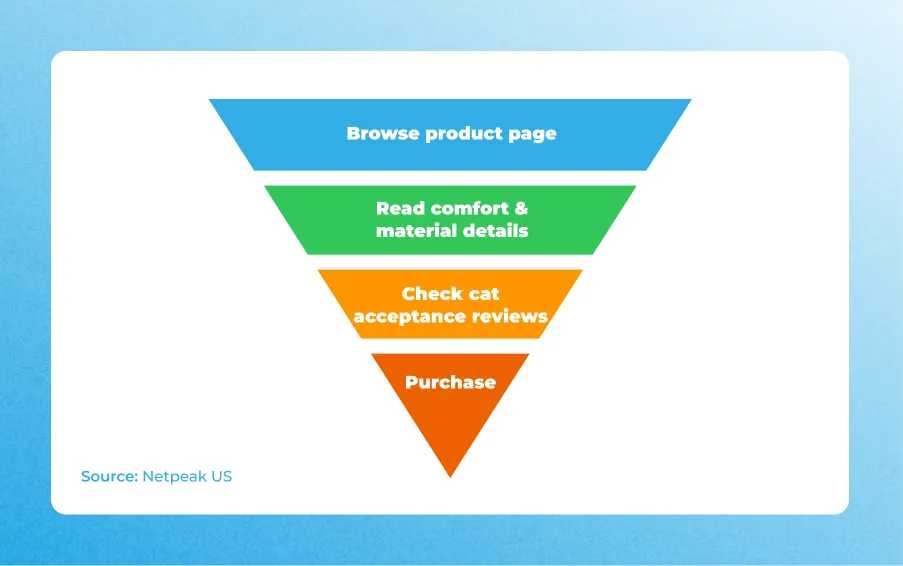
Example of her way to the purchase: Browse product page → read comfort & material details → check cat-acceptance reviews → purchase.
What should motivate cat owners to buy from you: Safety and acceptance. They want products their cat will tolerate and enjoy. Softness, quietness, and low stress are key.
Exotic Animals: Knowledge-Based Marketing
Exotic pets are far from niche: in the US and Europe are millions of birds, reptiles, and small mammals. In the US, they are used as a hobby for science enthusiasts, but in European families, they’re more like small child-oriented companions.
Here is a customer portrait that could help you with marketing:
Man (25–50), Exotic Habitat Explorer
When you imagine him, think about Sheldon Cooper from The Big Bang Theory if he had, for example, a spider. He would happily spend hours perfecting a terrarium — calm, observant, and deeply attentive to his animal’s needs. He chose an exotic pet intentionally, not impulsively.
-
He sees the animal as delicate and dependent on the right environment. Care feels precise and responsibility-heavy.
-
Value stability and the right conditions, and see their pet as something to protect rather than to train or entertain.
-
Reads care guides, compares technical details, and looks for experienced-owner or expert validation.
-
Biggest buying triggers: Species-appropriate design, safety and biological fit, stable habitat conditions, and evidence of animal comfort (“Designed for spiders,” “Spider-safe materials”).
-
Best marketing channels: Specialty retailers, product pages, educational content, forums/communities, YouTube care videos.
For example, Zilla’s Micro Habitat product shows up on the Snake Discovery YouTube video, “How to Care for Jumping Spiders!” It had 3.6 M views.

Example of their way to the purchase: Search species needs → read care guide → compare specs → check experienced-owner reviews → purchase from trusted specialist store.

What should motivate exotic pet owners to buy from you: Correctness and safety. They want products that match biological needs and reduce stress or risk. Stability, species-fit, and expert approval matter most.

Why One Channel Isn’t Enough in Pet Care Marketing?
Pet owners buy for animals, so they can’t check the products themselves. Their only hope is to read that someone's dog or cat was comfortable, full, or happy. And they want to find that info by checking several sources, including Instagram, Google, Amazon, and reviews.
That’s why one channel is not often enough:
-
Social shows pets using the product
-
Search answers questions
-
Marketplaces provide reviews
And it works: consistent multichannel work could increase revenue by up to 23%. Sounds nice, yeah?
Read how we helped PetLoc8 to create a multichannel strategy that establishes an emotional connection with pet owners by positioning around pet personalities, not product specifications.
10 Marketing for Pet Business Ideas That Cut Through Noise
Pet owners are full of anxiety, guilt, and love wrapped together. That’s why flashy tactics often fail, and trust-building succeeds. Here are 10 pet marketing best practices that would help you to build an emotional connection with owners.
#1: Hyper-Local Businesses SEO for Better Targeting
Optimize your website and listings so nearby pet owners can find you in Google. Create pages and profiles for local searches, like “dog food store in Austin” or “cat grooming near me,” to help them find you offline or check your website.
Thanks to e-commerce SEO (Search Engine Optimization), Google will show your online business with reviews and photos to people in that area and give directions to your place on Google Maps.

#2: Partner with Lifestyle Pet Bloggers
Work with content creators who have pets and matching target audience. Send products or sponsor content, and they show real pets using them in everyday life. And then a bunch of people who trust their idol's judgment buy from you.
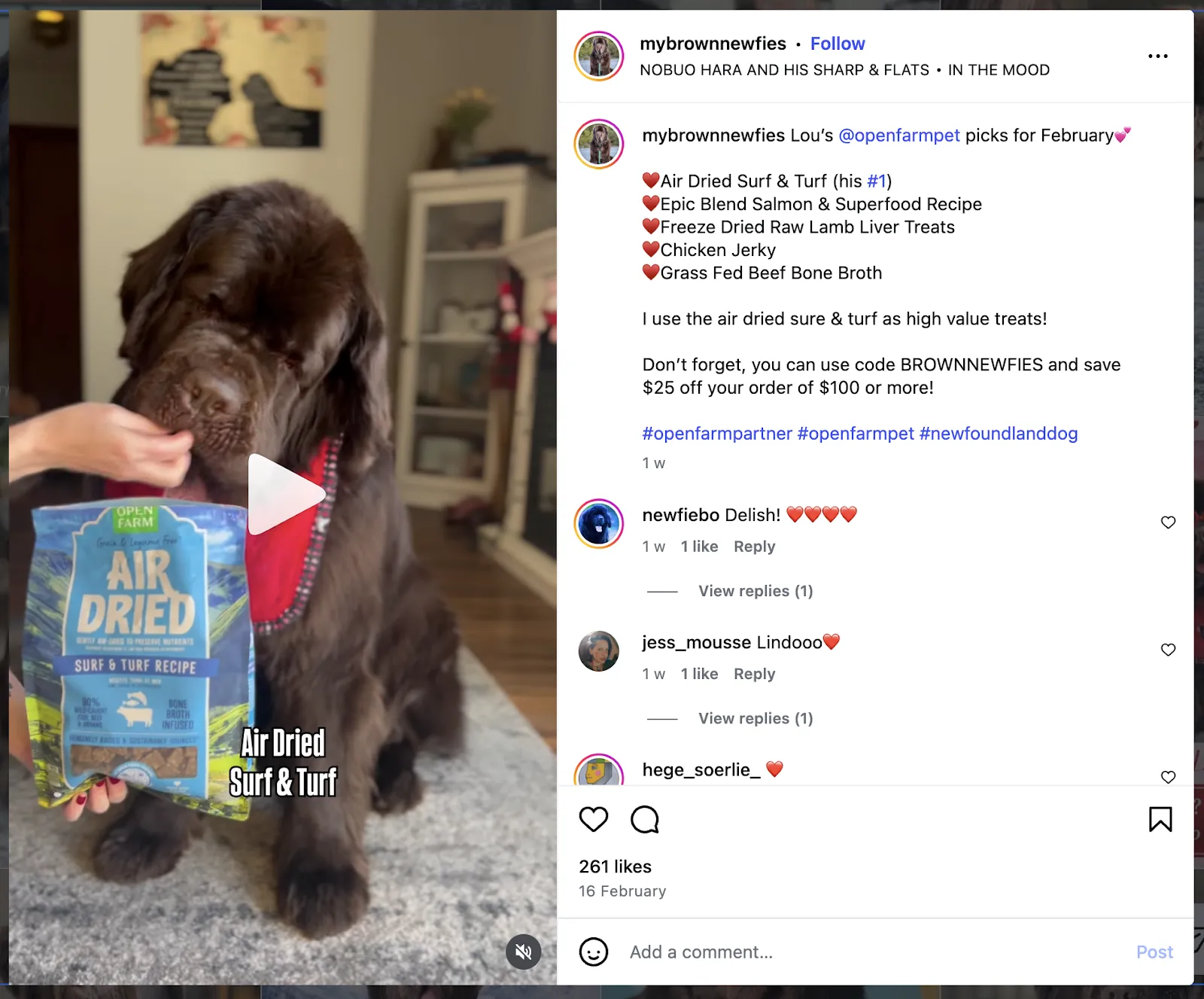
For example, mybrownnewfies at Instagram posted their pet Lou’s picks for February. What could be a better reason for a dog owner to buy food than watching someone else's boy or girl happily eat their treat?
#3: Post Educational Content & Vet Expertise
Create guides, blogs, videos, or talks that teach pet care. When you answer owner questions before they buy, search and social bring your content to them when they search for the answer. That’s what inbound marketing and content marketing are all about.
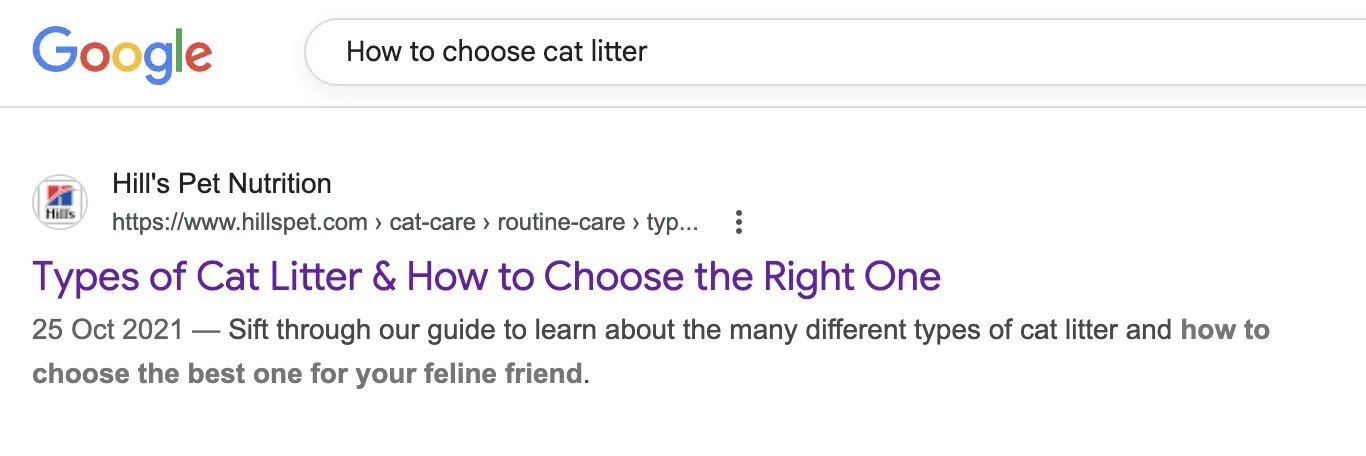
For example, when a person types “How to choose cat litter,” they see Hill’s Pet Nutrition article.
They will read an article, think like an expert about a company, and then maybe visit the “Shop” and buy some products.

#4: Brand Loyalty Programs
Try to make every customer a lifetime one. Use every trick you know for that: emails, points, discounts, perks for repeat customers, etc. It’s always cheaper to work with old clients than to constantly chase new ones.
For example, The Pet Beastro has a Loyalty Program: every purchase earns points, $1 = 1 point. Every point gets the customer closer to free treats, toys, and supplements.

A key message I want to send is:
“You need a strong customer retention strategy and email marketing, because pet care is built on long-term trust. Once owners find something that works for their pet, they prefer to stay with it. This is especially true in sensitive categories like pet food. People may switch toys or accessories, but they rarely change brands they trust for their pet’s health. So when you win a customer, focus on keeping them.”
#5: Social Media Interaction
Pet products are all about empathy, and you need to show it in the two-way communication with pet owners online. Reply to comments, feature pets, ask questions, and react to posts. Show on the media platforms that you care about owners as much as about their pets.
For example, WildOne launched a new dog collar collection on Instagram and responded to every comment. That’s the customer service we need!

#6: Real-Life UGC (User-Generated Content)
Customers love seeing photos/videos of pets using products. It’s the highest trust signal you could propose. Repost and collect customer content and use it everywhere. It’s free, imperfect in the best possible way, and the most effective social proof.
For example, Happy Paws US shows user-generated content on its Google Business Profile.

#7: Reviews & Customer Feedback
Pet owners worry about choosing wrong. Seeing other owners' positive reviews reduces risk and builds trust, which makes buying easier. Ask people to share their customer experience after purchase, then display ratings and reviews on your site, on Amazon, or on product pages.
For example, Sulfodene Dog Wound Care 3-Way Ointment has 22,827 reviews with a 4.5-star rating on Amazon. Would some dog dad consider buying this product even when he was searching for something else? Totally.

#8: Solve Problems, Don’t Just Sell
Pet owners want to buy care outcomes, not materials. Talk about how the product helps the pet. When they clearly see the way to improve their pet’s life, conversion increases:
❌ waterproof jacket
✅ keeps dogs dry and warm on rainy walks
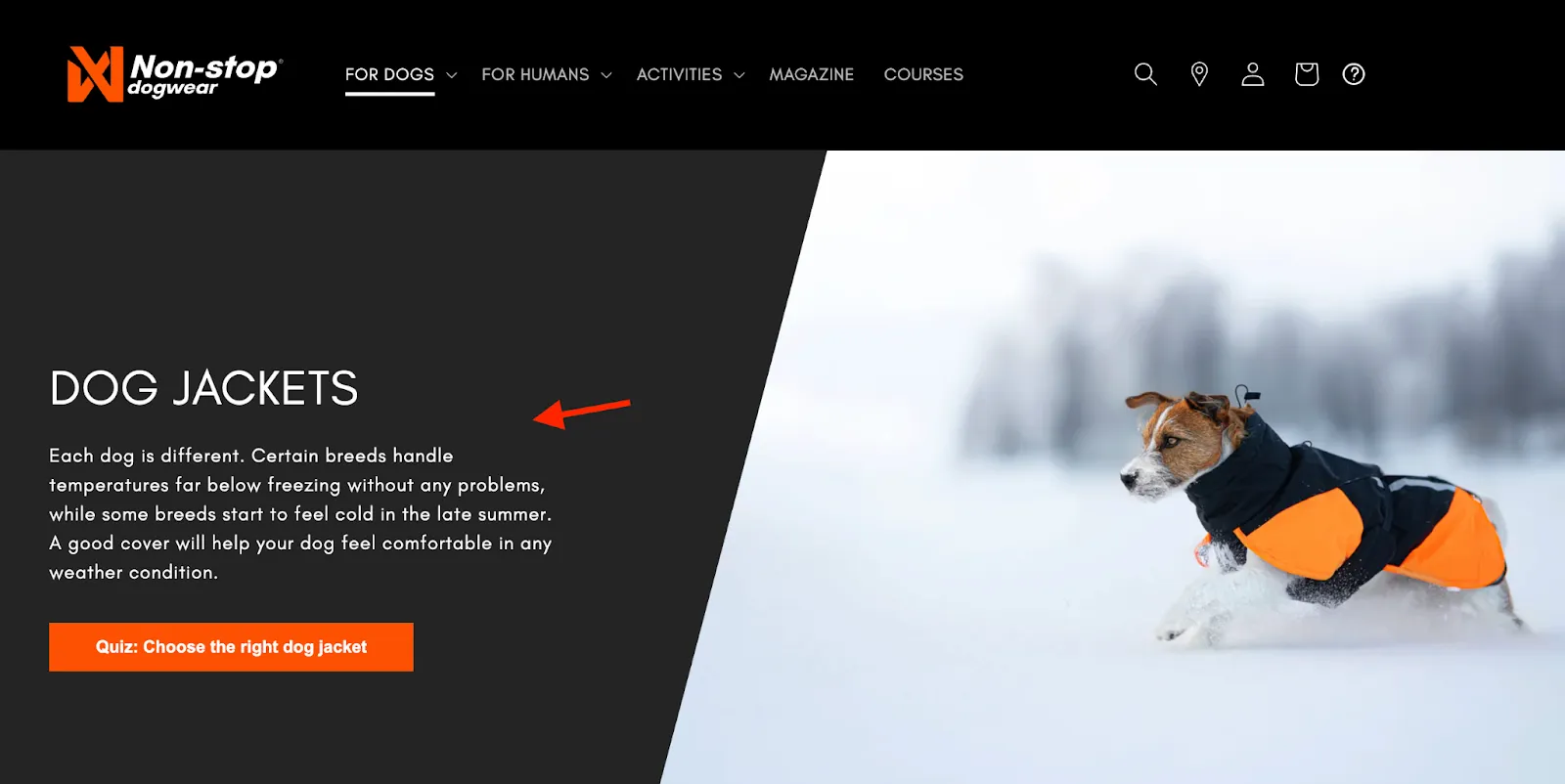
For example, the Non-Stop Dog Wear online shop, in its “Dog Jackets” category description, writes about how different dogs handle temperatures. And add a quiz to help choose correctly (customer engagement idea!).
#9: Events & Workshops
Host small activities for pet owners — online or in person. Training sessions, vet Q&As, pet meetups, care talks, or product demos. Pet care is personal. When owners learn or connect through your brand, you become part of their pet’s life, and customer acquisition costs less.
For example, Chewy opened an entire Chewy Bark Park and invited dog owners to visit and make a polaroid photos with their pets.

#10: Responsible Pet Brand Positioning
Show that your brand truly cares about animals and their well-being. Support shelters, promote adoption, use safe materials, and share responsible pet care.
Pet owners choose brands that reflect their values. When your brand visibly cares for animals, trust and loyalty grow.
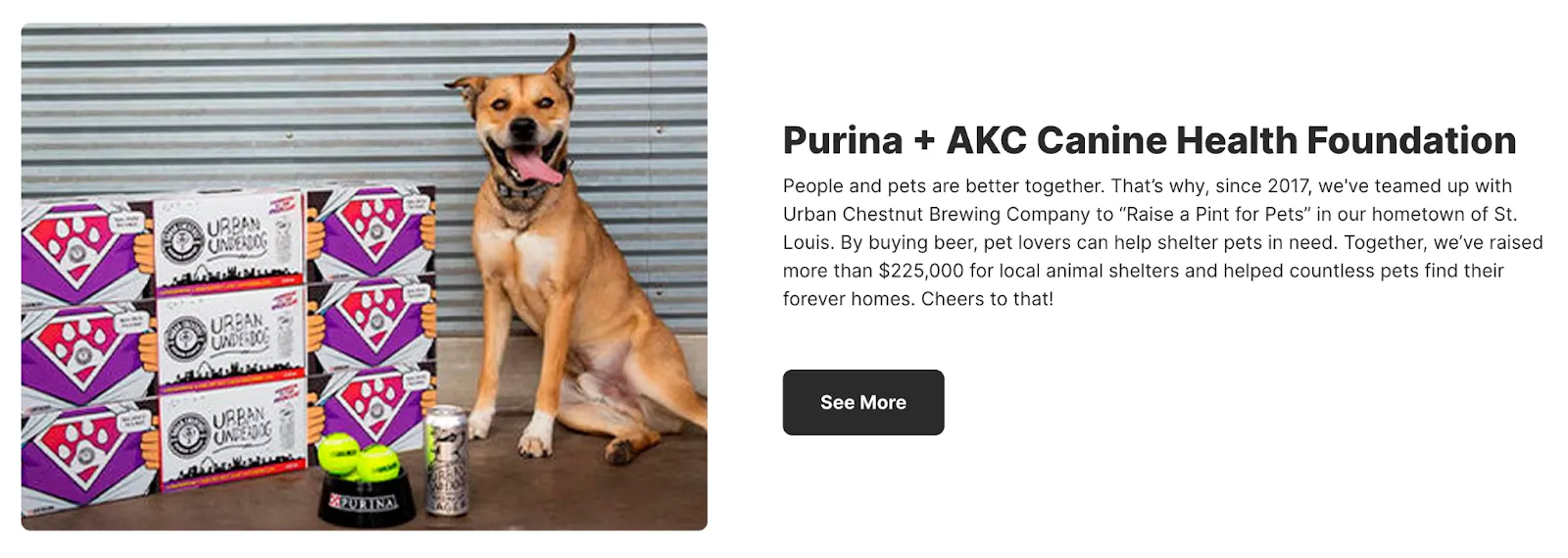
For example, Purina teamed up with Urban Chestnut Brewing Company to “Raise a Pint for Pets.” By buying beer, pet lovers can help shelter pets in need.
“You need to achieve a balance between empathy and technology. A simple formula is at work here: empathy creates desire and trust, while technology removes risk and provides the "right to buy." In practice, it works through the structure of the message:
-
Empathetic trigger: A recognizable situation or fear ("left the door open," "chased a squirrel," "ran away during a walk").
-
Technological response: "How exactly is this solved?" in simple language, without difficult or complex technical terms.
-
Confirmation: Social proof, transparency, reviews, demonstrations, "before and after," and happy ending cases are tools for building trust and reducing doubt.
Strategically, it is important not to make technology the main character. In strong campaigns, the hero is a person and their emotional needs, while technology is a reliable tool or assistant”.
Daria Markova, Strategist at Netpeak
Bonus Idea: Use Your Digital Marketing Analytics
Check whether your marketing actually brings customers and sales: website visitors, orders, and conversion rate (visits → sales). But not only that. I believe that besides these objective metrics, you should measure trust:
“It appears in repeat purchase rate (RPR) and customer lifetime value (CLTV) metrics: if people come back and spend more over time, your product and experience are working.
Another helpful metric is how many purchases it takes to form loyalty, so-called 'Magic number.' For example, after someone uses Uber twice, they’re very likely to keep using it forever, so the magic number for Uber is two. What is yours?
Together, these metrics show not just sales, but whether customers stay — which is key to sustainable growth.”
Pet owners are more loyal than most consumers: 70% stick with the same pet food brand if the pet tolerates it well. If you win their trust once, they will stay.

Real Marketing Campaigns Pets Would Approve (If They Had Thumbs)
Let’s move to the most exciting part — real-life case studies. Hope you’ll learn a thing or two.
CatsJoys — Search-Friendly Sales on Etsy
About the brand: CatsJoys is a family-run brand creating eco-friendly, fully handmade furniture and accessories for cats. Main sales channel: Etsy.

The challenge: They asked Netpeak to help with their Etsy optimization. Like many artisan brands, CatsJoys relied heavily on paid ads, while organic Etsy sales lagged. Their listings weren’t optimized for search, the keyword list was limited, and products simply weren’t showing up where cat parents were browsing.
Services: Etsy SEO, Etsy Store Advertising
Timeline: January 2024-February 2024
Our Strategy
-
Helping cat lovers actually find CatsJoys with Etsy SEO. We optimized 52 product listings, expanding keyword coverage from 27 to 522 tags to help items appear in more relevant Etsy searches. Listings were also localized into German, Dutch, and Spanish — adapting tone and phrasing to how pet owners search in each market while staying Etsy-algorithm friendly.
We refreshed product visuals and added simple graphics to highlight features and uses — making listings easier to scan and more appealing in crowded search results.
-
Turning Etsy Ads into steady growth. We restructured Etsy Ads to focus the budget on products and keywords that convert. Daily optimization removed weak listings and irrelevant tags, improving ROAS and reducing wasted spend. We also introduced light-touch promotions — coupons and short flash offers — to nudge hesitant shoppers without eroding brand value.
Results: CatsJoys moved from ad-dependent sales to healthier organic discovery: +29% organic revenue and +13% orders.
Petloc8 — GPS Tracking With Personality
About the brand: Petloc8 creates GPS trackers for pet owners who deeply care about their pets.

The challenge: They entered a category dominated by specs: battery life, accuracy, and waterproofing. So, they asked Netpeak to build a brand that would feel different and emotionally connect with pet owners.
Services: Brand Strategy, Marketing Strategy, Communication Strategy, Design Services, SMM
Timeline: December 2024-November 2025
Our Strategy
- Creating a brand strategy around understanding pets. We identified three pet-owner personality types — each driven by different fears and attachment styles. Petloc8 was positioned around those emotions. To reinforce belonging, we created playful brand artifacts — patches, pins, badges — turning customers into visible members of the Petloc8 community.
- From product to relationship (subscription model). Instead of a one-off device purchase, we designed a subscription ecosystem: personality test for pets, tailored tips and content, GPS alerts written in brand voice, and access to a pet-parent community.
- Mapping a multichannel strategy. We activated channels that pet owners already trust and enjoy: Instagram lifestyle content + influencer collabs, TikTok creator formats + challenges, podcast sponsorships, and bold OOH with QR-led discovery. Messaging leaned into humor and recognition (“that’s so my dog”), helping content spread while reducing media costs.
We built three influencer formats: performance posts, co-created content, and unboxings — balancing market reach, authenticity, and conversion.
-
Replacing corporate tech language with real pet-parent language. We defined a “Smart, Fun, Pet-Centric” tone — simple, emotionally fluent, and adaptable by channel.
Results: Petloc8 moved from feature parity to emotional differentiation — standing out in a crowded GPS tracker market.
Delickcious
About the brand: Delickcious is a premium food brand for cats and dogs — the kind pet parents use like a special treat.
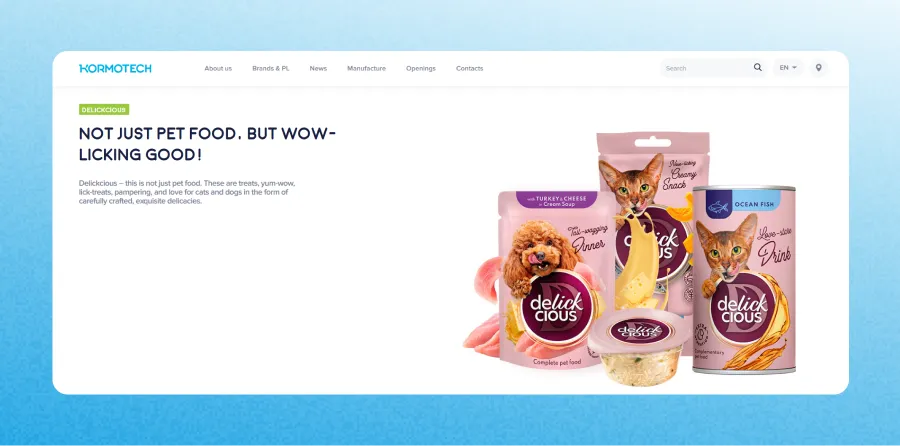
The challenge: Launching premium pet food means competing against familiar brands and established feeding habits. Delickcious asked Netpeak to build brand awareness fast and support rollout through digital channels.
Services: Marketing Strategy, Media Strategy
Timeline: December 2024-ongoing
Our Strategy
-
Launch: introducing the bowl newcomer. We focused on clear product storytelling — what it is, why it’s premium, and why pets love it. Product videos highlighted texture, ingredients, and feeding moments to create both appetite appeal and trust.
-
Season: showing up everywhere pet parents scroll. To build recognition during peak consumer demand, we activated a broad digital mix: YouTube + Display (DV360), Meta & TikTok ads, and premium video placements via local partners (Megogo, Vidzone, Kyivstar TV, Fozzy ecosystem).
-
Reminder: distribution meets demand. As distribution expanded, we shifted to reinforcement—keeping the brand visible wherever pet food decisions are made.
Results: Delickcious hit its planned sales targets by Q4 2025 (within its FY 2025-Q1 2026 cycle), and a new pet food player was born.
Final Takeaway: Empathy Above It All
Pet marketing is about understanding that sales come when your brand is not about some technical moments, but solving people’s real-life problems.
-
Do they love their doggie like a baby and want to buy him a treat?
-
Do their fish need some cheap food in bulk?
-
Where would they search for cat litter, and do they need a monthly subscription?
Your brand needs to know real-life situations to tell pet owners words that would reduce their stress and make them feel right in the moment.
FAQ
Should I launch separate marketing campaigns for each pet type?
Yes, if you serve multiple species, separate campaigns work better. Dog and cat owners respond to different messages, visuals, and needs. Even small adjustments in wording and imagery can improve relevance and conversion.
Can I focus on one pet type only? Will it be profitable?
Yes, many successful pet brands specialize in one species. Niche focus often builds stronger trust, expertise perception, and brand identity. Profitability depends more on product demand and positioning.
Is emotion important in pet marketing?
Yes — pet purchases are strongly emotional decisions. Owners buy what feels safe, caring, and beneficial for their pet. Brands that show empathy and real pet comfort build more trust and loyalty.
What is the biggest mistake pet businesses make when marketing pet care?
The biggest mistake is focusing only on product features instead of pet outcomes. Owners care about comfort, safety, and well-being — not just materials or specs. When marketing ignores emotion and reassurance, trust and conversion drop.

 0
0
 0
0
 0
0
 0
0
Related Articles
How to Track Brand Mentions in AI Search? Find Out Whether You Are in the Answer
Being mentioned in an AI search boosts visibility. Discover how to monitor your brand mentions in ChatGPT, Perplexity, or Gemini and follow our approach to higher mention frequency.
5 Questions to Expose an Amazon Agency That Can’t Handle Pet Brands
A field guide for CMOs who are tired of getting sold smoke and mirrors — and want an agency that actually understands the difference between a kibble and a kernel.
2026 E-commerce Scaling Guide: Boost Your Revenue Manyfold
Ready to scale your e-commerce business? This guide covers the strategies, systems, and metrics for growing revenue without increasing costs.