
The US and European pet industries are alike when it comes to market size and the growing trend of treating pets more like family. But they are different in how they sell products, use promo codes, and balance price with value.
If you’re a pet food or pet product brand planning international expansion, this article is for you.
When it comes to pet brand marketing, US and European differences affect where you should invest your marketing budget. A strategy that drives growth for a US pet brand may completely miss the mark in Germany, France, or Italy.
Consumer behavior, e-commerce platforms, regulations, and even the way people discover products vary much more than many brands expect.
Similarities in the American and European Pet Care
At first glance, the American and European pet care markets seem almost the same.
Huge Pet Markets
-
In the US, the pet care market was about $273 billion in 2025 and could grow to $497 billion by 2034. About 71% of households (94 million) have at least one pet.
-
In Europe, the market was valued at $81 billion in 2025 and could reach $127 billion by 2034. About 49% of households (139 million) own one or more pets.
To learn more about pet industry numbers, read our article How Concentrated Is the US Pet E-Commerce Market?
Emotional Connection with Pets
-
93% of dog owners say their dog’s health is as important or more important than their own.
-
65% of people would rather spend time with their pets than with their human partners.
-
90% say having a pet around helps them feel calm.
-
80% of people say their pets help them take breaks from daily tasks.
Similarities: In both America and Europe, many people have pets and are happy to spoil them because they see their pets as part of the family.
Read more about human-pet relationships here: Pet Care Marketing: Why Does Empathy Beat Tech Specs.
Differences in the American and European Pet Care
The way brands in the US and Europe reach, engage, and sell to them can be surprisingly different.
|
🇺🇸 United States |
🇪🇺 Europe |
|
|
Where people buy |
Amazon-led marketplace ecosystem. |
Fragmented ecosystem of marketplaces and local retailers. |
|
What builds trust |
Brand visibility and social proof. |
Certifications, transparency, and brand credibility. |
|
Shopping style |
Faster, promotion-driven purchase decisions. |
Longer research before purchase. |
|
Discounts |
Discounts and coupons effectively drive conversions. |
Excessive discounts can reduce brand value. |
|
What matters most |
Competitive pricing and convenience. |
Product quality, sustainability, and local origin. |
|
Winning strategy |
Be everywhere shoppers look. |
Earn trust before asking for the sale. |
Amazon Domination vs Fragmented Marketplaces
The US market works like a flywheel. It is a single, large market mostly dominated by Amazon, although some brands also sell through their own online stores. Amazon captures close to half of US pet e-commerce sales (Yahoo Finance, 2026).
In Europe, there are more niches and specialized marketplaces for the pet industry, such as Zooplus and Brekz.
If you’re interested in marketing your pet products on Amazon, read our in-depth articles.
-
How to Compete Against Big Pet Brands on Amazon Without Their Budget
- Pet Brands Must Win Amazon AI Discovery as Alexa Drives 6× More PDP Traffic
-
What Amazon's “Pet” Search Results Actually Tell You About Who's Winning
-
Amazon Is Selling a Cheaper Version of Your Product Under Its Own Brand — Now What?
Visibility vs Trust
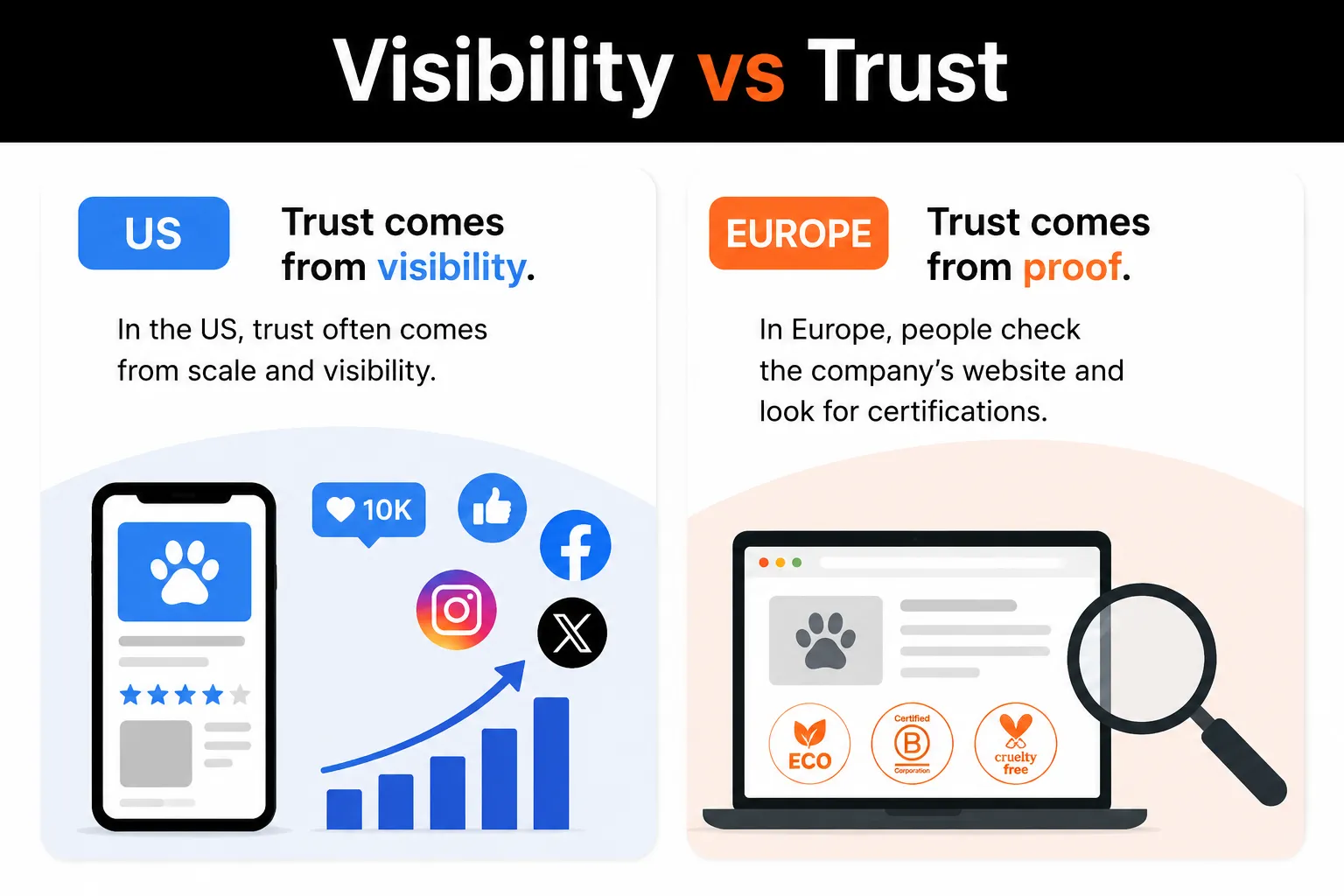
In the US, trust often comes from scale and visibility. If people talk about a brand and it appears on social networks, it signals trustworthiness.
In Europe, things are different. Being well-known does not automatically build trust. People may recognize a brand, but then they check the company’s website and look for certifications. If they do not find these, they are unlikely to buy.
Promo-Code Culture
In Europe, simply adding a promo code to a subscription is not always effective. Dropping the price can make people suspicious and wonder why the product is discounted if it is good.
In the US, discounts are common. Promo codes mean savings, and both the customer and the seller benefit.
Price vs. Value Focus
In the US, price is very important, and there is a strong culture of saving. If people can save money, they are more likely to buy.
In Europe, factors like:
-
moderation
-
local production
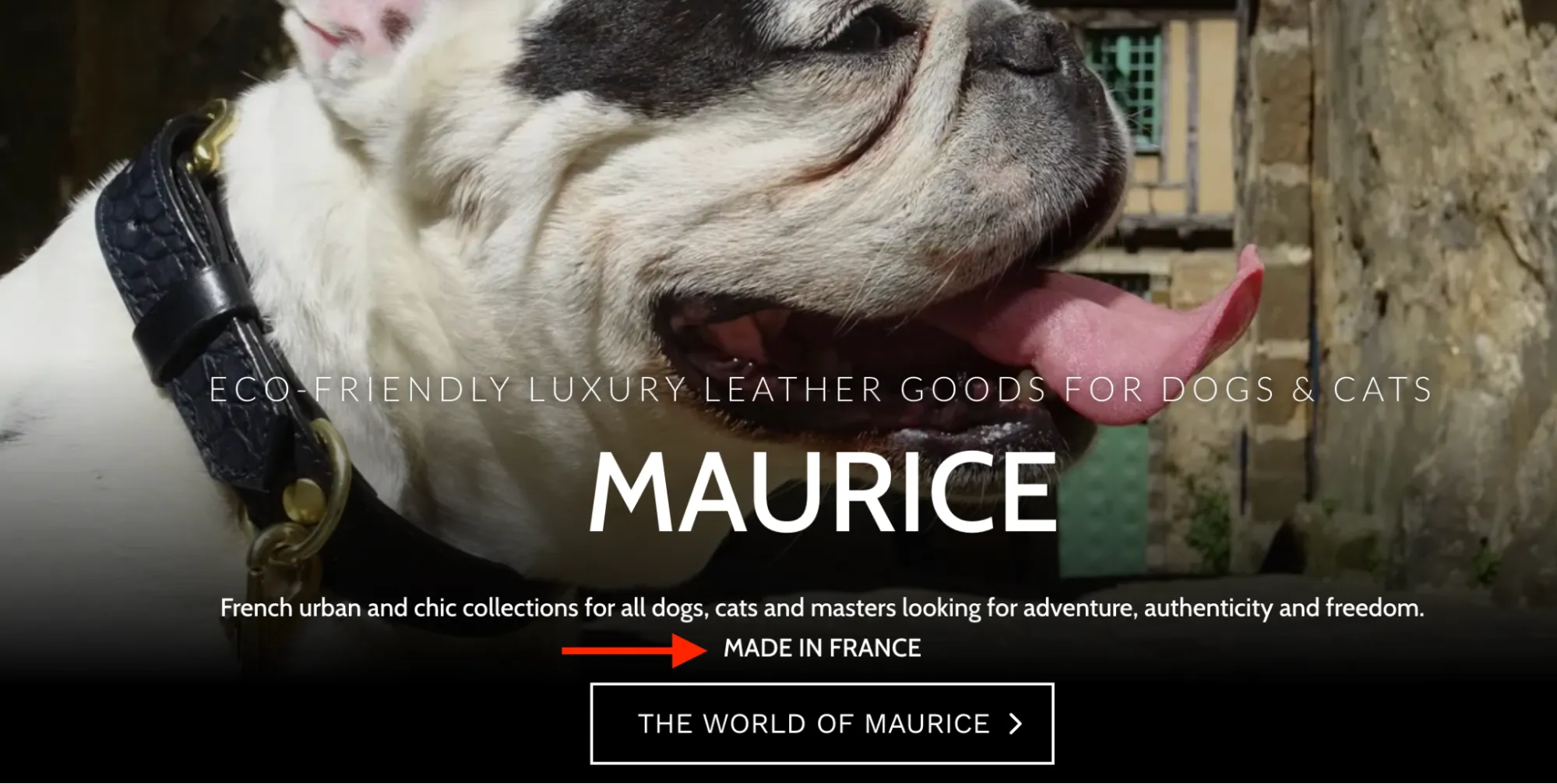
Often matter more. Labels such as “made in Europe,” “made in France,” or “made in Germany” are valued.
If you're more interested in actions than words, read about how knowing the market helped PetLoc8, a GPS tracking solution, enter the industry with an advantage.
FAQ
What is the biggest difference between pet care marketing in the US and Europe?
The US market is largely driven by Amazon, social proof, and promotions, while European consumers place more emphasis on trust, certifications, sustainability, and local retailers before making a purchase.
What do the US and European pet care markets have in common?
Pet owners on both continents increasingly treat pets like family, and pet companies have huge markets. Premium products, omnichannel shopping, and personalized marketing are becoming essential in both markets.
Which marketing channel delivers the best ROI for pet brands in 2026?
There's no single winner in pet advertising. The highest ROI usually comes from combining SEO, email marketing, Amazon optimization, and paid ads.
What are the biggest pet care trends in 2026?
Premium products, AI-powered search, subscriptions, sustainability, preventive pet health, and social commerce continue to shape the industry.
How should a pet care startup build its marketing strategy?
Start with a niche audience, build a trustworthy website, sell on the marketplaces your customers use, invest in SEO, collect emails early, and track performance before scaling.
Is Amazon more important than a brand's own website?
In the US, Amazon is often the primary sales channel. In Europe, a strong website is equally important because customers frequently research brands and verify certifications before buying.
Should pet brands focus more on acquiring or retaining customers?
Both matter, but retention is usually more profitable. Loyalty programs, subscriptions, email marketing, and personalized recommendations help increase repeat purchases while reducing customer acquisition costs.

 0
0
 0
0
 0
0
 0
0
Related Articles
Amazon's AI Now Builds Complete Looks on Product Pages. How Do Brands Make Sure the Bundle Is Theirs?
Amazon now uses AI to assemble complete, shoppable looks around a single product, and it fills those looks with whichever brands its model picks.
What Happens When Amazon Suppresses Your Listing? The New 2026 Rules
Under the new 2026 rules, Amazon warns you first and gives you a grace period to fix the issue.
Business Apps in the US: iOS vs. Android, August 2026
We’ve fetched data from the US App Store and Google Play to see what professionals, shoppers, and businesses are actually installing, and why the market leaders are winning right now.