
How to Compete Against Big Pet Brands on Amazon Without Their Budget
Small and mid-size pet brands can compete effectively against category giants by targeting long-tail keywords, building subscription velocity, and owning the customer story that a category giant is structurally too large to tell. The most important thing is to be creative and know your audience. If you play as big brands play, they will simply over-budget you.
Think of Amazon as a very large dog park. The big breeds — Purina, Hill's, Mars — arrive with matching leashes and a PR team. You arrive with a better treat and a clearer idea of which dog you're there for.
Budget is not the deciding factor. Precision is.
Why Big Pet Brands Are Not Untouchable on Amazon
Large brands compete for head-term keywords where cost-per-click runs high, and the battle is attrition. A challenger brand that avoids those terms entirely and dominates a narrower set of queries can generate a stronger return on ad spend with a fraction of the spend.
The US pet market reached $158 billion in 2025 and continues to grow (APPA, 2026). The largest brands command most of the offline shelf space.
On Amazon, however, the algorithm does not care about your distribution history at Petco. It cares about relevance, conversion rate, and review density — metrics a focused challenger brand can win.
According to Jungle Scout's 2024 State of the Amazon Seller report, 58% of Amazon sellers are profitable. One of the reasons why they cited niche product differentiation as their primary competitive lever. The giants cannot niche down. You can.
Five Tactics That Level the Playing Field
1. Win on Long-Tail Keywords, Not Category Head Terms
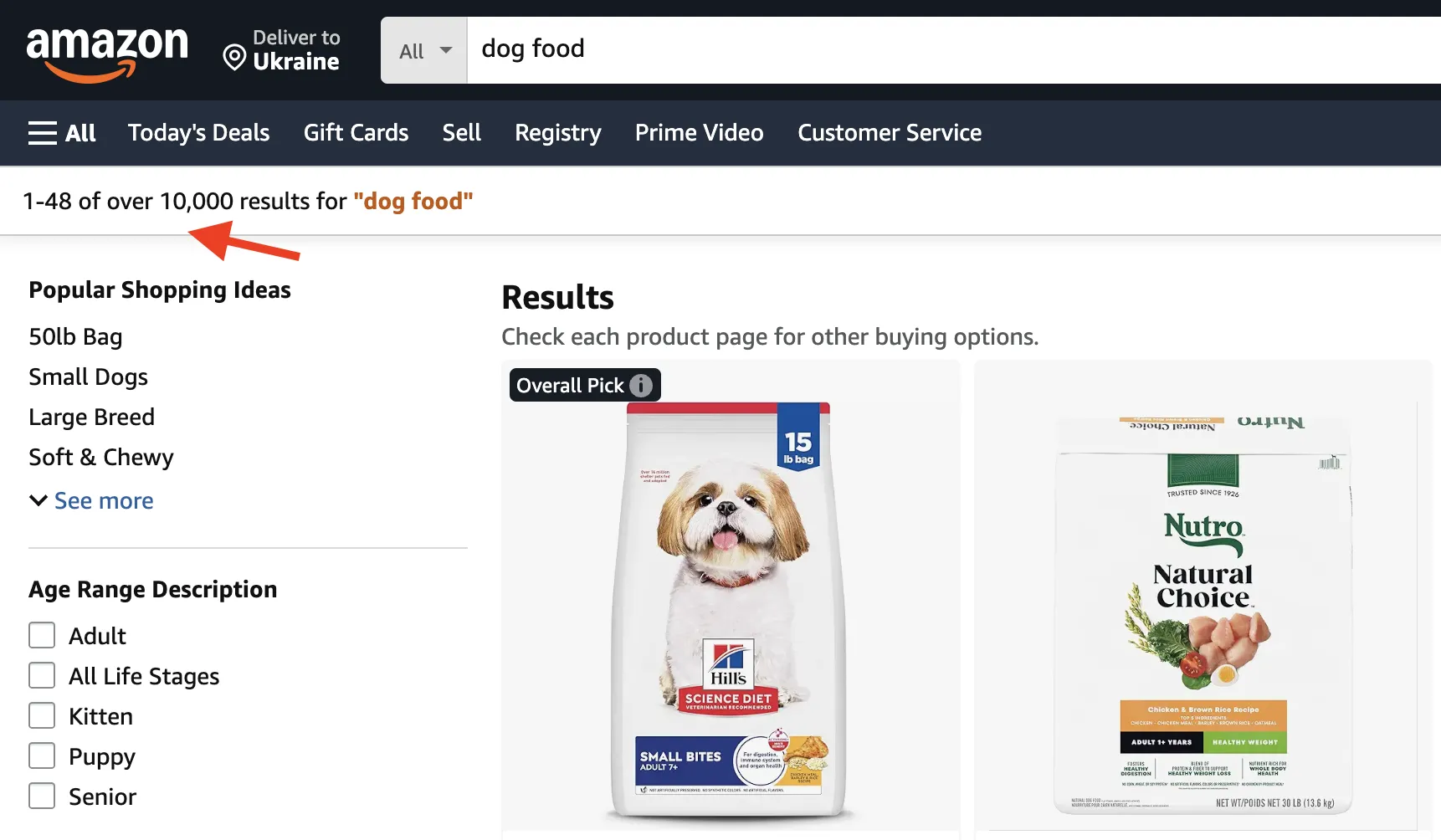
Amazon competition is fierce: a search for "dog food" returns 10,000+ results with high CPCs.
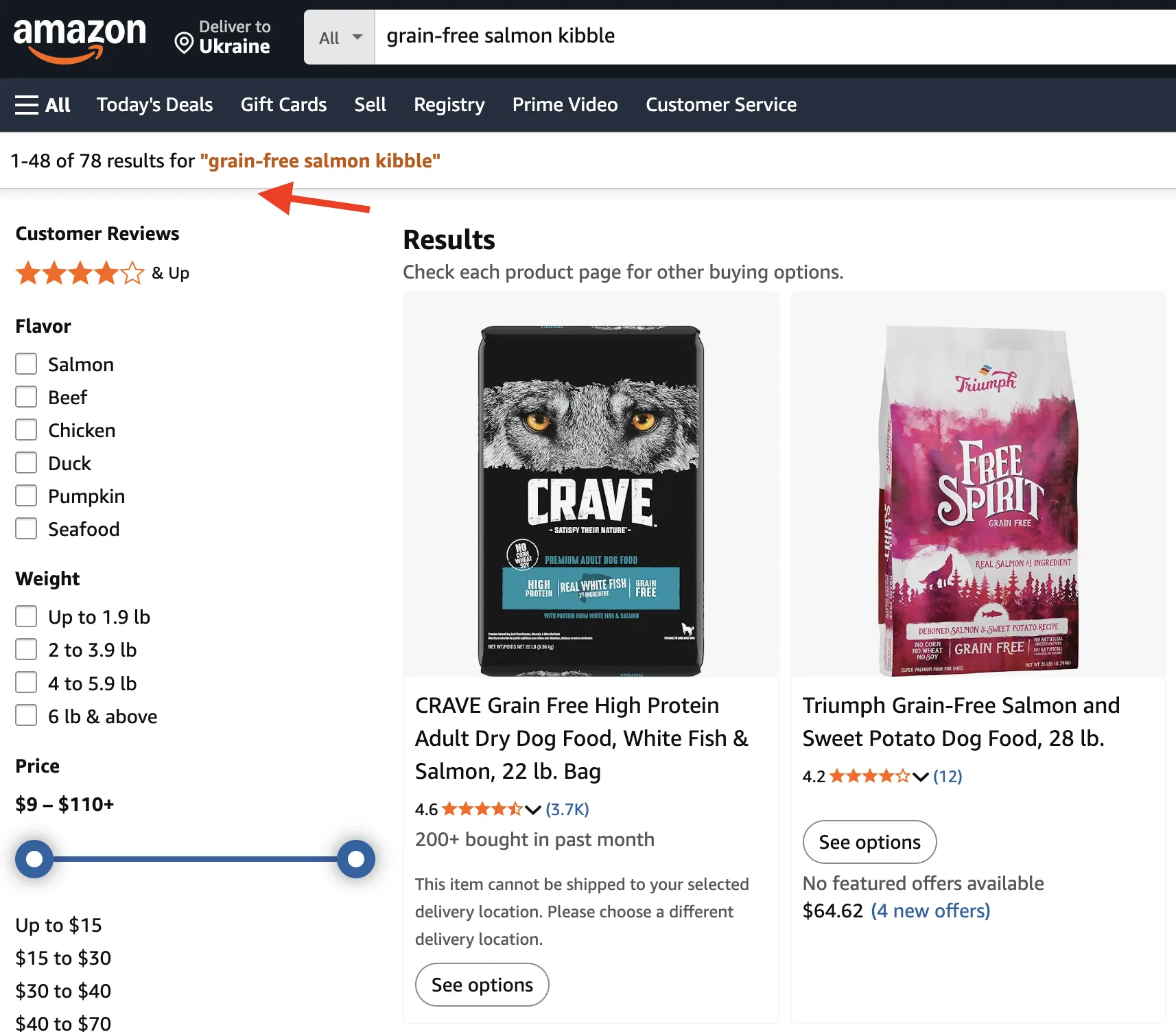
A search for "grain-free salmon kibble" returns far fewer competitors and converts at a higher rate because buyer intent is sharper. Voilà — that is your territory.
Use Helium 10 “Cerebro” or Jungle Scout “Keyword Scout” to find keywords where search volume sits between 500 and 5,000 monthly searches and where the top three listings have fewer than 200 reviews. Those are the gaps.
|
✅ Do |
❌ Don’t |
|
Map each gap to one listing. Do not spread ten keywords across one PDP and hope for the best. Optimize one listing per keyword cluster. The algorithm rewards focus. |
Don’t stuff multiple unrelated keywords into one listing, because your listing becomes… confusing. |
|
Optimize titles, bullets, and backend keywords around one clear theme. When everything says the same thing, it just clicks: Amazon quickly gets what your product is, and shoppers recognize it instantly. |
Don’t try to rank for everything at once, because it’ll blur your message |
|
Focus on conversion intent, not just traffic. Traffic without intent = wasted money. High-intent keywords convert better, often cost less, and rank faster (because of strong performance signals). |
Don’t assume more traffic automatically means more sales. Not all clicks are equal: some people are just browsing, other ready to buy |
If you want to get more insights about keywords, read our article about Amazon SEO with practical tips on how to show up at the top of the Amazon search.
2. Bid on Your Competitor's Brand Name
Then send buyers to a comparison landing page you control outside Amazon.
Run a small Google Shopping or Meta campaign targeting searches for "[Competitor Brand] dog food." Send that traffic not to your Amazon listing, but to a lightweight landing page that does an honest, specific product comparison: ingredients side by side, price per serving, subscription savings.
At the bottom: an Amazon buy button pointing to your listing.
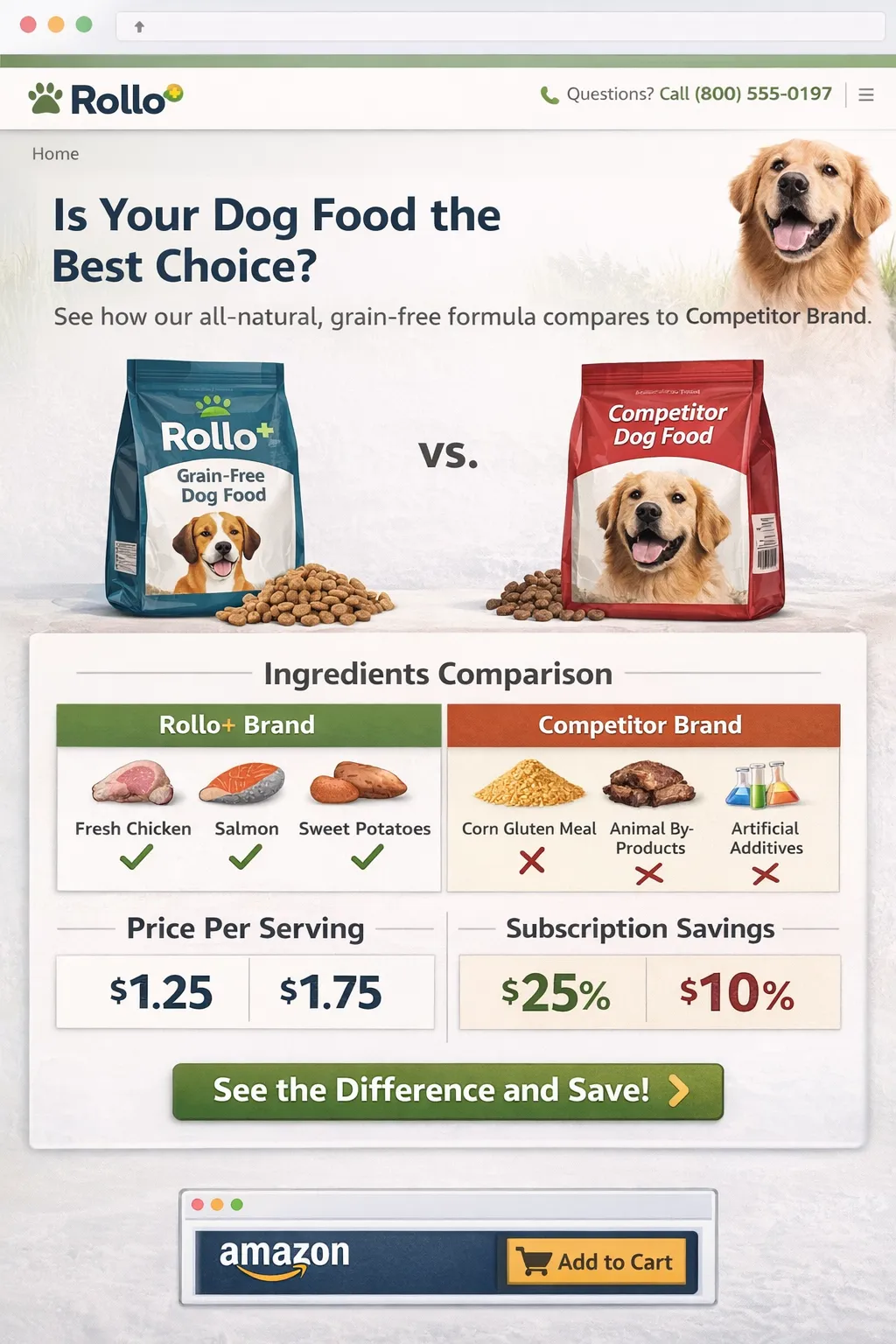
You are capturing buyers at the exact moment they are researching a category giant — before they ever reach Amazon. By the time they click through, they have already made the decision. Your Amazon listing converts cold traffic into warm. Your ACOS looks like magic.
The giants cannot retaliate cleanly because they spend on awareness. You spend on the moment someone is already halfway out the door of their brand.
3. Build Review Velocity Before You Spend on Ads
The single biggest structural disadvantage for a small brand on Amazon is review count. A listing with 23 reviews will lose a click to a listing with 2,300 reviews at the same price point, every time. Fix this before you scale advertising.
Enroll in Amazon Vine for new listings (available at no fee for sellers with fewer than 30 reviews on a new ASIN). Run a post-purchase email sequence via Amazon's “Request a Review” button. Set a target of 50 reviews before increasing ad spend meaningfully.
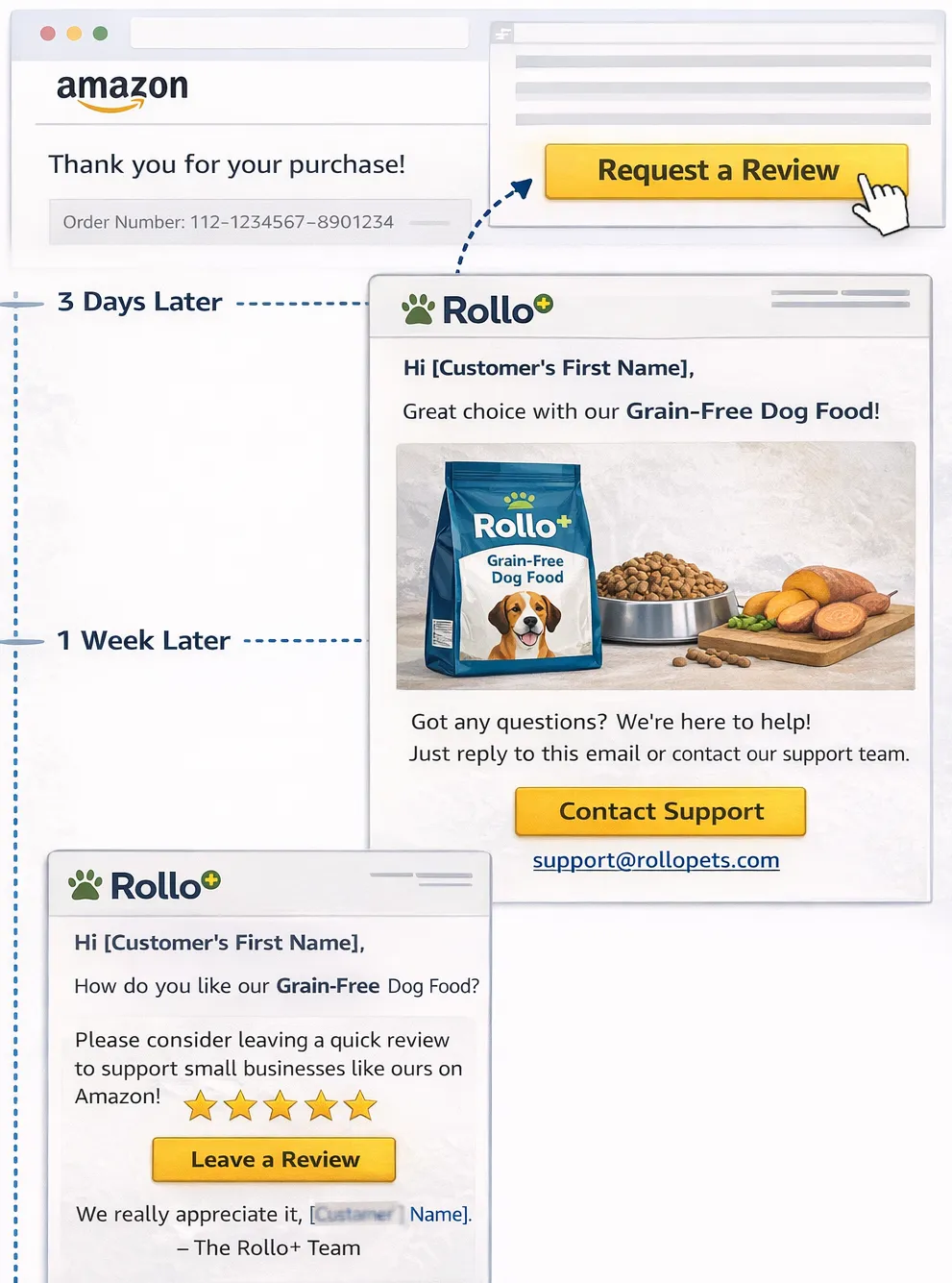
50+ reviews are often a trust threshold for shoppers. Ad spend on a poorly reviewed listing is budget set on fire — and not the good, campfire kind.
4. Target Competitor Listings With Sponsored Display — Strategically
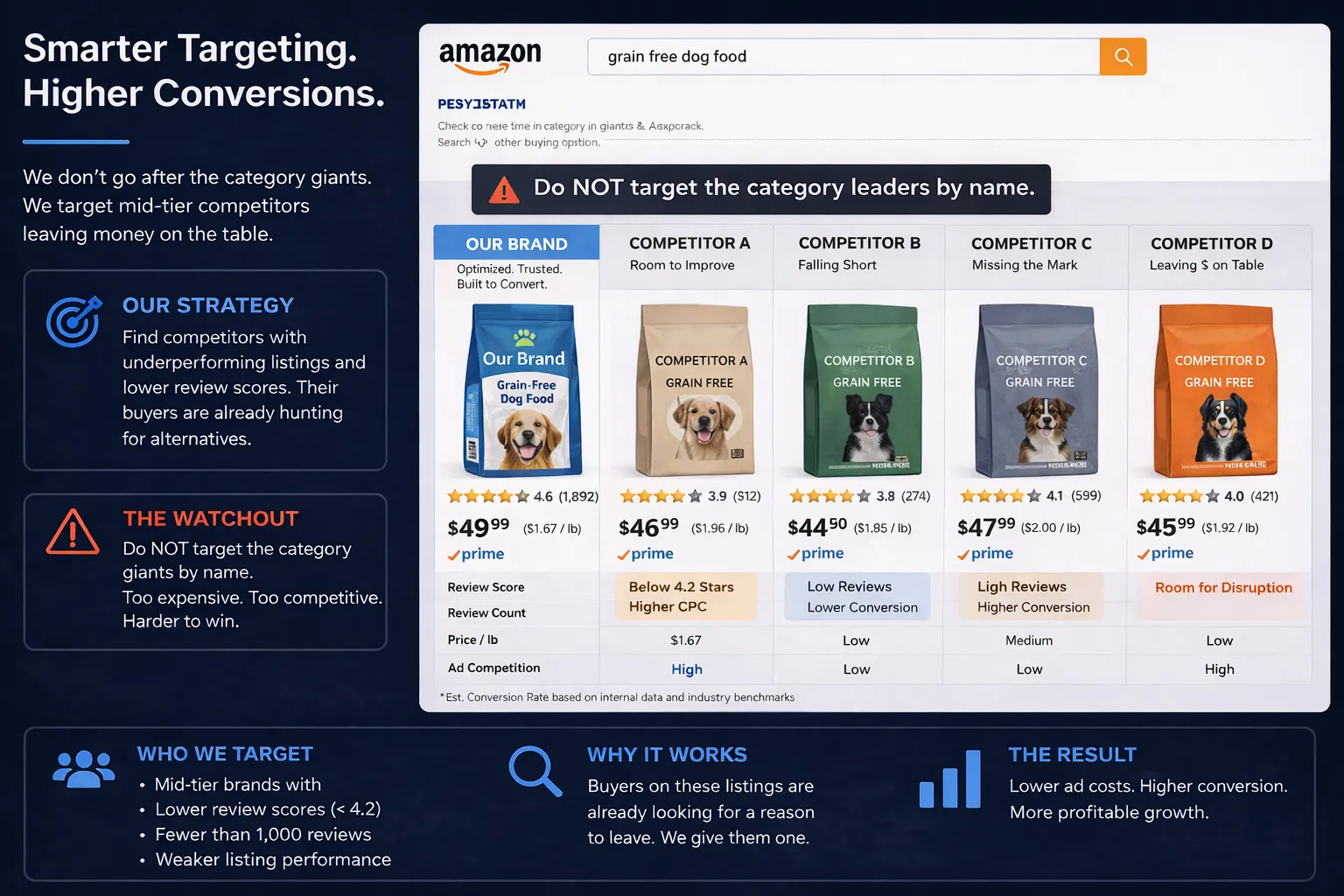
Sponsored Display allows you to serve Amazon PPC ads on competitor product detail pages. A $500 monthly Sponsored Display budget placed on the top ten listings of a direct competitor can intercept buyers at the exact moment they are reading reviews and still undecided.
The watchout: do not target the category giants by name. Target mid-tier competitors whose listings convert poorly or have review scores below 4.2. Buyers already on a 3.8-star listing are actively looking for a reason to leave.
5. Build A+ Content That Tells the Story Big Brands Cannot
A family-owned brand making functional chews for anxious dogs has a story. Mars Petcare does not. A+ Content is where that story converts.
Grand View Research projects the pet supplement market to reach $1.38 billion in the US by 2030, growing at a CAGR of 5.9%. The buyers in this category are not price-shopping. They are trust-shopping. A+ Content that shows your sourcing, your founder, your manufacturing standards, and your veterinary relationships does conversion work that no headline bid can replicate.
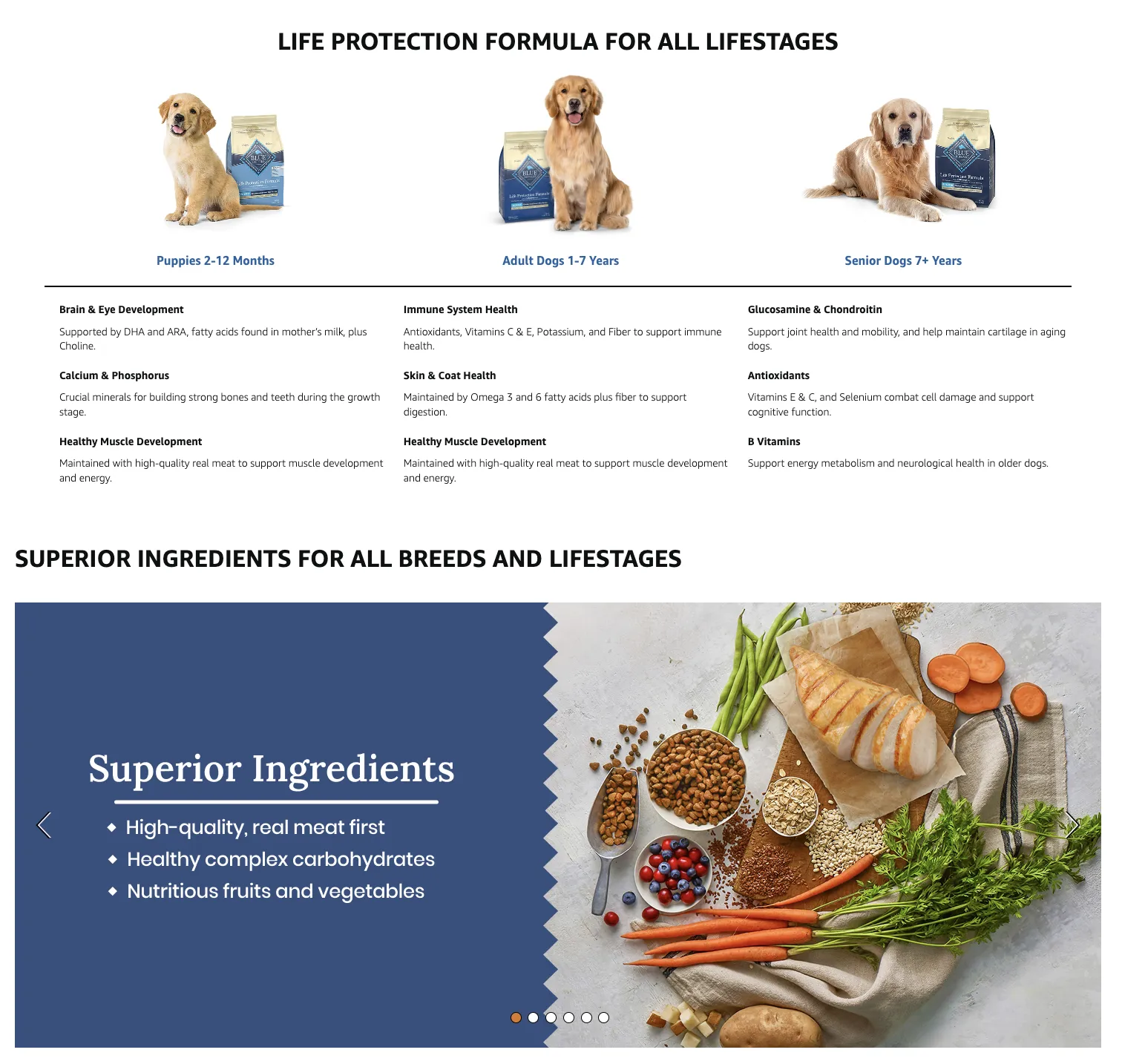
Keep modules tight: one hero image, one ingredient/benefit grid, one trust-builder (certifications, clinical references, vet endorsements). Three modules that answer the buyer's three questions beat seven modules that answer none of them.


Read our articles to get more Amazon deep dives:
- What Amazon's “Pet” Search Results Actually Tell You About Who's Winning (And It's Not Who You Think)
- Amazon Sharing Reviews Across Variations Update
- Why Your Amazon Pet Ads Are Getting More Expensive Every Quarter and How to Manage It
- Your US Pet Parcel to the EU Now Costs 3€ More. What Next?
- Amazon's 2026 Fee Changes: What Every Pet Brand Should Recalculate Before Q4
Tactics at a Glance: Budget vs. Impact
|
Tactic |
Budget Required |
Time to Impact |
Best For |
|
Niche keyword SEO |
Low |
4-8 weeks |
New brands with limited ad spend |
|
Competitor's brand name |
Low |
2-4 weeks |
Consumable pet products |
|
Review the velocity program |
Low-Medium |
4-10 weeks |
Any brand with < 50 reviews |
|
Targeted Sponsored Products (long-tail) |
Medium |
1-3 weeks |
Brands avoiding head-term bidding wars |
|
A+ Content / Brand Story |
Medium |
2-6 weeks |
Brands with a differentiating story |
Now you have all you need to sharpen your teeth and bite into the market share as a bulldog in the new toy.
Bonne chance — and may your Subscribe & Save conversion rate be ever in your favor!
FAQ
How much ad spend does a small pet brand need to compete on Amazon?
A focused challenger brand can run effective Sponsored Products campaigns with $1,500-$3,000 per month if that budget is allocated to long-tail keywords and competitor targeting rather than category head terms. The key variable is bid precision, not total spend.
Can a brand with fewer than 100 reviews rank on Amazon?
Yes. Review count affects conversion rate, not ranking eligibility. A listing can rank for long-tail keywords through strong keyword relevance, click-through rate, and early sales velocity. Ranking for head terms against established listings requires higher review density, typically 200 or more.
What is the fastest way to get Amazon reviews for a new pet product?
Enroll eligible ASINs in Amazon Vine and activate the Request a Review button for every order. Third-party review solicitation services that violate Amazon's Terms of Service carry account suspension risk and should be avoided.
Does Subscribe & Save work for all pet product categories?
Subscribe & Save performs best for consumables with a regular repurchase cycle: pet food, treats, supplements, litter, pads, and flea and tick preventatives. It is less effective for durable goods such as beds, crates, and toys, where repurchase frequency is low.
How do small pet brands measure Amazon performance against larger competitors?
Use Share of Voice metrics available through Helium 10 Market Tracker or Jungle Scout's market share tools. Track your keyword rank for a defined set of 20-40 target keywords weekly. Compare your listing's conversion rate against category averages using the Amazon Brand Analytics dashboard (available to brand-registered sellers).

 0
0
 0
0
 0
0
 0
0
Related Articles
Pet Food Product Patent: How to Protect Your Innovation
Patenting pet products requires careful consideration and proper application filing. With the 8 steps below, you will be able to submit your patent application and protect your invention.
How UGC and Algorithms Turn Content Into Viral Trends
Let’s break down how UGC, audience behavior, and recommendation algorithms work together to make something go viral. And how you can use this information to help your business grow.
Failed Market Expansion Examples: 7 Mistakes Your Business Should Avoid
Explore seven common failed market expansion examples, real-world lessons from global brands, and a practical checklist for entering new markets successfully.