
The $12,000 Amazon Launch Mistake: How to Avoid the Same Fate
A new toy brand launched on Amazon, but because of a few critical mistakes, its listing was blocked. Over 2,500 units were stuck in Amazon warehouses and were destroyed later. Overall, the company lost over $12,000.
Amazon creates a sense of control even before you have it. Logistics, warehousing, and delivery — it all seems set up by default. However, if you launch without understanding the rules, this model can quickly start working against you.
In this case study, we’ll learn from a real-life situation where a lack of strategy and expertise came with a painful price tag.
Period: December 2025 — present.
Region: United States.
Service: Amazon Marketing.
Project team: Yulia Tokareva, Marketplace Specialist; Anton Tochilo, Marketplace Promotion Team Lead; Boris Sudos, Client Project Manager.
Our Partner
They are a new toy brand entering the US market. The company launched on Amazon and uses the FBA model, where Amazon takes care of storage, shipping, and order fulfillment.
The Situation on Day One
The project had real potential and a solid budget for production and logistics. But they handed off the Amazon launch to a third-party contractor — without a clear strategy or deep marketplace know-how.
Because of a few critical missteps, Amazon flagged the activity as a rules violation and blocked the listing. As a result, over 2,500 units ended up stuck in warehouses with no way to sell or move them.
Since the products weren’t selling, Amazon started charging storage and handling fees automatically. On top of that, the accountthe account was set to automatically dispose of inventory — meaning unsold items after 90 days could be destroyed instead of returned. That made the financial risk even higher.
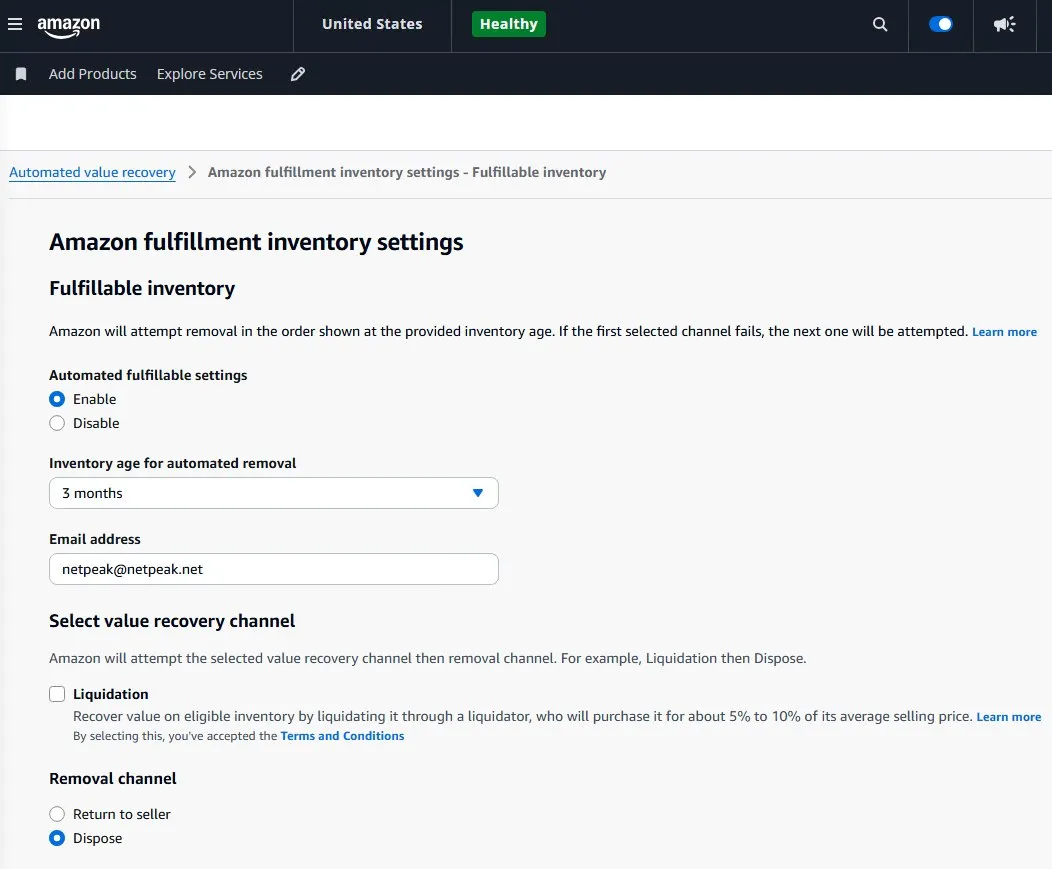
By the time they reached out to Netpeak, the business was in crisis:
-
The products were sitting in Amazon’s warehouses
-
There were no sales
-
The listing had been blocked due to category policy violations
-
The account was accumulating charges and debts
Read our article if you want to know more about Amazon FBA’s costs and hidden fees.
The Goals We Had to Hit
-
Stop further financial losses.
-
Save as much inventory as possible.
-
Regain control of the account.
-
Restructure the sales launch, following Amazon’s rules to avoid future suspensions.
The Recovery Strategy
Instead of sending multiple appeals to Amazon, we focused on fixing the root of the problem — building a systematic solution. Here is what we did.
Step 1: Regained Account Control
First, we ran a full audit of the seller’s Amazon account to understand its current state and identify the root causes of the issues.
We found that the account had been deactivated due to unpaid invoices, and all listings were removed. Sales stopped completely, while storage and handling fees for the inventory continued to accrue.
As part of the audit, we:
-
Checked the account status and reasons for deactivation
-
Analyzed financial charges and outstanding balances
-
Identified the reasons for the removal of listings in detail, specifically violations of platform rules in the children’s toys category
Thanks to that, we restored access to the account and found out the mistakes that led to the suspension and loss of $12,000. And we got a clear starting point for managing the situation and planning a safe relaunch.
Step 2: Financial and Operational Audit
During our analysis, we found that Amazon had started charging significant fees for product disposal. All because over 90 days had passed without sales after the listing was suspended.
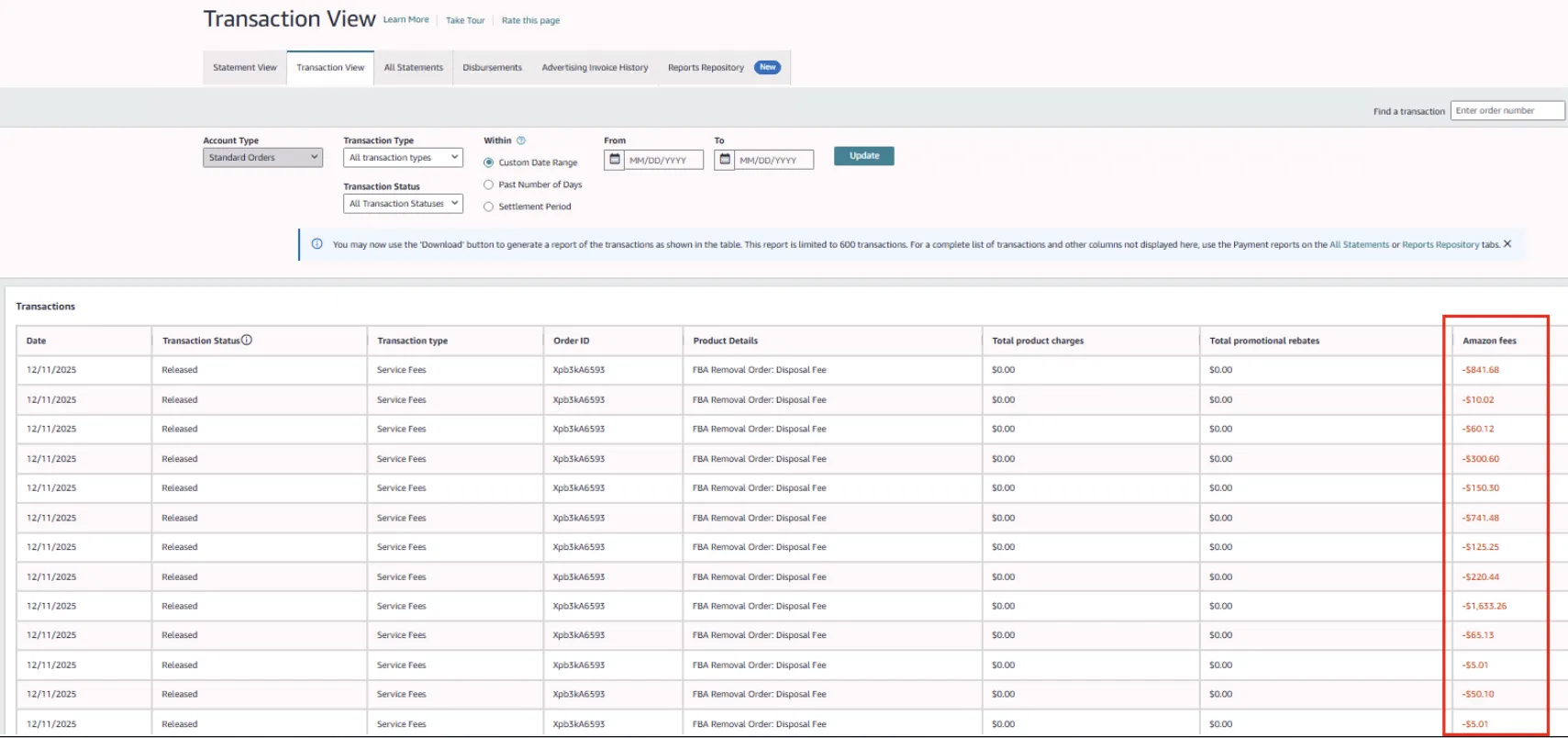
Amazon automatically charges disposal fees to the partner’s account
The situation was serious:
-
2,435 units of inventory had already been destroyed
-
Another 347 units were in the process of being disposed of
-
Total financial losses, including Amazon fees, exceeded $12,000
Step 3: Attempt to Stop Disposal
We contacted Amazon Support and requested the cancellation of the second disposal order. However, they responded that the process was triggered automatically and they can’t stop it manually.
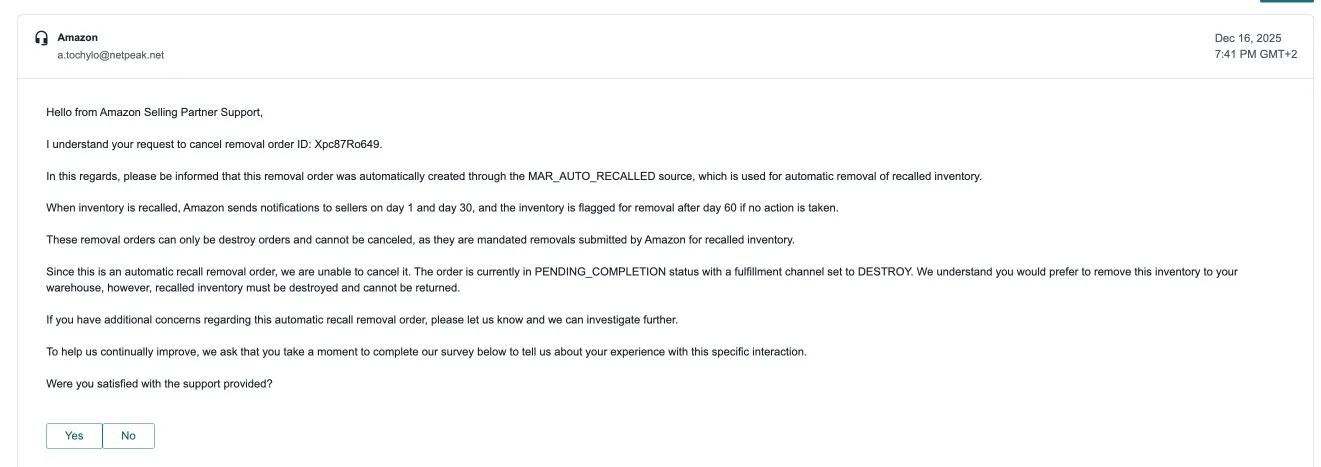
Amazon Support's official response confirmed that the process can’t be reversed
This stage clearly highlighted a key risk for the business: once disposal begins, Amazon leaves no room for intervention; the products are lost with no possibility of recovery.
“Amazon does not forgive mistakes at the beginning. This cautionary tale shows that launching without strategy, control, and expertise can stop even a strong product before it makes its first sale.”
Anton Tochilo, Marketplace Promotion Team Lead at Netpeak
Step 4: Preparing for a Safe Restart
At the same time as our crisis response measures, we reworked our approach to relaunching sales:
-
We initiated the Amazon brand registry process
-
Started building new listings in line with the platform’s rules and safety requirements
-
Prepared a plan to restock Amazon without risking product suspensions
Read more about how we relaunched the store after mass product suspensions on Amazon.
What We Achieved
This case shows that an Amazon launch can stall before making a single sale if the platform’s requirements are overlooked.
As a result of our work, we:
-
Restored the account’s active status
-
Stopped the accumulation of debt
-
Provided the partner with a clear understanding of the extent and reasons for the losses
-
Transformed the project from a chaotic state into a managed process
-
Laid the foundation for a safe and proper relaunch of sales
The Amazon “pet” search results look normal — until you analyze who is actually taking the revenue. Read our article to uncover the surprising pattern.
Lessons Learned: What Not to Do When Launching on Amazon
Launching on Amazon requires careful attention at every step. Some decisions are hard (or impossible!) to reverse once you start, so it’s important to think through the key risks in advance.
-
Don’t overlook Amazon’s requirements — especially in regulated categories like children’s toys or pet products. Mistakes here can quickly lead to suspensions.
-
Avoid sending products to FBA until listings and documents are fully verified. If something goes wrong, inventory can turn into ongoing costs.
-
Don’t rely on support to fix everything. Many processes are automated and can’t be reversed.
-
Keep a close eye on FBA settings, as they directly affect your financial risk.
-
Act quickly if issues appear — so delays can make problems much harder (or impossible) to stop.
Where We Go From Here
Our team is continuing to work on relaunching sales. We’re preparing SEO-friendly listings that meet Amazon’s requirements and planning a phased promotional campaign through Amazon Ads.
These steps will help us safely restart sales and build a more predictable path for growth.
FAQ
Why did the company lose $12,000 on the Amazon launch?
They handed off the Amazon launch to a third-party contractor without a clear strategy, their account had been deactivated due to unpaid invoices, and it had a disposal setting enabled — meaning unsold items after 90 days could be destroyed instead of returned.
What mistakes should I avoid when launching on Amazon?
Don’t overlook Amazon’s requirements; mistakes can quickly lead to account suspensions. Don't send products to FBA until your listings and documents are fully verified, since issues can turn your inventory into an ongoing cost.
Don’t rely on support to resolve every issue — many processes are automated and difficult to reverse.
What risks does the FBA model carry for new sellers?
If your listing is blocked or underperforms, your inventory can sit in Amazon warehouses while storage and handling fees continue to grow.
There’s also limited control — some settings (like disposal or returns) can trigger automatic processes that are hard to reverse.
Can you recover a suspended Amazon account?
Yes, in many cases, a suspended Amazon account can be recovered. You’ll usually need to identify the root cause (policy violation, unpaid fees, document issues) and submit a plan to fix and prevent the problem.
That said, recovery isn’t guaranteed. Some issues — especially repeated violations or unresolved financial problems — can lead to permanent suspension.
What happens to inventory if your listing is blocked?
If your listing is blocked, your inventory usually stays in Amazon’s warehouses — but you can’t sell it. Meanwhile, storage and handling fees continue to accumulate.
Depending on your account settings, Amazon may also initiate returns or disposal after a certain period. If no action is taken, this can lead to additional costs or even the loss of your inventory altogether.

 0
0
 0
0
 0
0
 0
0
Related Articles
Business Apps in the US: iOS vs. Android, September 2026
We searched for US App Store and Google Play data to see what business apps professionals, shoppers, and investors actually installed in September.
Pet Food Product Patent: How to Protect Your Innovation
Patenting pet products requires careful consideration and proper application filing. With the 8 steps below, you will be able to submit your patent application and protect your invention.
Digital Marketing for SMBs: How to Grow a Small Business Online
Small or mid-sized businesses compete for the same customers as brands with marketing departments ten times their size, on a fraction of the budget. You can't outspend them, so you have to outsmart them and grow your business deliberately.