
Amazon Is Selling a Cheaper Version of Your Product Under Its Own Brand — Now What?
If Amazon just launched a private-label version of the product you spent two years developing, you are not imagining things, and you are not overreacting. Half of all third-party sellers on Amazon report that the platform sells products competing directly with theirs (Jungle Scout, 2025).
The good news? Amazon’s private labels are not invincible. In Q1 2024, Amazon actually lost 6% of its private-label market share year over year (PMG, 2024).
The bad news? If you sit still and hope the algorithm remembers you fondly, you will get flattened like a chew toy under a Great Dane.
This article is your plan de bataille — a practical guide for CMOs and SMB owners who refuse to roll over (pun intended) when Amazon copies their product and prices it 20% lower.
How Amazon’s Private-Label Machine Actually Works
Amazon operates in a dual role: marketplace host and competing seller. It spots high-demand, low-differentiation products through its own sales data, then launches a version under brands like Amazon Basics, Amazon Essentials, or Wag.
I know it because that’s exactly what I did working at Amazon EU HQ in Paris.
Amazon stated in 2019 that it had 158,000 private-brand products across 45 brands (CNBC, 2023). In four years, that number was streamlined to fewer than 20 house brands — but the surviving ones are the sharpest knives in the drawer.
The pattern is predictable. Amazon identifies a category in which:
-
branded products carry healthy margins
-
customer reviews cluster around 3.5-4.5 stars (good enough but not untouchable)
-
product differentiation is thin.
It then launches at a 15-25% lower price point, often with Prime-exclusive placement.
If your product fits that profile, you are a target.
Specifically in pet supplies, Amazon Basics had nine products on the bestseller list in January 2026, with an average price of $12.06 and an average rating of 4.5 stars across 835,000 reviews (MetricsCart, 2026). That is a hard wall of social proof to climb over.
Why Panic Is the Wrong First Move
Before you start drafting your farewell letter to Amazon Seller Central, consider this: Amazon’s private labels are not winning everywhere. In Q1 2024, Amazon lost 6% of its private-label market share compared to the previous year, with declines in office supplies and home & kitchen (PMG, 2024).
Categories like health, baby, and cosmetics held steady or grew — but the idea that Amazon’s house brands are an unstoppable force is a myth.
Amazon excels at commodities. It struggles with brands that have genuine stories, loyal communities, and product features that cannot be cloned by reading a spec sheet. Your job is to make sure you are in the second group.
Think of it this way: nobody buys Amazon Basics because they love the brand. They buy it because they do not care enough about the category to choose anything else. Your entire strategy should be aimed at making people care.
Beauty brands are often the first to adapt to changes in marketplaces and social commerce. See what their latest moves can teach pet brands.
Seven Moves to Protect Your Brand Against Amazon’s Private Labels
1. Differentiate on What Amazon Cannot Copy
Amazon’s private-label products are manufactured to a formula: adequate quality, competitive price, minimal brand story.
They cannot replicate a proprietary ingredient, a patented design, a breed-specific formulation, or a supply chain story that resonates with buyers who research before purchasing.
If your product can be described entirely by its spec sheet, you have a differentiation problem that existed before Amazon showed up.
2. Win the Listing, Not Just the Price
Amazon Basics listings are functional. They have decent images, clean bullet points, and that is about it. Your A+ Content, your brand story module, your comparison charts, and your video content are all weapons Amazon’s private labels rarely deploy at the same level.
A Premium A+ page with a strong brand narrative can increase sales up to 20% (Amazon internal benchmarks). When you are competing against a cheaper alternative, every percentage point of conversion is survival money.
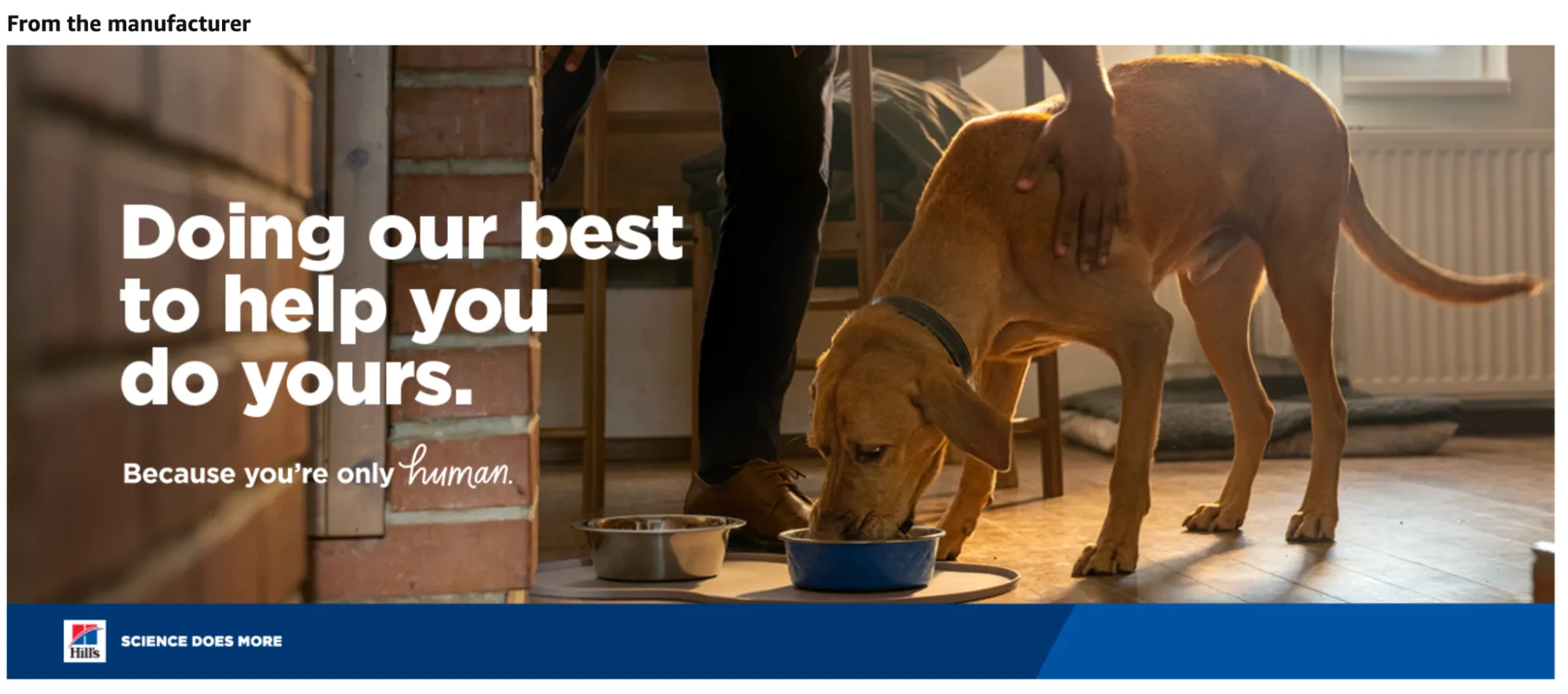
Think of your listing as a small store window on the Champs-Élysées. Amazon Basics is the vending machine down the alley. Make the window worth stopping for.
3. Build a Review Fortress
Amazon’s algorithm feeds on review volume and velocity. Amazon Basics pet products average has hundreds of thousands of reviews per listing cluster.
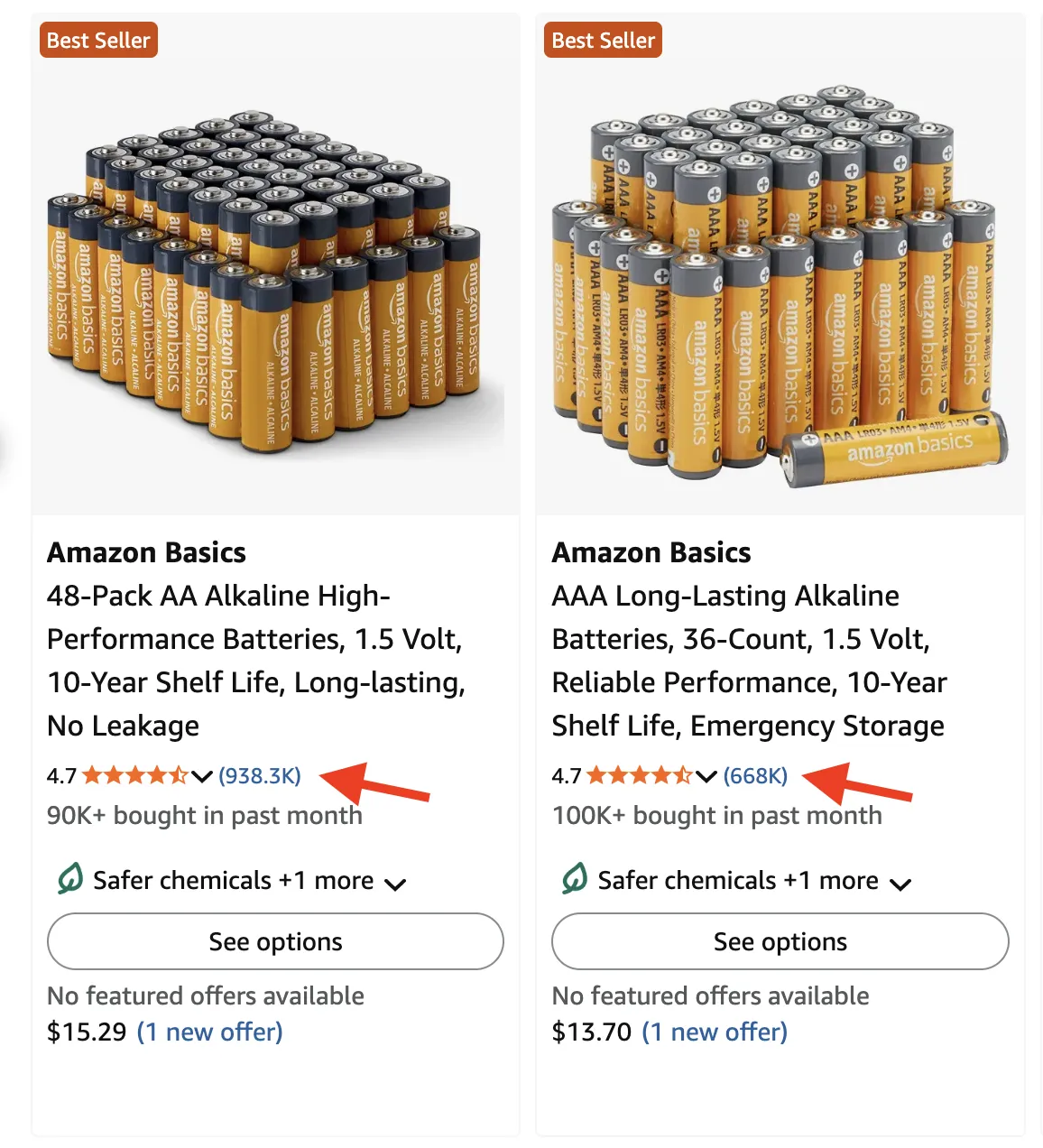
You will not outrun that number. But you can outrun the quality and specificity of your reviews.
Enroll in Vine. Use the “Request a Review” button religiously. Design packaging inserts that direct buyers to leave feedback — without violating Amazon’s TOS, obviously, because getting suspended would really ruin the mood.
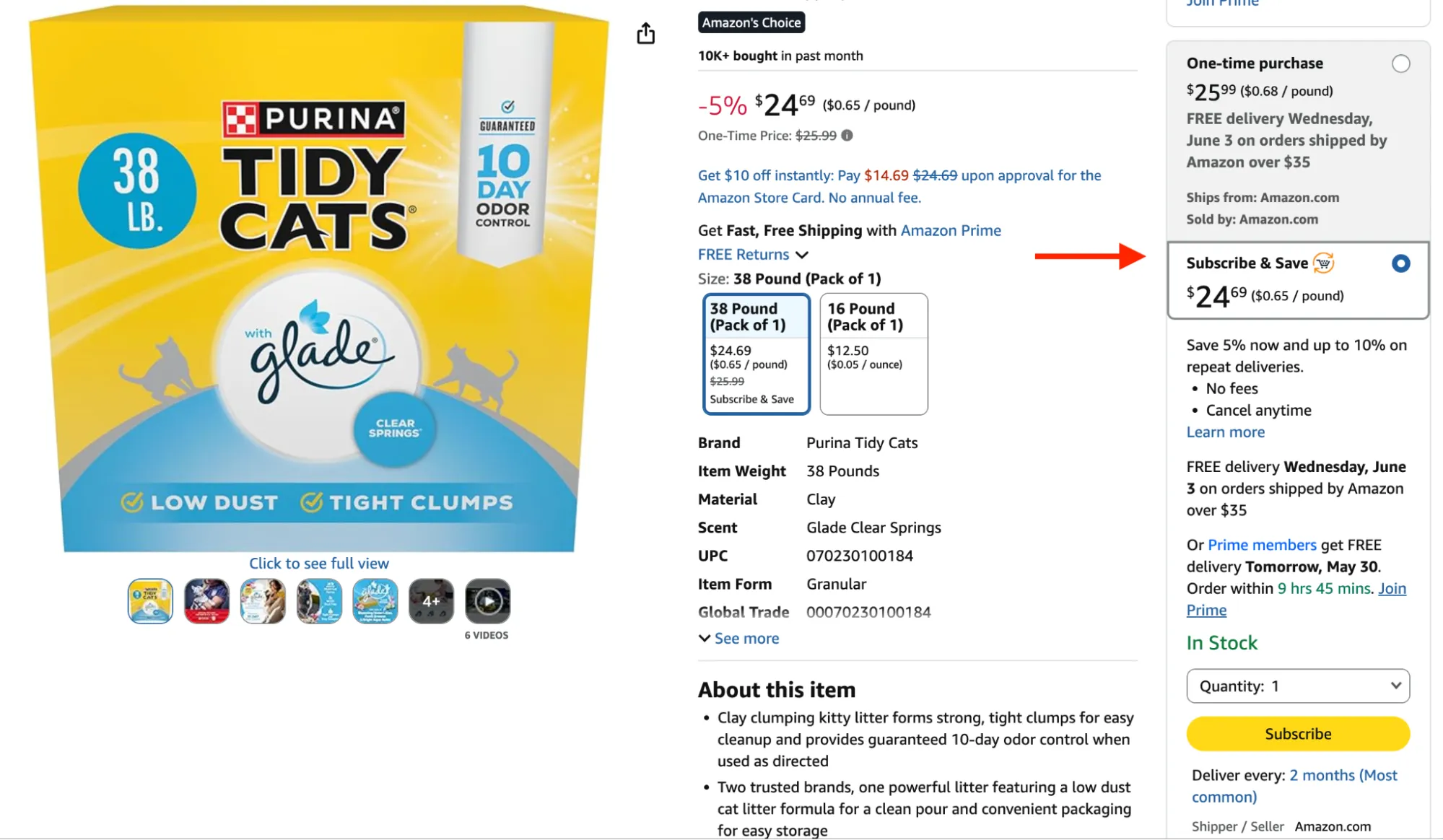
4. Use Subscribe & Save as a Loyalty Lock
Once a customer subscribes, they stop comparison-shopping. Subscribe & Save is the closest thing to a loyalty program Amazon will give you, and it makes your revenue predictable while keeping Amazon’s private label off your customers’ radar.
If you sell consumables — food, supplements, grooming supplies, cleaning products, coffee, vitamins — and you are not aggressively pushing S&S enrollment, you are leaving the door wide open.
5. Diversify Your Sales Channels
If 100% of your revenue flows through Amazon, you are not running a business — you are renting one. Amazon’s private labels can only hurt you on Amazon. They have zero presence on your DTC site, on Chewy, on TikTok Shop, on Walmart.com, or at your local independent retailer.
Channel diversification is not about leaving Amazon. It is about making sure Amazon cannot leave you.
Treat Amazon like your largest wholesale account: important, profitable, but never your only one. The French have a saying — ne mets pas tous tes œufs dans le même panier. Don’t put all your eggs in one basket. Cliché? Yes. Wrong? Never.
TikTok Shop went from a dance app side quest to a serious sales channel. Here's what pet brands should know.
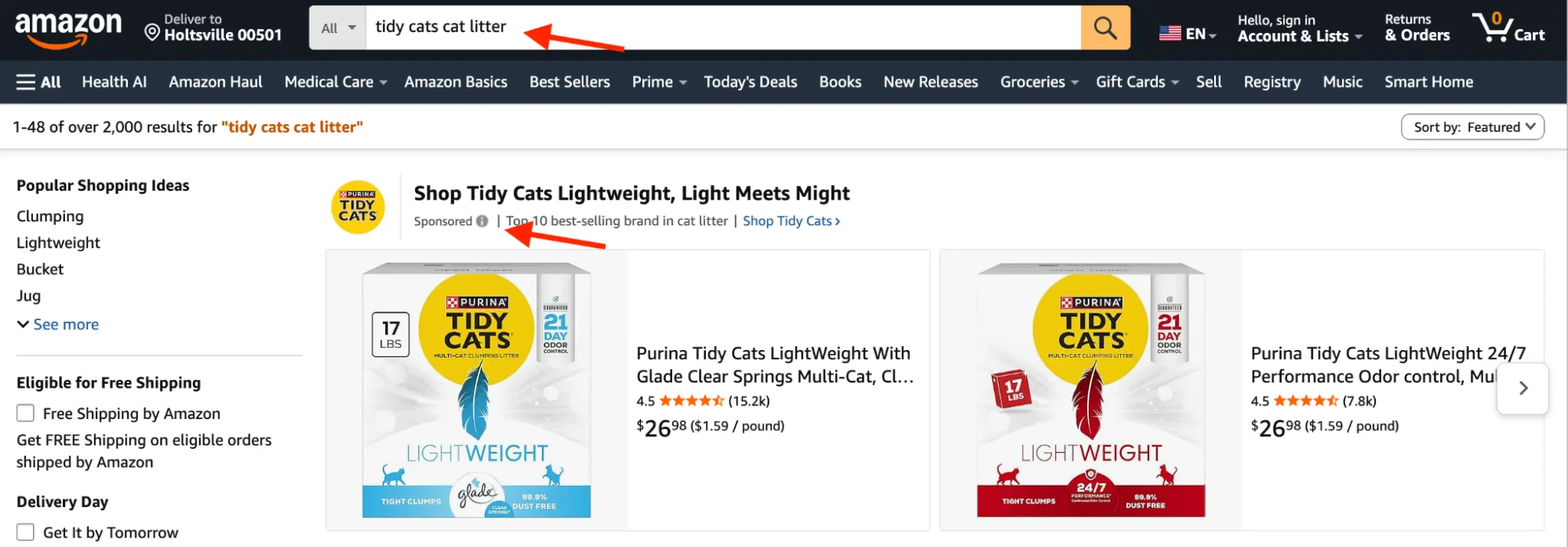
6. Defend Your Advertising Real Estate
Amazon’s private labels benefit from organic placement advantages, but they still have to fight for Sponsored Product and Sponsored Brand positions like everyone else.
-
Run defensive campaigns on your own branded keywords.
-
Run Sponsored Brand Video to dominate above-the-fold visibility.
-
Use Amazon DSP to retarget shoppers who viewed your product but did not convert.
Advertising costs are rising — CPC has climbed year over year in competitive categories (HBR, 2024) — but going dark on ads when a private-label competitor enters your space is like canceling your home insurance during hurricane season.
Read our articles to get more Amazon deep dives:
7. Register Your Brand and Protect Your IP
If you are not enrolled in Amazon Brand Registry, you are fighting with both hands tied behind your back. Brand Registry unlocks A+ Content, Sponsored Brands, Brand Analytics, and critical tools for reporting counterfeiters and listing hijackers.
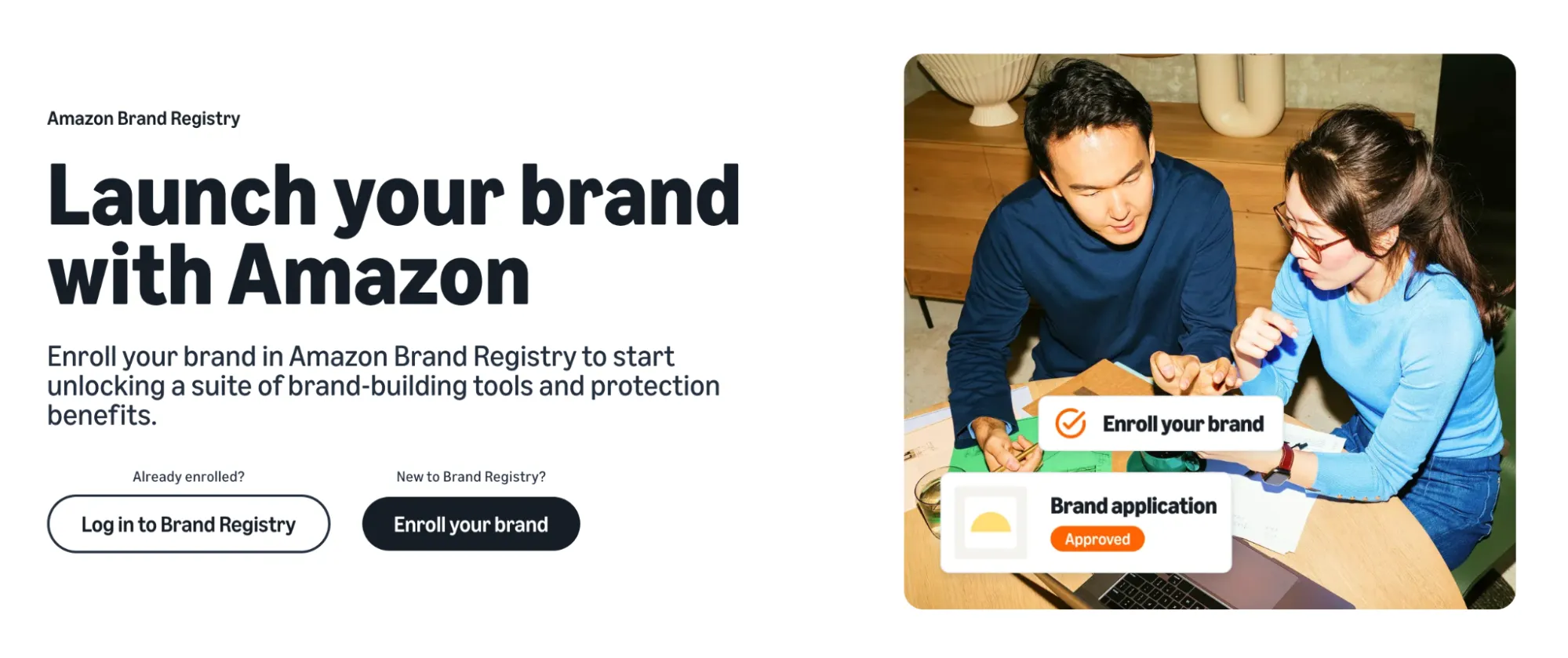
It will not stop Amazon from launching a competing product, but it will stop the cascade of knockoffs that tends to follow once a category gets competitive. Lock down your trademarks, your design patents, and your listing content.
Amazon Private Label vs. Independent Brand: A Side-by-Side Comparison
|
Factor |
Amazon Private Label |
Independent Brand |
|
Price positioning |
15-25% below category average |
Premium or value-added pricing |
|
Brand story |
Minimal to nonexistent |
Deep narrative, community-driven |
|
Product differentiation |
Spec-matching, commodity focus |
Proprietary features, formulations |
|
Review strategy |
Volume-driven, aggregate listings |
Quality-focused, niche-specific |
|
Advertising |
Organic placement advantage |
Paid + organic mix required |
|
Channel presence |
Amazon only |
Multi-channel (DTC, retail, etc.) |
|
Customer loyalty |
Transactional, price-sensitive |
Relationship-based, repeatable |
|
Vulnerability |
Struggles when brands fight back |
Vulnerable if differentiation is weak |
What This Means for Pet Brands Specifically
The pet industry is a $150+ billion market in the US (APPA, 2026), and Amazon knows it. Wag dog food launched priced to compete directly with premium brands like Blue Wilderness.
Amazon Basics pet beds and carriers have been on the market since 2016. In April 2026, on Amazon India, Amazon Basics was the single most-represented brand on the Amazon Pet Supplies bestseller list, with eleven products (MetricsCart, 2026).
But here is the part that should encourage you: Blue Buffalo still leads the bestseller list with seven products in April 2026 (MetricsCart, 2026). Greenies hold six.
These are not brands that compete on price — they compete on ingredient transparency, veterinary endorsements, and breed-specific formulations that Amazon’s house brands have not attempted to replicate.
The lesson is clear: if your differentiator lives inside a lab, a recipe, or a community of passionate buyers, Amazon’s private label is an annoyance, not an extinction event.
Stop Competing on Amazon’s Terms
The worst response to an Amazon private-label incursion is to drop your price to match. You will never out-Amazon Amazon on cost. The second worst response is to do nothing and hope your reviews carry you. They might, for a while, like a dog running on a freshly waxed floor — momentum is there, but traction is not.
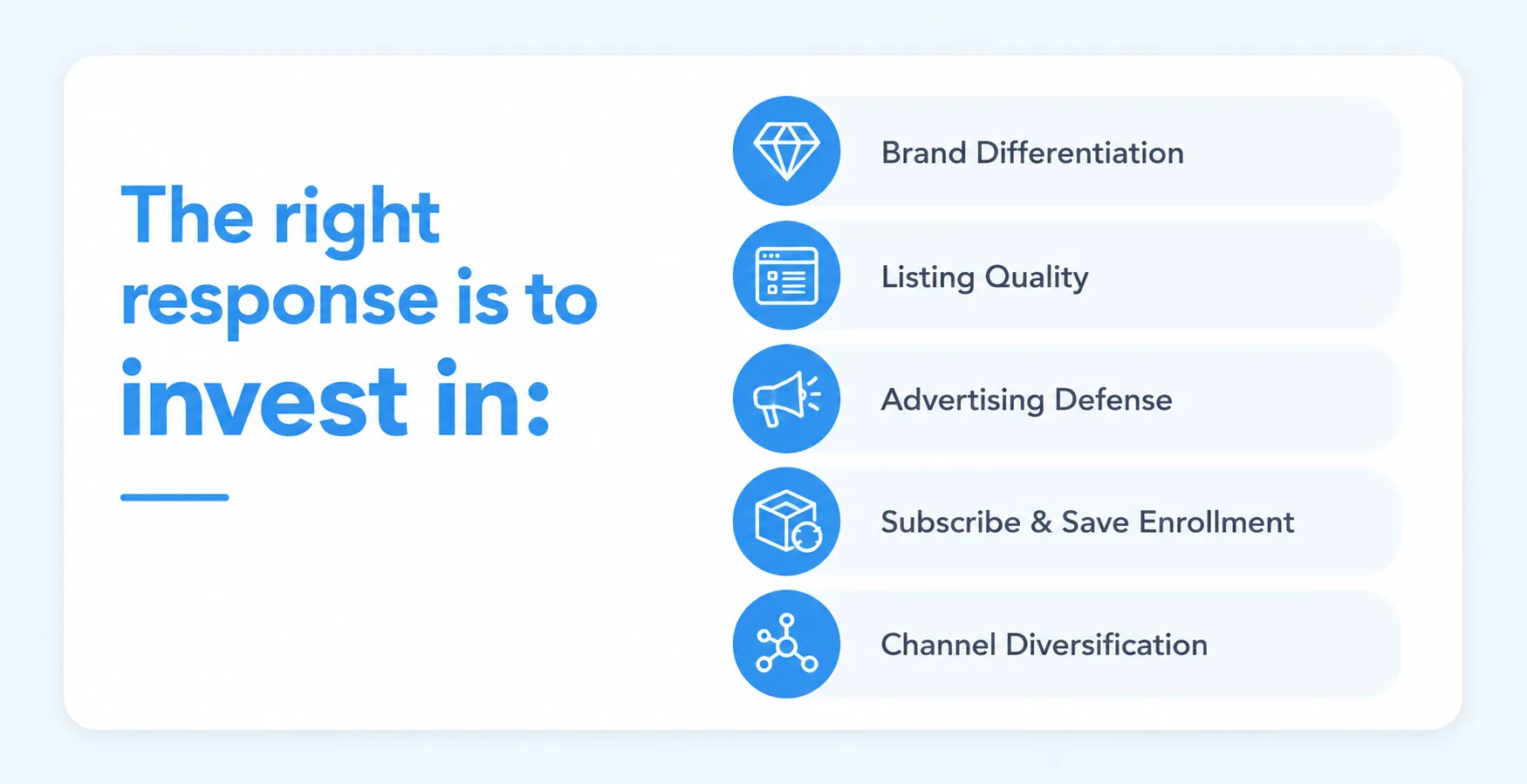
The right response is to invest in brand differentiation, listing quality, advertising defense, Subscribe & Save enrollment, and channel diversification. Do all five, and Amazon’s private label becomes a competitor you can manage rather than a threat you cannot survive.
If you are not sure where to start — or if you are staring at a sales graph that looks like a ski slope since Amazon’s house brand showed up — this is exactly the kind of problem a specialized marketplace agency handles every day.
Netpeak USA works with brands across pet, health, home, and consumer goods to build the kind of Amazon presence that private labels cannot simply copy-paste.
Bonne chance — and may your Subscribe & Save conversion rate be ever in your favor!
Frequently Asked Questions
How do I know if Amazon is selling a private-label version of my product?
Search for your product category on Amazon and filter by "Our Brands" in the left sidebar. Amazon’s private-label products will appear under brand names such as Amazon Basics, Amazon Essentials, Wag, Solimo, or Mama Bear.
You can also use tools like Helium 10 or Jungle Scout to track new ASIN launches in your category and monitor whether Amazon-owned brands are entering your keyword space.
Can Amazon use my sales data to decide which products to launch as private labels?
Amazon has an internal policy prohibiting the use of individual third-party seller data to inform private-label product decisions. However, the US House Judiciary Committee investigated Amazon on this exact issue, and CEO Jeff Bezos acknowledged during congressional testimony in 2020 that he could not guarantee the policy had never been violated.
Amazon maintains it uses only aggregate, publicly available market data to guide product launches.
Does Amazon give its own brands an unfair advantage in search results?
The FTC included "biasing search results to preference Amazon’s own products" as a claim in its 2023 antitrust lawsuit against Amazon.
Research published in Marketing Science by Duke University’s Fuqua School of Business found that Amazon’s self-preferencing in sponsored ad slots can affect third-party sellers and consumer welfare differently depending on the category.
The case is ongoing, and sellers should monitor developments closely.
Is Amazon scaling back its private-label program?
Partially. Amazon closed 27 of its 30 apparel brands and discontinued furniture lines like Rivet and Stone & Beam. The company is consolidating around its strongest brands: Amazon Basics, Amazon Essentials, and Amazon Aware.
In pet particular, Wag and Amazon Basics pet products remain active and well-represented on bestseller lists. The strategy appears to be fewer brands, sharper focus, and not retreat.
What is the most effective way to compete with Amazon’s private label on price?
Do not compete on price. Amazon’s cost structure, logistics infrastructure, and willingness to operate at thin margins make price-matching a losing strategy for independent brands. Instead, compete on differentiation: proprietary formulations, premium ingredients, community engagement, brand storytelling, and superior listing content.
Brands that maintain premium positioning with strong conversion rates consistently outperform private labels in customer lifetime value.

 0
0
 0
0
 0
0
 0
0
Related Articles
Pet Food Product Patent: How to Protect Your Innovation
Patenting pet products requires careful consideration and proper application filing. With the 8 steps below, you will be able to submit your patent application and protect your invention.
Digital Marketing for SMBs: How to Grow a Small Business Online
Small or mid-sized businesses compete for the same customers as brands with marketing departments ten times their size, on a fraction of the budget. You can't outspend them, so you have to outsmart them and grow your business deliberately.
Amazon’s New “Sourced from Brand” Buy Box Label: Who Gets It and Who Doesn’t
Amazon is rolling out a provenance line in the Buy Box. A short label under the Brand row now reads “Sourced from [Brand]” on amazon.com and “[Brand] approved” on amazon.de. It tells the shopper that the unit on offer came through the brand’s own supply c