
You can advertise your pet product on the global marketplace Amazon, the specialized marketplace for pet lovers Chewy, advertising platforms Google Ads and Microsoft Advertising, social platforms Meta and Reddit, and awareness channel Connected TV (including Roku, Amazon Fire TV, YouTube TV, etc.).
Here are some numbers to back up these choices:
-
Global marketplace Amazon had $716B in revenue (Macro Trends, 2025).
-
Chewy, a specialized marketplace for pet lovers, has $12.60 billion in net sales (Chewy Investors, 2026).
-
Search engine Google drives 89.66% of global online traffic (Forbes, 2026).
-
Microsoft Advertising has 1B users globally across its network (Microsoft Advertising, 2024).
-
Social platform Meta has 3.58 billion daily active users (Investor Media, 2026).
-
Reddit has 121M+ daily active users (Reddit Investors, 2025).
-
Connected TV shows high numbers too: Roku with 100M+ streaming households globally (Roku Newsroom, 2026), YouTube accounted for 12-13% of total TV viewing time (Nielsen, 2025), and Amazon, which sold 200M+ Fire TV devices globally (Amazon, 2023).
Having worked with the pet product category for years, I can assure you that choosing the right pet product marketing platforms is the foundation of success — comme on dit en français, “bien choisir, c’est déjà réussir” (to choose well is already to succeed).
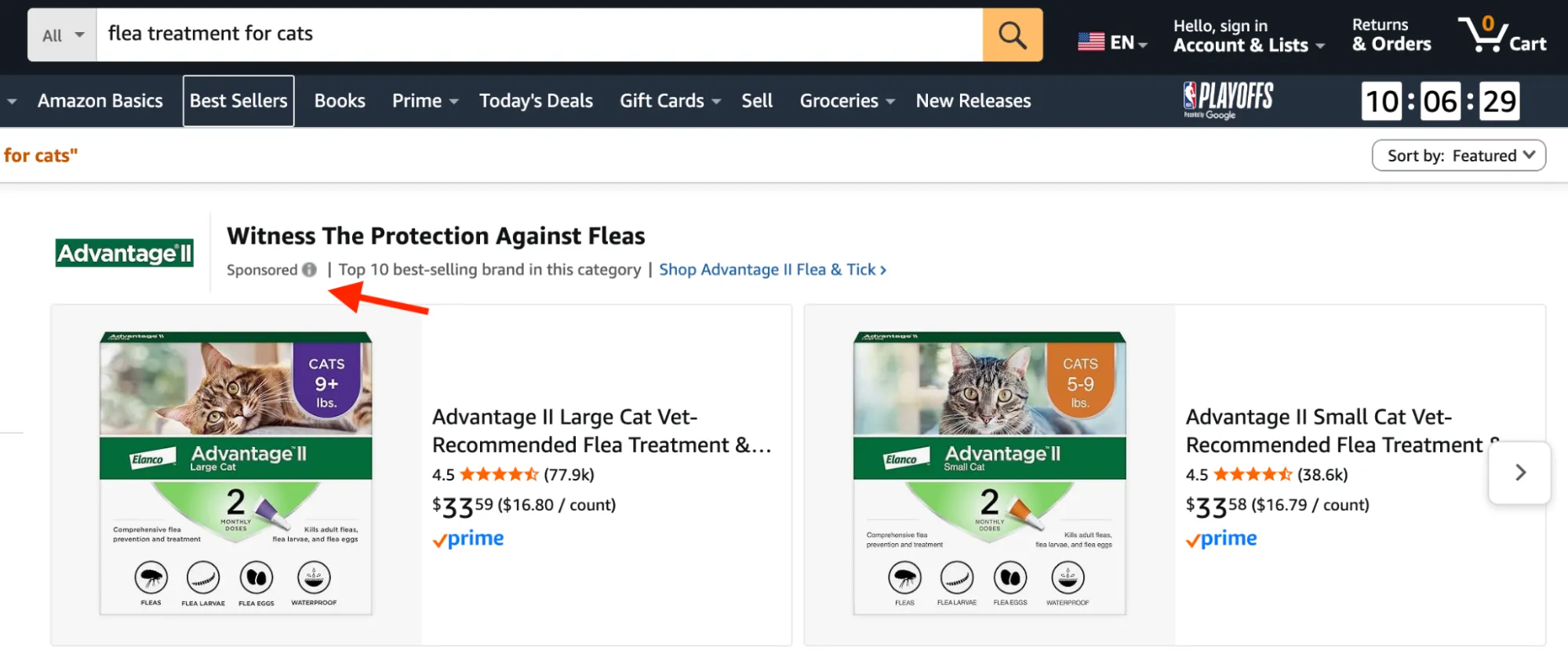
Amazon
Amazon combines huge demand with built-in purchase intent — the platform holds 37.6% of the US ecommerce market, making it the go-to marketplace for pet products (Forbes, 2026).
Amazon is basically the place where a dog owner goes to buy food — and accidentally leaves with toys, a camera, and matching sweaters.
More than 60% of all sales come from third-party sellers, and many small brands are doing really well (averaging $290K annually in the US). It’s a strong sign of how scalable the platform is for product-based businesses, including pet (Sell on Amazon, 2025).
Selling pet products on Amazon? You might want to sit down for this one. Sephora just plugged into ChatGPT — read our article to see what this means for your brand.
Chewy
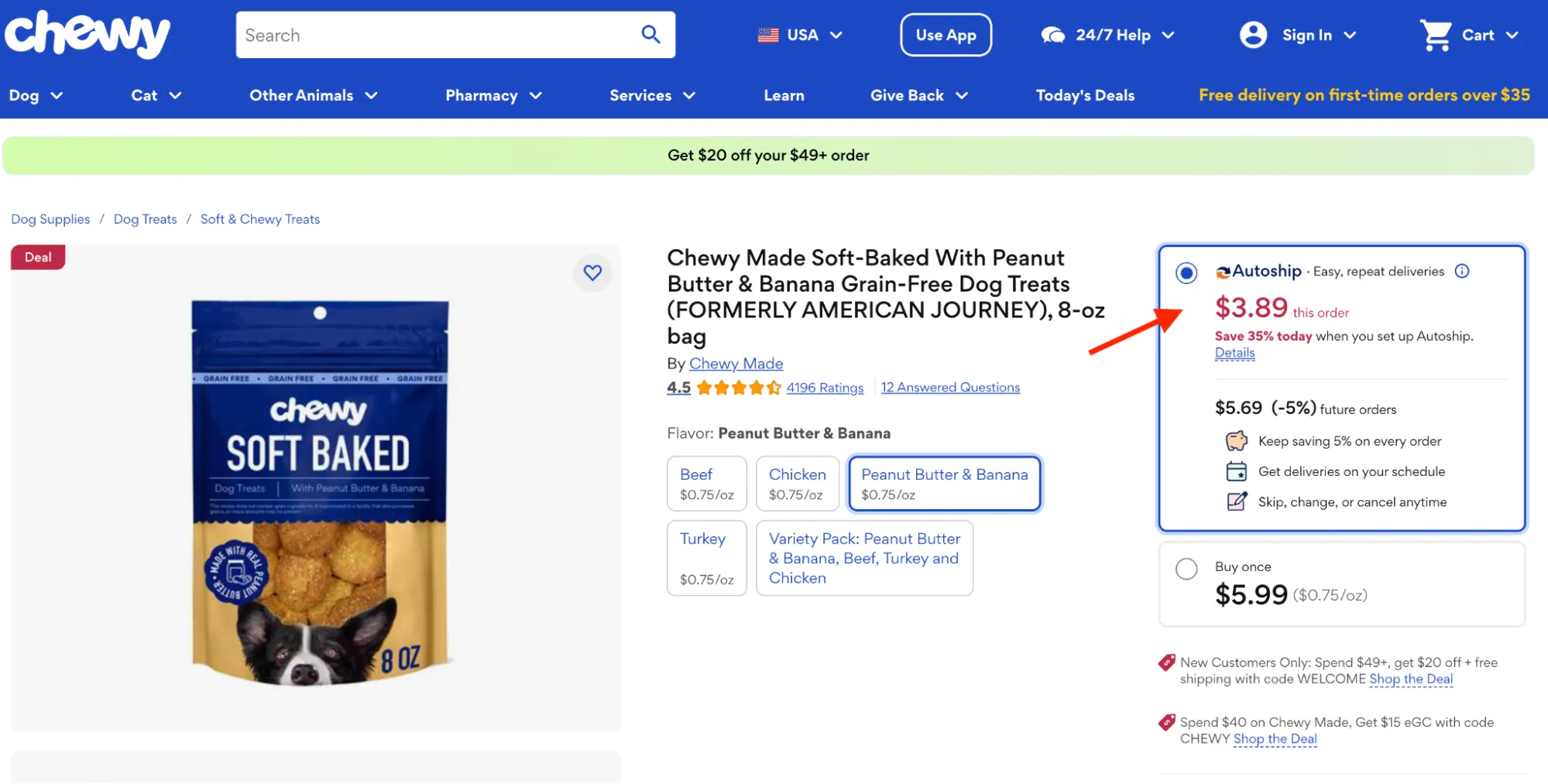
Chewy targets a pet-focused audience — the platform generated $12.6B in revenue in 2025 and continues to grow (Investing, 2026). It dominates the niche, controlling 36% of the US online pet retail market (BCG Matrix, 2026).
Sellers on Chewy actively use repeat purchases: over 80% of sales come from “Autoship” subscriptions. So, pet brands can earn repeat revenue and higher lifetime value (Pet Food Processing, 2026).
Chewy knows your pet’s needs so well that it sometimes feels like your dog has its own account.
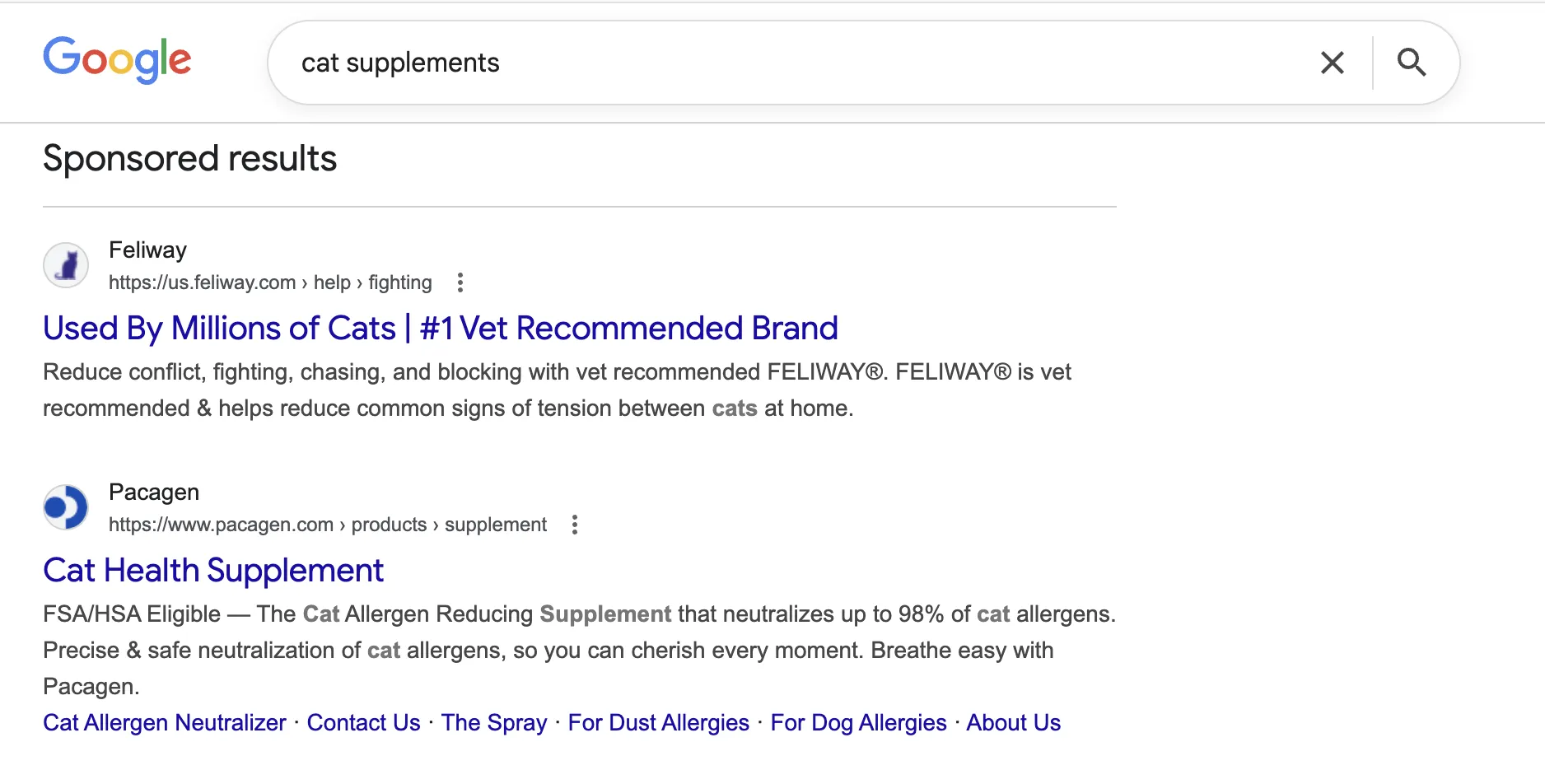
Google's power lies in its ability to target pet product buyers when they need pet products and search for them. When they type in "best dog food" or "cat supplements," they see your ads.
Google Ads lands like a laser pointer dot in front of the cat — impossible to ignore.
Businesses earn $2 in revenue for every $1 spent on Google Ads, so ROI (return on investment), making it worth using (Google's Economic Impact Report, 2025).
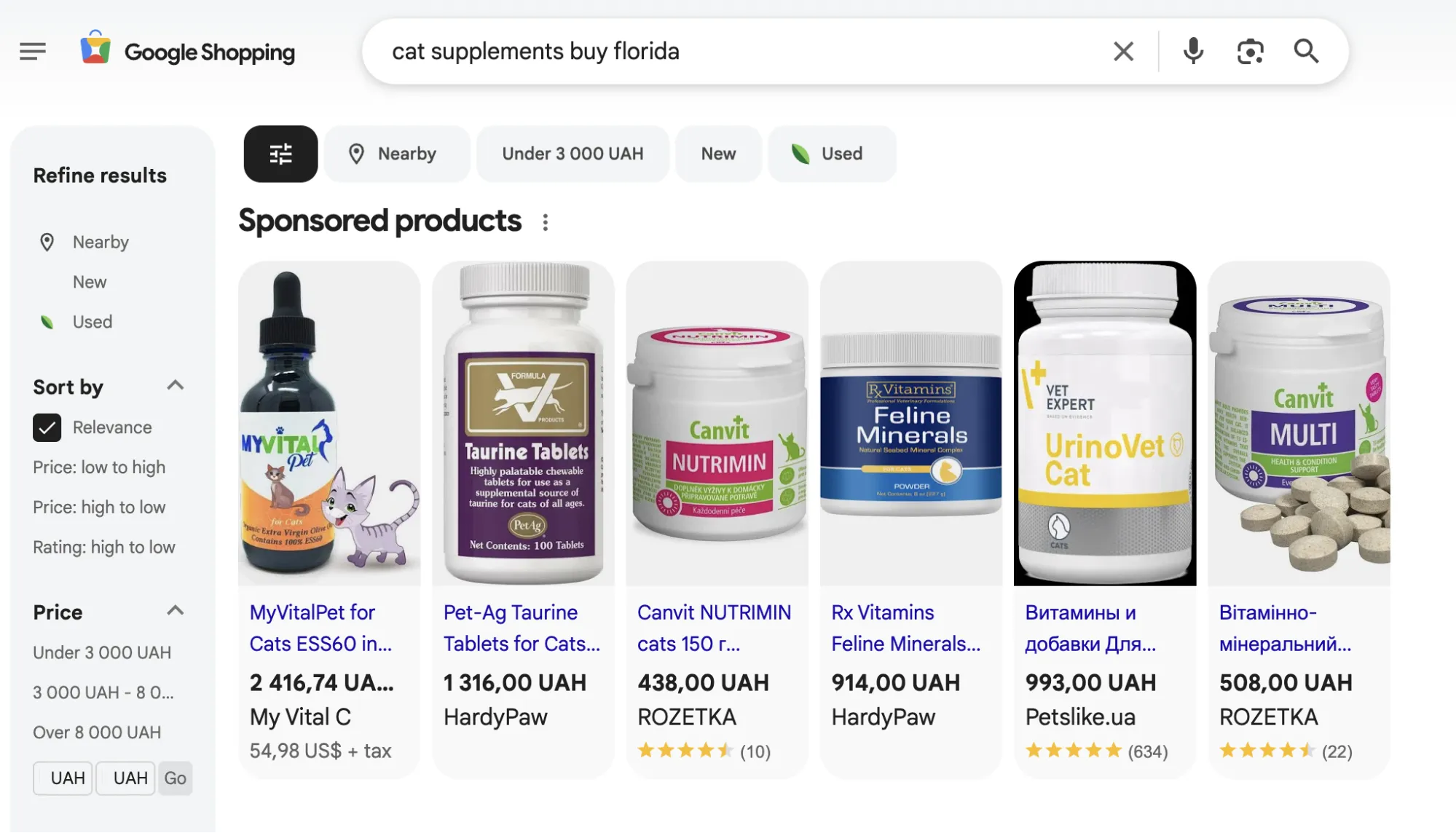
Google Shopping ads get most of the clicks and a 76% of retail ad spend (Forbes, 2018).
Meta (Instagram & Facebook)
Meta lets you show your ads to the right people, and a lot of them — its apps are used by over 3 billion people every day, so there’s a huge audience to reach (Meta Investor Relations, 2025).
Customers open Instagram to relax… and suddenly their dog needs a new bed, snacks, and a birthday outfit.
Meta’s revenue grew by about 19% year over year, mostly thanks to ads (Forbes, 2024). In simple terms, more businesses, including the pet industry, are buying ads there because it’s working.
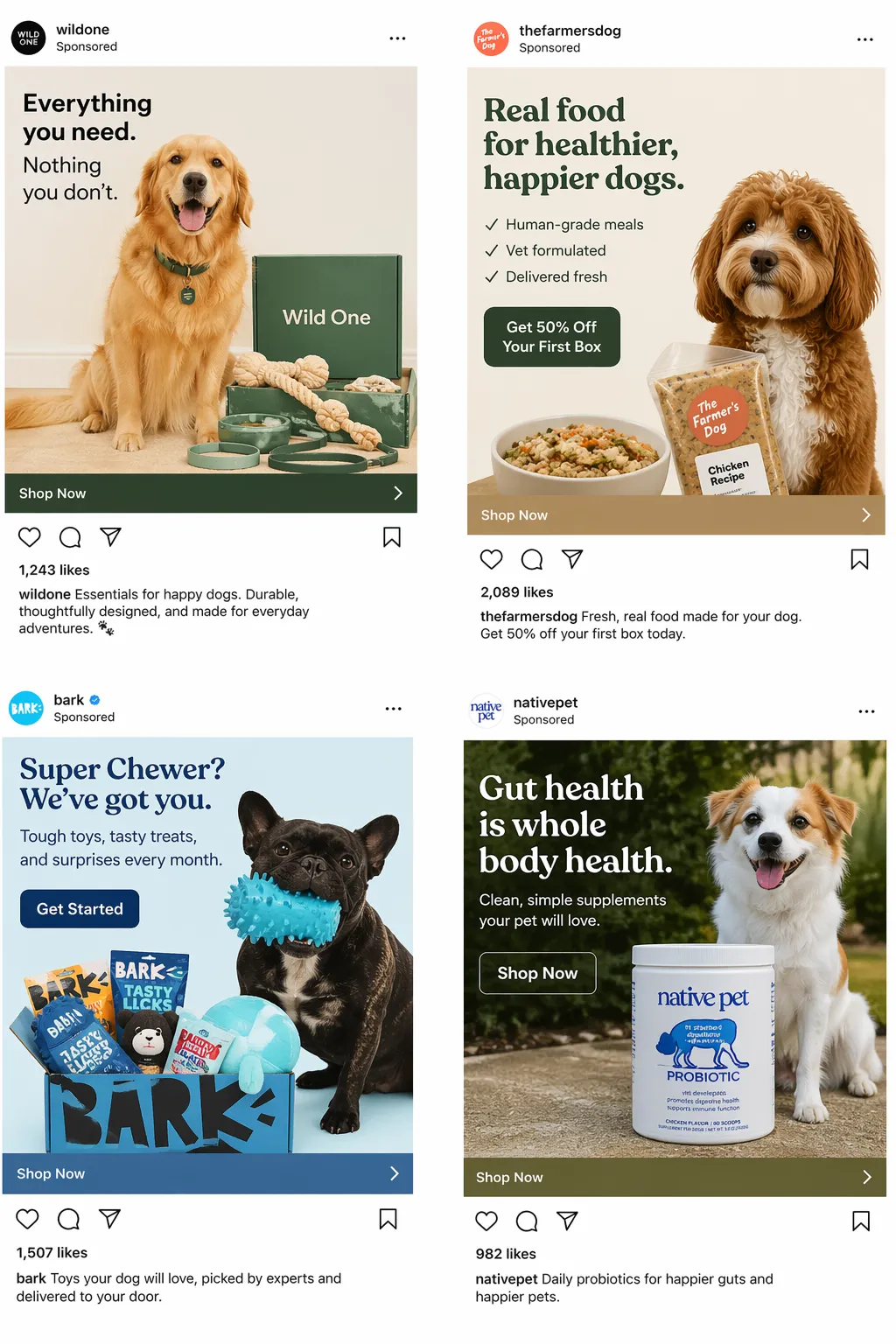
This discussion platform has 121M+ daily active users (Reddit Investors, 2025). Reddit has 100K+ communities where users ask for real recommendations and compare products before purchasing (Reddit, 2026).
This format makes ads there powerful: 76% of US users say conversations on Reddit are more honest than on other social platforms (Vogue Business, 2026).
Some customers don’t trust ads — they trust someone named “DogDad42” with a very strong opinion.
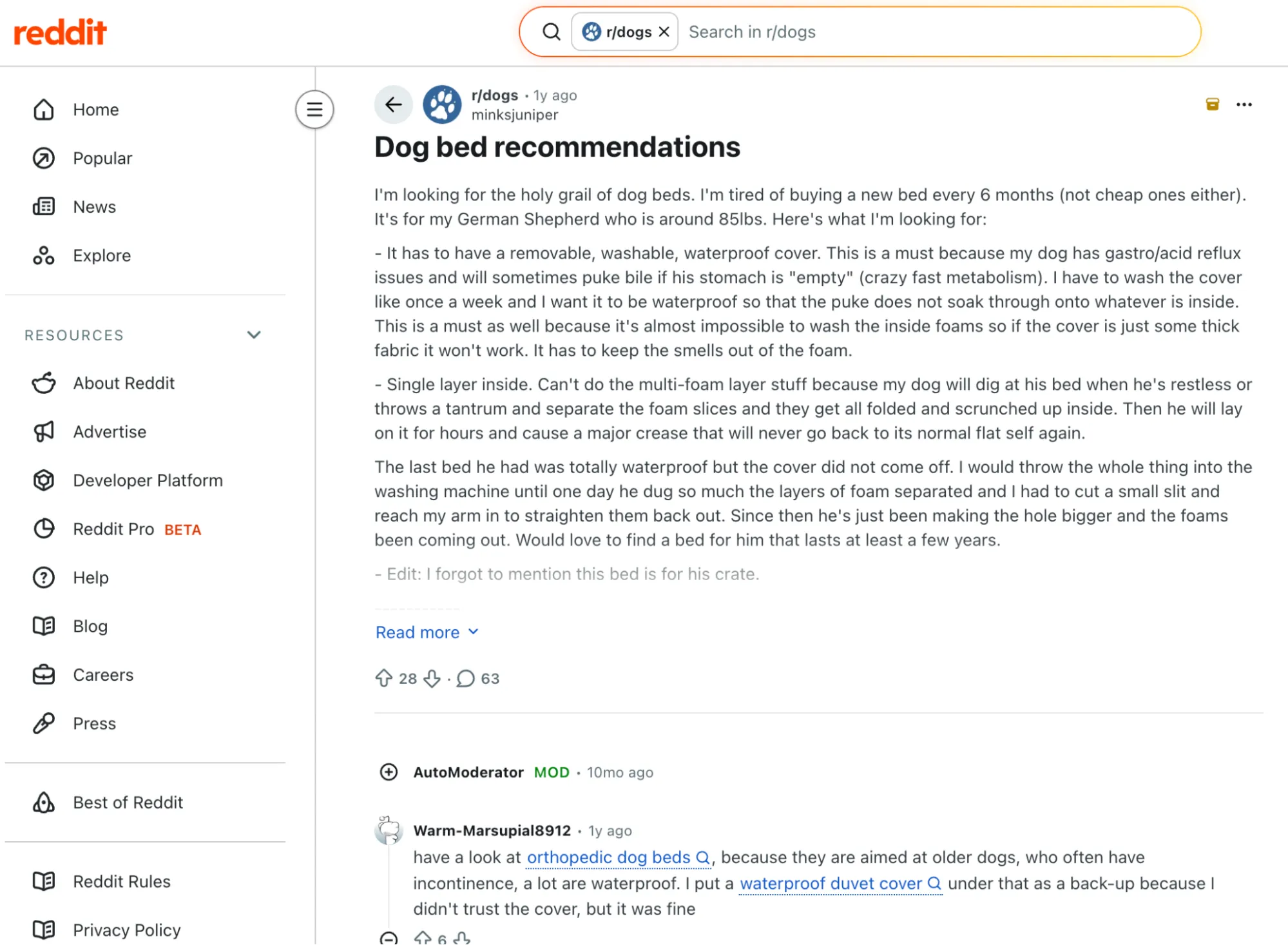
Connected TV
Connected TV is rapidly becoming the dominant viewing environment, with streaming reaching a record 47.5% of total TV viewing (Nielsen, 2026).
From an effectiveness perspective, CTV ads hold attention far better than most digital formats. 59% of viewers say YouTube TV ads feel more relevant than traditional TV ads (Google, 2022).
CTV is basically the only place where people don’t skip your ad — because they’re too comfortable on the couch to reach the remote.
56% of global marketers plan to increase CTV/OTT ad spend, making it one of the fastest-growing and most trusted channels for measurable impact (Nielsen, 2025).
What about a little AI for your pet products strategy? Read our article to learn how to forecast pet owners' search trends.
Last updated: May 2026
Cluster: Pet Industry Intelligence
|
Which Types of Products to Advertise |
Best Ad Tools for Pet Brands |
Advertising Cost |
|
|
Amazon |
Everyday products: food, supplements, basic accessories |
Sponsored Products and Sponsored Brands that show up when people search |
Medium–High Typical CPC: $0.80-$2.50 Competitive niches: up to $5 per click (Seller Metrics, 2025) |
|
Chewy |
Things people buy again and again: food, litter, subscription items |
Sponsored listings, email & subscription (Autoship) promos |
Medium Doesn’t publicly share CPC ranges, because of vendor partnerships |
|
|
Products people actively look for: health items, special diets, supplements |
Search Ads, Shopping Ads, Performance Max (automated campaigns) |
High Typical CPC: $1-$10+, depending on industry and keyword intent (Word Stream, 2026) |
|
Meta (Facebook & Instagram) |
Fun or nice-looking items: toys, accessories, premium products |
Boosted posts, Short video ads (Reels), and Retargeting (ads that remind people to come back and buy) |
Medium Typical CPC: Around $1.11 average CPC globally (Super Ads, 2026) |
|
|
High-consideration pet products: premium dog food, pet tech, problem-solving products (anxiety, training tools). |
Native, community-style formats: Promoted Posts, Conversation Ads, Video Ads, Dynamic Product Ads (DPA) |
Medium–High Typical CPC: $0.75–$2.00 CPM (cost per 1,000 impressions): $3–$12 depending on targeting (Stuckmatix, 2026) |
|
Connected TV |
Emotion-driven, visual-first pet products, subscription products, pet tech, health & wellness |
Roku Ads Manager, Amazon DSP (via Fire TV), YouTube Ads (CTV inventory), etc. |
High CPM (cost per 1,000 impressions): $25–$80 Budget $15,000–$25,000 total for a meaningful first CTV test (Stuckmatix, 2026) |
Are you looking to expand your business but aren't sure which pet products sell best? Read our article to find out.
What Are the Best Practices for Pet Product Advertising?
Pet product ads work best when you grab attention on social media, make your visuals clear and appealing, and use real customer reviews to help people feel confident about buying.
1. Use different platforms for the different stages of the buyer journey
Social media is where Gen Z, Millennials, and Gen X usually discover new products (HubSpot, 2025). They look for reviews on Google, and platforms like Amazon and Chewy make buying quick and easy.
Advertisers using Sponsored Products on Amazon saw about 34% more sales in just four weeks, which shows these ads work well when people are already ready to buy (Amazon Ads, 2026).
Your cat ignores one toy and loves another — your audience does the same with platforms.
If you want to know how to combine different channels in practice, read our PetLock8 case study.
2. Make creative do the heavy lifting
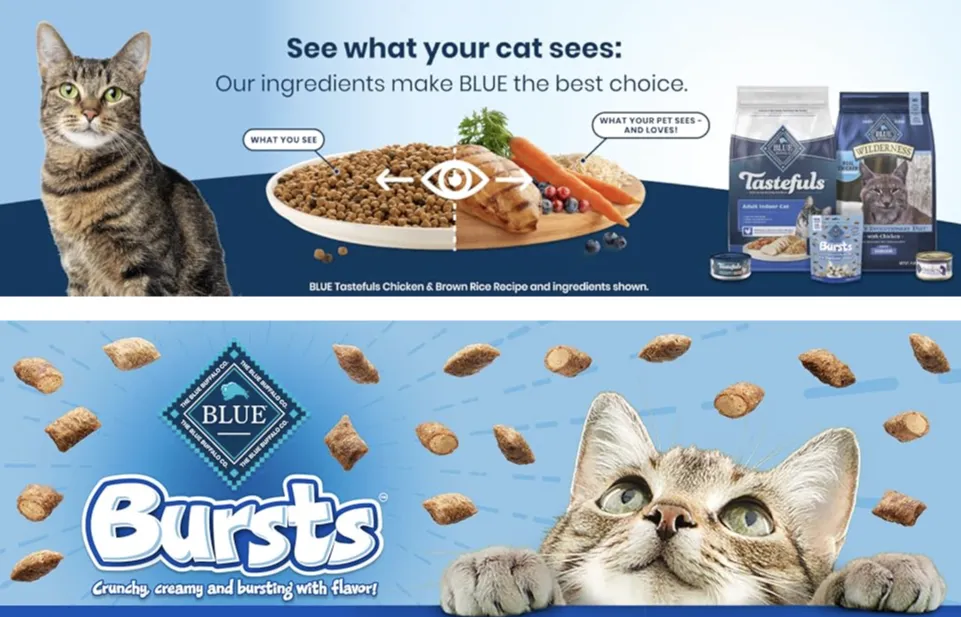
71% of people check product images and videos before choosing a product (Google Business, 2025). It’s especially important in the pet industry, where pet owners should choose a product for their pet. They’re practically guessing.
Create high-quality images and videos and then use them in your ads. It would help people quickly understand your product: what’s inside, how it works, and the results they can expect.
If your creative doesn’t explain the product, pet owners will just guess — and their cat will be the final judge (and we know how strict they are sometimes).
3. Use reviews in your ads to earn instant trust
Pet owners almost never buy new products for their pets without first reading about the experiences of other pet owners. 95% of consumers read reviews, and 86% consider them to be an essential part of the purchase journey (Power Reviews, 2023).
In pet marketing, your customer might trust your brand — but they trust other pet owners even more.
Reviews should actively influence your ad messaging, creative angles, Amazon A+ content, landing pages, and retargeting campaigns.
Call Netpeak USA if you need help advertising pet products. We do this every day and know how to get maximum results at a comfortable ad price.
Bonne chance — and may your Subscribe & Save conversion rate be ever in your favor!
FAQ
Can I use Facebook or Instagram to advertise pet products?
Yes — over 5 billion people use social media globally, giving brands access to one of the largest discovery environments in history (Statista, 2026).
Combined with precise targeting (by pet type, behavior, interests), Meta platforms make it easy to reach highly relevant audiences and drive conversions.
Is a partnership with influencers effective for pet product marketing?
Yes — influencer marketing is especially powerful in the pet industry because of the emotional connection people share with their pets. When a blogger with a pet recommends a product, it is more trustworthy.
80% of global brands use Instagram for influencer marketing (McKinsey, 2023).
Where should pet product startups start advertising their products?
Startups should begin with social media (Meta, Reddit) to maximize early traction. Next, they need to use Google Ads and marketplaces like Chewy and Amazon. If you want to grow fast, use Connected TV.

 0
0
 0
0
 0
0
 0
0
Related Articles
Business Apps in the US: iOS vs. Android, September 2026
We searched for US App Store and Google Play data to see what business apps professionals, shoppers, and investors actually installed in September.
Pet Food Product Patent: How to Protect Your Innovation
Patenting pet products requires careful consideration and proper application filing. With the 8 steps below, you will be able to submit your patent application and protect your invention.
Business Apps in the US: iOS vs. Android, August 2026
We’ve fetched data from the US App Store and Google Play to see what professionals, shoppers, and businesses are actually installing, and why the market leaders are winning right now.