
Why Target College Students for Marketing? Moving Companies' Untapped Gold Mine of Leads
College students live in constant transition — dorms, breakups, internships — year-round. They move more often than almost any other group, yet they’re the least experienced at hiring movers. That’s exactly why moving marketing to college students should be specific.
Students need a way to quickly find a non-intimidating moving company on their phone. They crave a stress-free solution during one of their first “adult” moments.
In this article, you’ll learn how to reach college students, adapt your messaging to first-time movers, and how to turn today’s overwhelmed freshmen into tomorrow’s loyal professional customers for life.
Small Moves, Big Potential: Why Students Are Worth Targeting
It’s a common myth that students don’t have money to spend and they’re stuck in the same dorm room for years. The reality is different: some students move in and out of dorms and shared apartments every semester.
The college student niche is predictable, highly networked, and often overlooked. Let's explore why your college marketing will bring you revenue.
An Untapped Audience
Most movers don’t actively target students. Their websites show large houses, heavy furniture, and long-distance relocations — because they think that's where money is.
But grounded adults with kids in a certain school and gym membership, moving only when something important happens.
Students are free-spirited: breakup — moving; creepy neighbor — moving; cheaper rent — moving.
That creates opportunity. With 19 million college students in the US alone, this is a valuable target for brands.
Students’ Seasonality Is Highly Predictable
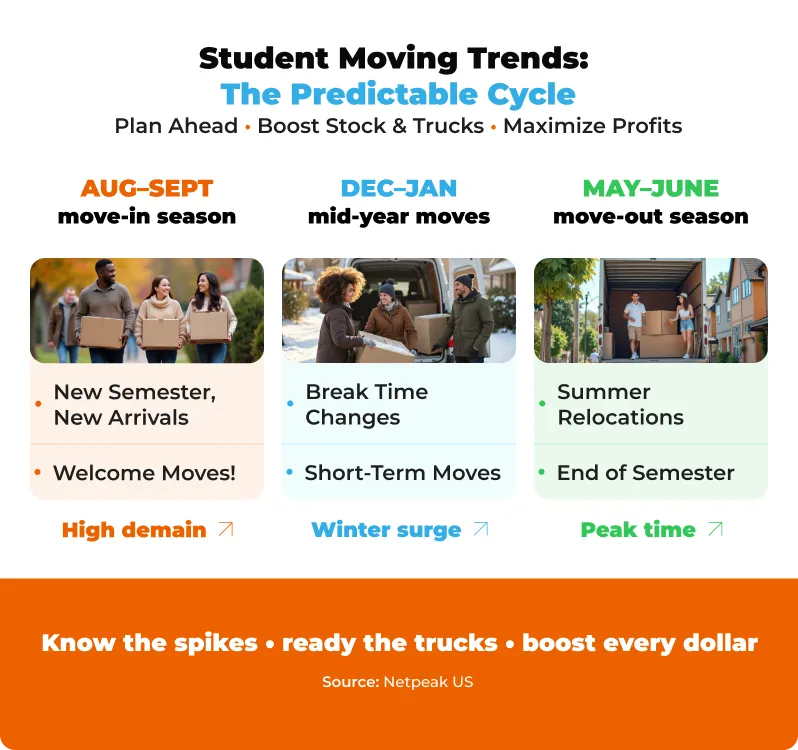
Student moves follow an academic calendar: move-in in August-September, move-out in May-June, and mid-year changes in December-January.
You know the exact times of year when demand spikes, so you can prepare additional stock and more trucks. You can launch promotions and paid ads to make a profit from every dollar.
Perfect for Small Companies: Consistent Demand in Low Volumes
Students don’t move mansions. It’s more about 10-20 boxes, a mattress, and a mini fridge max. That means jobs are shorter, so you can take multiple bookings per day.
If you're a small moving company with 1-2 trucks, student jobs are manageable without overwhelming your capacity. Even if the moves are smaller, volume makes them stable.
Digital-First, Tech-Savvy Customers
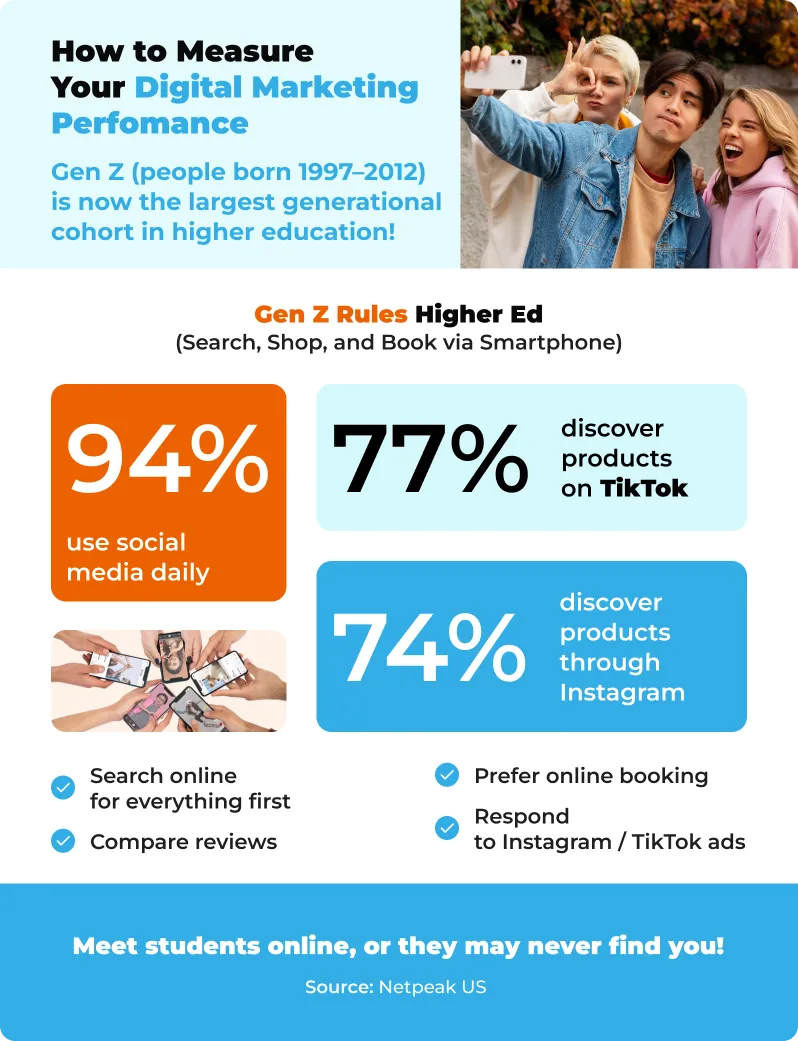
Gen Z (people born from 1997 to 2012) became the largest generational cohort in higher education around 2020. What we know:
- 94% of Gen Z engage with at least one social platform daily.
- Around 75% say their smartphone is their primary device.
Students search online on the phone first, prefer online booking, and respond to Instagram/TikTok ads, so online moving marketing is surprisingly effective.
“Younger Gen Z consumers are often dismissed as not financially viable enough to target as a market. In reality, they have untapped potential for lead generation because they are digital natives.
They are more likely to create UGC, read or watch content before making a decision, and search for their ride-or-die mover.”
Valeria Karbusheva, Head of Blog, Moving Market Researcher
Abundant Partnership Opportunities
Colleges function like small cities. Across every campus, there is an entire ecosystem of organizations that interact with students every day. For moving companies, these organizations can become steady sources of referrals.
You can partner with:
-
Student housing offices. They help students move into dorms and university apartments. If they recommend your company on their website or in their welcome materials, many students will choose you automatically.
-
Dorm administrators. Dorm staff deal with move-in and move-out chaos every semester. If they know your company, they can recommend it.
-
Property managers. Many students live in off-campus apartments. Property managers often interact with hundreds of tenants each year and can suggest movers during lease changes.
-
Local storage facilities. Students frequently need storage between semesters or during summer break. Storage companies and movers naturally complement each other.
For a new moving company, this can be one of the fastest ways to build a customer pipeline. Even faster than ads targeting college students.
Strong Word-of-Mouth Potential
Students share apartments, attend the same campus events, and belong to group chats, so recommendations spread extremely quickly. When students need a service such as movers, they often ask:
-
a roommate
-
a class group chat
-
a dorm community
-
a campus Facebook group
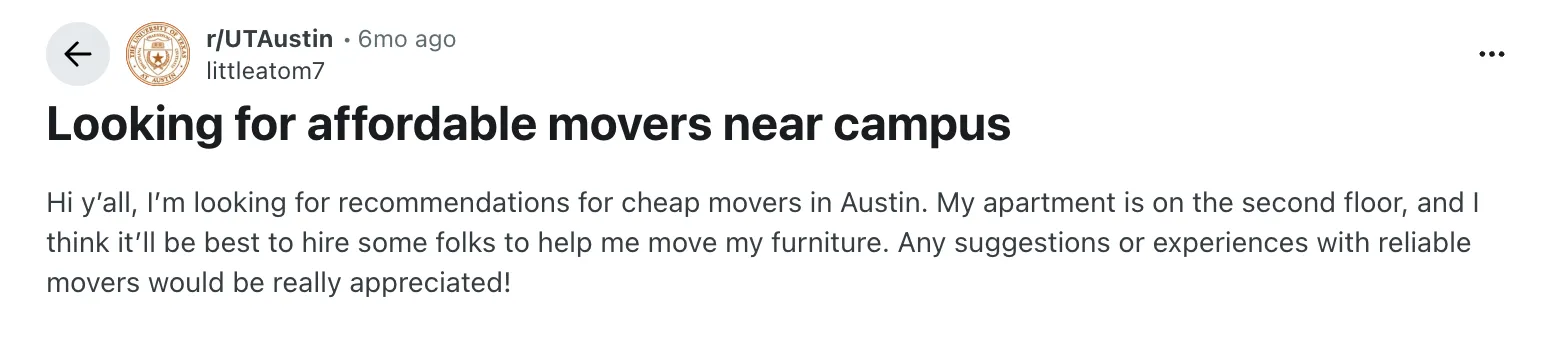
One positive experience can therefore quickly spread to other potential customers.
If your moving company needs some help with marketing to college students, just give us a call! We know how they think and how to make them choose you.
What Makes Student Moves Tricky
Student customers can be a great market for moving companies, but they also come with specific challenges. Here are some tips on how to advertise to college students and the common difficulties you should expect.
|
Situation |
What to Do |
||
|
1. |
College Students Have Limited Budgets |
Because of this, price often becomes the first thing they compare. Many college students will try to move on their own first with a friend's help. They usually hire movers only when they realize that the move is harder than expected. |
Offer student discounts, small-move pricing, or hourly rates for short jobs. The key is showing college students that hiring movers is affordable and easier than doing everything themselves. |
|
2. |
Logistical Complications |
Dorms and student apartments often have limited parking, time-limited loading zones, small elevators, many stairs, and crowded hallways during move-in days. |
Plan ahead, arrive earlier, coordinate with building management, and bring smaller moving equipment. |
|
3. |
Last-Minute Bookings |
Leases change quickly, roommates change plans, or someone suddenly needs to move for an internship or new housing opportunity. |
Offer on the website or in social media same-day or next-day moving services. |
|
4. |
Unrealistic Expectations |
College students might underestimate how long the move will take, how much furniture they have, or the difficulty of stairs or narrow hallways. Sometimes they assume a move will take one hour when it actually takes three. |
Ask detailed questions before the move, request photos of items, and clearly explain pricing and timing. |
|
5. |
Heavy Move-In / Move-Out Crowds |
Certain times of year can become extremely busy around universities: August and September (new-semester move-in), May and June (end-of-semester move-out). During these weeks, demand for movers spikes dramatically. |
Prepare in advance: schedule additional crews, add more trucks, and run targeted promotions to student customers before the rush. When planned correctly, these busy periods can become very profitable. |
How to Market to Students: A Practical Playbook
College students rarely call five companies for moving quotes. Instead, they search quickly and decide fast, often from their phones. To reach this audience, your digital marketing has to adapt to their habits.
#1: Mobile-Friendly = Student-Friendly: Optimize Your Website
Gen Z live on their smartphones. If your website looks great on a laptop but is frustrating on mobile, you’re losing customers.
If students have to zoom in, fill out five long forms, or wait for pages to load, they’ll go away.
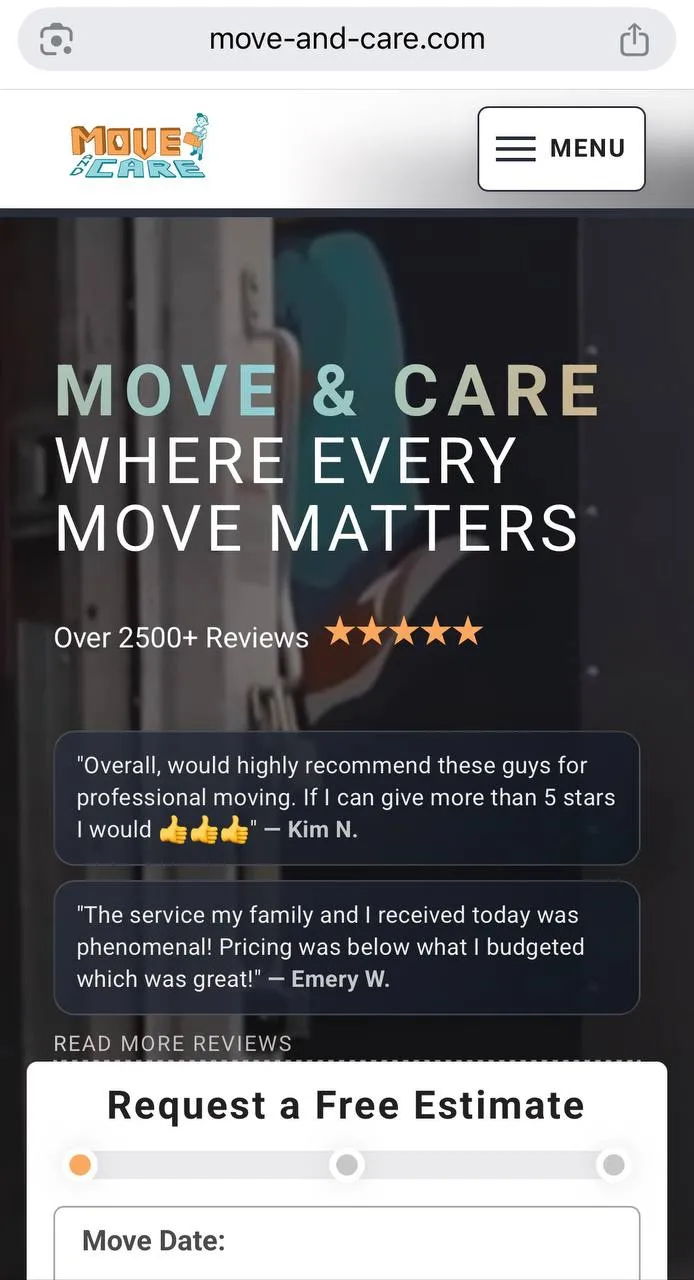
For example, Move & Care Moving Company has a great mobile version. On the main screen, visitors already see a 5-star rating based on 2,500 grades and customers’ reviews. And they see that if they scroll a little bit, they could request a free estimate.
Business results: A mobile-friendly site means more bookings, better search rankings, and fewer abandoned visits.
#2: Create Landing Pages Specifically for Students
If your website only has a general page, it may not match students’ searches like “cheap movers near campus”. Creating dedicated landing pages for student scenarios helps your local business appear there and makes your service feel more relevant.
Also, use landing pages for content marketing to address students' concerns directly.
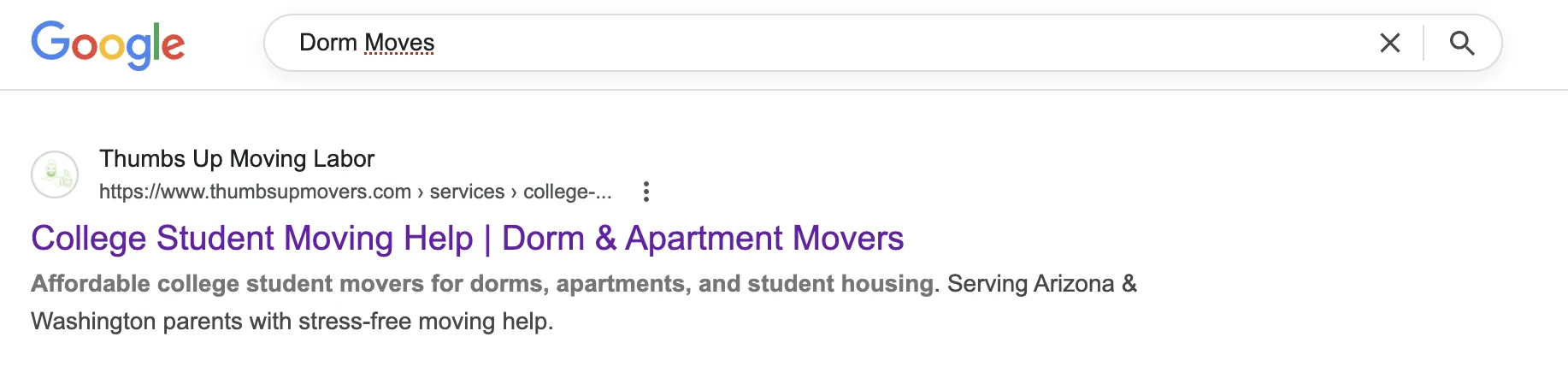
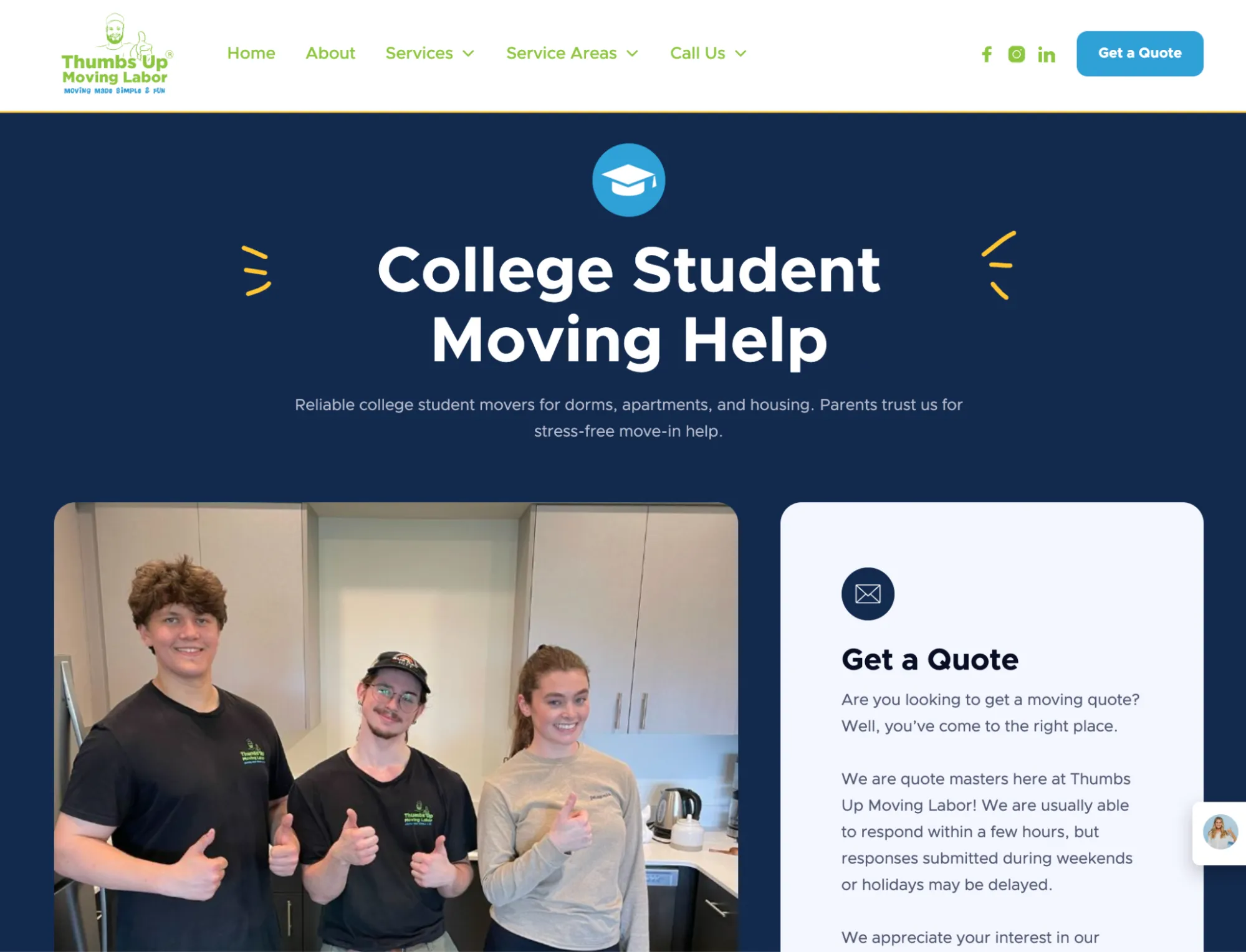
For example, Thumbs Up Moving Labor created a specific landing page on their website, “College Student Moving,” and emphasized the “stress-free moving help.”
#3: Segment the Student Chaos
Make your pages even more specific. “Students” may sound like a single audience, but in reality, they represent several very different situations.
A freshman moving into a dorm has different needs than a senior moving into an off-campus apartment or a student leaving belongings in storage for the summer.
Instead of advertising simply “student moving services,” you might promote:
-
Dorm move-in assistance
-
Apartment moves for students
-
Summer storage relocation
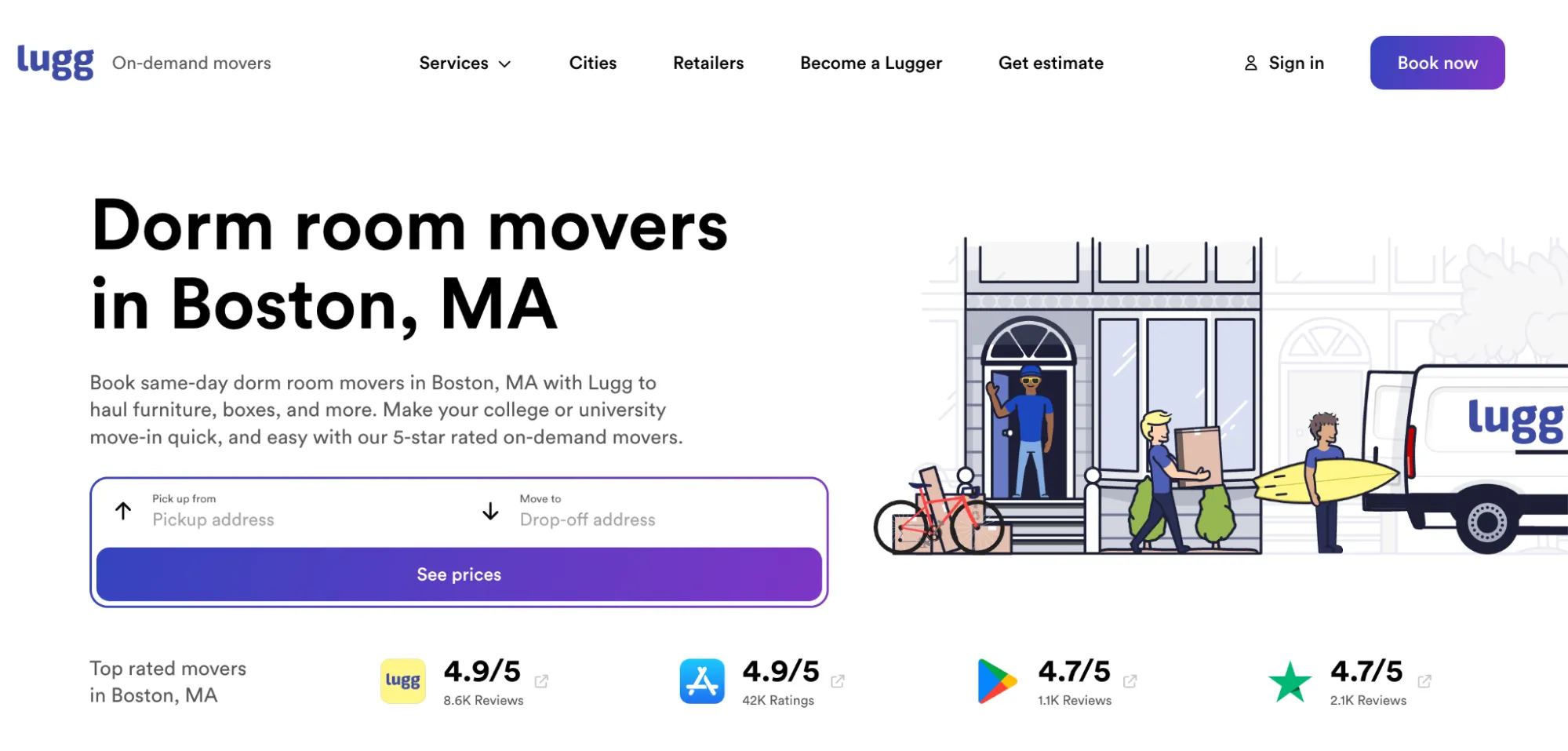
For example, Lugg moving company targets students who move in or out of the dorm. They show their high ratings from the start, and that works.
Business results: Segmentation makes students feel like the service was built exactly for their move — and they’re far more likely to book.
#4: Launch Targeted Paid Search
Paid advertising to college students lets your company show up when someone is looking for help. This is one of the most powerful marketing tools because students want to solve their moving problem right now.
When students need movers, they type things like:
-
“cheap movers near campus”
-
“student movers near me”
-
“same-day movers for apartment”
For example, Raimond’s Movers shows sponsored Google Map results on the keywords “affordable student movers Boston.” It’s a specific request, and they’re ready to meet it.
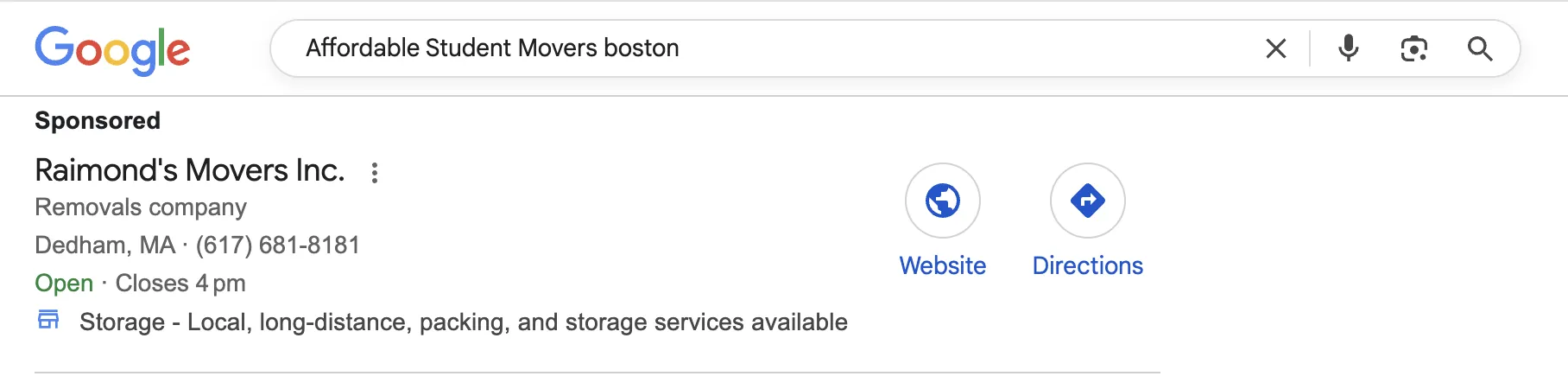
Business results: Ads for college students bring more high-intent customers and faster lead generation. Read how H2H Movers increased Google Ads conversions by 135% with a multi-channel PPC strategy.
#5: Win the Scroll: Instagram & TikTok
Students practically live on social media. They discover brands and watch recommendations on platforms like Instagram and TikTok. So, moving companies should create content that students actually enjoy watching, and maybe propose exclusive giveaways from time to time.
For instance, short videos:
-
“5 moving mistakes every student makes”
-
“How we moved a dorm room in 20 minutes.”
-
“What students forget to pack during move-out”
For example, one of the Luggs’ clients shared a funny TikTok video. She tagged them, it had some likes and comments, the company made a little joke about themselves, and bam - Gen Z has a nicer impression of these movers. User-generated content won again.
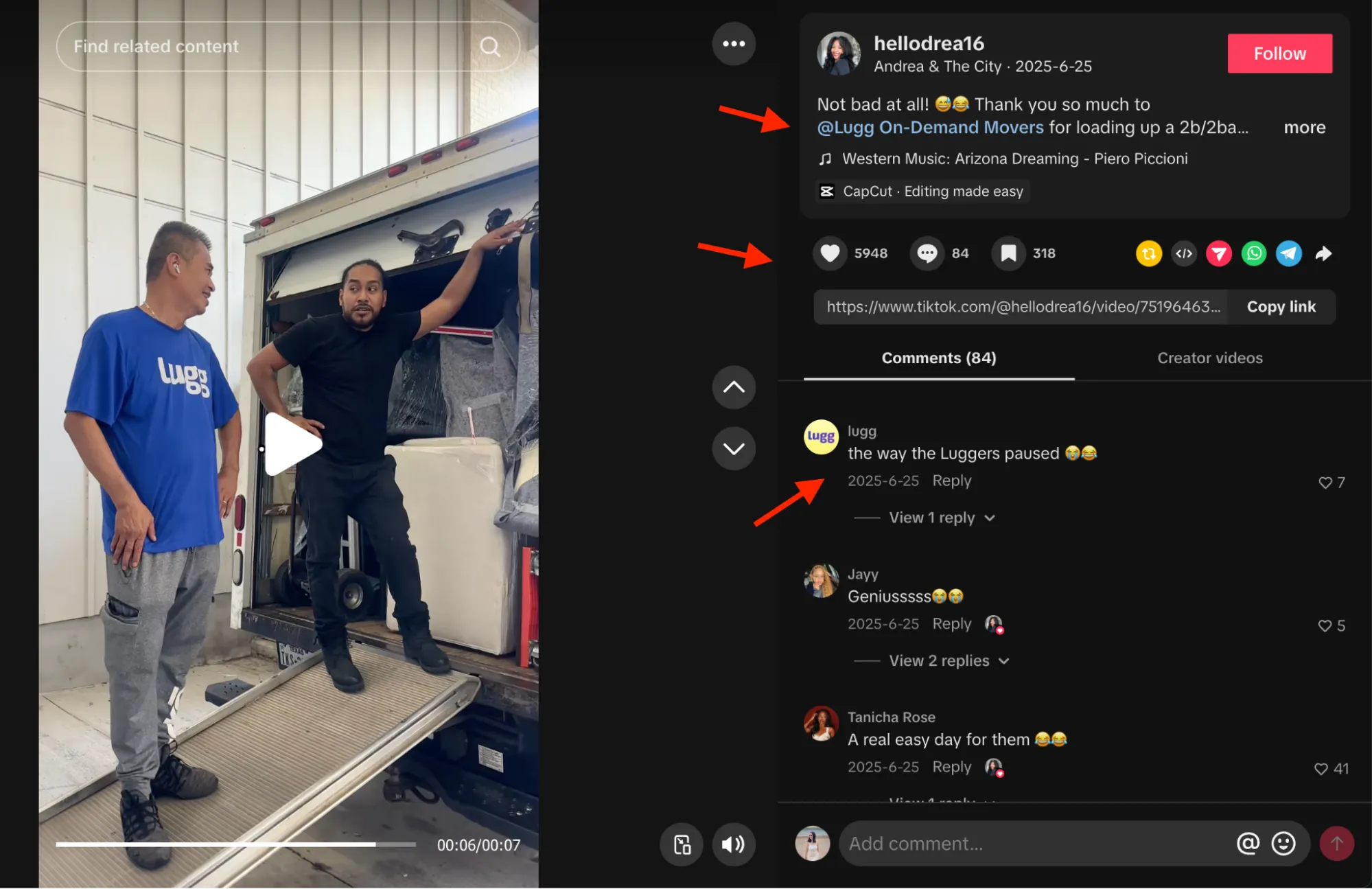
Business results: Content like this puts your brand in students’ heads long before moving day — so when they need help, they already know who to call.
#6: Employ Student Bloggers as Brand Ambassadors
Students trust other students far more than ads. That’s why you need to work with campus bloggers, TikTok creators, and student influencers.
They don’t promote your company directly, just share their personal experience. To their followers, moving company recommendations don’t feel like marketing, more like a recommendation from a friend.
For example, Niki Patton, with 1.7M+ TikTok followers, shares advice on dorm essentials and campus life. She created a video about college move-in day tips. Moving company ads match this type of content perfectly.
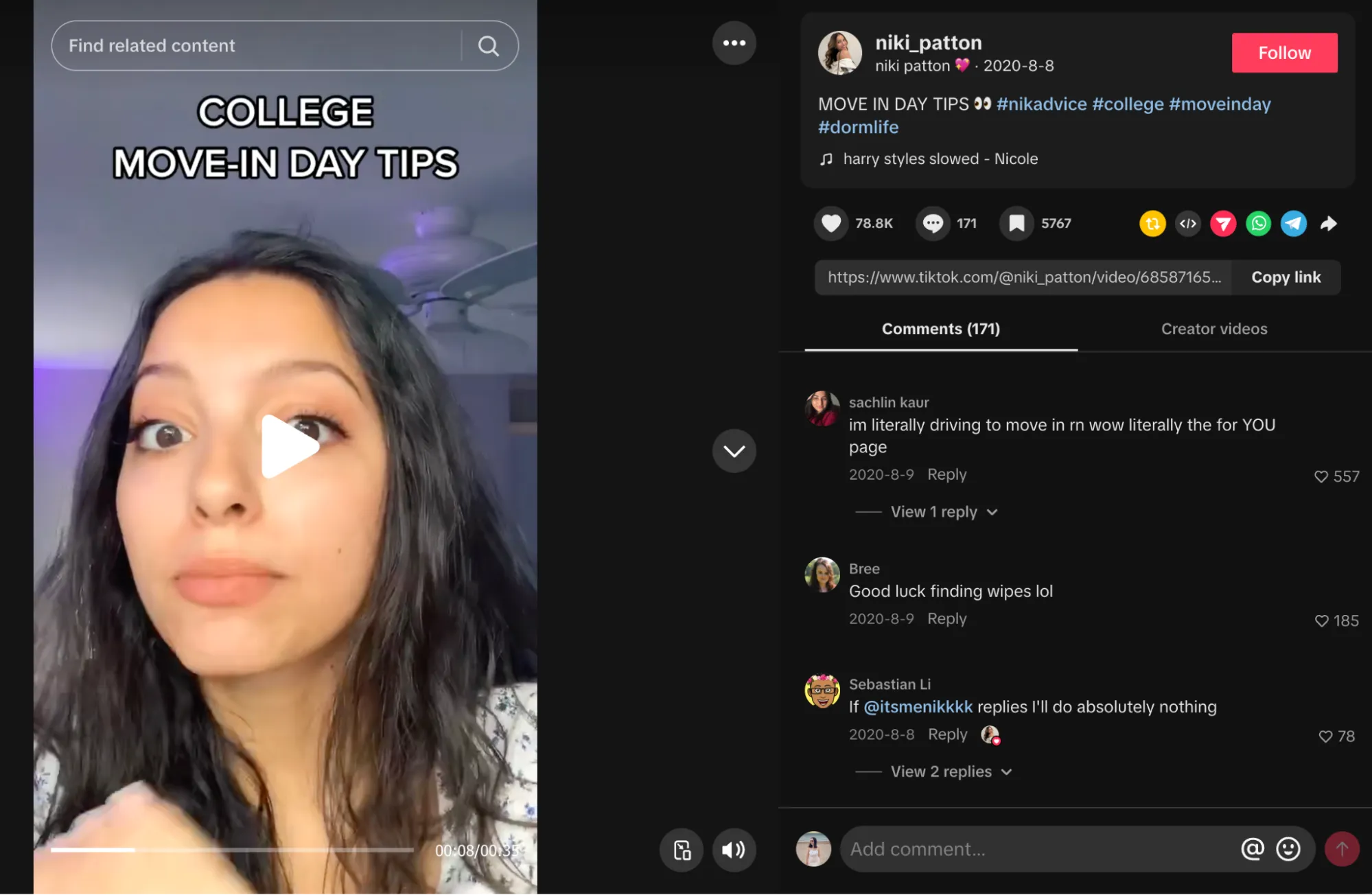
Business results: Suddenly, your moving company is the one everyone in the group chat recommends.
#7: Use Offline Marketing On-Site
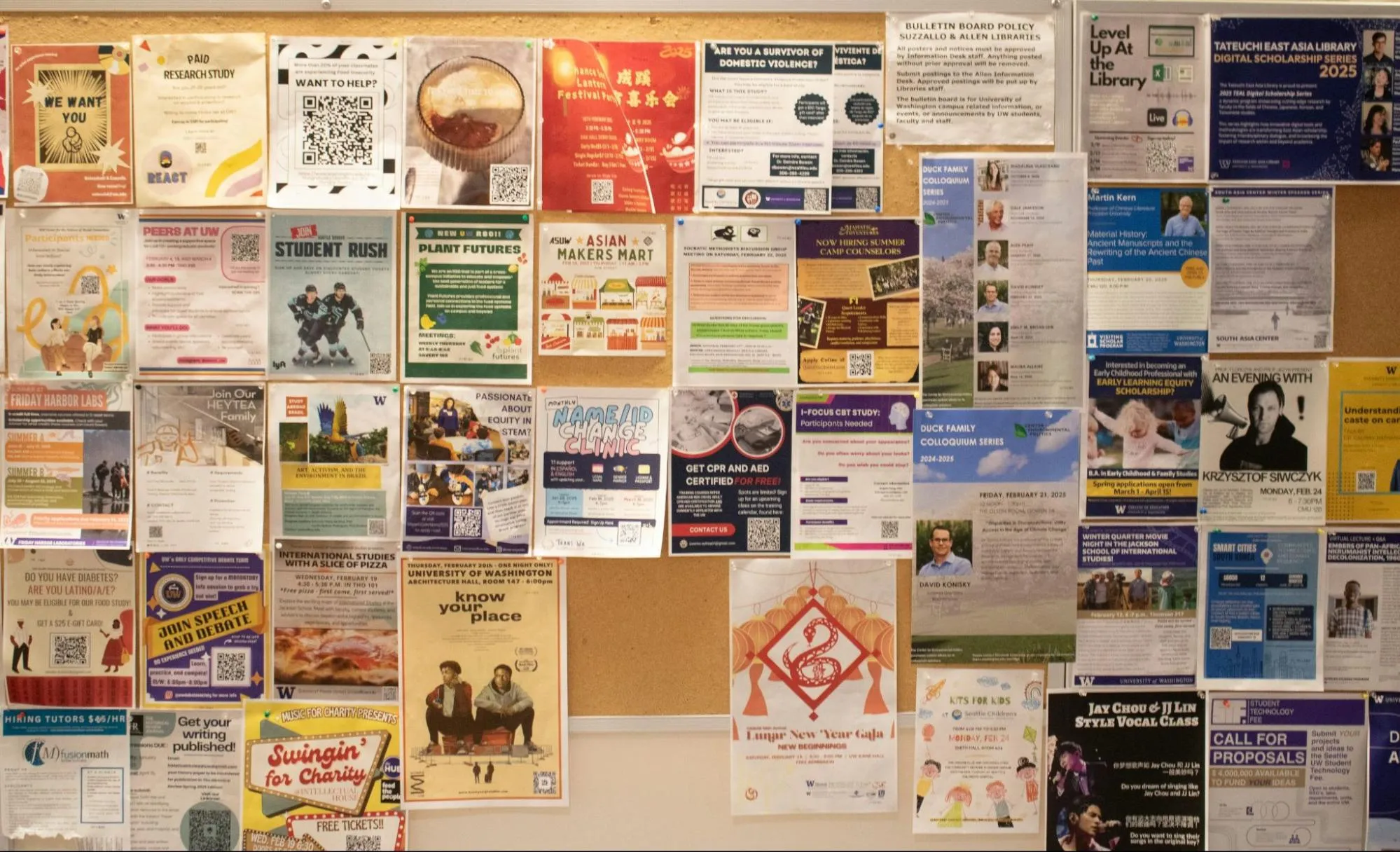
Even in the digital age, physical presence around campus still matters. Students constantly pass bulletin boards, dorm lobbies, and campus housing offices.
A simple poster or flyer placed in the right location can generate real leads.
For example, place a sign near the student apartments that says “Moving out this semester? Student discounts available,” with a QR code linking to your website.
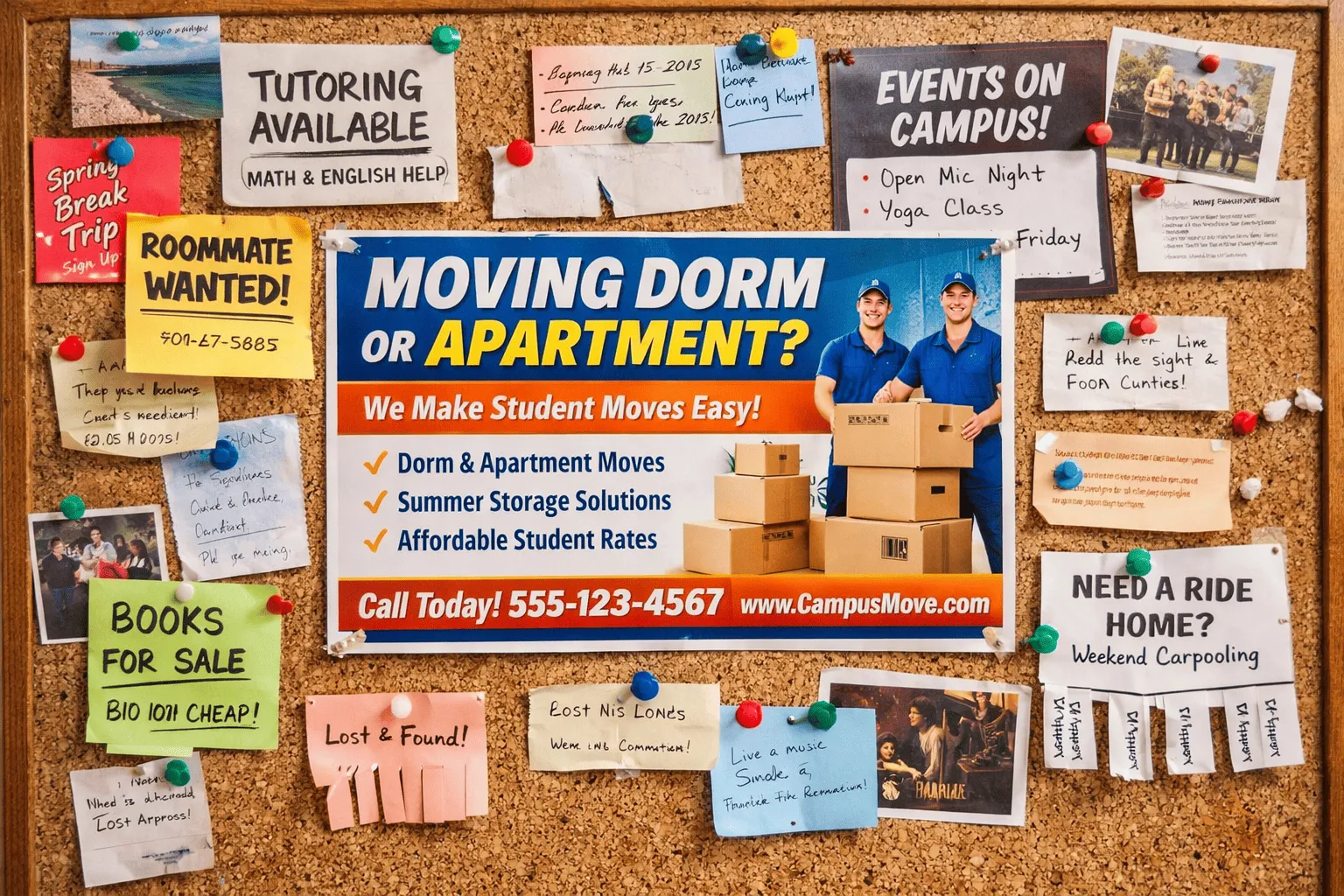
Business results: Now your brand lives both in their feed and in their daily routine.
#8: Provide Incentive Programs
Students love a good deal — and they love sharing it with friends. Referral incentives are especially beneficial when students move together with roommates, classmates, or friends.
A simple offer like: “Refer a friend and both get $25 off your next move” can quickly spread through group chats.
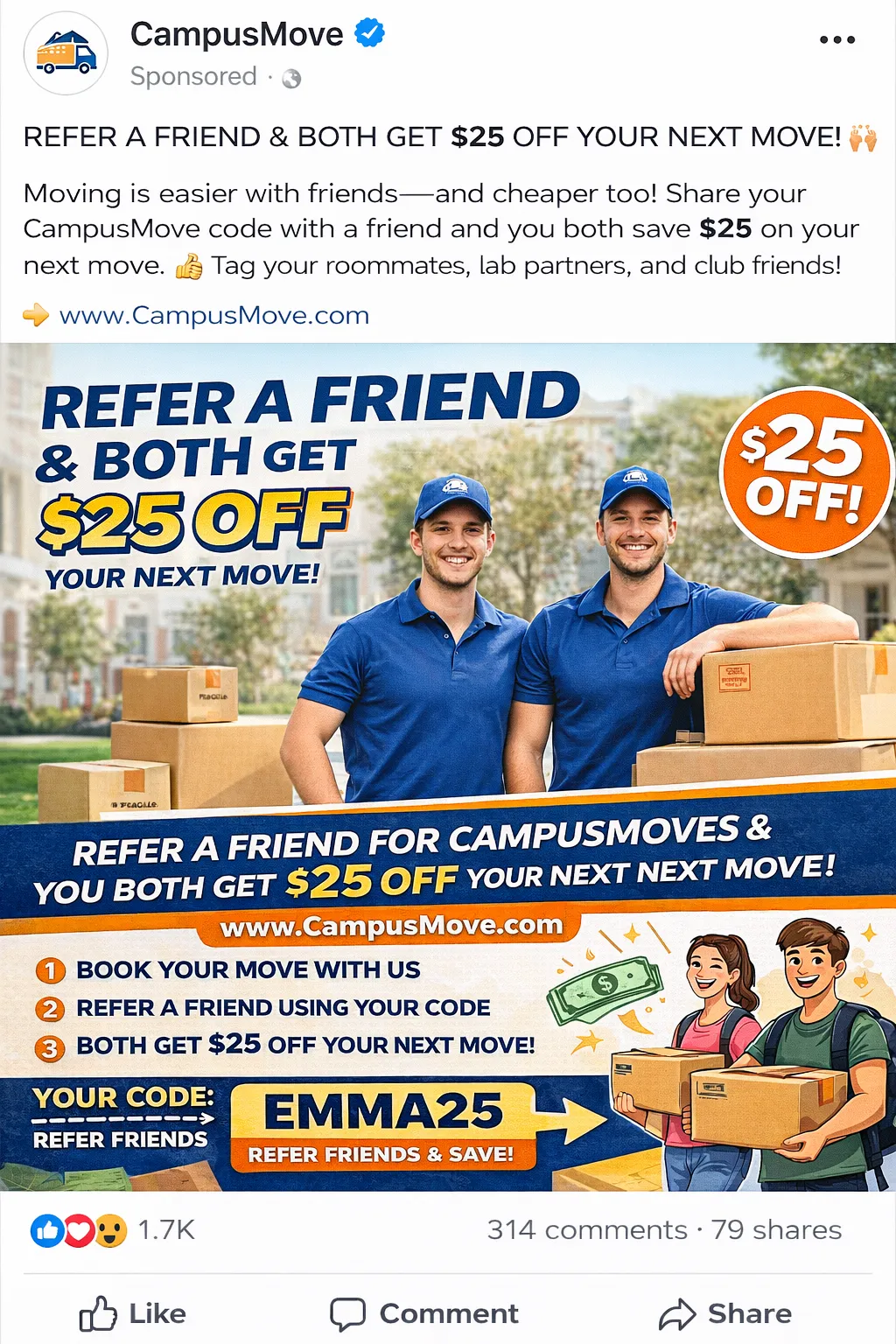
Business results: A single good experience can multiply quickly — incentives turn customers into enthusiastic recommenders.
#9: Be on the Same Page with Students
Finally, successful marketing to students requires speaking their language. Students appreciate brands that feel clear and human rather than overly corporate.
But no AI! They feel it from a mile away.
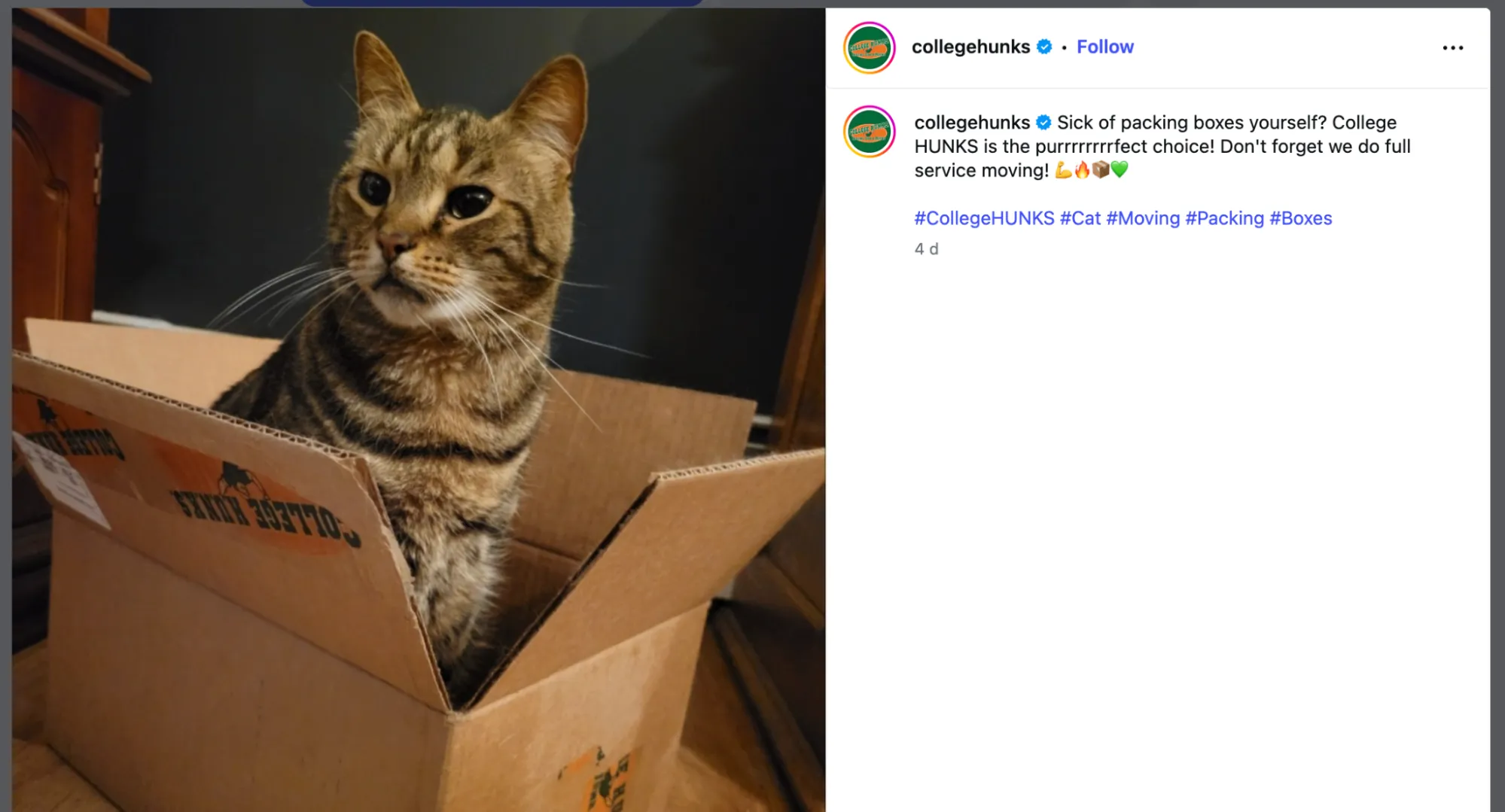
For example, College Hunks uses cute cats and messaging that acknowledges potential situations: “Sick of packing boxes yourself? College Hunks is the purrrrrrfect choice!”
“Think long-term. When Nestlé tried to sell coffee in Japan, it struggled because the taste felt foreign to local consumers who were accustomed to tea. Instead of targeting adults, the company introduced coffee-flavored sweets and candies aimed at children to familiarize them with the flavor. Over time, these children grew up already accustomed to coffee, and now Japan is a land of coffee connoisseurs.
In the moving industry, the principle can be similar: build trust early. If college students come to believe that moving with your company is frictionless and stress-free, you may gain a customer who you help move into their first apartment, their first home, and eventually even their retirement community. Think big!”
Valeria Karbusheva, Head of Blog, Moving Market Researcher
Did Your Marketing Actually Work? Let’s Check
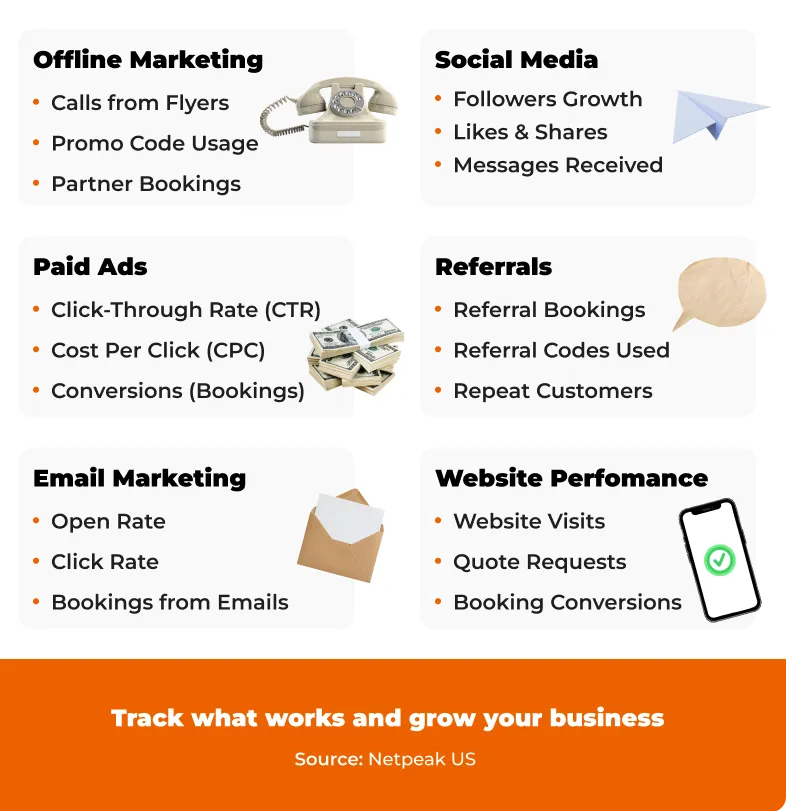
To understand whether your marketing efforts are actually bringing customers, you need to track a few simple metrics. They help you answer important questions:
-
Are people finding your business?
-
Which channels work best?
-
Are students actually booking moves?
Tracking the right metrics helps avoid wasting money and focus on strategies that bring real customers.
Below are the key areas to monitor.
Offline Marketing
Offline marketing tactics can be very effective near campuses, but only if they generate real customers.
Tracking helps you understand which locations or partnerships bring the most leads.
Metrics to track:
-
Number of calls mentioning the flyer or poster with targeted discounts
-
Discount code usage from offline marketing campaigns
-
Bookings from partner organizations
Example: You place flyers in student housing with the code MOVE10. If 20 students use that code, you know the flyers are working.
Social Media
High engagement means your content resonates with students and increases brand awareness.
Metrics to track:
-
Followers growth
-
Post reach (how many people saw the content)
-
Engagement (likes, comments, shares)
-
Messages or bookings from social media platforms
Example: A TikTok video about “Dorm move-out tips” receives 15,000 views and several students message your account asking for quotes.
Paid Ads
Paid advertising includes Google Ads, social media ads, or promoted posts. Numbers help to know whether advertising budgets are being spent efficiently.
Metrics to track:
-
Click-through rate (CTR) – how many people click your ad
-
Cost per click (CPC) – how much each click costs
-
Conversion rate – how many clicks turn into bookings
Example: If 100 people click your ad and 10 book a move, your conversion rate is 10%.
Referrals
Referrals are often the most cost-effective marketing channel because they rely on trust between students.
Metrics to track:
-
Number of referral bookings
-
Usage of referral codes
-
Repeat customers
Example: You offer a $20 referral discount, and 15 new customers book using that code.
Email Marketing
Email campaigns help with customer retention and customer loyalty, and remind students about your service during peak moving seasons.
Metrics to track:
-
Open rate – how many recipients open the email
-
Click rate – how many clicks the links inside the email receive
-
Bookings generated from email marketing campaigns
Example: An email announcing “Student Move-Out Season Discounts” leads to several bookings.
Why Multichannel Marketing Wins the Move
Students are surfing through multiple media channels every day. Google, Insta, TikTok, campus communities, you name it. Your goal is to make them see your brand everywhere and to start trusting you.
Stats show that it works:
Clients who engage with the brand through multiple channels have 30% higher lifetime value than those who interact with just one.
Which Marketing Channels to Combine
It depends on your budget and company size. If you’re a beginner, focus on high-impact, affordable channels first, then expand.
|
Channels to Combine |
Why It Works |
|
|
Low Budget ($1,000 – $2,000 / month) |
Google Business Profile, Local SEO, Social media, Campus partnerships |
Low cost, but still great for getting noticed locally. |
|
Medium Budget ($2,000 – $6,000 / month) |
SEO, Social media marketing, Referral programs, Small paid ad campaigns |
A mix of organic reach and PPC for moving businesses helps capture more leads. |
|
High Budget ($6,000 – $15,000+ / month) |
Use a full multichannel strategy including: SEO for moving companies, Paid ads, Influencer partnerships, Video content |
Show up across multiple platforms and make your brand hard to miss. |
Your college student marketing can be so much easier if you delegate the task to someone who already knows what to do. Give us a call, and we will recommend a marketing strategy to attract students and generate a consistent stream of leads!
Final Thoughts
College students might not seem like the most obvious target audience for moving companies, but they represent a large, active, and highly connected market.
Every semester, thousands of students move between dorms, apartments, internships, and cities, lacking experience and needing reliable assistance. This creates a unique opportunity for moving companies.
If your company provides a stress-free experience for these first-time customers, they can become long-term clients and strong brand advocates.
FAQ
Why segment students?
Students are not a single audience — freshmen moving into dorms, seniors moving to apartments, and students leaving belongings in storage all have different needs. Segmenting helps tailor your message and offers to specific situations, making your marketing more relevant. When students feel that customer service is designed for their exact needs, they are more likely to choose it.
Which marketing channel usually brings more leads?
For moving companies, Google Search and Google Maps often generate the most immediate leads because students search there when they urgently need movers. Social media like Instagram or TikTok help build awareness earlier, but usually work together with search. The strongest results typically come from combining several channels rather than relying on just one.
I’m a moving company startup – what should I prioritize from the beginning?
Start with the essentials: optimize your Google Business Profile, collect reviews, and make sure your website works well on mobile. These steps help students find and trust your company when they search for movers. After that, you can gradually add social media content and small paid ad campaigns.
Is marketing to college students profitable?
Yes, because students move more frequently than most other customer groups and often recommend services to friends. Even though individual moves may be smaller, the volume and referrals can generate steady demand. In addition, today’s student customers may return later for larger moves as their careers and living situations evolve.

 0
0
 0
0
 0
0
 0
0
Related Articles
Sustainability Marketing: 7 Smart Ways to Earn Trust (and Customers)
Learn how to grow your brand efficiently while using eco-friendly marketing practices to build trust and long-term revenue.
Why Your Amazon Pet Ads Are Getting More Expensive Every Quarter Since 2025 (and How Smart Brands Manage It)
What happened to the auction prices? Where is the margin going, and what should be done next quarter?
How to Track Brand Mentions in AI Search? Find Out Whether You Are in the Answer
Being mentioned in an AI search boosts visibility. Discover how to monitor your brand mentions in ChatGPT, Perplexity, or Gemini and follow our approach to higher mention frequency.