
Business owners spend hours obsessing over choosing visuals for their ads and writing the wittiest copy the internet has ever seen. But when the work is finished, they don't have the time or energy to select an online ad placement for their masterpiece, so they rely on algorithms to do so. Huge mistake!
Automation tools can place your ad in a thousand different contexts in just seconds. However, they can't tell the difference between "nice" and "toxic" ones. This is especially true when "toxic" means lower prices and you choose to downsize your budget.
In this article, we’ll explore where put your ads in 2026, what brand safety in advertising really means, and how to protect your reputation while still reaching the people you want.
What is Ad Placement: The Art of Showing Up Where It Matters
Ad placement is simply where your advertisement appears online. It’s not just who sees your ad, but where they see it. For example, your ad can show up:
-
At the top of Google search results
-
Inside a news article
-
Between posts in a social media feed
-
Before a YouTube video
-
Inside an app
Each of these places feels different to the user. An ad inside a helpful article feels natural. An ad in the middle of a video can feel annoying. An ad next to low-quality or shocking content can make your brand look shady.
The same ad can perform well in one place and fail in another — not because the copy is bad, but because the context is wrong.
Why Ad Placement Matters as Much as the Ad Itself
People never read ads in a vacuum — they read them through the mood of whatever surrounds them. Here are a few reasons to take care of the right ad placements.
-
Ads placed in the right spots work better. For example, the Stories format on Facebook and Instagram reaches around 1.34% CTR, while the barely visible Right Column averages just 0.41%.
The same goes for channels: an ad that shows up when someone searches for “emergency plumber near me” works better than a random message drifting through a social feed.
-
Context is everything. An ad for cooking tools inside an article with a spaghetti recipe feels helpful. But showing the same ad next to shocking news feels wrong.
When ads match what people are reading, they blend into the experience and don’t irritate much. In fact, contextual relevance can boost brand recall by up to 70%.
-
The “Halo Effect” is real. The same ad can feel up to 74% more trustworthy when it shows up near quality journalism or educational content that people already respect. Some of that trust rubs off on your ad.
But place it beside spam, and the opposite happens.
At Netpeak US, we work with various ad types all the time and know how to choose the best ad placement for e-commerce brand. If you want great results from the start without the headache, just give us a call!
Top Ad Placement Tactics for 2026
Think of ad placement as choosing where to speak. You could shout in a crowd, whisper to someone who needs you, or join a conversation that's already happening.
Each of the ad placement strategies below is a different way of choosing that moment.
Tactic 1: Contextual vs. Behavioral Targeting
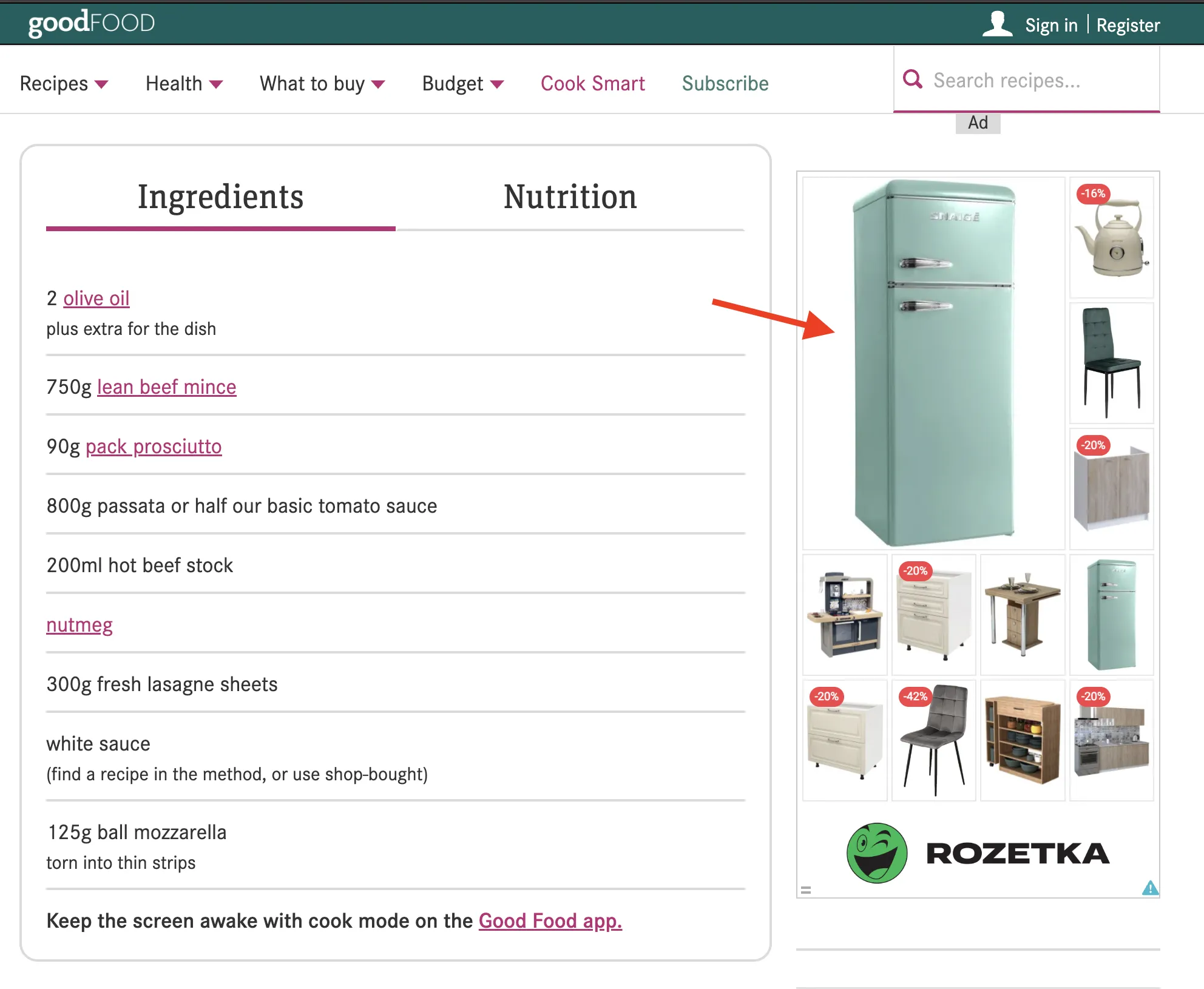
Behavioral targeting follows people based on their previous actions. Imagine a person searches for kitchen furniture, and targeted ads start following them across news sites and social media.
This works, and some people from the older generation might think it's a sign to buy if they see the same kitchen table everywhere. But for other people, this can feel intrusive.
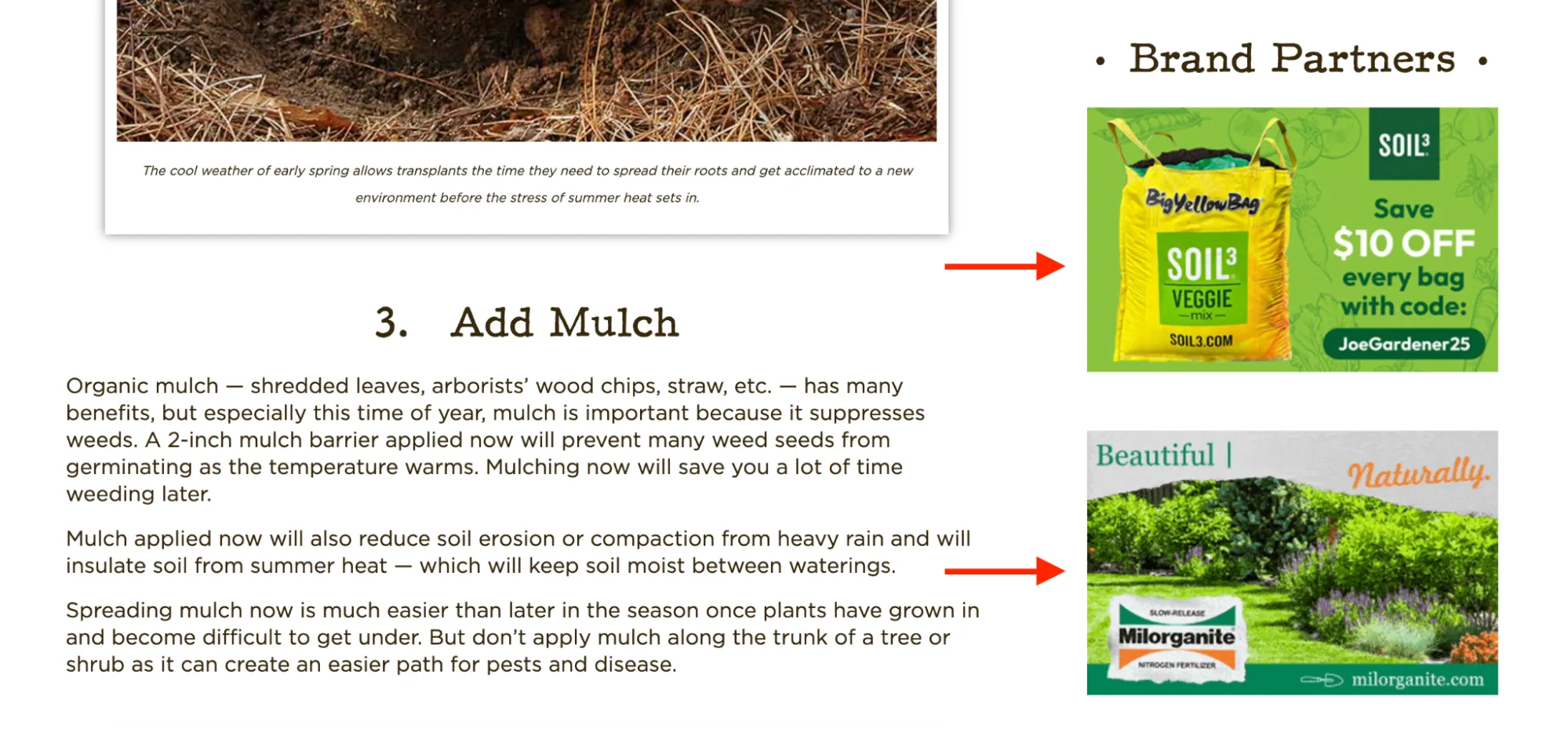
Contextual targeting reacts to what’s happening right now. For example, a person reads an article titled “How to prepare your garden for spring” and sees ads for soil or fertilizer.
It feels natural because the ad matches current interests. They are already thinking about the topic.
Tactic 2: Above-the-Fold vs. In-Feed vs. Interstitial Placements
These formats evoke different responses from users. The choice between them is a business decision based on what you’re optimizing for: reach, trust, or urgency.
Above-the-Fold is the space users see immediately when a page loads. For example, a person opens a news article. At the very top, before any text, there’s a banner ad.
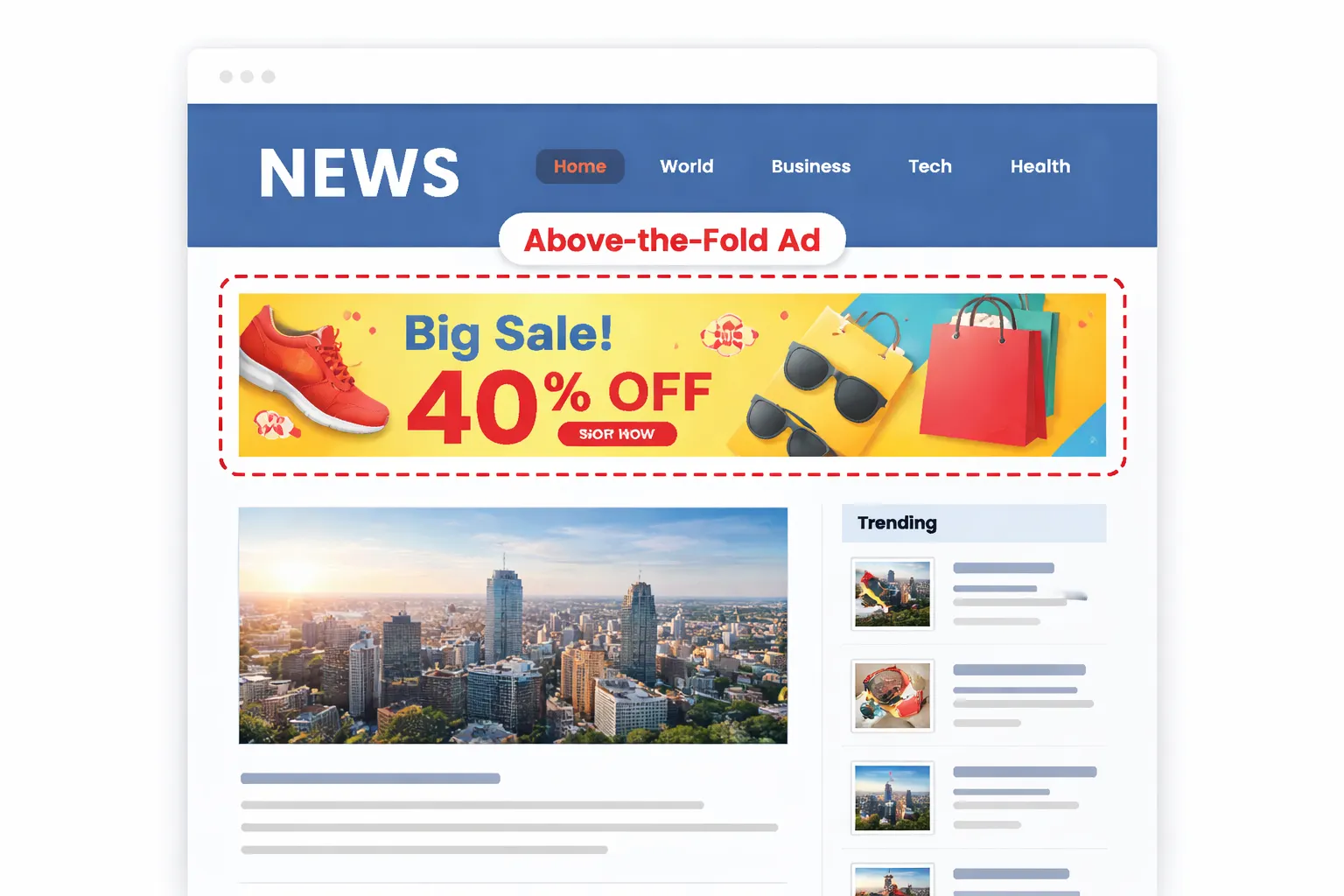
Above-the-fold placements are ideal for launches and brand-building phases. They don't generate immediate clicks; rather, they build recognition. Cons: Easy to ignore, because these ads can feel like “noise.”
In-Feed ads hide inside everyday content. For example, a user scrolls through Facebook and, between two normal posts, sees a sponsored pay-per-click one.
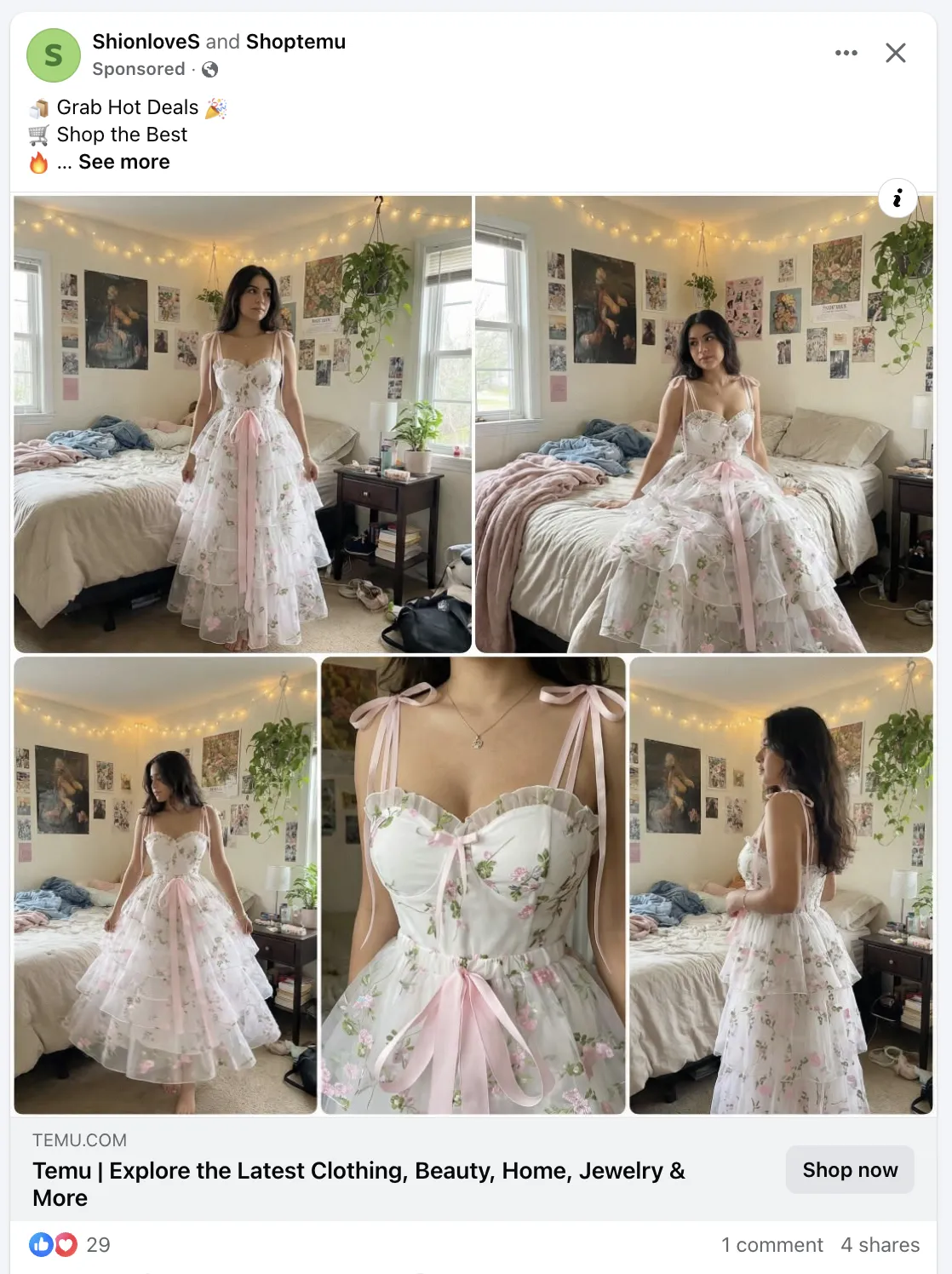
In-feed placements consistently deliver better engagement and lower cost per action because they feel natural and less disruptive. For many businesses, in-feed becomes the core growth engine. Cons: Needs good design and copy to blend in.
Interstitial ads are full-screen messages that appear between actions. For example, a person opens a mobile app and, before it loads, a full-screen offer appears. Or a video begins with an unskippable ad before the content starts.
This can also be a branded “pause screen” when a user stops a video or a full-screen card between articles in a news app.
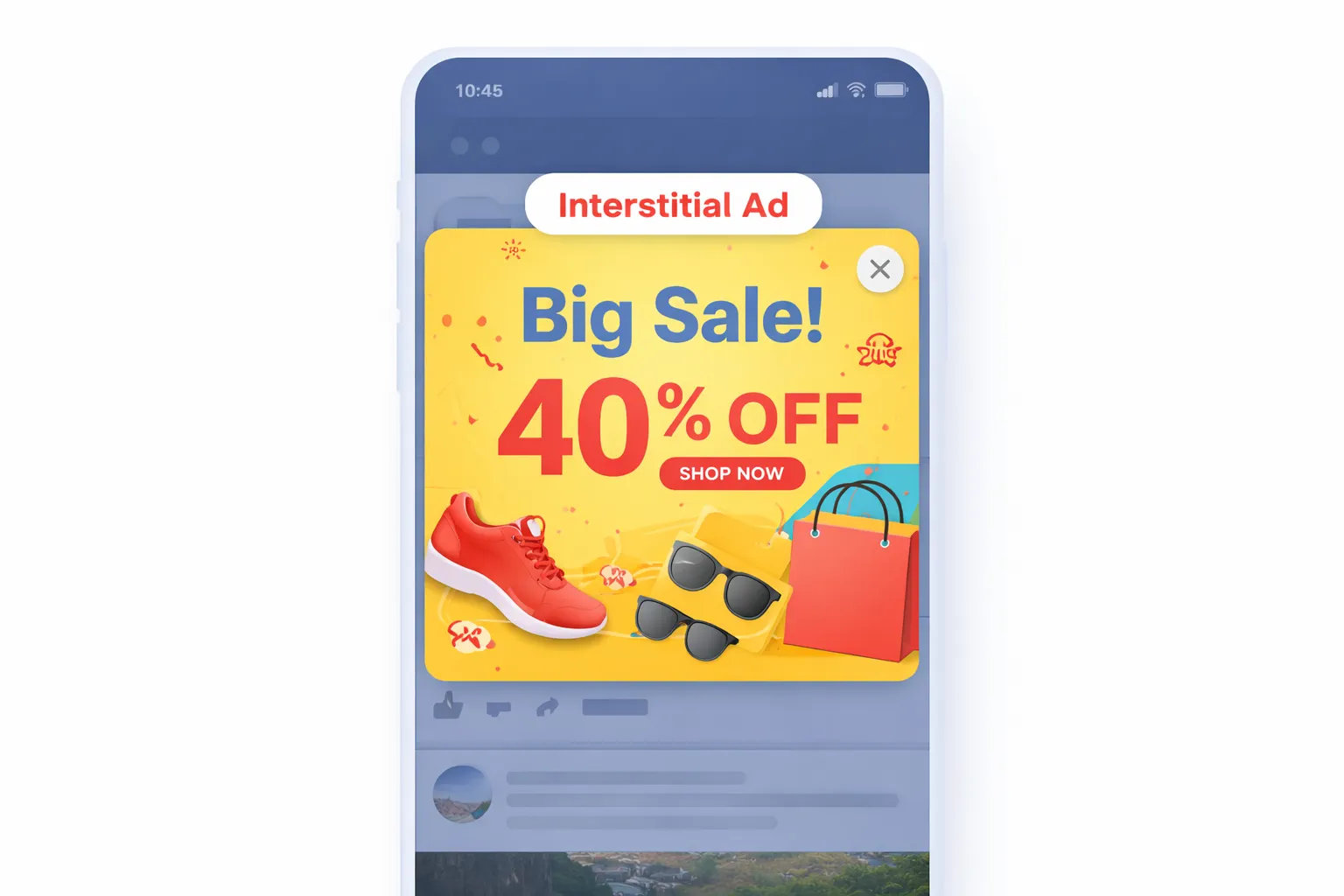
Interstitials are powerful for promoting a limited-time offer or a major launch. They created to be remembered. Cons: Can annoy people if you use them too much.
Tactic 3: Whitelisting and Blacklisting
You can’t trust programmatic advertising to automatically place your ads wherever they want. If you give them this power, you’ll find your brand on thousands of websites and apps in seconds. However, the publisher quality of half of them will be subpar.
Without guidance, algorithms optimize for cheap reach and don’t think a lot about your reputation.
Whitelisting means creating a short list of websites and apps on which ads can show up. So, even if another site offers cheaper impressions, the system won't use them.
In practice, this means that you:
-
Add domains you like (e.g., mindbodygreen.com, healthline.com) in Google Display Network or DV360.
-
Select channels or videos on YouTube based on your brand suitability.
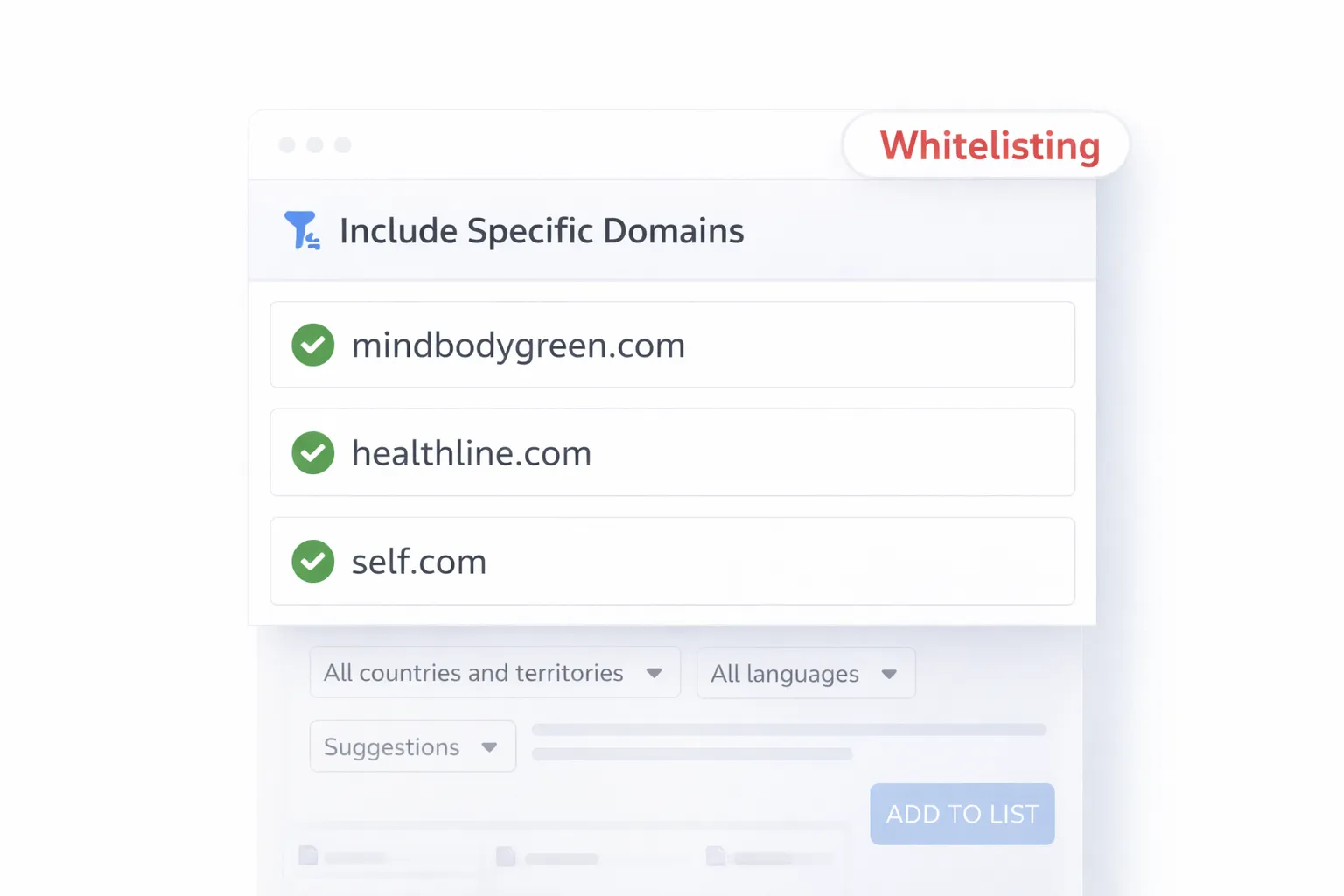
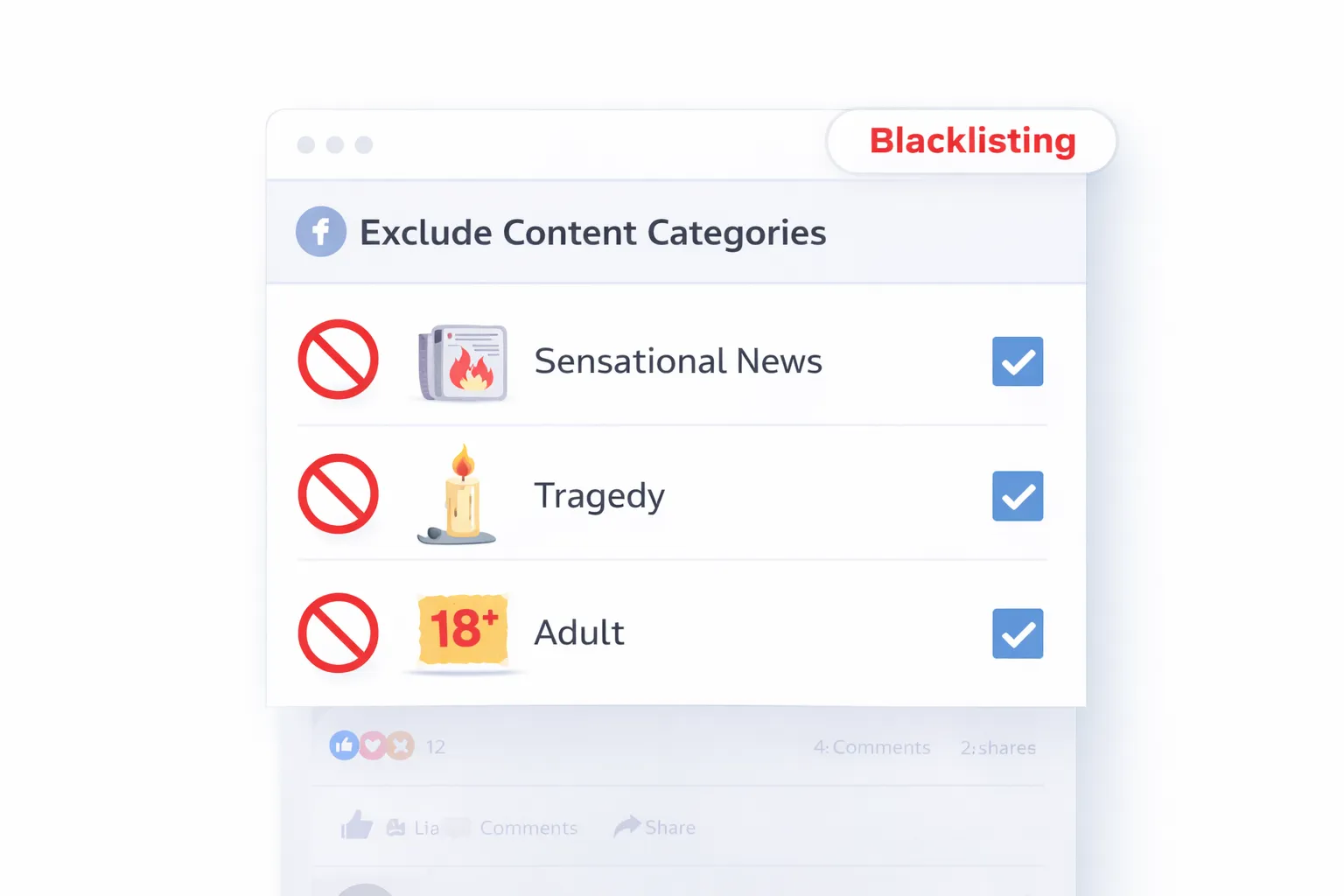
Blacklisting is the opposite filter you use to never see your ads in some places, like spam sites, fake news pages, adult content, content farms, etc.
In practice, you choose negative placements by:
-
Excluding content categories (e.g., “sensational news,” “tragedy,” “adult”).
-
Adding specific domains that feel off.
-
Blocking entire app categories if they don’t fit your audience.
Tactic 4: Moment-Based Placements
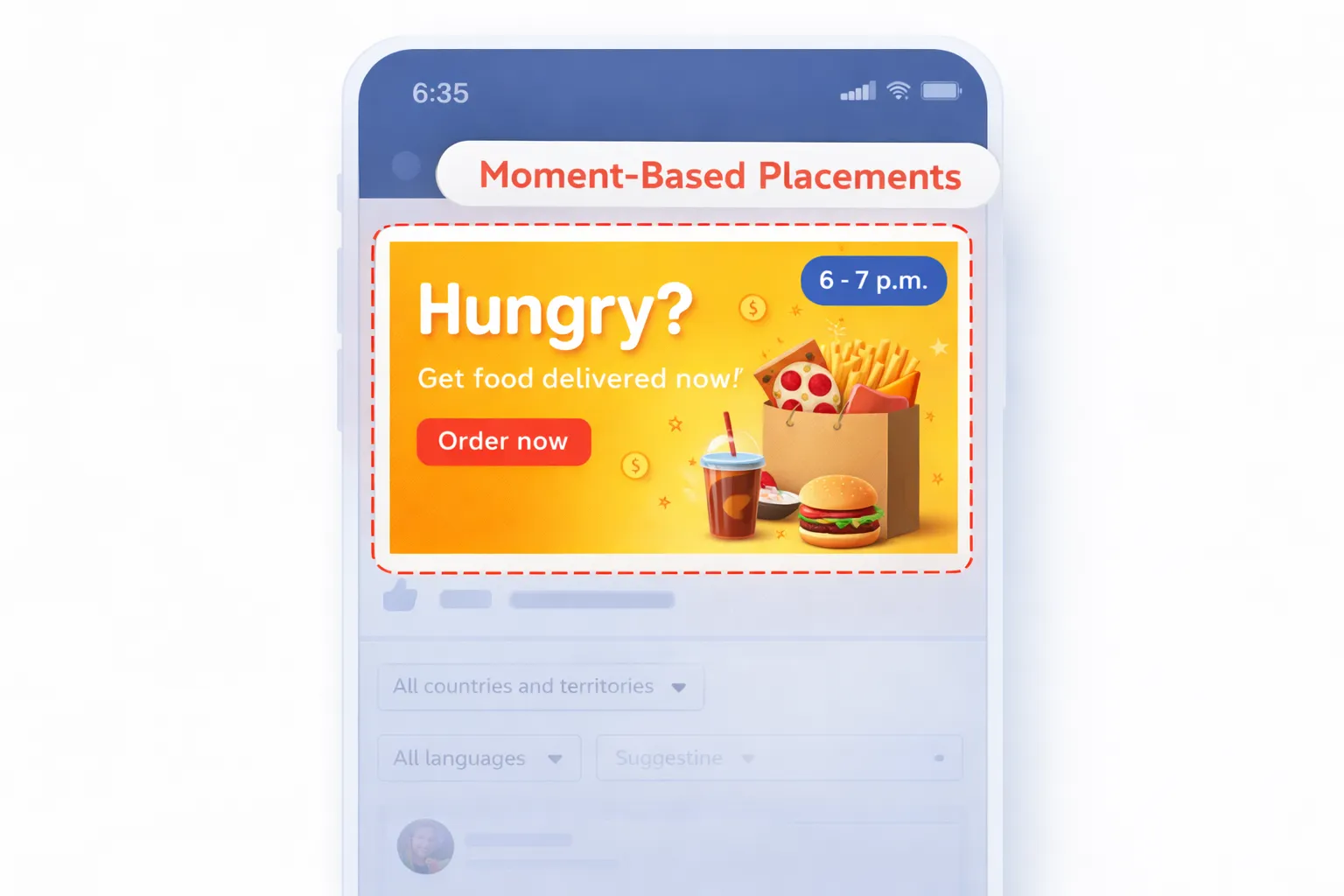
Moment-based placement focuses on when your ad appears, not just where. It targets short “windows of intent” — the minutes or hours when a person is most likely to act. For example, a food delivery ad is shown at 6-7 p.m., or a repair service ad is shown during a local storm.
In practise, you need to:
-
Define the “need window.”
-
Use time and context controls in ad platforms. You can set ad schedules (e.g., only 5:30-8:30 p.m.), increase bids during “hot hours”, or combine with location (e.g., show food ads near offices at 6 p.m.)
Which tactic is the most effective for your business? Without expertise, it’s hard to say, but luckily, we at Netpeak US have it after all these years of hard work. Give us a call, and we’ll create an ad placement strategy tailored to your brand.
Digital Ad Placement Risks: The Hidden Costs
When ads are scattered across thousands of sites and apps, problems don’t always announce themselves. Your reputation or money could be slipping away.
-
Brand safety risks. Your ad might appear next to fake news or on a spammy website. Imagine a wellness product shown beside conspiracy content. Not the best association, right?
What to do: Start with a whitelist for your first campaigns and build a small blacklist of sites you never want to be associated with.
-
Ad fraud prevention. It involves paying for impressions, clicks, or views generated by bots, fake sites, or invisible placements. For example, bots click your ad hundreds of times. So, you waste the budget and make decisions based on fake data. For small businesses, especially, this can quietly drain money.
What to do: Avoid “too cheap to be true” offers and watch for red flags: huge traffic with zero engagement, strange geographies, etc.
-
Brand fatigue. Poor placement teaches people to ignore you. If your ad pops up at the wrong time or interrupts content too aggressively, people develop resistance to your brand. You become part of the noise.
What to do: Set frequency caps so the same person doesn’t see your ad too many times, and favor in-feed and contextual placements over pop-ups.
-
Invisible ads. Some placements technically show your ad, but no one truly sees it. For example, they put your banners at the very bottom of pages or use tiny formats on cluttered sites.
What to do: Set the minimum ad size on the screen (e.g., 50%), use heatmaps, and read placement reports.
How to Measure Placement Success?
Good ad placement is about seeing proof that the right people are noticing you in the right places. Here are basic signals:
|
Why to Measure |
How to Use |
Tools |
||
|
1. |
Engagement Quality |
Clicks and viewability metrics alone can lie. If people leave in two seconds, the placement is wrong — even if CTR looks good. |
Look at user experience (UX): time on site, pages viewed, scroll depth, and bounce rate. If visitors from one environment scroll, read, and move — keep it. If they vanish in seconds — don’t. |
Google Analytics 4 (time on site, pages per session, bounce/engagement rate) Hotjar / Microsoft Clarity (heatmaps and session recordings) Google Ads, Meta, LinkedIn platform reports (CTR by placement) |
|
2. |
Conversion Behavior |
A small channel that brings 5 sales is better than a big one that brings 500 empty visits. It’s the core of performance marketing. |
Group conversions by placement type (search, in-feed, display, video). Keep the ones that produce customers. |
GA4 Conversions (form submits, calls, purchases) Call tracking like CallRail, WhatConverts, Ringostat (for phone-driven businesses) CRM like HubSpot, Pipedrive, Zoho (lead quality by source) UTM tags (to separate placements clearly) |
|
3. |
Brand Signals Over Time |
Some placements don’t convert instantly, but they build familiarity. |
Watch branded search growth, direct traffic, and remarketing. These often rise when your brand appears in calm, trusted environments. |
Google Search Console (branded queries growth) GA4 (direct traffic & returning users) Brand monitoring tools like Brand24 or Mention (brand mentions) AI mention trackers like Peec, Scrunch, or Profound (visibility in AI answers) |
|
4. |
Placement Reviews |
Most platforms show where ads appeared. And you want to know it. |
Once a week, scan environments, remove anything that feels off-brand, and lock in places that feel right. |
Google Ads (“Where ads showed”) Meta Ads (“Placement breakdown”) Programmatic demand-side platforms reports Spreadsheets for whitelists & blacklists |
Netpeak US Case Studies: Practical Proof That Ad Placement Matters
Theory is nice, but results are better. Here are some case studies from our work that prove you should choose your ad placements as carefully as you choose which film to watch tonight.
Pandora’s International Women’s Day Holiday Campaign
Pandora knew many people were looking for holiday gifts, such as jewelry. However, showing ads everywhere is expensive. They wanted their ads to reach real buyers, not just rack up thousands of views.
What We Did
-
Constantly checked where the ads appeared and improved ad placements, so money wasn’t wasted on places that didn’t bring buyers.
-
Put more budget into the ads that actually led to purchases.
-
Reminded people who had already visited Pandora’s site to come back and finish buying. Our experts used the Google Display Network and the Meta platforms for that.
Results: Pandora sold 65% more jewelry from those ads, and each new customer cost less to attract.
H2H Movers PPC Growth Campaign
H2H Movers, a moving company in Chicago, wanted to get more service requests and outpace competitors without spending too much on advertising.
What We Did
-
Showed ads on the not-so-popular placements like Bing and Reddit to reach different kinds of potential customers at lower prices.
-
Continuously tested and improved creatives, audience targeting, and bidding so placements didn’t waste budget.
-
Worked closely with the client to scale what was working.
Results: There has been a 135% increase in Google Ads conversions, resulting in more leads and customers.
Ukrposhta Brand Awareness & Conversion Campaign
Ukrposhta — Ukraine’s national postal service — wanted to tell people about new services and promotions. They needed ads placed where relevant audiences would actually see and respond to them.
What We Did
-
Used advanced placement tools, Display & Video360 (DV360), and Admixer Trade Desk. This allowed us to choose exactly where and to whom the ads will show.
-
Placed both standard ad creatives and Rich media creatives, such as Mobile Halfscreen and Catfish, to reach the parents' audience.
-
Tested and optimized placements and creative formats, so ads performed well.
Results: In the “New Year’s Business” campaign, the ads reached 84.7% of the target audience and boosted landing-page conversions by 124×.
If you care deeply about your brand's reputation, we're here for you. Recently, we helped an online distributor of nutritional supplements improve their ratings and reviews across search results, maps, and directory listings. If you need help with yours, let us know!
Final Thoughts
Advertising is expensive, and the risks are too high, especially for small businesses. That's why you need to create your own rules for ad placement. A good placement should:
-
Bring in people who will scroll, read, and sometimes click. Bots can't do that.
-
Support your brand’s values.
-
Move someone one small step closer to choosing you.
If the placement seems shady or shows signs of spam or fraud, don't use it. You can’t be too careful with brand safety in advertising.
FAQ
What is ad placement?
Ad placement is where your ad appears online — on which website, app, feed, video, or screen position. It shapes how people perceive your brand and how likely they are to click or convert.
What is the difference between ad placement and ad targeting?
Ad targeting decides who sees your ad (age, location, interests, intent). Ad placement determines where it appears (search results, news sites, social feeds, videos, apps).
How can I avoid my ads appearing on low-quality websites?
Use platform safety filters, create blacklists, and regularly review “Where your ads appeared” reports. For greater control, start with whitelists — only allow trusted sites, apps, and channels.
Do ad placement strategies affect my CPC?
Yes. High-quality, relevant placements often deliver better engagement, which lowers CPC over time. Poor placements can drive cheap clicks that don’t convert, quietly raising your real cost per customer.

 0
0
 0
0
 0
0
 0
0
Related Articles
Local SEO for Home Service Companies: 8 Fool-Proof Ways to Reach Your Customers
When something breaks, people go straight to Google to find a plumber, an electrician, or a roofer right away. And local home services SEO is what makes sure you’re the one they find (and choose!) instead of your competitor.
Local SEO for Construction Companies Explained
If clients can’t find you online, they hire someone else. Learn how local SEO puts your construction business in front of ready buyers.
How to Market a Security Company in 2026?
Most security companies are invisible online. Here's how to fix that and turn your digital presence into a steady stream of qualified leads.