
Ask anyone: Moving is stressful. I mean, seriously — have you ever met anyone who enjoys packing up all their earthly belongings, pets, kids and valuables, and schlepping them to another house or apartment? No one is volunteering for that mess, and some people still have nightmares about their last move.
Whether you’re just getting started or looking to overhaul your approach, this guide breaks down the peculiarities of marketing for moving companies, the common mistakes that burn ad budgets and the six best platforms that generate high-intent moving leads. Looking for a broader view of what digital marketing looks like for movers? We covered the fundamentals in our guide to digital marketing for moving companies.
Get a free consultation with our marketing experts.
Marketing a Moving Company: The Peculiarities
Most marketing strategies are designed for businesses that see customers more than once. Coffee shops, gyms, SaaS platforms — they all benefit from recurring revenue and brand loyalty built over time. Moving companies? Not so much. Here’s what makes moving marketing fundamentally different.
The U.S. moving company advertising market is worth roughly $23.3 billion in 2024, and nearly 26 million Americans relocate every single year. That’s a lot of bubble wrap. Yet the average mover makes this decision once every few years — which means that if your moving company can’t be found at the exact right moment, you’re invisible.
Moving companies rely on trust, positive reviews and referrals. And if your company has got the brawn, it may not necessarily have the marketing brain. The truth is, digital marketing for moving companies is an entirely different animal from, say, promoting a coffee shop or an e-commerce brand. You can’t coast on repeat visits. You can’t rely on impulse purchases. And you definitely can’t afford to let bad reviews fester while you’re busy loading someone’s piano onto a truck.
Adaptation to Extreme Seasonality
More than 60% of all U.S. moves happen between May and September, with costs spiking 20%–30% during peak months. That means your ad spend, staffing and content calendar all need to flex dramatically between seasons. A static, year-round budget is a recipe for wasting money in January and getting outbid in July. Smart moving company marketing ramps up campaigns in March and April to capture early planners, goes full throttle through summer and pulls back (without disappearing) during the slower fall and winter months.
Hyperlocal Targeting Ads
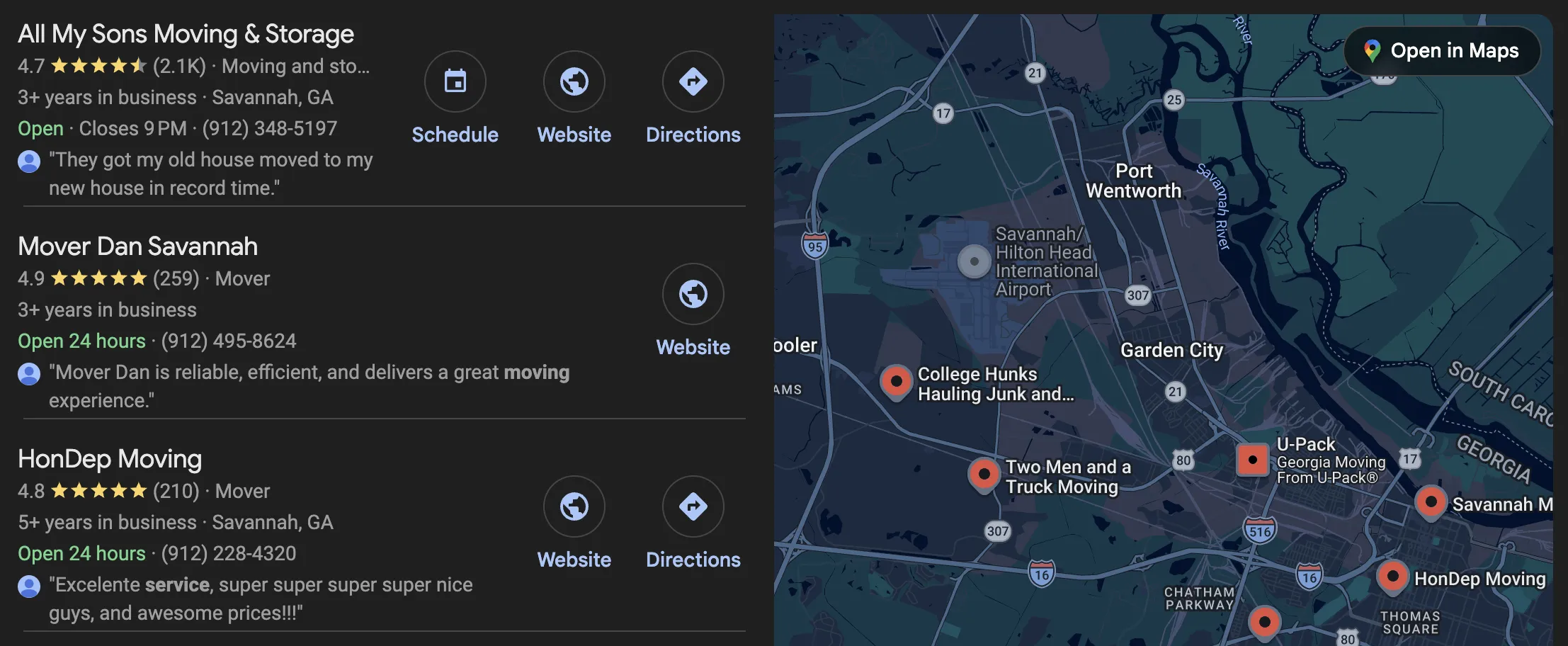
A plumber in Dallas doesn’t serve customers in Houston. Similarly, a moving company can’t afford to waste impressions on people 300 miles away. Geo-targeted moving ads are non-negotiable. Your Google Business Profile for movers should be optimized down to the neighborhood level, and every paid campaign needs tight geographic boundaries. This is where local visibility matters more than massive reach. For a deeper look at why hyperlocal matters, check out our piece on local advertising for small businesses.
Repeat Customers Are Rare
The average American moves about 11.7 times in a lifetime. That sounds like a lot until you realize those moves are spread across decades. Unlike a restaurant that can cultivate regulars, your customer acquisition pipeline needs to constantly refill with brand-new people who have never heard of you. This makes first impressions and online reviews disproportionately important — you likely get one shot per customer.
Multichannel Marketing Strategy
Relying on a single platform is like loading all your furniture into a MINI — something’s going to get left behind. A proper strategy for how to market a moving company uses a mix of Google Ads, social media, local directories, email marketing and content marketing working in tandem. Each channel reinforces the others. A potential customer might see your Facebook ads first, then check your Yelp profile, then Google you before making a call. If any of those touchpoints is missing or looks neglected, you lose the lead.
Focus on Mentions & Trust Signals
Here’s where it gets personal. You’re asking strangers to let your employees into their home and handle their grandma’s priceless vase collection. That requires an extraordinary level of trust — and reputation management isn’t optional, it’s existential. According to a 2024 Reputation survey, 54% of consumers trust online reviews more than recommendations from friends and family. And negative reviews push 67% of consumers away from making a purchase.
Let me give you a real-world horror story. A moving company completely dropped the ball by overbooking both its trucks and movers on a holiday weekend. One of their customers found her own moving truck and asked if the movers could still come help. The company said “of course!” — but never sent the movers. The customer had to move with the last-minute help of friends and family, ended up hurting her back and was still charged for the full move. She wrote scathing reviews on several review sites, told all her friends the story and went scorched earth about it across all her socials. How does a company come back from that when trust is of the utmost importance in this industry? The answer: It’s incredibly hard — and it’s exactly why your online reputation needs to be managed proactively, not reactively.
Catering for Urgent Decision-Makers
Many people searching for movers are doing so under a deadline. A lease is ending. A new job starts Monday. The house sold faster than expected. These are high-intent moving leads — people who need help now and will go with whoever looks trustworthy and available. Your digital presence needs to communicate speed, professionalism and availability at a glance. Slow-loading websites, buried phone numbers and week-old social media posts scream “We’re not ready for you.”
Why Many Moving Businesses Fail With Advertising
Before we get into the platforms that work, let’s talk about why so many moving company ads fail. If you recognize yourself in any of these, don’t panic — self-awareness is step one.
Low-Quality Leads
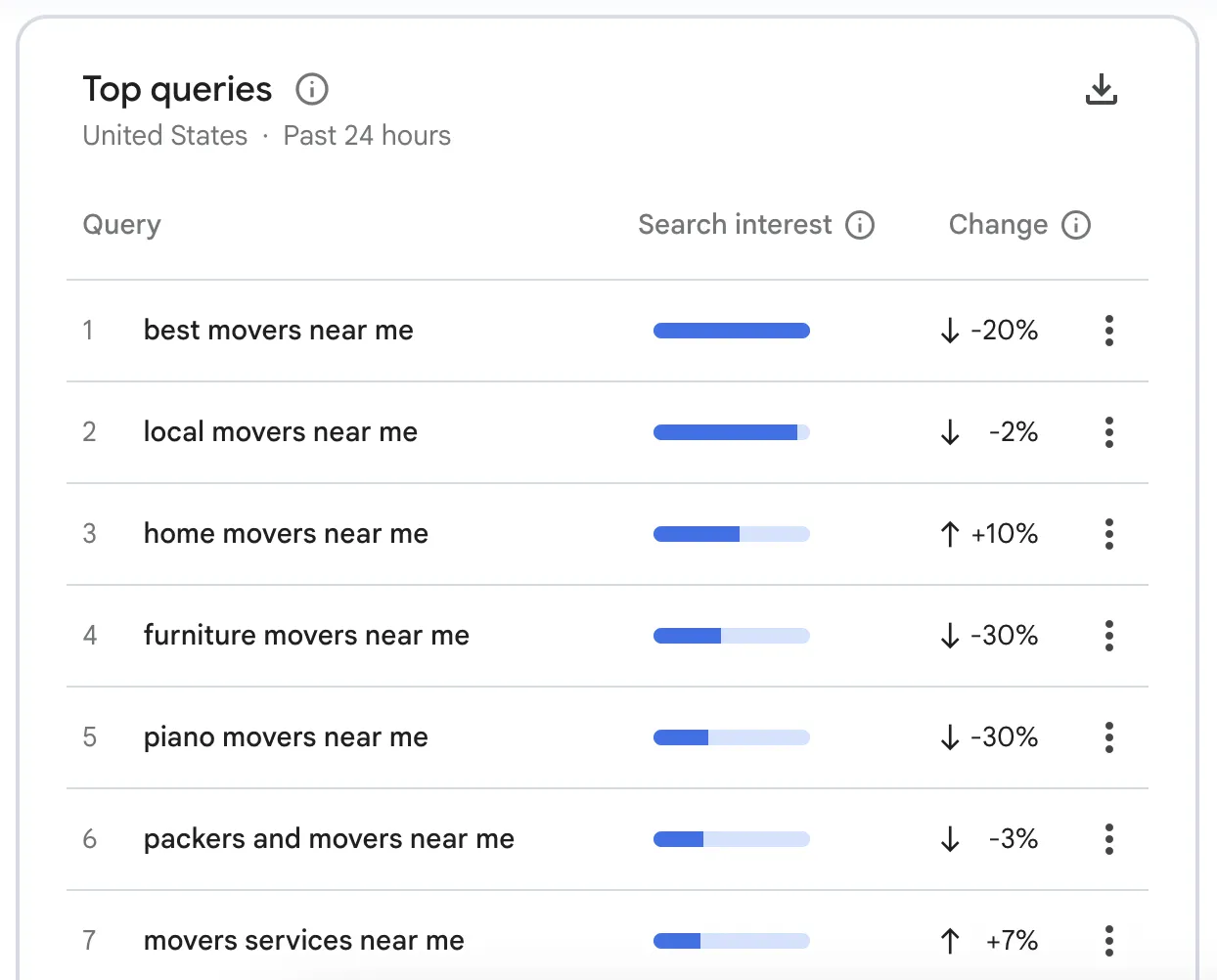
You’re getting clicks, but nobody’s booking. This usually means your targeting is too broad or your ad copy is attracting tire-kickers instead of people who are genuinely ready to move. Quality moving leads generation requires intent-driven messaging, not just high volume.
The assumption: More clicks = more customers. Cast a wide net and the bookings will follow.
The reality: Volume without intent is just wasted budget. A homeowner researching “should I hire movers or rent a truck” is not the same as someone searching “movers in [City] available this weekend.” High-intent moving leads come from targeting people deep in the decision process — not everyone who’s ever thought about moving.
Wrong Channels for Moving Company Marketing
Putting all your money into a platform that doesn’t match your audience is like advertising snowboards in Miami. If your ideal customer is a homeowner in the suburbs, blasting ads on LinkedIn probably isn't your best bet.
The assumption: A big platform with a big audience means big results. More reach = more leads.
The reality: Channel fit matters more than audience size. LinkedIn marketing might make sense for a B2B corporate relocation service, but for residential movers, it’s money down the drain. The best marketing strategies for moving companies prioritize platforms where people are actively looking for local services — think Google Maps, Google Ads, and neighborhood-level tools like Nextdoor.
Broad Targeting
“Everyone who might move” is not a target audience. The tighter your geographic and demographic filters, the better your ROI. This is especially true for moving company advertising, where service areas are inherently limited.
The assumption: Narrowing your audience means missing out on potential customers.
The reality: Broad targeting burns budget on people you can’t serve. A mover based in Nashville has no business paying for clicks from someone in Seattle. Geo-targeted moving ads focused on specific ZIP codes, neighborhoods and service radiuses consistently outperform broad campaigns — and they protect your budget from being eaten up by unqualified traffic.
No Analytics
If you can’t track which campaigns are driving bookings, you’re just guessing. And guessing, while great for carnival games, is terrible for digital marketing for moving companies.
The assumption: If the phone is ringing, the marketing is working.
The reality: Calls can come from anywhere — a yard sign, a referral, an old Yelp review. Without tracking tied to specific campaigns, you have no idea which marketing solutions are actually driving customer acquisition and which are silently draining your budget. Call tracking, form submissions, and booked-move attribution aren’t extras — they’re the only way to make smart decisions about where to spend next month.
Absence of Brand Image
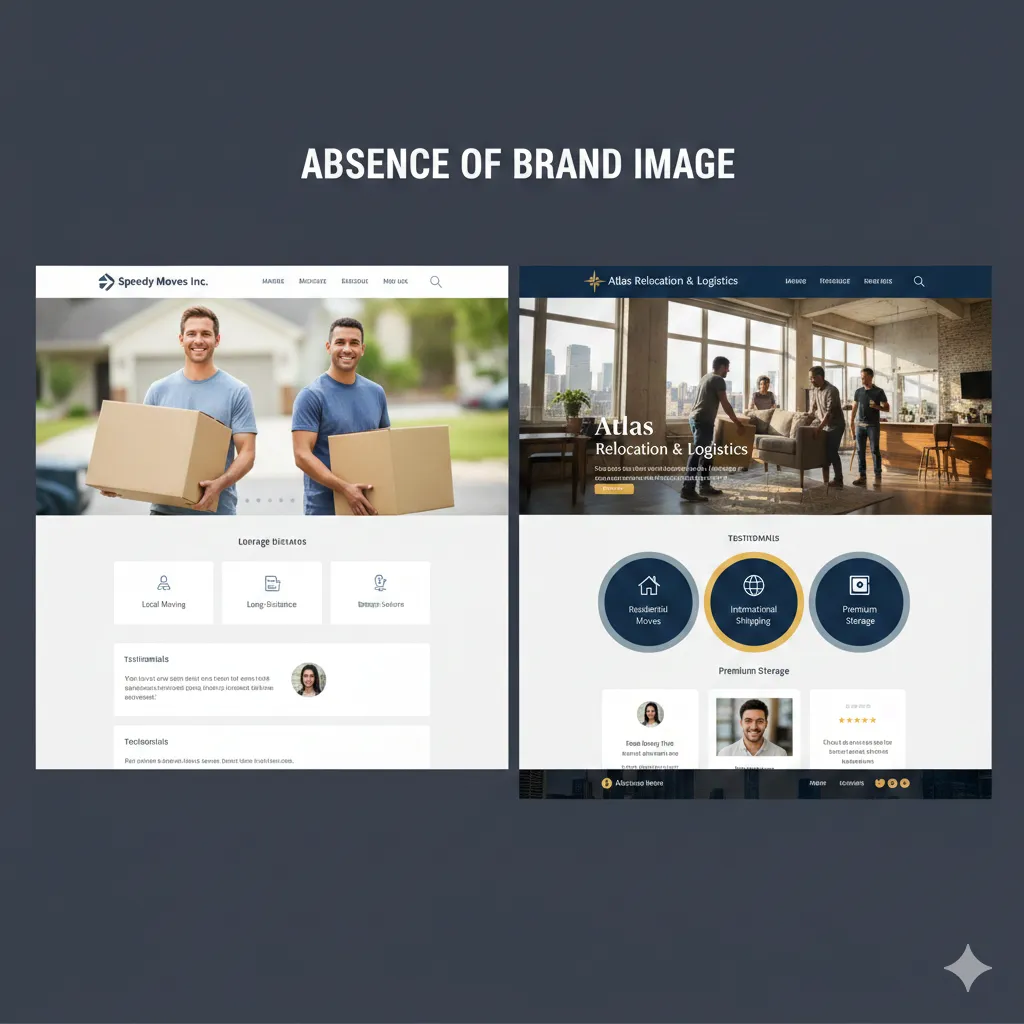
When every moving company’s website looks the same — stock photo of a smiling guy holding a box, generic “We move your stuff!” tagline — nobody remembers you. Your website design and messaging need personality.
The assumption: Customers choose movers based on price and availability, so branding doesn’t matter much.
The reality: Moving is a high-trust transaction. People are handing you the keys to everything they own. A forgettable brand doesn’t just fail to stand out — it actively erodes confidence. A strong online reputation, distinctive voice and professional website design signal that you’re a legitimate, established business worth trusting with someone’s grandmother’s china.
Inactive Social Media Profiles
A Facebook page with its last post from 2023? That’s worse than having no page at all. It signals to potential customers that you’ve either gone out of business or simply don’t care. Active social media profiles build trust and keep you top-of-mind.
The assumption: Social media is a nice-to-have. Movers get business through referrals and Google, not Instagram.
The reality: An inactive profile isn’t neutral — it’s a red flag. When someone finds you through Google Maps or a referral and then checks your Facebook ads page or Instagram to get a feel for who you are, a ghost town of old posts tells them one of two things: You no longer exist, or you don’t take your local visibility seriously. Regular posting — even just crew photos, move day clips and fresh reviews — reinforces credibility at every touchpoint in the customer acquisition journey.
6 Best Platforms for Moving Company Marketing
Now let’s get to the good stuff. These are the six platforms where your moving company advertising ideas should come to life. Each one has strengths, trade-offs and a specific role in your overall strategy. And spoiler alert — the best approach is usually a combination of several platforms, not putting all your eggs in one moving box.
1. Google Local Services Ads (LSAs)
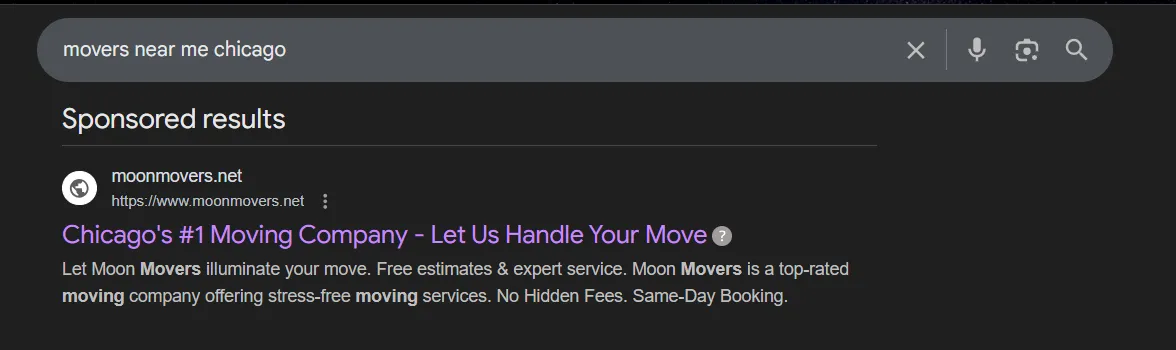
If there’s one platform that was practically invented for local service businesses, it’s Google Local Services Ads. These ads sit at the very top of search results — above traditional Google Ads, above the map pack, above everything. When someone types “movers near me” into Google, your LSA is the first thing they see. Plus, they carry the Google Verified badge (formerly Google Guaranteed), which adds instant credibility.
Pros:
- Pay-per-lead model (not pay-per-click), so you only pay when someone contacts you
- Average cost per lead for local service ads ranges from $6–$30
- Google Verified badge builds trust before the customer even visits your site
- Perfect for capturing high-intent, urgent decision-makers
Cons:
- Limited customization — you can’t control keywords or write custom ad copy
- Lead quality can be inconsistent (some out-of-area leads slip through)
- Requires passing Google’s background check and verification process
LSAs are the foundation of advertising for moving companies in 2026. If you’re not running them, your competitors are — and they’re taking the top spot. Learn more about the pay-per-click advertising model and how it compares.
2. Google & Meta Ads
Google Search Ads and Meta (Facebook/Instagram) Ads make up the backbone of most moving company digital marketing campaigns. Google catches people with active search intent (“I need a mover THIS WEEK”), while Meta is better for awareness and retargeting (“Hey, remember us when you’re ready?”).
Pros:
- Google Ads: Targets high-intent keywords like “moving company near me” at the moment of search
- Meta Ads: Powerful demographic, interest-based and behavioral targeting for brand awareness
- Both platforms offer robust analytics and conversion tracking
- Retargeting capabilities keep your company top-of-mind for people who visited but didn’t convert
Cons:
- Google Ads: Competitive keywords in moving can be pricey; requires ongoing optimization
- Meta Ads: Lower intent — you’re interrupting people scrolling through vacation photos, not people actively searching
- Both require budget and expertise to avoid wasting spend
The combination of Google plus Meta ads creates a powerful funnel — Google captures demand while Meta generates it. For a moving company, running both is the sweet spot. Wonder why search engine ads cost what they do? Our breakdown of search engine advertising costs explains it.
3. Nextdoor
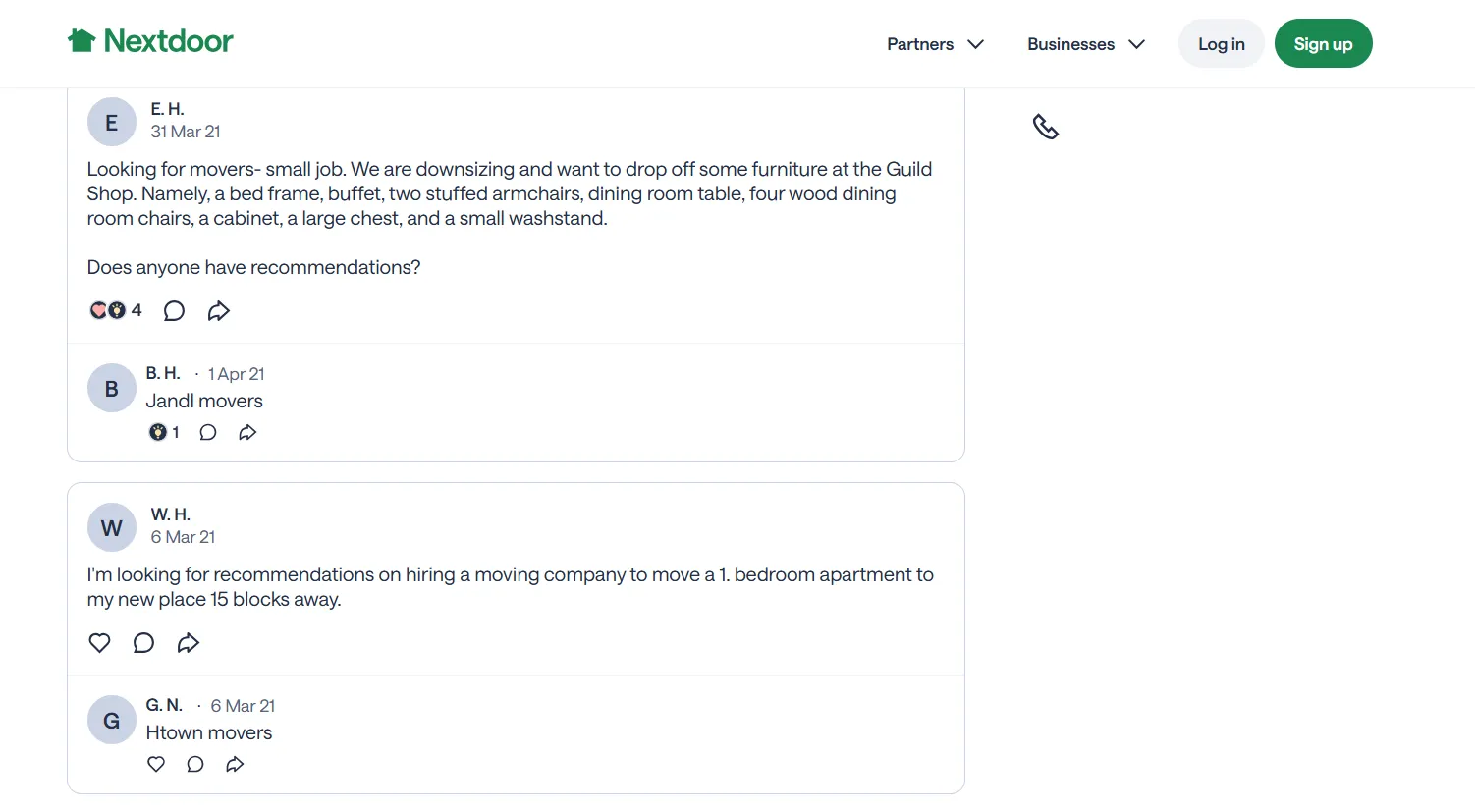
Nextdoor is the neighborhood-focused social network that feels like the digital equivalent of a recommendation from your next-door neighbor — because it literally is. It’s not just a place to report your lost dog. It’s hyper-local by design, and neighbors regularly ask for and share mover recommendations. For a business built on local rankings and word-of-mouth, this platform is underrated.
Pros:
- Built-in neighborhood targeting — you’re reaching the exact ZIP codes you serve
- Organic engagement through recommendations (free exposure when neighbors vouch for you)
- Lower competition compared to Google or Meta
Cons:
- Smaller audience compared to major platforms
- Limited ad customization and analytics
- Requires genuine engagement; overly salesy posts get ignored or flagged
4. Yelp
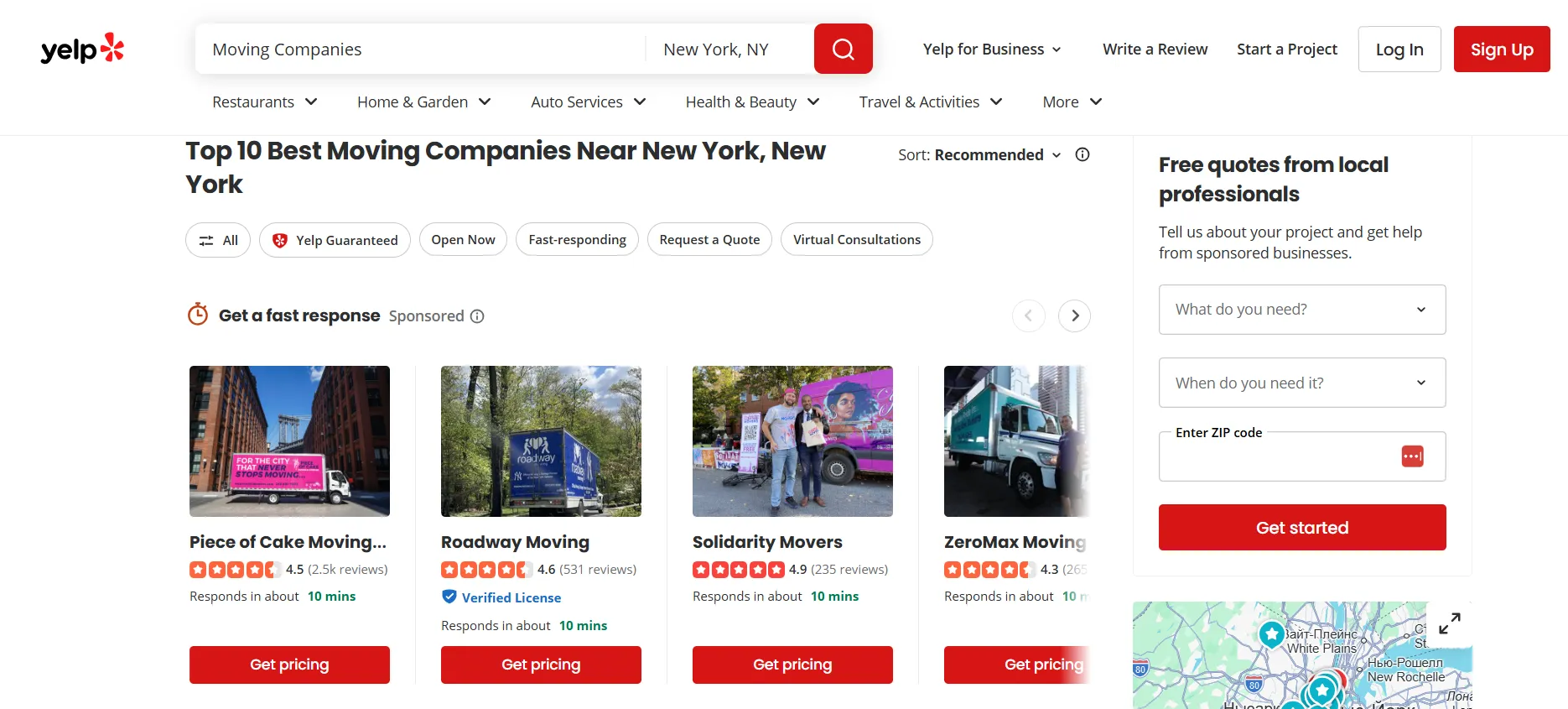
Yelp remains one of the first stops for people researching local services. About 44% of consumers refer to Yelp for business reviews, and the platform has over 308 million reviews. For a moving company, a strong Yelp presence acts as social proof that can tip a hesitant customer in your direction.
Pros:
- High-trust environment — people specifically come to Yelp to read reviews before hiring
- Good SEO juice — Yelp profiles often rank on page one of Google for local searches
- Yelp Ads can boost visibility among serious shoppers in your area
Cons:
- Yelp’s review filter can suppress legitimate positive reviews, which is frustrating
- Paid advertising on Yelp can get expensive with debatable ROI
- Negative reviews are prominently displayed and difficult to contest
5. Thumbtack
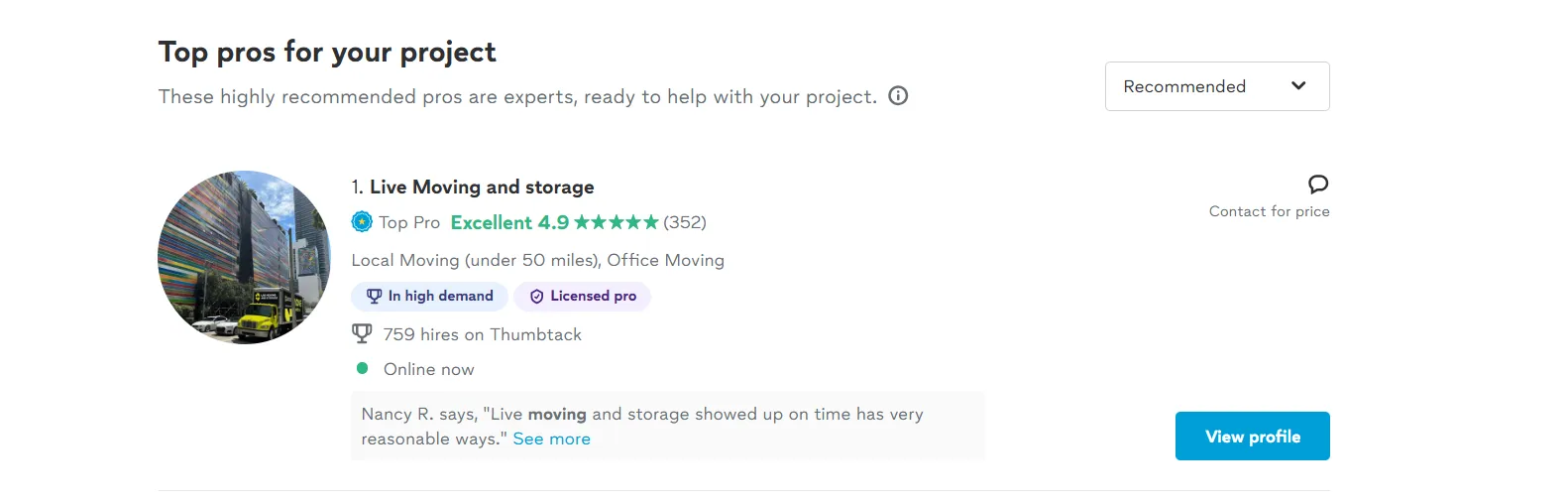
Thumbtack connects service providers directly with customers who have already submitted project details. In the moving marketing world, that means you’re receiving leads from people who have already decided they need a mover — they’ve entered their move date, origin, destination and budget. That’s about as high-intent as it gets.
Pros:
- Pre-qualified leads — customers have already filled out their project requirements
- You only pay when a customer contacts you
- Built-in review system adds credibility
Cons:
- You’re competing head-to-head with multiple movers for the same lead
- Lead costs can add up quickly, especially during peak season
- Less brand visibility compared to running your own ad campaigns
6. Bing Ads (Microsoft Advertising)
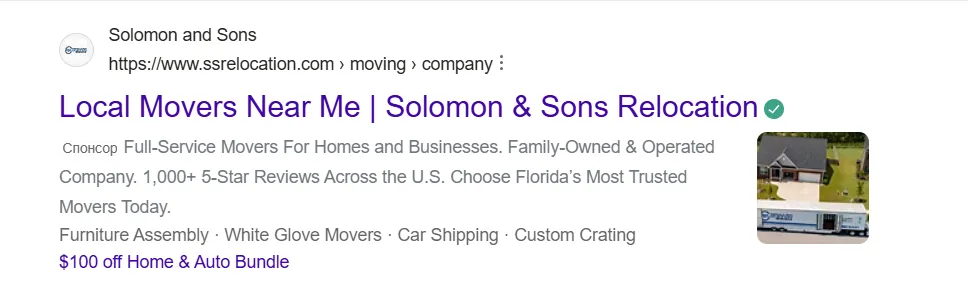
Don’t sleep on Bing. Yes, Google dominates search, but Bing still accounts for a meaningful share of searches — and its user base tends to skew older, more affluent and more likely to be homeowners. In other words, it’s the exact demographic most likely to hire full-service movers.
Pros:
- Lower cost-per-click than Google (often 20%–50% less) due to less competition
- Audience skews toward homeowners and higher-income demographics
- Easy import of existing Google Ads campaigns to get started fast
Cons:
- Significantly smaller search volume compared to Google
- Fewer advanced features and slower rollout of new ad formats
- Won’t be your primary lead source, but an excellent supplement
Platform Comparison at a Glance
|
Platform |
Best For |
Pricing Model |
Lead Intent |
Difficulty |
|
Google LSAs |
High-intent local leads |
Pay-per-lead |
Very high |
Low — Google handles most of the setup; you just verify your business and manage your budget. If you need expert help with that, call us at Netpeak US — we're a PPC agency for a moving company you need. |
|
Google Ads |
Search intent capture |
Pay-per-click |
High |
Medium–High — requires keyword research, bid strategy, ad copywriting and ongoing optimization |
|
Meta Ads |
Awareness & retargeting |
Pay-per-click/impression |
Low–Medium |
Medium — audience targeting and creative testing take time to learn, but the interface is relatively intuitive |
|
Nextdoor |
Hyperlocal trust-building |
Free + paid options |
Medium |
Low — simple to set up; organic participation in neighborhood posts does most of the heavy lifting |
|
Yelp |
Review-driven credibility |
Free + paid ads |
Medium–High |
Low — claiming and optimizing your profile is straightforward; paid ads are optional and easy to configure |
|
Thumbtack |
Pre-qualified leads |
Pay-per-lead |
High |
Low — platform guides you through setup and matches you with leads automatically |
|
Bing Ads |
Affluent homeowner reach |
Pay-per-click |
High |
Medium — similar to Google Ads but less complex; many advertisers import campaigns directly from Google |
What to Consider When Creating a Marketing Strategy for Moving Companies
Picking platforms is only half the battle. Here’s how to weave those platforms into a cohesive marketing strategy for moving company success.
Multichannel for the Win
The strongest marketing solutions for movers don’t rely on a single channel. Use LSAs and Google Ads to capture demand. Use Meta and Nextdoor for awareness. Use Yelp and Thumbtack for credibility and lead generation. Each platform covers a different stage of the customer journey, and together they create a marketing strategy for moving company growth that’s resilient and scalable. See how one moving company achieved this in our H2H Movers PPC case study. It’s a textbook example of movers marketing done right.
Precise Targeting
Every dollar counts. Effective marketing for moving company growth starts with focusing your geo-targeted moving ads on the exact ZIP codes and neighborhoods you serve. Layer in demographic targeting (homeowners, people in specific age ranges, people who have recently searched for real estate) to narrow your audience further. The more precise you get, the less waste in your budget. Check out the critical factors for local success in our guide on what local businesses need to succeed online.
Customer Testimonials
We’ve said it before, and we’ll say it louder for the folks in the back: Reviews matter. Actively collect testimonials after every move. Respond to every review — positive and negative. Feature your best reviews on your site, in your ads and across your social media profiles. Businesses that respond to negative reviews within 24 hours see a 33% increase in the likelihood that customers will update their ratings.
Long-Tail Local Keywords
Instead of competing for “moving company” (good luck with that), target long-tail phrases like “affordable movers in [Your City]”, “last-minute moving help [Neighborhood]” or “piano moving service near [ZIP code].” These phrases have lower competition, higher conversion rates and directly address business goals for moving company SEO marketing.
Structured Data for AI Overviews
Google’s AI Overviews are showing up in more and more search results, and structured data (schema markup for local businesses, FAQs and reviews) increases your chances of being featured. If your website is properly marked up, you could appear in AI-generated summaries before a user even clicks on a traditional result. This is the future of moving company SEO marketing, and it’s happening right now.
Partnerships & Incentive Programs
Partner with real estate agents, property managers and apartment complexes. These people interact with movers’ ideal customers every single day. Offer a referral bonus or co-branded moving checklist. Incentive programs turn your existing happy customers into a moving leads generation engine — give them a discount on storage or a gift card for every referral that books.
Hybrid Paid & Organic Approach
Paid ads get you immediate visibility. Content marketing and SEO build long-term authority. The smartest how to promote moving company approach combines both. Run your paid campaigns for quick wins while simultaneously building a blog, optimizing your Google Maps listing and growing an email list for seasonal promotions. Over time, your organic presence reduces your dependency on ad spend. Need a road map? Our marketing strategy services can help you build exactly that.
How Netpeak Can Help Your Moving Business Grow
At Netpeak, we’ve helped moving companies turn their digital marketing from a money pit into a lead-generating machine. Our team specializes in PPC for moving businesses, local SEO, reputation management and multichannel strategy — all tailored to the unique challenges of the moving industry. See how we helped H2H Movers achieve measurable growth through Google Ads.
Time to Make Your Move
The best way to advertise your moving business in 2026 isn’t about finding one magic platform — it’s about building a system where multiple platforms work together. Google LSAs capture urgency. Google and Meta Ads cast a wider net. Nextdoor builds neighborhood trust. Yelp and Thumbtack generate social proof and pre-qualified leads. Bing Ads pick up the customers your competitors are ignoring.
Start with the platforms that match your current budget and business goals. Get your tracking set up so you can measure what’s working. Invest in reviews and customer testimonials like your business depends on them — because it does. And when you’re ready to scale, layer in additional channels to fill every gap in your marketing for movers pipeline. Explore our full suite of marketing services for moving companies.
The moving companies that win in 2026 won’t just be the ones with the strongest backs. They’ll be the ones with the smartest marketing for moving companies’ strategy.
FAQ
Why doesn’t fresh content alone work anymore?
Content is still valuable, but it’s not enough on its own. Search engines now prioritize structured data, user signals (like reviews and click-through rates) and AI-processed summaries. You need a combination of quality content, technical SEO, paid visibility and active reputation management to rank and convert. Content without distribution is just words on a page nobody reads.
Where should I start with moving company marketing?
Start with the two things that deliver the fastest results: Set up and optimize your Google Business Profile, and launch Google Local Services Ads. Together, these give you immediate visibility in local rankings for high-intent moving leads. Then layer in other channels as your budget and capacity grow.
What is the best way to advertise a moving business?
A multichannel approach. No single platform will cover all your bases. Use LSAs for top-of-funnel urgency, Google Ads for search intent, Meta for awareness and retargeting, review platforms for credibility and LinkedIn marketing for commercial moving leads. The specific mix depends on your budget, location and target market.
If my moving business has trust issues, does it mean paid advertising is a waste of money?
Not exactly — but it does mean you need to fix the trust problem before scaling your ad spend. Pouring money into moving company ads when you have a 2.5-star rating on Google is like showing up to a move with a wheelbarrow. Address negative reviews, implement a review collection process, improve your service quality and then reinvest in advertising. Paid campaigns amplify whatever reputation you already have — good or bad.

 0
0
 0
0
 0
0
 0
0
Related Articles
Sustainability Marketing: 7 Smart Ways to Earn Trust (and Customers)
Learn how to grow your brand efficiently while using eco-friendly marketing practices to build trust and long-term revenue.
Why Your Amazon Pet Ads Are Getting More Expensive Every Quarter Since 2025 (and How Smart Brands Manage It)
What happened to the auction prices? Where is the margin going, and what should be done next quarter?
How to Track Brand Mentions in AI Search? Find Out Whether You Are in the Answer
Being mentioned in an AI search boosts visibility. Discover how to monitor your brand mentions in ChatGPT, Perplexity, or Gemini and follow our approach to higher mention frequency.