
Similar audiences in Google Shopping campaigns: test results
Remarketing is an effective tool that lets you reach people who have previously visited your site by showing ads when they browse the web or use apps. But what if your current remarketing lists are small? What if you want to increase the influence on users in the gathered audience? There is a way: on May 1, 2017, Google launched similar audiences for Search and Shopping campaigns. Previously, they were available for the Display Network campaigns only.
Before sharing the results of testing the remarketing lists, let’s take a look at the algorithm for generating these lists: Google creates a new audience with similar search queries on the basis of the users’ search queries from your remarketing lists.
Taking into account the mechanism of creating similar audiences, I added lists that are close to the high conversion remarketing lists to advertising campaigns:
- a list of users who abandoned a shopping cart;
- a list of users who made the purchase.
To create ideal conditions for experimenting, I didn’t adjust any bids for the lists under test. I will compare:
- the average conversion rate of similar audiences to a conversion rate of the “Other” category users who don’t belong to any remarketing lists;
-
how the Google Shopping tool works in the “Car accessories” niche in different regions.
Test 1
Region: Austria
Subject: "Car accessories"
Tool: Shopping
Campaign 1
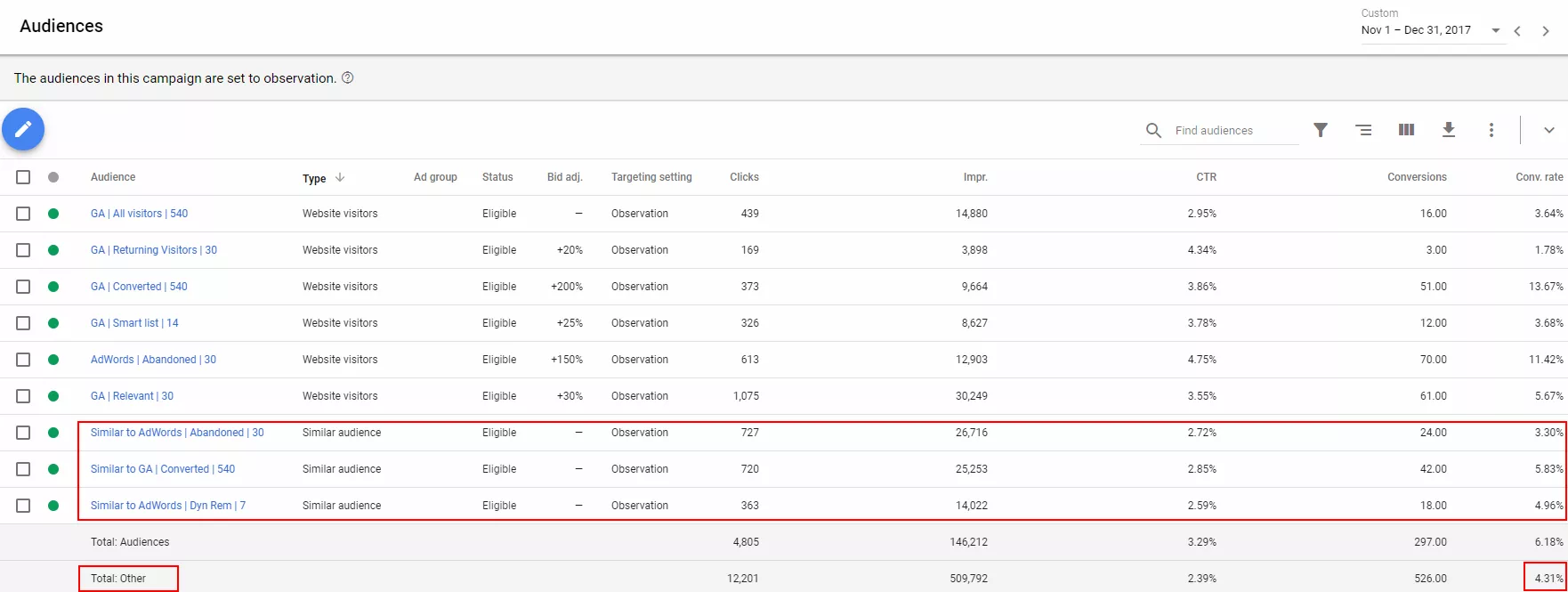
- total CR of the similar audiences — 4,64%;
- CR of the “Other” category users — 4,31%.
Campaign 2
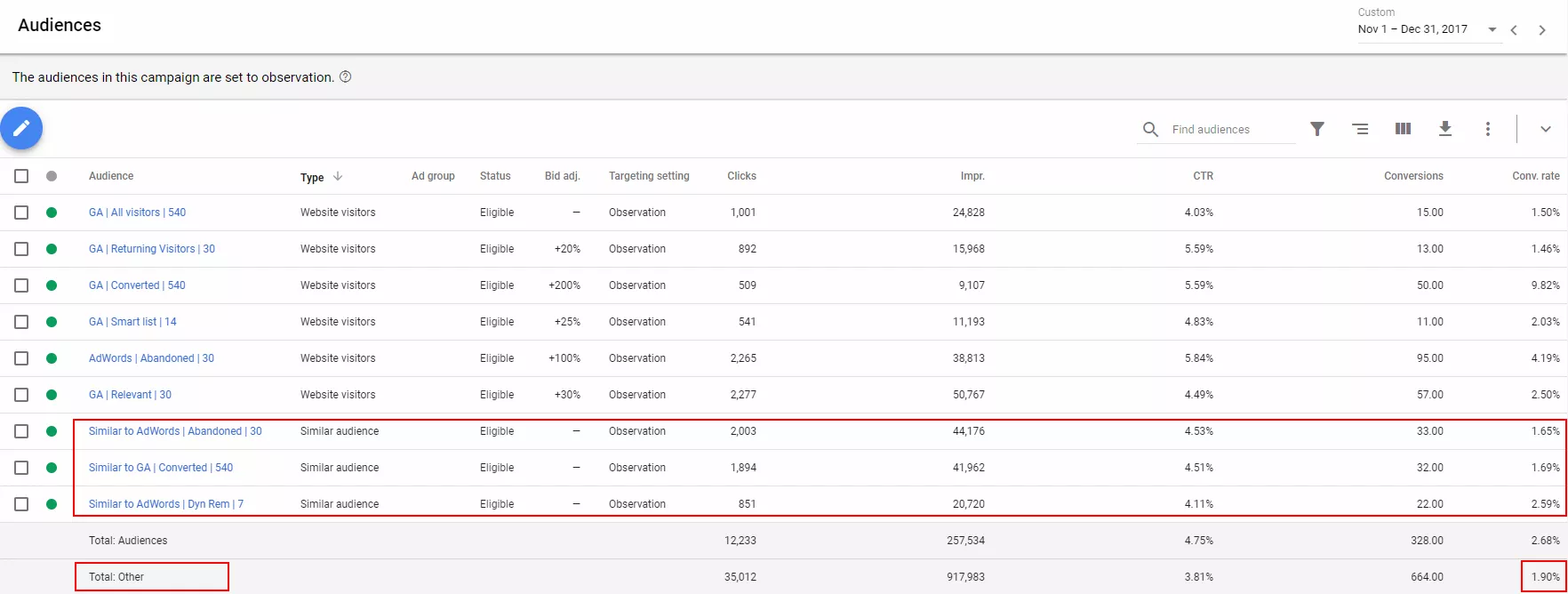
- total CR of the similar audiences — 1,83%;
- CR of the “Other” category users — 1,90%.
Test 2
Region: Italy
Subject: "Car accessories"
Tool: Shopping
Campaign 1
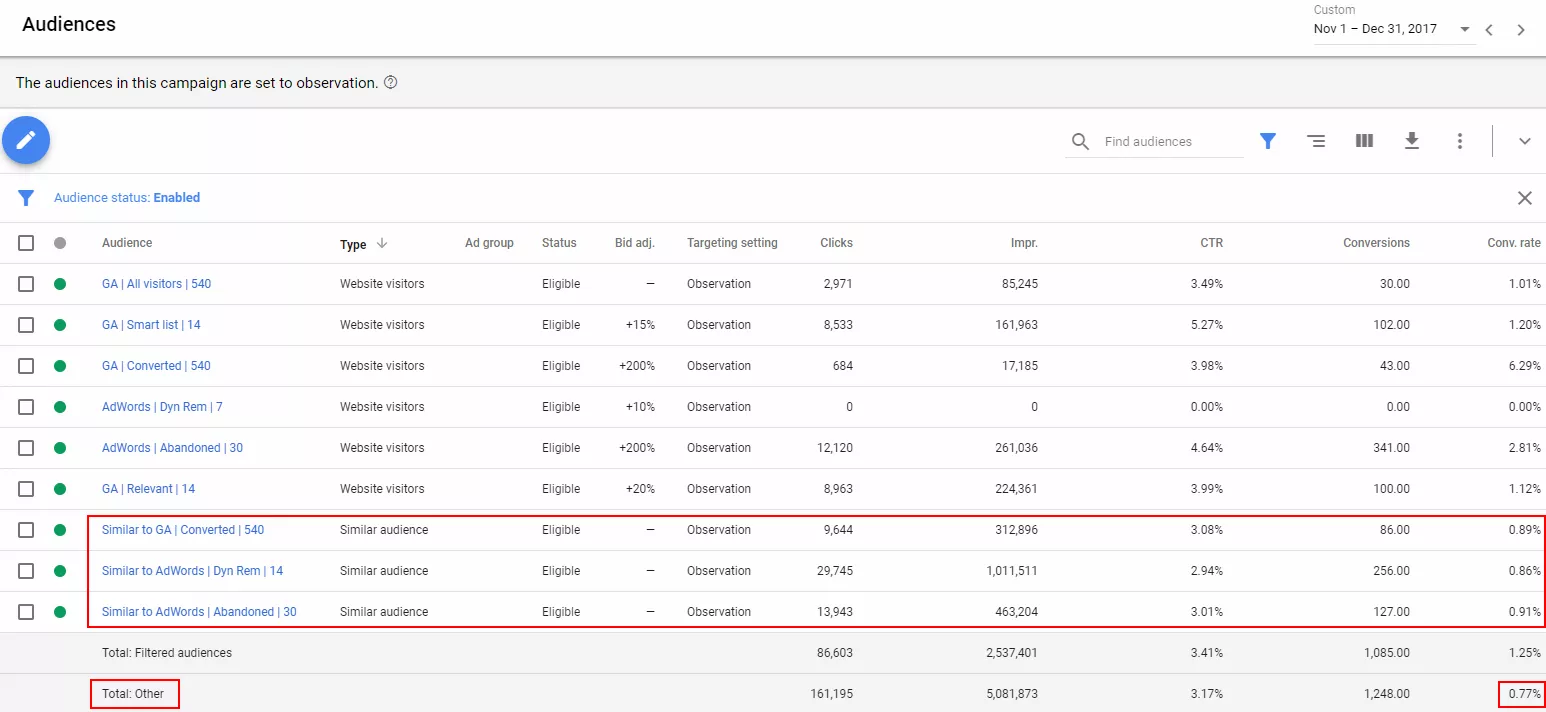
- total CR of the similar audiences — 0,88%;
- CR of the “Other” category users — 0,77%.
Campaign 2
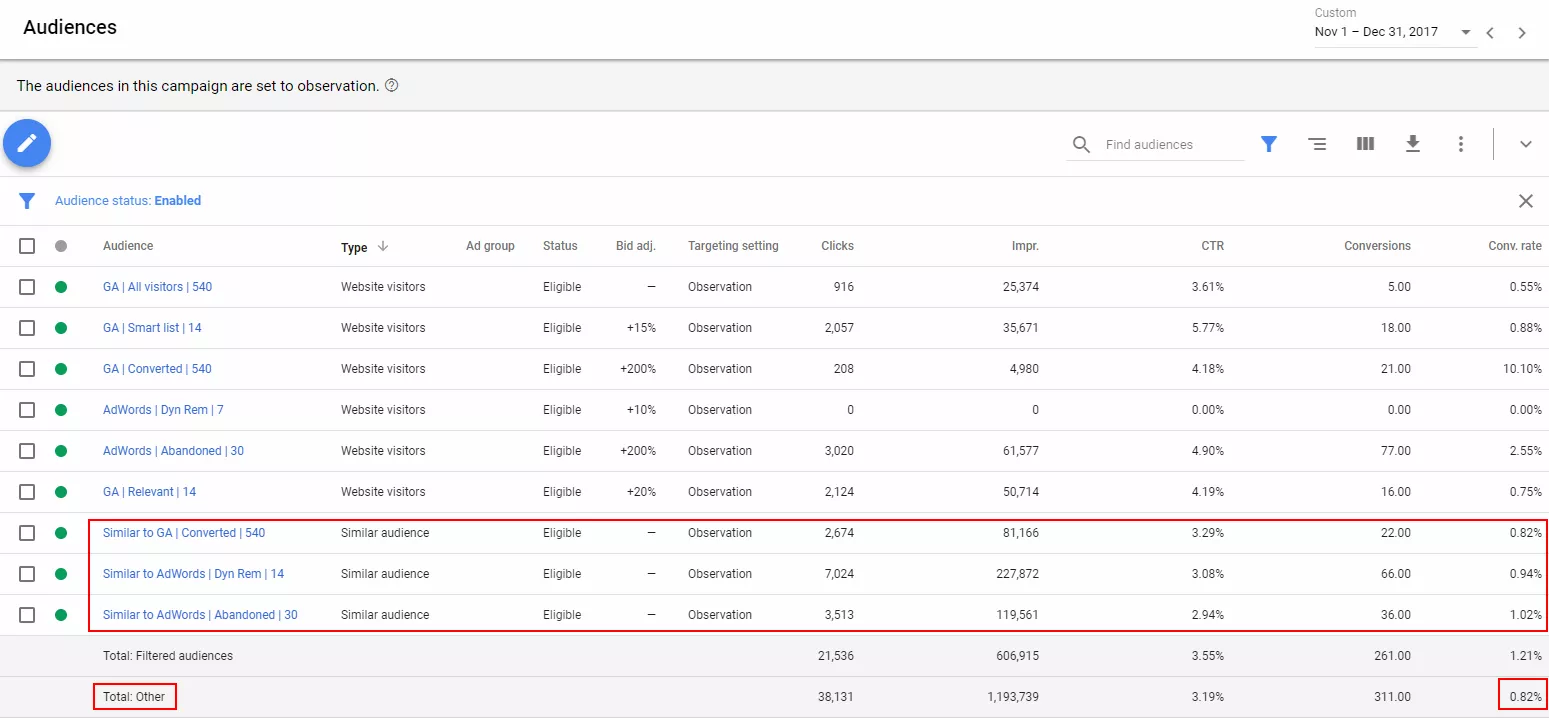
- total CR of the similar audiences — 0,94%;
- CR of the “Other” category users — 0,82%.
Test 3
Region: France
Subject: "Car accessories"
Tool: Shopping
Campaign 1
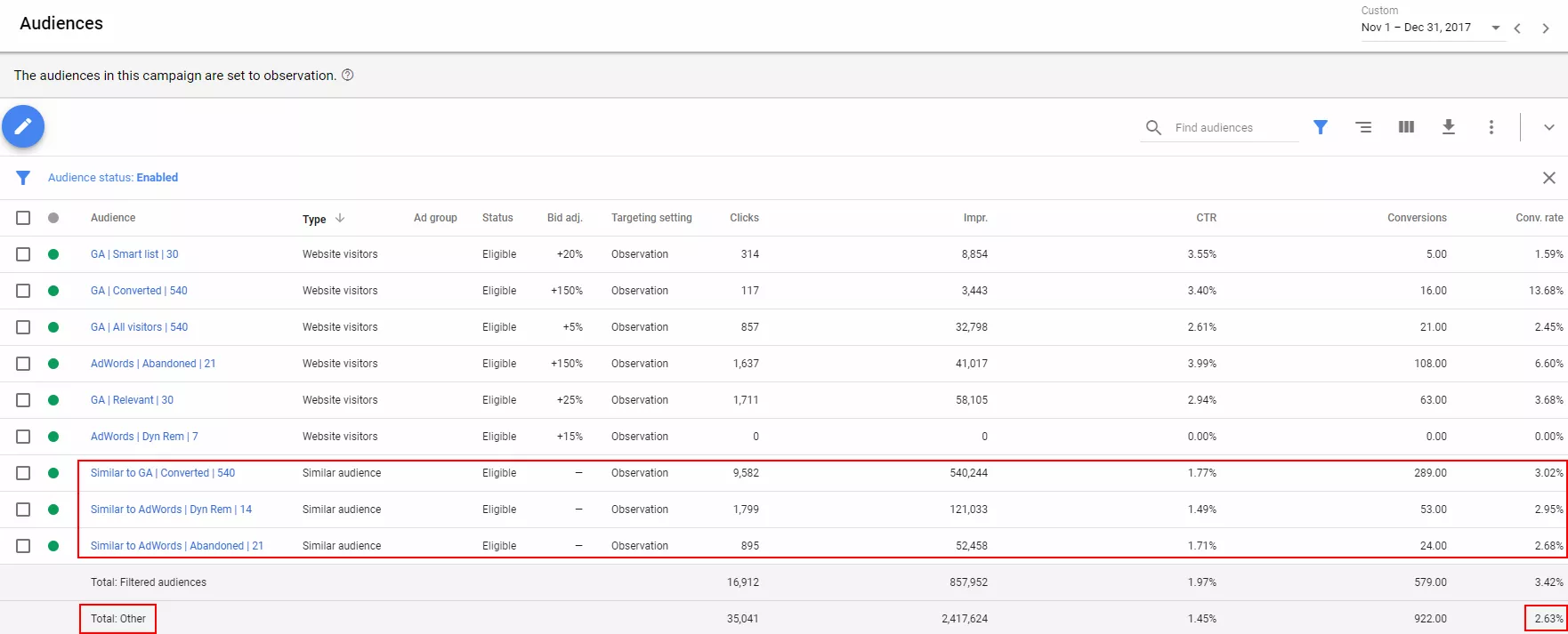
- total CR of the similar audiences — 2,98%;
- CR of the “Other” category users — 2,63%.
Campaign 2
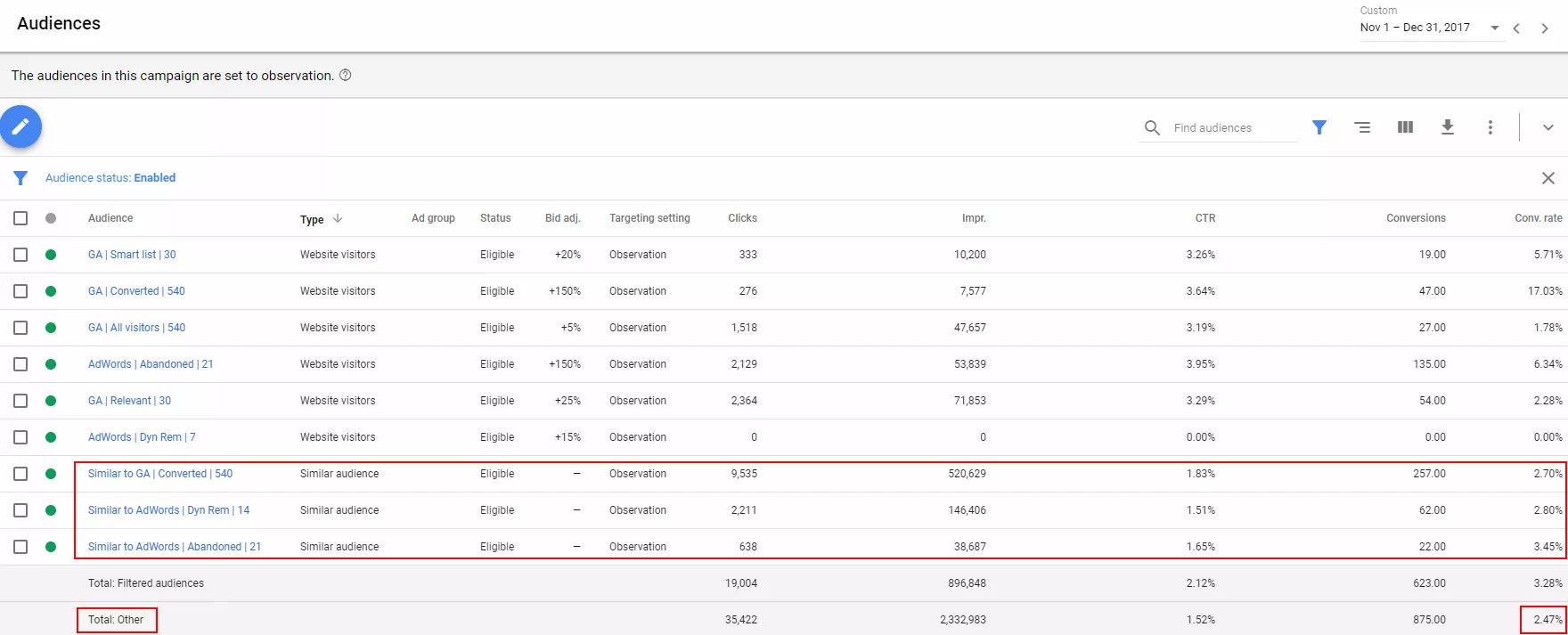
- total CR of the similar audiences — 2,75%;
-
CR of the “Other” category users — 2,47%.
Conclusions
Benefits of the similar audiences:
- They allow targeting new relevant users on the search network.
- If the behavior of users from the main lists changes, the similar audiences will be updated. This will keep these lists up-to-date.
- They allow to properly update the current remarketing lists: if a user visits a site and is added to the current remarketing list, he will be excluded from a similar audience.
- When identifying an irrelevant audience of site visitors, it is possible to create a similar remarketing audience based on these data to reduce bid adjustments.
Recommendations for use:
- create different remarketing lists to identify the most relevant users and the lists they belong to. Remember: the more users in the source list, the more users in a similar remarketing audience;
- add similar remarketing lists to advertising campaigns with the “Only bid adjustments” option — this will allow you to see the efficiency of each list and, based on this data, decide on further actions.

 1
1
 1
1
 0
0
 0
0
Related Articles
What Vibe Coding Means for Business: No Coding Skills, One Weekend, One SaaS
Vibecoding is changing the rules for front-end development and opening up new opportunities for businesses, but there are some nuances to consider.
Amazon's AI Now Builds Complete Looks on Product Pages. How Do Brands Make Sure the Bundle Is Theirs?
Amazon now uses AI to assemble complete, shoppable looks around a single product, and it fills those looks with whichever brands its model picks.
Business Apps in the US: iOS vs. Android, September 2026
We searched for US App Store and Google Play data to see what business apps professionals, shoppers, and investors actually installed in September.