
Amazon's New 75-Character Title Rule: What Brands Must Do Before July 27, 2026
Starting July 27, 2026, every Amazon product title outside the media categories must fit 75 characters, including spaces, and a new 125-character Item Highlights field holds the details you cut (Amazon, 2026).
Rewrite your titles now, lead with brand and primary keyword, and move the rest into Item Highlights, or Amazon's AI rewrites them for you and leaves you 14 days to approve its version. For pet brands with long, claim-stacked titles, that is a deadline worth circling in red.
What Is Amazon's New 75-Character Title Rule?
From July 27, 2026, titles in all categories except media must be 75 characters or fewer, including spaces. Amazon's stated reasons are full title display on mobile and consistency with the title lengths used by other online stores.
A new Item Highlights field adds 125 characters for materials, features, or recommended use cases. That content is searchable and shows below the title in search results and on product detail pages.
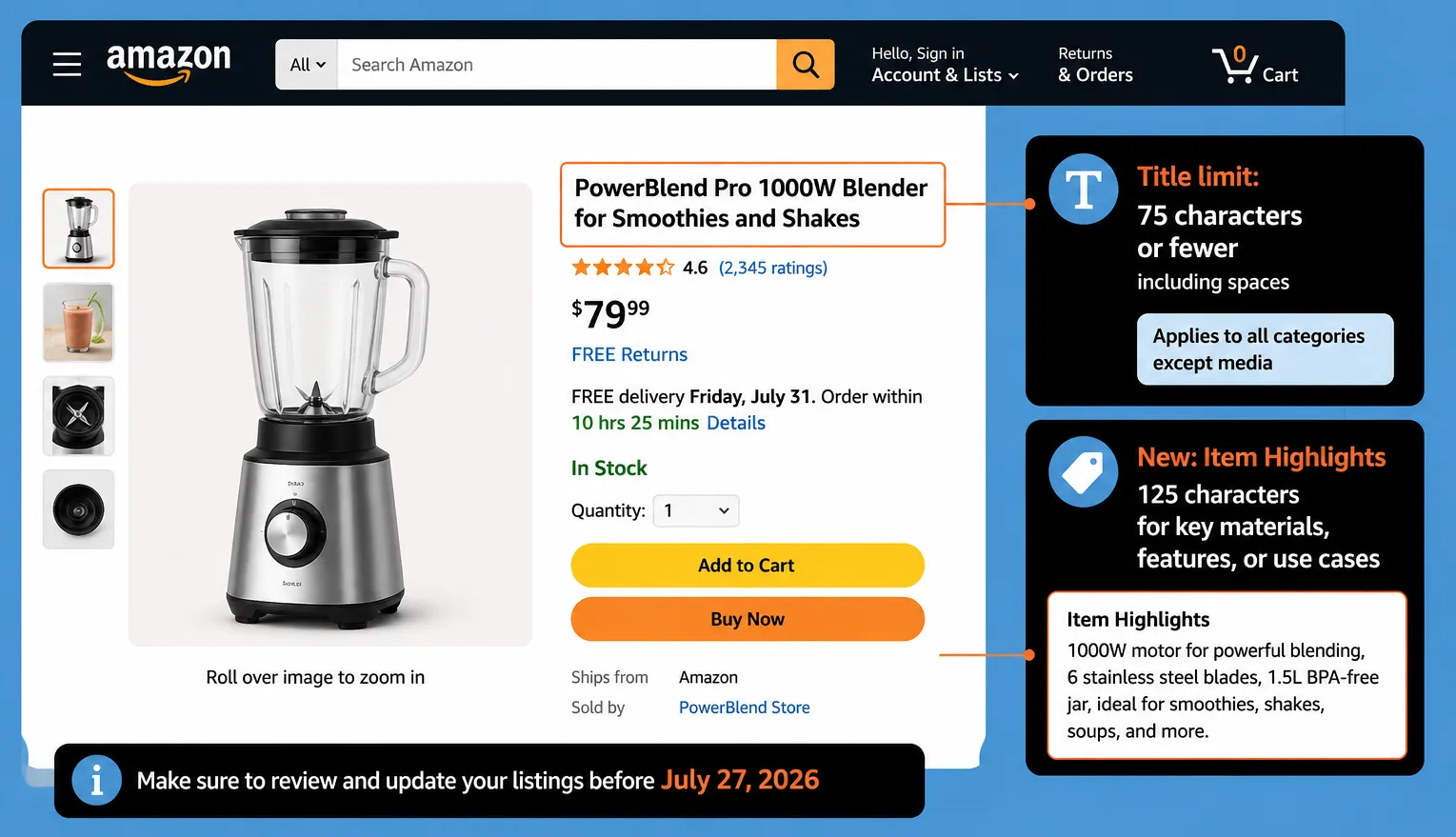
Amazon is supplying AI-recommended titles and Item Highlights now. You reach them in Manage All Inventory: open the listing, select Edit, then click View enhancements. The recommendations keep key product information in the title and shift the rest into Item Highlights (Amazon, 2026).
After July 27, any title with over 75 characters is updated to the AI recommendation gradually, and listings stay active during the change. When Amazon edits a listing, brand owners get 14 days in Review Listing Changes to review, modify, and approve the AI titles and Item Highlights before they publish.
What Counts Toward Your 75 Characters?
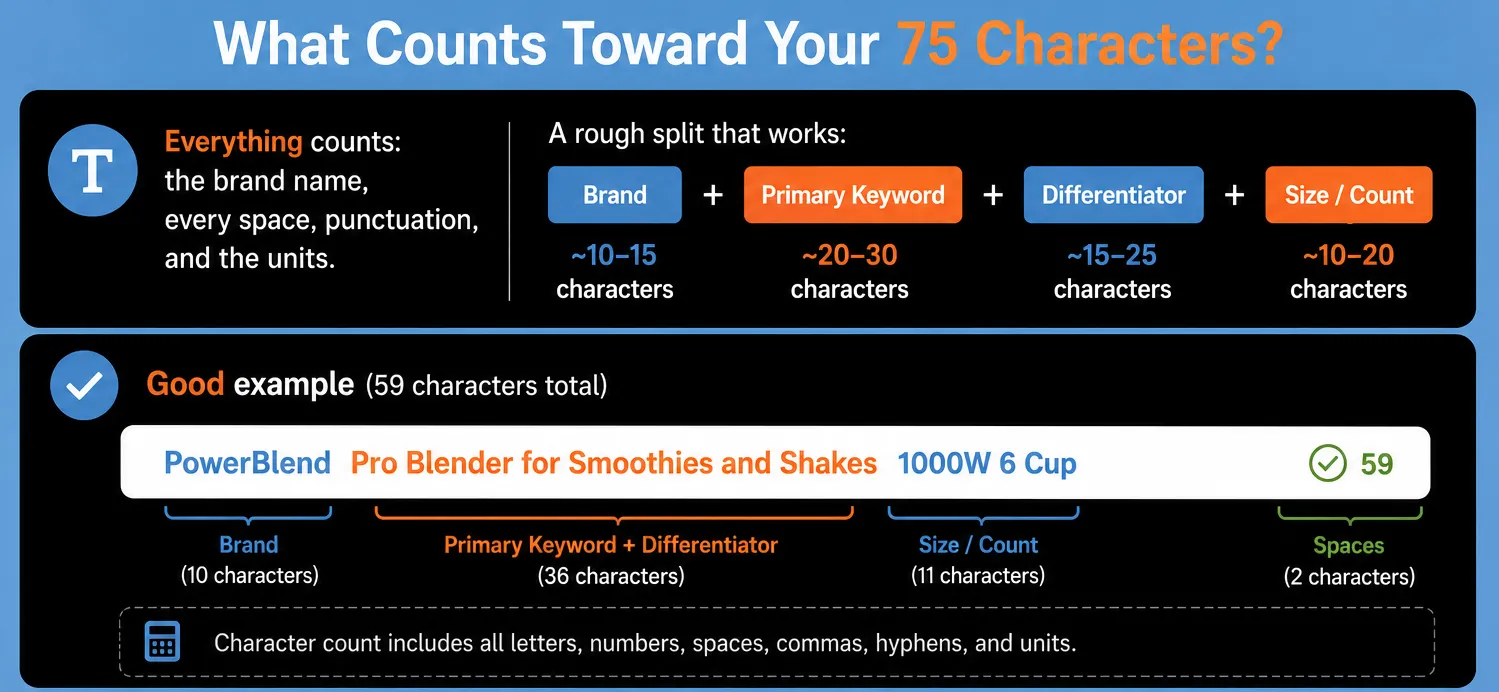
Everything counts: the brand name, every space, punctuation, and the units. A "24 lb" or a "(150 ml)" eats real estate, so budget the title before you write it. A rough split that works: brand around 12 characters, primary keyword around 20, one differentiator around 20, and size or count for the rest.
The 2025 title rules still apply on top of the new limit. Most special characters stay banned unless they belong to the brand name, decorative symbols are out, and sales claims like "best seller" do not belong in a title. Translation: no emoji, no asterisks, no shouting.
Why Amazon Is Making This Change Now
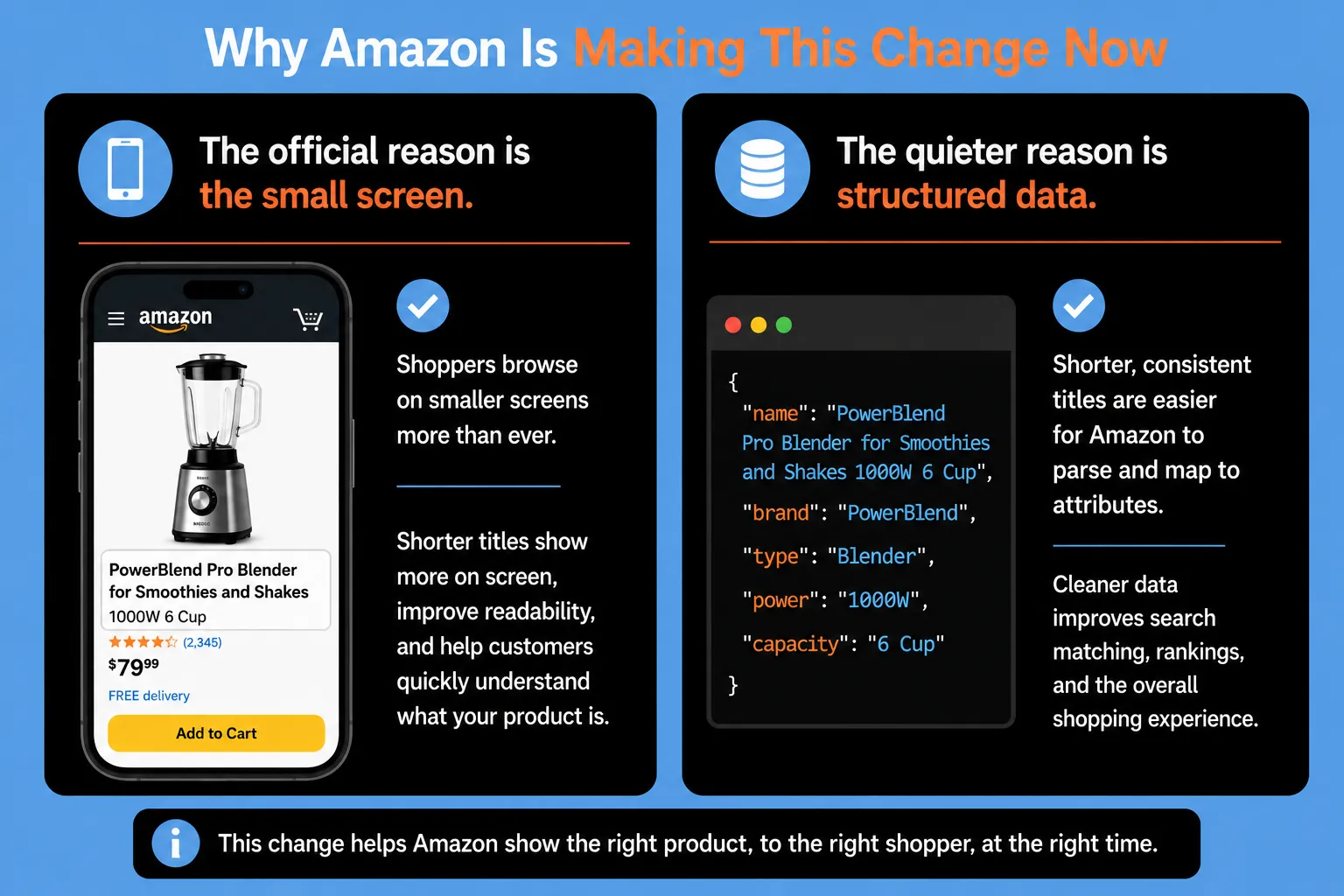
The official reason is the small screen. Amazon's app already truncates titles around the 70-to-80-character mark, so a 200-character title was mostly talking to itself. A 75-character cap forces the part that matters to show up where shoppers actually look.
The quieter reason is structured data. Amazon's search and its AI assistant Rufus increasingly read labeled fields, not keyword soup. Item Highlights hands the algorithm clean attributes to compare across products, which helps you in AI-driven search, not just on the title line.
A title that reads like a CVS receipt does neither you nor the robot any favors.
What the 75-character Rule Means for Pet Brands
The stakes are large because the category is large. The US pet industry reached $158 billion in 2025 and is projected to hit $165 billion in 2026 (APPA, 2026). Pet food and treats alone reached $65.8 billion in 2024, about 43% of category sales (APPA, 2025), and a big share of that runs through Amazon search.
Pet products titles are among the most exposed to this change. Multipacks and variety packs, breed and life-stage variants, prescription diets, and supplements with long claim strings routinely run past 150 characters today.
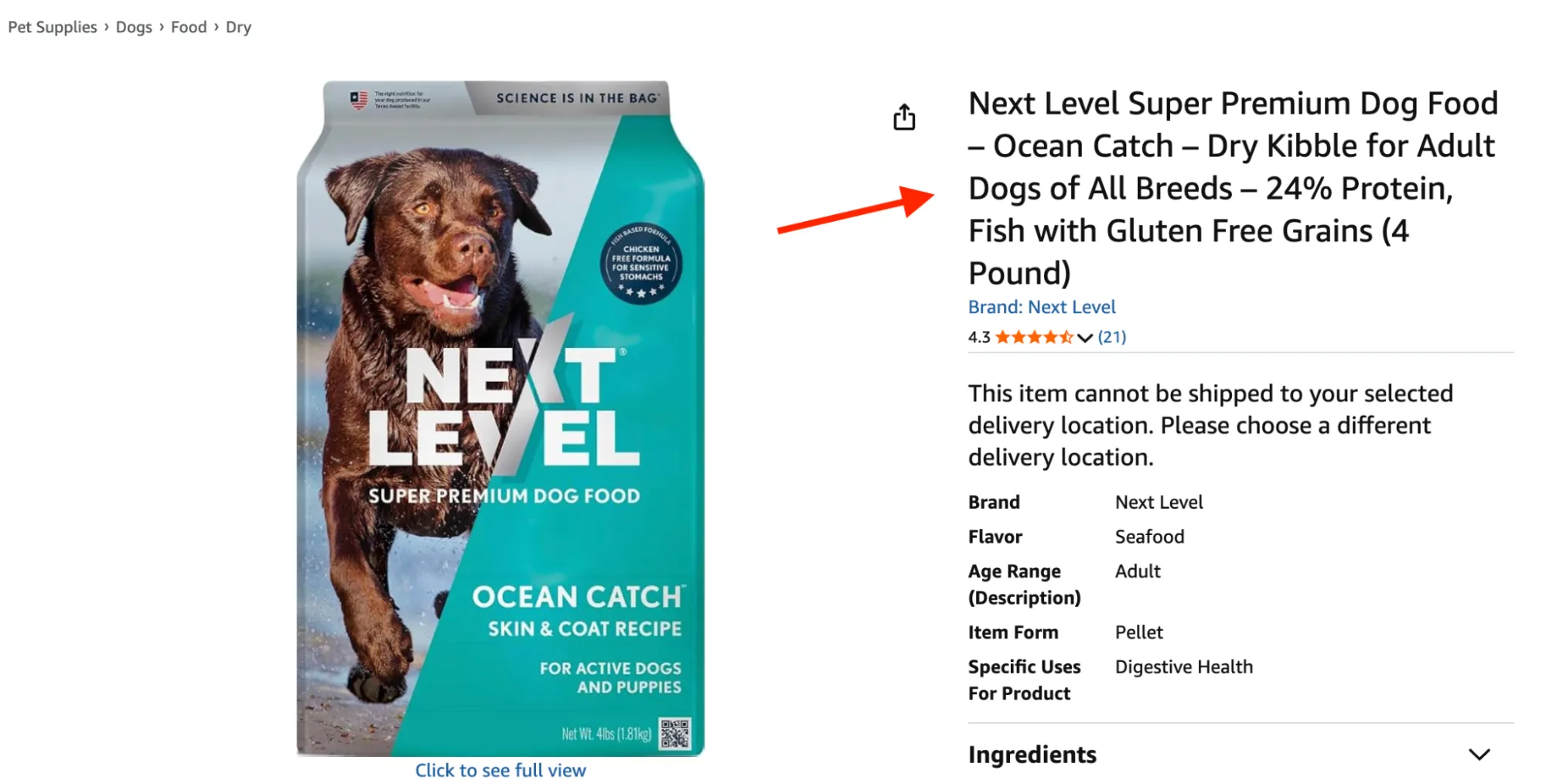
"Next Level Super Premium Dog Food – Ocean Catch – Dry Kibble for Adult Dogs of All Breeds – 24% Protein, Fish with Gluten Free Grains (4 Pound)" has a few benefits fighting for the same 75 characters.
The real risk is keyword loss.
The term you cut from the title may be the one you rank for. Moving it into Item Highlights or a bullet keeps it indexed, but title-level weight for a removed keyword drops, so choose what stays with care. Your hero keyword earns its seat at the table; the nice-to-haves move to the back.
TikTok Shop went from a dance app side quest to a serious sales channel. Here's what pet brands should know.
Your Move Before July 27
-
Triage by revenue. Pull your top ASINs and flag every title over 75 characters. Start where the money is, since a clean rewrite on a hero product matters far more than on a dormant SKU. Watchout: count characters including spaces and units, not words.
-
Rewrite the title. Lead with brand, then primary keyword, then one differentiator and the size or variant, all under 75. Front-loading protects the brand and keyword from mobile truncation. Watchout: keep the keyword you actually rank for, even if a prettier phrase tempts you.
-
Write Item Highlights. Use the 125 characters for the materials, use case, and benefits you removed. Treat the field as real SEO space, because it is searchable and visible. Watchout: plain text only, no bullets, and do not repeat the title word for word.
-
Check the AI draft. Open View enhancements and read Amazon's recommendation as a first draft. The AI keeps core information in the title and shifts the rest to Item Highlights, but it does not know your brand voice or which keyword drives your sales. Watchout: the default may quietly drop a ranking term.
-
Approve or override. Confirm your version in Review Listing Changes within the 14-day window. Silence hands the decision to the algorithm. Watchout: the 14-day clock starts when Amazon edits the listing, not on July 27, so set a reminder.
A Before-and-After Example: Dry Dog Food
|
Field |
Before (old long title) |
After (July 27, 2026 format) |
|
Main title |
Acme Grain-Free Dog Food, Salmon & Sweet Potato Recipe, Natural Dry Kibble for Adult Dogs, All Breeds, No Fillers, Made in USA, 24 lb Bag |
Acme Grain-Free Salmon Dry Dog Food, All Breeds, 24 lb |
|
Title length |
Over 130 characters |
54 characters (under 75) |
|
Item Highlights |
Did not exist |
Natural salmon and sweet potato kibble for adult dogs. No fillers. Supports skin and coat. Made in the USA. (107 characters) |
|
What mobile shows |
Title cut off mid-phrase |
Full title plus Item Highlights below it |
A second example: a supplement multipack
|
Field |
Before (old long title) |
After (July 27, 2026 format) |
|
Main title |
VitaPup Hip & Joint Supplement for Dogs, Glucosamine Chondroitin MSM Chews, Supports Mobility & Cartilage, All Breeds & Ages, Made in USA, 120 Soft Chews |
VitaPup Hip & Joint Dog Chews, Glucosamine + MSM, 120 Count |
|
Title length |
Over 150 characters |
59 characters (under 75) |
|
Item Highlights |
Did not exist |
Glucosamine, chondroitin, and MSM soft chews for dogs of all ages. Supports mobility and cartilage. Made in the USA. (116 characters) |
|
What mobile shows |
Buried claims, cut off |
Brand, benefit, and count all visible |
How to Write Item Highlights That Actually Work
Spend the 125 characters on facts that help a shopper compare options: materials, format, quantity, use case, and one clear benefit. Lead with the most search-relevant attribute, since the field is indexed.
Skip the filler.
Do not repeat the title, do not pile on synonyms, and do not add claims you cannot support. For supplements and food, "vet-recommended" or health claims without backing invite a compliance headache you do not want.
Where Your Cut Keywords Should Go
Shortening the title does not mean deleting keywords. It means relocating them to fields that stay indexed: your five bullet points, A+ content, the product description, and backend search terms.
Prioritize by search volume, and let the data pick the winners. Tools like Helium 10's Cerebro show which terms actually earn placement, so the strongest phrases go to the title and bullets, while the long tail moves to the backend.
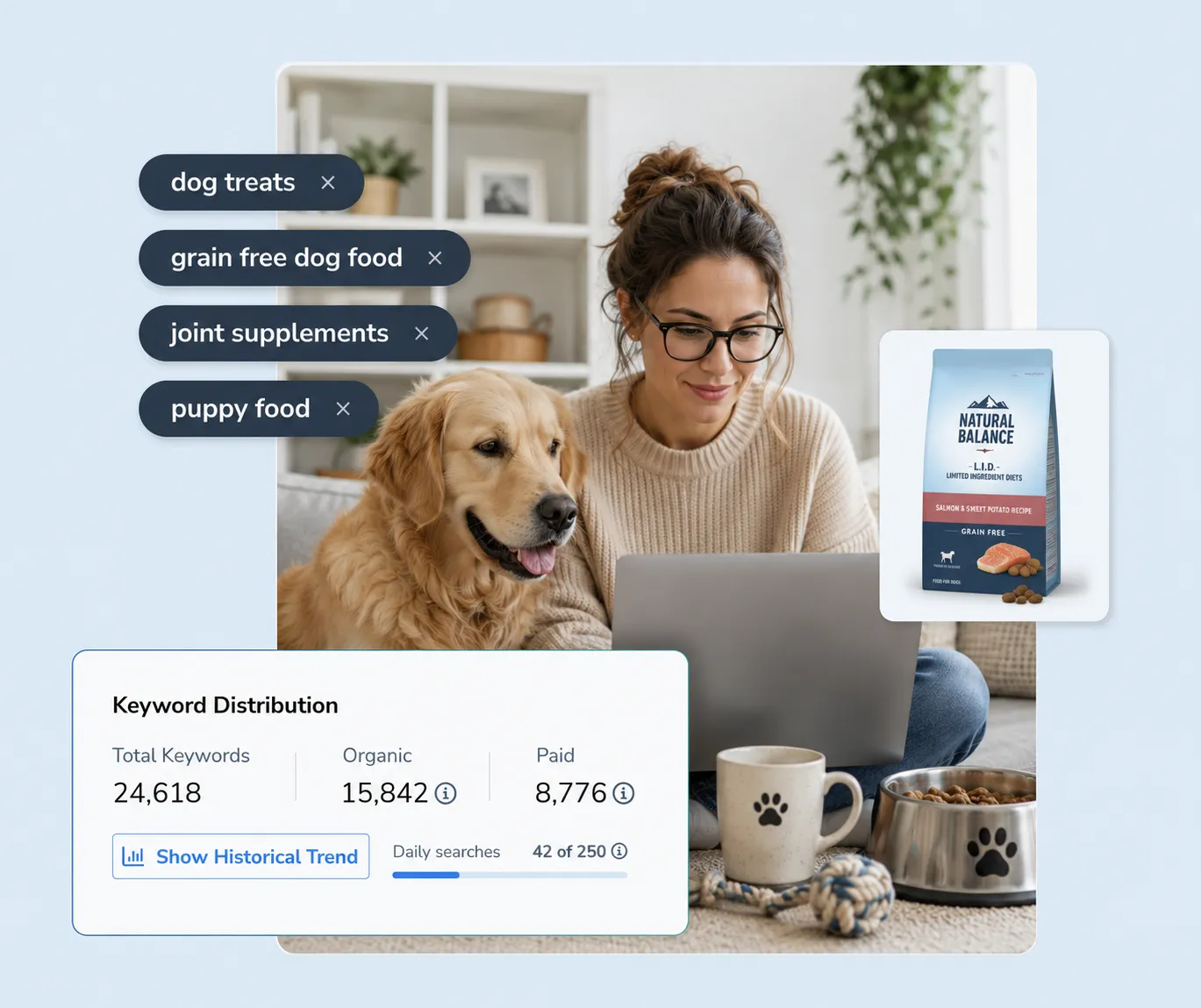
One trap to remember: backend search terms are measured in bytes, not characters, with a limit of around 249 bytes. Accented and special characters cost more than one byte each, and going a single byte over silently de-indexes the whole field. Count carefully, or the keywords you moved there disappear without warning.
Bottom line: you have until July 27, 2026. Rewrite your highest-revenue pet titles to 75 characters, draft Item Highlights for each, relocate the spare keywords, and approve your version in Review Listing Changes.
Do nothing, and Amazon's AI rewrites your catalog and gives you 14 days to argue with it. Mieux vaut prévenir que guérir — better to prevent than to cure.
Bonne chance — and may your Subscribe & Save conversion rate be ever in your favor!
Would you like to take a deeper dive into the world of Amazon? Read these:
- Amazon Is Selling a Cheaper Version of Your Product Under Its Own Brand — Now What?
- What Amazon's “Pet” Search Results Actually Tell You About Who's Winning (And It's Not Who You Think)
- 5 Questions to Expose an Amazon Agency That Can’t Handle Pet Brands
- Your US Pet Parcel to the EU Now Costs 3€ More. What Next?
- Amazon's 2026 Fee Changes: What Every Pet Brand Should Recalculate Before Q4
Frequently Asked Questions
What is Amazon's new product title character limit?
Starting July 27, 2026, product titles in all categories except media must be 75 characters or fewer, including spaces (Amazon, 2026). The change applies to every catalog, so pet food, treats, supplies, and accessories are all affected.
What is the Amazon Item Highlights field?
Item Highlights is a new field that gives you an extra 125 characters for materials, features, or recommended use cases. The content is searchable and appears below the title in search results and on product detail pages (Amazon, 2026).
What happens if I do not shorten my titles before July 27, 2026?
After July 27, Amazon gradually updates any title still over 75 characters to its AI recommendation. Your listings stay active, and brand owners get 14 days in Review Listing Changes to review, modify, and approve the AI titles and Item Highlights before they go live (Amazon, 2026).
Where do I find Amazon's AI title recommendations?
Go to Manage All Inventory, find the listing, select Edit, then click View enhancements. Amazon shows recommended titles and Item Highlights that keep key product information in the title and move the rest into Item Highlights (Amazon, 2026).
Does the 75-character rule apply to pet products?
Yes. The rule covers all categories except media, so pet food, treats, supplements, and accessories are included. Confirm each listing in Seller Central before the deadline.
Do spaces and pack sizes count toward the 75-character limit?
Yes. Every character counts, including spaces, punctuation, and units such as 24 lb or 150 ml. Measure the full string, not the word count, when you check a title.
Will I lose keyword rankings when I shorten my title?
Not if you relocate the keywords. Terms moved into Item Highlights, bullet points, A+ content, and backend search terms stay indexed. Title-level weight for a removed keyword does drop, so keep your strongest ranking term in the title itself.
Work with Netpeak USA
Netpeak USA's marketplace team rewrites pet catalog titles to the 75-character rule, drafts Item Highlights, and relocates keywords before July 27, so the AI never decides your wording. Talk to the team behind the French Kiss blog while you still control the deadline.

 0
0
 0
0
 0
0
 0
0
Related Articles
Pet Food Product Patent: How to Protect Your Innovation
Patenting pet products requires careful consideration and proper application filing. With the 8 steps below, you will be able to submit your patent application and protect your invention.
Amazon’s New “Sourced from Brand” Buy Box Label: Who Gets It and Who Doesn’t
Amazon is rolling out a provenance line in the Buy Box. A short label under the Brand row now reads “Sourced from [Brand]” on amazon.com and “[Brand] approved” on amazon.de. It tells the shopper that the unit on offer came through the brand’s own supply c
How UGC and Algorithms Turn Content Into Viral Trends
Let’s break down how UGC, audience behavior, and recommendation algorithms work together to make something go viral. And how you can use this information to help your business grow.