
This guide explains how to market products on Amazon through organic search, paid campaigns, and external channels. You’ll learn how to advertise Amazon products, choose the right tools for your audience, and measure whether promotion generates profitable sales.
Amazon is one of the world's largest and most popular online marketplaces. It has more than 310 million active accounts – users who make ten or more purchases per month. Fulfillment by Amazon makes the service faster and better, as the marketplace distributes goods to different logistics centers to speed up delivery.
Why Promote on Amazon
Promoting on the Amazon marketplace has several significant advantages.
Huge Customer Base
Amazon gives businesses access to an established shopping audience. Instead of building every customer journey from scratch, sellers can put their products in front of people already browsing, comparing options, and preparing to buy.
The opportunity extends beyond large brands. According to Amazon’s 2025 Small Business Empowerment Report:
-
Independent sellers account for more than 60% of sales in Amazon’s store, and most are small and medium-sized businesses.
-
US-based independent sellers sold more than 4.6 billion items in 2025, more than 8,900 per minute.
-
More than 75,000 independent sellers exceeded $1 million in annual sales in 2025.
For your business, this means an opportunity to reach shoppers beyond your existing website visitors or social media followers. A clear, relevant listing can help introduce your product to customers who know what they need but have not yet chosen a brand.
Treat Amazon’s reach as an opportunity to compete. There are thousands of sellers and billions of items there. You need to know and highlight the reason why people should buy from you. Is it useful features, competitive pricing, or reliable delivery?
Convenient Logistics Solution
Amazon offers the Fulfillment by Amazon (FBA) service, through which sellers send inventory to Amazon’s fulfillment centers. When customers place orders, Amazon picks, packs, and ships the products and handles customer service and returns for those orders.
This can make promoting products on Amazon easier to support operationally:
-
Offer Prime delivery. FBA provides access to Prime shipping benefits, helping sellers serve shoppers who prioritize fast delivery.
-
Reduce daily fulfillment work. Outsourcing packing, shipping, and order-related customer support frees up time for product development, listing optimization, and advertising.
-
Support growing order volumes. Amazon’s fulfillment network gives businesses access to logistics infrastructure without building their own warehouse and shipping operation.
Before choosing FBA, you need to check the economics. Amazon’s FBA fees are all about your products and the services you use: they could be small or enormous. Include fulfillment and storage costs in your margin calculations, especially for bulky or slow-selling items. The goal is to make additional sales profitable after delivery costs.
Which Products Went Viral on Amazon in the Last 12 Months?
From October 2025 to October 2026, these five products went viral on social media. All thanks to TikTok videos, recipe demonstrations, a drop of nostalgia, and worldwide love for sensory content. Here’s what helped them stand out and what lessons sellers can learn from this.
|
Product |
What helped it go viral |
What sellers can learn |
|
AquaSonic Electric Pink Vibe toothbrush |
TikTok creator @stacymariekay highlighted its pink color. According to the brand’s CEO, Amazon sales jumped from a few dozen units daily to thousands, exhausting inventory in February 2026 (Modern Retail). |
Give creators a memorable feature to highlight. Even a color can make a familiar product stand out. |
|
Ninja SLUSHi frozen drink maker |
Recipe demonstrations showed coffee, soda, and cocktails turning into frozen drinks. Journalist and creator Kate Kozuch reported more than 1 million views for her SLUSHi content in June 2026 (Tom’s Guide). |
Demonstrate a result shoppers will want to recreate, and show different ways to use the product. |
|
Kodak PIXPRO FZ55 digital camera |
TikTok and Instagram users embraced its nostalgic photo aesthetic (PhotoWorkout). Later coverage placed it among Amazon’s top ten best-selling cameras in the US (Digital Camera World). |
Connect your product with an aesthetic or interest your audience already enjoys. |
|
ZELUS weighted vest |
Videos demonstrated wearing weighted vests during everyday walks. Women’s Health included ZELUS in its May 2026 roundup of TikTok-viral fitness products available on Amazon. |
Show how your product fits into an existing routine without requiring a major lifestyle change. |
|
NeeDoh squeeze toys |
Advent-calendar videos, unboxings, and ASMR fueled interest. One TikTok cutting video reached 10.4 million views, while the brand sold through a year’s inventory in nine weeks (Modern Retail). |
Make the experience of using your product worth sharing, and prepare inventory for potential demand spikes. |
Read our full breakdown of which products went viral on Amazon in the last 12 months for more examples and promotion ideas.
What You Need to Do Before Launching on Amazon
A few steps can resolve most of the issues related to launching on Amazon.
Analyze Market
One of the advantages of this marketplace is its very open data. Amazon reports, third-party services, and PDF statements via the API provide detailed data on competitors, such as the number of times each product was sold. Thus, by knowing the product cost and the approximate number of sales, the vendor can estimate the fulfillment cost before they start working.
Also, the vendor can find out the total number of sales for goods in a certain niche monthly. This metric shows whether the niche has a turnover, how many players there are, how much they sell, and how much they earn.
Which Amazon Categories Are Growing Fastest in 2026?
We analyzed open data and ran our own Google Trends research to find out, and here are the results: Grocery & Gourmet Food, Clothing, Shoes & Jewelry, and Beauty & Personal Care are growing fastest in 2026.
|
Amazon category |
Estimated revenue growth, Q2 2026 vs. Q2 2025 — PMG |
Google search-interest growth — Netpeak Research |
|
Grocery & Gourmet Food |
+32% |
Crackers: +20% |
|
Clothing, Shoes & Jewelry |
+27% |
Crocs: +4%; jeans: +29% |
|
Beauty & Personal Care |
+22% |
Acne patches: +61%; hair extensions: +46% |
The revenue figures come from PMG’s research that covered more than 30 million Amazon US products. The product-level percentages come from our own Google Trends analysis of US search interest in January–September 2026 versus the same period in 2025
Read the methodology in Which Amazon Categories Are Growing Fastest in 2026?
What Are the Best Amazon Products to Launch in Q4 2026?
We ran one more Google Trends research and found that in Q4 you could launch Christmas lights, coffee makers, board games, Bluetooth speakers, and dog beds. We compared selected products using US Google Trends data from October 1, 2023, to January 1, 2026:
|
Product |
What our research found |
Google Trends data |
|
Christmas lights |
Recurring holiday surges, with interest peaking during Christmas week in 2025. |
|
|
Coffee makers |
Search peaks around Black Friday in all three years. |
|
|
Board games |
Interest peaked in December as Christmas approached. |
|
|
Bluetooth speakers |
Holiday peaks returned annually, without consistent year-over-year increases. |
|
|
Dog beds |
Black Friday peaks recurred, although the 2025 peak was lower. |
Google Trends uses a relative 0–100 index. Each chart has its own scale, so compare scores within that chart. Explore our methodology and best Amazon products to launch in Q4 2026
Careful planning is required for seasonal inventory: unsold Christmas lights, for example, may need to be sold at a discount or stored in the warehouse. Items that never go out of style have a longer sales cycle after the fourth quarter. Before placing an order, it is important to calculate the delivery time, advertising costs, and break-even price.
Choose a Country for Sales
Amazon operates on different websites in different countries. For example, Amazon.pl in Poland and Amazon.de in Germany. Before starting work, vendors should analyze the best country for their products in terms of prospects.
For example, there may be two promising regions to choose from: France and Germany. After analyzing the sales volume of one of the categories in these countries, we see that it is €1,284 in France and €19,639 in Germany. The choice is obvious.
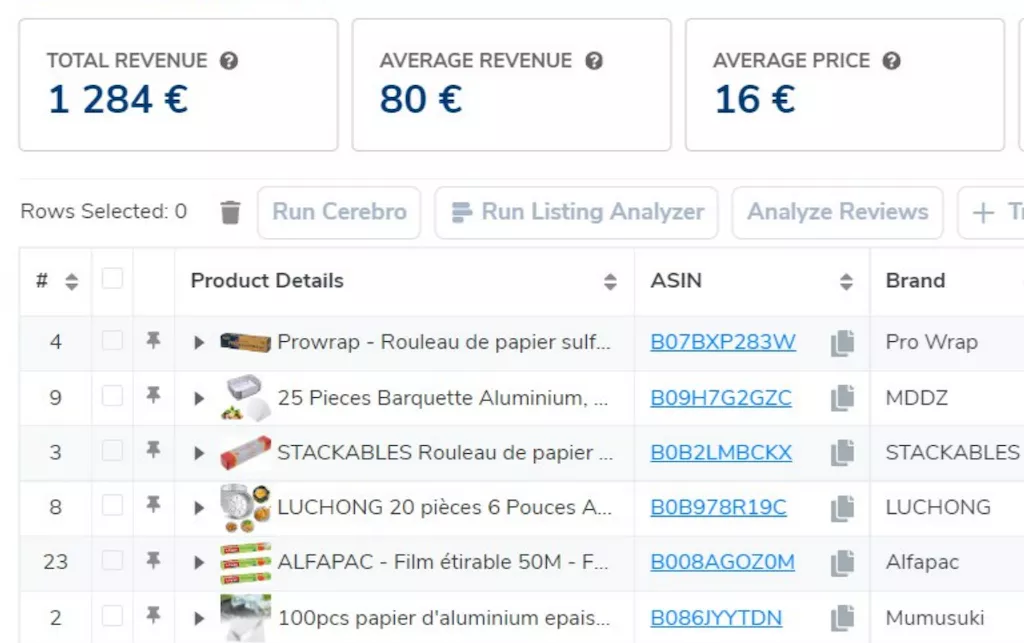
Total revenue in France
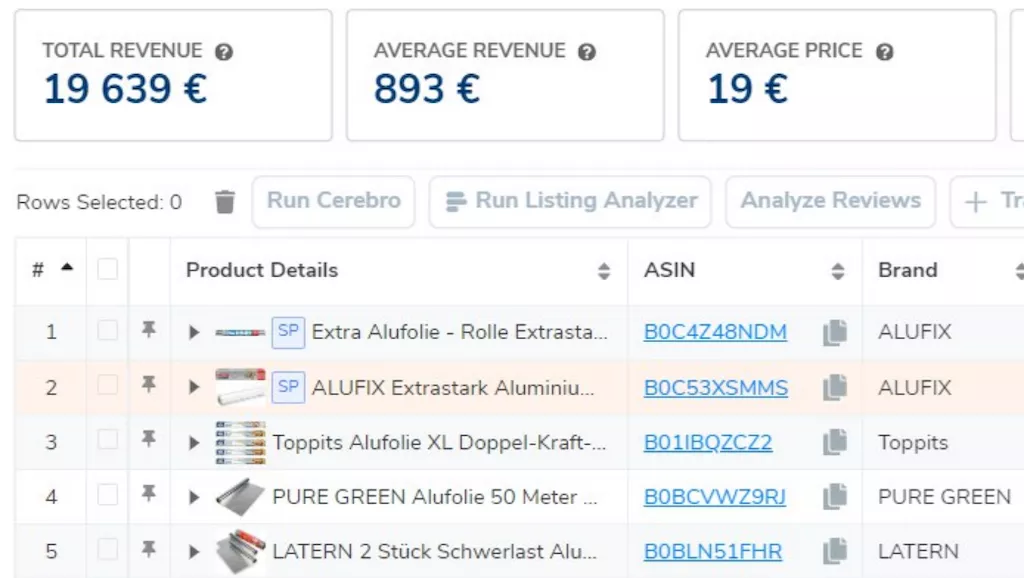
Total revenue in Germany
Register a Brand
Sometimes, several vendors on Amazon sell the goods produced by one manufacturer. For example, there is an official manufacturer and distributor with goods in stock. If you are a manufacturer, registering your brand to protect your rights and become the only vendor of your goods on the platform is worth registering.
This way, you will be able to file a complaint against goods that are sold or used without your permission, as well as against copies of goods and counterfeits.
When it comes to protecting the rights of brand owners, Amazon is very responsible. The rules are upheld to a very high standard.
Case study: One of the top vendors on Amazon made a Harry Potter-themed product without the copyright holder's permission. The marketplace banned the goods, the vendor, and all the beneficiaries associated with the vendor.
It is recommended to register the brand in a European jurisdiction, in the USA, and in the UK. After that, provide Amazon with the registration code. Want to enter Amazon EU? Read our guide on how to choose your first EU Amazon market.
Get Acquainted with the Legislation
Study the chosen country's laws and ensure that the product and the business do not violate them. To avoid legal problems, check the product's certification requirements, tax policies, and packaging requirements.
Ways to Promote on Amazon: Organic Search
Amazon SEO helps shoppers find your products in unpaid search results. Start with keyword research and build a keyword list around relevant search terms. To promote Amazon listing content effectively, use those terms naturally in titles and bullet points, then answer purchase questions clearly.
Follow our practical Amazon SEO guide and product page optimization checklist. Check Amazon listing title rules before editing titles.
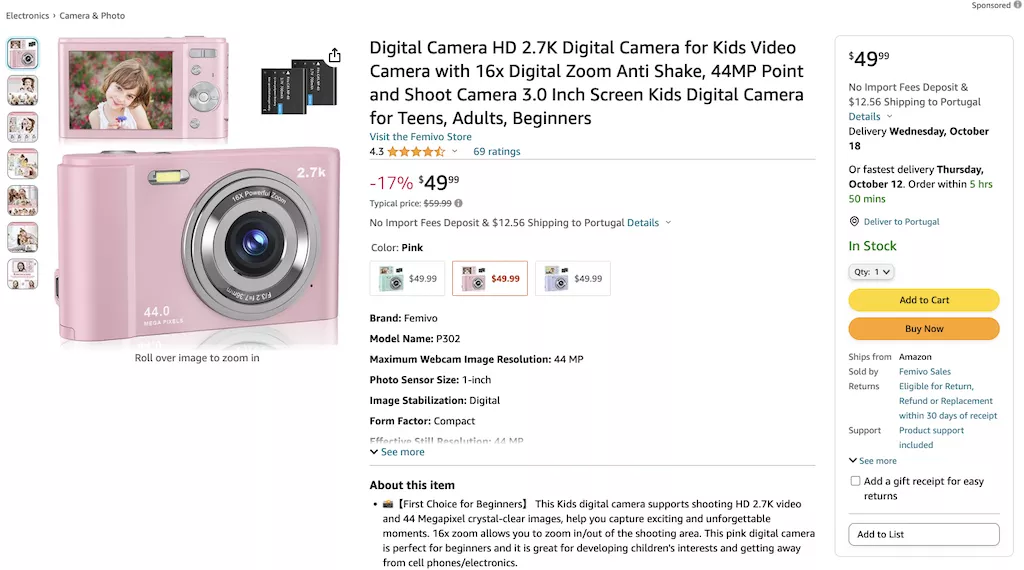
Amazon’s SEO guidance recommends optimizing titles, descriptions, bullet points, backend search terms, images, and pricing.
Effectiveness of Search Engine Optimization
SEO can help attract relevant shoppers without paying for every organic click. However, visibility alone does not guarantee purchases: your listing also needs to explain the product clearly and offer customers a convincing reason to buy.
Measure results at different stages of the purchase journey:
-
Visibility: Are your products appearing for relevant searches?
-
Clicks: Are shoppers choosing your listing from the results?
-
Purchases: Do those visits turn into orders?
-
Profitability: Do additional sales generate enough margin after your costs?
For eligible brands, Amazon’s Search Query Performance dashboard provides query-level insights into impressions, clicks, and purchasing activity. Use these metrics to identify where shoppers lose interest.
For example, if visibility increases but clicks remain flat, review your main image, title, and price. If visits increase without more orders, investigate missing product details or purchase concerns. Treat these as starting points for testing. Manage Your Experiments lets eligible brands compare listing-content versions and measure their results.
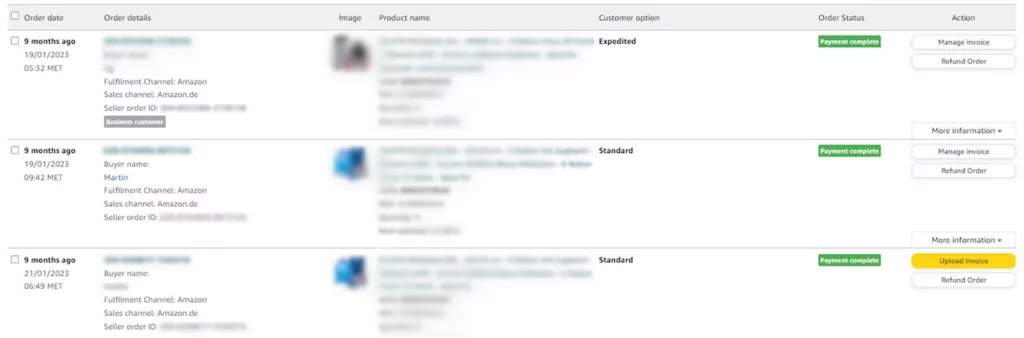
Case study: The vendor created the listings in early January, the goods arrived on 20 January, and the store received the first orders before the goods arrived at the warehouse. The vendor created high-quality photo content and product descriptions, set an attractive discounted price, and added coupons. Amazon quickly showed these offers in organic search results, and users bought them.
The date of receipt of the goods in the warehouse:
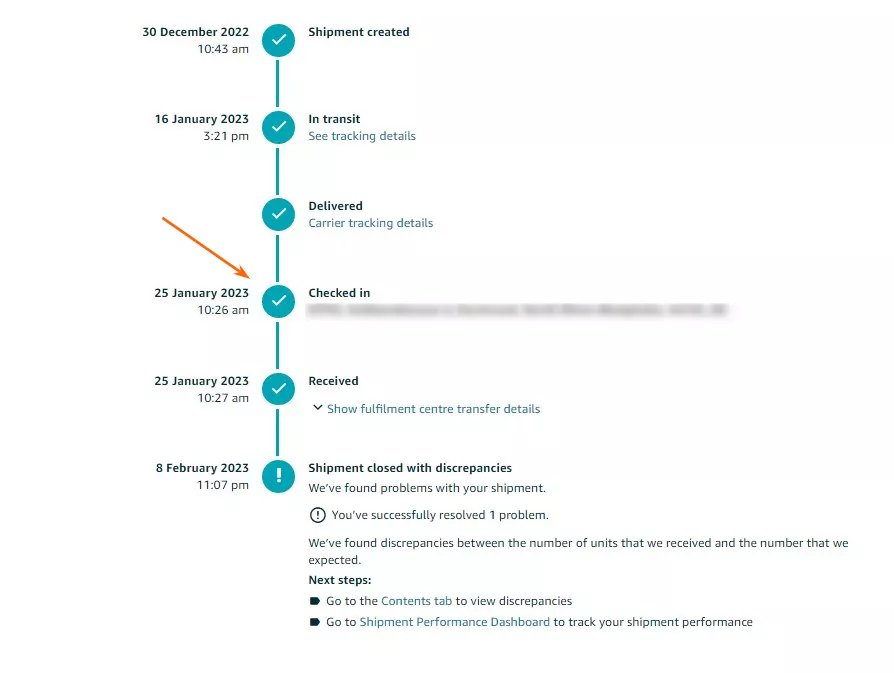
First sales:
How Amazon's A10 Search Algorithm Works
Keep in mind that “A10” is a common industry label, but Amazon does not publish an official A10 ranking formula or a universal weighting of ranking factors.
So, focus on what Amazon publicly describes: matching products with relevant searches, improving listing quality, and maintaining account health. Amazon’s COSMO research also explores connections between products and shopping needs beyond literal keyword matches.
What Ranking Factors Matter Most for Amazon Listings in 2026?
Our guide to Amazon ranking factors in 2026 recommends this practical order for diagnosing problems. It is a troubleshooting sequence, rather than Amazon’s official ranking hierarchy.
|
Priority |
What to check |
What sellers should do |
|
1. Availability and compliance |
Can customers buy the offer? |
Address stock shortages, suppressed listings, and policy issues. |
|
2. Keywords and shopper intent |
Does the listing match the intended search? |
Use accurate product terms and explain relevant uses, compatibility, and limitations. |
|
3. Listing content |
Can shoppers confidently evaluate the product? |
Clarify dimensions, package contents, and benefits through text and images. |
|
4. Sales performance |
Are shoppers choosing the product? |
Track sales alongside query visibility and investigate the contribution of ads and promotions. |
Amazon says products that sell well have a better chance of ranking higher organically, but it does not disclose a universal sales threshold. Check the full ranking-factor breakdown before deciding what to fix first.
How Do Amazon Sellers Optimize Listings for AI Shopping Assistants?
Shoppers also ask conversational questions, such as “Will this fit my laptop?” Amazon says its shopping assistant draws on product information, customer reviews, and community Q&As. Clear answers therefore matter alongside relevant keywords.
Our guide to optimizing Amazon listings for AI shopping assistants recommends these improvements:
-
Identify the product clearly. Put its type and important distinguishing attributes in the title.
-
Answer purchase questions in bullets. Explain suitability, compatibility, included items, and limitations.
-
Complete relevant attributes. Keep dimensions, materials, and other specifications consistent across fields.
-
Explain use cases. Describe who the product suits and when it is useful.
-
Address information gaps. Review recurring customer questions and check the assistant’s answers for missing or incorrect details.
For example, replace “perfect for every laptop” with verified internal dimensions and compatible device sizes. Use bullet points to make these details easy to find. Explore our Amazon AI tools guide for more ways to prepare your listing.
Accurate details help shoppers assess suitability and give the assistant clearer information to work with. These changes support product understanding; they do not guarantee an AI recommendation.
Paid Advertising on Amazon
Amazon Ads helps sellers promote individual products, introduce their brands, and reach audiences beyond shopping results. To set up ads on the marketplace, you need to register for Amazon Ads and choose the type of ad you want.
To advertise Amazon products effectively, choose an Amazon advertising format based on your goal: product-page visits, discovery of multiple products, or brand awareness.
If you’re deciding where to advertise Amazon products, compare Amazon Ads with social media, YouTube, and affiliate links according to purchase intent and your audience.
Sponsored Products
Sponsored Products are cost-per-click ads: you pay when someone clicks, and the ad takes shoppers to your product’s page. Use Sponsored Products to drive traffic to your listings.
For example, you’re a coffee-maker seller. That means that you could target relevant searches and similar products, then compare which targets generate profitable orders.
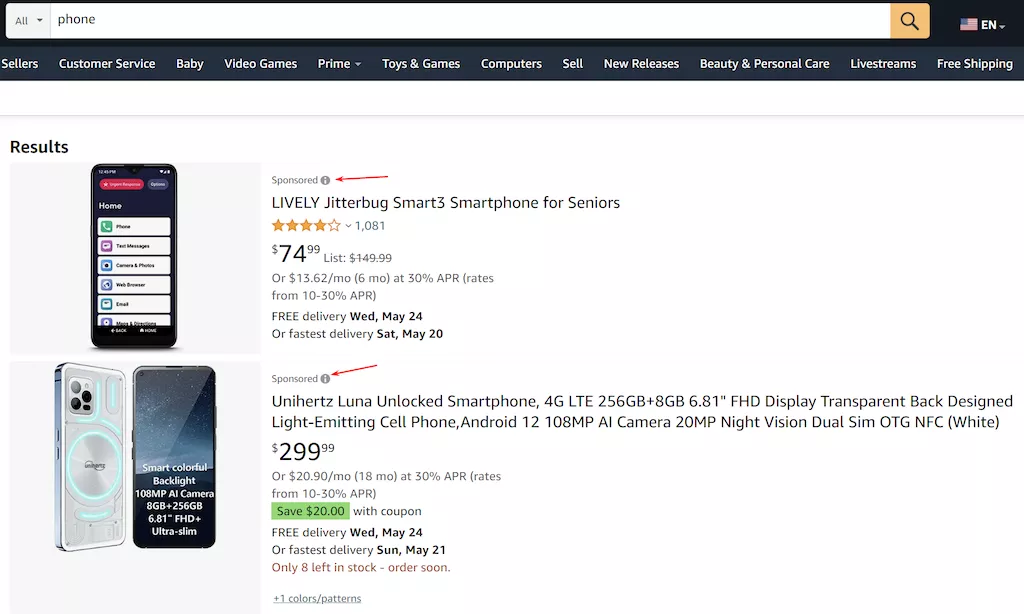
Here are the main features you could choose:
-
Shopping placements. Ads can appear within Amazon search results and on product pages. Additional placements: apps and websites.
-
Automatic targeting. Amazon matches your product with relevant searches and products. You still control bids and budgets and should review performance.
-
Manual targeting. Choose keywords or product targets and adjust bids according to their results.
-
Image and video options. Eligible advertisers can use Sponsored Products video to demonstrate product features.
Usually, automatic advertising campaigns start working effectively in the 3rd-4th month and should not be touched.
Sponsored Brands
Sponsored Brands help shoppers to find your products using images, videos, or several products together. You can use this ad format if you’re enrolled in Amazon Brand Registry or supply products directly to Amazon.
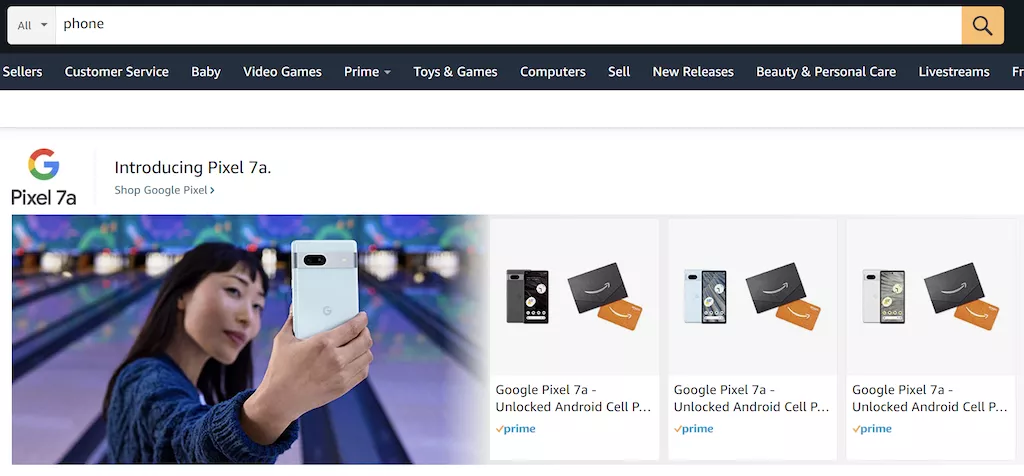
The main formats are:
|
Format |
What it shows |
When to use it |
|
Product collection |
Multiple products with brand elements and lifestyle imagery. |
Introduce related products and encourage shoppers to explore your range. |
|
Brand Store spotlight |
Up to three Brand Store subpages, with customized images and labels. |
Direct shoppers to relevant collections or departments within your Store. |
|
Sponsored Brands video |
An autoplay video demonstrating a product or introducing your brand. |
Explain a benefit that is easier to show than describe. |
Placements can include shopping results, product detail pages, and the homepage, depending on the format.
Video ads can direct shoppers to a Brand Store or, for some campaign goals, a product detail page. If you’re considering how to promote Amazon store collections, combine Sponsored Brands with clear navigation and consistent brand positioning on Amazon.
Eligible sellers can explore Amazon Brand Registry for access to brand-building tools, including A+ Content. For example, a kitchenware brand could demonstrate its cookware and send interested shoppers to its Store collection.
Media Ads: Display and Video
You can choose from several visual formats to reach people while they browse, shop, or stream content. Amazon’s display advertising uses audience insights and flexible creatives to reach relevant customers on Amazon properties and other websites and apps.
|
Format |
What it looks like |
Main features |
|
Display ads |
Image-based placements featuring product or brand messaging. |
Reach audiences across websites and apps using Amazon’s audience insights. |
|
Display ads with video |
Autoplay video within display placements. |
Demonstrate products on Amazon pages, IMDb, and eligible third-party websites and apps. |
|
Online video ads |
Video shown within video content or in standalone placements. |
Reach viewers across Amazon-affiliated destinations and other publishers. |
|
Streaming TV ads |
Full-screen video before, during, or after streaming content. |
Build awareness through placements such as Prime Video and live entertainment. |
Available placements, buying options, and features vary by market and campaign type. Explore Amazon’s video advertising options before choosing your creative and budget.
When you advertise Amazon products, match measurement to your objective. Review how Amazon’s full-funnel campaigns beta connects advertising stages before choosing your setup. Sellers familiar with Sponsored Display should check the display options currently available in their marketplace.
External Sources of Promotion
Promoting your products outside Amazon can help you reach new buyers, introduce people to your products, and guide them to your Amazon product pages.
For eligible advertisers, Amazon Attribution is a free measurement tool for assessing how non-Amazon marketing contributes to activity and sales on Amazon. Use separate tracking links for campaigns and placements to understand which sources produce results.
Social Media
TikTok, Instagram, Facebook, and Pinterest are places where many people spend time every day. Choose the platforms your audience uses and focus on content you have time to make regularly:
-
Product demonstrations: Use them to show how your product helps solve everyday problems.
-
Instructions: Explain in details how to use it.
-
Customer reviews: Post photos or stories from real customers with their permission.
-
Videos from bloggers: Collaborate with people whose followers are likely to need your product.
For example, if you sell pans, show three meals cooked in one pan and link to that pan on Amazon. Make sure the link opens the right product, size, and color, and that any advertised discount is available.
Start with a few posts or a small ad budget. Before spending more, check how many sales they bring in and how much you earn after costs. Lots of views and likes don’t always mean more sales.
YouTube
YouTube gives you the opportunity to provide in-depth information about products that require more than just a brief demonstration. Tutorials, comparison reviews, setup guides, and detailed reviews can help buyers determine whether a product meets their needs.
You can publish videos on your own channel or collaborate with an established channel serving your audience. For example, a pet-accessories brand could work with a dog-training channel to demonstrate how to fit and use a harness.
To make the content useful:
-
Answer a specific question. Cover sizing, compatibility, setup, maintenance, or another purchase concern.
-
Show the product in use. Include close-ups and realistic demonstrations of its features and limitations.
-
Provide a clear next step. Link to the matching Amazon listing in the description and explain where viewers can find it.
-
Measure each collaboration. Where eligible, use Amazon Attribution to assess the Amazon sales impact of your video campaigns.
Choose creators whose viewers are likely to need your product and who make useful, clear videos. Then check whether the sales they bring in leave enough money to cover their fee and the cost of making the content. More subscribers don’t always mean more buyers.
Affiliate Links
Affiliate marketing is all about letting people earn money by recommending your products. It’s a special community named Amazon Associates, and members get tracking links to share. And then when someone buys through their link, they get a commission.
These people often work as bloggers, reviewers, or video creators, so they have an audience and can reach people likely to buy what they recommend. Your job is to give them accurate product details and clear photos.
If you want to learn how to promote Amazon products and get paid, there are two different ways to earn:
-
As an affiliate, you research how to promote Amazon products and get paid and earn a commission for purchases made through your links.
-
As a seller, you receive money from selling your products, but you still need to pay for stock, Amazon fees, delivery, and other expenses.
Keep in mind that Amazon Associates and Brand Referral Bonus have different purposes:
|
Program |
Who benefits |
How it works |
|
Amazon Associates |
Participating publishers and creators |
Affiliates earn commissions from qualifying purchases through their links. |
|
Brand Referral Bonus |
Eligible enrolled brands |
Brands can receive referral-fee credits averaging 10% of qualifying sales generated by eligible external marketing. Actual rates and eligibility vary. |
Check Brand Referral Bonus requirements before including credits in your campaign calculations.
Reddit is a place where people ask questions and share experiences. Find communities discussing the problem your product solves, and read their rules before posting.
Some communities allow product links; others limit or ban them. Reddit’s spam policy also warns against repeatedly posting links to your own business.
Here’s how to get started:
-
Look for common questions. You need to find out what confuses shoppers or disappoints them about similar products. Use this information to improve your Amazon product page.
-
Give helpful answers. Offer advice people can use, even if they never click your link or buy your product.
-
Say who you are. If you mention a product you sell, make that clear.
-
Follow each community’s rules. Share offers only where promotion is allowed. You can also consider paid Reddit ads.
If you recommend your own product on Reddit, say that you sell it. Never pretend to be a customer and don’t change links to get around a community’s rules.
What Is the Average Amazon PPC Cost in 2026 by Category?
Amazon PPC costs vary by category and advertiser sample. In the 2026 benchmarks compared in our Amazon PPC cost guide, average cost per click (CPC) ranged from $0.38 for Books in Ad Badger’s sample to $2.01 for Health & Household in Pacvue’s sample.
|
Amazon category |
Average CPC — Ad Badger, January–August 2026 |
Average CPC — Pacvue |
|
Health & Household |
$1.05 |
|
|
Beauty & Personal Care |
$1.18 |
|
|
Electronics |
$1.45 |
— |
|
Pet Supplies |
$0.91 |
|
|
Books |
$0.38 |
— |
|
Food & Grocery |
$0.58 |
— |
|
Clothing & Apparel |
$0.72 |
— |
These are separate benchmarks covering different samples and periods, not Amazon-wide rates or full-year averages. A dash means no corresponding CPC figure was included in our comparison
Use CPC to estimate your advertising cost for paid traffic. At $1.18 per click, 100 clicks would cost approximately $118, but your cost per order depends on how many visitors buy.
To explore the sources, advertising costs of sales benchmarks, and optimization tips, read our article What Is the Average Amazon PPC Cost in 2026 by Category? If you sell beauty or wellness products, explore our category-specific Amazon advertising cost guide for a closer look at ad formats, competition, and budgeting.
Promotions on Amazon
Amazon offers promotions, coupons, deals, and price discounts to encourage purchases. Choose the tool according to your goal, product eligibility, and available margin.
|
Tool |
How it works |
When to consider it |
|
Coupons |
Shoppers clip an eligible percentage-off or dollar-off offer and receive savings at checkout. |
Give price-conscious shoppers an additional reason to buy. |
|
Price discounts |
Reduce the selling price of eligible products for a defined period. |
Test an offer or support a planned campaign. |
|
Deals |
Run eligible, time-limited offers that can receive deal-related visibility. |
Support shopping events or move inventory. |
|
Promotions |
Offer incentives such as percentage-off multi-item purchases, claim codes, or buy-one-get-one offers. |
Encourage larger purchases or support a specific audience campaign. |
Availability and eligibility differ by marketplace and promotion type. Check the requirements in Seller Central before planning your campaign
Amazon periodically creates special pages for holidays, such as Black Friday. But to get on these pages, you must be a top player and have a hot offer.
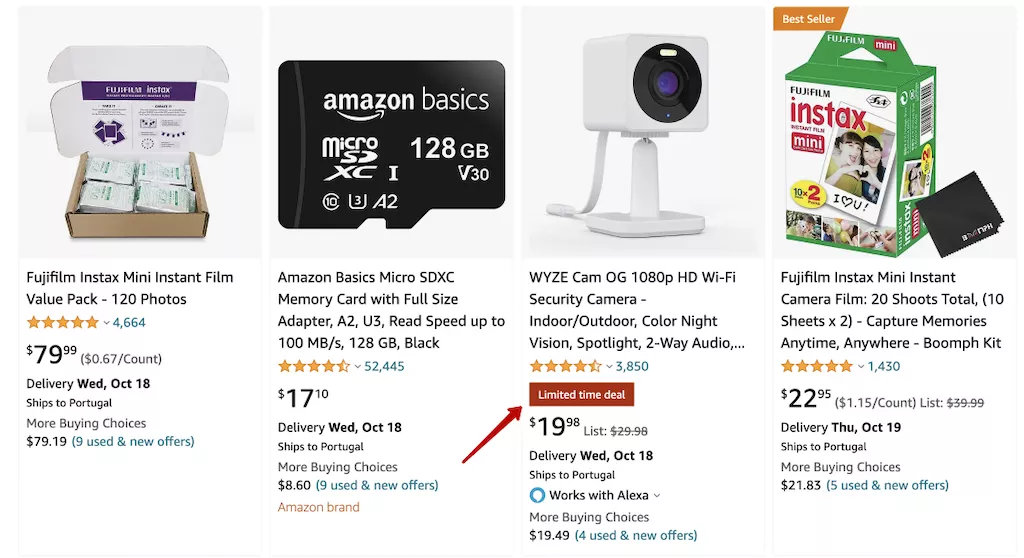
Therefore, paying attention to classic discounts, coupons, and crossed-out prices is better. They positively highlight the product in the search results and encourage users to click on it.
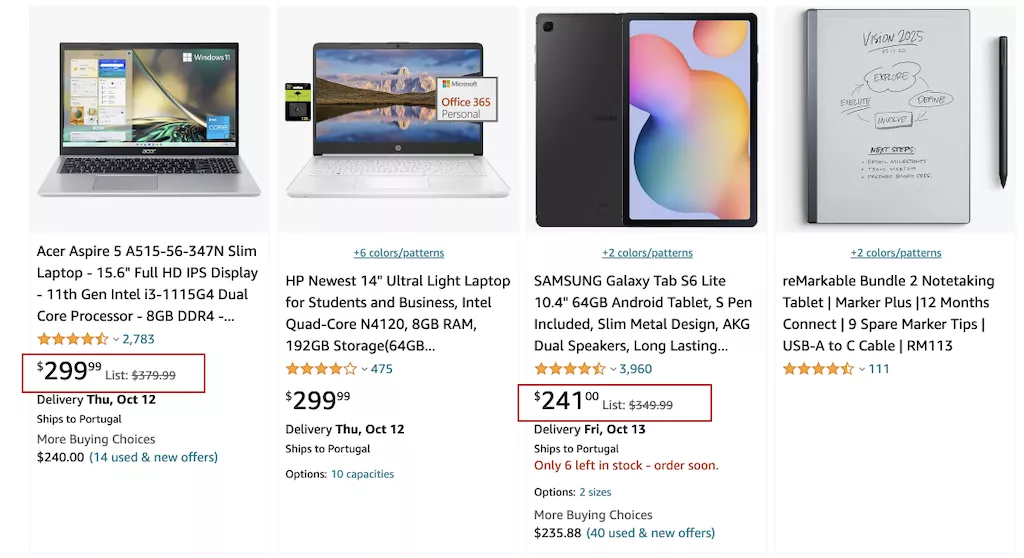
Another good attention-grabber is the red Limited Time Deal plate.
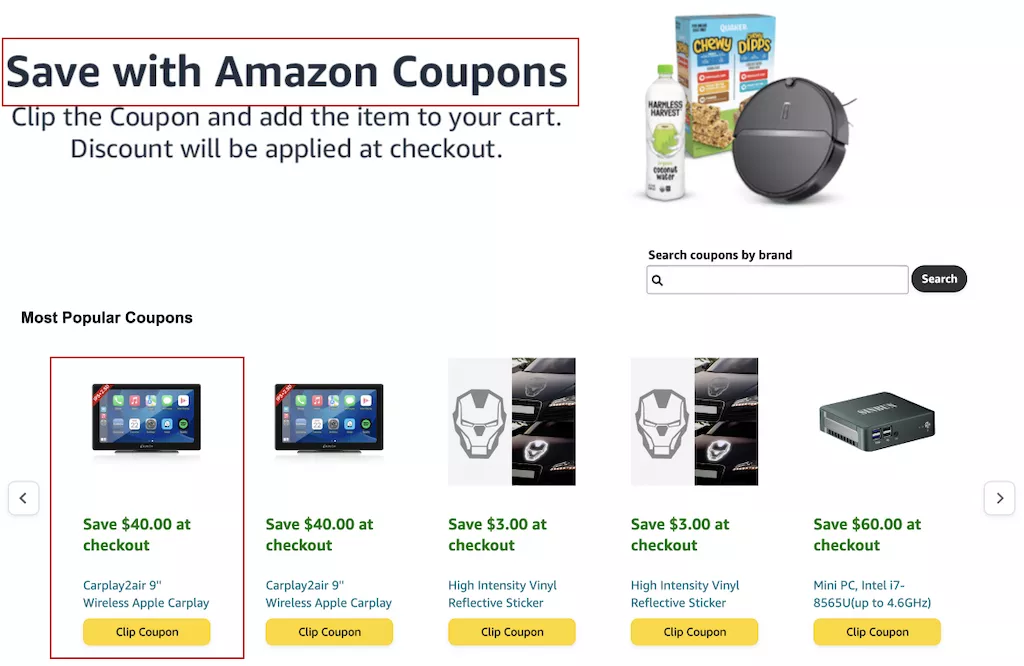
There is also a special page called Coupons, which gives a big boost to sales. To get featured on this page, offer generous discounts. For example, first set the price at $60 and then give a coupon for 60% off.
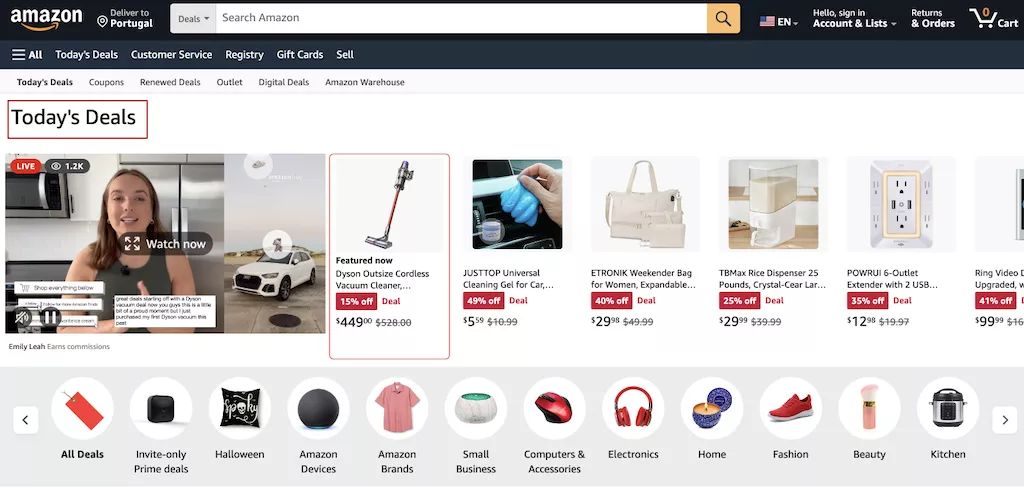
Amazon also collects profitable promotional offers on separate pages, such as Today's Deals.
Calculate the cost before launching: include the customer discount, applicable promotion fees, advertising, fulfillment, and returns. Amazon’s promotion-budget guidance explains how to estimate these expenses.
Plan your discount in combination with your ads and stock levels. You need to make sure that shoppers can find your offer and that you have enough products ready to ship. Follow Amazon’s pricing rules, and check whether customers can combine discounts, because you could earn less per sale than expected.
Working with Amazon Reviews
Reviews help shoppers decide whether your product is right for them. They show what real buyers liked and whether the product matched its description.
Here are ways to get reviews that follow Amazon’s rules:
-
Use Request a Review. Seller Central provides a standardized way to request feedback on eligible orders.
-
Learn from recurring complaints. If buyers repeatedly misunderstand dimensions or package contents, improve the listing. If the product itself causes problems, address those too.
-
Use available customer-support tools. Eligible brands can use Amazon’s Customer Reviews tool to contact customers about certain critical reviews and offer support.
-
Consider Amazon Vine. Eligible products can receive up to 30 reviews from invited Vine Voices who request free units and share independent opinions. Check enrollment requirements and costs first.
Amazon launched the Amazon Vine program to ensure that vendors receive honest reviews.
- The manufacturer sends its products for free to active Amazon users who buy more than ten products per month in its niche.
- These users then write honest reviews.
Such reviews will be published as "Vine Customer Review of Free Product."
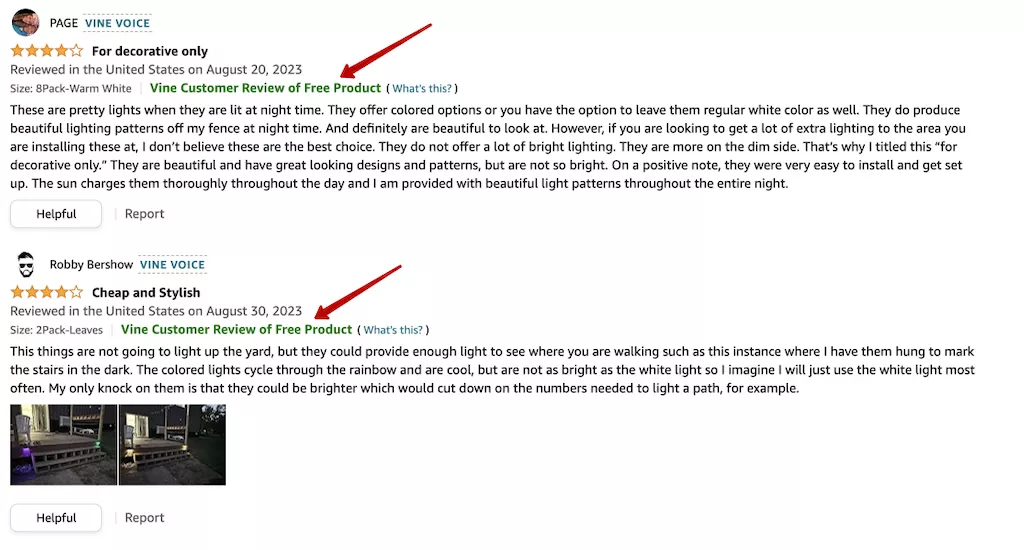
Vine reviewers may leave positive or negative reviews. Amazon chooses who reviews your product, and you must not pressure them to give a good rating. Use their feedback to fix problems and make your product better for future customers.
How to Analyze the Results
Your main goal is to check how many sales your promotion brings in and how much money you keep after costs. Then look at how many people see your product, click on it, and buy it to understand what to improve.
Compare similar time periods, keeping price changes, stock shortages, discounts, and seasonal demand in mind.
|
Promotion method |
What to measure |
What the results can help you investigate |
|
Organic search |
Query-level impressions, clicks, purchases, and tracked organic positions. |
Whether relevant shoppers find the listing and choose the product. |
|
Paid advertising |
Spend, CPC, CTR, attributed purchases, conversion rate, ACoS, and ROAS. |
Which targets and placements generate orders at an acceptable cost. |
|
External promotion |
Channel spend, tagged traffic, detail-page views, add-to-carts, and attributed sales. |
Which social campaigns, videos, or partnerships contribute to Amazon purchases. |
|
Overall business performance |
Revenue, contribution profit, returns, inventory, and storage costs. |
Whether increased sales improve the business’s financial results. |
Eligible brands can use Search Query Performance to examine search behavior. For external campaigns, Amazon Attribution connects tagged marketing activity with Amazon shopping actions.
Keep these advertising calculations handy:
-
ACoS = advertising spend ÷ attributed sales × 100.
-
ROAS = attributed sales ÷ advertising spend.
For example, $100 spent to generate $400 in attributed sales means 25% ACoS and 4× ROAS. Neither figure establishes profit until you account for other costs.
Challenges on Amazon You Should Be Aware Of
Amazon helps you to find customers and handle orders, but managing spending, stock, and customer service is fully on you. Here are the main challenges to prepare for:
-
Many sellers offer similar products. Give shoppers a clear reason to choose yours, such as a useful feature, better materials, or a size competitors don’t offer.
-
More sales don’t always mean more profit. Amazon fees, delivery, storage, ads, discounts, and returns reduce what you earn. Work out how much money you keep from each product sold.
-
You can run out of stock or buy too much. Running out means missing sales. Ordering too much leaves money sitting in unsold products and adds storage costs. Track how quickly products sell and how long new deliveries take.
-
Amazon can restrict your listings or even your account. If you forget some product details, break important rules, or have problems with orders, your sales are in danger. You need to check Account Health regularly and address warnings quickly.
-
Customers may return products if they get what they didn’t expect. That’s why make sure you explained sizes, included items, limitations, etc. Accurate descriptions help shoppers and save your budget.
-
Reports don’t tell the whole story. A report may count a purchase after someone clicks an ad, but that doesn’t prove the ad caused it. Compare advertising reports with your total sales and earnings.
-
You may need to pay before you get paid. Products, shipping, and ads often require money upfront. Keep enough cash available to cover everyday expenses and order your next batch of stock.
Read Amazon’s seller-policy overview to understand its rules for handling orders, cancellations, and other selling responsibilities.
Best Practices
To maximize the value of your promotion budget, decide how to market products on Amazon around a clear customer need. Our guide to effective brand differentiation on Amazon can help you clarify that advantage. Use this checklist before increasing your budget:
-
Check whether people want your product, what similar products already exist, and whether demand lasts all year or only during certain seasons.
-
Work out how much money you’ll keep from each sale after paying for the product, Amazon fees, storage, delivery, ads, discounts, and returns.
-
Make sure your product is in stock, follows Amazon’s rules, and is available to buy.
-
Check that your title, bullet points, photos, and product details describe the same item correctly.
-
Explain the product’s size, who it suits, what it works with, and what it cannot do.
-
Set an advertising budget you can afford and decide what you want to achieve, such as your first ten orders.
-
Check which search terms and ad locations bring sales. Reduce spending on those that cost too much without producing enough orders.
-
Use Amazon’s review-request tools and fix problems customers mention repeatedly.
-
If available to your business, use Amazon Attribution to see whether social media posts, videos, and other outside links lead to purchases.
-
Look beyond sales numbers: check how much you earn, how much stock remains, and whether customers are happy.
Conclusions
Organic promotion helps interested buyers find and choose your listings. Paid advertising is your best friend for increasing the visibility of selected products and target audiences. External promotion helps raise awareness of your brand through social media, YouTube, publishing platforms, and online communities.
Support these methods with reliable stock, clear product information, genuine reviews, and carefully priced promotions. Increase investment when results demonstrate that additional sales contribute to profit.
Think Temu and Shein own budget shopping? Amazon thinks otherwise. Meet Amazon Haul—a storefront for ultra-low-cost products backed by Amazon's reach and trust.
FAQ
How do you promote a product on Amazon?
How much does it cost to advertise on Amazon?
How do you get your first sales on Amazon?

 4
 2
 2
 0
Related Articles
Business Apps in the US: iOS vs. Android, October 2026
Which business apps did Americans actually download in October 2026? We pulled US data from the App Store and Google Play to find out what professionals, gig workers, shoppers, and investors installed.
Shoppable YouTube: How to Make Every Screen Shoppable
Shoppable YouTube turns your video ads into mini storefronts by adding clickable products from your Merchant Center catalog.
Is Amazon Replacing My Hero Image With an AI Version? What Pet Brands Need to Know
Amazon now shows hero images in US search results that brands did not upload, and several look AI-rendered.