
What Ranking Factors Matter Most for Amazon Listings in 2026?
To rank highly on Amazon, you need to work on keyword and buyer-intent relevance and listing content. Also, you need to have strong sales metrics and conversion rates, a healthy account, and compliance with rules.
What Are the Most Important Amazon Ranking Factors in 2026?
|
How It Works |
What Sellers Should Optimize |
|
|
Keywords and shopper-intent relevance |
When you put relevant product keywords, it helps Amazon to connect listings with searches. Amazon’s COSMO research says that the marketplace deeply explores the relationship between products and shopping needs. |
Use accurate product terms in titles, bullets, descriptions, and backend keywords. Explain intended uses, compatibility, and limitations (Amazon SEO guidance). |
|
Sales performance |
Amazon says products that sell well have a better chance of ranking higher organically. It does not publish a universal sales threshold or organic-ranking formula. |
Track sales alongside target-query visibility. Investigate whether growth comes from relevant searches, advertising, or promotions. See also our guide to promoting products on Amazon. |
|
Listing content and conversion |
Clear content helps shoppers evaluate the product. Amazon offers experiments to measure which content generates better results. This does not establish a fixed conversion-rate ranking weight. |
Test titles, images, bullets, descriptions, and A+ content on eligible ASINs. Answer questions about dimensions, contents, suitability, and use (Amazon). |
|
Account health and compliance |
Amazon’s SEO guidance says account health can contribute to search rankings, although it does not disclose individual metric weights. |
Monitor account warnings, listing issues, and policy compliance. Resolve problems that interrupt availability or customer service. |
Keywords and Shopper Intent
Use accurate product terms in titles, descriptions, and backend fields. Add useful synonyms without repetition.
Say you sell a lunch container. Tell people how much it holds and how well it keeps food warm. Don’t stuff the title with random keywords just because they kind of sound related.
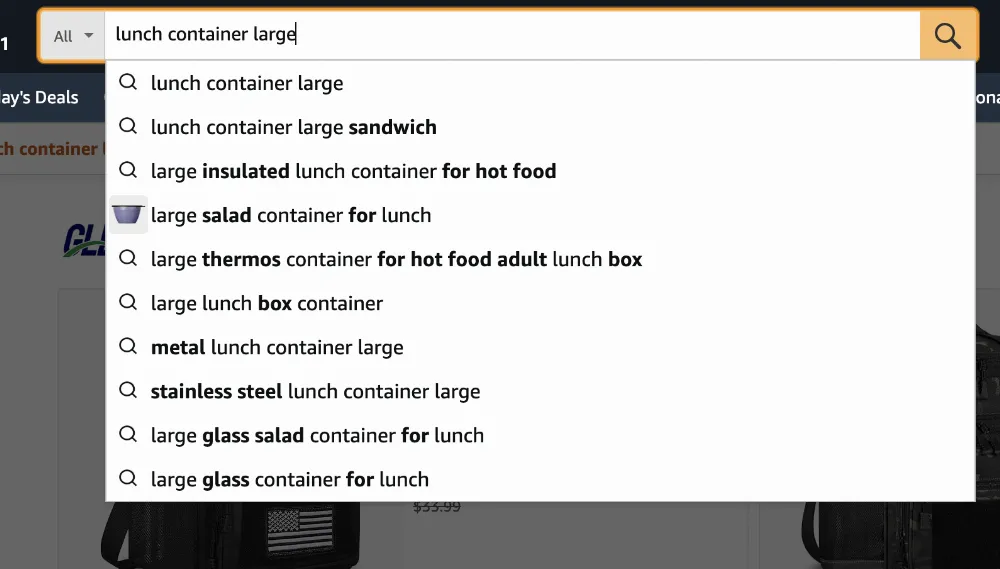
Amazon recommends relevant keyword research and backend terms (Sell on Amazon).
Sales Performance
You need to track sales alongside organic positions. For example, if a dog brush gains sales without improving for every grooming query, it’s totally fine. Amazon uses sales volume as a factor in organic ranking, but there’s no universal rule out there (Sell on Amazon).
Are you selling on Amazon? Here are answers to some of your questions:
Listing Content and Conversion
Answer purchase questions clearly. A pet carrier listing could show internal dimensions and explain how to measure an animal.
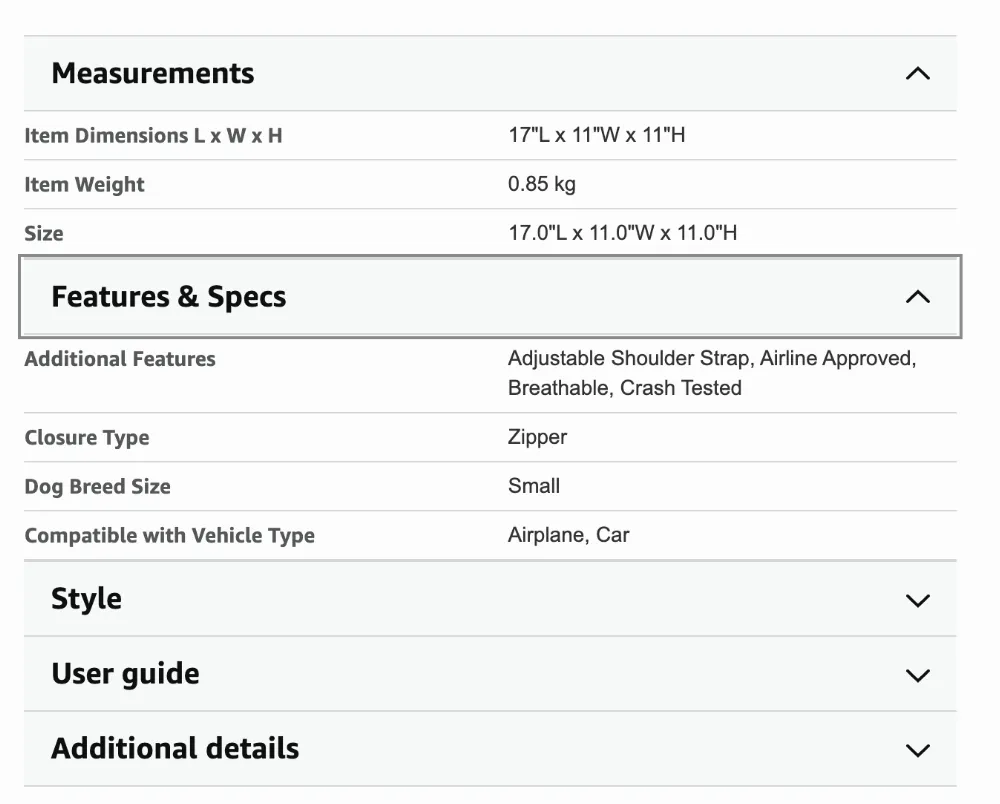
Use Manage Your Experiments to compare versions of your content on eligible ASINs. Don’t just assume your edit made things better. It might have made them worse (Sell on Amazon).
Account Health and Compliance
You need to resolve policy and listing problems fast. For example, if your visibility suddenly dropped, check whether you had an account warning before and fix what needs to be fixed. Amazon’s SEO guidance says that account health is among ranking considerations (Sell on Amazon).
Which Amazon Ranking Factors Have the Biggest Impact?
Amazon doesn’t publish any universal weighting, so don’t treat this as a secret algorithm ladder. It’s just a practical order for figuring out what’s wrong.
|
Priority |
Focus |
Why it matters to Amazon |
|
1 |
Availability and compliance |
Amazon needs offers customers can actually buy. Stock and policy issues can limit availability before ranking improvements have a chance to help. |
|
2 |
Keywords and shopper-intent relevance |
Amazon needs to understand whether your product answers the shopper’s search. Clear product details help it make that match. |
|
3 |
Listing content |
These help shoppers choose an offer. |
|
4 |
Sales performance |
Sales show that shoppers are choosing the product. Amazon says products selling well have a better chance of ranking higher organically. |
How Has Amazon Ranking Optimization Changed in 2026?
Product discovery has become more conversational with Amazon’s AI assistant. Amazon renamed Rufus Alexa for Shopping in May 2026. The assistant uses product information, reviews, and conversational context to answer shopping questions and recommend products (About Amazon).
So, you need to optimize not only for Amazon SEO, but for Amazon AI too.
Interested in how Amazon uses AI to maximize results? Read our articles:
-
How Does Amazon Feed Rufus Data Your Listing Never Shows (And You Didn’t Even Know It)?
-
Pet Brands Must Win Amazon AI Discovery as Alexa Drives Traffic
Turn listing improvements into a focused growth plan. Netpeak USA can help audit your Amazon visibility, identify purchase barriers, and prioritize what to fix first.
FAQ
What is the most important Amazon ranking factor in 2026?
Does sales velocity affect Amazon rankings?
Do reviews directly affect Amazon search rankings?
Does Amazon BSR affect organic search rankings?
How long does it take to improve an Amazon listing’s ranking?

 0
 0
 0
 0
Related Articles
What Vibe Coding Means for Business: No Coding Skills, One Weekend, One SaaS
Vibecoding is changing the rules for front-end development and opening up new opportunities for businesses, but there are some nuances to consider.
Which Products Went Viral on Amazon in the Last 12 Months?
Amazon trending products from October 2025 to October 2026 are the AquaSonic Electric Pink Vibe toothbrush, Ninja SLUSHi frozen drink maker, Kodak PIXPRO FZ55 digital camera, ZELUS weighted vest, and NeeDoh squeeze toys.
Amazon's AI Now Builds Complete Looks on Product Pages. How Do Brands Make Sure the Bundle Is Theirs?
Amazon now uses AI to assemble complete, shoppable looks around a single product, and it fills those looks with whichever brands its model picks.