
What Percent of Customers Find Their Moving Company Through AI Assistants (ChatGPT)?
No single study has measured what percent of customers find their contractors through AI assistants for moving industry by itself. However, based on BrightLocal's and Pew Research's latest figures on AI adoption, roughly 15–25% of people shopping for a mover now start that search with an AI assistant like ChatGPT, Perplexity, or Google AI Mode. We will discuss the data behind that number, and what it means for digital marketing for moving companies in the overview below.
|
Question |
Answer |
|
What % of moving customers use AI assistants to find a mover? |
An estimated 15–25% in 2026, based on adjacent local-business and chatbot-adoption data (no moving-specific study exists yet). |
|
What % of all consumers use AI to find local businesses? |
45%, up from 6% in 2025 (BrightLocal, 2026). |
|
What % of US adults use ChatGPT? |
44%, up from 34% a year earlier (Pew Research, 2026). |
How We Have Collected the Data
There’s currently no industry-wide study showing exactly how many people use AI assistants to find moving companies. The category is still too niche to appear as a standalone segment in major consumer research.
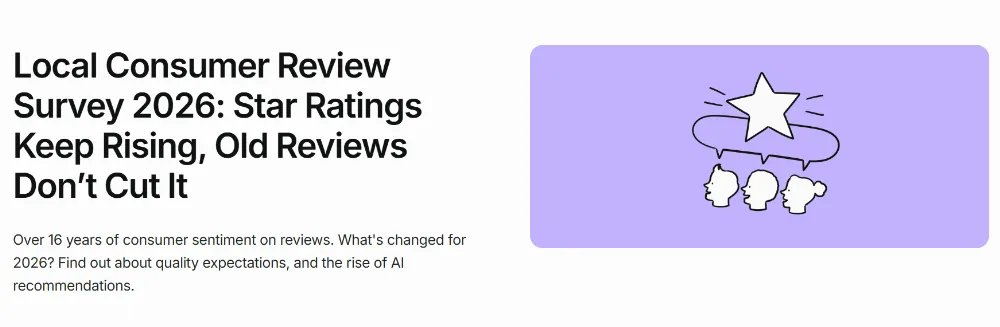
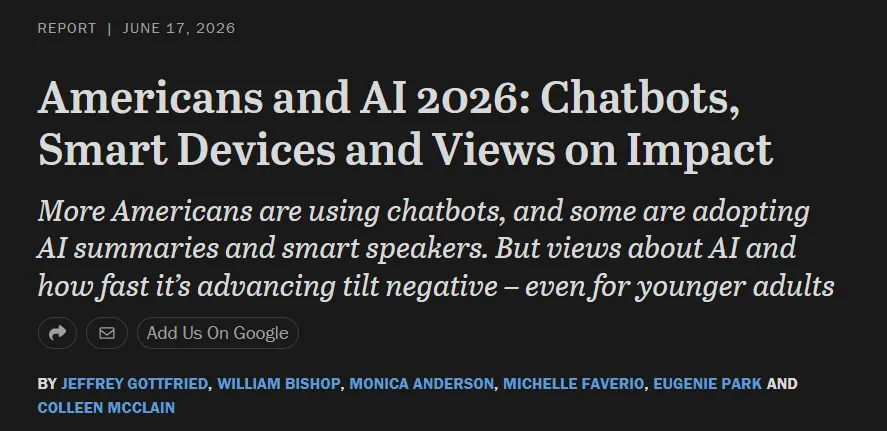
Instead of relying on unsupported claims, we built our estimate using two trusted 2026 data sources: BrightLocal’s Local Consumer Review Survey and Pew Research Center’s Americans and AI 2026 report. The insights on AI adoption trends and local business discovery data helped us estimate how AI is influencing the way consumers search for movers.
How Many Consumers Use AI Assistants for Recommendations?
According to BrightLocal's 2026 Local Consumer Review Survey, 45% of consumers now use AI tools to find local businesses. For the record, this number used to be just 6% in 2025. That makes AI the third most popular discovery channel for local services, behind only Google and Facebook.
Pew Research Center reports that 44% of US adults use ChatGPT, 49% use an AI chatbot, and 60% regularly read AI-generated summaries directly in search results. Hence, users adopt AI for small business discovery at mass based on the recent research.
The bottom line: AI is no longer a new fad but a force to be reckoned with. So movers should not wonder whether customers are likely to look for them with AI assistants, but rather think of how customers can find your business in their LLM search result.
Common AI Queries
Keep in mind that AI prompts are much different from regular Google questions: people tend to put in much more details, describe the context, and type in hyper specific niche requests. So your goal is to understand their thinking pattern when it comes to looking up moving service providers with AI. Some popular prompts are:
-
"What are the best moving companies in [city] as of 2026?"
-
"Find me a reliable mover for a 2-bedroom apartment move"
-
"How much should a local move cost, and who does it well?"
-
"Compare moving companies near me by reviews and price"
AI has effectively automated moving word-of-mouth at scale, and it needs the right signals to recommend you instead of a competitor.
AI Search vs Google Search: How Customers Discover Movers
|
Factor |
Traditional Google Search |
AI Assistants (ChatGPT, Perplexity, AI Mode) |
|
Result format |
List of ranked links |
One concise, named recommendation |
|
What drives visibility |
Backlinks, on-page SEO, local SEO, Google Business Profile |
Review volume and freshness, NAP consistency, third-party mentions, listicle inclusion |
|
Customer journey |
Users compare multiple websites before contacting a company |
Users often contact one of the first businesses recommended |
|
Discovery share (local businesses, 2026) |
Still the #1 discovery channel |
~45% of consumers use AI for local business discovery and their percentage tends to grow (BrightLocal, 2026) |
|
Consumer trust |
Customer reviews remain a trusted decision factor |
42% of people trust AI recommendations as much as traditional human-written reviews (BrightLocal, 2026) |
Because AI tools hand shoppers a single answer instead of options to compare, showing up at all matters more than ranking #3 vs #7 ever did on Google.
Want a a deeper breakdown of how traditional channels perform on cost and volume, see how to calculate the cost of a moving lead this year and our Boston moving CPC benchmarks across Google, Facebook, TikTok, and Bing.
What Moving Companies Can Do to Get Recommended by AI Chatbots?
AI tools recommend movers based on trust signals pulled from across the web, not paid placement on ad platforms. To improve your odds:
-
Get a bunch of reviews on Google, Yelp, BBB, and Moving.com since AI tools favor businesses with strong, recent ratings.
-
Keep NAP data identical (name, address, phone) across every directory and listing.
-
Earn mentions in local content such as news, real estate blogs, and "Best Movers in [City]" articles. AI tools often tend to quote this data for its answers.
-
Publish content that covers real questions, like moving costs and timelines as of this year.
-
Complete every business profile: Google Business Profile, Bing Places, and industry directories.
-
Add LocalBusiness/MovingCompany schema markup so AI tools can parse your details.
This is the core of what Generative Engine Optimization does. Wanna know how your moving company performs compared to competitors? Get our Google AI Overview visibility report that shows exactly where your brand is being cited versus competitors.
FAQ
Do People Use ChatGPT to Find Local Businesses?
Yes, based on recent findings of BrightLocal's 2026 survey, 45% of consumers now use AI tools such as ChatGPT to find local business recommendations. Now AI is the third most-used discovery channel behind Google and Facebook. Here is some research on why customers choose one moving company over another.
What Determines Which Moving Companies AI Recommends?
Review volume and recency, consistent NAP data, third-party brand mentions (news, blogs, listicles), complete business listings, and helpful on-site content. AI tools treat reviews as a trust filter, so businesses with strong, current ratings are far more likely to be named.
Should Moving Companies Invest in AI SEO?
Yes, since AI's share of local-business discovery grew 7.5x in a single year (from 6% to 45%) (BrightLocal, 2026). Waiting means competitors accumulate the trust signals AI rewards while your business stays invisible in these results. Here are some research studies on the average ROI of various digital channels for moving companies and their budget.
Does AI Recommend Movers Instead of Google, or Alongside It?
Alongside it, for now. Many shoppers still cross-reference Google Business Profiles and reviews after getting an AI recommendation, so visibility in both channels currently wins the most bookings for movers. Our SEO for moving companies guide covers the Google side in depth.

 0
0
 0
0
 0
0
 0
0
Related Articles
Business Apps in the US: iOS vs. Android, September 2026
We searched for US App Store and Google Play data to see what business apps professionals, shoppers, and investors actually installed in September.
What Happens When Amazon Suppresses Your Listing? The New 2026 Rules
Under the new 2026 rules, Amazon warns you first and gives you a grace period to fix the issue.
Amazon’s New “Sourced from Brand” Buy Box Label: Who Gets It and Who Doesn’t
Amazon is rolling out a provenance line in the Buy Box. A short label under the Brand row now reads “Sourced from [Brand]” on amazon.com and “[Brand] approved” on amazon.de. It tells the shopper that the unit on offer came through the brand’s own supply c