
Why Customers Choose One Moving Company Over Another in 2026?
Customers today research online reviews, prices, licensing, and communication before signing anything. Here are the five factors driving those decisions in 2026, backed by current industry data.
Use this information for your digital marketing strategy.
|
Importance in 2026 |
Why It Matters |
||
|
1. |
Online reviews |
Very High |
97% of consumers read reviews before choosing a local business (Local Consumer Review Survey, 2026) |
|
2. |
Transparent, binding pricing |
Very High |
Only 43% of movers offer a binding estimate, so clear pricing stands out (This Old House 2025 Moving Survey) |
|
3. |
Licensing & insurance |
High |
Vetted, properly licensed movers correlate with higher satisfaction (Forbes Advisor 2026 Best Moving Company Survey) |
|
4. |
Punctuality & communication |
High |
29% of dissatisfied customers cite poor punctuality, 53% cite poor communication (This Old House, 2025) |
|
5. |
Damage protection |
Medium-High |
Damaged goods are the top complaint among unhappy movers, at 62% (This Old House, 2025) |
Data sources: Forbes Advisor 2026 Best Moving Company Survey, This Old House 2025 Moving Survey, and BrightLocal 2026 Local Consumer Review Survey.
Aggregation method:
-
Forbes Advisor looked at 45 leading moving companies in the United States, using 76 different criteria and over 200 actual quotes.
-
The team at This Old House used several research methods, such as customer surveys, expert interviews, and a national cost analysis. They also reached out to moving companies to get quotes and see how the service worked in practice.
-
Every year, the Local Consumer Review Survey looks at how people use reviews, showing trends and insights that affect local businesses.
Interested in moving industry data? Read our research to find out how to actually streamline leads.
Factor 1: Online Reviews and Reputation
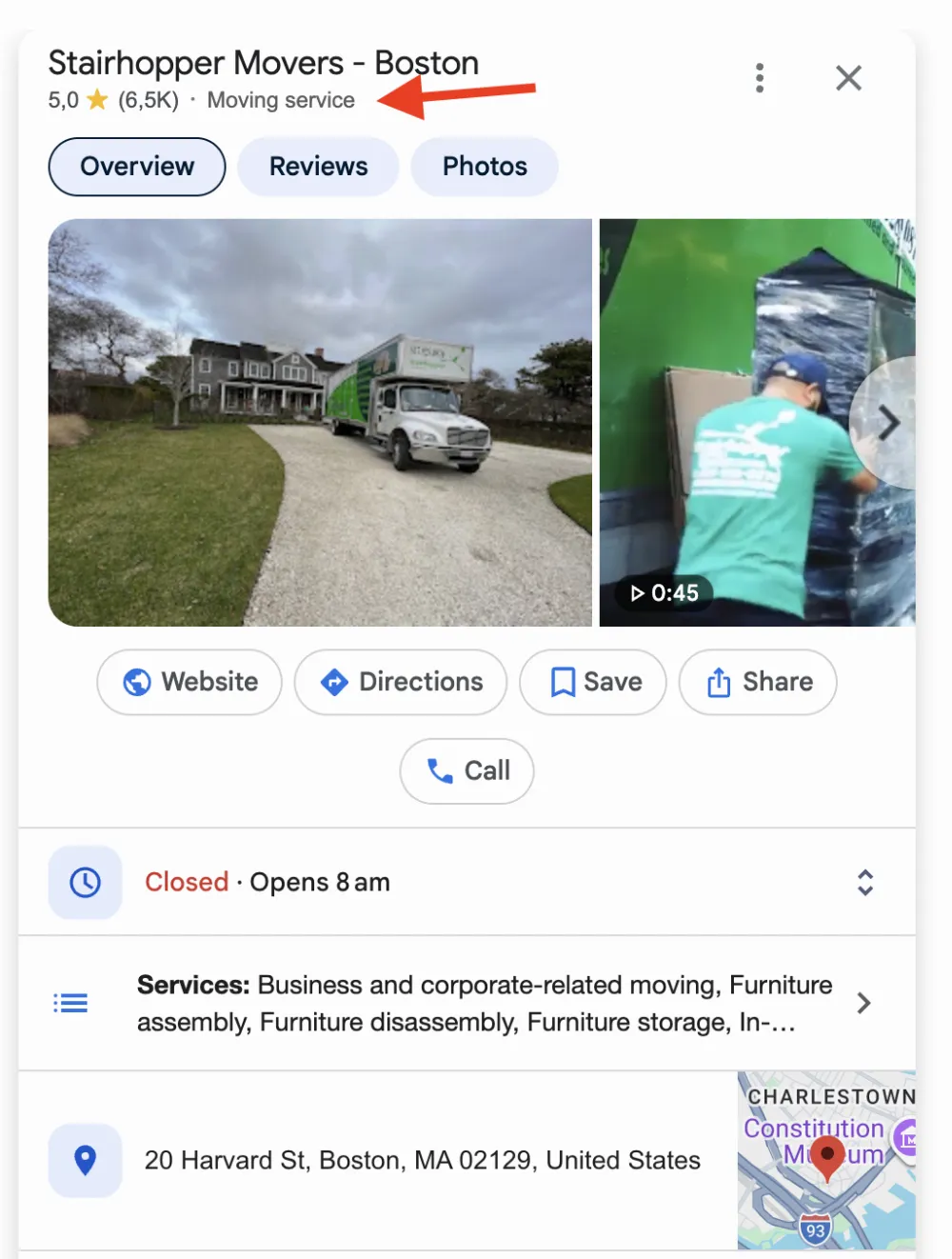
Reviews are now the single biggest trust signal in the moving industry. Forbes Advisor's 2026 methodology confirms this: customer reviews are one of the core scoring factors. Reviews are also important for moving SEO.
Shoppers believe third-party sites like Yelp and Google Reviews and are skeptical about curated testimonials on a mover's own website, since a pattern of dishonest pricing, damage, or late deliveries is a clear red flag.
Planning to grow in specific markets? Explore our moving SEO guides for movers in general, in Boston and Illinois.
Factor 2: Transparent, Binding Pricing
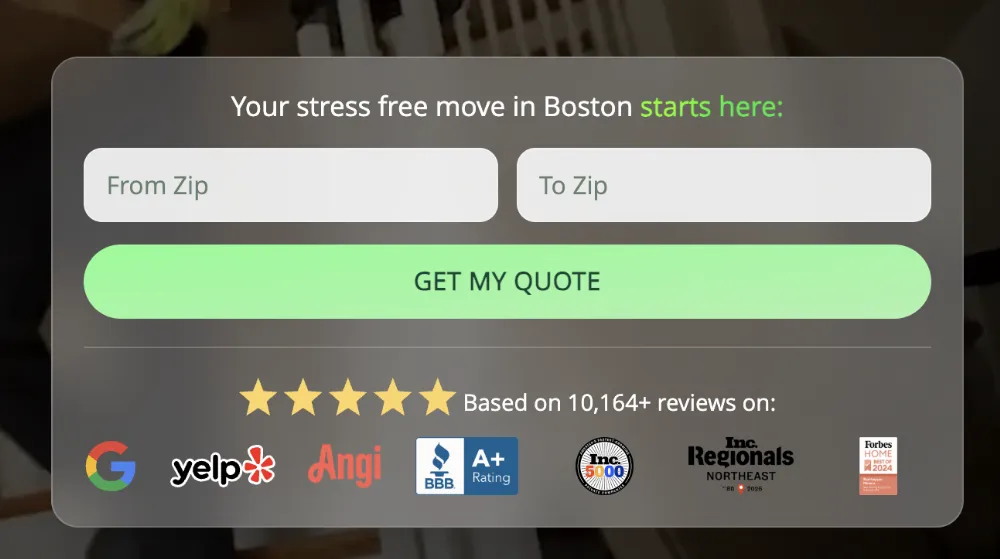
Price still matters, but predictability matters more. This Old House 2025 survey of 1,000 recent movers found that only 43% had been offered a binding estimate, meaning more than half of customers were left uncertain about their final cost.
Companies that close that gap earn trust immediately — the same research notes that 89% of respondents whose company gave a quoted rate said their final bill matched it.
Customers don't default to the lowest price — they look for movers offering binding or flat-rate estimates so the number they're quoted is the number they pay.
Factor 3: Licensing, Insurance, and Vetting
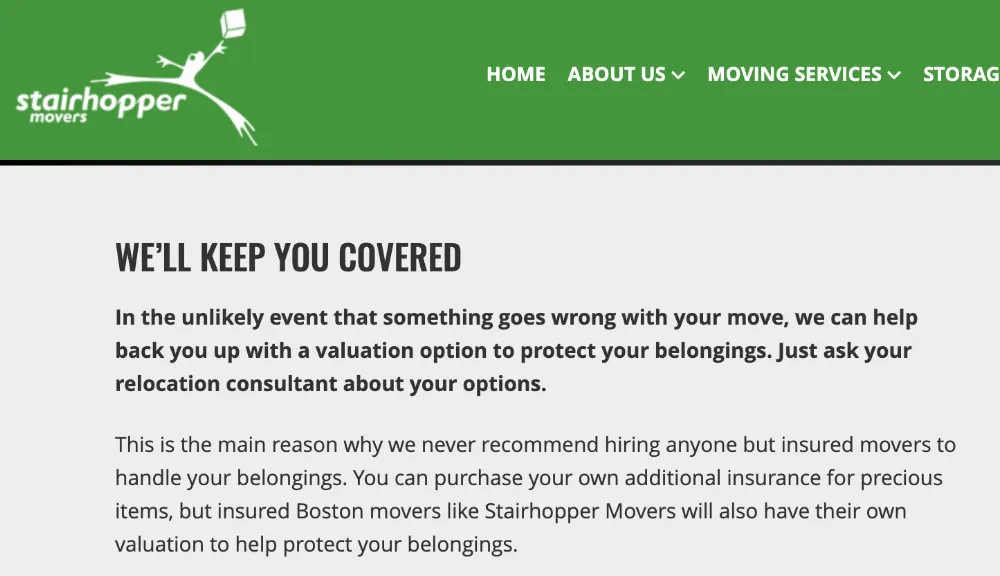
Unlicensed or uninsured movers are one of the biggest risk factors in the industry. Forbes Advisors' 2026 review process starts by eliminating companies outright over this issue: it disqualified movers that failed to meet standards for licensing, insurance, and legal registration before evaluating the remaining 45 companies on price and service.
Customers do the same filtering themselves before requesting a quote. Build your digital marketing around it.
Factor 4: Punctuality and Communication
A mover who shows up late or goes silent can’t be trusted. The same This Old House 2025 survey found that 29% of dissatisfied customers were upset with a lack of punctuality, and 16% said their goods arrived outside the agreed delivery window.
Communication issues were even more common: among unhappy customers, 53% cited poor customer service or communication as a core complaint. You need to make sure that your moving ads communicate clearly too.
Dive deeper into the numbers shaping the moving industry:
Factor 5: Damage Protection and Claims Handling
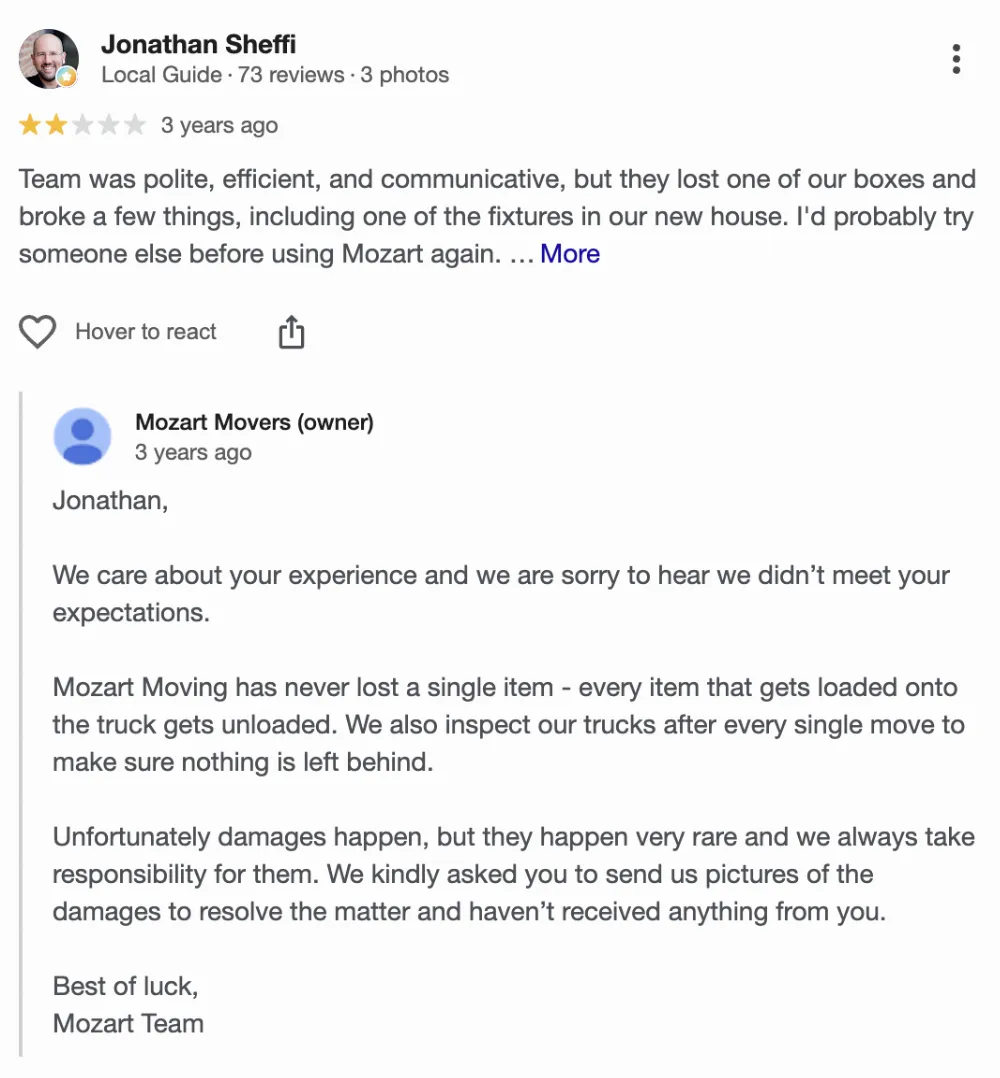
How a company protects — and handles claims for — a customer's belongings shapes loyalty more than almost anything else. Damaged goods top the list of complaints industry-wide: 62% of dissatisfied customers in This Old House survey cited damaged furniture.
Movers that offer real valuation coverage and a fast, fair claims process turn a risky moment into a reason customers recommend them.
Comparison: What Drives Loyalty vs. What Drives a One-Time Booking
|
Drives First-Time Booking |
Drives Repeat Business & Referrals |
|
Star rating and review volume |
How claims and damage are handled |
|
Upfront, binding price quote |
Actual bill matching the quote |
|
Verified licensing (USDOT/MC number) |
On-time pickup and delivery |
|
Fast, clear communication at quote stage |
Ongoing responsiveness during the move |
Which state has the fastest-growing search demand for movers in 2026? Read our research to find out. Also, customers find movers through AI in 2026, so don't underestimate this lead channel as well.
FAQ
Do customers choose movers based on price?
Price matters, but predictability matters more. Customers are less swayed by the lowest number and more by whether the quote is binding — over half of movers surveyed in 2025 didn't get a binding estimate, which is a major source of frustration and lost trust.
Why do some moving companies get more leads?
Companies with strong, consistent reviews across multiple platforms — not just their own website — tend to generate more leads, since the vast majority of consumers now read reviews before ever requesting a quote. Here is some research on why moving companies struggle to attract customers.
How can movers get more customers in 2026?
The clearest levers are offering transparent binding pricing, actively collecting and responding to reviews on multiple sites, keeping licensing and insurance information easy to verify, and tightening communication around scheduling and damage claims — the areas customers complain about most.

 0
0
 0
0
 0
0
 0
0
Related Articles
Amazon's AI Now Builds Complete Looks on Product Pages. How Do Brands Make Sure the Bundle Is Theirs?
Amazon now uses AI to assemble complete, shoppable looks around a single product, and it fills those looks with whichever brands its model picks.
Business Apps in the US: iOS vs. Android, September 2026
We searched for US App Store and Google Play data to see what business apps professionals, shoppers, and investors actually installed in September.
What Happens When Amazon Suppresses Your Listing? The New 2026 Rules
Under the new 2026 rules, Amazon warns you first and gives you a grace period to fix the issue.