
Zombies ate my rankings! How to cannibalize your competitor's organic traffic with PPC in 3 simple steps
What is cannibalization? You've apparently already met this concept, but today I'd like to present it a bit differently. Cannibalization is a way of obtaining traffic by diverting it to your landing pages from pages that rank organically for targeted keywords.
If you’ve already tried all the usual ways to bring leads to your site and are in search of some new ideas, then this article is just what you need. I’m glad to share this relatively simple way of getting traffic, about which, however, I haven't met a single mention online.
Step 1. Finding competitors (in case you don't know whom to target)
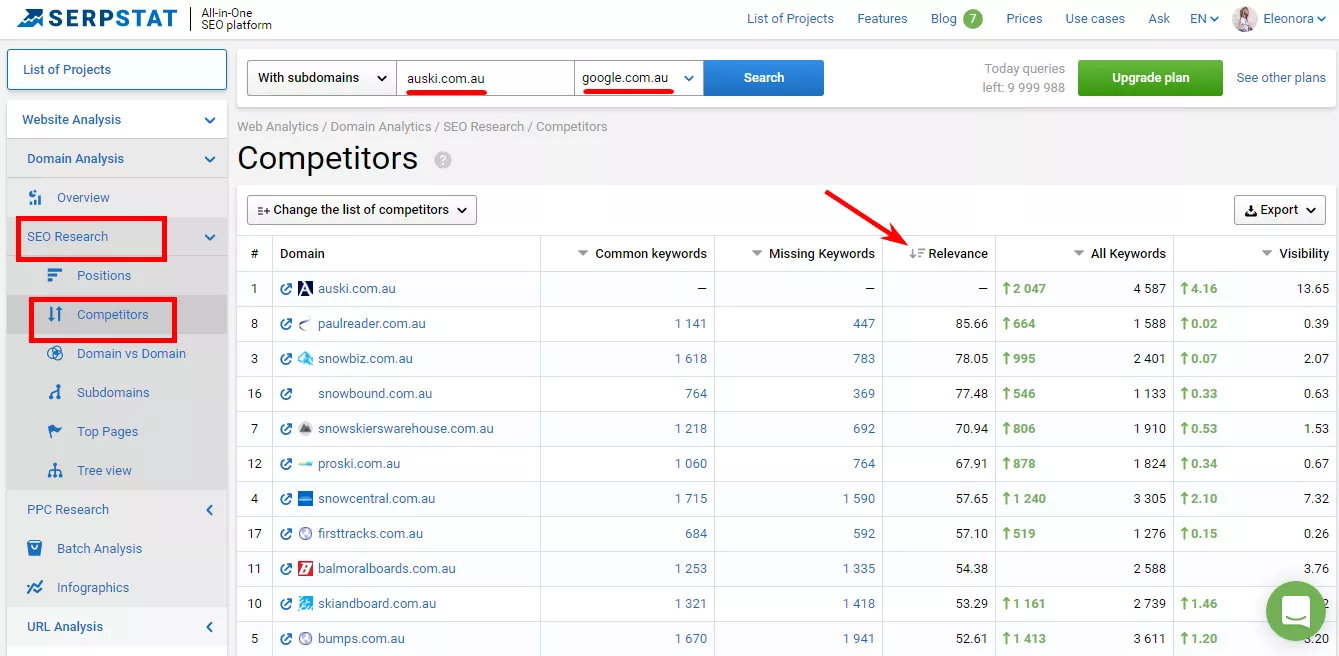
Let’s start with domain analysis. I take the Australian shop Auski as an example. I type auski.com.au in Serpstat’s search bar, choose the search engine, pass to SEO Research → Competitors. I sort the obtained list of competitors by relevance.
Relevance counts by dividing the number of common keywords by the number of overlapping ones.
Step 2. Picking the keywords to target
Simply by clicking any competitor, you’ll get the list with all the keywords they are ranking for. My most relevant competitor is Paul Reader, so let’s choose it. Applying filters as it’s shown in the picture below, I exclude branded queries, as it’s 99.99% that your competitor already runs PPC campaign for it. Another filter allows seeing what keywords competitor ranks for in the top-3 of SERP.
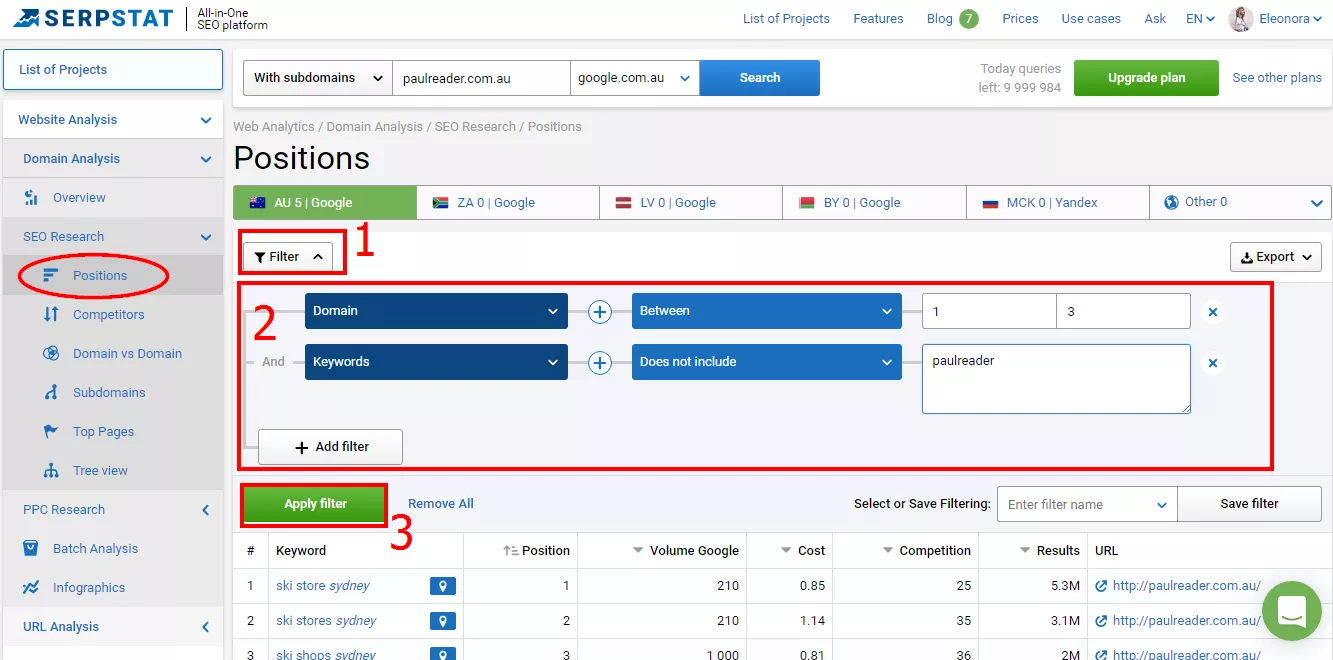
Also, pay attention to the Cost and the Competition indicators. Use them to find the optimal keywords to target depending on your budget.
Step 3. Result
So we have a list of organic search queries, where our competitor is displayed on the first position in the organic SERP. We will use it for drawing competitor's organic traffic to our landing pages.
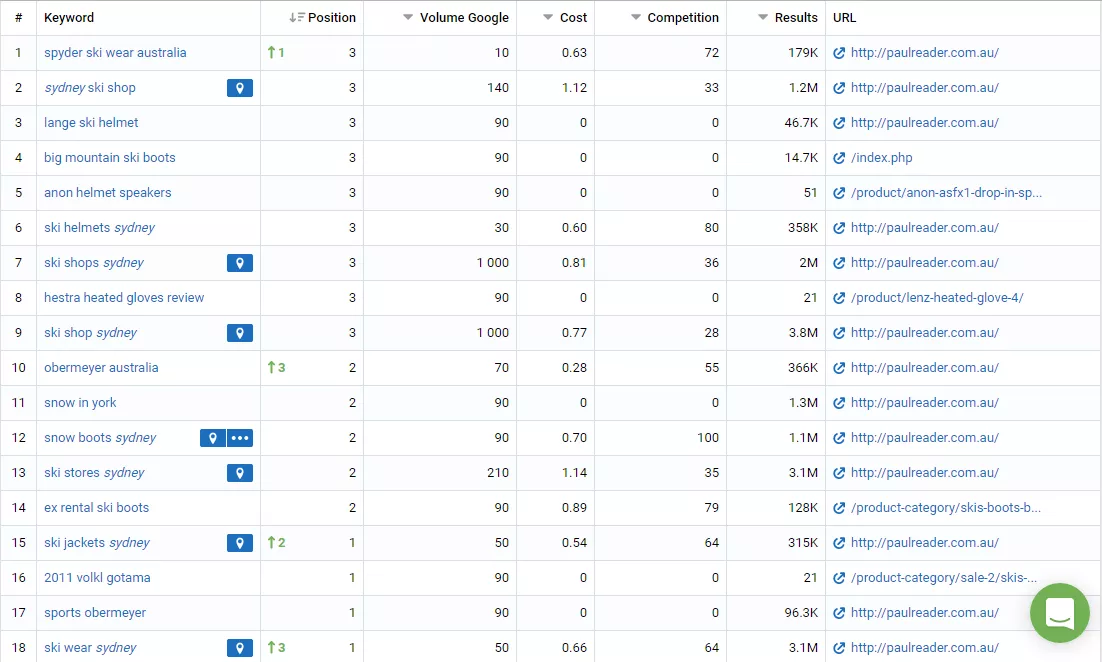
What should we do next? That’s right – we will launch ads on these queries. Thus, instead of the usual organic results, where the competitor is in the first place, potential customers will first see our ad.
Pros of such method
- Since this is not a competitor's brand requests and there is not a high competition, this is a relatively cheap method. In addition, you do not violate any rules and take no risks.
- This is a standard guerrilla marketing method, as your competitor couldn’t even understand why his organic traffic sank!
Cons of such method
- There are no cons of such method. If you do everything correctly, you will get lots of leads, which would have otherwise, gone to your competitor.
The bottom line
This method is useful if you need to set up a PPC campaign with a sole purpose of getting more visitors while making your competitor's organic rankings less efficient.
I always use Serpstat for my working purposes so this small case is also based on using this platform, but you can use any other similar tool to which you are accustomed.
Please, feel free to leave your feedback in the comments below.

 3
3
 1
1
 1
1
 1
1
Related Articles
Pet Food Product Patent: How to Protect Your Innovation
Patenting pet products requires careful consideration and proper application filing. With the 8 steps below, you will be able to submit your patent application and protect your invention.
What Happens When Amazon Suppresses Your Listing? The New 2026 Rules
Under the new 2026 rules, Amazon warns you first and gives you a grace period to fix the issue.
Digital Marketing for SMBs: How to Grow a Small Business Online
Small or mid-sized businesses compete for the same customers as brands with marketing departments ten times their size, on a fraction of the budget. You can't outspend them, so you have to outsmart them and grow your business deliberately.