
The 2026 Guide to Starting a Clothing Brand: 9 Steps to First Sale
If you want to start a clothing brand in 2026, you need to research your ideal customer, develop a brand identity, analyze the market and competitors, and find manufacturing contractors. Next, start a marketing campaign and launch a small collection. Use real-world results to grow your clothing business.
So, you've got an eye for fashion: sketchbooks full of ideas and Pinterest boards with inspiration. And now you're ready to turn that creative vision into the work of your life. Good for you!
But hear me out: a lot of great fashion brands never made it past a few collections. Their clothes were beautiful, but creativity alone doesn't build a business. Around 20% of new fashion businesses fail within the first year of operation. To avoid that, your clothing brand needs a marketing strategy.
This guide will help you bridge the gap between artistic vision and commercial success. You'll learn how to start a clothing brand step by step, avoiding rookie mistakes that kill small businesses.
Step 1: Research Your Ideal Customer
Forget about designs for everyone. Your goal is to focus on a specific style, lifestyle, or audience segment and understand them deeply.
-
What do they wear?
-
How high is their income?
-
Where do they shop?
-
What frustrates them about existing brands?
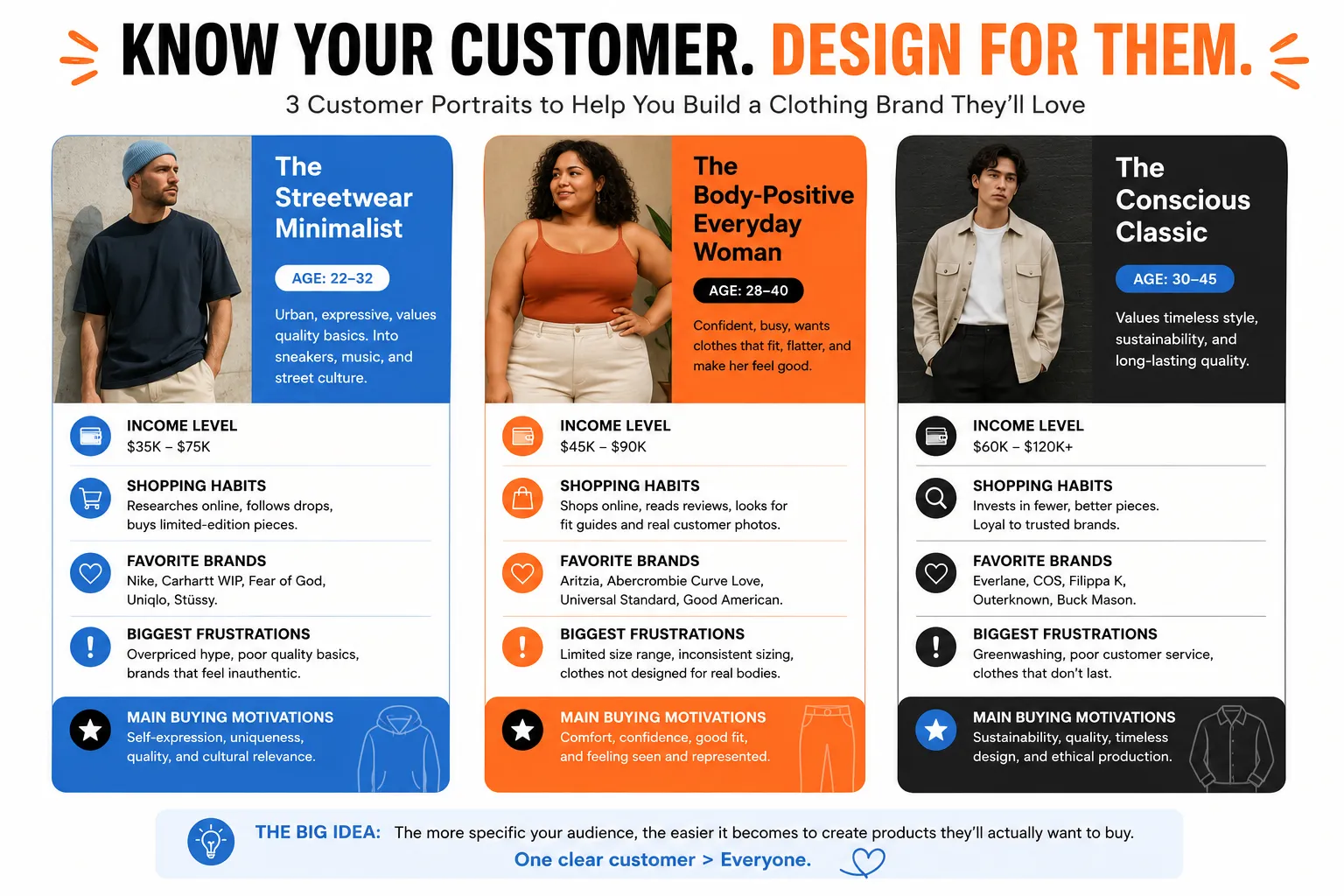
Customer Portrait #1. The Streetwear Minimalist
Urban, expressive, values quality basics. Into sneakers, music, and street culture.
-
Age: 22–32
-
Income Level: $35K–$75K
-
Shopping Habits: Researches online, follows drops, buys limited-edition pieces.
-
Favorite Brands: Nike, Carhartt WIP, Fear of God, Uniqlo, Stüssy.
-
Biggest Frustrations: Overpriced hype, poor quality basics, brands that feel inauthentic.
-
Main Buying Motivations: Self-expression, uniqueness, quality, and cultural relevance.
Customer Portrait #2. The Body-Positive Everyday Woman
Confident, busy, wants clothes that fit, flatter, and make her feel good.
-
Age: 28–40
-
Income Level: $45K–$90K
-
Shopping Habits: Shops online, reads reviews, looks for fit guides and real customer photos.
-
Favorite Brands: Aritzia, Abercrombie, Curve Love, Universal Standard, Good American.
-
Biggest Frustrations: Limited size range, inconsistent sizing, clothes not designed for real bodies.
-
Main Buying Motivations: Comfort, confidence, good fit, and feeling seen and represented.
Customer Portrait #3. The Conscious Classic
Values timeless style, sustainability, and long-lasting quality.
-
Age: 30–45
-
Income Level: $60K–$120K+
-
Shopping Habits: Invests in fewer, better pieces. Loyal to trusted brands.
-
Favorite Brands: Everlane, COS, Filippa K, Outerknown, Buck Mason.
-
Biggest Frustrations: Greenwashing, poor customer service, clothes that don't last.
-
Main Buying Motivations: Sustainability, quality, timeless design, and ethical production.
Use your Sherlock Holmes skills to create the most detailed customer portrait possible:
-
Read customer satisfaction reviews, browse Reddit, and watch TikTok comments. Analyze what people complain about and what excites them.
-
Check your niche in general. Is it growing? Seasonal? Already overcrowded? Google Trends, Pinterest Trends, and Statista are your best buddies for that quest.
Online business benefit: The more specific your audience, the easier it becomes to create products they'll actually want to buy.
Step 2: Learn from the Target Market and Competitors
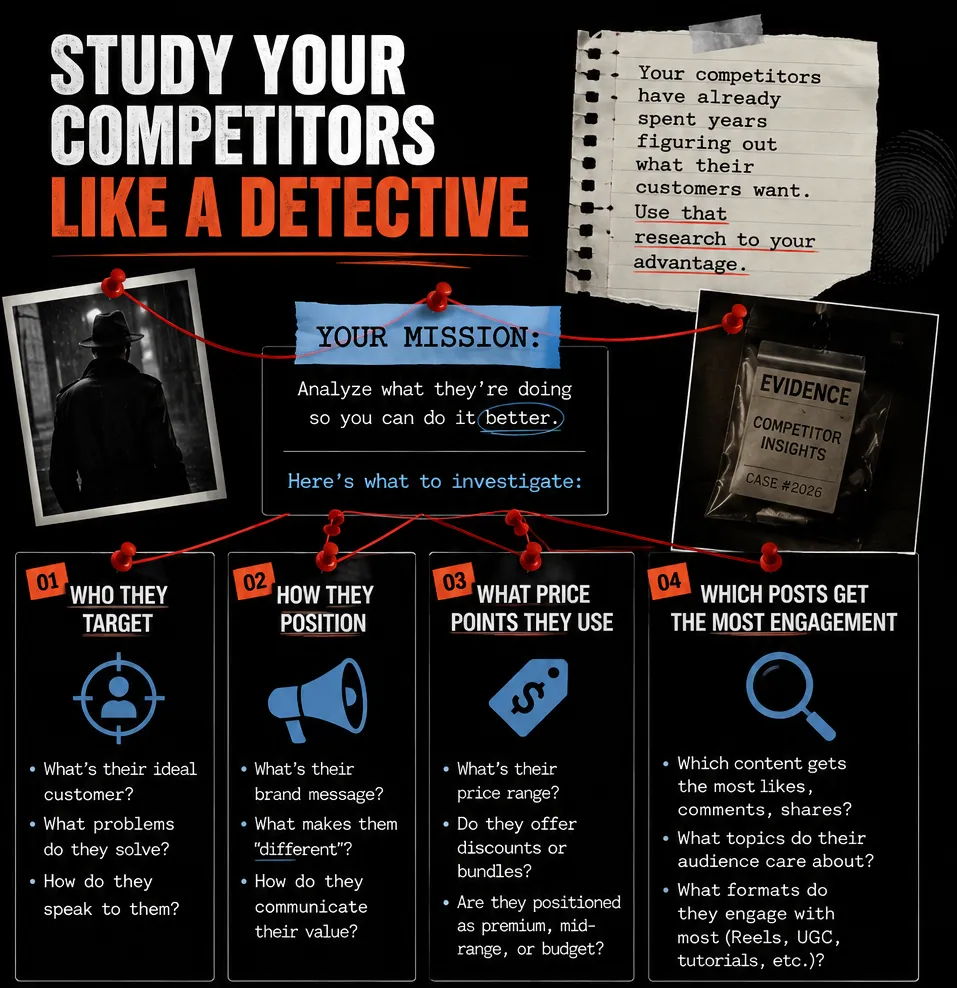
Study brands that target a similar audience. Your competitors have already done years of customer research, so that you can use their help.
Treat your competitors like a Netflix true crime documentary. Pause, zoom in, and ask, "Why did they do that?"
Analyze who they target, how they position their products, what price points they use, and which posts get the most engagement.
What to put in your market research toolbox?
-
Meta Ad Library to see which products they're advertising, what messages they use, and how they encourage people to buy.
-
TikTok to look up fashion brands or keywords to discover trending products, popular hashtags, and videos with high engagement.
-
Similarweb to check market reach and find out where competitors' website traffic comes from (search engines, social, referrals, ads) and which channels are driving the most customers.
Business benefit: You get the opportunity to run product-market fit and differentiate your brand instead of creating another copycat.
To have more chances to create high brand awareness, read our 100 statistics on Amazon marketing for fashion brands.
Step 3: Create Your Branding
Your brand strategy is much more than a logo. It's the personality, story, and visual identity that make people remember you.
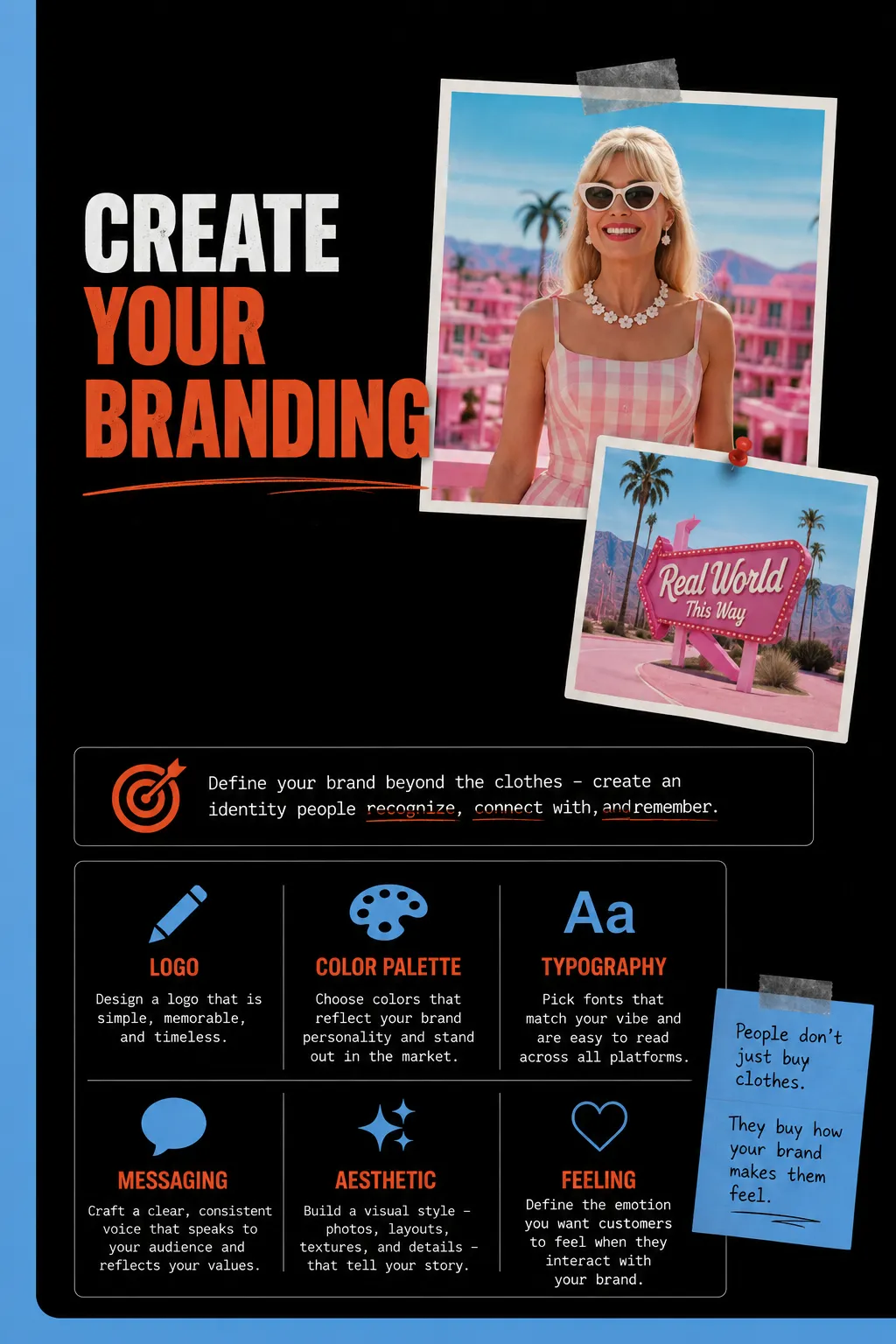
Remember when the Barbie movie turned the whole world pink? It wasn't just because of a huge marketing budget. It had a clear personality, a visual identity, and a story people wanted to relate to.
-
Design a logo people can draw from memory. If someone can't sketch a rough version of your logo on a napkin, it's probably too complicated.
-
Pick a color palette. 3–5 colors that reflect your brand's personality.
-
Choose typography. Fonts have vibes too. E.g., a luxury serif says "old money", but a bold sans-serif says "streetwear."
-
Create an aesthetic. Save inspiration on Pinterest and create a mood board with your photography style, editing, packaging, textures, etc.
-
Decide how you want people to feel. Confident? Cozy? Comfy? Every branding decision should reinforce that emotion.
|
Clear Identity |
|
|
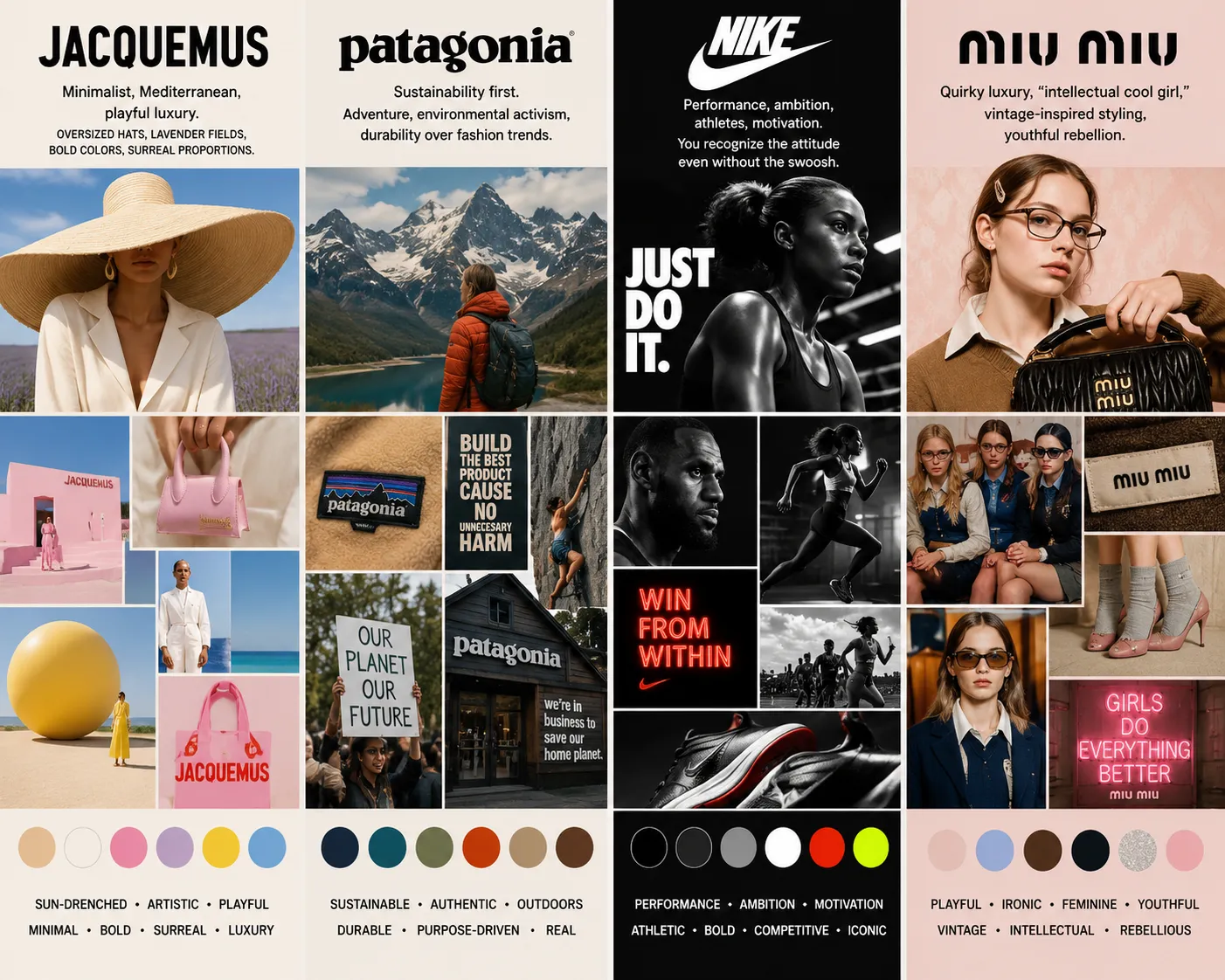
Jacquemus |
Minimalist, Mediterranean, playful luxury. Oversized hats, lavender fields, bold colors, surreal proportions. |
|
Patagonia |
Sustainability first. Adventure, environmental activism, durability over fashion trends. |
|
Nike |
Performance, ambition, athletes, motivation. You recognize the attitude even without the swoosh. |
|
Miu Miu |
Quirky luxury, "intellectual cool girl," vintage-inspired styling, youthful rebellion. |
Business benefit: The fashion market is crowded. Make strong branding your advantage.
Do you want to create a vintage brand? Read our article on how to use retro marketing for positive reminiscences.
Step 4: Find Manufacturing Contractors
Finding the right factory is like finding a good tattoo artist. Cheap sounds great until you have to live with the result.
Where should you go first to find a clothing manufacturer? Alibaba, Maker's Row, and Sewport.
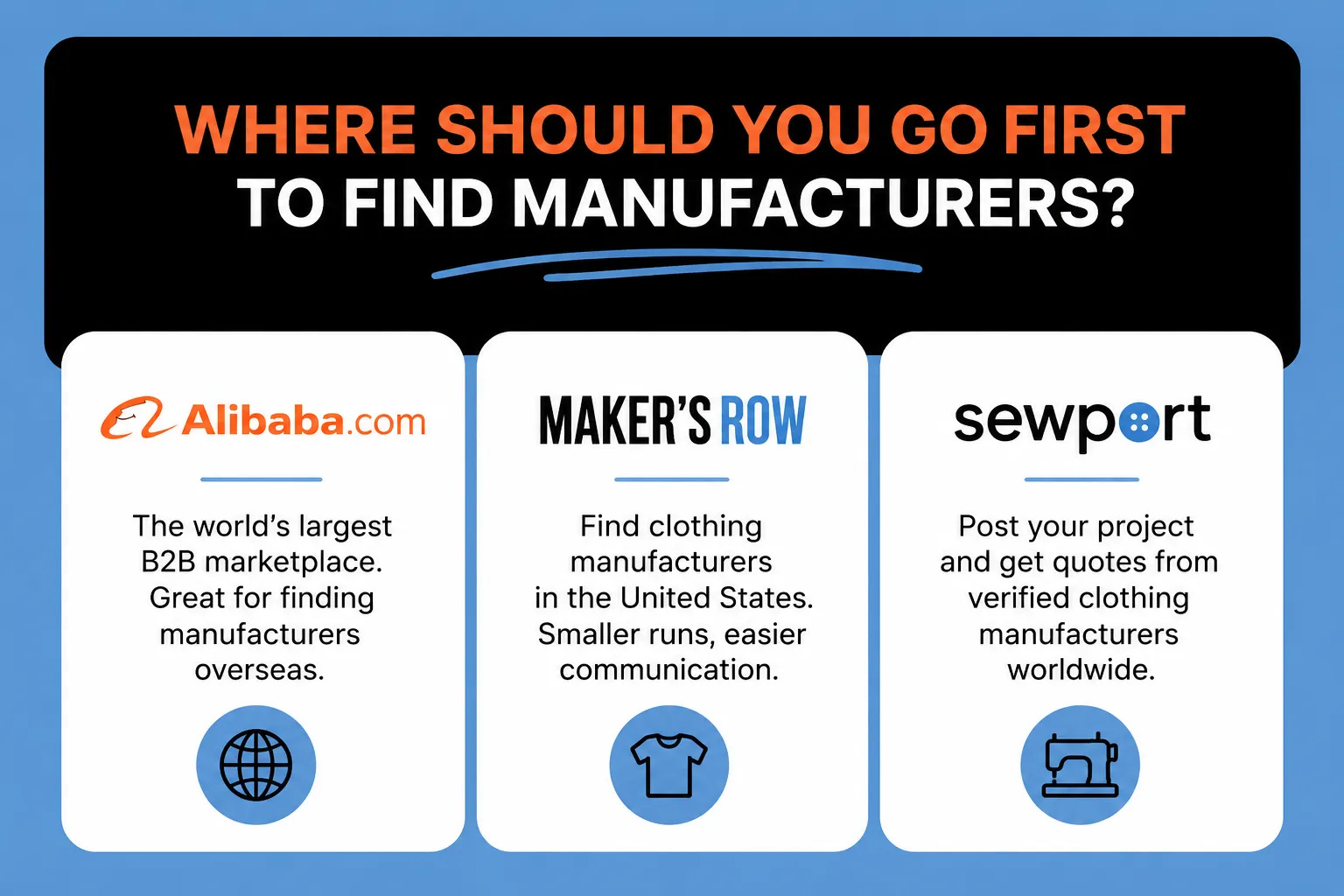
What should you do next?
-
Don't marry the first factory you meet. This is basically The Bachelor — but for factories. Don't commit after the first good impression. Contact at least 5-10 factories, compare their prices, communication, lead times, and MOQs.
-
Order and inspect samples. Check fabric quality, stitching, print or embroidery, sizing accuracy, packaging, etc. Pro tip: Wash and wear the sample for a week. If it falls apart after one wash, your rose should go to someone else.
-
Understand the real cost. For example, factory A charges $12 per hoodie and factory B charges $15. But factory A delivers late, and 15% of the hoodies have defects. Factory B delivers on time with consistent quality. Which one is actually cheaper?
Questions to Ask Clothing Manufacturer
Before choosing a factory, make sure you know the answers to these questions:
Production
- What is your minimum order quantity (MOQ) per style and color?
- What are your sample costs?
- What are your production lead times?
- Can you handle repeat orders if demand grows?
Product Quality
- What quality control checks do you do?
- Can you share photos or videos during production?
- How do you handle defective products?
- What percentage of defects is acceptable?
Materials
- Where do you source your fabrics?
- Can you provide fabric certifications (OEKO-TEX, GOTS, etc.) if needed?
- Can I supply my own fabric or trims?
Pricing
- What's included in the quoted price?
- Are there additional charges for labels, packaging, samples, or pattern making?
- Do prices decrease at higher order quantities?
Problems & Returns
- What happens if products arrive damaged?
- Who pays for manufacturing mistakes?
- What if production is delayed?
- Will you remake defective items or issue a refund?
Business benefit: The right manufacturing partner helps you scale. The wrong one creates returns, refunds, and unhappy customers.
Step 5: Choose Where You'll Sell
Beautiful products don't sell themselves; people should discover them. Think of your clothes as extroverts trapped in a warehouse — they need someone to introduce them to people.
Online clothing brands typically sell through three channels:
|
Channel |
Best for |
Pros |
Cons |
|
Your own website (DTC) |
Building a long-term brand |
Full control over branding, customer data, pricing, and margins |
You must generate all your own traffic |
|
Reaching customers quickly |
Massive existing audience and built-in trust. Amazon has become the largest online apparel retailer in the US, with over $56 billion in US clothing, shoes, and accessories sales. |
High competition, fees, less control over customer relationships |
|
|
Social commerce (TikTok Shop, Instagram Shop) |
Trend-driven and impulse purchases |
Easy product discovery and viral potential. Read more in our article Should US Brands Be in a TikTok Shop? |
Success depends heavily on content and creators |
What should you do?
-
Decide where your first customers will come from. Choose one primary sales channel — for example, Amazon.
-
Set up your seller account. Verification can take days or weeks, so don't wait until your products are ready.
-
Prepare high-quality product listings with clear titles and descriptions, accurate size charts, and professional photos.
-
Calculate all marketplace fees. Factor in referral fees, fulfillment costs, shipping, returns, etc.
-
Start with your best-selling products. Gather reviews and expand once you know what customers love.
Business benefit: Selling through the right channels helps you reach customers faster, generate your first sales sooner, and build a stronger brand over time.
Step 6: Start a Marketing Campaign Before Launch
Even Marvel releases trailers before the movie. Don't wait until your store is live to start attracting potential customers.
That works not only at the start. For example, Gymshark always announces new products before launch. This time it was a Bratz collaboration.
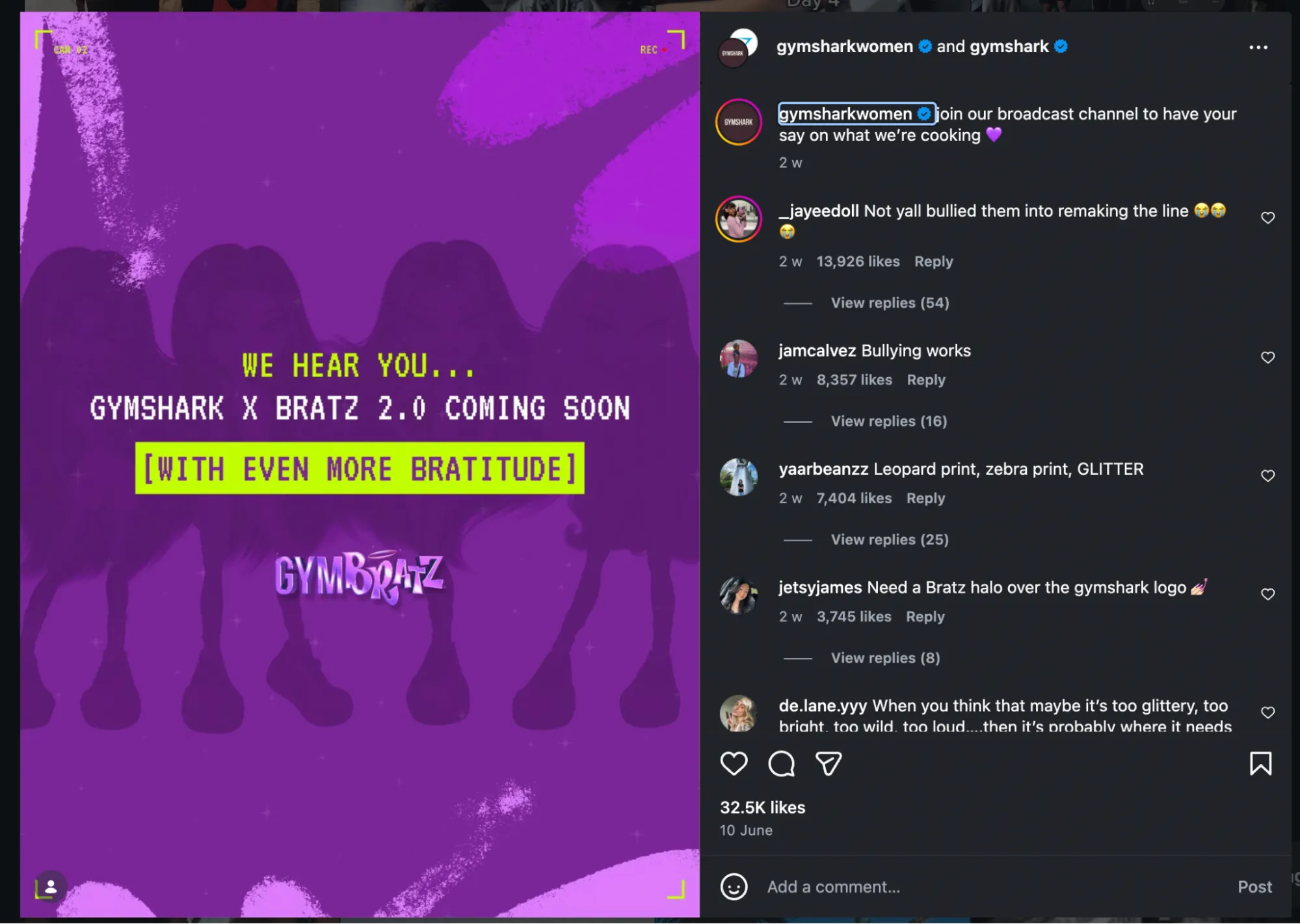
What should you do?
-
Don't wait until everything is perfect. Share sketches, packaging ideas, and factory visits. People love to feel like they’re a part of the journey.
-
Build an email list before you need one. Create a landing page with a waitlist and reward early sign-ups. You could run email campaigns later.
-
Tease, don't spoil. Don't reveal the whole collection at once. Think movie trailer, not full-length film.
-
Start a countdown two or three weeks before launch. Reveal one product at a time, introduce the story behind the collection. By launch day, potential clients should already know what they want to buy.
Business benefit: Find your first customers before your first product is ready.
Step 7: Launch a Small Collection First
Please, don't release 50 products on day one. A petite, focused collection is easier to manage.
That will work when you’re successful too. For example, Pangaia dropped a limited-edition capsule supporting coral reef restoration. It both creates scarcity and attracts customers who value sustainable brands. Win-win.
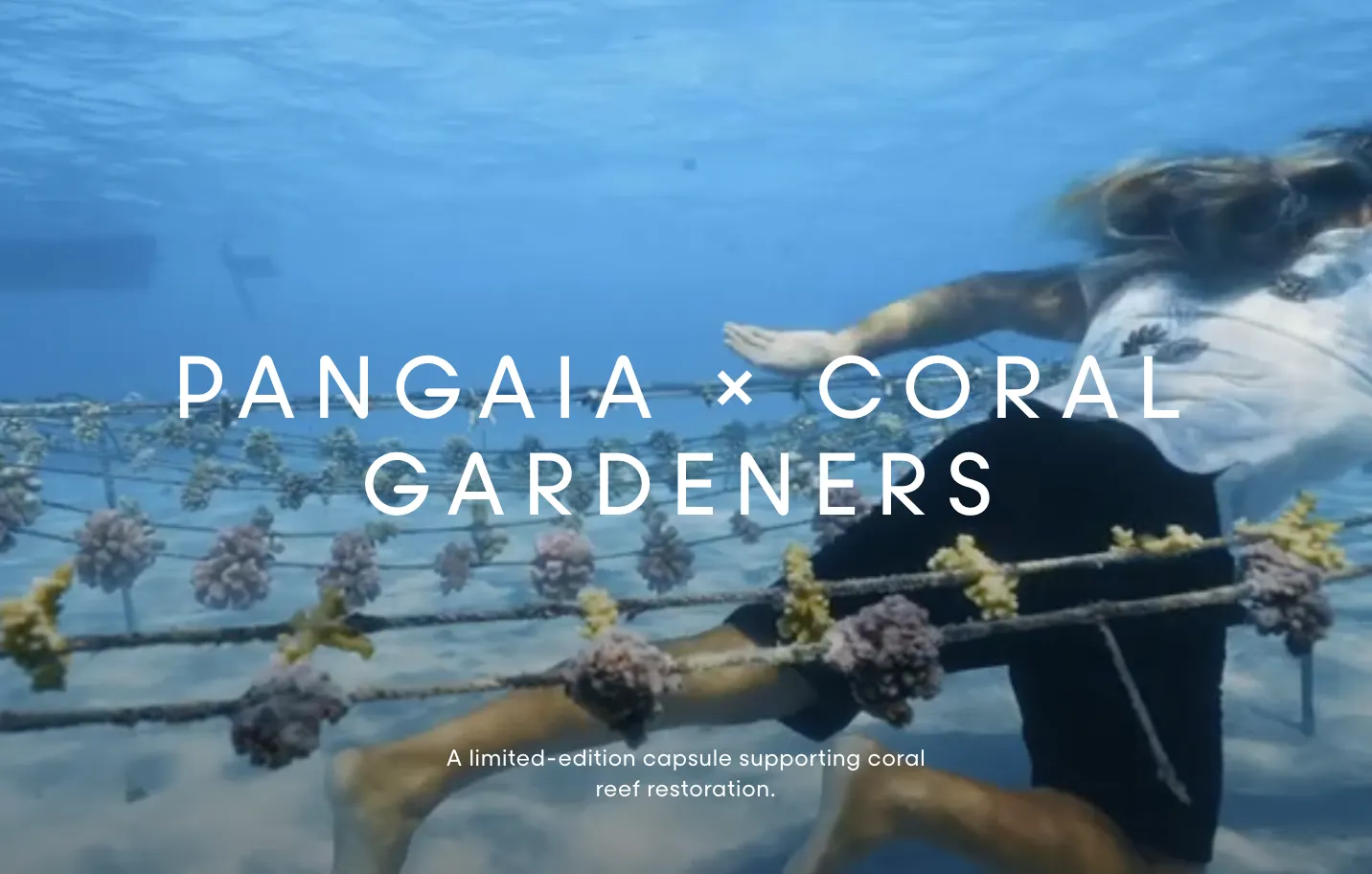
What should you do?
-
Start with 5–15 SKUs. Start with something like: 2 T-shirts, 2 hoodies, 1 pair of pants, and 2 color options. Seven great products are easier to market than seventy average ones.
-
Let customers decide what comes next. Watch which color sells first, which size sells out, and which product gets returned most often. Your customers will tell you what Collection #2 should look like.
Business benefit: A smaller launch is easier to manage, less risky financially, and gives you valuable feedback before investing in larger production runs.
Want to read more about it? Here is our article about Amazon launch strategy for fashion brands.
Step 8: Combine Marketing Channels for Best Results
Don't rely on a single source of traffic. Mix content marketing, social media platforms, email marketing campaigns, SEO, influencer partnerships, and paid advertising.
|
Its Job |
Real-Life Example |
|
|
Shows your products, personality, behind-the-scenes moments, and customer stories. |
"That hoodie keeps showing up on my For You Page... maybe I do need it." |
|
|
Becomes the answer when people search for fashion inspiration or products. |
Someone Googles "how to style wide-leg jeans" and discovers your brand in search results. |
|
|
Content Marketing |
Helps with valuable content before you sell. |
Instead of saying "Buy our blazer," write "5 Ways to Style an Oversized Blazer." |
|
Turns casual visitors into loyal customers. Read more in the Lace clothing store case study and how they achieved full ROI in 4 months. |
"Psst... our bestseller is back, and subscribers get first dibs." |
|
|
Influencer Partnerships |
Borrows trust instead of building it from scratch. When creators genuinely wear your clothes, their audience is more likely to give you a chance. |
A micro-influencer posts "I've worn this hoodie for six months — here's my honest review." |
|
Puts your best content in front of more of the right people. Read more in our Collins Google Ads case study. |
Your best-performing Reel reaches 10,000 people organically. Boost it to reach another 100,000. |
They should work together to move customers from discovery to purchase.
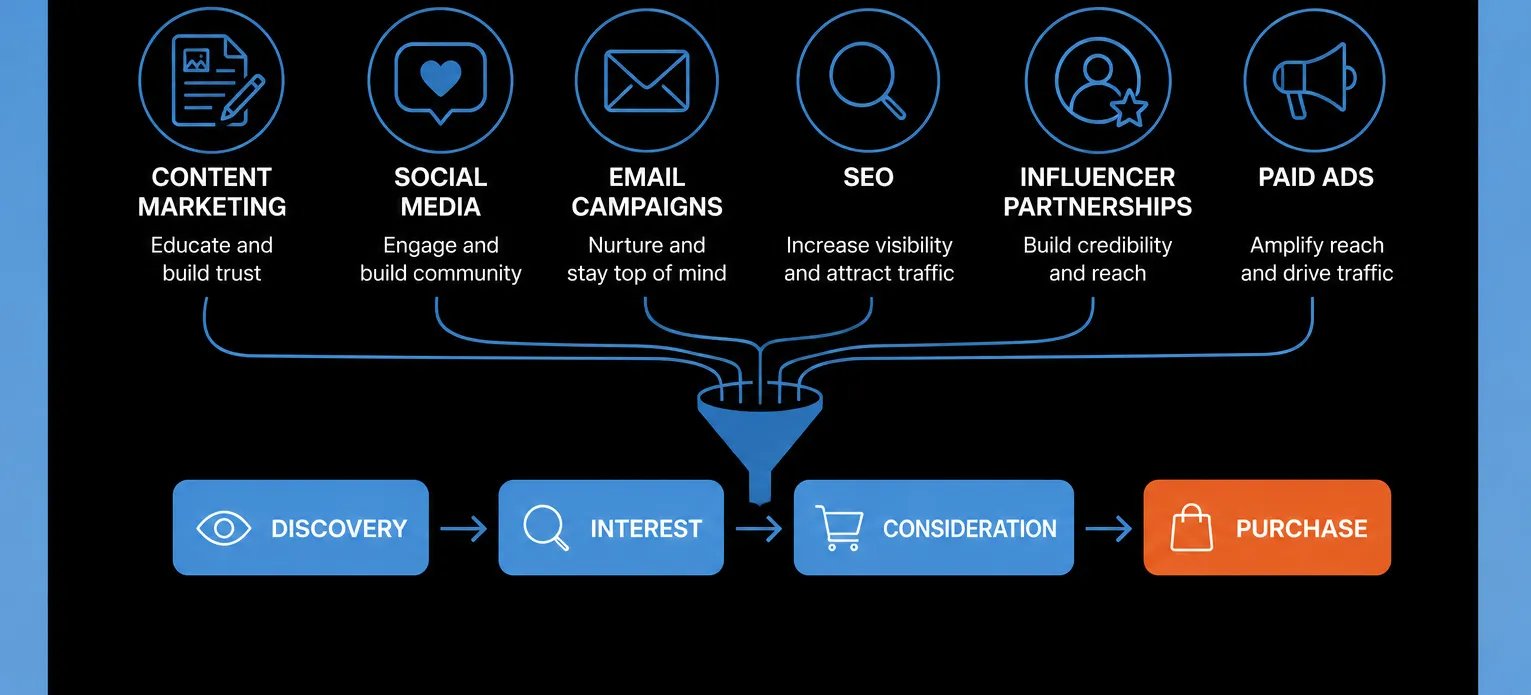
Business benefit: The more connected your marketing channels are, the more opportunities you create to turn interest into sales.
How to start a clothing brand? First things first, call Netpeak International. We’ll create your marketing strategy from scratch.
Step 9: Use Real-World Results to Grow and Improve
Your customers will tell you what works — but you need to listen. Listening in that case looks like tracking sales, website behavior, customer feedback, return rates, and marketing activities performance. Understand what's driving growth and what's holding your business back.
Your first collection is a hypothesis. Your customers decide whether it becomes a bestseller or a lesson to learn.
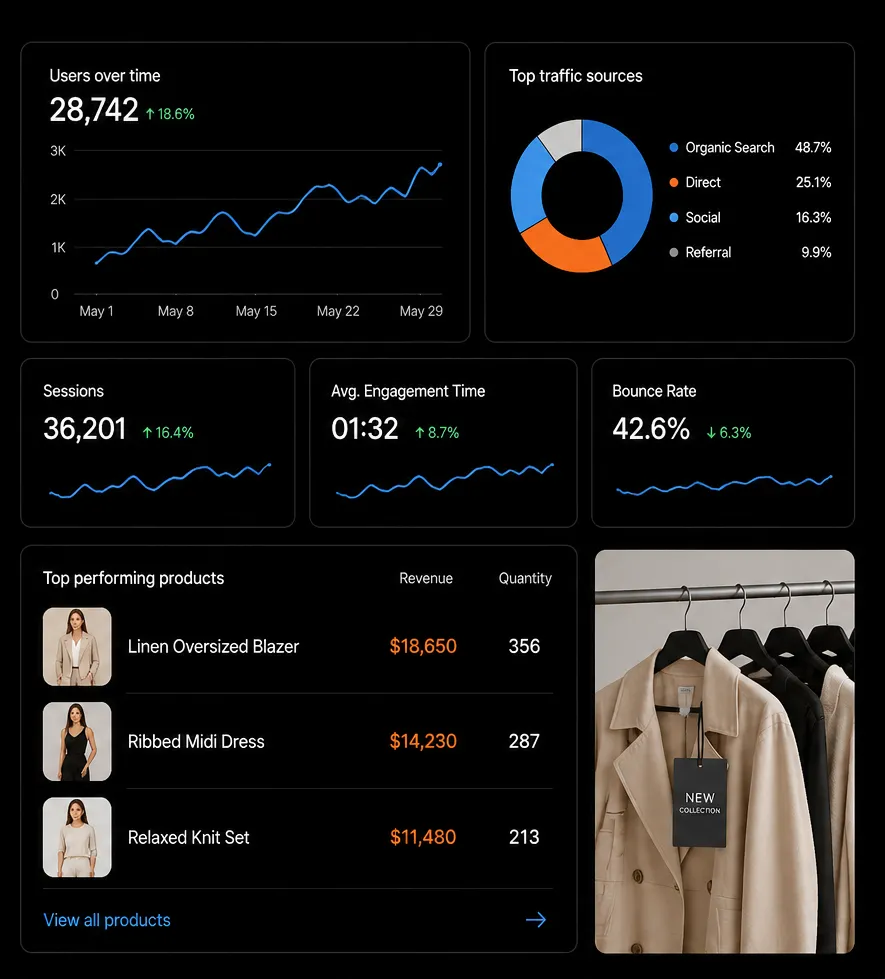
What should you do?
-
Track what people actually buy. Watch which products sell fastest, which sizes and colors are most popular, and which items never seem to leave the shelf. Tools: Your CRM, Shopify Analytics, etc.
-
Watch how people use your website. Do customers leave after 10 seconds? Do they abandon their cart? Which pages keep people interested? Your website visitors are constantly giving you clues. Tool: Microsoft Clarity (Free heatmaps and session recordings).
-
Ask customers what they think. Send a short survey after every purchase and learn what customers loved — and what they'd change. Tools: Google Forms, Typeform.
-
Measure which marketing channels work best. Marketing analytics compares where your customers come from and which channels generate the most sales. Tool: Google Analytics 4.
Business benefit: Learn what your customers actually want before launching your next collection.
Pro Tips from Premium Women's Fashion Brand
Situation: A women's fashion brand had stylish products, but online marketplaces weren't making life easy. Returns were piling up, and ad costs kept climbing.
What did we do?
-
Showed clothes on real people, not just perfect models.
-
Created sizing guides that answer questions before customers ask them.
-
Replaced generic product descriptions with content that helps shoppers imagine wearing the item.
-
Collected customer photos and positive reviews.
-
Used email and referral programs to turn one-time buyers into repeat customers.
-
Planned content around seasons and shopping habits instead of posting randomly.
Results:
-
45% higher conversion rates
-
30% lower customer acquisition costs
-
60% more repeat customers
-
40% better review scores and online reputation
If you want more success stories today, read how we helped fashion brand The Lace to increase their organic traffic by 27% in six months.
Final Thoughts
Fashion is short on people both with great taste and a business plan. If you’re one of them, you have a chance to win.
What you need to remember is this:
Find a specific audience, create a brand they connect with, launch a small collection, and pay attention to what happens next. Your customers will tell you what's working, what's not, and where to grow.
Start small and curious. Let the market guide your next move.
FAQ
How much does it cost to start a clothing brand?
The cost can range from a few hundred dollars to tens of thousands, depending on your business model. Print-on-demand brands can launch with relatively low upfront costs, while custom manufacturing requires investments in design, sampling, production, branding, marketing, and inventory.
Many successful founders start small, validate demand, and reinvest profits as they grow.
How do I find clothing manufacturers?
Start by researching manufacturers that specialize in your product category and production volume. Compare minimum order quantities (MOQs), pricing, lead times, communication quality, and sample costs. Fashion industry directories, trade shows, sourcing platforms, and referrals from other founders can help you find reliable partners.
Do I need to trademark my brand from the beginning?
While it's not always necessary before launch, securing a trademark becomes increasingly important as your brand grows. Before investing in logos, packaging, and marketing, check whether your brand name is already registered or in use.
What do I need for a successful clothing brand?
A successful clothing brand requires more than great designs. You need a clear target audience, strong branding, reliable production, a solid marketing strategy, and the ability to adapt based on customer feedback.
The brands that last combine creativity with business discipline.
What mistakes do early clothing brand owners make?
One of the biggest mistakes is trying to appeal to everyone. Other common pitfalls include ordering too much inventory, neglecting marketing until after launch, choosing manufacturers based solely on price, ignoring customer feedback, and scaling too quickly before establishing consistent demand.
Many brands fail not because the products are bad, but because the business fundamentals aren't there.

 0
0
 0
0
 0
0
 0
0
Related Articles
What Happens When Amazon Suppresses Your Listing? The New 2026 Rules
Under the new 2026 rules, Amazon warns you first and gives you a grace period to fix the issue.
Business Apps in the US: iOS vs. Android, August 2026
We’ve fetched data from the US App Store and Google Play to see what professionals, shoppers, and businesses are actually installing, and why the market leaders are winning right now.
Amazon’s New “Sourced from Brand” Buy Box Label: Who Gets It and Who Doesn’t
Amazon is rolling out a provenance line in the Buy Box. A short label under the Brand row now reads “Sourced from [Brand]” on amazon.com and “[Brand] approved” on amazon.de. It tells the shopper that the unit on offer came through the brand’s own supply c