
9 Global SEO Cases From 2026: Invisible Blog, Broken Relaunch and Zero Orders
Most SEO case studies follow the same script with keywords and more links, but we decided to find ones where SEO experts met unexpected problems:
-
An IT company's blog vanished from Google because of one security setting
-
A website relaunch broke millions of pages overnight
-
An insurer had to grow while regulators watched every word
-
And a clinic launched a website built entirely by AI, then held its breath, etc.
And they solved these and more challenges in unexpected ways!
Below are nine of the year's strongest SEO case studies from the US and Europe, grouped into four areas. Each one explains what made the problem hard, what the team did, and what it achieved.
AI Search and GEO Success Stories
More people now ask ChatGPT or read Google's AI summary instead of clicking through to websites. AI Overviews appeared on 39.4% of US desktop Google searches by June 2026, and brands now compete to be cited in AI answers too.
The brands that won in AI search did two things: they made sure search engines and AI tools could read their sites, and they got mentioned on other trusted websites that AI tools learn from.
SUSE × Evolv: Beating Bigger Rivals in AI Answers After Fixing a Hidden Crawl Block
Why it made the list: SUSE's slump looked like a content problem. Before writing a single article, Evolv found the real cause: a security setting that hid the whole blog from Google, which nobody had noticed. The case also tracks how visitors from AI tools convert, something few 2026 case studies report.
SUSE, a German-founded company that sells Linux and open-source software to businesses, was losing AI-search visibility on its most important topics to its two biggest rivals: Red Hat, the IBM-owned market leader, and Canonical, the company behind Ubuntu. When IT buyers asked AI tools for advice, SUSE often wasn't mentioned.
UK agency Evolv found four problems before writing any new content:
-
Google couldn't see the blog. A security setting at Cloudflare (a service that protects and speeds up websites) was blocking Googlebot with a "403 forbidden" error and a noindex tag on every blog article. The articles weren't ranking badly; Google didn't know they existed.
-
Thousands of articles with no structure. Evolv crawled 5,279 blog articles; of the 515 it reviewed, only 79 were strong enough to support a topic, and key topics had no main "hub" page tying related articles together.
-
Broken language signals. 3,166 pages that Google couldn't index still carried hreflang tags, with 1,412 broken links between language versions.
-
Wrong reporting. A tracking error counted organic visitors as paid-ad visitors, so SEO looked weaker than it really was.
How they fixed it: in the first week, Evolv measured how often SUSE appeared in ChatGPT, Gemini, Perplexity, and Claude across 70 topics, compared with Red Hat and Canonical. Then the team removed the block, grouped content into 16 topic hubs, and wrote 15 content plans a month, each with structured data. It also got SUSE's content, PR, and paid-ads teams working from one plan.
Results: on VMware migration topics (popular virtualization software that many companies are looking to replace), SUSE's Perplexity visibility score rose from 46 to 82 out of 100. In Gemini, it moved ahead of both Red Hat and Canonical on those topics.
Google clicks on SUSE's virtualization keywords grew 56%. Of 8,019 visits that came from AI assistants, ChatGPT visitors converted (completed a goal on the site) at 3.1% and Microsoft Copilot visitors at 4.02%.

Source: Evolv Agency
Read the full case study here: SUSE Generative Search Case Study
Allianz Türkiye × Zeo: AI Search in a Strictly Regulated Industry
Why it made the list: Insurance regulators limit what pages can say, and the rules kept changing, so bolder, more persuasive copy was off the table. The market was shrinking too. Zeo relied on automation and AI-assisted reviews to keep content compliant, an approach finance, health and legal sites can borrow.
During this project, Turkey's motor insurance market shrank 9.3%, and the site had technical problems with indexing, duplicate pages and wasted crawling.
How they fixed it: Turkish agency Zeo used n8n (a tool that automates repetitive tasks) to run technical checks faster. AI-assisted reviews kept every page accurate and compliant as regulations changed.
The team rewrote content around what customers want to know, added more internal links, and described Allianz's products and services clearly enough for both Google and AI tools to understand them.
Results (November 2024 – March 2026): search visibility +56.9%, clicks from Google +25%, organic visits +15.1%, and visibility for "motor insurance" searches +75%. Visits from AI assistants grew 12.5%, and the average mobile ranking reached Google's first page (top 10).
Read more here: Allianz Türkiye SEO Success Story
Technical SEO Success Stories
Technical SEO is everything that helps search engines find and read a site: working links, fast pages, etc. It's invisible to most visitors, but when it breaks, even great content can disappear from Google.
Fixing it is often the fastest way to grow, and in 2026 it also decides whether AI tools can read your site.
Wisent Parts Center × Netpeak: From Zero Orders to Regular Sales
Why it made the list: a brand-new store with a small budget has almost no chance against established sellers for broad searches like "truck parts". Instead of fighting that battle, the team found a narrower way in: exact part numbers, which mechanics type when they already know what they need and are ready to order.
Wisent Parts Center is a new US online store for heavy-duty truck and industrial parts, built on Shopify. After 11 months online with a full catalog, it got almost no visitors from Google and not a single order.
The store's own developers had tried to handle SEO and left several problems:
-
Each product could be opened at three or more different web addresses, so Google saw lots of duplicate pages.
-
When an item sold out, its page showed "page not found". In total, over 2,000 addresses returned this error.
-
Two versions of product structured data conflicted with each other.
-
The catalog had just five broad categories with no links between them.
How they fixed it (March–September 2026):
-
A full technical audit: Netpeak checked 50+ technical points and delivered a 58-page report, ranked by priority so developers knew what to fix first.
-
One address per product: messy addresses were replaced with simple, permanent ones, removing the duplicates.
-
Keep sold-out pages alive: instead of an error, sold-out products now show "Out of stock" and suggest similar parts.
-
Fix the instructions for Google: robots.txt and product structured data were corrected. All fixes went live within one to one and a half months, and the first order arrived in April 2026.
-
Target part numbers: a mechanic who pulls a broken part off a truck searches for its exact part number and is ready to buy. Netpeak optimized product pages for these part numbers. The client chose parts it always keeps in stock, and Netpeak checked that people really search for each number and that it doesn't belong to an unrelated product.
-
Make the store easier to browse and contact: new categories, subcategories and filters were added, and a phone number was put in search result descriptions so buyers can call straight from Google.
Results: "page not found" errors fell 82%, from over 2,000 to under 400. Google Search Console recorded 111.4K impressions over the reporting period, with both reaching new highs by the end of the project.
GA4 counted 23 first-time buyers since April 2026. Searches peaked on weekdays, when repair shops order parts.
Source: Netpeak
Read more here: Wisent Parts Center Case Study
US Luxury Real Estate × Moving Traffic Media: 4.7× More Leads After a Broken Relaunch
Why it made the list: the agency inherited a disaster it didn't cause: a relaunch that left millions of old web addresses broken and cut search traffic in half. Fixing millions of pages one by one was impossible, so the team wrote rules that repaired whole groups at once, and then took over the site's development to stop waiting on someone else's developers.
A US luxury real estate company launched a new website in January 2025 without involving SEO specialists. The new site had three serious problems:
-
Web addresses full of extra codes (parameters), creating messy duplicate URLs.
-
Menus and key content built with JavaScript in a way search engines couldn't read.
-
Millions of old web addresses that suddenly showed "page not found" (404), because nobody redirected them to the new pages.
Within months, traffic from Google dropped by about 49%.
Moving Traffic Media joined in March 2025. Instead of handing over a huge audit, the agency ranked fixes by impact and effort and turned each one into a ready-to-build task for developers. In July 2025, it took over the site's development to move faster.
-
Stop the losses: pattern-based redirect rules sent whole groups of old addresses to their new pages at once. Menus built from clickable buttons were rebuilt as normal links that Google can follow.
-
Fix the basics on every page: automatic page titles and descriptions filled thousands of empty fields. Better internal links, headings and breadcrumbs (the "Home > Category > Page" trail) restored a clear site structure.
-
Help machines understand: structured data was added across the site, including local business details.
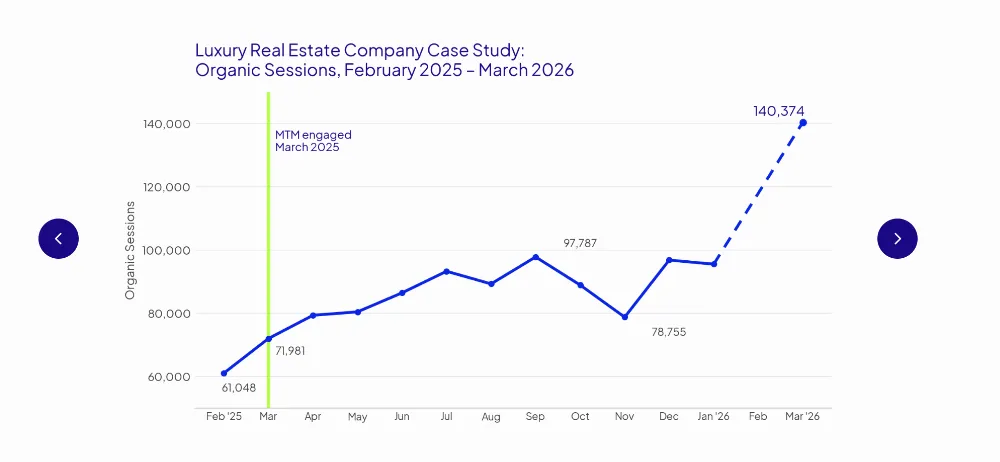
Results (March 2025 → March 2026): monthly leads (property inquiries) grew from 278 to 1,312, about 4.7×. Visits from search rose 95%, from 71,981 to 140,374 a month. The number of keywords on Google's first page nearly tripled, from 3,963 to 11,524, and visits from AI assistants grew 70%.
Source: Moving Traffic Media
Read more here: US Luxury Real Estate Case Study
StreetStyle24 × Insightland: Making Product Lists Readable without JavaScript
Why it made the list: nobody could see this problem by looking at the site. It worked fine for shoppers, but search engines saw only six products per category. The fix was narrow: the team moved a few key page elements out of JavaScript, starting with the cheapest changes.
StreetStyle24.pl is a Polish online fashion store. Its site looked fine to shoppers, but almost everything that matters for search was built with JavaScript: the menu, sidebar, product lists, category descriptions, page numbers (pagination) and footer only appeared after the browser ran scripts. When a search engine first loaded a category page, it saw just the first six products.
Wrocław-based agency Insightland identified three problems this caused:
-
Slower indexing. Google can run JavaScript, but only in a second step: pages wait in a queue before Google renders them. Until then, it misses much of the content.
-
Hidden structure. If links to products and categories appear only after scripts run, search engines may never find parts of the site, and ranking value can't flow between pages.
-
Invisible to AI. Many AI tools read pages without running JavaScript at all, so they couldn't see key sections of the store.
How they fixed it:
-
Wrote guidelines on which parts of each page should be available in the HTML before JavaScript runs. Then worked with the client’s developers to decide which changes to make first.
-
Started with quick, high-impact changes. Insightland picked the elements that were cheapest and easiest to change but likely to have the biggest effect, and left the rest for later.
-
Rebuilt category pages to work without JavaScript: the main heading (H1), category description, full product grid instead of just six products, and pagination links now load in the basic HTML.
-
Made internal links visible: links inside category descriptions and links between related categories now sit in the page code, so crawlers can follow them straight away.
-
Planned the next stage: the main menu, sidebar and footer are next in line for the same treatment.
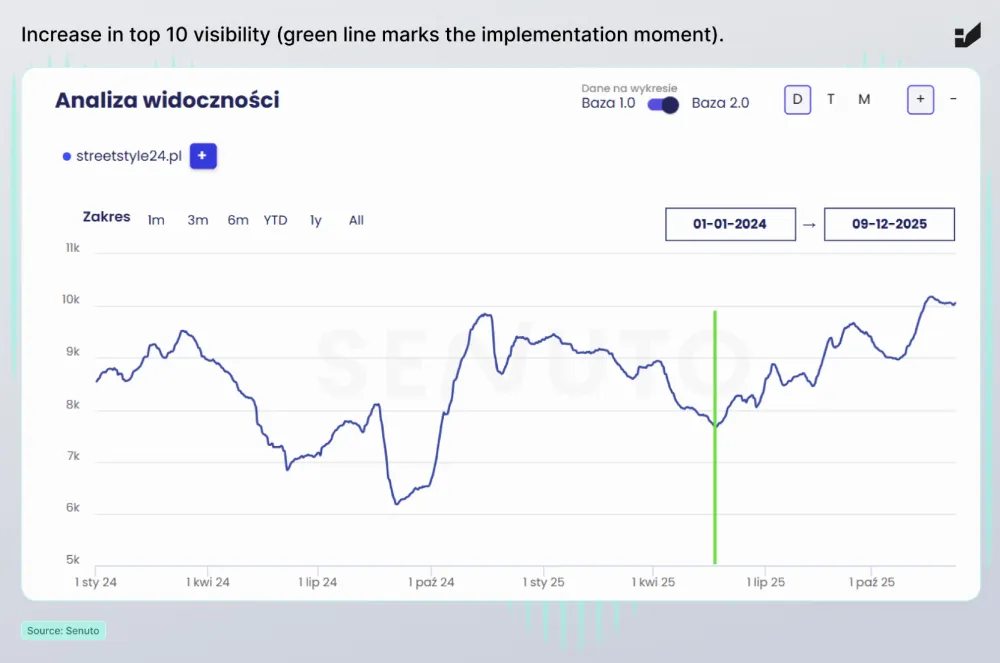
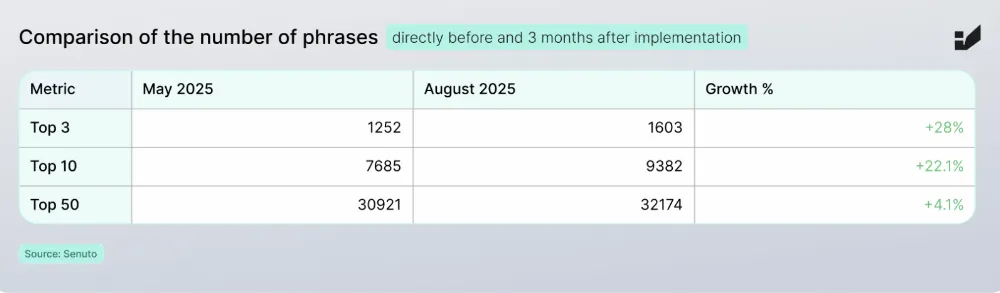
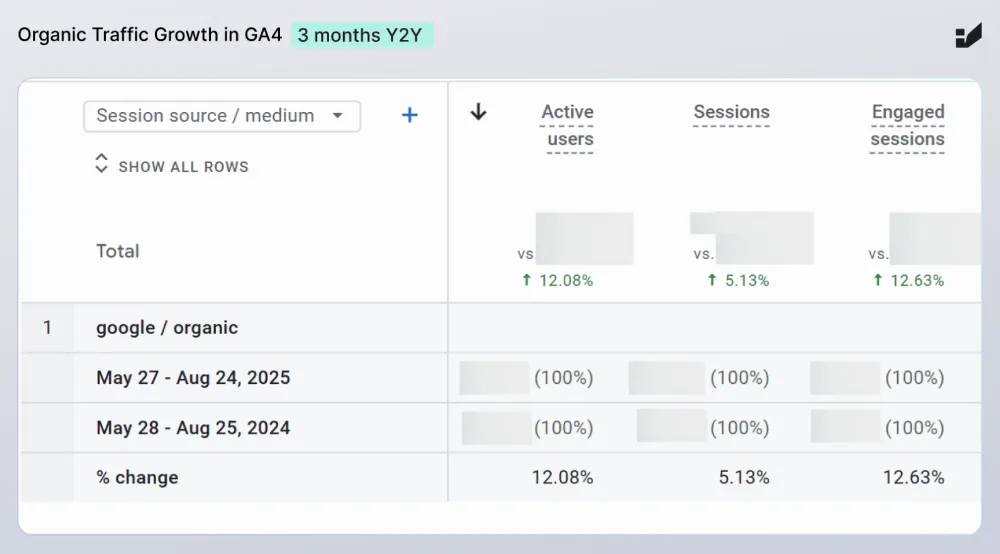
Results: three months after the change, keywords in Google's top 3 rose 28% and top-10 keywords grew 22% (Senuto data). Rankings for key categories also became more stable, with fewer ups and downs. Compared with the same period a year earlier, visits from Google grew more than 4%, engaged visits more than 11% and active users nearly 11%.
This matters even more for AI search: in Vercel's tests, none of the major AI crawlers currently render JavaScript, so anything that appears only after scripts run is invisible to them.
Source: Senuto
Source: Senuto
Source: Senuto
This matters even more for AI search: many AI crawlers don't run JavaScript at all, so anything that appears only after scripts run is invisible to them.
Read more here: StreetStyle24 Case Study
Migration and Redesign Success Stories
A site migration (a new domain, platform, design, page structure, etc.) is one of the riskiest moments for search traffic. If old pages aren't redirected to new ones or Google can't read the new site, rankings built over years can vanish overnight.
US Health Clinic × Search Logistics: 5× More Clicks After Launching an AI-Built Site
Why it made the list: AI site builders produce pages that look finished but often miss the SEO basics. This clinic was about to launch one at its highest-ever search visibility, in a medical niche that Google judges more strictly than most. The pre-launch checklist below works as a template for anyone building a site with AI.
A US health clinic rebuilt its entire website using AI tools (Claude Design, Claude Code and Claude Cowork). Search Logistics treated the launch as a full migration.
How they did it:
-
Checked the test site independently with Screaming Frog, a tool that crawls a site like Google does. The team looked for the mistakes AI builds often make: a test site open to Google, pages dropped without redirects, canonical tags pointing to the test site, analytics recording test visits, recent edits never copied over, and redirects that bounce through several addresses.
-
Didn't launch until every issue was fixed and re-crawled, then watched clicks, impressions and positions in Search Console daily for two weeks.
-
Rewrote existing expert content so AI can quote it: the direct answer goes in the first sentence or two, steps go in numbered lists, and subheadings are written as the questions people ask.
-
Strengthened local signals: a complete Google Business Profile (the listing that appears on Google Maps), each service listed separately, regular reviews with replies, and the same name, address and phone number everywhere online.
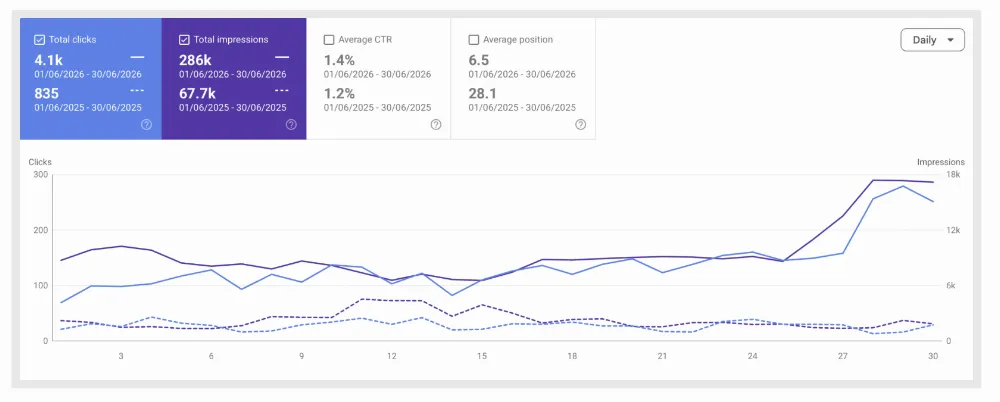
Results: the new site launched without losing any rankings. Before the update, people saw the site in Google results about 68,000 times a month (clicked on it 835 times). After the update, they saw it 286,000 times a month (clicked on it 4,100 times).
On average, the site went from page three of Google’s results to page one. Google now mentions the clinic in 181 of its AI answers, up from almost none.
Source: Search Logistics
Read more here: US Health Clinic Case Study
Splash About × eComOne: Moving Three International Stores to Shopify
Why it made the list: Redirects were the easy part. The team also had to protect search rankings in three regions, a paid-ads setup tied to product IDs from the old platform, and automatic country redirects that could have hidden the UK and EU stores from Google.
Splash About, a maker of baby swimwear known for its Happy Nappy, ran separate Magento stores for the UK, EU and US. It moved them all to one Shopify Plus site with regional versions. Its web developers handled the design, while eComOne handled SEO and paid ads.
How they did it:
-
One shared plan with the developers: eComOne shared its full migration checklist and timeline, so nothing fell between teams.
-
Redirects for every page that mattered: old addresses were collected from site crawls, sitemaps, and pages that brought visitors according to GA4 and Search Console. The new site was then crawled to confirm every redirect worked.
-
Content and structured data checks: product, category and blog text, plus FAQ and product structured data, were compared old versus new, because these often go missing when data is exported.
-
Smart regional redirects: visitors are sent to their country's store automatically, but Google's crawlers were allowed through so the UK and EU pages stayed visible in search. Hreflang tags were checked for all three regions.
-
Tracking kept intact: GA4 and ad tracking were tested before launch, and Google Shopping product IDs were kept the same as on the old site, so the ads' historical performance data wasn't lost.
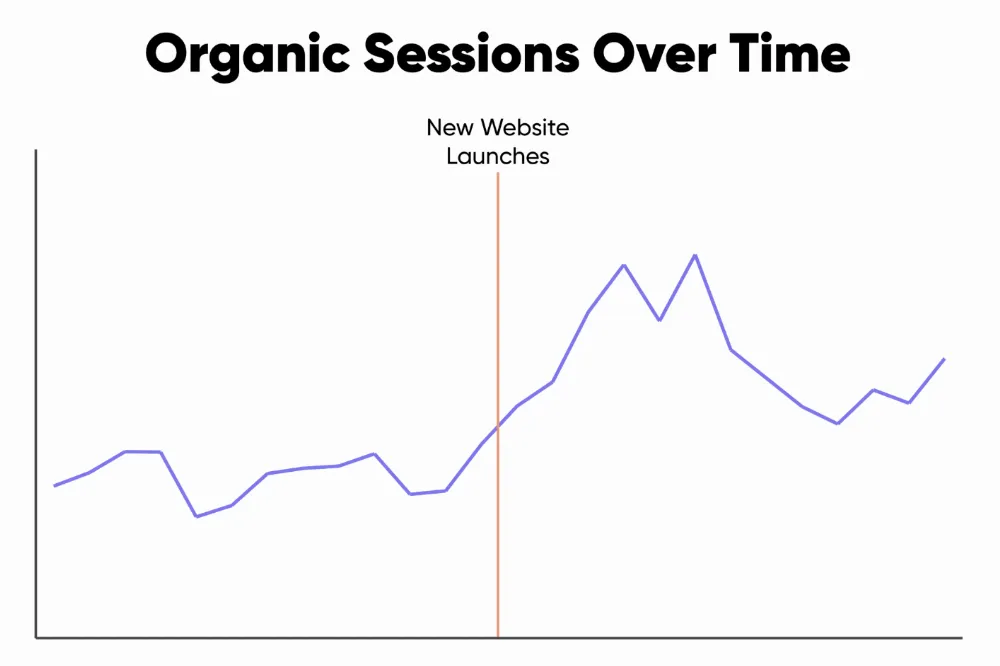
Results (three months after launch vs the three months before): visits from Google +26%, UK and EU revenue from search +11%, Search Console impressions +51%, and UK and EU Google Ads revenue +21%. The company's head of e-commerce said there was no loss in rankings or traffic.
Source: eComOne
Read more here: Splash About Case Study
E-commerce SEO and Revenue Success Stories
For online stores, traffic only matters if it turns into sales. Both cases below measure SEO by the revenue it brought in.
ASICS × Re:signal: 20× More Revenue From Search Across Europe
Why it made the list: scale. ASICS had 26 websites in 8 languages, years of falling search traffic, and no in-house SEO expert. The hard part was growing content across many markets without the quality drop that usually comes with mass translation; the team solved it by writing centrally with real experts and then localizing.
To reverse the decline, sportswear brand ASICS hired UK agency Re:signal.
How they did it:
-
Technical fixes first, made together with ASICS's own developers in short work cycles, to give the content a solid base.
-
Improved 2,000+ product pages that were close to ranking higher.
-
Wrote text for 600+ category pages (pages like "women's running shoes") and linked them to related categories and products. Re:signal says this brought the biggest revenue gains.
-
Built two advice sections with 1,000+ articles, written in English and translated into French, German, Spanish, Italian, Dutch, Polish and Portuguese, with input from professional coaches and therapists.
-
Kept key pages up to date to show real expertise. Running magazines and major publications started linking to them without being asked.
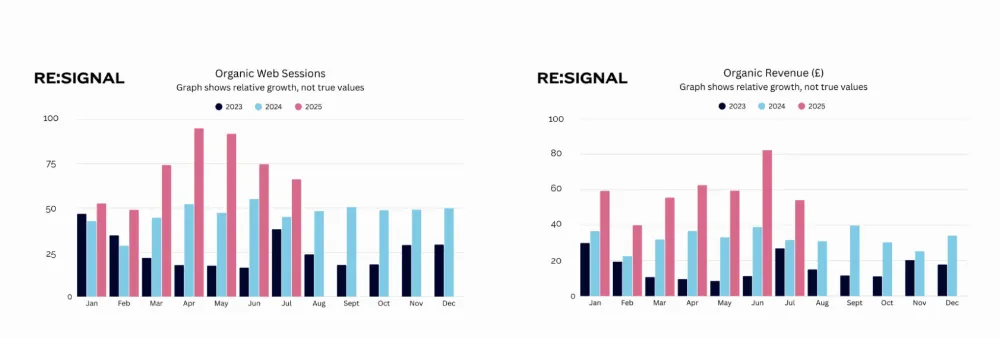
Results: ASICS now earns 20× more revenue from search than when the work began, including +81% in 2024 alone. Traffic to category pages grew 34% year over year, beating a 15% target, and the partnership has returned 438% on investment.
Source: Resignal
Read more here: ASICS Case Study
Printfresh × Digital Commerce Partners: Building the Pages Shoppers Search For
Why it made the list: Printfresh had the products people wanted but no pages matching how they searched. About 73% of category searches for its own products had nowhere to land on its site, so shoppers ended up with competitors.
US sleepwear brand Printfresh sells pajamas, robes, nightgowns and loungewear. But its site had no category pages for many of the ways people search, like "women's pajama sets" or "cotton nightgowns". It was missing about 73% of category-level searches for its own products.
Digital Commerce Partners built and improved category pages (also called collection pages) to match how shoppers search, rather than how the business organized its products internally. Every major category got its own page designed to rank and sell, and the work continued through 2025.
Results: After the first set of new category pages went live, sales from search more than doubled (+103%) in three months. The site also started showing up for 6,008 more search terms.
The site gained 565,000 new visitors from search in the last three months of 2025. Visits from AI assistants also went up every quarter in 2025.
Read more here: Printfresh Case Study
Lessons From 2026: What to Copy
The nine cases span different countries and budgets, yet several moves repeat across them.
-
Before you write more content, check that Google can find and read your pages. A security setting kept SUSE’s blog out of Google search. On a luxury real estate site, Google couldn’t follow the menu buttons to find other pages. And when StreetStyle24 made its product lists easier for Google to read, the site showed up in the top three results for 28% more search terms.
-
Aim to be quoted inside AI answers, not just ranked below them. When Google shows an AI summary, people click a regular result in only 8% of visits, compared with 15% when there's no summary, according to Pew Research. Being one of the sources the AI cites pays off: in Seer Interactive's research, brands cited in AI Overviews got 35% more clicks from regular results and 91% more clicks on their ads than brands that weren't cited.
-
Get mentioned on other websites. In its May 2026 report, Muck Rack analyzed over 25 million links cited by ChatGPT, Claude and Gemini and found that 84% came from earned media (press coverage, research, government and reference sites, and other independent sources), while paid and sponsored content made up just 0.3%. That's why SUSE coordinated SEO with its PR agency, and ASICS's advice articles earned links from running magazines.
-
Write so AI can easily quote you. Give the answer in the first one or two sentences, put steps in numbered lists, and write subheadings as the questions people ask. The US health clinic went from almost no AI visibility to 181 AI Overviews without publishing anything new: it restructured the content it already had and strengthened its local signals. Longer, question-like searches matter most: Pew found only 8% of one- or two-word searches showed an AI summary, while longer, more question-like searches showed them far more often.
-
Create the pages people are already searching for. Printfresh was missing about 73% of category searches for its own products; adding those category pages doubled its search revenue in one quarter. Wisent ignored broad terms and targeted exact part numbers that ready-to-buy mechanics search for.
Want results like these? Talk to Netpeak's SEO team, or see how we help brands get cited by AI assistants with GEO.

 0
 0
 0
 0
Related Articles
Vinted Beat Temu in the US: Here's What It's a Wake-Up Call for Your Business
Asolytics data shows that in October 2026, Vinted was the #1 most-installed app in the US. Not just in Shopping. Overall.
Why Does My Under-$10 Product Lose Money on Amazon FBA?
Your under-$10 product loses money because Amazon charges an almost fixed fulfillment fee per order, and on a $3.99 item, that fee takes two-thirds of the price.
Can My Amazon Agency Still Access My Seller Central? What Pet Brand CMOs Must Check Before Reauthorization
Since August 10, 2026, Amazon decides which roles an outside provider may hold, and access granted the old way expires if you skip the reset.