For two years, every e-commerce marketer in America had the same nightmare, and it was orange. Temu: billions in ads and a “spin the wheel” for everything.
Meanwhile, a Lithuanian app where people sell their old jeans snuck up and took the crown.
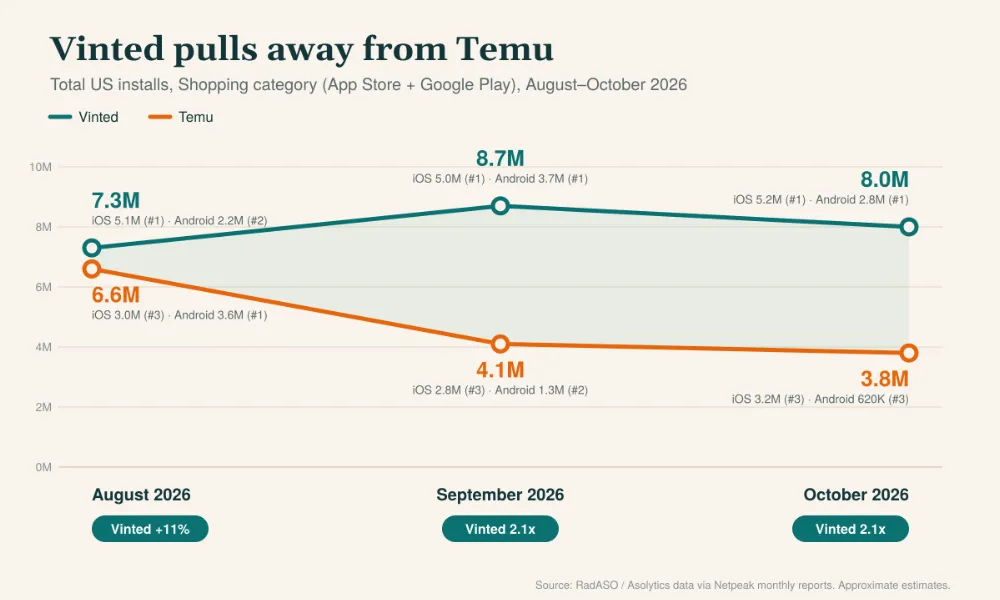
Asolytics data shows that in October 2026, Vinted was the #1 most-installed app in the US. On iOS, it beat Threads and TikTok. And it has now out-installed Temu by more than 2x for two months in a row.
We track these installs every month, and this result surprised us too. Below are the numbers, the reasons behind them, and what they mean for your store.
The Scoreboard: Three Months, One Clear Winner
US installs, Shopping category (rank in brackets):
These are US App Store and Google Play installs, collected by the RadASO team with Asolytics. Figures are approximate. "Total" means iOS plus Google Play. All figures come from our monthly reports for August, September, and October
What jumps out:
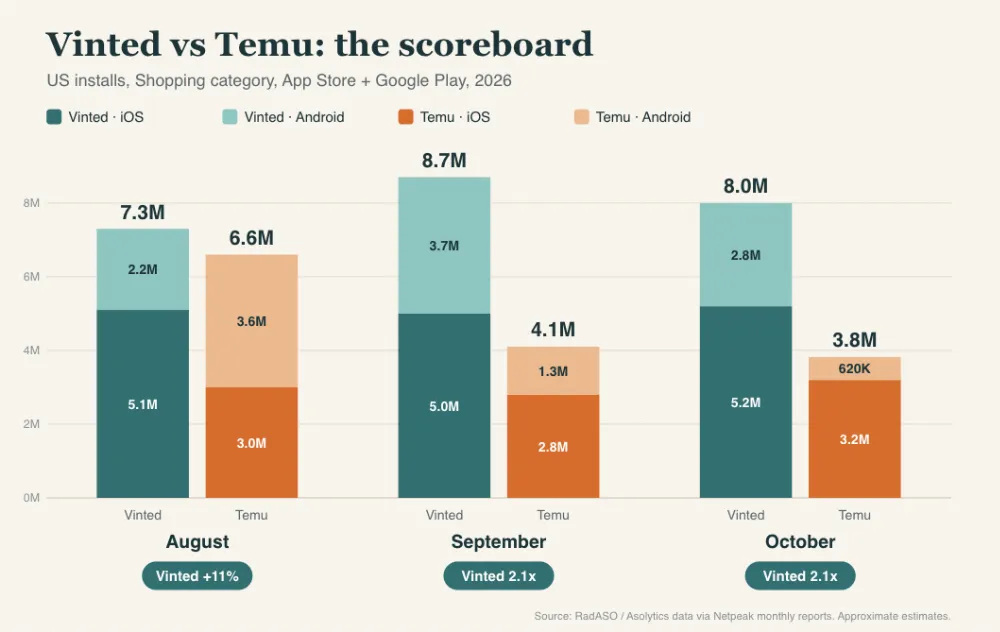
August was almost a tie. Vinted got 7.3M installs and Temu got 6.6M. Temu was even #1 on Google Play, the app store on Android phones. Vinted came out ahead only once we added both stores together.
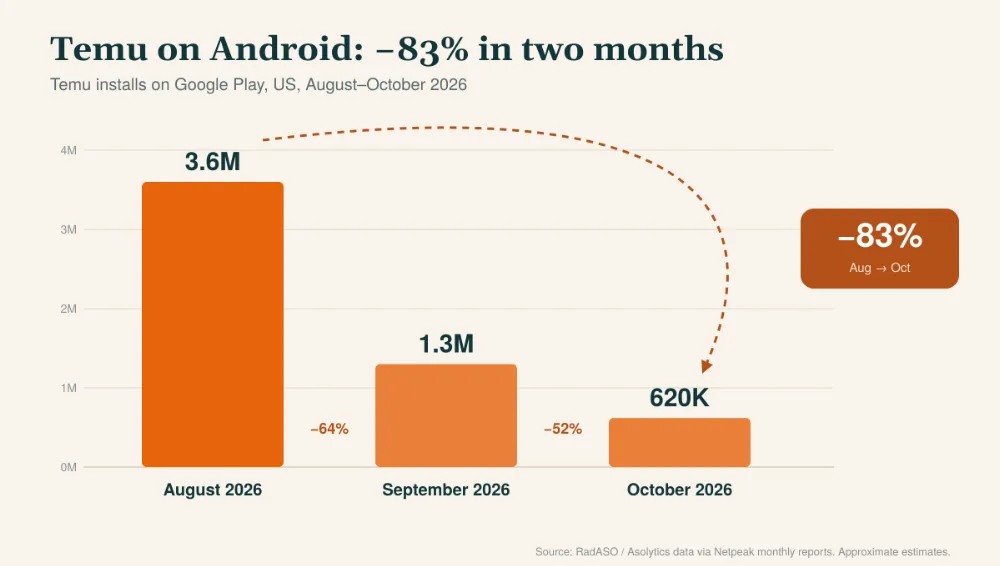
Then Temu lost most of its Android downloads. Its Google Play installs went from 3.6M in August to 1.3M in September and then 620K in October. That’s 83% fewer in two months. Imagine a shop that used to get 100 new customers a day suddenly getting 17.
Vinted stayed strong. It got more than 5M installs from iPhone users (the App Store) every month, and in September and October it was #1 on both stores. In October, about 1 in every 5 shopping-app installs in our sample was Vinted.
Temu didn’t disappear. iPhone users kept downloading it, about 3M a month. What Temu lost was Android shoppers, who tend to chase deals the hardest. A likely reason is the cut in Temu’s advertising, covered below.
Is the Trend Holding?
Yes. After August's near-tie, Vinted has been 2.1x ahead of Temu for two months in a row. October was a little bumpier. Vinted dipped 8% from its September peak but kept the #1 spot, and Temu's iOS installs rose 14%, probably from early holiday deal hunting.
The Black Friday peak isn't in our data yet, so we'll see in the November edition whether Temu can narrow the gap.
Why Vinted Won (Spoiler: It Wasn't Luck)
Here are five reasons, and they all worked at the same time.
Vinted Stopped Testing the Waters and Jumped In
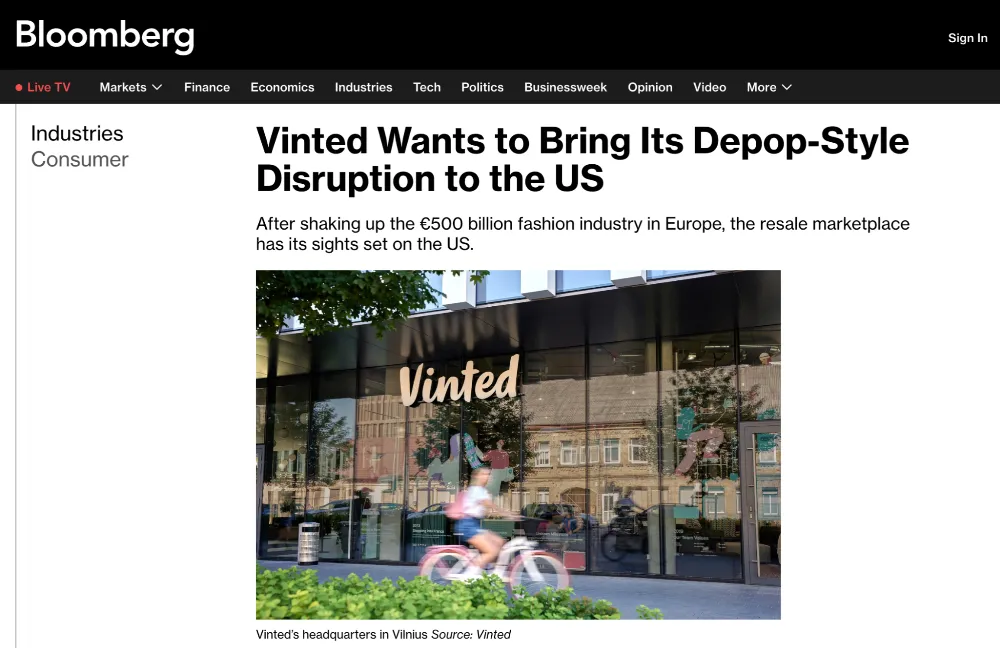
Vinted has technically been available in the US since 2013. For years, though, it was like a shop on a side street with no sign. In January 2026, it launched a proper US push, starting with New York and backed by real marketing money (Vinted).
The results came fast. Over the summer, press coverage kept the name in the news.
Sellers Pay Nothing, so the Shelves Fill Themselves
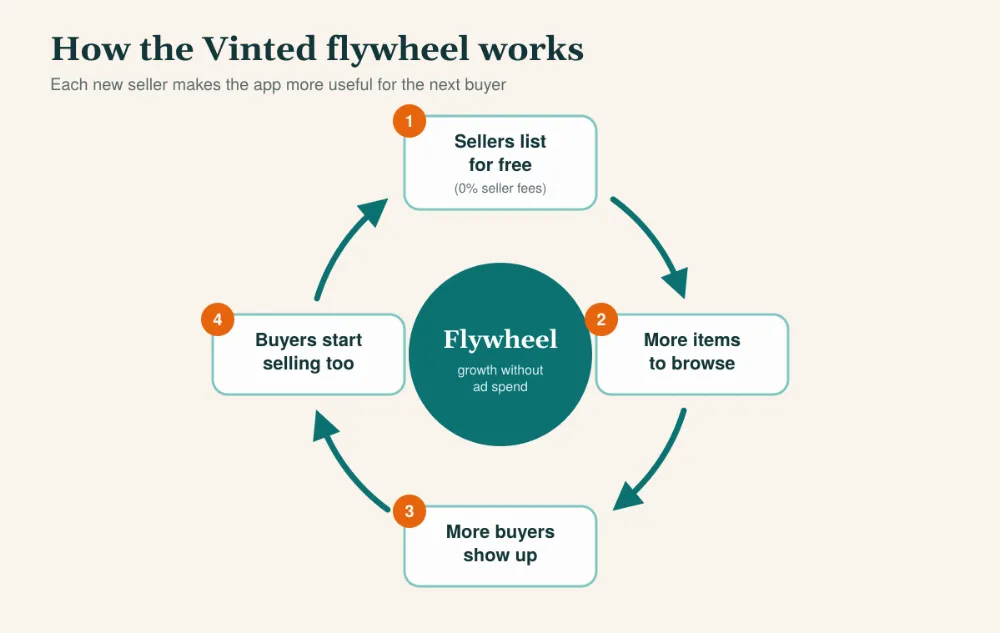
On most marketplaces, sellers pay a commission. On Vinted, sellers keep the full price, and buyers pay a small fee instead. It's a small switch with a big effect. Listing an old jacket costs nothing, so lots of people do it.
More listings attract more buyers, and buyers soon realize they could sell too. Marketers call this a flywheel. Each new seller makes the app more useful for the next buyer, and that growth doesn't come from ad spend. Read our article to find out what is the average Amazon PPC cost in 2026 by category.
Secondhand Stopped Being “Second Best”
More shoppers now look for secondhand clothes first. It’s a smart way to find what they want for less. ThredUp's 2026 Resale Report found that the global secondhand apparel market is projected to reach $393B by 2030, growing 2X faster than the overall apparel market. It also found that nearly half of shoppers check resale before buying new, and among Gen Z, the figure is 58%.
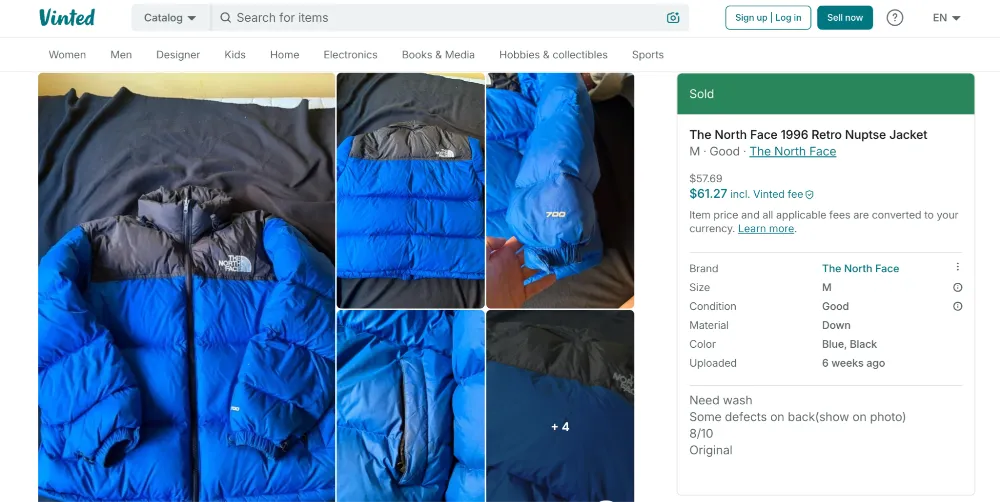
While listings on Vinted range from $57.69 to $243.58 depending on condition.
Vinted Made Trust a Feature
On October 8, 2026, Vinted renamed its required buyer charge the “Vinted fee” and put its refund rules in a separate policy. It also doubled the time sellers have to prove an item is genuine, from 24 to 48 hours.
Around the same time, Fortune reported that Temu relied on ads from accounts that posed as real creators.
Example: Two shops sell the same sneakers. One promises a refund if they aren't genuine. The other has glowing reviews from accounts that may not be real people. Most shoppers pick the first one, even if it costs a bit more.
Temu's Growth Was Rented, and the Rent Went Up
Temu grew by selling very cheap goods shipped straight from China and by buying huge amounts of advertising. A big part of the model relied on the de minimis rule, a US exemption that let small parcels enter the country without import duties. When the US closed that loophole in 2025, every cheap order got more expensive to deliver.
Temu responded by cutting its US ad spend: in January–May 2026 it spent 95% less on X and 74% less on YouTube and TikTok (Digiday). If growth comes mostly from ads, cutting the ads cuts the growth. Our data shows the result: Temu's Google Play installs fell from 3.6M in August to 620K in October.
What This Means for Your Business
You don't need to start selling used clothes to learn from this. Just keep in mind that shoppers now check the secondhand price before they pay yours. Also, they'd rather buy from a store they trust than chase a bigger discount. And growth you only pay for stops the day the budget does.
4 Moves to Make Before Resale Eats Your Lunch
Price against the resale tab too. For purchases over $100, 44% of customers check resale options first (PRNewsWire).
What to do: Search your top 10 bestsellers on Vinted, Depop, and eBay. If a lightly used one costs about the same as your sale price, a bigger discount won't win the sale. Add something a stranger can't offer: a warranty, free returns, a bundle, or fast delivery.
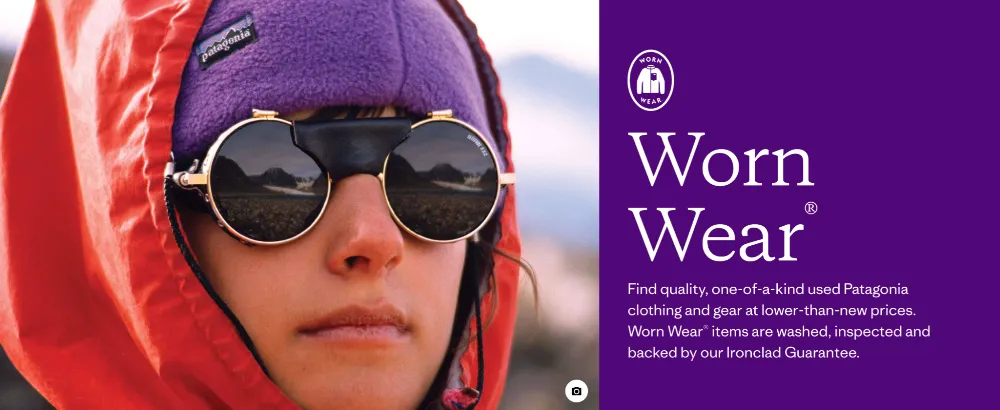
Launch a resale or trade-in program before someone else resells your products. The number of fashion brands running their own resale programs grew from 9 in 2020 to 148 in 2025 (ThredUp). For example,Patagonia's Worn Wear, one of the earliest brand-run resale programs, has grown into a meaningful part of the business. Read more about that in our sustainability marketing guide.
What to do: Start small. Offer store credit for old items and resell them under your brand. You keep the customer, collect the margin, and get a reason to say “our stuff holds its value.”
Run iOS and Android as two separate markets. In our October data, about 3 out of 4 installs (68.6M of 92M) came from the App Store, and iOS led installs in every category by 2.2x to 3.2x. Temu shows why that matters: its iOS installs held at about 3M a month, while its Google Play installs fell 83%.
What to do: Split marketing budgets, creatives and store listings by platform. On Google Play, where shoppers react faster to sales, lead with the price and the deal. On iOS, lead with quality, brand and convenience. Track rankings on each store separately; an average of the two hides the real story.
Put trust above the fold. The average cart abandonment rate is 70.22%. Among US shoppers who abandon (not counting those just browsing), 40% leave over extra costs, 19% because they don't trust the site with their card details, and 13% over the returns policy (Baymard Institute).
What to do: Show the full price, including shipping, before checkout. Put the returns policy next to the Buy button. Also, keep real reviews and payment security badges close to the price, where people actually make up their minds.
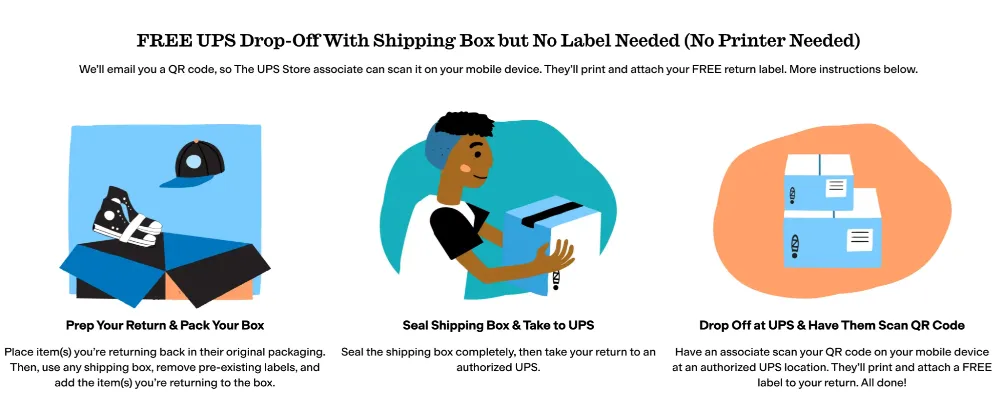
For example, Zappos offers free drop-offs and explains how to do so easily
What's Next in App Trends Review
Every month, we work with the app store marketing agency RadASO to track the most-installed apps in the US and publish results in our App Trends Review section. In the November edition, we'll check whether Vinted keeps its lead through Black Friday and the holiday rush, or whether Temu's seasonal push closes the gap.
Want your app on the next leaderboard instead of just reading about it? Our mobile app marketing team helps apps get more installs and keep their users.
Core Expertise: Home Services (Moving, Cleaning, Plumbing, HVAC, etc.), Pet Marketing, IT (Intelligence & Cybersecurity, SaaS), and Creative marketing (Fashion, Beauty & Wellness)
Education: Driving Creativity and Innovation in Marketing (Aalto University); Cultural Studies (University of Helsinki); and Content Strategy for Demand Generation and Bottom-of-Funnel SEO Strategies in Tough Niches (CXL).
Work Experience: Over 8 years in digital content marketing, SEO content writing, and creative copywriting. She has worked at a private intelligence agency (collaborates with MDF and government agencies) and a digital brand transformation agency (clients include Rakuten Viber and Deutsche Bank).
Notable Projects: SEO-driven content boosted the product site traffic by 200%


 0
 0
 0
 0