
Updates in Amazon Pet Care Marketing Policies in 2026
In 2026, Amazon updated how reviews are shared across product variations and how prices are displayed, created a 75-character limit for product titles, and changed seller fees. It affected everyone, especially those in the pet care industry.
|
Amazon update |
Date |
How it was |
What changed |
|
Jan 1–Apr 17, 2026 |
Lower FBA fees, no fuel surcharge, and Amazon offered FBA prep. |
FBA prep has ended. Fulfillment fees grew up by $0.08 per unit. There is now a 3.5% fuel surcharge, and costs for aged inventory have also increased (Amazon Seller Central, 2026). |
|
|
Feb 12, 2026 |
Reviews could be pooled across variations, letting new products inherit reviews from established ASINs. |
Reviews are shared only between minor variations now. Products with different formulas, proteins, life stages, or functions usually have their own separate review pools (Amazon Seller Central, 2026). |
|
|
Apr 23 & May 18, 2026 |
Brands could submit MSRPs, while temporary promotions were generally excluded from the 90-day Typical Price. |
Amazon now checks List Prices, and if discounts happen often, they may be included in the Typical Price baseline (Amazon Seller Central, 2026). |
|
|
Jul 27, 2026 |
Product titles could be much longer and include more keywords, benefits, ingredients, and claims. |
Most product titles can be up to 75 characters. There is also an Item Highlights field with 125 characters to add more details (Amazon Seller Central, 2026). |
Amazon's 2026 Fee Changes
Date: January 1–April 17, 2026.
In 2025, pet brands had lower FBA fulfillment costs, no fuel surcharge, and could use Amazon’s FBA prep services.
Amazon cut FBA preparations, raised fulfillment fees by about $0.08 per unit, and added a 3.5% fuel and logistics surcharge. Keeping old stock around got pricier too.
Apparently, Amazon looked at FBA costs and decided they needed more FBA costs.
|
2025 |
2026 |
Pet brand impact |
|
|
FBA fulfillment (standard) |
Single rate per size tier |
+$0.08/unit avg; three price bands (Amazon Seller Central, 2026) |
Reprice around band thresholds |
|
Fuel & logistics surcharge |
None |
3.5% of fulfillment fee, ~$0.17/unit (Amazon FBA Fee Changes, 2026) |
Direct hit on every unit shipped |
|
FBA prep services |
Amazon-provided |
Discontinued; seller-handled |
New prep or 3PL cost line |
|
Aged-inventory surcharge |
From 181 days |
+0.30–0.35/unit at 12–15+ months (Amazon Aged-Inventory Action Plan, 2026) |
Q4 overstock risk on slow ASINs |
|
Referral fee (pet supplies) |
15% |
15% (Amazon Fee Schedule, 2026) |
It stayed the same |
What pet brands should do:
-
Recalculate margins for every ASIN.
-
Factor in seller-side prep and the new surcharge.
-
Reduce slow-moving inventory before expensive Q4 storage.
-
Check whether packaging or pricing changes can move products into cheaper fulfillment tiers.
Amazon Review Sharing Across Variations Update
Date: February 12, 2026.
In the past, Amazon let reviews be shared across different versions of a product under one main listing. For pet brands marketing, this meant that a new flavor, formula, or product for a different life stage could get thousands of reviews from older, established products.
It was basically a family review plan: one ASIN did the work, everyone enjoyed the benefits.
What changed: Reviews now share across non-functional variations: size, color, pack quantity, etc. Functional differences (like chicken vs. salmon recipes, puppy vs. adult food, etc.) get separate review pools.
|
Non-functional variation family, where reviews are shared |
Functional variation family, with separate reviews |
|
|
What pet brands should do:
-
Find the ASINs Amazon left review-less and give them some attention.
-
Prioritize these products for Amazon Vine and legitimate review generation.
-
Shift ad spend toward variants that now have a review advantage over competitors.
What could give you an even bigger advantage? A powerful pet marketing campaign! Read our article to get ideas from the market leaders.
Amazon Prices Display Changes
Date: April 23 and May 18, 2026.
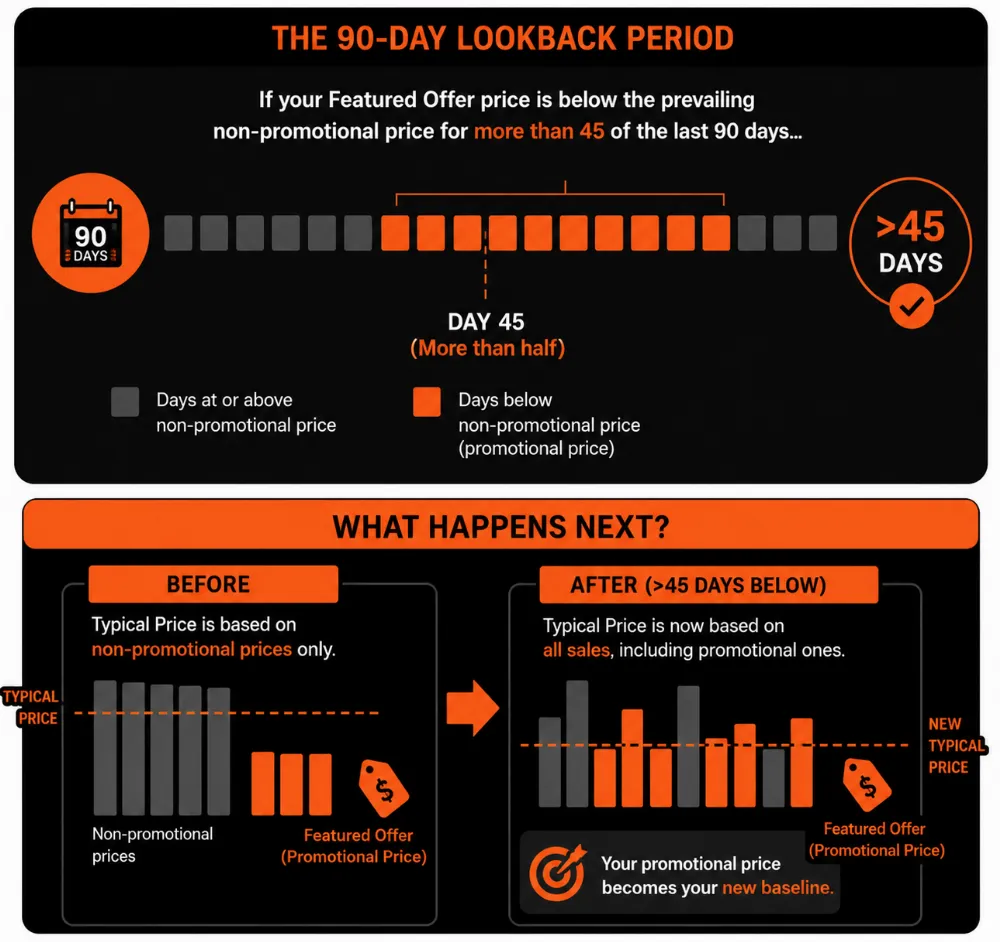
Pet brands could use the MSRP as the “List Price.” Temporary promotional prices were usually not included when Amazon calculated the 90-day “Typical Price.”
What changed: Starting April 23, Amazon checks List Prices against actual retail or Amazon sales. From May 18, frequent discounts may count toward the Typical Price, so a constant “sale” price could become the new standard.
What pet brands should do:
-
Verify MSRPs against actual selling prices.
-
Review 90-day price histories.
-
Rethink permanent Subscribe & Save discounts and coupons that could lower the reference price.
-
Make sale badges or strikethrough pricing disappear. Your “limited-time” discount should have some real limit.
Amazon's New 75-Character Title Rule
Date: July 27, 2026.
Amazon product titles could be much longer, so pet brands often packed titles with multiple keywords, product claims, etc.
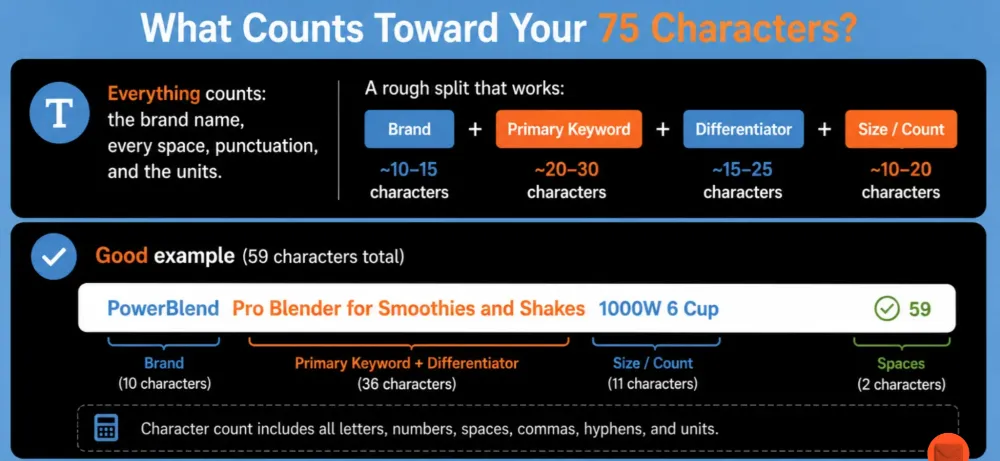
What changed: Most non-media product titles can now have up to 75 characters, including spaces. Amazon has also added a searchable Item Highlights field with a 125-character limit for key details that do not fit in the title. If your title is too long, Amazon’s AI can help rewrite it.
What pet brands should do:
-
Rewrite titles to lead with the brand + primary keyword + key differentiator + size/count.
-
Move secondary details and keywords into Item Highlights and other indexed fields.
-
Check Amazon’s AI version. It may know your character limit, but it doesn’t know which keyword pays your bills.
Looking for ideas to market your pet brand? Read our case study on how we helped PetLock8 with brand positioning, and learn why empathy sometimes means more than tech specifics in the pet industry.
FAQ
What changed in Amazon's pet care marketing policies in 2026?
Reviews are now limited to specific product variations, reference-price rules are stricter, most product titles must be 75 characters or less, and FBA costs have gone up.
Because of these updates, it is more important than ever to keep listings accurate, focus on product-level reviews, maintain pricing discipline, and manage margins carefully.
Does Amazon have the most stringent marketing rules for pet care?
Not necessarily. Amazon uses its own marketplace rules along with existing regulations for pet food, supplements, health claims, advertising, and labeling. The problem is that if you break Amazon's rules, your listings can be hidden, your ads rejected, or your product can lose visibility, even if it is legal to sell.
Is Amazon the best place to start the first marketing campaign for a pet care startup?
Not always. Amazon lets a new pet brand reach lots of shoppers who are ready to buy, but high competition and fees can make it costly to get new customers. It might work better for a startup to first build awareness and trust through social media, creators, its own website, and pet communities. Then, once there is demand, Amazon can help capture those interested buyers.
What should pet brands prioritize on Amazon in 2026?
Begin with listings. You need to add reviews for each ASIN, optimize your pricing, and create A+ content. Having one hero ASIN will no longer suffice. Permanent discounts and keyword-stuffed titles are also a thing of the past.
How often should pet brands review Amazon policy changes?
Make it a regular part of marketplace management rather than waiting for a listing problem. Check Amazon announcements before major launches, pricing changes, Prime events, and Q4 planning.
Amazon keeps changing the rules, but your pet brand doesn't have to play catch-up. Talk to Netpeak International about building an Amazon pet care marketing strategy that stays compliant, competitive, and profitable.

 0
0
 0
0
 0
0
 0
0
Related Articles
Business Apps in the US: iOS vs. Android, September 2026
We searched for US App Store and Google Play data to see what business apps professionals, shoppers, and investors actually installed in September.
Pet Food Product Patent: How to Protect Your Innovation
Patenting pet products requires careful consideration and proper application filing. With the 8 steps below, you will be able to submit your patent application and protect your invention.
Amazon’s New “Sourced from Brand” Buy Box Label: Who Gets It and Who Doesn’t
Amazon is rolling out a provenance line in the Buy Box. A short label under the Brand row now reads “Sourced from [Brand]” on amazon.com and “[Brand] approved” on amazon.de. It tells the shopper that the unit on offer came through the brand’s own supply c