
10 Proven Pet Care Marketing Techniques for 2026
In 2026, pet care marketing comes down to showing up where pet parents look for answers: AI chatbots, short-form video, paid ads, and search results. It also involves partnerships with petfluencers, encouraging user-generated content (UGC), fostering a community of like-minded people, participation in local events, gamification, and optimizing for mobile.
Pet care marketing in 2026 is about much more than launching ads in front of the right people. Pet parents care deeply about their cats and dogs, which makes their purchases emotional. They want to make the right choice for an animal that can’t make that choice for itself, which makes trust especially important in this market.
That's why a good pet care marketing strategy needs to reassure, educate, and build trust. And once you've earned that trust, pet care has a major advantage: retention can be incredibly powerful. If the food works or a supplement becomes part of the daily routine, there's little reason to start experimenting again. Pet parents can come back month after month.
The 10 marketing strategies below focus on both sides of that relationship: earning a pet parent's trust in the first place and giving them reasons to stay with your brand and make repeat purchases once their pet has given its final approval.
The Reality Check First
-
The US pet market is worth $158 billion as of 2025 and is projected to hit $165 billion in 2026, with 95 million US households owning at least one pet, so the money and consumer demand are there (APPA, 2026). The problem with market growth is that the old playbook no longer cuts it, because the way people search and buy has changed faster than most pet brands have adapted. Globally, 23% of consumers already primarily use generative AI to discover products (McKinsey).
-
Pet owners are more emotionally and financially invested in their pets than ever, but they're also more skeptical of generic pet care marketing. 93% of dog owners say their pet’s health is as important or more important than their own. 65% prefer spending time with pets over their human partners (New York Post, 2025). That commitment shows up in their wallets, too: US dog and cat owners spent an average of $2,085.60 on their pets in 2024, according to a survey of 2,000 pet parents (MetLife, 2025).
Winning them over now takes a mix of deep market research, genuine expertise, and technical visibility across search engines, AI marketing tools, social media, and local results.
1. AI Search Optimization
If your website traffic is dropping even though your rankings seem okay, the rise of AI search could be the reason. Google's AI-generated answers and AI chatbots such as ChatGPT, Gemini, or Claude often give people what they need before they visit any website.
-
Semrush's research found that zero-click search traffic has grown to roughly 27.2% of all US search traffic, up from 24.4% less than two years earlier.
-
Ahrefs' study on AI Overviews found they can reduce click-through rates on informational content by as much as 34.5%.
So, pet businesses should find a way to show up in the AI search results. Here is what they should do:
-
Write in an answer-first format: state the answer in the first sentence, then explain it.
-
Use clear H2/H3 questions that mirror how people actually type or speak their queries.
-
Get cited as a source. AI answer engines pull from sites they consider credible. This is where your vet's credentials, your clinic's "About" page, and consistent NAP (name, address, phone) data all start to matter.
-
Don't abandon content just because clicks might drop. Appearing inside an AI Overview still builds brand recall, even without a click.
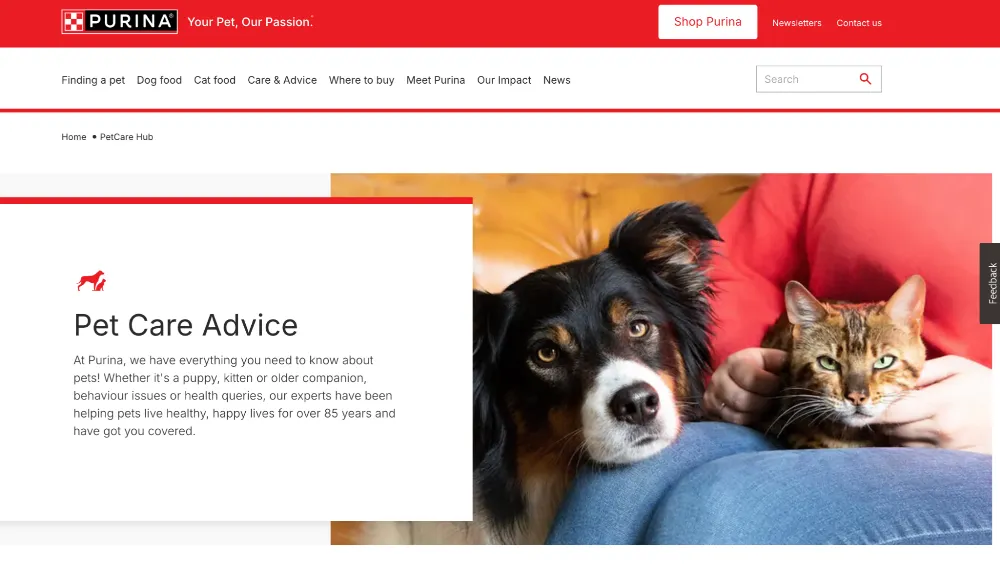
The Purina PetCare Hub provides the information that AI chatbots use to give pet owners professional answers
Business impact: Even without the click, brand visibility inside AI answers builds trust before a customer ever compares prices, meaning your online business is already the "known name" by the time they're ready to book or buy.
2. Partnerships with Petfluencers and Encouraging UGC
"Petfluencers" are dog, cat, and exotic pet accounts with dedicated followings. They work especially well because pets are visual and shareable content. US brands are expected to spend $13.7 billion on influencer marketing by 2027.
And you don't need a celebrity pet with a million followers. Nano-influencers (1K–10K followers) now often outperform mega-influencers on customer engagement: TikTok nano-influencers average around 10.3% engagement, compared to a fraction of that for mega-influencers.
How to apply it:
-
Partner with mid-size and small pet influencers.
-
Offer free products in exchange for reviews. People value authenticity.
-
Run branded hashtag challenges that invite customers to submit their own pet photos and videos. For example, BarkBox and Chewy both built large, loyal social followings largely through user-generated content and community reposting.
-
Repurpose UGC across your own channels and website. It doubles as social proof and free content.
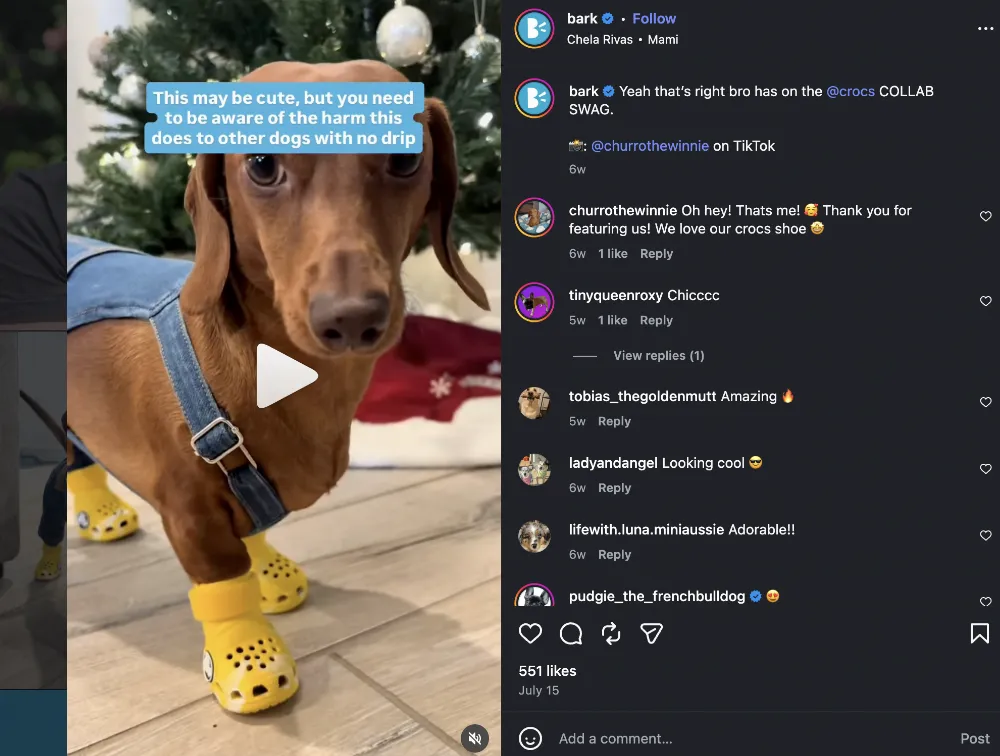
Bark shared a client’s TikTok video on their Instagram page
Business impact: UGC and petfluencer content convert because they mimic a friend's recommendation, and pet owners are usually willing to share images of their pets, giving you a low-cost content pipeline.
3. Combining Paid Ads and Organic Traffic
Relying only on paid ads or only on organic SEO leaves money on the table. Paid search and social ads get your brand immediate visibility for high-intent keywords ("emergency vet near me," "dog boarding this weekend"), while organic content and SEO build long-term traffic and brand awareness that doesn't disappear the moment you pause your budget.
How to do cross-promotion effectively:
-
Use paid ads to test which keywords and offers convert best, then double down on those topics with long-form organic content.
-
Retarget website visitors who read a blog post (say, "how to choose a puppy trainer") with an ad for a related service.
-
Run local service ads for time-sensitive, high-intent searches (emergency dog daycare, same-day grooming slots) while your organic content handles research-stage searches.
-
Track marketing analytics and cost-per-acquisition separately for each channel so you know where to reinvest.
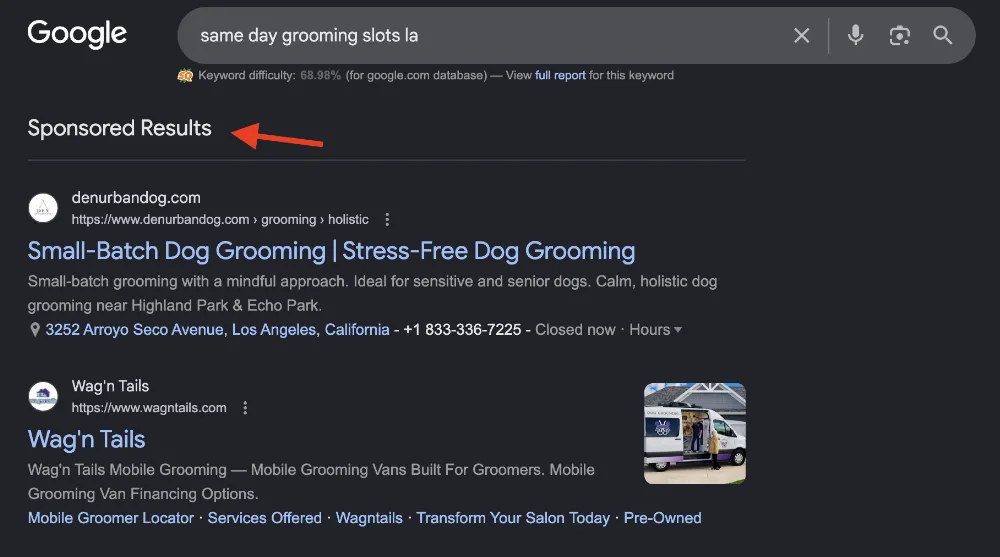
The “same day grooming slots LA” paid search results
Business impact: Businesses that blend paid and organic consistently see lower overall customer acquisition costs than those relying on paid ads alone, because organic traffic reduces your dependency on rising ad costs over time.
Netpeak International helped PetLoc8 create a multichannel digital strategy that creates brand identity and makes everything work together. Read the full article to learn more about this case.
4. Engagement with Users Through Short-Video Content
Content is still the foundation, but the format has shifted heavily toward short-form video and interactive posts. Pet owners are on social media a lot like everybody else, so they would like to watch 30-second training tips, "get ready with me" vet visit videos, and behind-the-scenes grooming clips.
What performs well on your target audience right now:
-
Short educational videos (60 seconds or less) that solve one specific problem: "why does my cat knead," "how to trim nails without stress."
-
“Get ready with me” pet content: preparing for a vet visit, packing for a trip with a dog, or getting a cat ready for grooming.
-
Day-in-the-life videos that naturally show the product in a real pet routine rather than feeling like a traditional ad.
-
Before-and-after content: grooming transformations, dental-care progress, coat improvements, or training results.
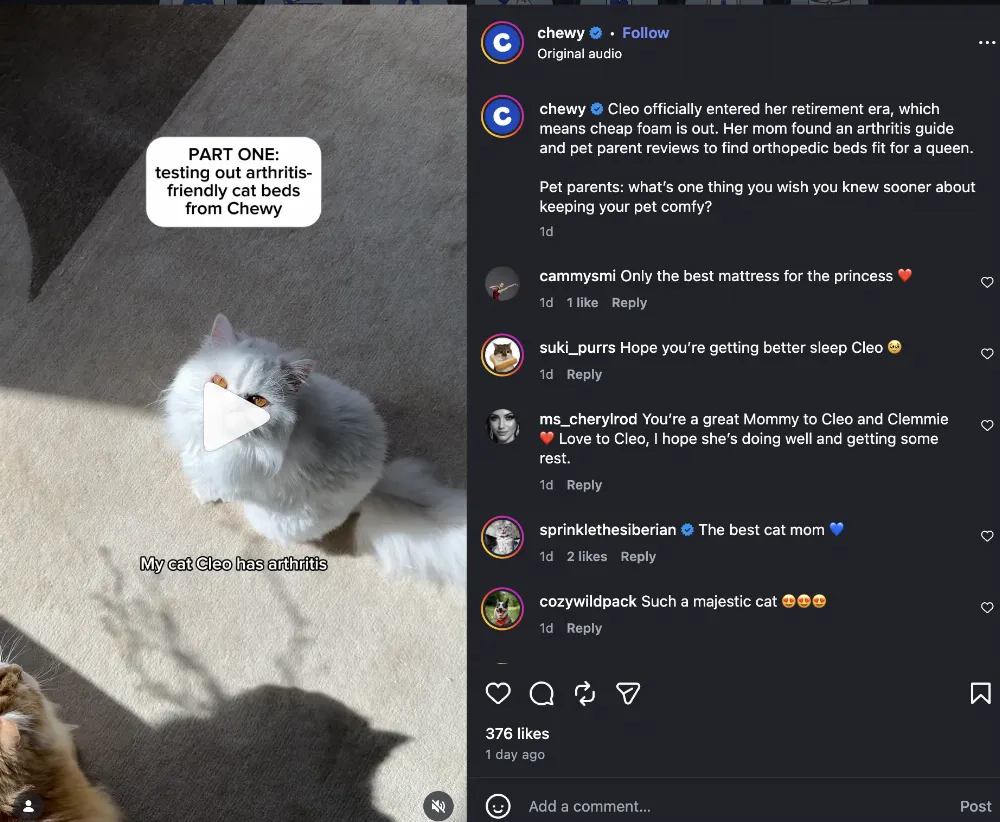
Chewy posted an Instagram video featuring a real cat with arthritis testing their arthritis-friendly beds
Business impact: Content that engages rather than just informs builds a habit of checking your brand's channels, which keeps you top-of-mind for the next purchase decision (vet visit, food reorder, or grooming appointment).
5. Fostering a Community of Like-Minded People
Pet ownership is social, and pet parents definitely love talking about their favorite creatures with other pet people. Brands that build a community around that (rather than just broadcasting to followers) create stickier, more loyal customers.
How to build one:
-
Create a Facebook Group, Discord, or app-based community for customers (breed-specific groups work especially well, think "senior dog owners" or "first-time reptile keepers").
-
Host regular live Q&As with your vets, trainers, or groomers where the community can ask questions directly.
-
Spotlight community members and their pets in your digital marketing. This turns customers into micro-advocates.
-
Encourage peer-to-peer advice within the group; a thriving community increases trust in your brand.
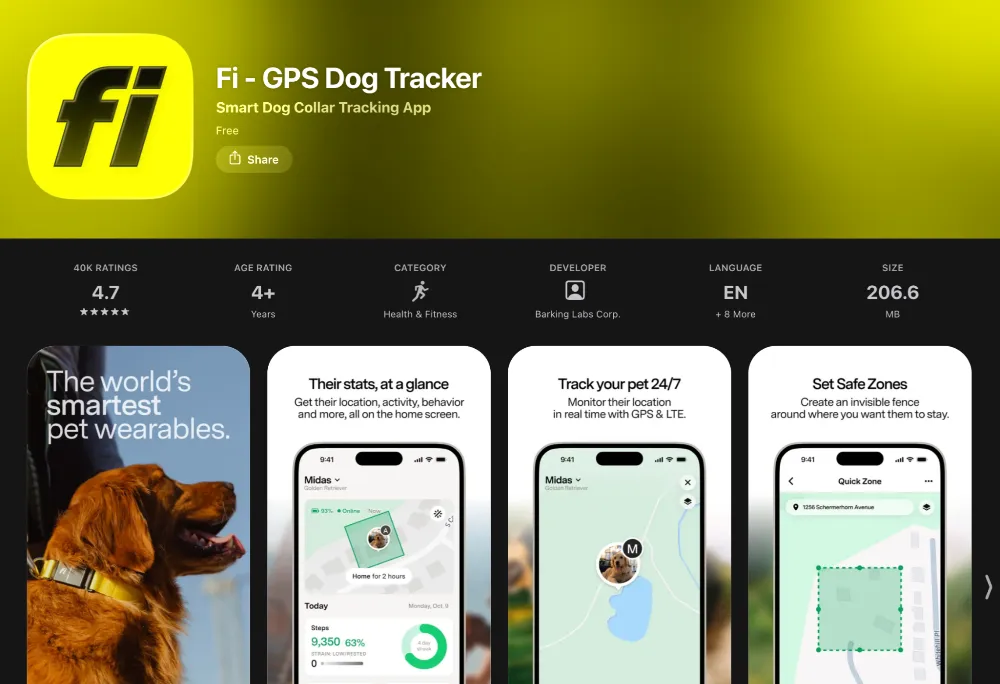
Fi app gives owners a reason to interact. Owners can track activity, compete on leaderboards, follow other dogs, and participate in a social experience built around active dog ownership
Business impact: Community members typically have higher lifetime value because they feel emotionally invested in the brand and they refer you to other pet owners organically.
6. Personalized Approach to Clients
Generic digital marketing doesn't work as well in an industry this personal. People expect brands to understand what they actually need: 71% of consumers expect personalized interactions, and 76% get frustrated when they don't get them (McKinsey).
How to personalize at scale:
-
Use AI-driven product recommendations on your online store, similar to Chewy's "customers who bought this also bought" logic, tailored by pet type and life stage.
-
Offer a simple quiz-based AI tool ("find the right food for your dog"). This personalizes the experience and naturally captures email addresses for follow-up marketing campaigns.
-
Segment your CRM by pet species, breed, age, etc., and tailor email marketing and SMS content accordingly (a senior-dog owner needs different content marketing than a new-puppy owner).
-
Send personalized reminders: vaccination due dates, food running low, grooming due for a specific breed's coat type.
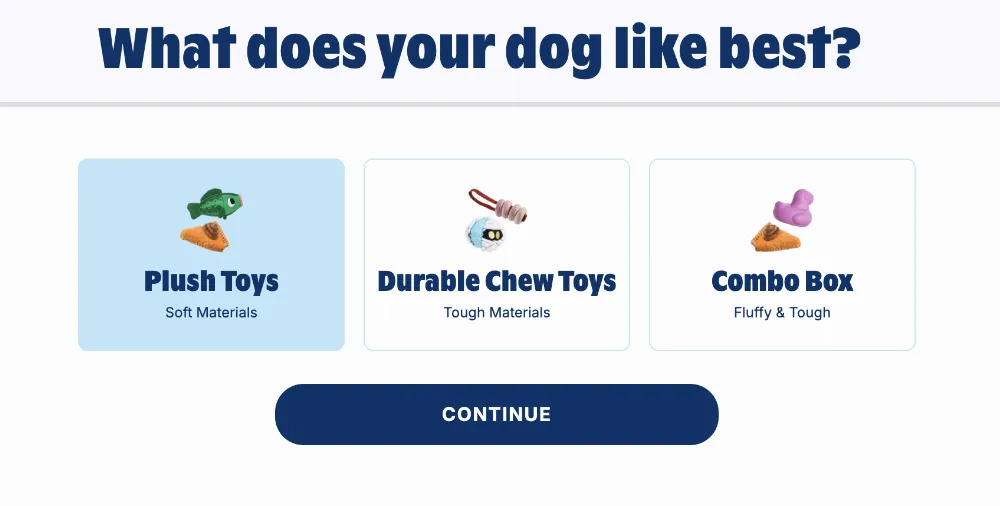
BarkBox proposes a personalized monthly subscription with 2 new toys and 2 bags of healthy treats
Business impact: 78% of consumers say personalized content makes them more likely to repurchase (McKinsey). Personalized customer retention marketing (reminders, tailored offers) is one of the most cost-effective ways to increase customer base, repeat customers, and reorders.
7. Online Reputation Monitoring
Customer feedback matters a lot in pet care because people want to make sure they can trust a business with their pet. In fact, 78% of customers won't even consider a business rated below four stars, according to Local Impact.
Customer satisfaction becomes even more important with AI search: one recent analysis found that ChatGPT only recommends businesses averaging 4.3 stars or higher, and Perplexity requires at least 4.1 (Search Engine Land, 2026).
What to do:
-
Set up alerts (Google, Yelp, Facebook) so you can respond to every good or bad review about customer service within 24–48 hours.
-
Ask happy customers for reviews right after a positive interaction (post-appointment text or email with a direct review link).
-
Respond professionally and specifically to negative reviews; how you handle criticism is itself a trust signal to potential customers reading it.
-
Monitor mentions across media platforms and pet forums. Reputation now lives in more places than your Google Business Profile.
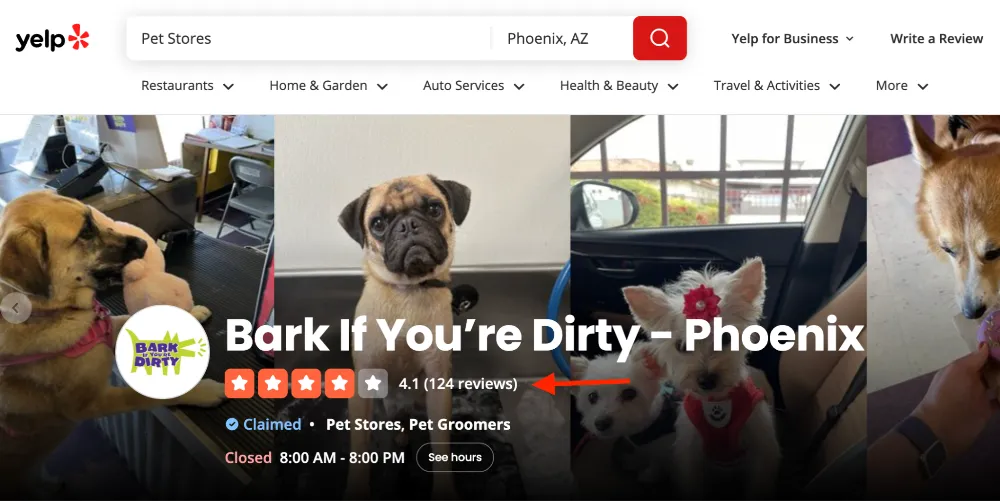
“Bark If You’re Dirty — Phoenix” has a 4.1-star rating from 124 Yelp reviews, which is a good enough result to be booked and appear in AI recommendations
Business impact: A strong review profile directly increases both human conversion rates and your odds of being recommended by AI assistants. It's now a ranking factor in two search ecosystems at once.
Be cautious of updates to different platforms. For example, because of an update to Amazon's review-sharing policy, some pet brands' listings lost most of their reviews overnight. Check out our article for the details.
8. Gamification and Rewards
Loyalty and rewards programs tap into something pet owners already do naturally — treat their pets (and by extension, themselves) to something special. Gamification adds a layer of fun that keeps people coming back to check their status, points, or unlocked perks.
Ways to apply gamification:
-
Points-based loyalty programs where purchases earn rewards (Chewy and PetSmart both run programs like this, tying points to free products or discounts).
-
Streaks and challenges. For example, "log your dog's walks for 7 days" or "complete your puppy's first-year vaccination checklist" with a small reward at completion.
-
Tiered membership levels (bronze/silver/gold) that unlock better perks the more a customer engages, encouraging both spend and referrals.
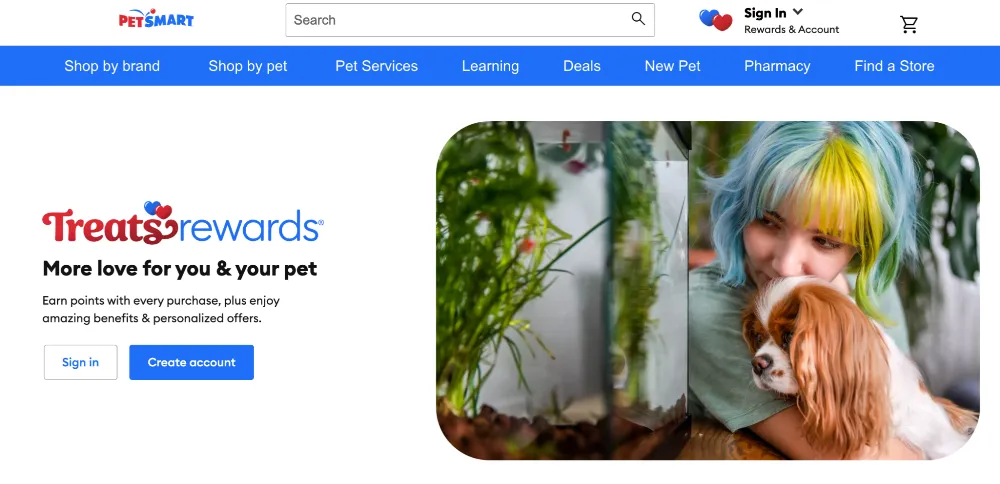
The PetSmart Treats Rewards program is a brand loyalty plan where customers earn 10 points for every $1 spent on products and professional services
Business impact: Gamified loyalty programs make everyday purchases like food, litter, or grooming feel a little more rewarding. Customers feel like they're making progress toward their next perk or reward.
9. Mobile Optimization
Many pet-related searches, especially urgent ones like "emergency vet near me" or "dog groomer open now", happen on a phone, often while someone is already out and about with their pet. If your site is slow or hard to navigate on mobile, you lose that customer to a competitor before they even see your prices.
What to prioritize:
-
A mobile site that loads in under 2–3 seconds, with a click-to-call button visible on every page.
-
Thumb-friendly booking or appointment forms. Long forms lose mobile users fast.
-
Test your checkout and booking flow specifically on a phone. What feels smooth on a laptop can be frustrating on a small screen.
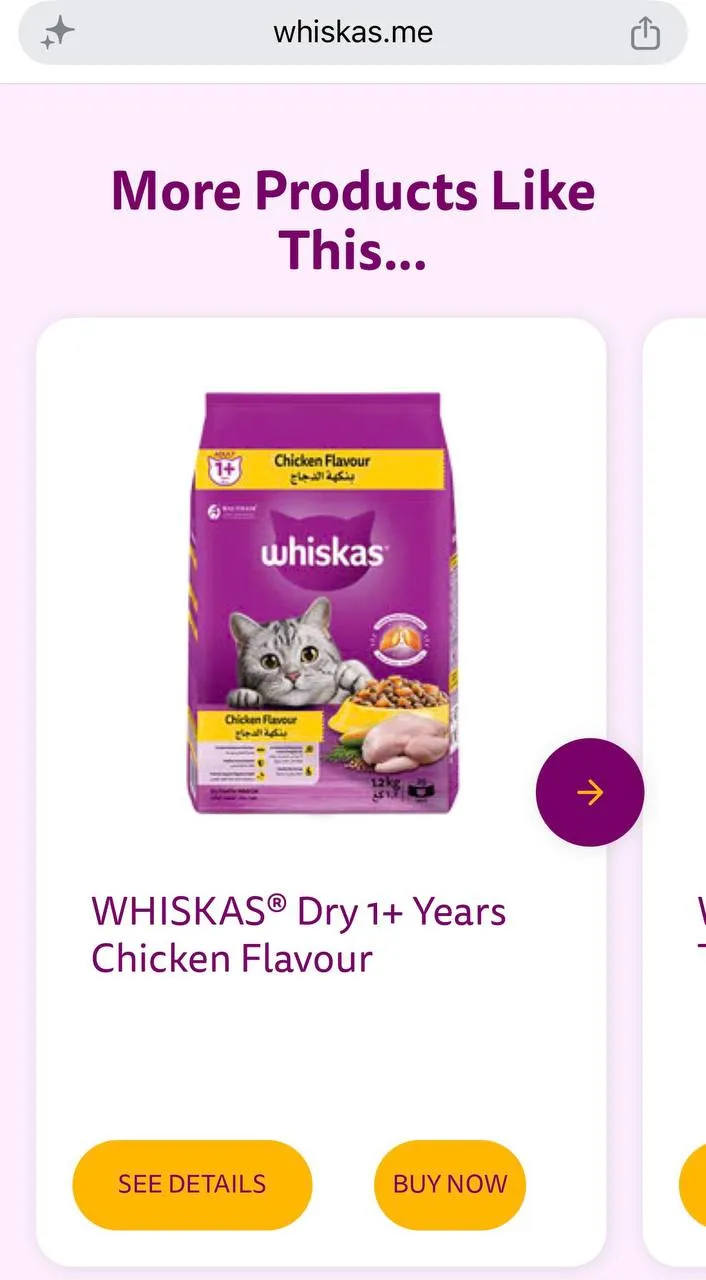
The Whiskas mobile website has thumb-friendly buttons and intuitive navigation
Business impact: A lot of local pet searches happen on phones, often when someone is ready to book or buy. If your mobile site is fast and easy to use, you're much more likely to turn that search into an appointment or sale.
10. Participation in Local Events
Digital tactics are amazing, but for most shops and groomers are still deeply local businesses. That's why sponsoring local adoption days, dog-friendly festivals, etc. is worth the effort.
Ideas that work:
-
Offer free nail trims or ear checks as a low-pressure way to meet new customers.
-
Partner with local shelters or rescues for co-branded events. This builds goodwill and positions your business as invested in the community, not just profit.
-
Sponsor local youth sports teams or community events with your logo.
-
Collect emails and social follows on-site during events, then follow up promptly with a personalized offer.
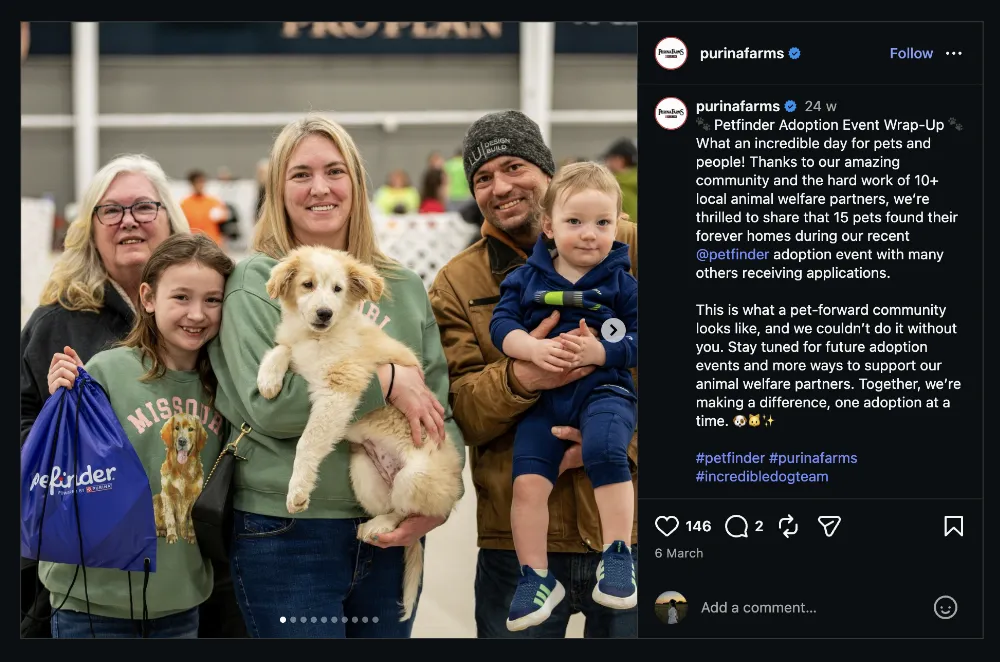
Purina Farms participates in a Petfinder adoption event and shared on their Instagram that 15 pets found their forever homes
Business impact: Showing up at local events can help your local SEO, too. You can earn local mentions and backlinks while getting people in the community talking about your brand.
Final Thoughts
The best pet care marketing efforts in 2026 don't start with the product. It starts with understanding how much people care about their pets. Pet parents aren't simply choosing food, toys, supplements, or grooming services. They're making decisions for an animal they love, and they want to feel confident they're making the right one.
That's why a strong digital strategy needs more than ads. Show up when people search for answers, create useful short-form content, work with petfluencers customers already trust, encourage real UGC, build communities, and meet pet parents offline at local events. Gamification and a smooth mobile customer experience can make interacting with your brand easier and more memorable.
Most importantly, don't focus only on winning the first purchase. Pet care has enormous potential for loyalty. Once a cat finally approves of a food or a dog has a favorite treat, their owner has a very good reason to come back again and again.
Win the pet parent's trust, pass the pet's approval test, and you've got the foundation for a long-term customer relationship.
FAQ
Is pet care marketing profitable?
Yes — the US pet industry alone is worth $158 billion and growing toward $165 billion in 2026, with 95 million US households owning at least one pet (APPA, 2026). Profitability depends on execution, but the underlying demand is strong and still growing across most pet categories, from dogs and cats to reptiles and birds.
How can gamification improve pet care marketing?
Gamification turns routine purchases — food, litter, grooming appointments — into progress toward a reward, which increases how often customers come back and how much they spend per visit. Points programs, streaks, and referral rewards all tap into the same instinct that makes pet owners already enjoy treating their pets, redirected toward loyalty behavior.
Do local SEO and geo-targeting influence pet care marketing results?
Significantly. Local searches convert at high rates, and businesses appearing in the local map pack get 126% more traffic and 93% more calls and direction requests than lower-ranked competitors.
Since AI assistants like ChatGPT and Gemini are also starting to recommend local pet businesses based on reviews and online presence signals, geo-targeting and an optimized Google Business Profile now influence both traditional and AI-driven discovery.
What are pet care marketing trends heading into 2026?
The biggest shifts are toward AI-driven search visibility (AI Overviews and answer engines), continued growth in influencer and UGC content. Especially nano-influencers with high customer engagement, AI-powered personalization in product recommendations, and a growing emphasis on mobile-first, hyperlocal experiences as "near me" searches keep rising.

 0
0
 0
0
 0
0
 0
0
Related Articles
What Happens When Amazon Suppresses Your Listing? The New 2026 Rules
Under the new 2026 rules, Amazon warns you first and gives you a grace period to fix the issue.
Business Apps in the US: iOS vs. Android, August 2026
We’ve fetched data from the US App Store and Google Play to see what professionals, shoppers, and businesses are actually installing, and why the market leaders are winning right now.
Amazon’s New “Sourced from Brand” Buy Box Label: Who Gets It and Who Doesn’t
Amazon is rolling out a provenance line in the Buy Box. A short label under the Brand row now reads “Sourced from [Brand]” on amazon.com and “[Brand] approved” on amazon.de. It tells the shopper that the unit on offer came through the brand’s own supply c