
Failed Market Expansion Examples: 7 Mistakes Your Business Should Avoid
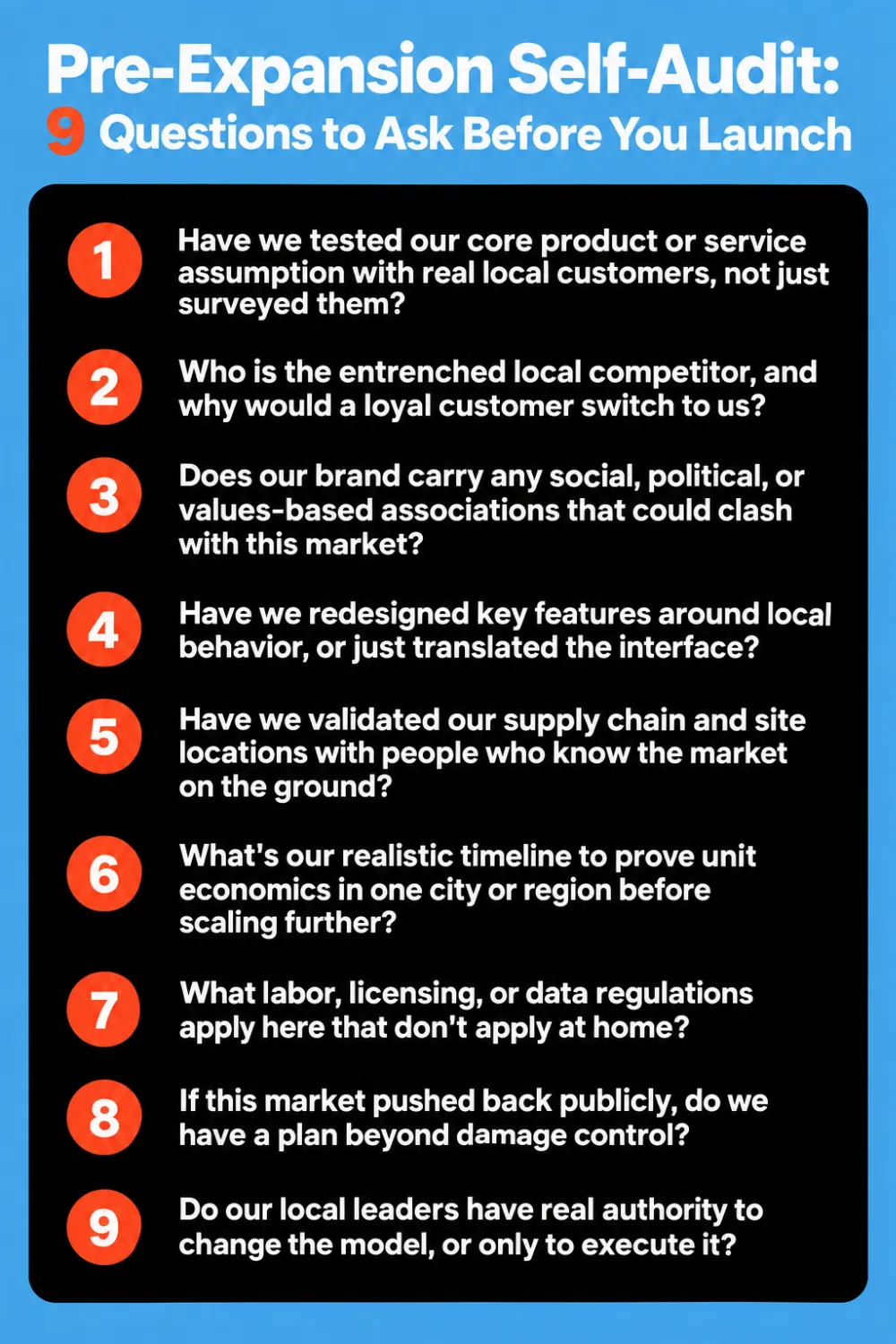
A failed business expansion is usually a chain of mistakes: assuming your home-market playbook will travel as-is; underestimating entrenched local competitors; treating "culture" as only taste, not values; localizing the language but not the product; getting location, logistics, or supply chain wrong; expanding into foreign markets faster than you can prove the model; or misjudging regulatory, legal, or political risk.
Below are stories starring Starbucks, Walmart, Target, Facebook, and several other brands. They learned the hard way that even billion-dollar companies can forget to do their homework. We’ve also included a quick self-audit to help you avoid joining the cast.
Netpeak helps businesses enter the EU, US, and global markets every day. We have worked on 5,000 projects in over 30 countries. So, let's use our experience to analyse the mistakes made by major players and learn from them. These lessons are free!
If you're a founder or marketer eyeing your first international launch, these international expansion failures show you which questions to ask before you sign a lease or ship inventory. You can't afford to lose millions of dollars.
What Actually Counts as a “Failed” Business Expansion
Failed expansion isn't about a slow first year. Struggle during international expansion is the norm, not the exception. At some point, most companies need to replace a regional lead or slow down the rollout, and that's OK.
A "failed" expansion is one where a company withdraws entirely, sells off the business, or writes off losses large enough to change its marketing strategy.
Some famous examples:
-
Starbucks closed two-thirds of its Australian stores after $105 million in losses (CNBC).
-
Walmart sold its entire German operation at a loss of about $1 billion (The Guardian).
-
Target closed all 133 of its Canadian stores after $1 billion in losses (CBC News).
-
Mobike shut down most of its international markets after its bike-sharing unit drove over half of its parent company's losses (TechCrunch).
-
Deliveroo withdrew entirely from Germany, Spain, and the Netherlands (TechCrunch, Silicon Canals).
-
Chick-fil-A closed its only UK location within six months of opening (Forbes).
-
Home Depot and Mattel's flagship Barbie store both closed every location they'd opened in China (NBC News).
Below, we break down each giant's market expansion mistakes to avoid: what went wrong and how an earlier check could have helped.
Mistake #1: Assuming Your Home-Market Playbook Will Travel As-Is
The most common failure pattern: a company thinks that what made it successful at home will automatically work abroad. Spoiler alert: local habits, tastes, and social norms don’t match in most cases.
Starbucks in Australia
Starbucks entered Australia in 2000 and started an aggressive expansion plan: they reached close to 90 stores by 2008. Starbucks thought the country was ready for their standardized “third place” coffeehouse concept.
The problem: Australia already had an espresso-based café culture built by post-war Italian and Greek immigrants. Their local independent cafés were far ahead of anything Starbucks could offer, so customer lifetime value was low.
The company moved too fast, opened stores before demand existed, and by 2008 had closed around two-thirds of its Australian locations. They lost roughly $105 million (CNBC).
Image: lenscap50/stock.adobe.com
Walmart in Germany
Walmart entered Germany in 1997 by acquiring two German chains. They tried to import its US retail culture wholesale: training cashiers to smile, make small talk at checkout, and hold morning staff chants, failing to understand customers.
German shoppers and employees found this behavior artificial rather than warm.
Walmart exited in 2006, selling its 85 stores to Metro. They lost roughly $1 billion (The Guardian).
Photograph: Edgard Garrido/Reuters
What to do instead: Run behavioral research and adapt your business model before launch: observe how people actually shop, socialize, or work in the target market. A pilot store or soft launch in one city, with a hard checkpoint, would have caught both problems above within months.
Mistake #2: Ignoring Local Competition
Reading the culture correctly is great but not enough. Your company can still lose to a cheaper or more trusted local.
Walmart's German experience is a good example here too. By the time it arrived, Aldi and Lidl had already spent decades building the exact reputation for low prices that Walmart wanted to claim. As a result, German price wars had already pushed margins lower than Walmart's US model could sustain (The Guardian).
A "good enough" local player is often hard to dislodge. Customers don't need a reason to switch if they're already satisfied.
What to do instead: Study the local competition. If you plan to compete on price, check whether another brand already owns that space and whether your margins can handle it. Most importantly, ask why a happy customer would switch to you. If you don’t have a clear answer, your go-to-market strategy needs more work.
Mistake #3: Treating “Culture” as Only Taste, Not Values
Localization research often focuses on taste (flavors, colors, store layouts) and misses two deeper layers: everyday consumption habits and social or political values.
Home Depot in China
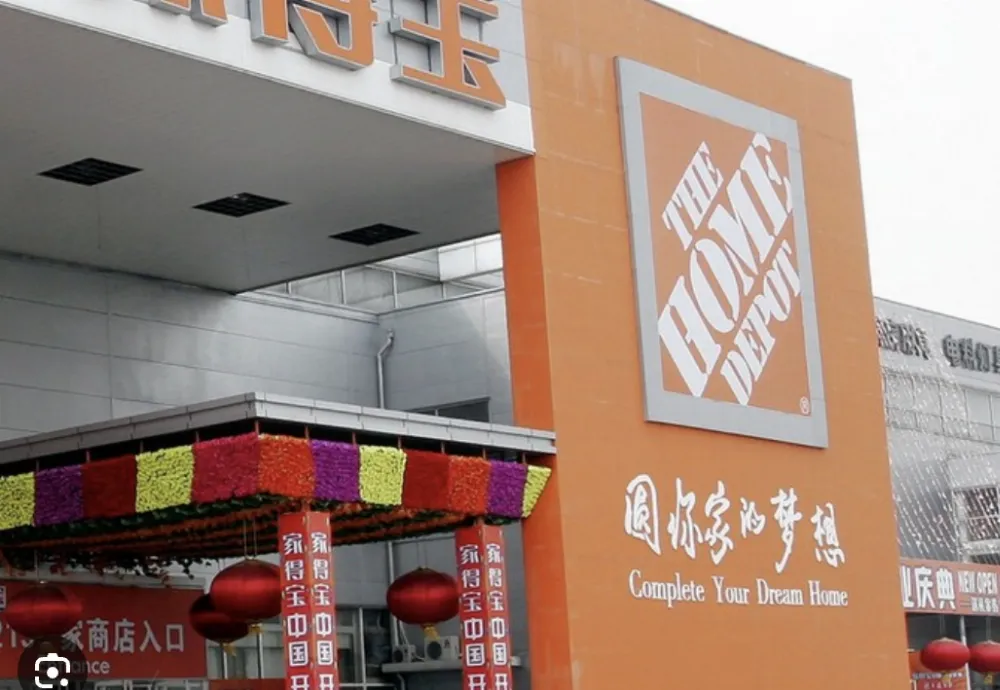
It was a consumption-habit mismatch. Home Depot's entire model is built on DIY: American suburban homeowners doing their own renovations as a hobby. In China, hiring a handyman is cheap, and manual labor has historically been associated with lower social status.
Home Depot admitted it had misread the market, calling China "a do-it-for-me market, not a do-it-yourself market," and closed its last stores there in 2012 (NBC News).
Source: Imaginechina / Associated Press
Mattel's Barbie Flagship in Shanghai
They ran into a similar issue from a different angle: Barbie, the doll, was popular in China, but Barbie, the brand, was not.
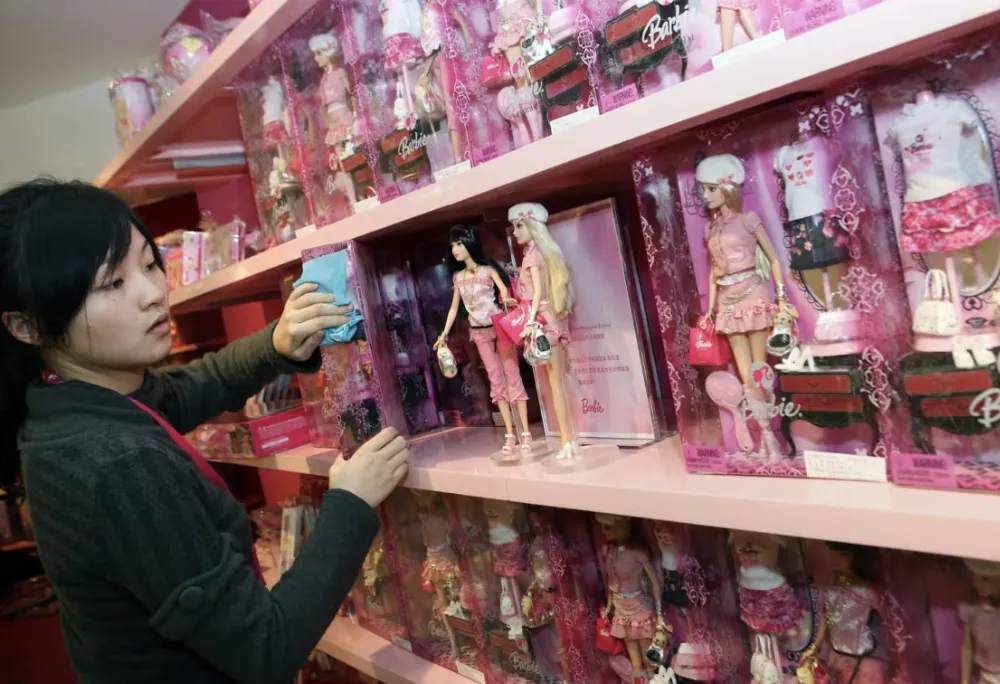
Mattel opened the world's largest "House of Barbie" concept store in a prime Shanghai location in 2009: with Barbie merchandise, a Barbie-themed restaurant, a hair and nail salon, a cocktail bar, and a spa.
Chinese consumers saw Barbie as a nostalgic American toy, not a lifestyle brand, and couldn’t care less. The store closed within two years (NBC News).
Credit: CTR
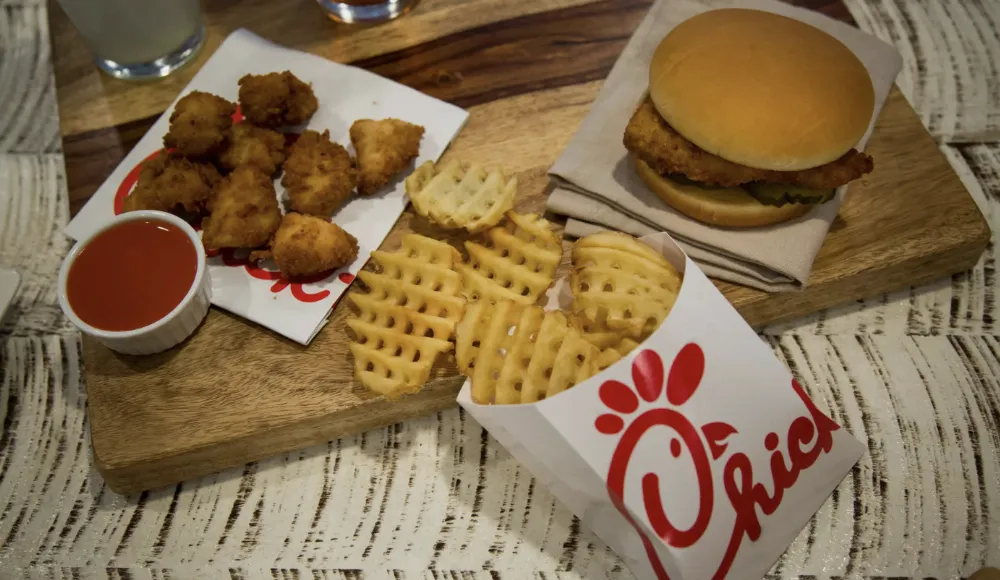
Chick-fil-A in the UK
The fast food chain opened its first UK location in a Reading Shopping Mall in October 2019. Within eight days, LGBTQ rights groups organized protests. They found out that the Chick-fil-A Foundation donated to organizations opposed to same-sex marriage.
As a result, the mall's operator refused to renew the lease beyond its initial six-month trial period. The restaurant closed the following spring (Forbes).
The product itself was never the issue. Lack of market research and understanding of British values was. People there remember such brand blunders and are willing to ignore the brands because of them.
Photographer: Michael Nagle/Bloomberg
What to do instead: Entering a new market needs cultural research on a few levels: taste, habits, and values. Ask:
-
What do people buy?
-
What do they do (does anyone in this market actually want to renovate their own kitchen?)
-
What do they believe (how will your brand's existing public associations read here)?
The third question is the one most companies skip, and it's the hardest to fix after launch.
Mistake #4: Localizing the Language but Not the Product
Translating your app or website is the easy part of localization. Rebuilding features around how people in that market actually behave is much harder.
Facebook in Japan
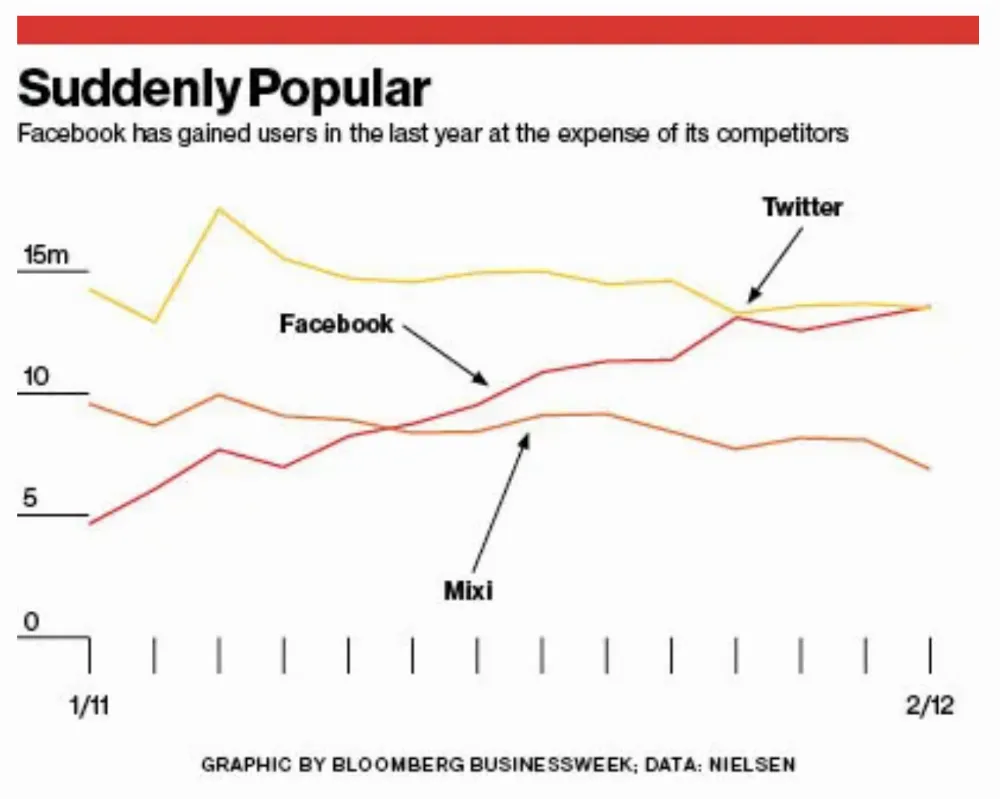
Facebook's core identity is built around using your real name. This fits American norms but clashes with Japanese internet culture, where people used pseudonyms on platforms like Mixi and DeNA's. On top of that, Facebook's early Japanese-language version relied on crowd-sourced translation. Many users found it clunky and hard to navigate (Bloomberg).
Because the interface and privacy model weren't rebuilt around local expectations, homegrown competitors kept the advantage for years.
The situation changed a little after the 2011 earthquake, not relatable to Facebook's actions. People started to use it because its real-name system made it easier to find information about people they care about.
What to do instead: Budget for product localization. Have native speakers review the copy, but also ask a harder question: which of your core product assumptions are actually cultural? Identity, privacy, payment methods, or social defaults?
Then test the localized version with real local users to understand customer behavior before starting customer acquisition.
Mistake #5: Getting Location, Logistics, or Supply Chain Wrong
Even a well-known brand can fail. All they need to do is pick the wrong sites or ignore supply chain issues that can't keep shelves stocked.
Target Canada
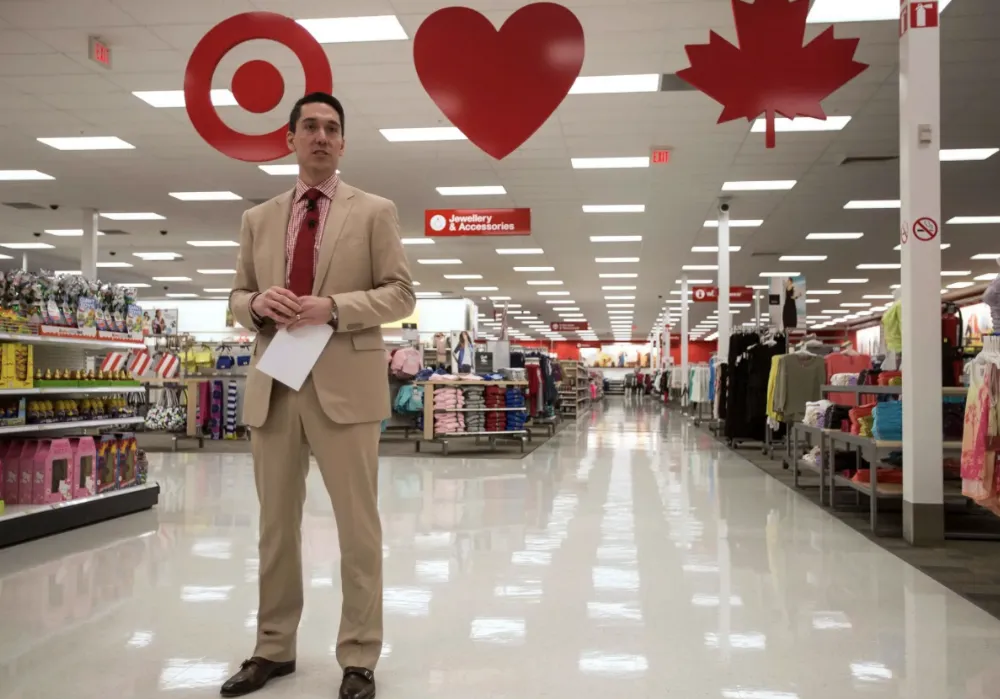
In 2011, Target bought the leases of the failing Canadian retailer Zellers and converted the locations into Target stores. As a result, they inherited some sites that didn’t work well for Target's format.
The bigger issue was behind the scenes: Target rushed the launch of a new SAP system, and its inventory data was full of errors. Stores often get the wrong products or the wrong quantities. The result was empty shelves and overstocked backrooms at the same time.
Target opened 133 stores and closed every one of them by 2015. They lost around $1 billion (CBC News).
Anthony S. Fisher, the president of Target Canada. Geoff Robins/Reuters
Walmart in Germany
Several of Walmart’s German hypermarkets were located in areas poorly suited to how German shoppers actually get to stores. They didn’t match the car-centric suburban layout Walmart was used to in the US.
German shoppers relied on public transit, walking, or small vehicles. They did not participate in the American habit of bi-weekly bulk shopping trips (Research Gate).
Credit: Jonathan Weiss/Shutterstock
What to do instead: Treat inherited assets with suspicion. A cheap lease from a failing competitor is cheap for a reason. And stress-test your logistics before opening day: run the new market's inventory system in parallel with a small number of sites first. Don't scale until the data has been verified against what's physically on the shelves.
Mistake #6: Expanding into Foreign Markets Faster Than You Can Prove the Model
Speed often turns a fixable problem into an unrecoverable one. Target's Canadian rollout is a good example again: the company opened all 133 stores in under two years. By the time the data problems became obvious, they were already baked into every store. But here is an even more telling example.
Mobike's Global Expansion
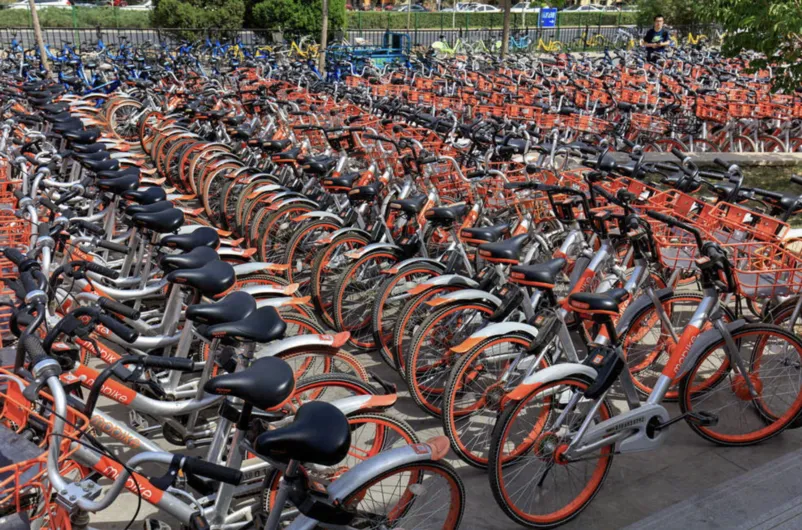
At its peak, Mobike operated dockless bikes in around 200 cities across 19 countries. After Chinese delivery giant Meituan acquired the company for $2.7 billion in 2018, it continued the global expansion. But as Mobike entered more markets, the scale of its losses became impossible to ignore.
Meituan reported that the bike-sharing unit accounted for over half its overall losses. By early 2019, it began shutting down operations across Asia and most markets outside China (TechCrunch).
Source: Shutterstock
What to do instead: Pick one city or region, define what "this works" means numerically (contribution margin, repeat rate, cost per location). Don't fund the next wave until you hit it.
Slower rollouts keep mistakes contained.
Want more international expansion tips and tricks? Read our deep dives:
Mistake #7: Misjudging Regulatory, Legal, or Political Risk
Even a solid business model can be derailed by labor law, licensing, or public sentiment.
Deliveroo's European Retreat
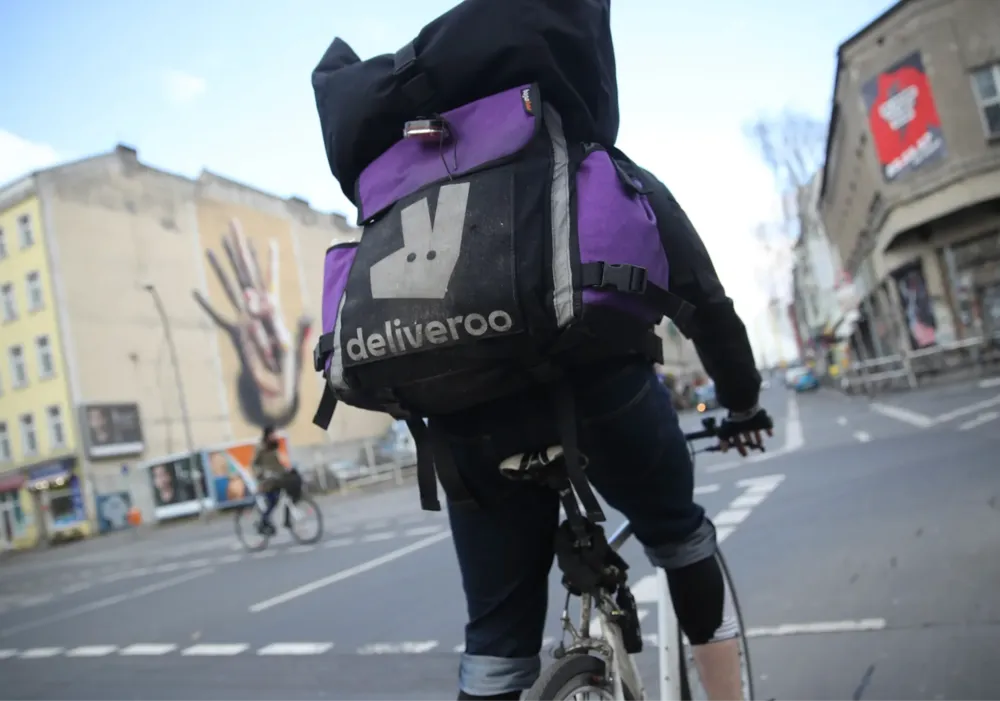
It is a clear regulatory example. Spain passed a law requiring delivery platforms to formally employ their couriers rather than treat them as freelancers.
After that, Deliveroo decided the changed cost structure made the market unworkable and left (Silicon Canals).
Photographer: Sean Gallup
What to do instead: Get local legal and employment advice before you model the business. Labor classification, working-hours rules, and licensing can change your cost base enough to invalidate the whole plan. Then run the same exercise for reputational risk.
Here is a list of the latest EU regulations you might be interested in:
Final Thoughts
Companies that failed internationally rarely come down to a single bad decision:
-
Starbucks and Walmart underestimated how differently people shop and socialize abroad.
-
Target and Mobike scaled faster than their operations or unit economics could support.
-
Facebook and Home Depot localized the surface without rebuilding the product underneath.
-
Deliveroo and Chick-fil-A ran into regulatory and reputational risks.
The common thread is that every one of these mistakes was knowable in advance. A slower rollout or a frank conversation with in-country staff would have surfaced most of these problems before they became expensive.
If you want to have a successful international presence, treat the self-audit above as a starting point and revisit it at every stage.
If you can’t afford to make rookie mistakes and need some help with your growth strategy, call us at Netpeak. All our expertise is yours. For example, read how we helped Domino's Pizza take its place in a Ukrainian overheated market.
FAQ
What are the top failed products or expansions?
How much does a failed market expansion typically cost?
How long should a company wait before deciding to exit a new market?
Can a company that failed once succeed on a second attempt?

 0
0
 0
0
 0
0
 0
0
Related Articles
Business Apps in the US: iOS vs. Android, September 2026
We searched for US App Store and Google Play data to see what business apps professionals, shoppers, and investors actually installed in September.
What Happens When Amazon Suppresses Your Listing? The New 2026 Rules
Under the new 2026 rules, Amazon warns you first and gives you a grace period to fix the issue.
Amazon’s New “Sourced from Brand” Buy Box Label: Who Gets It and Who Doesn’t
Amazon is rolling out a provenance line in the Buy Box. A short label under the Brand row now reads “Sourced from [Brand]” on amazon.com and “[Brand] approved” on amazon.de. It tells the shopper that the unit on offer came through the brand’s own supply c