
Digital Marketing for SMBs: How to Grow a Small Business Online
Small or mid-sized businesses compete for the same customers as brands with marketing departments ten times their size, on a fraction of the budget.
You can't outspend them, so you have to outsmart them and grow your business deliberately. Digital marketing for SMBs should be tailored to their specific needs. That means showing up for nearby customers and spending only on what's working.
And the stakes are real: roughly a third of small businesses close within their first two years (US Bureau of Labor Statistics). So, running without a plan is one of the fastest ways to end up in that number.
This guide walks through that, step by step: which digital marketing channels to use and when, a marketing budget framework, and real-life examples showing how digital marketing for small business actually works for small and medium-sized companies.
What Is Digital Marketing for SMBs?
Small business digital marketing has the same toolkit big brands use, applied at a scale and cost that fits a small team and a limited marketing budget:
-
Search engine optimization (SEO) — improving a company's website so it ranks higher in unpaid ("organic") Google search results.
-
Local SEO / Google Business Profile (GBP) — optimizing online presence for "near me" and location-based searches, including your free Google listing.
-
PPC (Pay-Per-Click) / Google Ads — paid ads where you're charged only when someone clicks.
-
SMM (Social media marketing) — building an audience and running campaigns on platforms like Instagram, TikTok, or LinkedIn.
-
Email marketing — sending targeted messages to people who've opted in, for lead generation and repeat sales.
-
Content marketing — publishing helpful articles, guides, or videos that attract an audience and feed SEO.
The strategy underneath it, though, looks different.
Enterprise marketing is often about sustaining brand awareness across a huge audience, while SMB digital marketing is about turning local or niche customers into a loyal customer base.
|
Area |
Big-Brand Digital Marketing |
SMB Digital Marketing |
|
Primary goal |
Build broad awareness and protect market share |
Generate leads, bookings, or sales |
|
Target audience |
Large, diverse markets |
Local customers or a specific niche |
|
Budget |
Large budgets spread across many channels |
Limited budget focused on the best-performing channels |
|
Team |
Specialized departments and external agencies |
Small teams where one person may wear several hats |
|
Decision-making |
Longer approval processes involving several stakeholders |
Faster testing and quicker adjustments |
|
Success metrics |
Reach, impressions, brand lift, and market share |
Leads, bookings, sales, cost per acquisition, and ROI |
|
Main advantage |
Money, reach, and resources |
Speed, local knowledge, and closer customer relationships |
Not sure whether to start with SEO or PPC? SEO vs. PPC vs. SEM: What's the Difference and Which One Should I Choose? breaks the decision down.
Why Digital Marketing for SMBs Matters: The Numbers
You don't need to take this on faith. The data on small business digital marketing results is well documented:
-
Top channels that SMB owners use: unpaid social media marketing (66%), social media ads (56%), and SEO and email marketing (53%) (Localiq).
-
Local searches often lead to immediate action. 76% of people who search for something nearby on a smartphone visit a related business within a day, while 28% of those searches result in a purchase (Think with Google).
-
Email can deliver a strong return on investment (ROI) without requiring a large media budget. An average return is $36 for every $1 invested in email marketing (Litmus).
-
Paid search is becoming more expensive, which makes precision essential. WordStream’s analysis of more than 16,000 US campaigns found that the average Google Ads cost per click reached $5.26 in 2025, while the average conversion rate was 7.52% (WordStream).
SMBs cannot afford to buy irrelevant traffic, so tight targeting and conversion tracking matter more than ever.
For a broader look at how digital tools help a young company grow, see How to Grow a Startup: Developing a Successful Business With Digital Marketing and Modern Technologies.
What This Can Look Like in Practice
Netpeak's case studies show why a strong small business marketing strategy matters as much as the channel itself
-
Dental clinic Complex-Dent combined their SEO and PPC strategies and increased organic traffic by 150% and appointment bookings by 120% (Complex-Dent SEO and PPC Case Study).

-
H2H Movers combined PPC optimization with better mobile UX and a broader channel strategy and got 135% growth in Google Ads conversions (H2H Movers Case Study).

-
In another PPC project for a luxury real estate brand, Netpeak used better targeting, landing pages, analytics, and bidding to make the existing spend work harder. As a result, lead conversions increased by 86% without a bigger advertising budget (Luxury Real Estate Case Study).
When every dollar has a job, a small budget does not have to mean small results.
How to Build an SMB Digital Marketing Strategy (Step by Step)
Before picking channels, get four things straight. Skipping this step is the single biggest reason SMB marketing budgets get wasted.
Step 1. Set One Primary Goal
Choose the single business result that matters most over the next three to six months:
-
Qualified leads
-
Phone calls
-
Appointment bookings
-
Online sales
-
Store visits
-
Repeat purchases, etc.
Then make this goal specific and measurable.
For example, a local dental clinic could have:
-
Primary goal: 40 appointment requests per month
-
Supporting action: visits to treatment pages
-
Best initial channels: local SEO and Google Ads
-
Main KPI: completed appointment forms and qualified calls
Step 2. Define Your Target Audience
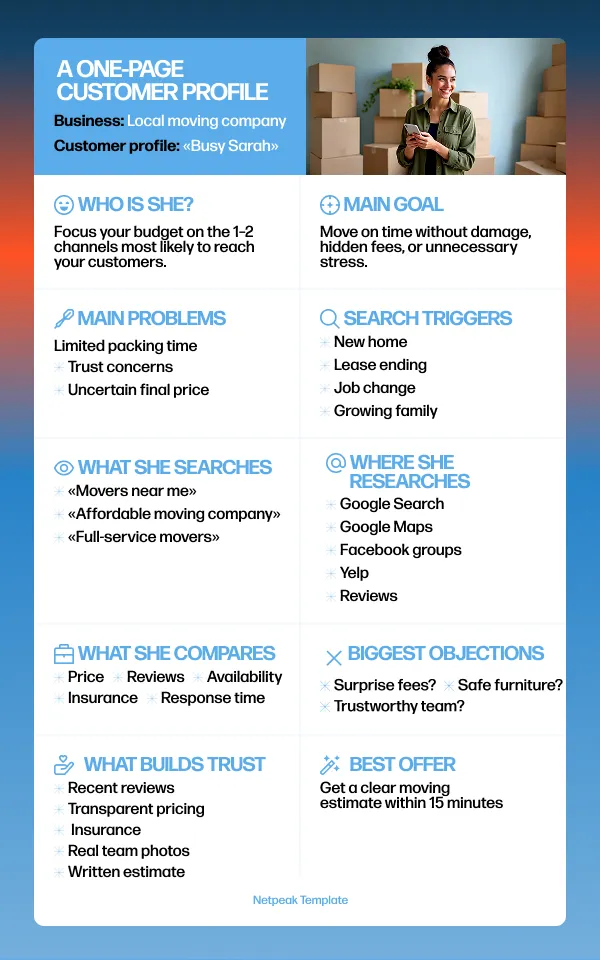
Start with a one-page customer profile answering five questions:
-
Who is most likely to buy?
-
What problem are they trying to solve?
-
What words would they type into Google?
-
What might prevent them from choosing you?
-
Where do they research or compare options?
Use real evidence wherever possible. Review sales calls, customer emails, CRM notes, online reviews, search queries, and questions people ask before buying.
Step 3. Set a Budget You Can Commit To
Choose a marketing budget you can maintain long enough to collect data. SBA reports that, in general:
-
B2B product companies spend 6.3% of their revenues on ads
-
B2B service companies spend 6.9%
-
B2C product companies spend 9.6%
-
B2C service companies spend 11.8%
There’s no universal percentage that works for every SMB. So, consider your industry, growth stage, margins, and past results.
An established company may spend a smaller share, while a new business entering a competitive market may need to invest more. Only 8% of small businesses plan to decrease marketing budgets in 2026, nearly 40% plan to increase, and 54% plan to keep budgets the same (Localiq).
A Simple Starting Budget Split
|
Allocation |
Purpose |
|
60–70% |
The one or two channels most closely connected to the primary goal |
|
20–30% |
Supporting assets and infrastructure, such as content, landing pages, email, analytics, or creative |
|
10% |
Controlled experiments with a new audience, platform, message, or format |
Practical tip: Protect the testing budget. Do not move the same $500 between Google, Meta, TikTok, and LinkedIn every two weeks. That creates four unfinished experiments.
Step 4. Decide How You'll Measure Success
Set up measurements before launching marketing campaigns. Otherwise, the business may know how many people clicked but not how many became customers.
At minimum, use:
-
Google Analytics 4 for website behavior and key events
-
Google Search Console for organic search visibility
-
Google Business Profile Performance for profile views and customer interactions on Search and Maps
-
A CRM or structured lead spreadsheet to record lead source, quality, status, and revenue
-
Call tracking if phone calls are an important conversion
-
Microsoft Clarity for free heatmaps and session recordings that show where visitors become confused or leave
-
UTM parameters on email, social media, influencer marketing, and partnership links so GA4 can identify the campaign that produced each visit
In GA4, mark important actions such as generate_lead, purchase, or a completed booking as key events. Google Ads can then use relevant GA4 key events as conversions for campaign reporting and optimization.
Track metrics at three levels:
|
Level |
Examples |
What It Tells You |
|
Visibility |
Impressions, rankings, reach, video views |
Are people finding the business? |
|
Engagement |
Click-through rate, time on page, product views |
Are they interested? |
|
Business results |
Leads, calls, bookings, sales, revenue |
Is marketing producing value? |
The final level matters most. A campaign with fewer clicks but more qualified leads is usually the better campaign.
The key for a small business owner is starting with 1–2 channels that match your goal and budget, then expanding once the first one is working.
The Best Digital Marketing Channels for SMBs — When and How to Use Each
This is the core decision every small business owner faces. Below, each channel gets the same four-part breakdown: what it is, when to use it, how to start, and cost/time to results. You can compare them side by side.
Channel Comparison at a Glance
|
Channel |
Best for |
Speed |
When to prioritize |
|
Local SEO / GBP |
Nearby customers, foot traffic |
Medium |
Local/storefront SMBs — do first |
|
SEO |
Long-term organic traffic |
Slow |
Playing the long game |
|
PPC / Google Ads |
Fast leads & sales |
Fast |
Need results now / validate demand |
|
Social (SMM) |
Brand & community |
Medium |
Visual/community brands |
|
|
Retention & repeat sales |
Fast |
You have a list/repeat buyers |
|
Content |
Trust & SEO fuel |
Slow |
Considered purchases, authority |
|
Video / short-form |
Awareness, demos |
Medium |
Younger/visual audiences |
|
Offline / referral |
Local trust |
Medium |
Community-based SMBs |
Local SEO & Google Business Profile
Local SEO helps people nearby find your business on Google search. It is what puts a local bakery, dentist, moving company, or repair service in Google Maps and the results that appear when someone searches for “near me.”
If your business serves a particular city or has a physical location, this is one of the best places to start. These customers are not casually scrolling. They are often looking for a service right now, and they would prefer not to drive across the state to get it.
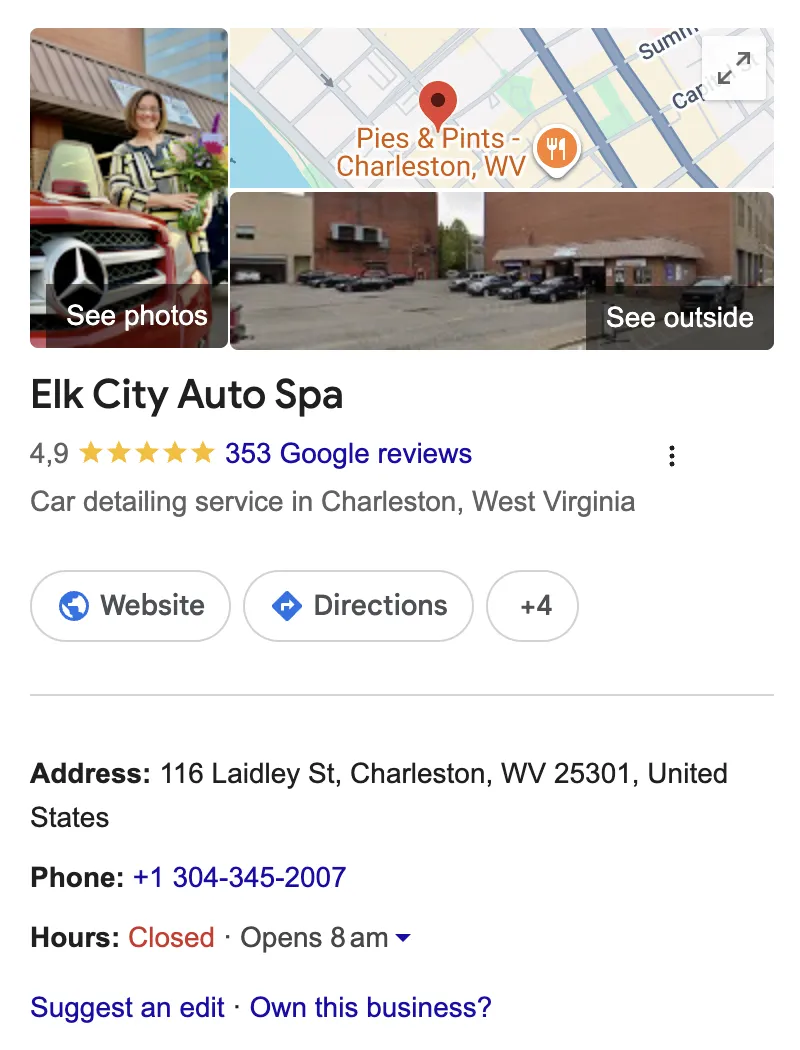
For example, Elk City Auto Spa, a seven-employee detailing shop in Charleston, West Virginia, got more than 80% of customers through Google Business Profile. Its revenue was up 300% since it started actively managing its listing and reviews (Google).
How to start:
-
Claim and fully optimize your Google Business Profile — hours, categories, photos, services.
-
Keep your name, address, and phone number (NAP) identical everywhere you're listed online.
-
Actively collect and respond to reviews.
-
Build local landing pages if you serve multiple areas.
-
Get listed in relevant local directories (citations).
Cost & time: Low cost. The first movement is often visible within weeks.
For a deeper dive into this channel, see Online Local Advertising for Small Businesses: How Neighbors Find You Online and 5 Things You Need to Know to Succeed Online as a Local Business.
SEO (Organic Search)
SEO (search engine optimization) helps with optimizing your website so it ranks in Google's unpaid results for what your customers search. 72% of SMBs say SEO has a medium-high impact on their business, yet only 40% said they have a dedicated website.
Use it if you're playing the long game: want compounding organic traffic that doesn't disappear the moment you stop paying for it and can wait 3–6+ months for traction. Especially strong for niches where people research before buying.
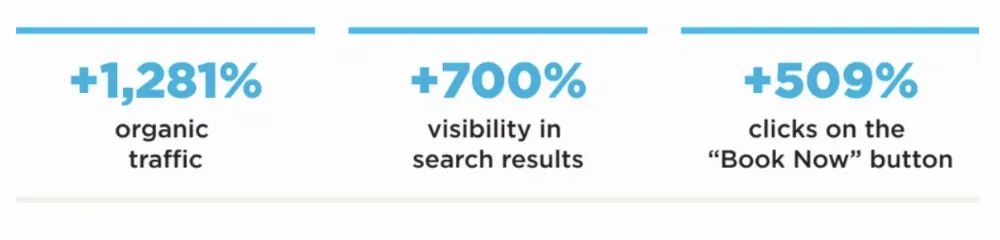
For example, Netpeak helped the German beauty salon Hello Beauty with SEO: updating the website's structure, optimising the content, and making recommendations for a redesign. As a result, the company achieved:
How to start:
-
Research the terms your target audience searches.
-
Fix site speed, mobile-friendliness, secure (HTTPS) setup, etc.
-
Publish genuinely helpful pages that answer real customer questions.
-
Start with your "money pages" (product or service pages) before blog content. They convert.
-
Earn links from other credible sites in your industry.
Cost & time: Medium cost, mostly time/labor. Slow results, usually 3–6+ months before meaningful ranking movement.
SEO's role is also evolving with AI-powered search — see How PPC, SEO, and Link Building Shape Your Visibility in AI Search.
PPC / Google Ads
These are paid ads that show up above organic results, charged per click. Use it if you need lead generation or sales now or organic search simply hasn't kicked in yet.
Works best when your average sale value comfortably covers the cost per click.
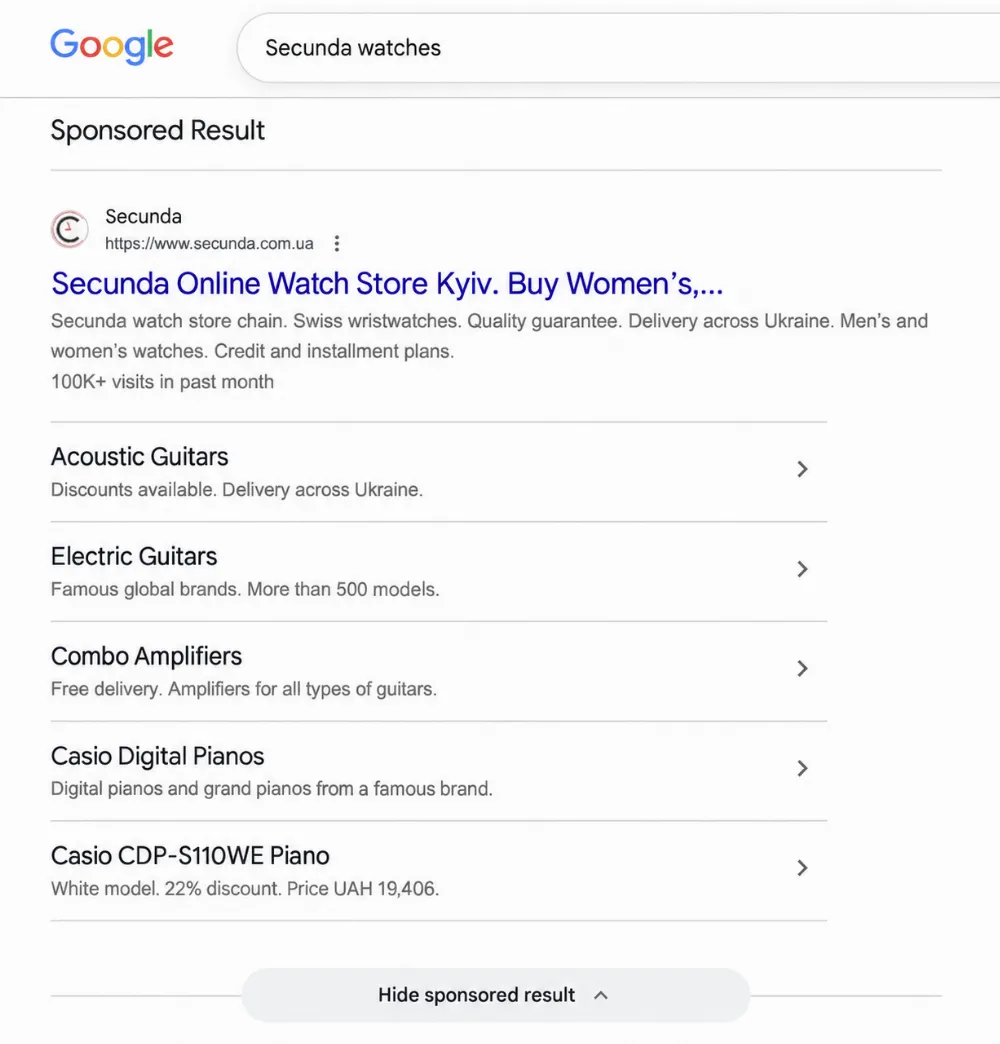
For example, Netpeak helped Secunda, a watch retailer, to optimize their PPC and promote their offline stores on a budget of $3,000. The result was 13,189 conversions (139 calls and 13,050 store visits via Google Maps). The average cost per conversion was $0.24.
How to start:
-
You can’t afford to waste money, so use tight keyword match types and a negative keyword list.
-
Start with Search campaigns, but only on your highest-intent keywords.
-
Set up conversion tracking before you launch.
-
If you’re an e-commerce business, layer in Shopping or Performance Max once you have solid tracking.
-
Check performance weekly for the first month — early data guides everything downstream.
Cost & time: Expensive, but brings results in days. The average Google Ads conversion rate sits around 7.5–8%, and the average cost per click is roughly $5.26 (WordStream's 2025 benchmarks).
New to the platform? How Does Google Ads Work? A Guide for Beginners in Online Advertising covers the basics.
Social Media Marketing (SMM)
SMM (social media marketing) is about building an audience and running organic and paid campaigns on platforms like Instagram, TikTok, Facebook, or LinkedIn.
Use it if your brand is building brand awareness and community, and your customers are active on social media. Visual businesses tend to do well on Instagram/TikTok; B2B businesses see more traction on LinkedIn.
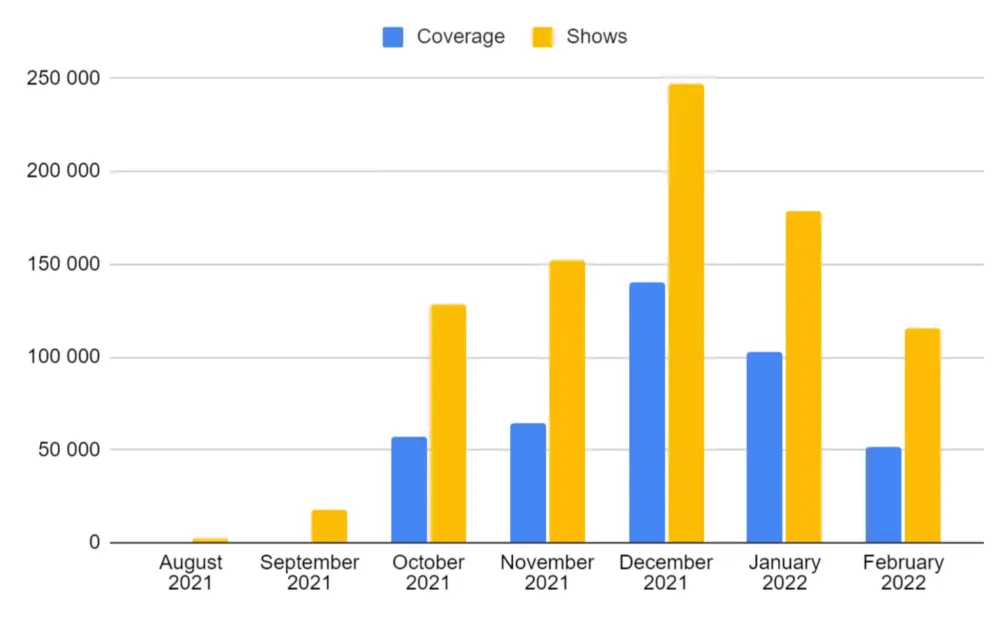
Also, SMM is great for building a personal brand. Netpeak helped a Ukrainian-Canadian writer with setting up the Instagram account from scratch and promoting on social media. We created an SMM strategy, boosted paid ads using a $300 monthly budget, and posted sponsored content. As a result, the client got their first 1k followers.
How to start:
-
Pick 1–2 social platforms where your customers are hanging out all the time.
-
Don’t stop posting even if you don’t get any reaction. Do it 2–4 times a week.
-
Track your best-performing posts and boost them with paid ads.
-
Reply to comments and messages (customer engagement compounds reach).
-
Encourage and reshare user-generated content (UGC) from happy customers.
Cost & time: Medium cost and medium time to first results. Organic growth takes months; paid boosting shows results in days.
For a step-by-step framework, see 6 Important Steps to Consider When Creating a Social Media Marketing Plan, and if TikTok fits your audience, How to Advertise on TikTok: A Beginner's Guide.
Email Marketing
That’s a digital channel for sending targeted campaigns and marketing automation sequences to people who've opted in.
Use it if you already have, or can start building, a customer base. Email consistently delivers the highest return on investment (ROI) of any digital channel for SMBs — about $36 for every $1 spent (Litmus's research). All because the sending cost is nearly free, and the audience already knows your company.
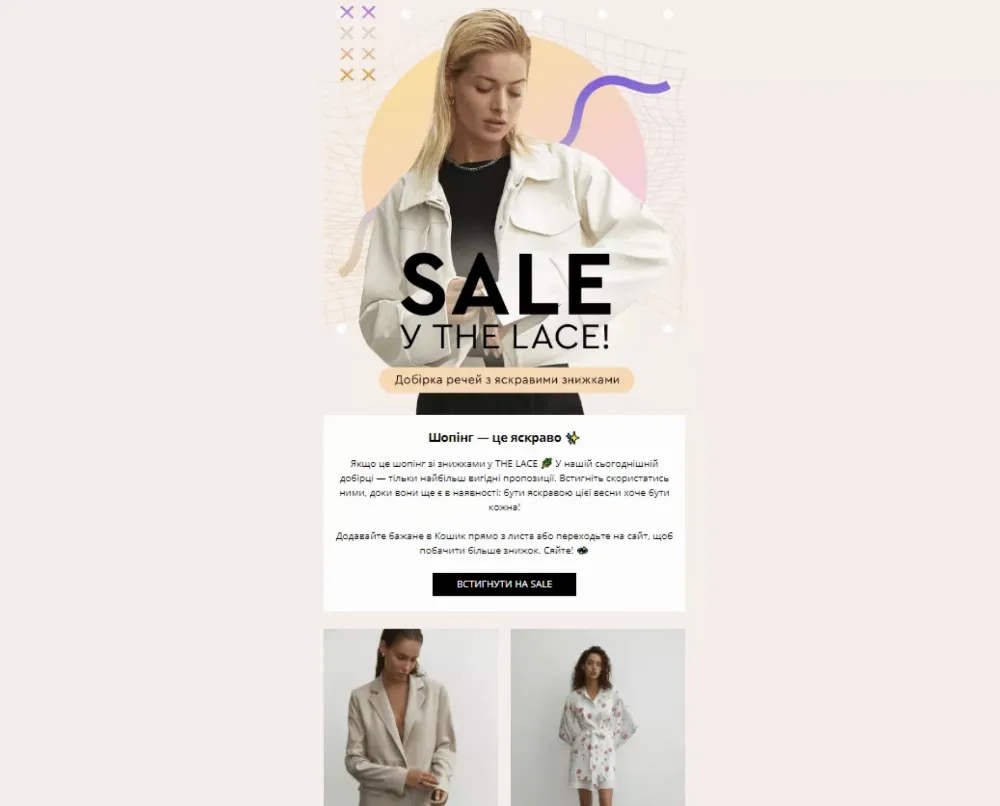
For example, Netpeak helped clothing retailer The Lace build its email marketing channel from scratch: developed a marketing strategy, defined the brand’s unique selling proposition, etc. Within four months, the email channel got a positive return on investment and began generating 6.92% of the company’s total revenue.
How to start:
-
Build your list with a simple lead magnet (a discount, guide, or free consultation).
-
Segment your list by interest or purchase history from day one.
-
Set up a welcome sequence for new subscribers.
-
Add a win-back marketing automation for customers who've gone quiet.
-
Run seasonal or promotional campaigns on top of your automations.
Cost & time: Very low cost per send and fast first results. Automations can start generating revenue within the first week.
Content Marketing
It is all about publishing helpful articles, guides, FAQs, and videos that attract customers and answer their questions.
Use it if you want to build trust over time and feed every other channel. It will help to support SEO, provide you with something to share on social media, and give email subscribers a reason to open your messages.
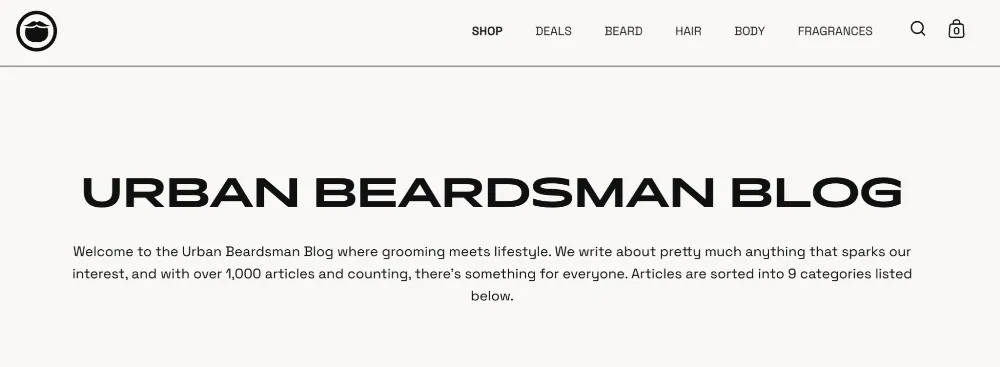
For example, beard-care company Beardbrand created videos, stories, and educational content around the idea of the “urban beardsman.” This content-led strategy helped Beardbrand build a community and reach $120,000 in monthly sales within its first year (Forbes).
How to start:
-
Answer the 10 questions your customers ask most before buying.
-
Create different formats. For example, how-to guides, FAQs, short videos, and customer stories.
-
Link content pieces to the relevant product or service page.
Cost & time: Medium cost (mostly time or a writer's fee) and slow first results (compounds over 6+ months).
Video & Short-Form (YouTube, TikTok, Reels)
Video marketing is about short vertical video content: trends, product demos, behind-the-scenes clips, tutorials, etc.
Use it if you have a younger audience or sell something beautiful and worth demonstrating.
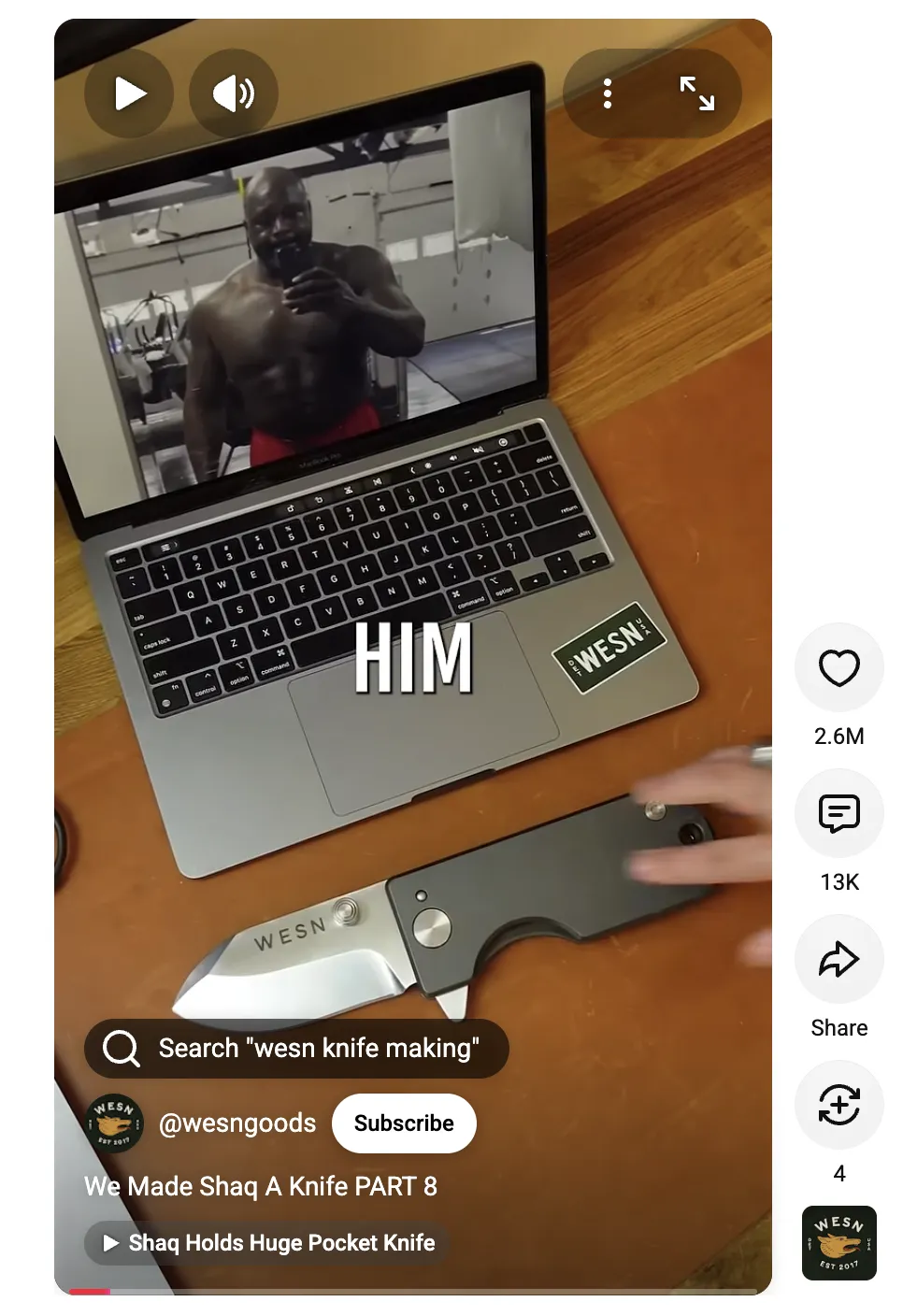
For example, a pocket-knife company, WESN, could not advertise normally because many platforms restrict knife promotions. Their marketing efforts started with a team of just one person publishing one YouTube video every day. After 60 videos, WESN passed 1M views and sold out its bestselling knife in a single day.
Later, their video series built around an enormous “Shaq-sized” knife helped the channel reach 590M views in six months. As a result, their revenue grew up to 3.5 times (Think with Google).
How to start:
-
Film short (30-second–2-minute) clips where you show your product or process.
-
Repurpose one shoot into multiple short clips for different platforms.
-
Add captions, because most videos are watched with the sound off.
Cost & time: Medium cost (a smartphone and good lighting are enough to start) and medium time to first results.
Offline & Relationship Marketing
This is about old-fashioned tactics like referral programs, local partnerships, community events, review generation — all of which support customer acquisition without heavy ad spend. As the saying goes: 'Old is gold'. 83% of SMBs cite customer referrals as their best lead source (Localiq).
Use it if local trust matters to your business, and you want a cheap way to grow alongside your digital marketing channels.
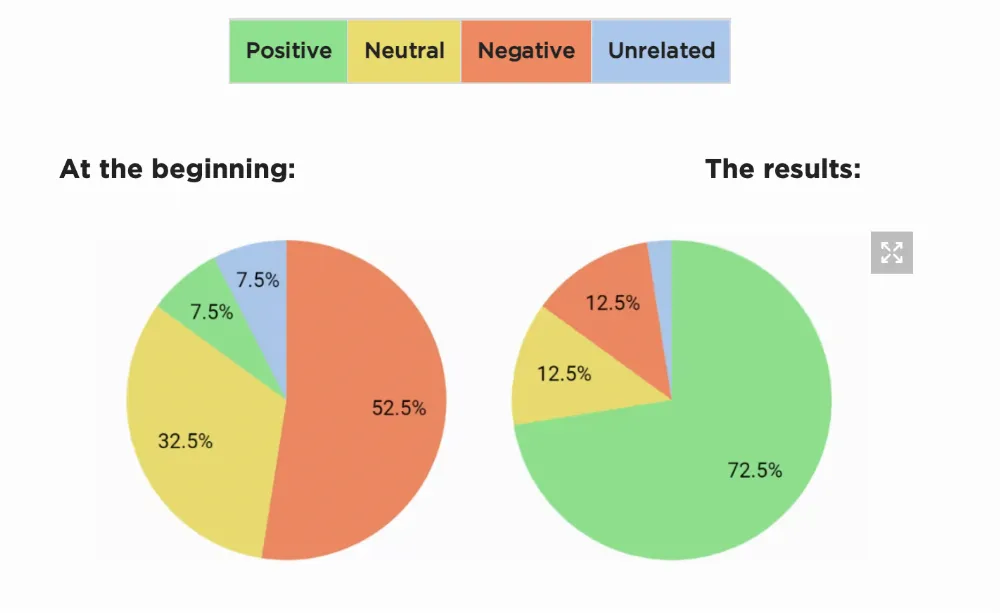
For example, Netpeak helped the real estate service DOM.RIA to boost its online presence and search ranking reputation. As a result, we eliminated negativity in the top 10 search results and increased the number of pages with positive tones tenfold.
How to start:
-
Ask customers to refer your business to someone new and promise a small reward.
-
Team up with nearby businesses that attract a similar audience.
-
Ask happy customers for a review while their experience is still fresh.
-
Join or sponsor local events where potential customers already gather.
Cost & time: Cheap, but with medium timing to first results. Relationship-building compounds slowly but reliably.
Which Channels to Start With (by Goal & Budget)
You should not try every channel at once. Start with the one or two that match your goal, your budget, and where your customers already are. Then expand once the first one is producing results.
|
Situation/goal |
Start with |
Add next |
|
Local storefront, small budget |
Google Business Profile + Local SEO |
Reviews, local Google Ads |
|
Need leads fast |
Google Ads (Search) |
Local SEO, email capture |
|
E-commerce, growing |
PPC/Shopping + Email |
SEO, social, video |
|
Tiny/near-zero budget |
GBP + organic social + email |
Content, SEO |
|
B2B / services |
SEO + LinkedIn + email |
Google Ads, content |
|
Building brand long-term |
SEO + content + social |
Video, email |
SMB Marketing on a Budget
A small budget means you need to be smart. Start with the free activities that help customers find and trust you, then spend money only when you can prove it works.
What to Prioritize at Each Marketing Budget Level
|
Monthly Budget |
Best Use of the Money |
What to Avoid |
|
$0 |
Google Business Profile, reviews, organic social media, basic email collection, and helpful content |
Trying to maintain five social platforms at once |
|
Under $300 |
A simple email tool, basic design or video software, local directory listings, or improving one important landing page |
Spreading $50 across several ad platforms |
|
$300-1,000 |
A tightly targeted Google Ads test, local SEO help, content production, or email automation |
Broad awareness campaigns with no clear conversion goal |
|
$1,000-3,000 |
Consistent SEO or PPC support, professional landing pages, conversion tracking, and regular content |
Increasing ad spend before fixing a weak website |
|
$3,000+ |
A coordinated mix of SEO, PPC, email, content, and remarketing |
Expanding into new channels without knowing which current ones generate customers |
For proof that even a $0 marketing budget can produce serious organic traffic, see How to Get Over 100,000 Website Visitors With Zero Marketing Budget.
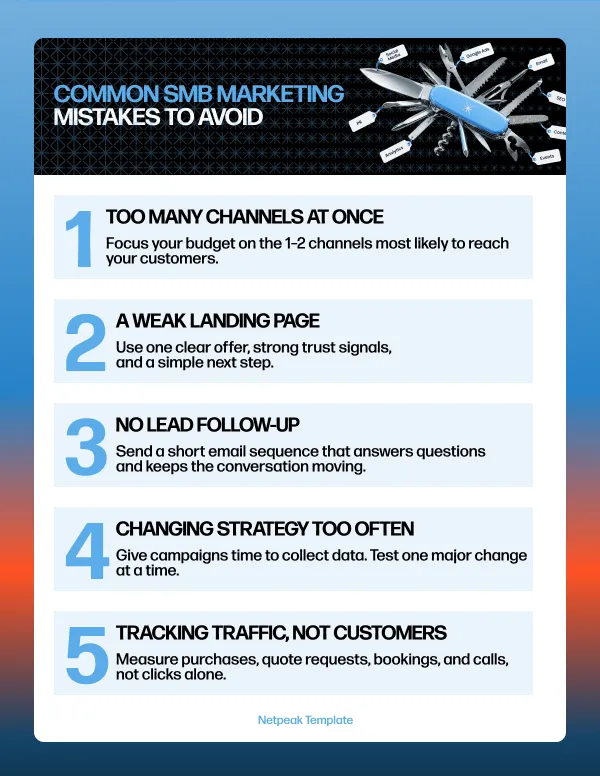
Common SMB Marketing Mistakes to Avoid
A limited marketing budget can still produce strong results in small business marketing, but only when every channel has a clear purpose. Watch out for these common mistakes.
-
Trying too many channels at once. Start with one or two channels that best match your goal. A local plumber, for example, might focus on Google Business Profile and Google Ads before experimenting with TikTok.
-
Sending visitors to a weak landing page. Use a focused landing page with one offer, a clear call to action, trust signals, and a simple form or booking process.
-
Failing to follow up with leads. Create a short email sequence that answers common questions, shares customer proof, and explains the next step. Even three helpful emails are better than silence.
-
Changing the strategy too often. Set a reasonable testing period, collect enough data, and change one major element at a time. Marketing needs experimentation, but it also needs enough patience to finish the experiment.
-
Focusing on traffic instead of customers. Track meaningful actions such as purchases, quote requests, booked appointments, and phone calls using Google Analytics 4, advertising-platform tracking, or call-tracking tools.
Tools & AI for SMB Marketing
You do not need dozens of marketing tools to run a small business. Start with your goal, choose one tool that helps you achieve it, and add more only when you genuinely need them.
To understand what people do on your website
- Google Analytics 4 shows where visitors come from and whether they submit a form, make a purchase, or complete another important action.
- Microsoft Clarity provides heatmaps and session recordings, helping you see where visitors click, scroll, or get confused.
- Looker Studio turns data from different sources into simple marketing reports and dashboards.
To improve your visibility in Google Search
- Google Search Console shows which searches bring people to your website and highlights indexing or technical problems.
- Ahrefs Free helps you find technical SEO issues, backlinks, ranking keywords, and your best-performing pages.
- Google Keyword Planner provides keyword ideas and search-demand estimates for content and advertising.
To attract more local customers
- Google Business Profile lets you manage your appearance in Google Search and Maps, collect reviews, and publish business updates.
- Bing Places for Business helps your company appear in Bing’s local results and maps.
- BrightLocal can monitor local rankings, reviews, and business listings when you are ready for a more advanced paid tool.
To analyze Amazon position: Amazon Industry Benchmark Report
To use the power of AI: AI Overview Analysis, ChatGPT, Gemini, Claude. AI works best as an assistant. Use it to create first drafts and speed up repetitive work. 84% of SMBs use AI to save time and 78% use it to generate ideas (Localiq).
For more picks, see Great SEO Tools Every Startup Should Learn How to Use.
DIY vs. Hiring an Agency
Whether to handle marketing in-house or bring in outside help usually comes down to time and expertise, not just budget:
-
DIY makes sense when you have the time to learn one or two channels deeply, your budget is very limited, and you're still figuring out what resonates with your customers.
-
An agency makes sense when you need results fast, you want channels running in parallel, or you'd rather spend your time running the business than managing campaigns.
|
DIY marketing |
Hiring an agency |
|
|
Best when |
You are still learning what customers respond to |
You already have clear goals and want to grow faster |
|
Time required |
High (you handle strategy, execution, and reporting) |
Lower (the agency manages most day-to-day work) |
|
Expertise |
You learn as you go |
You gain access to specialists across several channels |
|
Channels |
Best for focusing on one or two at a time |
Better for running SEO, ads, email, and social together |
|
Main advantage |
Lower cost and complete control |
Faster execution and fewer expensive mistakes |
Good SMB marketing should be able to show real, verifiable results from businesses similar to yours.
Netpeak’s marketing strategy services bring together SEO, local SEO, PPC, social media marketing, email marketing, and conversion rate optimization. The goal is not to squeeze every possible channel into the plan, but to choose the ones that fit your budget, customers, and current stage of growth.
Final Thoughts
Digital marketing for SMBs means doing the right one or two things well. You just need to measure results and expand from there.
-
If you serve local customers, your free Google Business Profile is almost always the highest-leverage place to start.
-
If you need leads fast, a tightly targeted Google Ads campaign will outperform a broad one every time.
-
And whatever else you do, start collecting email addresses now. It remains the highest-ROI channel available to any small business.
The businesses that win online are the ones who picked their channels deliberately, tracked what actually worked, and kept doing more of that.
If you'd rather have an experienced team build and run that marketing plan for you, Netpeak's digital strategy team works with small and mid-sized businesses to build exactly this kind of channel mix, sized to a real budget.
FAQ
What is digital marketing for small businesses?
How much should an SMB spend on digital marketing?
Which digital marketing channel is best for a small business?
When should an SMB use PPC vs. SEO?
Should I do digital marketing myself or hire an agency?
How long does it take to see results from SMB digital marketing?
What are the cheapest ways to market a small business online?

 0
0
 0
0
 0
0
 0
0
Related Articles
Amazon's AI Now Builds Complete Looks on Product Pages. How Do Brands Make Sure the Bundle Is Theirs?
Amazon now uses AI to assemble complete, shoppable looks around a single product, and it fills those looks with whichever brands its model picks.
What Happens When Amazon Suppresses Your Listing? The New 2026 Rules
Under the new 2026 rules, Amazon warns you first and gives you a grace period to fix the issue.
Business Apps in the US: iOS vs. Android, August 2026
We’ve fetched data from the US App Store and Google Play to see what professionals, shoppers, and businesses are actually installing, and why the market leaders are winning right now.